Leaching field repair: costs, methods, and when to replace
By the SepticMind Editorial Team
TL;DR
- Leaching field repair runs roughly $1,500 to $20,000 depending on whether you jet-clean the pipes, add remediation additives, expand the field, or replace it outright.
- Most failures trace to biomat buildup, too much water, or crushed soil.
- Some fields come back without excavation.
- Many don't.
- Soil tests, the failure cause, and local code decide which fix actually works.
What is a leaching field and why does it fail?
A leaching field (also called a drain field, leach field, or soil absorption system) is the last treatment stage of a conventional septic system. Clarified liquid leaves the septic tank, flows through perforated pipes into gravel-filled trenches, then seeps into the surrounding soil where bacteria and filtration finish treating the wastewater before it reaches groundwater. [1]
The field is failing when the soil stops taking liquid fast enough. Why it stopped decides every repair choice you'll make.
Biomat is the usual suspect. A dense black-to-gray layer of bacterial slime and organic solids forms at the spot where trench gravel meets native soil, thickening over years of normal use. Biomat is partly self-limiting because some bacteria feed on it, but heavy or nonstop loading seals the soil faster than biology can clean it. [2]
Hydraulic overload is the second big one. Too much water hits the system, whether from a large household, a running toilet dumping 200 gallons a day, or seasonal high groundwater, and the soil simply can't drain it fast enough. That's fixable only by cutting the water load or improving drainage. The soil underneath may still be perfectly good.
Compaction is different. Drive a truck or a loaded trailer across the field and you crush the gravel bed and the pipe, collapse the pore space in the soil, and usually buy yourself an excavation. Grease and solids that carry over from a neglected or undersized tank coat the infiltration surface and speed up biomat. Tree roots crack pipe and block flow. And in clay-heavy ground, the swell-and-shrink cycle wrecks soil structure over time no matter how careful you are with water.
Age counts too. A well-designed field on a household that pumps the tank on schedule can run 25 to 30 years or more. Fields that never see tank maintenance, or that were sized too small for the real household load, often quit inside 10 to 15 years. [3]
How do you know your leaching field is failing?
The signs run from a puddle you can't miss to symptoms you'd walk right past, and catching them early genuinely widens your repair options. Sewage smell and wet soggy grass over the field are the loudest signals. Wastewater is surfacing because the soil can't absorb it, and that's a public health problem, more than a lawn problem. [1]
Slow drains and gurgling fixtures across the whole house often show up weeks or months before anything surfaces. A pump-system alarm going off, or sewage backing into the lowest drains in the house, means you're already at the critical stage.
Lush, fast-growing grass right over the trench lines while the rest of the lawn looks ordinary is a classic early tell. That grass is feeding on nutrient-rich effluent sitting just below the surface. Pop the tank lid and find the outlet end holding more liquid than usual, and you're looking at a field that won't accept flow.
A licensed inspector confirms failure with a handful of tools: a dye test (flush non-toxic dye, watch for it surfacing), a camera run through the distribution lines, or a percolation test of the existing trench soil. Some contractors run a probe test, pushing a steel rod into the trench area. If the soil around the gravel stays saturated and won't drain within 24 hours, the field has lost its ability to infiltrate. [3]
Pump and inspect the tank before you call a field specialist. A full tank fakes the exact symptoms of a failed field, so a septic tank inspection rules out the cheapest problem first.
What are the repair options for a failed leaching field?
There's no single fix. The right move depends on why the field died, what the soil looks like now, what your code allows, and how much of the original field you can save. Here are the main options, roughly least to most invasive.
Resting the field. If the failure is hydraulic (too much water) rather than a biologically sealed soil, rotating between two field sections, or just cutting household water use for a few months, lets biomat oxidize down. Plenty of older systems came with alternating valve boxes for this exact reason. It costs almost nothing. It only works if you have a second field section and the soil hasn't fully sealed.
Hydro-jetting and mechanical cleaning. A technician runs high-pressure water through the distribution pipes to scour out roots, solids, and loose biomat clinging to the pipe walls. That restores flow through the pipe. It does nothing for biomat at the soil-gravel interface. Budget $300 to $800 for jetting alone. It's a good call when pipes are partly blocked but the surrounding soil still drains. [4]
Aeration and remediation additives. These products inject oxygen (terralift-style pneumatic fracturing, or bio-aeration systems) or bacteria-boosting formulas into the soil. The idea holds up: aerobic bacteria eat biomat far faster than anaerobic ones do. The evidence is another story. Texas A&M AgriLife Extension reviewed several of these products and found some lab evidence for biomat reduction but limited controlled field data showing whole-system restoration. [5] I'd treat them as a helper, not the whole plan.
Terralift and soil fracturing. A pneumatic probe goes into the soil around the trenches and injects pressurized air (sometimes with polystyrene beads) to crack compacted or sealed soil and reopen pore space. Results swing all over the place. Worth a shot if excavation isn't practical and the soil is compaction-driven rather than pure biomat. Don't pay more than $1,000 to $2,500 for it without a clear diagnosis that compaction is the actual cause.
Lateral-line repair or replacement. If one run of perforated pipe crushed, offset, or clogged with roots but the surrounding soil still passes a perc test, you excavate and replace just that run. It targets the real problem and costs far less than a full replacement, usually $1,500 to $4,000 depending on trench depth and length. [4]
Expanding the field (adding laterals). If your lot has unused suitable soil and your permit allows it, adding new trenches while the original field rests can bring capacity back. Cost tracks linear footage and soil conditions. Plan on $3,000 to $8,000 for a modest expansion.
Full field replacement. When biomat is irreversible, the soil fails its perc test, or the original field was built wrong, you replace the whole absorption area. It's the priciest route and needs a new permit, a perc test (or in some states a soil morphology evaluation), and full excavation. [6]
Alternative system installation. If your soil no longer perc-tests for a conventional gravity trench, code may push you to a mound system, drip irrigation, aerobic treatment unit (ATU), or chamber system. These carry different rules and sometimes cost two to three times a conventional replacement. [7]
How much does leaching field repair cost?
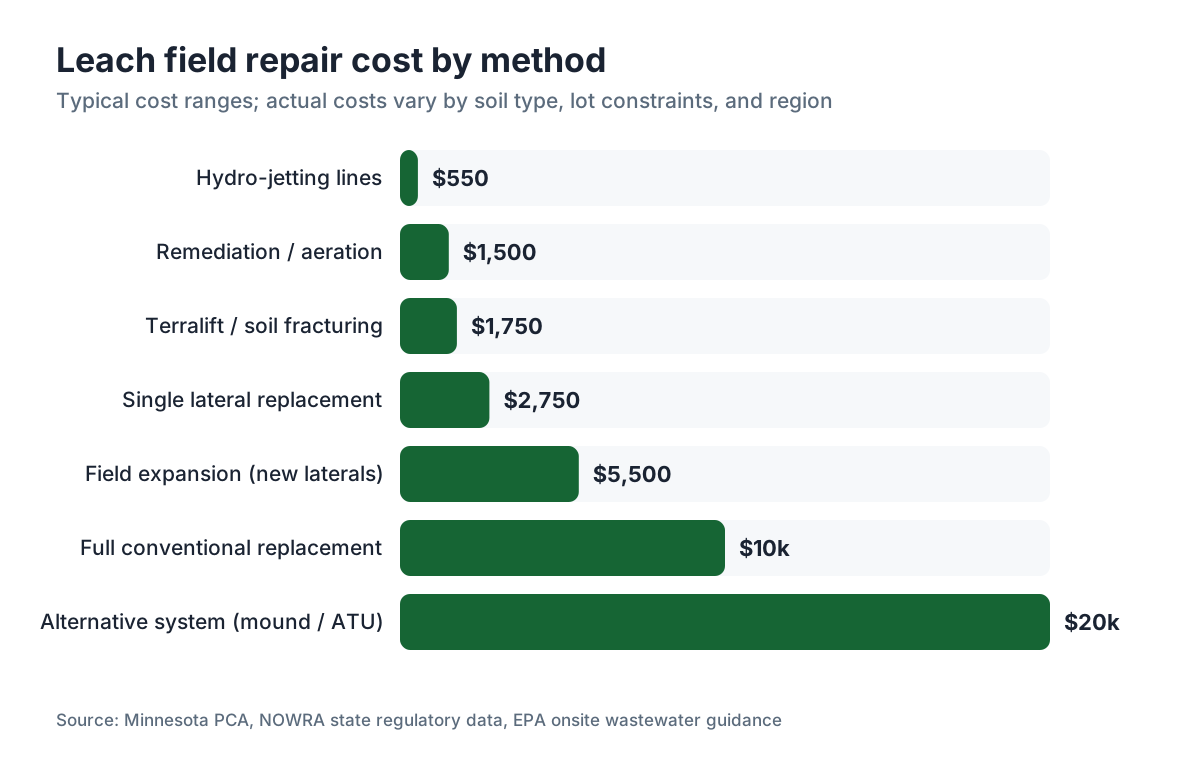
Leach field repair costs swing wider than almost any other home repair, from a few hundred dollars for jetting to over $30,000 for an alternative system. Soil type, lot constraints, local labor rates, permit rules, and the failure mode all move the number. The table below gives realistic ranges built from contractor surveys and state agency cost guidance.
| Repair Method | Typical Cost Range | Best Used When |
|---|---|---|
| Field resting / load reduction | $0 (just time) | Hydraulic overload, alternating field available |
| Hydro-jetting distribution lines | $300, $800 | Partial pipe blockage, root intrusion |
| Remediation additives / aeration | $500, $2,500 | Mild biomat, as a supplement |
| Terralift / pneumatic fracturing | $1,000, $2,500 | Compaction-related failure |
| Single lateral repair/replacement | $1,500, $4,000 | One damaged run, passing soil elsewhere |
| Field expansion (new laterals) | $3,000, $8,000 | Adequate lot space, soil still passes perc |
| Full conventional field replacement | $5,000, $15,000 | Irreversible failure, new perc test required |
| Alternative system (mound, ATU, drip) | $10,000, $30,000+ | Failed soil, no suitable conventional area |
Permit fees usually add $150 to $700 by state and county. [8] Soil testing (perc or soil morphology) runs $300 to $1,500. If the design needs an engineer's stamp, add $500 to $2,000. Full field replacement for a 3-bedroom home in the Northeast or Pacific Coast commonly lands at $15,000 to $25,000 once every fee is in.
The biggest single cost driver is whether you're forced into an alternative system. A conventional gravity trench replacement in a Midwestern state with sandy loam and real contractor competition might run $5,000 to $8,000. The same job in Massachusetts, where Title 5 requires a licensed site evaluator and a registered engineer on most new designs, adds several thousand dollars in required professional fees before anyone touches dirt. [9]
For the bigger picture, a complete new septic system runs $10,000 to $30,000 or more. Our cost to install a septic system guide breaks it down region by region.
Do you need a permit to repair a leaching field?
Almost always yes, for anything beyond cleaning or additives. Most states require a permit for any work that disturbs or replaces leach field components, and some require one even to swap a single lateral. [6]
This matters for three practical reasons. An unpermitted repair never lands on the legal record of your system, which turns into a headache at sale. If unpermitted work fails and contaminates a neighbor's well or a stream, your liability is real and large. And inspectors sometimes discover the old system went in without a permit at all, which snarls the repair permitting.
The sequence usually runs: application and site evaluation, perc test or soil morphology review, design approval, permit issuance, construction, final inspection. Some states clear that in two to four weeks. Others, with backlogged health departments, take four to six months. Plan ahead if a home sale is riding on it.
Call your county or state environmental or health department before you sign any repair contract. Most states post their onsite wastewater regulations online. The EPA's SepticSmart program keeps state resources at epa.gov, and its guidance notes that most states require a permit for installation, significant repair, or alteration of an onsite system. [1]
Can a leaching field be repaired without digging it up?
Sometimes. It hinges on why the field failed and how far the damage has gone. Hydro-jetting and camera inspection need only small access points at cleanout ports or the distribution box, no excavation. Pneumatic fracturing tools (terralift style) drive probes into the ground around the field without major digging. Some bio-aeration rigs use similar probes.
These low-disturbance methods work best when:
- The failure is recent (within one to two years of the first symptoms)
- The soil profile was adequate when the field was installed
- Loading has been cut or corrected
- The problem is biomat or partial blockage, not crushed pipe or fully sealed soil
If a probe test or perc test shows the trench soil stays saturated and won't drain even after 48 to 72 hours, no-dig methods almost certainly won't bring it back. The biomat has sealed the soil completely, and the only way to expose fresh infiltration surface is a shovel. Don't let a contractor sell you a $2,000 no-dig treatment on soil that's already dead. Get a second opinion.
Field resting is the most overlooked no-dig option of all. If your system has an alternating valve or a second idle field section, switching flow to the unused side while the old side rests six to twelve months can restore real infiltrative capacity in moderately biomat-affected fields. University of Minnesota Extension research found alternating-field systems rested for 12 months showed measurable biomat reduction against continuously loaded fields. [10]
What happens if you ignore a failing leach field?
Nothing good, and the bill compounds fast. Surfacing wastewater carries pathogens, bacteria, viruses, and parasites, and it's a real risk to anyone near it, especially kids and pets. Contaminated groundwater can reach neighboring wells, and it's a leading route for nitrate and coliform bacteria in private water supplies. [2]
The money side gets ugly quick. A field that's been surfacing sewage for months is harder to save, and sometimes impossible. The soil around saturated trenches turns anaerobic well below the original biomat layer. What might have been a $3,000 lateral repair becomes a $12,000 full replacement.
The regulatory side is real too. Most states treat a surfacing septic system as an imminent health hazard. Local health authorities can cite it, order it fixed on a compliance schedule, or in bad cases restrict the property's use until it's resolved. [6]
Then there's the sale. Most states require a septic inspection as part of real estate disclosure. A failed field that hasn't been repaired kills deals or shoves sellers into emergency repairs under a clock, which always costs more.
If you're watching a system show early stress, a septic tank pump out every 3 to 5 years (household size drives the interval) pulls solids before they carry over into the field. It's the cheapest insurance policy against premature field failure there is. [3]
How do you choose a leach field repair contractor?
This is one of the higher-stakes contractor calls a homeowner makes, and quality across the market varies a lot. Start with the license. Most states require septic contractors to hold a specific onsite wastewater installer or maintenance license, separate from a plumbing license. Verify the number with your state licensing board before any work starts. Some states also require the design professional (soil evaluator or engineer) to carry a separate license.
Ask for the specific diagnosis before you agree to any scope. A contractor who quotes a $5,000 field expansion after a ten-minute walkthrough, no probe test, no perc test, hasn't diagnosed anything. A real diagnosis covers tank condition, distribution box condition, and some direct evidence of what's happening in the soil. A camera run through the laterals and a probe test are the minimum you should expect.
Get at least two estimates on anything over $2,000. The spread on the same scope often hits 30 to 50 percent, and the higher bid isn't automatically the better work. Check references from field repair jobs specifically, more than from new installations.
If your system is complex or the soil is marginal, pay a licensed soil evaluator or engineer for an independent look before you commit. That's money well spent. An evaluator's $400 to $1,000 fee can save you from a $3,000 treatment that was never going to work.
Service operators juggling many system assessments and repair workflows can use tools like SepticMind to track system history, permit records, and scheduled follow-ups across a customer base. That makes early-failure patterns easier to spot before a field passes the point of no return.
What is the difference between repairing and replacing a leach field?
The line is functional. Repair keeps and restores some or all of the existing absorption area. Replacement installs new infrastructure in new soil.
Repair makes sense when the original soil can still pass a perc test once you fix the cause of failure, or when only part of the field is damaged. Replacement is required when the soil is irreversibly sealed, when the original install broke current code, or when the system is old enough that several components need renewal at once.
One distinction trips people up: replacing only the distribution pipes while leaving the existing gravel and native soil in place is legally a repair in most states. Excavate the trench, swap out gravel and pipe, and reuse the same soil footprint, and that's technically replacement of the field components. Install in a brand-new spot on the lot and it's a full new installation, which usually triggers full permit and design review.
Here's the surprise for a lot of homeowners: replacement doesn't always mean rebuilding the same kind of system. If current soil or lot size can't support a conventional trench at today's design standards, the county health department may require an alternative system even though the original was a plain gravity trench. [7] That's common in states that have tightened design standards since the original install.
For the wider view of what a full system repair covers beyond the field, the septic system repair overview walks through tank, pipe, and field components together.
How long does a repaired leach field last?
Honest answer: it depends entirely on what got repaired and whether you fixed the actual cause. A field that failed from a crushed lateral, excavated and replaced with the surrounding soil still in good shape, can easily run another 15 to 25 years if you maintain the system from here on. [3]
A field treated with aeration or remediation after moderate biomat, plus reduced household loading and regular pumping, might buy 5 to 10 more functional years. Some do better. Some see symptoms return in two to three years once the water load climbs back up.
A field that got terralift or bio-aeration but never had its root cause addressed, usually a neglected tank or a household simply making too much wastewater, often fails again inside one to three years.
Full replacement with a properly designed, permitted, and maintained new field carries the same design life as a fresh install: 20 to 30 years or more in good soil with reasonable loading.
Maintenance is the variable that swamps all the others. The EPA SepticSmart program calls inspection and pumping every three to five years the most important thing you can do to protect your septic investment. [1] Every year you skip the pump-out, solids build in the tank's effluent zone and carry over into the field, and biomat forms faster.
For pump-out timing by household size, see how often to pump a septic tank.
What does the repair process look like from start to finish?
Knowing the sequence keeps you from getting rushed into a bad decision.
Step 1: Diagnosis (1 to 3 days). Tank pumping and inspection, distribution box check, probe test of the trench areas, maybe a camera run through the laterals. All of this happens before you sign a repair contract.
Step 2: Permitting (1 week to 6 months). Even simple repairs often need a permit. Full replacement or alternative system work requires a site evaluation, soil test, and design approval. Don't let a contractor skip this or tell you it isn't required. Verify with your health department yourself.
Step 3: Design approval (if applicable). Alternative systems and most full replacements need an approved design before permits issue. A soil evaluator or PE stamps it.
Step 4: Construction (1 to 5 days on site). A straightforward lateral repair often wraps in a day. Full field replacement usually runs two to four days plus time to cover and inspect. Alternative systems with ATUs or mound construction can go a week or more.
Step 5: Inspection and final permit close. Most jurisdictions need a health department or county inspector to sign off before the field gets backfilled. Do not let a contractor bury the work before inspection, even if they're in a hurry.
Step 6: Restoration. Topsoil, seeding, or sod over the disturbed area. This is often an add-on, so pin it down in the contract.
After the repair, keep every record: permit number, as-built drawing, contractor license, date, and scope. You'll need these for future permit work and buyers expect them at disclosure. Your septic tank inspection records and pump logs belong in the same folder.
Are there financial assistance programs for leach field repair?
Yes, and they're underused. Plenty of homeowners pay out of pocket without knowing relief exists.
The USDA Rural Development program (through the Section 504 Home Repair loan and grant program and the Section 306C Water and Waste Disposal grants) has funded septic repairs for low-income rural homeowners for decades. Eligibility rides on income, rural location, and property status. [11]
The EPA's Clean Water State Revolving Fund (CWSRF) provides low-interest financing that states can pass through to homeowners via county revolving loan programs for onsite wastewater upgrades. Several states, including North Carolina, Virginia, and Minnesota, run programs aimed specifically at failed septic systems. Check your state environmental agency's site for current availability. [12]
Some states run their own dedicated septic repair assistance. Massachusetts, for one, operates a Title 5 loan program through the state's Clean Water Trust that offers 0% interest loans for septic upgrades. [9]
Homeowners insurance rarely covers leach field repair unless you added a sewer/septic line endorsement, and even then coverage usually caps at pipe repair, not soil restoration or field replacement. Read the policy before you assume anything.
Local health departments sometimes offer compliance grace periods or payment plans for homeowners who are actively pursuing repair but tight on cash. Call before you assume you're facing immediate enforcement.
Frequently asked questions
Can I repair a leach field myself?
Minor cleaning, like clearing a blocked cleanout or adding a bacterial additive, is DIY-feasible. Anything that disturbs trench soil, replaces pipe, or requires a permit is not. Most states prohibit unlicensed persons from doing permitted septic work, and an unpermitted repair creates liability at resale. Hire a licensed installer for any structural repair and get a permit before any soil is disturbed.
How long does a leach field repair take?
Simple repairs like hydro-jetting or a single lateral replacement take one to two days of on-site work. Full field replacement typically takes two to five days on site. The permit and design process often takes longer than the construction, ranging from a week in fast jurisdictions to several months in states with backlogged health departments. Budget at least three to eight weeks from diagnosis to final inspection for most full replacements.
What kills the bacteria in a leach field?
Antibacterial household cleaners, bleach used in large quantities, certain medications flushed down toilets, and non-biodegradable solids can all reduce the bacterial populations that treat wastewater. Grease coats the infiltration surface and cuts oxygen supply. Using septic-safe products and avoiding garbage disposal overuse protects the biological treatment process both in the tank and in the field.
Can heavy rain cause a leach field to fail?
Yes. Saturated soil from sustained heavy rain can temporarily back up a field even if it's otherwise healthy. Seasonal high groundwater reduces the vertical separation distance between the trench bottom and the water table, which is a code requirement for a reason. Persistent flooding or a permanently high water table may require upgrading to a mound system or another alternative that provides the required separation above grade.
Does pumping the septic tank fix a failed leach field?
Pumping relieves immediate backup pressure and confirms the tank itself isn't the problem, but it does not restore a biomat-sealed field. After pumping, if the field still won't drain, the field itself needs treatment. Pumping is a necessary first diagnostic step and should happen before any field repair work begins, but it is not a substitute for field-level repair.
How do septic system additives affect a leach field?
Biological additives (bacteria and enzyme products) have mixed evidence. Some lab studies show biomat reduction; controlled field studies show inconsistent results. Chemical additives marketed to open drain fields can actually disrupt treatment and are prohibited in several states. The EPA does not endorse additives as a substitute for proper maintenance. Use them only as a supplement to reduced loading and regular pumping, not as a primary repair strategy.
What soil conditions make leach field repair impossible?
Clay soils that have fully swelled and sealed around trench walls, soils with permanent seasonal saturation at trench depth, and soils that fail a perc test even after resting cannot support conventional trench repair. In these cases the only viable path is an alternative system designed to work above the limiting condition, such as a raised mound system, drip irrigation, or an aerobic treatment unit with surface or subsurface dispersal.
Will a leach field repair show up on a home inspection or real estate disclosure?
Permitted repairs are recorded with the county and will show in permit history. Buyers' inspectors often pull permit records. Most states require sellers to disclose known septic system repairs and failures. Unpermitted repairs may not appear in records but can surface during a septic inspection, which many buyers now require as a sale condition. Always permit the work and keep documentation.
How much does a perc test cost for leach field repair?
A percolation test typically costs $300 to $1,500 depending on state requirements and whether a licensed soil evaluator or engineer must conduct it. Some states have replaced the traditional perc test with soil morphology evaluation by a certified evaluator, which can cost more but provides more accurate design data. The cost is usually required before a repair permit is issued for any replacement or expansion work.
Can you repair a leach field in winter?
It depends on how frozen the ground is. In mild-winter climates, field repair in winter is routine. In northern states, frozen ground makes excavation prohibitively difficult and expensive. Some contractors use frost-protection methods, but most full replacement projects are scheduled for spring through fall. Emergency repairs in winter are possible but expect a significant cost premium, sometimes 25 to 50 percent above summer rates.
What is the difference between a leach field and a drain field?
The terms are used interchangeably and refer to the same component: the subsurface soil absorption area that receives clarified effluent from the septic tank. Regional preference drives the terminology. 'Drain field' is common in the South and Midwest; 'leach field' or 'leaching field' is more common in the Northeast. Technically, 'soil absorption system' is the regulatory term used in most state codes and EPA guidance.
How do I know if my leach field is under warranty?
Warranties on new leach field installations vary widely. Most contractors offer one to two years on labor and materials workmanship; soil performance is rarely warrantied because it depends on maintenance and loading factors outside the installer's control. Some alternative system manufacturers (aerobic treatment units, mound system liners) offer equipment warranties of five to ten years. Check your installation contract and any manufacturer documentation for the specific components installed.
Can a leach field be repaired if it's close to a well?
Setback distances between leach fields and private wells are regulated by state code, typically 50 to 100 feet depending on soil type, topography, and system design. If your current field violates current setbacks (which may have tightened since original installation), the repair permit may require relocating the field to a compliant location. In tight lots where no compliant location exists, alternative systems with better pathogen treatment are sometimes approved with reduced setbacks.
Sources
- U.S. EPA, SepticSmart: Protect Your Investment: EPA SepticSmart guidance on septic system function, inspection frequency, and the statement that most states require permits for significant repair or alteration of onsite systems.
- U.S. EPA, Onsite Wastewater Treatment Systems Manual (EPA/625/R-00/008): Biomat formation as primary cause of soil absorption system failure and pathogen contamination risks from surfacing wastewater.
- Penn State Extension, Septic System Owner's Guide: Typical design life of 25 to 30 years for well-maintained fields; 10 to 15 years for poorly maintained or undersized systems; pumping every 3 to 5 years as the primary maintenance action.
- Minnesota Pollution Control Agency, Septic System Owner's Guide: Cost ranges for lateral line repair and hydro-jetting; probe testing methodology for field diagnosis.
- Texas A&M AgriLife Extension, Septic System Additives: Do They Work?: Review of septic field remediation products finding laboratory evidence for biomat reduction but limited controlled field data proving whole-system restoration.
- North Carolina Department of Environmental Quality, Onsite Wastewater Section: Permit requirements for leach field repair and replacement; surfacing wastewater classified as imminent health hazard subject to enforcement.
- U.S. EPA, Voluntary National Guidelines for Management of Onsite and Clustered (Decentralized) Wastewater Treatment Systems: Alternative system types (mound, drip, ATU) required when conventional soil conditions no longer support gravity trench design; typical cost range two to three times conventional replacement.
- National Onsite Wastewater Recycling Association (NOWRA), State Regulatory Information: Permit fee ranges of $150 to $700 and soil evaluation cost ranges across states.
- Massachusetts Department of Environmental Protection, Title 5 of the State Environmental Code: Title 5 requirements for licensed site evaluator and registered engineer on septic designs; Massachusetts Clean Water Trust 0% interest loan program for septic upgrades.
- University of Minnesota Extension, Septic System Maintenance: Resting and Alternating Fields: Research finding measurable biomat reduction in alternating-field systems rested for 12 months compared to continuously loaded fields.
- USDA Rural Development, Section 504 Home Repair Loans and Grants: USDA Section 504 program and Section 306C grants available for septic repair assistance for low-income rural homeowners.
- U.S. EPA, Clean Water State Revolving Fund (CWSRF): CWSRF low-interest financing passed through states for onsite wastewater upgrades including failed septic systems.
Last updated 2026-07-09