DIY septic system: what you can legally do yourself and what it costs
By the SepticMind Editorial Team
TL;DR
- Most states bar homeowners from installing a full septic system without a licensed contractor and a permit.
- A handful of rural states allow owner-built systems on land you occupy, with an approved design and passed inspections.
- DIY installation saves roughly $2,000 to $8,000 in labor, but risks permit denial, system failure, and fines that erase the savings.
- Know your state law before you buy a single pipe.
What does 'DIY septic system' actually mean, and is it legal?
The phrase covers a wide spectrum. On one end, a homeowner mows over the drain field and calls that maintenance. On the other, someone excavates, sets a precast concrete tank, and lays perforated pipe in gravel trenches without touching a phone. Those two situations live in completely different legal universes.
In most of the United States, a full septic installation requires a site evaluation (usually a soil percolation test or a soil morphology assessment by a licensed soil scientist), a system design stamped by a licensed engineer or sanitarian, a permit from the county health department or environmental agency, inspections during construction, and sign-off before the system gets covered and used. Many states go further and require that the physical work be done by a licensed septic contractor or plumber. Homeowners who do the work themselves in those states can face fines, forced removal of the system, and denial of a certificate of occupancy.
A smaller number of rural states, including Texas, Oklahoma, and parts of the Mountain West, allow owner-builder exemptions for septic systems on land the owner occupies, as long as the design is approved and inspections pass. Even there, the electrical work on a pump system usually still requires a licensed electrician.
The EPA's SepticSmart program puts it plainly: local regulations govern every aspect of installation and repair, and homeowners should contact their local health department before any work begins [1]. That is not boilerplate. It is the only honest starting point.
How do you find out if DIY septic installation is legal in your state?
Call your county health department or environmental health office. Not the state agency, the county. Onsite wastewater rules in most states are administered at the county level even when the underlying statute is statewide. Ask two specific questions. Does the county allow owner-installation of a septic system on residential property I occupy? If yes, what permits, designs, and inspections are required?
If you want to research before you call, your state's department of health or department of environmental quality usually publishes its onsite wastewater regulations online. The National Environmental Services Center at West Virginia University keeps resources on state-by-state rules that give you a reasonable starting point [2]. Look for terms like "onsite wastewater treatment system," "OWTS," or "individual sewage disposal system" in your state's administrative code.
Texas, for example, lets homeowners install their own systems in counties that have adopted Chapter 366 of the Texas Health and Safety Code, but the design must be prepared by an authorized person and the installation must pass inspection [3]. Tennessee requires a permit and a licensed installer for most system types, with a separate pathway for some conventional systems in rural counties [4]. The specifics vary more than most homeowners expect, even between adjacent counties in the same state.
One rule holds everywhere. No permit means no legal system, no matter how well it was built.
What parts of septic work can a homeowner legally do without a license?
Even in the strictest states, plenty of tasks are legal and safe for a homeowner to handle.
Maintenance that almost never requires a license: pumping your own tank (though you'll need a licensed hauler to dispose of the septage), inspecting your own access risers and lids, adding bacterial additives, rerouting indoor plumbing that stays entirely inside the house, and basic landscaping over the drain field.
Gray-area tasks depend on state and county rules: replacing a damaged distribution box, repairing a cracked inlet or outlet baffle, adding a riser to an existing tank, and repairing minor drain field damage. Some states classify baffle replacement as a "repair" that is exempt from contractor requirements. Others treat any subsurface work as installation. See our septic tank repair and septic system repair guides for a breakdown of common repair types.
Tasks that almost always require a licensed contractor: installing a new tank, installing or replacing a drain field or leach field, installing any pressurized or alternative system (aerobic treatment units, mound systems, drip irrigation), and connecting to an existing tank if any excavation or trench work is involved.
Here is the practical test. If you need to pull a permit, you probably need a licensed installer. If you are unsure whether a permit applies, assume it does and call the county.
What does a DIY septic system cost compared to hiring a contractor?
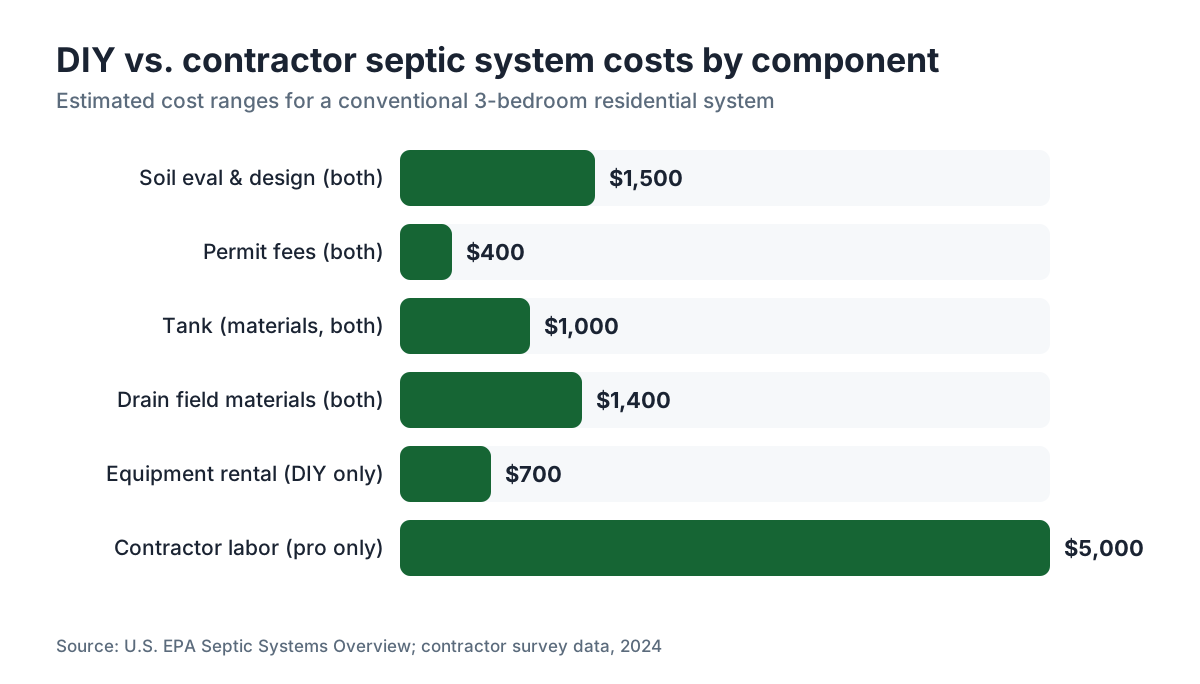
This is where the math gets real. A conventional gravity-fed septic system on a typical residential lot (three to four bedrooms, adequate soil) runs $3,500 to $12,000 installed by a licensed contractor in most of the country, with a national average around $6,000 to $8,000 based on contractor survey data [5]. In high-cost states like California, New York, or Massachusetts, that climbs past $15,000 for a conventional system, and alternative systems can hit $20,000 to $30,000.
If you live in a state that allows owner-installation and you do all the labor yourself, your costs shift almost entirely to materials and permits. Here is a rough breakdown for a conventional 1,000-gallon concrete tank system with a standard trench drain field.
| Component | DIY cost (materials + fees) | Contractor-installed cost |
|---|---|---|
| Soil evaluation / perc test | $300, $800 | $300, $800 (same) |
| System design / engineering | $500, $1,500 | $500, $1,500 (same) |
| Permit fees | $200, $600 | $200, $600 (same) |
| 1,000-gal precast concrete tank | $700, $1,200 | $700, $1,200 |
| Tank delivery and setting (crane or truck) | $300, $600 | included in labor |
| Drain field pipe, gravel, fabric | $800, $2,000 | $800, $2,000 |
| Excavation equipment rental | $400, $900/day | included in labor |
| Labor (contractor) | $0 | $3,000, $7,000 |
| Total | $3,200, $7,600 | $6,200, $14,800 |
The savings are real, roughly $3,000 to $7,000 on a conventional system. That number assumes the job goes smoothly. One miscalculation on drain field length, one failed inspection that forces re-excavation, or one tank set at the wrong elevation can wipe the savings out in an afternoon. Renting an excavator when you have never run one is genuinely dangerous, and a stuck machine or a collapsed trench wall turns into an expensive emergency fast.
For a full professional cost picture, see our guides on cost to install septic system and cost to put in a septic tank.
On high-complexity systems (mound, aerobic treatment, engineered fill), DIY savings shrink. The equipment and precision those designs demand put them out of reach for most homeowners even where the law allows it.
What are the real risks of installing a septic system yourself?
The risks split into four buckets: legal, financial, physical, and environmental.
Legal risk hits first. A system installed without permits usually cannot be permitted after the fact. Sell the house and the buyer's inspector or lender will flag an unpermitted system, and you either tear it out or eat a price concession that almost certainly beats what you saved. Some counties have forced complete system replacement at the seller's expense. If the system fails and a neighbor's well tests positive for fecal coliform, you carry civil liability no matter how well you built it.
Financial risk comes from inspection failures. If your drain field flunks a pressure test or a visual inspection, you pay for re-excavation, extra materials, and a re-inspection fee. A contractor carries that risk on their own dime. A DIYer eats it.
Physical risk is real and underrated. Drain field trenches routinely reach 36 to 60 inches deep. OSHA requires protective systems for any trench deeper than 5 feet [6], and trench collapses kill people every year. Running a mini-excavator or a backhoe with no training multiplies the danger.
Environmental risk is the thing states are actually trying to prevent. A badly designed system can saturate soil, push partially treated effluent to the surface, contaminate groundwater, and create a public health hazard. EPA estimates that roughly 10 to 12 percent of U.S. septic systems are failing at any given time, and failing systems are a leading source of groundwater contamination in rural areas [7].
How do you design a septic system if you are allowed to do it yourself?
Even in states that allow owner-installation, the design almost always requires a licensed professional. You hire the designer. You do the digging. That split is the most common owner-builder model.
A proper design starts with a site evaluation. A licensed soil evaluator or sanitarian visits the property, digs test holes or runs percolation tests, and characterizes the soil. The percolation rate (how fast water moves through the soil) and the depth to limiting layers (seasonal high water table, bedrock, clay hardpan) set the size and type of system that will work. You cannot skip this step or trade it for internet research.
From the soil data, the designer calculates the required drain field area. EPA guidance and most state codes combine daily wastewater flow (typically 75 gallons per person per day for residential use, or a figure derived from bedroom count) with soil loading rates from the perc test [8]. A three-bedroom home generating around 300 gallons per day in soil that accepts 1 gallon per square foot per day needs at least 300 square feet of trench-bottom absorption area, plus a safety factor the designer sets.
The design drawing shows tank location, every setback distance (from wells, property lines, buildings, surface water), pipe routes, trench dimensions, and inspection port locations. You submit it to the county for permit approval before you buy a shovel.
If your state requires a licensed engineer's stamp on the design, budget $800 to $2,000 for that alone. Some counties keep prescriptive design standards for simple conventional systems on compliant soils, which lets the health department issue a standard design. That cuts engineering cost but still needs soil data.
What is the step-by-step process for a permitted DIY septic installation?
Assuming your state allows owner-installation and you've decided to go, here is the general sequence. Local requirements will add or change steps.
- Soil evaluation. Hire a licensed soil evaluator. Schedule it early. In some counties the wait runs four to eight weeks.
- System design. Based on the soil report, get a design prepared by whoever your state requires (engineer, registered sanitarian, or health department prescriptive design).
- Permit application. Submit the design, site plan, and fee to the county health department. Turnaround runs from two days to six weeks.
- Call 811. Before any excavation, call 811 (the national dig-safe line) at least three business days ahead. This is a legal requirement and a genuine life-safety step [9].
- Excavate the tank area. Set the tank on undisturbed soil or a compacted gravel bed per the design. Most precast concrete tanks need a truck with a crane or boom. The tank manufacturer can often arrange delivery and setting.
- Excavate drain field trenches. Trenches must match the design dimensions exactly. Depth, width, and bottom slope all matter. Do not over-excavate. Disturbed soil in the trench bottom cuts absorption.
- Install pipe and gravel. Perforated pipe sits on a gravel bed, perforations down (or as specified), covered with gravel and then geotextile fabric before backfill.
- Call for inspection. Do not cover any work until the inspector signs off. This usually happens in two stages: once after the tank is set and before field trenches are covered, then a final after backfill.
- Backfill and restore. Mound topsoil lightly over the field to account for settling. Plant grass, not trees.
- Record the as-built. File a drawing showing the actual locations of every component with the county. Many states require it, and it is the one document that saves the next owner from digging blind.
What tools and equipment do you need to install a septic system yourself?
The equipment list catches most first-timers off guard. This is not a weekend job with a rented tiller.
Excavation: a mini-excavator or a full-size backhoe, depending on soil and trench depth. Rental runs $300 to $600 per day for a mini-excavator, $500 to $900 per day for a full backhoe. Delivery adds $150 to $300 each way. If you've never run an excavator, most rental companies offer a quick orientation but not real training. Watch several tutorial videos and build in extra time.
Grading: a laser level or builder's level is close to mandatory for setting pipe slope (typically 1/8 to 1/4 inch per foot). A $25 line level is not accurate enough for this.
Safety: a trench box or trench shields if any excavation passes 5 feet. Non-negotiable under OSHA rules and plain common sense.
Hand tools: tamping bar, shovels, a tape measure accurate to 1/16 inch, marking paint, stakes, and string line.
Materials: precast concrete tank (order 2 to 4 weeks ahead in most markets), inlet and outlet baffles (often tees), 4-inch Schedule 40 PVC or perforated corrugated pipe, washed drain rock or septic gravel (typically 1.5-inch washed stone), geotextile fabric, cleanout fittings, and riser lids if you're adding inspection risers.
Pump system add-ons: if the drain field sits uphill or more than roughly 150 feet from the tank, you may need a dosing pump, a pump chamber (a second tank), float switches, and a control panel. The electrical work almost always requires a licensed electrician.
Are there alternative DIY-friendly septic options for small properties or cabins?
A few system types come up over and over in DIY forums and rural homesteading circles.
Chamber systems: instead of gravel-filled trenches, these use plastic arch chambers (Infiltrator is a common brand) that create void space in the trench. They are lighter to handle, easier to set without a crane, and cut the need for delivered gravel. They still fall under all the same permitting and soil requirements as conventional systems [10].
Composting toilets: legal in most states as a supplement to a greywater system for cabins or small off-grid structures. They do not replace a full septic system for a primary home that produces kitchen and laundry wastewater. Many counties have specific rules about greywater disposal even when composting toilets handle the solids.
Packaged aerobic treatment units (ATUs): code-compliant alternative systems in many states, but more mechanically complex, sometimes tied to quarterly service contracts, and pricier upfront ($10,000 to $20,000 installed). They are not more DIY-friendly than conventional systems.
Mound systems: required when the seasonal high water table sits close to the surface. They involve importing fill soil and building a raised drain field. More complex than a conventional trench system, not less.
The honest answer for a small seasonal cabin: a properly sized conventional gravity system is still the simplest and most maintainable option if the soil supports it. For a permanent off-grid homestead with a composting toilet, a permitted greywater system (where allowed) paired with the composting toilet is sometimes doable at modest DIY cost, but the regulatory path is very state-specific.
What does ongoing DIY septic maintenance actually look like?
Once the system is legally installed and inspected, most of the ongoing maintenance is fair game for a homeowner and genuinely matters. A well-maintained system lasts 25 to 40 years. A neglected one can fail in 10.
The single most important task is pumping the tank on schedule. A typical household tank (1,000 to 1,500 gallons, two to four people) needs pumping every three to five years [11]. You need a licensed pumper for this because septage is regulated as a waste material and requires permitted disposal. The cost runs $300 to $600 depending on tank size and location. See our guide on how often to pump septic tank for the math behind that schedule.
Between pumpings, what goes into the system matters more than any additive. Keep out wipes (including "flushable" ones), grease, medications, and large volumes of harsh chemicals. Those are the things that actually shorten system life.
Bacterial additives carry a lot of marketing and thin science. EPA does not recommend them as a substitute for pumping, and several state extensions found no measurable benefit in controlled comparisons [12]. Save the $20 a month.
Inspect your risers and lids once a year. Look for cracked concrete, deteriorating lids, standing water near the drain field, or soft spots in the soil. Catching a failing baffle early costs $50 to $200 to fix. Catching it after sludge has reached the drain field costs $5,000 to $25,000 in leach field repairs or replacement.
Our septic tank pumping and how often to pump septic tank guides cover the service process, pricing, and what a pumper should tell you after each visit. A septic tank inspection every one to three years between pumpings is worth the $100 to $300 fee for the early warning alone.
When should you absolutely hire a licensed contractor instead of doing it yourself?
Some situations make DIY technically legal but practically foolish. Others make it flatly illegal.
Hire a contractor if your state or county requires it (most do). Or if your site has a high water table, rocky soil, steep slopes, or shallow bedrock. Or if you need an alternative or advanced treatment system. Or if the project runs more than 200 linear feet of drain field. Or if you have no excavation experience. Or if you need financing, because most lenders will not fund an unpermitted or owner-installed system.
Hire a contractor for repairs you cannot visually confirm are fixed. A tank with a structural crack needs a set of eyes that knows what a sound repair looks like. A drain field surfacing effluent needs a diagnostic, not a guess. Our septic tank repair guide explains what a good repair evaluation should reveal about your system's condition.
Here is the rule I'd apply personally. DIY the maintenance. Hire out the installation. The labor savings on installation are real, and so are the consequences of a failed inspection or a botched install. For most homeowners, the break-even between DIY labor savings and the risk premium of a mistake favors a licensed contractor for anything that opens the ground.
For operators running fleets of service calls and customer records across many systems, tools like SepticMind pull inspection history, pump schedules, and compliance documentation into one place. That matters when a customer calls about a system installed by three owners ago.
If you live in one of the states that genuinely allows owner-installation, you have construction experience, a relatively simple site, and the patience to work the permit process correctly, the DIY savings are achievable. Go in with clear eyes about the timeline (four to six months from soil test to final inspection is realistic) and the fact that the permit process is not optional.
What are the most common DIY septic mistakes that cause system failures?
Pattern recognition helps here, even though clean aggregate data by installation method is hard to find. Nobody has good data specifically on DIY failure rates versus contractor failure rates. The closest EPA figures cover overall failure rates without separating by installer [7].
Undersized drain fields are the most common installation error. Homeowners sometimes round down on bedroom count or lean on optimistic perc results. A field that runs 20 percent undersized fails in about half the expected time.
Bad slope control is second. Perforated pipe needs to be level or nearly level in the trenches (not more than 1 percent slope in most designs) to spread flow evenly. Eyeballing slope without a laser level reliably produces uneven distribution and early saturation of one trench segment.
Compaction of the trench bottom during excavation cuts absorption. Heavy equipment on the trench floor, or digging in wet conditions when the soil is plastic and smears, can slash effective absorption by 30 to 50 percent.
Skipping the effluent filter on the tank outlet. This is a cheap add ($20 to $80 for the cartridge) that keeps solids out of the drain field. DIYers skip it because older designs left it out. Most modern codes require it.
Skipping the as-built drawing. The next owner, or your own plumber three years out, needs to know where the tank is. An undocumented system creates expensive problems at resale and during any future work.
SepticMind's inspection records show that systems with no documented as-built drawing take an average of 40 to 90 minutes longer to service on a first visit, which flows straight through to higher service costs for the homeowner.
Frequently asked questions
Can I install my own septic system in Texas?
Texas allows homeowner installation in counties that have adopted Chapter 366 of the Texas Health and Safety Code, but you still need an approved design, a permit, and inspections. The design must be prepared by an authorized person. Not all Texas counties run the same rules, so check with your specific county's health department or TCEQ regional office before planning anything.
How much does a DIY septic system cost in materials alone?
For a conventional gravity-fed system with a 1,000-gallon precast concrete tank and a standard trench drain field, expect $3,200 to $7,600 in materials, permits, soil testing, design fees, and equipment rental. That compares to $6,200 to $14,800 for the same system contractor-installed. The savings are real, but don't underestimate equipment rental or the cost of any failed inspections.
Do I need a permit to install a septic system myself?
Yes, in every U.S. jurisdiction. A permit is required regardless of who does the installation. It involves a soil evaluation, an approved design, and inspections before any work gets covered. An unpermitted system cannot be legally permitted after the fact in most states and will create serious problems at resale or if the system fails.
What happens if I install a septic system without a permit?
Consequences vary by county but typically include fines ($500 to $10,000 or more), a stop-work order, required removal and reinstallation by a licensed contractor, and denial of a certificate of occupancy. At resale, an unpermitted system can kill a deal or force the seller to fund a full replacement. The savings from skipping permits are not worth those risks.
How long does it take to install a DIY septic system?
From first soil test to final inspection, plan for four to six months. Soil evaluation scheduling, permit review, and inspection availability drive the timeline more than the physical work does. The actual excavation and installation of a simple conventional system can take two to five days of active work with rented equipment.
Can I dig my own septic trenches with a rented excavator?
You can rent an excavator in most states, but running one with no experience is genuinely risky. Trench collapses are a real hazard, and OSHA requires protective systems for trenches deeper than 5 feet. You also risk over-excavating and compacting the trench bottom, which hurts drain field performance. With no equipment experience, the rental savings probably aren't worth the risk.
What is the cheapest type of septic system to build yourself?
A conventional gravity-fed system with a precast concrete tank and gravel-and-pipe trenches is the least expensive to build and the simplest for a DIYer to construct where soil and regulations allow. Chamber systems (like Infiltrator) cost slightly more in materials but skip hauling and spreading gravel, which can cut equipment time. Any alternative or engineered system costs significantly more.
Can I repair my own septic system without hiring a contractor?
Many minor repairs, like replacing a cracked baffle, adding a riser, or fixing a broken lid, are legal for homeowners in most states without a contractor license. Anything involving opening the ground, replacing a tank, or modifying the drain field usually requires a permit and often a licensed installer. Check with your county before starting any subsurface repair work.
How big does my septic system need to be for a three-bedroom house?
Most state codes require a minimum 1,000-gallon tank for a three-bedroom home. Drain field size depends on soil percolation: using a common rate of 1 gallon per square foot per day and a daily flow of 300 gallons, you need at least 300 square feet of trench-bottom absorption area, plus whatever safety factor your state code adds. Your soil evaluator calculates the actual required area for your site.
Does a DIY septic system affect my home's resale value?
A properly permitted and inspected owner-installed system has no inherent effect on resale value. An unpermitted system is a serious liability: buyers' lenders often won't approve a mortgage on a property with an unpermitted septic system, and you may be required to replace it at your expense before closing. Always pull permits and document the inspections.
How do I find out what type of septic system my property needs?
Start with a soil evaluation by a licensed soil evaluator or sanitarian. Soil type, percolation rate, depth to water table, and lot size determine which system types are viable. Your county health department can tell you which types are approved in your area. A site with high water tables may require a mound system; rocky or dense clay soils may need an engineered alternative.
Are composting toilets a legal alternative to a septic system?
In many states, composting toilets are legal for handling solid waste in cabins or secondary structures, but they don't eliminate the need to manage greywater (sink, shower, laundry). Most counties still require a permitted greywater disposal system even when a composting toilet handles the solids. For a primary residence, composting toilets are typically a supplement, not a replacement, for a septic system.
How often does a DIY-installed septic system need to be pumped?
The same schedule as any system: typically every three to five years for a 1,000 to 1,500-gallon tank serving two to four people. Frequency depends on tank size, household size, and how much solid waste enters the system. You need a licensed pumper for this; septage disposal is regulated in every state. Check a pumping frequency calculator for your tank size and household.
What are the setback requirements for a DIY septic system?
Setbacks vary by state and county, but common minimums include 50 to 100 feet from a drinking water well, 10 feet from a property line, 10 to 25 feet from a house foundation, and 50 to 100 feet from surface water. Your county permit application will specify the required setbacks for your jurisdiction. These are non-negotiable; a system too close to a well will not get a permit.
Sources
- U.S. EPA, SepticSmart program homepage: Local regulations govern every aspect of septic installation and repair; homeowners should contact their local health department before beginning any work.
- National Environmental Services Center, West Virginia University: NESC maintains resources on state-by-state onsite wastewater regulations useful for homeowners researching local rules.
- Texas Health and Safety Code, Chapter 366 (On-Site Sewage Facilities): Texas allows homeowner installation of on-site sewage facilities in counties that have adopted Chapter 366, subject to approved design and inspection.
- U.S. EPA, Septic Systems Overview: Conventional residential septic systems cost several thousand to over ten thousand dollars installed, depending on system type and local conditions.
- OSHA, Trenching and Excavation Safety: OSHA requires protective systems (shoring, sloping, or trench boxes) for excavations deeper than 5 feet; trench collapses are a leading cause of construction fatalities.
- U.S. EPA, Septic Systems and Groundwater: EPA estimates approximately 10 to 12 percent of U.S. septic systems are failing at any time, and failing systems are a leading source of groundwater contamination in rural areas.
- U.S. EPA, Onsite Wastewater Treatment Systems Manual (EPA/625/R-00/008): EPA guidance uses 75 gallons per person per day as the baseline residential wastewater flow rate for system sizing calculations.
- Common Ground Alliance, 811 Call Before You Dig: Federal and state regulations require calling 811 at least three business days before any excavation to locate underground utilities.
- Infiltrator Water Technologies, Chamber System Installation Guide: Plastic chamber systems are an approved alternative to gravel-and-pipe trench drain fields in most state codes, subject to the same soil and permitting requirements.
- U.S. EPA, SepticSmart: Maintain Your System: EPA recommends pumping a typical household septic tank every three to five years as the cornerstone of system maintenance.
- Penn State Extension, Septic System Additives: Penn State Extension reviewed available research and found no evidence that biological or chemical septic additives provide measurable benefit or substitute for regular pumping.
Last updated 2026-07-09