Flushable septic tank treatment: what actually works
By the SepticMind Editorial Team
TL;DR
- Flushable septic tank treatments drop bacteria, enzymes, or both into your system through the toilet.
- The EPA says a working septic system doesn't need additives.
- Limited evidence suggests enzyme-and-bacteria products are harmless and maybe help a little.
- Chemical treatments, especially solvents and surfactants, can wreck your drain field, and most state extension programs tell you to skip them.
What is a flushable septic tank treatment and how does it work?
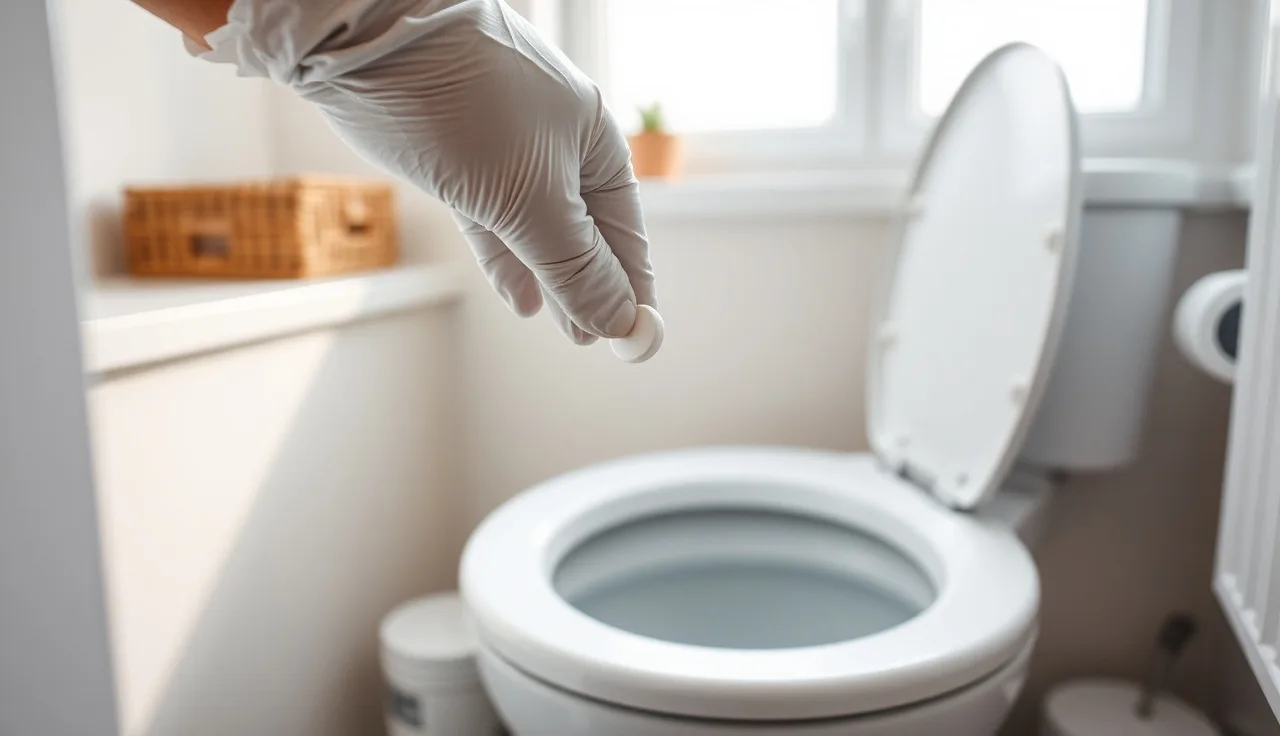
A flushable septic tank treatment is a product you drop, pour, or flush down any toilet. It rides your drain pipes into the septic tank, where it's supposed to add live microbes, digestive enzymes, or chemical compounds that break down waste.
Most products land in one of three buckets. Biological additives contain live bacteria and sometimes enzymes, packaged as pods, tablets, or dissolvable packets. Chemical additives use solvents, surfactants, or acids to cut grease and solids. Combination products mix enzymes with bacterial cultures and sometimes inorganic compounds.
The pitch is simple. Flush it and forget it. No digging, no service call, no mess. That convenience is real. The claim that your septic system needs them is a different story, and we'll get to it.
A working tank already holds billions of anaerobic bacteria that digest organic waste, and they arrive on their own through the waste you send down every day. So the question was never whether bacteria help. They do. The question is whether a foil packet changes anything in a tank that already has a thriving microbial population.
Does the EPA recommend using septic tank treatments?
No. The EPA's SepticSmart program says a properly functioning system already carries the biology it needs, so "you don't need to add anything to your septic system" [1].
That's a plain statement from a federal agency with no money on either side of the additive market. It matches the scientific consensus: a healthy tank runs itself.
The EPA's real maintenance advice is about pumping on schedule, keeping water use in check so you don't hydraulically overload the tank, and keeping harmful stuff out of the drain. You can see how that schedule works in our guide on how often to pump septic tank.
Flushable treatments cause trouble when they carry bleach-based compounds, strong solvents like methylene chloride, or surfactants that strip the biomat in your drain field. Several states have written this into their onsite wastewater rules. Minnesota's Pollution Control Agency warns against "strong chemicals, solvents, or other compounds" that can pass through the tank and damage the soil absorption system [2].
Do flushable septic treatments actually help or are they a waste of money?
Honest answer: the evidence for benefit is weak, and the evidence for harm from biological products is weak too. For chemical products, the harm is documented.
The most cited independent work is a 2010 NSF International study that evaluated 11 commercial septic additives. NSF found no consistent, statistically significant improvement in tank performance from biological or enzymatic products [3]. It found no harm from those products either. Call it neutral.
A 2007 University of Arkansas Cooperative Extension review of the literature landed in the same place, reporting that none of the products reviewed were found to be beneficial while some chemical treatments can harm your septic system [4].
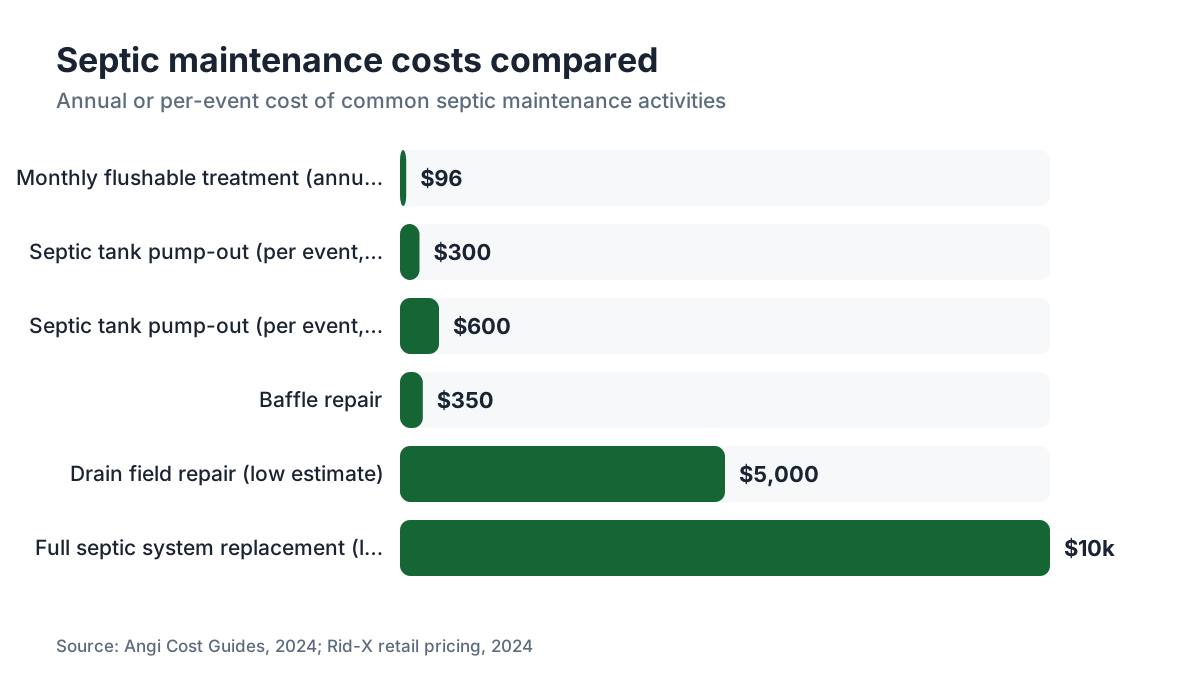
So if you've been flushing monthly pods and your system runs fine, it probably does run fine. It also probably runs fine without them. Most of these products cost $8 to $20 a month, which is $96 to $240 a year for something that hasn't earned its keep.
One exception. If everyone in the house just finished a course of antibiotics, that could, in theory, knock down bacterial populations in the tank. A few extension programs treat this as a spot where a one-time bacterial inoculant has a little logic to it. Nobody has strong data here, but that reasoning holds up better than the routine monthly pitch.
Which types of flushable septic products are safe and which are harmful?
Here's the practical breakdown.
| Product Type | Typical Ingredients | Likely Outcome | Recommendation |
|---|---|---|---|
| Biological (bacteria only) | Bacillus strains, anaerobes | Neutral, probably harmless | Low risk, low benefit |
| Enzymatic | Lipase, protease, cellulase | Neutral to minor benefit on grease | Low risk, low benefit |
| Enzyme + bacteria combo | Both above | Same as above | Acceptable if no chemical additives |
| Chemical solvents | Methylene chloride, TCE | Can carry through to soil, toxic | Avoid completely |
| Surfactant-based | Quaternary ammonium, strong detergents | Disrupts biomat, harms drain field | Avoid completely |
| Acid-based | HCl, sulfuric acid | Kills tank bacteria, corrodes tank | Avoid completely |
The chemical products are the real problem. Solvents like methylene chloride, once common in tank "openers," are classified by the EPA as a probable human carcinogen [5]. They pass through the tank mostly undigested, reach the drain field, and can contaminate groundwater. Several states have banned or restricted them in septic additives outright.
If your product's ingredient list mentions a solvent, a strong acid, or a quaternary ammonium compound, stop using it. Mainstream enzyme-and-bacteria products like Rid-X don't contain these, which is part of why they've stayed on shelves. Store-brand or bargain "tank openers" sometimes do.
How do flushable treatments compare to professional septic tank cleaning?
They don't compare. They're different jobs, and one can't stand in for the other.
Professional septic tank pumping physically hauls out the sludge and scum sitting in your tank. Biological treatments can speed up digestion of some organic material, but they can't remove non-digestible solids: hair, plastics, grit, inorganic compounds, and fats that already hardened. That stuff builds up no matter how many tablets you flush.
The EPA and most state extension programs recommend pumping every 3 to 5 years for a typical household, with the exact interval set by tank size and how many people live there [1]. A 1,000-gallon tank serving four people needs a pump roughly every 3 to 4 years. Skipping pumps because you're flushing a treatment is a documented path to early drain field failure.
Drain field repair or replacement runs $5,000 to $25,000 or more depending on region and soil. A pump-out runs $300 to $600 in most markets. The math writes itself.
Some homeowners run a biological product between pumps as a kind of insurance. If an enzyme-bacteria product makes you feel better, the cost is low and the risk is minimal. Just don't let it push your pump schedule back.
What ingredients should you look for (or avoid) in a septic tank chemical treatment?
Look for these on the label.
Bacillus subtilis, Bacillus licheniformis, or other bacterial strains. These are soil bacteria that do well in the oxygen-limited world of a septic tank and are generally recognized as safe.
Enzymes listed by function: lipase (fats), protease (proteins), amylase (starches), cellulase (paper and plant fiber). Enzyme-only products have a short window of activity, because enzymes break down or dilute fast, but they're harmless.
Now the avoid list.
Methylene chloride, 1,1,1-trichloroethane, or any chlorinated solvent. These are persistent pollutants the EPA has flagged under the Safe Drinking Water Act for leaching into groundwater [5][10].
Quaternary ammonium compounds ("quats"), often listed as benzalkonium chloride. These kill exactly the bacteria your tank runs on.
Strong acids or bases. A pH far off neutral disrupts anaerobic digestion.
Bleach or hydrogen peroxide as an active agent. The trace amounts from normal toilet-bowl cleaner get diluted to nothing, but a treatment built around bleach works against you.
For a specific problem, like a sluggish tank after a plumbing disruption, a bacterial inoculant with a high colony-forming unit count (look for 10 billion CFU or more per dose) at least has a logical basis, even if the hard evidence is thin.
How often should you use a flushable septic treatment?
Most makers say monthly. That's a convenient schedule for selling product. There's no scientific basis for monthly dosing.
If you're going to use a biological product, a quarterly dose rests on the same weak evidence that props up monthly use. Your tank refills its own bacterial culture with every flush, so you aren't correcting a deficiency that keeps coming back.
One scenario has real logic behind it: right after an event that could seriously knock down tank biology. Think a long stretch of heavy antibiotic use by the household, a pump-out (though most operators leave a seed layer in the tank on purpose), or a big slug of disinfectant going down the drain by accident. A single treatment after any of those beats any standing schedule.
For routine care, the schedule that matters is your pump-out. Track it, along with water-use patterns and inspection records, in a simple home log. Operators who manage many client systems often run software like SepticMind to track service intervals and flag overdue tanks, which matters far more than any additive calendar.
Bottom line on frequency: less is more. Monthly purchases are mostly marketing.
Can flushable septic treatments fix a failing or slow septic system?
No. This is the costliest misconception in the whole category.
Slow drains, gurgling, sewage odors in the yard, or wet spots near the leach field are symptoms of a real mechanical or biological problem. A full tank (fix: septic tank pump out). A clogged inlet or outlet baffle (fix: inspection and physical repair). A compacted or biomat-clogged drain field (fix: resting the field or mechanical remediation). Root intrusion in the pipes (fix: mechanical clearing or pipe repair). Hydraulic overload from too much water. Each has its own cause and its own fix.
Flushing more product into a failing system addresses none of them. Worse, if the system is backing up, the product can't even reach where it's supposed to go. Some products sold as "septic field restorers" claim to break up biomat in the soil. Independent testing hasn't confirmed those claims, and some state regulators have gone after specific products for restoration claims with no evidence behind them.
When your system shows failure symptoms, the move is a septic tank inspection by a licensed inspector, not a bottle of additives. Catching a problem early can be the difference between a $400 baffle repair and a $15,000 drain field replacement. Our overview of septic system repair walks through what a real repair looks like.
What do state regulations say about chemicals for septic tank treatment?
State rules vary a lot, but the trend runs one direction: caution or outright restriction on chemical additives.
Minnesota rules under Minn. R. 7080 prohibit chemical additives that haven't been reviewed and approved, and the Minnesota Pollution Control Agency advises against solvents and strong chemicals [2].
Washington State's Department of Health tells homeowners most septic additives are not necessary and that some can harm the system or the environment [6].
North Carolina's cooperative extension, like most southeastern programs, defers to EPA guidance, recommends against chemical additives, and takes no official position on biological products [11].
California's State Water Resources Control Board doesn't regulate septic additives as a product class, but it does regulate any compound that reaches groundwater under the Porter-Cologne Water Quality Control Act. A homeowner using solvent-based products could, in theory, face liability for groundwater contamination.
The practical read: no state makes you use any additive. Several warn against the chemical ones. No state has published a rule calling biological products mandatory or even recommended. If you live under a strict onsite wastewater code (Minnesota, Oregon, and Washington run tight), check your county's specific guidance before you add anything to your tank.
How much do flushable septic tank treatments cost compared to other maintenance?
The cost picture is worth laying out, because it should change how you think about these products.
A single monthly dose of a mainstream treatment like Rid-X runs about $6 to $10 at retail. At the recommended monthly schedule, that's $72 to $120 a year. Over a typical 3-year pump cycle, $216 to $360 [7].
That 3-year spend is 40% to 80% of a single pump-out ($300 to $600 in most markets) [8]. And the pump-out removes material the treatment physically cannot. So you still need the pump-out.
For the stakes: a septic tank repair for a failed baffle runs $150 to $500. A new leach field runs $5,000 to $20,000 or more. A full septic tank installation replacement, if it comes to that, runs $10,000 to $30,000 depending on system type and local labor [9].
Spending $72 a year on a product that hasn't proven it works, while putting off the $400 pump-out, is a bad trade. If you're going to spend money on septic maintenance, spend it on a scheduled pump-out and a periodic inspection. Those have measured, documented impact on how long a system lasts.
What actually works to maintain a healthy septic system?
This is what the evidence supports, and what every state extension program tells you.
Pump on schedule. The EPA and most state guidance say every 3 to 5 years for a typical home. Get quotes from licensed operators. Book it the way you book a furnace check.
Watch what goes down the drain. The usual tank-killers are wipes (yes, even "flushable" ones, which don't break down in a tank), cooking grease, coffee grounds, and heavy garbage-disposal use. No treatment product fixes any of these after the fact.
Control water volume. An overloaded tank never gives solids time to settle. Spread laundry across the week, fix leaky toilets (a running toilet can dump 200 gallons a day into the system), and put in low-flow fixtures. These cost nothing and they protect the biology.
Keep roots off the drain field. Willows, silver maples, and other aggressive-rooted trees planted within 30 feet of a drain field are a known cause of pipe damage.
Get periodic inspections. A licensed inspector catches a failing baffle, a high sludge level, or early drain field stress before it turns into a $15,000 job. Our guide to septic tank inspection covers what that visit involves.
None of that needs a monthly product purchase. It needs attention and a little scheduling discipline. Less satisfying than flush-and-forget, sure. But it's what keeps a septic system running 25 to 30 years.
Operators who manage many systems live this scheduling reality daily. Platforms like SepticMind help service companies track client pump schedules and fire off reminders on their own, which is where technology actually improves outcomes. Not in the chemistry of a tablet.
Frequently asked questions
Are flushable septic treatments safe to use with a concrete or plastic tank?
Biological and enzymatic products are safe for concrete and plastic tanks alike. Chemical solvent-based products can soften or degrade some plastic components over time, so skip those regardless of tank material. The bacteria and enzyme strains in mainstream biological products don't react with tank walls.
Does Rid-X actually work for septic tanks?
Rid-X contains Bacillus bacterial strains and enzymes (lipase, protease, amylase, cellulase). It's biologically safe and won't hurt your system. The honest answer is that independent studies, including NSF's 2010 review, found no statistically significant improvement in tank performance from products like it. It probably doesn't hurt. The evidence that it helps is thin.
Can I use flushable treatments if I'm on a septic system with a pump chamber?
Yes, with caveats. Biological products are safe for systems with pump chambers or aerobic treatment units. Avoid anything that creates excess foam, since surfactant-heavy treatments can mess with float switches and pump sensors. Look for "septic safe" language and steer clear of products with surfactants as a primary ingredient.
How soon after pumping should I use a septic treatment?
You don't need to. A pump-out usually leaves a small residual sludge layer that reseeds the tank with the bacteria it needs to restart digestion. Normal waste flow rebuilds the microbial population within days. One bacterial inoculant right after a full cleanout is fine if you want peace of mind, but it isn't required.
Will flushable treatments help if my drains are slow?
Almost certainly not. Slow drains usually come from a full tank, a clogged pipe, a blocked baffle, or early drain field saturation. A flushable treatment can't remove solids or clear a clog. If drains are slow, schedule an inspection and pump-out first. If it persists after pumping, you likely have a drain field problem.
Are enzyme septic treatments different from bacterial treatments?
Yes. Enzyme-only products add proteins that catalyze the breakdown of specific compounds but don't reproduce. Once diluted or degraded, within hours to a few days, they're gone. Bacterial products add living microbes that reproduce in the tank. Most commercial products combine both. Neither type has strong clinical evidence of measurable benefit in a functioning system.
Is it safe to use flushable treatments if we have a well on the property?
Biological and enzymatic products pose minimal groundwater risk because the organisms occur naturally and don't persist as contaminants. Chemical solvent-based products are another matter. Compounds like methylene chloride can travel through soil to groundwater and have turned up in well water near systems where chemical additives got used heavily. With a well, use biological products or none at all.
Do septic treatment tablets work better than liquid treatments?
No consistent evidence shows one format beats the other. Tablets dissolve as you flush, liquids disperse faster but don't necessarily deliver more active organisms. The CFU count (colony-forming units) matters more than the format. For bacterial products, look for at least 2 to 8 billion CFU per dose. Format is mostly a marketing distinction.
Can flushable septic treatments damage my drain field?
Biological products don't damage drain fields. Chemical solvent-based products can pass through the tank into the drain field soil, disrupting the beneficial biomat and possibly adding toxic compounds. Surfactant-heavy products can strip the biomat layer that filters effluent. Stick to biological or enzymatic products and the treatment itself poses no drain field risk.
Do I still need to pump my septic tank if I use monthly treatments?
Yes, always. No flushable treatment removes accumulated inorganic solids, hair, plastics, or the digested sludge that compresses at the tank bottom over time. That material can't be digested away. Skipping pump-outs because you use a monthly product is one of the most common reasons tanks back up early. The pump schedule stands regardless of treatment use.
What's the best flushable septic treatment for a vacation home used only seasonally?
A seasonal system gets more from a single bacterial inoculant at each startup than from monthly treatments. When the home sits empty, the bacterial population drops for lack of a food source. One high-CFU bacterial tablet flushed on arrival, plus running water for a day to restore moisture in the tank, is a reasonable practice for seasonal properties.
Are there any flushable treatments approved or certified by a government agency?
No federal agency certifies or approves septic additives for efficacy. The EPA doesn't approve specific products; it only advises that additives are unnecessary. Some states require additives to be registered before sale (Massachusetts and Virginia have done this), but registration isn't efficacy approval. NSF International has tested products but publishes results rather than issuing approvals.
Sources
- EPA SepticSmart Program, 'How to Care for Your Septic System': EPA states you don't need to add anything to a properly functioning septic system and recommends pumping every 3 to 5 years.
- Minnesota Pollution Control Agency, 'Septic system maintenance': Minnesota MPCA advises against strong chemicals, solvents, and other compounds that can pass through the tank and damage the soil absorption system.
- NSF International, 'Evaluation of Septic System Additives' (2010): NSF's 2010 review of 11 commercial septic additives found no consistent, statistically significant improvement in tank performance from biological or enzymatic products.
- University of Arkansas Cooperative Extension, 'Septic Tank Additives' (2007): University of Arkansas Cooperative Extension review found none of the products reviewed were beneficial while some chemical treatments can harm the septic system.
- EPA, 'Assessing and Managing Chemicals under TSCA: Methylene Chloride': EPA classifies methylene chloride (found in some chemical septic additives) as a probable human carcinogen and manages it under TSCA.
- Washington State Department of Health, 'Septic System Care': Washington DOH advises that most septic system additives are not necessary and that some can be harmful to the system or the environment.
- Reckitt (Rid-X manufacturer) retail pricing, major retailers 2024: Mainstream flushable septic treatment products such as Rid-X cost approximately $6 to $10 per monthly dose at retail.
- Angi, 'Septic Tank Pumping Cost Guide' (2024): Professional septic tank pump-out costs $300 to $600 in most U.S. markets.
- Angi, 'Septic System Installation Cost Guide' (2024): Full septic system installation costs $10,000 to $30,000 depending on system type and local labor rates.
- EPA, 'Safe Drinking Water Act (SDWA)': The Safe Drinking Water Act governs compounds that can leach into groundwater, relevant to chemical septic additives used near wells.
- North Carolina State Extension, 'Septic Systems': NC State Extension defers to EPA guidance on additives and recommends against chemical septic additives while taking no official position on biological products.
Last updated 2026-07-09