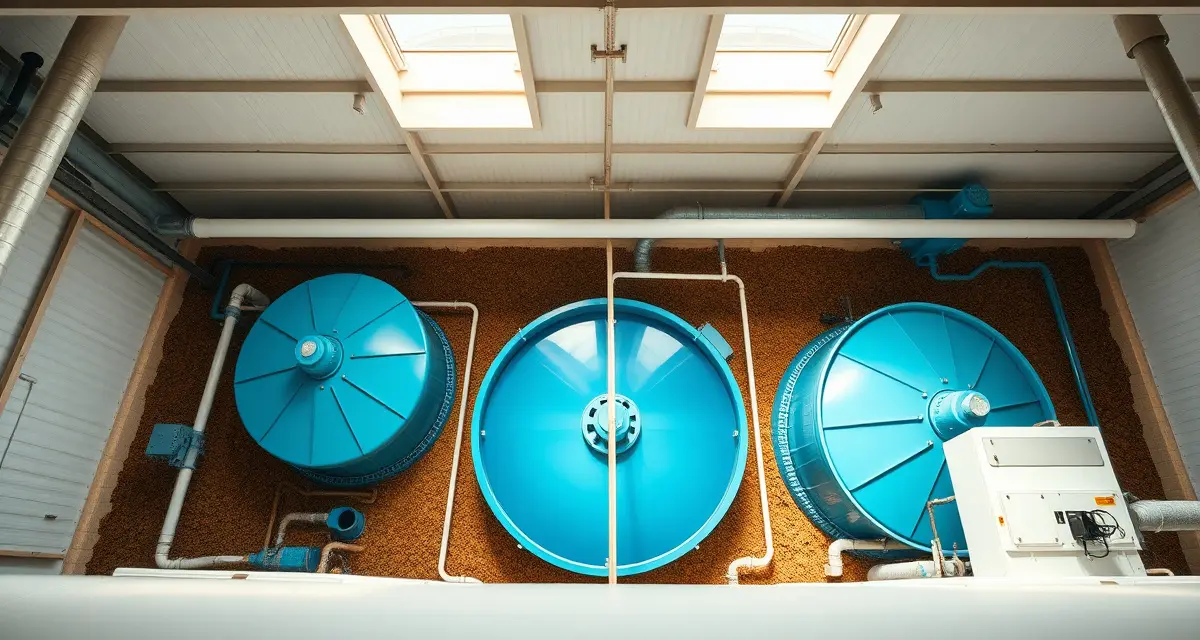
Septic Service for Mushroom Farms and Specialty Crop Facilities
By the SepticMind Editorial Team
Specialty mushroom cultivation facilities produce wastewater with BOD 10-15x higher than residential levels, and mushroom substrate wastewater has very high BOD loads that can rapidly overwhelm conventional septic systems. Commercial mushroom farming is one of the most wastewater-intensive specialty agricultural operations, and operators who try to manage it with standard residential or commercial septic approaches consistently run into problems.
TL;DR
- Mushroom Farms facilities have distinct wastewater loading patterns that affect septic system sizing, service frequency, and permit requirements.
- Commercial and institutional properties like mushroom farms typically require more frequent pumping than residential systems due to higher daily usage.
- Some mushroom farms operations generate waste streams (grease, chemicals, or high-volume flow) that require pre-treatment before reaching the septic system.
- Service contracts for mushroom farms provide predictable recurring revenue and are easier to manage with a platform that tracks commercial account schedules.
- Health department inspections for mushroom farms properties may require septic system condition documentation as part of facility licensing.
- Septic companies specializing in mushroom farms service build referral networks with property managers, architects, and health inspectors in that niche.
Why Mushroom Farm Wastewater Is So Demanding
Mushroom cultivation produces several distinct wastewater streams that collectively create one of the most challenging organic wastewater profiles in specialty agriculture:
Substrate soaking and inoculation wastewater: Logs, straw, sawdust, or grain substrate used for mushroom cultivation is often soaked in water before inoculation. The rinse and drain water from this process is high in organic dissolved solids.
Post-harvest substrate waste: Spent substrate after mushrooms are harvested contains high concentrations of biological material, mycelium, and organic matter. When this material is cleaned out and the growing areas are washed down, the wash water carries extremely high organic loads.
Humidity control drainage: Commercial mushroom facilities maintain precise humidity for growth, which generates condensate and drainage water with organic content.
General facility cleaning: Washing growing chambers, equipment, and work surfaces creates cleaning water with high organic loads from mushroom debris.
The combination of these streams creates wastewater with BOD concentrations that are categorically different from restaurant gray water, which itself is considered high-strength compared to residential waste. For comparison:
- Residential wastewater: ~200 mg/L BOD
- Restaurant wastewater: ~800-1,500 mg/L BOD
- Mushroom substrate wastewater: 2,000-4,000+ mg/L BOD
SepticMind's specialty crop account type documents high-BOD organic load considerations in service scheduling, adjusting intervals to reflect the actual organic load rather than a headcount-based estimate.
What Can and Cannot Go to a Conventional Septic System
Like aquaculture and composting facilities, mushroom farms need to separate process wastewater from employee sanitation gray water:
Employee facilities gray water (appropriate for conventional septic):
- Worker restroom and break room use
- Administrative office gray water
- Standard handwashing sink water
Process area wastewater (requires separate management):
- Substrate soaking and rinse water
- Post-harvest chamber wash water
- Equipment cleaning water with high organic loads
If your facility routes process area drainage to the employee septic system, that system is receiving organic loads far above what it was sized to handle. The result is premature biomat formation, drainfield failure, and groundwater quality concerns.
Get Started with SepticMind
Mushroom Farms facilities need a service provider who understands the specific wastewater challenges of their operations. SepticMind makes it easy to manage commercial service contracts, track inspection schedules, and document service visits for every account in your portfolio. See how it supports commercial account management.
Frequently Asked Questions
What septic management is required for a commercial mushroom farm?
Commercial mushroom farms need to separate employee sanitation gray water from process area wastewater generated by substrate handling, chamber cleaning, and equipment washing. The employee septic system handles standard gray water on standard commercial service intervals. Process area wastewater, which has BOD concentrations 10-15x or more above residential levels, requires a separate management approach: composting spent substrate to minimize wash water, constructed wetlands, anaerobic digestion, or land application under appropriate permits. Routing high-BOD process wastewater to a conventional septic system will overwhelm the drainfield rapidly and may create groundwater quality violations.
How often should a mushroom farm's onsite wastewater system be serviced?
For the employee facilities septic system at a mushroom farm (properly separated from process wastewater): standard commercial service intervals based on employee count. Annual inspections with pump-outs every 2-3 years for facilities with fewer than 20 employees. For process wastewater management systems: service frequency depends on the system type. Constructed wetlands need periodic inspection and maintenance. Anaerobic digesters need regular monitoring and maintenance. If holding tanks are used for high-strength process wastewater, they may need monthly or quarterly pump-outs depending on volume. Have each system assessed by the appropriate professional and set service schedules accordingly.
Does SepticMind adjust service intervals for high-organic load specialty crop accounts?
Yes. SepticMind's specialty crop account type captures the wastewater profile of the operation, including BOD load estimates from process activities, and adjusts service interval recommendations accordingly. For employee systems properly separated from process wastewater, standard commercial intervals apply. For any systems receiving partial process loads, intervals are compressed to reflect the higher organic load. Process wastewater management systems (wetlands, digesters, holding tanks) have separate service records with their own appropriate schedules. For mushroom farm operators managing multiple growing facilities, all locations can be tracked under a single account.
How often should a septic system serving a mushroom farms property be inspected?
Septic systems at mushroom farms properties should be inspected at least annually and pumped more frequently than residential systems, since commercial-scale daily water usage accelerates sludge and grease accumulation. The exact frequency depends on the specific activities at the facility, peak occupancy, any food service or chemical use on-site, and local regulatory requirements. A service provider familiar with mushroom farms operations can recommend an appropriate inspection and pumping schedule based on the system's actual usage profile.
What septic system issues are most common at mushroom farms properties?
The most common septic problems at mushroom farms properties are rapid sludge accumulation from high occupancy, grease trap failure if food service is involved, hydraulic overloading during peak-use periods, and non-biodegradable waste disposal from cleaning or maintenance activities. Regular inspection and a service contract with clear maintenance intervals are the most effective ways to catch these problems before they cause system failure or regulatory violations.
Try These Free Tools
Sources
- National Onsite Wastewater Recycling Association (NOWRA)
- US EPA Office of Wastewater Management
- NSF International
- Water Environment Federation
- National Environmental Services Center (NESC)