Septic tank plumbing: how every pipe and fitting works
By the SepticMind Editorial Team
TL;DR
- Septic tank plumbing is the chain of pipes, fittings, and baffles that carries wastewater from your house to the tank, separates solids from liquid inside the tank, and sends treated effluent out to the drain field.
- Knowing what each part does helps you catch problems early.
- A $50 baffle fix ignored today becomes a $15,000 drain field tomorrow.
What is septic tank plumbing and how does it all connect?
Septic tank plumbing is not one pipe. It's a chain, and every link depends on the one before it.
Wastewater leaves your house through the building sewer, a sloped pipe that runs underground to the septic tank inlet. Inside the tank, gravity and time separate solids, liquids, and scum. The clarified middle layer (called effluent) flows out through the outlet baffle into the distribution system, then into the leach field, where soil finishes the treatment. Every pipe, baffle, and fitting in that chain has to work for the system to work.
The EPA's SepticSmart program describes a conventional septic system as having three main parts: the septic tank, the drainfield, and the soil beneath it [1]. The plumbing that ties those parts together is what most homeowners never see and rarely think about until something goes wrong.
Here's the flow path, in order:
- Household drains collect wastewater from toilets, sinks, showers, and appliances.
- Interior drain lines slope toward the main building drain, typically 3 or 4 inches in diameter.
- The building sewer exits the foundation and runs to the tank inlet.
- The inlet baffle slows incoming flow so it doesn't disturb settled solids.
- Three layers form inside the tank: scum on top, effluent in the middle, sludge on the bottom.
- Effluent exits through the outlet baffle, which sits submerged to keep scum from leaving.
- The effluent line carries liquid to the distribution box or manifold.
- From there, effluent moves into the drain field trenches through perforated pipe.
That's the whole system. Simple in concept. But each joint and fitting matters, and one failed link stops the chain.
What pipe connects the house to the septic tank?
The building sewer is the pipe that runs from your foundation wall to the septic tank inlet. Most codes require 4-inch schedule 40 PVC for new construction. Older homes may have cast iron, clay tile, or Orangeburg pipe, a fiber-tar composite that degrades badly and is banned in new installs [2].
Slope is everything with a gravity sewer. The standard minimum is 1/4 inch of fall per foot of horizontal run. Too flat and solids settle inside the pipe. Too steep (more than 1/2 inch per foot is sometimes cited) and liquids race ahead of solids, leaving a dry sludge layer that can eventually plug the line. Your local code may set a tighter range, so check your state's onsite wastewater rules.
The building sewer has to be watertight. Groundwater leaking in (infiltration) overloads the tank. Sewage leaking out (exfiltration) is a health and environmental hazard. At the house end, the connection to the foundation wall needs a flexible boot or sleeve that allows minor movement without cracking. At the tank end, the pipe usually seats into the inlet opening with a rubber gasketed fitting.
Depth matters too. In cold climates, the pipe needs to sit below the frost line for most of its run, though the section right at the foundation usually can't go that deep. Installers often lay insulation board over the shallow section to protect it.
What are inlet and outlet baffles and why do they matter?
Baffles are the parts nobody sees and almost nobody thinks about, and they're the difference between a working system and a $15,000 field replacement. They're fittings inside the tank, one at the inlet and one at the outlet, doing two different jobs.
The inlet baffle deflects incoming wastewater downward, sending it below the scum layer so it doesn't stir up settled solids or push them out the far side. Without a working inlet baffle, the churn from each flush can lift sludge and carry solids toward the outlet.
The outlet baffle matters more. It reaches down into the clear effluent zone with its opening submerged, typically 12 to 18 inches below the liquid surface depending on tank size and code [12]. That submerged opening pulls from the cleanest part of the tank instead of the scum-covered top. If the outlet baffle fails or goes missing, grease and scum flow straight into the drain field, clog the soil pores, and kill the field. Drain field replacement runs $5,000 to $20,000 or more [3]. A new baffle costs about $50 in materials.
Older concrete tanks often had concrete baffles cast in place. These corrode over time from hydrogen sulfide gas that anaerobic bacteria produce inside the tank. The standard fix now is a sanitary tee (a T-shaped PVC fitting) or an effluent filter (a screened insert) in place of the old baffle. Effluent filters are worth adding at the outlet even when the baffle is intact. They catch solids before they reach the drain field and clean out during routine pumping.
Sanitary tees used as baffles should have the side opening facing up and the straight run going up and down, with the downward leg reaching into the effluent zone. Flip that orientation and the fitting does the opposite of its job.
During a septic tank inspection, a licensed inspector checks that both baffles are present, intact, and positioned right. It's one of the first things they look at.
What types of pipe are used inside and around a septic system?
Different parts of the system use different pipe, and mixing them wrong causes trouble.
Schedule 40 PVC is the current standard for the building sewer, inlet and outlet lines, and most distribution piping. It's tough, holds up to sewage chemically, and it's easy to work with.
SDR-35 PVC has a thinner wall and lower pressure rating. It's common for the sewer lateral in some jurisdictions. Cheaper, but more prone to crushing under heavy loads. Never run it under a driveway without proper bedding and cover.
ABS (acrylonitrile butadiene styrene) shows up in older homes for interior drain lines. It's black, slightly flexible, and does not bond with PVC primer and cement. Joining ABS to PVC takes a transition cement or a mechanical coupling, not standard PVC glue.
Cast iron is found in homes built before the 1970s. It lasts a long time but corrodes from the inside. Interior cast iron drain lines sometimes need relining or replacement in houses 50 years old or older.
Perforated PVC or HDPE runs in the drain field trenches. The perforations let effluent seep into the surrounding gravel and soil. The pipe sits in crushed stone with the holes pointing down, so effluent drains into the stone bed instead of pooling inside the pipe. Some newer systems use chambers instead.
Orangeburg pipe deserves its own warning. It went in widely from the 1940s through the early 1970s. Made from compressed wood pulp and tar, it softens and collapses when it stays wet. If your home dates to that era and nobody has replaced the sewer lateral, assume Orangeburg until proven otherwise. A camera inspection confirms it fast.
| Pipe material | Typical location | Lifespan | Watch for |
|---|---|---|---|
| Schedule 40 PVC | Building sewer, tank connections | 50+ years | Root intrusion at joints |
| SDR-35 PVC | Sewer lateral | 25-50 years | Crushing, joint failure |
| ABS | Interior drain lines | 40-50 years | Cracking, wrong adhesive use |
| Cast iron | Interior drain lines (older homes) | 50-100 years | Internal corrosion, scale |
| Orangeburg | Building sewer (pre-1975) | 30-50 years (already failing) | Collapse, deformation |
| Perforated PVC/HDPE | Drain field | 30-50+ years | Biomat clogging |
| Clay tile | Building sewer (pre-1950) | Varies | Root intrusion, joint failure |
How does the drain field connect to the septic tank plumbing?
After effluent leaves the tank outlet, it has to spread evenly across the drain field. Uneven distribution is one of the top causes of early field failure, because it overloads one area while the rest sits unused.
In a conventional gravity system, the outlet line runs to a distribution box (D-box), a small concrete or plastic box with one inlet and several outlets, one per trench. Level it right and it splits flow equally among the laterals. Let it settle or tilt and one lateral takes most of the flow and fails while the others stay dry.
From the D-box, perforated pipe runs the length of each trench, surrounded by washed stone or gravel. The stone bed is typically 6 to 12 inches deep below the pipe and covered with filter fabric (geotextile) before backfill. The fabric keeps dirt from working into the stone and plugging it.
Alternative systems use pressure distribution instead of gravity. A pump, usually in a separate dosing chamber downstream of the tank, doses effluent under pressure through a manifold and small-diameter orifice pipes. Pressure distribution spreads effluent more evenly, rests the field between doses, and is often required on hard soils or steep slopes [2].
A pump adds parts a gravity system doesn't have: electrical components, float switches, and the pump itself. Plan on checking it every 3 to 5 years and replacing it eventually, typically at 7 to 15 years depending on brand and usage.
For what happens when the field itself fails, see our guide to leach field problems and repair options.
What are the most common septic plumbing problems and how do you spot them?
Most septic plumbing failures announce themselves. Learn the handful of symptoms and you'll catch problems while they're cheap.
Slow drains throughout the house. One slow drain means the clog is in that branch line. Every drain slow at once means the trouble is in the main building sewer or at the tank. Could be a blockage, a crushed pipe, or a full tank.
Sewage backing up into the lowest drains. Either the tank is full or the sewer line is blocked. Check the pumping date first. Recently pumped and still backing up? You likely have a blockage or a broken pipe.
Gurgling from drains. Usually a venting problem. Your house plumbing needs vent pipes open to the air so air can move as water drains. A blocked vent stack creates negative pressure, pulls water out of trap seals, and makes that gurgle.
Wet or soggy ground over the drain field. Effluent at the surface means the field is overloaded, failing, or the outlet baffle is gone and solids have clogged the soil. This is a health hazard. Keep kids and pets off it.
Sewage odor outside near the tank or field. Points to a cracked tank, a failed riser seal, a missing lid, or a clogged vent. Odor inside the house usually means a dry trap or a broken vent line.
Tank alarm going off (pump systems). High water in the pump chamber usually means the pump failed or a float switch stuck.
The best early warning is boring: track your last septic tank pump out date and schedule routine inspections. Plenty of $15,000 field replacements started as a $50 baffle problem nobody caught.
When you find a problem, start with septic tank repair for tank-side issues, or septic system repair if the trouble reaches the field.
Can tree roots damage septic plumbing, and how do you fix it?
Yes, and roots are one of the most common causes of building sewer failure. Roots chase moisture and nutrients. A sewer line with even hairline joint gaps is a beacon.
Willow, poplar, silver maple, and elm are the worst because their roots are aggressive and water-seeking. Keep these trees at least 50 feet from sewer lines where you can; some extension resources push for even more clearance [5]. Even calmer trees like oaks work roots into joints over 20 to 30 years.
Intrusion usually starts at rubber-gasketed joints or at cracks in clay tile and old pipe. Roots grow in, snag toilet paper and solids, and build toward a full blockage. Worse cases, the roots shove pipe sections apart and wreck the slope.
Diagnosis is easy: run a camera through the cleanout and root intrusion shows up plainly. Fixing it depends on how bad things are:
- Light intrusion: Mechanical cutting (a rotating blade run through the pipe) clears the line. Follow with copper sulfate or a foaming root killer to slow regrowth. This is temporary. Roots come back.
- Heavy intrusion, pipe still intact: Hydro-jetting plus cutting, then chemical treatment. Might buy several more years.
- Pipe damaged or joints displaced: Spot repair or full replacement of the bad section. Cast iron and clay tile are often relined with an epoxy liner instead of dug up.
Here's the honest part. Once roots have found your pipe, they'll keep finding it. Cutting buys time. Only replacement or relining ends it for good.
What does septic tank plumbing look like for a two-tank or advanced treatment system?
Not every system is one tank plus a field. As lots shrink and soils get tighter, alternative designs add parts.
Two-compartment tanks carry an internal wall that splits the tank roughly 2:1. The larger first compartment handles most of the solids separation; the smaller second one adds settling before the outlet. Many modern concrete tanks pour this way. The rest of the plumbing is the same, with the outlet still a baffle on the second compartment's far wall.
Two-tank systems use a primary tank feeding a secondary tank (often a pump tank or dosing chamber). The primary tank handles solids. The pump tank holds effluent and doses it to the field on a timer or on demand. These add a pump, an alarm, and more pipe, but they handle difficult soils far better than gravity alone.
Aerobic treatment units (ATUs) inject air into the treatment chamber to feed oxygen-using bacteria, which break down waste more thoroughly than the anaerobic process in a standard tank [11]. ATU effluent is cleaner and can sometimes discharge closer to the surface or at higher rates. The plumbing is similar but usually ends in spray heads or drip emitters instead of perforated pipe.
Mound systems go in when the water table is too high or the soil too dense for a conventional in-ground field. Effluent gets pumped up into a raised mound of imported sandy fill. The plumbing includes a pressure distribution manifold and orifice shield assemblies. Mounds are expensive, often $10,000 to $20,000 just for the mound component [3], but they work well when maintained.
Planning a new install? The cost to install a septic system swings hard depending on which of these designs your site needs.
What plumbing code rules govern septic system pipes?
Septic plumbing sits between two regulatory worlds: interior plumbing codes that govern drain lines inside the house, and onsite wastewater codes that govern the building sewer, tank, and field. Both apply, and different agencies enforce them.
Interior drain and vent requirements usually follow the International Plumbing Code (IPC) or the Uniform Plumbing Code (UPC), depending on your state [8]. These set minimum pipe sizes, slope (1/4 inch per foot for horizontal runs), trap requirements, venting rules, and approved materials.
Onsite wastewater systems fall under state environmental or health agencies. Every state writes its own rules, often adapted from EPA guidance. The EPA's Office of Water states that a properly designed and maintained onsite system is "essential to protecting public health and the environment" [1]. State codes set setbacks (how far the tank and field sit from wells, property lines, and water bodies), pipe materials, burial depths, and inspection schedules.
Common required setbacks (these vary by state, always verify locally):
| Component | From drinking water well | From property line | From surface water |
|---|---|---|---|
| Septic tank | 50-100 ft | 5-10 ft | 50-100 ft |
| Drain field | 50-100 ft | 10-20 ft | 50-100 ft |
| Building sewer | 10-25 ft | Varies | Varies |
Permits are almost always required for new installs, replacements, and repairs beyond basic maintenance. Unpermitted work can void insurance, create liability when you sell, and draw fines. Check your state or county health department's website for the applicable code before you start any work.
For a realistic picture of what permitted installation costs, see cost to put in a septic tank.
How does interior house plumbing connect to the septic system, and what can go wrong inside?
The link between your interior plumbing and the septic system is the main cleanout, usually in the basement, crawlspace, or just outside the foundation wall. Every drain in the house flows toward that point.
Interior drain lines follow a tree structure. Fixtures (toilets, sinks, tubs) feed branch drains. Branch drains feed stack drains, the vertical pipes running floor to floor. Stacks feed the main building drain, which slopes toward the building sewer.
Vent pipes belong to this system even though they carry no wastewater. Every fixture trap (the U-bend under the sink that holds water to block sewer gas) needs a vent. Without one, draining water siphons the trap dry, and sewer gas comes into the house. Vents run from the drain lines up through the roof. A blocked roof vent brings slow drains, gurgling, and sewer gas indoors.
Garbage disposals deserve a hard look in septic homes. They grind food into fine particles that hit the tank and build the sludge layer faster than normal. The EPA advises avoiding garbage disposals in septic homes where possible, or pumping more often if you keep one [1]. A disposal doesn't destroy waste. It just moves it into your tank faster.
Other things that hurt septic plumbing from inside the house:
- Flushing wipes (even ones labeled "flushable"), feminine hygiene products, or paper towels. These don't break down and will block the sewer or pile up in the tank.
- Pouring grease down the drain. It hardens in the pipe and feeds the scum layer.
- Dumping bleach, drain cleaner, or antibacterial soap. Big doses can knock back the bacteria in the tank that do the treatment work. Additive marketing overstates this, but a full bottle of drain cleaner really can disrupt the biology.
For maintenance scheduling, the how often to pump septic tank guide runs the actual math based on household size and tank volume.
When should you call a plumber versus a septic contractor?
This trips people up. The dividing line is usually the foundation wall.
A licensed plumber handles everything inside the house: drain lines, vent stacks, trap replacements, interior cleanout clearing, and the point where the building sewer exits the foundation. They're also the right call for a blockage in the building sewer when the cause is inside the pipe rather than at or past the tank.
A septic contractor (also called an onsite wastewater professional or a licensed pumper/installer, depending on your state) handles everything from the tank inward: pumping, baffle replacement, tank repairs, D-box leveling, distribution pipe repairs, and drain field work. Some also handle the building sewer from the foundation to the tank, if the state license covers it.
Gray area: a blockage in the building sewer between house and tank can go either way. Most plumbers will camera the line and root-cut it. A septic company with jetting gear can do the same. Unsure? Get quotes from both.
When the problem is at or past the tank, call a septic contractor. When it's clearly inside the house, call a plumber. When you can't tell, have the tank pumped and inspected first. That clears the tank and field as suspects and often shows whether the trouble is on the house side.
SepticMind's inspection tracking tools let septic operators log baffle condition, pipe findings, and recommended repairs in one place, which makes follow-up service calls easier to run.
For septic tank cleaning and septic tank pumping, always use a licensed pumper who inspects the baffles while the tank is open.
What does septic tank plumbing maintenance actually cost?
Routine maintenance is cheap. Deferred maintenance is brutal. That's the whole financial story of septic plumbing.
The EPA estimates the average cost of maintaining a septic system at $250 to $500 per year once routine pumping is spread over a typical 3- to 5-year cycle [1]. Set that against sewer connection fees and monthly utility bills, and septic often wins over time.
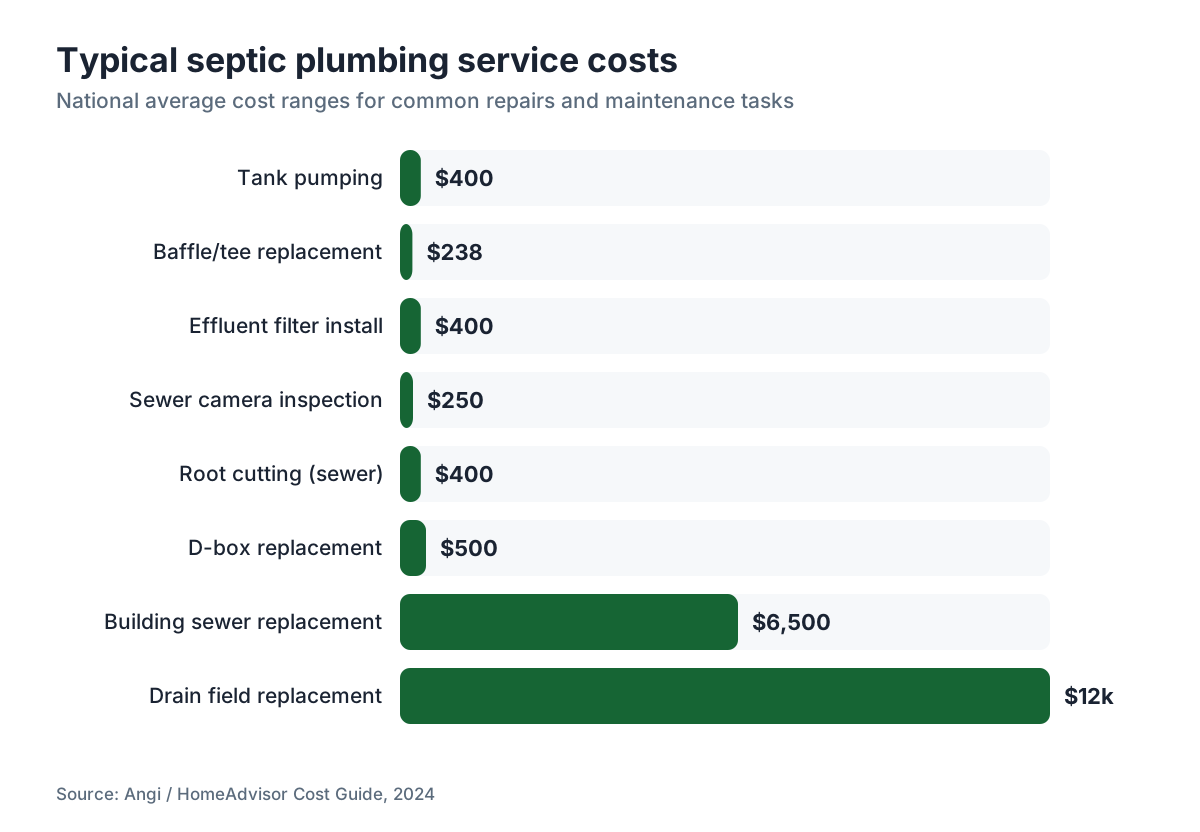
Here are realistic ranges for common septic plumbing work. These are national averages; regional prices vary a lot, and costs have climbed with material and labor prices since 2020.
| Service | Typical cost range | Notes |
|---|---|---|
| Septic tank pumping | $250 to $550 | Every 3-5 years for an average household [7] |
| Baffle replacement (sanitary tee or filter) | $75 to $400 installed | Easy fix, high payoff |
| Effluent filter installation | $200 to $600 installed | Worth doing at next pumping |
| Building sewer camera inspection | $150 to $350 | More for longer runs |
| Root cutting (sewer lateral) | $200 to $600 | Temporary fix |
| Pipe lining (trenchless sewer repair) | $80 to $250 per foot | Avoids excavation |
| Building sewer replacement | $3,000 to $10,000+ | Depends on length and depth |
| D-box replacement or leveling | $300 to $700 | |
| Drain field repair or replacement | $5,000 to $20,000+ | Full replacement is expensive [3] |
| Pump replacement (pressure systems) | $500 to $1,500 | Every 7-15 years |
The single best buy for most homeowners is an effluent filter at the outlet baffle. A $300 installed filter you clean each pumping cycle can add years to a field that would otherwise cost $15,000 to replace. I'd do it at the next pump-out without a second thought.
For septic tank emptying frequency and what drives the cost, it comes down to your household size, tank volume, and how hard you run the disposal.
Frequently asked questions
What size pipe connects a house to a septic tank?
For new construction, most codes require 4-inch schedule 40 PVC for the building sewer. Some jurisdictions allow 3-inch pipe from individual fixtures inside the house, but the main building sewer running to the tank must be at least 4 inches in nearly all codes. Older homes may have cast iron, clay tile, or Orangeburg in smaller diameters.
How deep should the pipe from the house to the septic tank be buried?
The pipe needs enough cover to stay above freeze depth for most of its run, from a few inches in the deep south to 4 to 6 feet in northern states. At the foundation, the pipe exits close to the footing and can't always go deep, so installers add insulation board on top. The tank itself usually sits with its lid 6 to 12 inches below grade.
What is the difference between a septic tank baffle and a sanitary tee?
An original cast concrete baffle and a sanitary tee fitting do the same job: deflect incoming flow at the inlet and draw from the submerged effluent zone at the outlet. A sanitary tee is the modern replacement because PVC doesn't corrode from hydrogen sulfide the way concrete does. When a concrete baffle deteriorates, a licensed pumper installs a PVC sanitary tee in its place during or after pumping.
Can you use flexible pipe for the building sewer?
No. Flexible or corrugated pipe, like the kind used for drain tile or some landscaping, isn't approved for building sewers because it won't hold slope consistently and can trap solids. Building sewers require rigid pipe, either PVC schedule 40 or SDR-35, bedded properly in sand or native soil to keep the required slope over the full run.
What happens if the outlet baffle is missing or broken?
Without a working outlet baffle, floating scum and partially settled solids flow straight into the drain field. The soil pores clog with grease and biomat, effluent starts surfacing or backing up, and the field eventually fails. Drain field replacement can cost $5,000 to $20,000 or more. A replacement baffle or effluent filter installed during pumping costs $75 to $400. It's one of the worst false economies in home maintenance.
How do I find the cleanout for my septic plumbing?
Look for a 4-inch capped pipe stub in the basement floor, crawlspace, or just outside the foundation wall where the sewer exits. In older homes without a proper cleanout, the access point may be a removable plug at the base of the main drain stack. If you can't find it, a plumber can locate it with a camera or a snake. Adding a proper cleanout at the same time is worth the cost.
Does a garbage disposal cause problems for septic plumbing?
Yes, more than most people realize. A disposal doesn't eliminate food waste, it grinds it into fine particles that enter the tank and build sludge much faster than normal. The EPA specifically advises minimizing disposal use in septic homes. If you use one regularly, expect to pump the tank 30 to 50 percent more often than the standard schedule.
What causes septic plumbing to fail in cold weather?
Freezing is the main risk. A building sewer that runs too shallow, a tank with little soil cover, or distribution pipes exposed to frost can all freeze solid. Low-use periods (an empty vacation home in January) raise the risk because there isn't enough warm wastewater flowing to keep the pipe above freezing. Insulation board over shallow sections and keeping some water flowing during extreme cold both help.
How often should septic plumbing be inspected?
The EPA recommends inspecting a septic system at least every 3 years for conventional systems and every year for systems with electrical or mechanical parts like pumps. A full inspection checks the baffles, measures sludge and scum levels, and verifies the outlet line is clear. Pumping and inspecting at the same visit is the most efficient approach.
Can I do my own septic plumbing repairs?
Interior work (clearing drains, replacing trap fittings, rodding a partial blockage) is DIY-capable for a handy homeowner. Anything involving the tank, baffles, the building sewer outside the house, or the drain field almost always needs a permit and a licensed contractor. Working on the tank without training also means confined space and hydrogen sulfide hazards. Know where to stop.
What is an effluent filter and should I add one?
An effluent filter is a screened insert that installs in the outlet baffle and catches solids before they leave the tank for the drain field. They're cheap (about $30 to $100 for the filter itself) and clean out at each pumping. They extend drain field life a lot and are required on new installs in many states. If your tank doesn't have one, ask your pumper to add it at the next service.
What's the difference between a septic tank and a grease trap in plumbing terms?
A septic tank handles all household wastewater and relies on anaerobic bacteria to break down waste. A grease trap (or grease interceptor) is built specifically to catch fats, oils, and grease before they reach the sewer or septic system, and it's commonly required for commercial kitchens. Homes on septic don't usually have a separate grease trap, though some high-use homes benefit from one.
How do I know if tree roots have gotten into my septic plumbing?
The classic signs are slow drains that don't respond to plunging, repeat blockages in the same spot, and gurgling. Confirmation takes a camera inspection of the building sewer. In a home over 20 to 30 years old with large trees near the sewer line, assume some root intrusion is possible and schedule a camera inspection before you hit a full blockage.
What is a distribution box in a septic system and how do I maintain it?
A distribution box (D-box) is a small concrete or plastic box that takes effluent from the tank outlet and splits it evenly among the drain field laterals. Maintenance means keeping it level (a settled D-box dumps all flow to one lateral and loads the field unevenly) and keeping the outlet pipes intact and clear. A plumber or septic contractor can check and relevel a settled D-box for $300 to $700 in most markets.
Sources
- U.S. EPA, SepticSmart: How Your Septic System Works: A conventional septic system has three main parts (the septic tank, the drainfield, and the soil); EPA advises minimizing garbage disposal use; average maintenance cost $250 to $500 per year
- EPA Office of Water, Onsite Wastewater Treatment Systems Manual (EPA/625/R-00/008): Building sewer pipe materials including PVC, cast iron, clay tile, and Orangeburg; slope requirements for gravity sewer lines; pressure distribution on difficult soils
- Angi, Septic System Cost Guide: Drain field replacement costs $5,000 to $20,000 or more; mound system component costs $10,000 to $20,000
- Penn State Extension: Willows, poplars, silver maples, and elms have aggressive water-seeking root systems; minimum recommended clearances from sewer lines
- West Virginia University, National Environmental Services Center (NESC) septic tank fact sheet: Average septic tank pumping frequency is every 3 to 5 years for a typical household; pumping cost range $250 to $550
- International Association of Plumbing and Mechanical Officials (IAPMO), Uniform Plumbing Code: Interior drain and vent requirements including 1/4 inch per foot slope for horizontal drain runs
- University of Florida IFAS Extension, EDIS: Your Septic System: Aerobic treatment units inject air to encourage aerobic bacteria that break down waste more thoroughly than the standard anaerobic tank process
- Virginia Cooperative Extension, Septic Systems and Their Maintenance: Outlet baffle extends 12 to 18 inches below liquid surface to draw from clearest effluent zone; failed baffles cause field failure
Last updated 2026-07-09