Can you have a garbage disposal with a septic tank?
By the SepticMind Editorial Team
TL;DR
- You can run a garbage disposal on a septic system, but it comes with a real cost.
- Ground food waste can increase the solids load in your tank by 30 to 50 percent, which means more frequent pumping and higher failure risk for your drain field.
- Septic-rated disposals reduce but do not eliminate that risk.
- Most state extension services recommend against standard disposals on septic systems.
Can you have a garbage disposal with a septic tank?
Yes, you can. Nothing in federal law bans it, and plenty of homes run a disposal on a septic system without any immediate disaster. But the honest answer is more complicated than a yes or no, and the complications are serious enough that most onsite wastewater engineers would tell you to skip it.
A garbage disposal grinds food scraps into a slurry that goes straight into your septic tank. The tank's job is to separate solids from liquids so the liquid effluent can flow safely into the drain field. Add a constant stream of ground food, and you're adding a load the tank wasn't sized for. Fats, proteins, vegetable fiber, starch, all of it arrives faster than the bacteria in the tank can digest it. Solids pile up faster. The scum layer thickens faster. Sludge builds on the bottom faster.
Septic tanks are sized on household water use, not food waste volume. Add a disposal and you change the math on how fast that tank fills.
What does the EPA actually say about disposals and septic systems?
The EPA's SepticSmart program, which is the agency's main public guidance on residential septic maintenance, takes a clear position: keep food waste out of the system. The guidance states that garbage disposals "can add significantly to the solids, scum, and sludge that accumulate in the septic tank" and recommends homeowners compost food scraps instead [1].
That's not a ban. But it's about as close to a discouraging recommendation as federal guidance gets. EPA's SepticSmart materials also warn specifically against grease and cooking oils, which often ride into the disposal stream alongside food scraps, because grease is one of the fastest ways to clog a drain field [1].
Several states go further. North Carolina's onsite wastewater rules, for example, allow disposals only if the system is specifically designed to handle them, which can mean a larger tank, a separate grease trap, or both [2]. Check your own state's onsite wastewater code before installing anything.
How much does a garbage disposal actually increase septic tank solids?
The number cited most consistently in university extension literature is 30 to 50 percent more solids entering the tank when a disposal is in regular use [3]. University of Illinois Extension puts the increase in that range and notes the effect on scum and sludge accumulation is heavy enough to cut pumping intervals roughly in half [3].
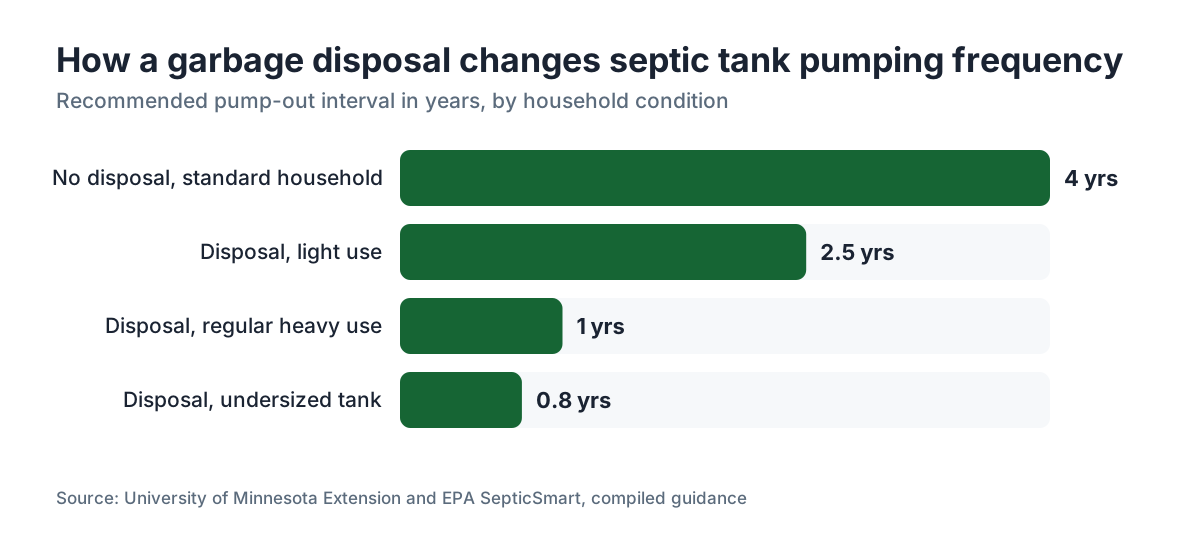
Concrete terms: if your household would normally need pumping every three to five years, a disposal in regular use could push that to every one to three years [4]. That's an extra $400 to $600 in pumping costs roughly every two years, depending on your region. Over a decade, the "free" convenience of a disposal costs real money.
Solids are only part of it. Finely ground food particles are light enough to float out of the tank with the effluent and reach the drain field. Once biological material starts clogging the biomat in the field, you're looking at septic system repair that can run $5,000 to $30,000 [5]. That's the failure scenario nobody wants.
Are septic-rated garbage disposals actually safer?
Several manufacturers sell disposals marketed for septic systems. The main differences are usually a slower grind speed (coarser particles instead of fine slurry), and a built-in compartment that doses the tank with an enzyme or microorganism packet each time the disposal runs.
Do they work? Somewhat, but not as much as the marketing implies. The coarser grind does mean less fine particulate leaving the tank. The enzyme packs are more doubtful. North Carolina State University Extension reviewed the evidence and concluded that biological additives, including the enzyme packs in septic-rated disposals, show "no reliable evidence" of reducing pumping frequency or improving system performance in controlled studies [6]. The tank already runs a full, active bacterial ecosystem. You aren't short on bacteria.
A septic-rated disposal beats a standard high-speed model if you're going to use one regardless. But it doesn't make the problem disappear. You're still adding a material load the system wasn't built for.
How does food waste affect the drain field specifically?
The drain field, sometimes called a leach field, is the part of the system most homeowners ignore until it fails. Liquid effluent from the tank flows out into perforated pipes buried in gravel trenches, and the surrounding soil filters and treats it before it reaches groundwater. That soil layer has a finite capacity.
Fine food particles that escape the tank coat the soil pores and feed anaerobic bacteria that build a thick biomat layer. Some biomat is normal and actually helps treatment. Too much, and infiltration slows, the field saturates, and sewage starts backing up or surfacing. Fats and grease are the worst offenders. They're hydrophobic and coat soil particles in a way that's extremely hard to reverse [7].
Drain field replacement is expensive. The cost to install a septic system varies by region and soil, but new drain field installation alone commonly runs $3,000 to $15,000, and in difficult soil or areas requiring an engineered system, costs go much higher [5]. A disposal that speeds up field failure is genuinely expensive over the long run.
For a closer look at how the field works and what goes wrong, the leach field guide covers it in detail.
What happens to pumping frequency if you use a disposal?
Pumping is the main tool that keeps a septic system working. The EPA recommends most household tanks be pumped every three to five years, depending on tank size and household size [1]. That baseline assumes normal household waste: human waste, toilet paper, and household wastewater. It does not assume regular food waste on top.
Add a disposal and most extension services recommend cutting that interval to one to three years. University of Minnesota Extension is blunt about it: households with garbage disposals should pump every year [4]. That's a conservative stance, but it reflects real field data from technicians who consistently find faster sludge buildup in disposal-equipped homes.
For guidance on your specific household size and tank volume, the how often to pump septic tank guide has a sizing table. The septic tank pumping article walks through what to expect from a service visit.
One practical point. If you're buying a home that already has a disposal wired to septic, ask about the pumping history. A tank that hasn't been pumped in five or six years with a disposal in use is a tank that's almost certainly overdue.
What foods are the worst to put down a disposal on a septic system?
If you're going to use a disposal anyway, knowing what does the most damage helps you keep the risk down.
Fats, oils, and grease are the single worst category. Cooking oil, bacon grease, butter, dairy fats. They congeal in the tank and the drain field pipes, and they're nearly impossible to reverse once they've coated the soil. Pour grease in a can, let it solidify, throw it in the trash.
Fibrous vegetables come next: celery, artichoke leaves, corn husks, asparagus ends. The fibers don't break down well and mat together in the tank. Starchy foods like pasta and rice absorb water and swell, adding to sludge volume faster than most people expect.
Eggshells are a mixed bag. Some composting guidance says they're fine. In a septic tank, the gritty ground shell settles and adds to the inert grit layer at the bottom, which doesn't break down at all.
The safest approach is to run the disposal only for small incidental scraps that can't realistically be composted, not as a scraping station for every meal.
Do you need a larger septic tank if you want to use a disposal?
Some jurisdictions require a larger-than-standard tank for homes with disposals. The reasoning is simple: if a disposal adds 30 to 50 percent more solids, the tank needs more room to hold that extra material between pump-outs.
Oregon's onsite wastewater regulations, for example, require tank capacity to increase by a set factor when a garbage disposal is present [8]. North Carolina's rules similarly require design changes. Your local or state health department's onsite wastewater program will have the specific requirement for your area.
If you're in an older home where the tank was sized without a disposal in mind, adding one without any adjustment means you're operating outside the design parameters from day one. The tank might physically cope for a while, but your pumping contractor will tell you they're seeing higher sludge levels earlier and earlier.
If you're planning a new install, bring the disposal into the design conversation upfront so the engineer sizes the system correctly. The cost to put in a septic tank article has current pricing context if you're looking at a full installation.
Is composting a realistic alternative for most households?
Yes, and it's what the EPA explicitly recommends in place of a disposal on a septic system [1]. Countertop composting bins with charcoal filters are cheap (usually $20 to $50) and kill the odor that made indoor composting unappealing a generation ago. Many municipalities now run curbside food scrap collection that makes it even easier.
For homeowners who find composting a hassle, the math is still worth a look. Even a modest bump in pumping frequency, say one extra pump-out every four years at $400 to $600, adds up to real money over the life of a home. Composting costs almost nothing.
For most households, the practical case against a disposal on septic isn't moral or environmental. It's financial. The convenience isn't worth the accumulated cost of more frequent septic tank pump out service and the higher risk to the drain field.
What should you do if your home already has a disposal connected to septic?
Start with a septic tank inspection. If the history is unknown or the system hasn't been serviced in years, have a licensed pumper open the tank and check sludge and scum layer depths. That tells you right away whether you're in trouble or still have some margin.
If sludge is at or above the one-third mark of tank depth, you need pumping now. Some service providers offer septic tank cleaning that goes beyond a basic pump-out to address scum and residue buildup.
Going forward, you have three choices. Disconnect the disposal and switch to composting, which is the most conservative and cheapest long-term option. Keep the disposal but commit to annual or biennial pumping and careful monitoring. Or switch to a septic-rated disposal and keep your pump-out schedule tight. All three work. Only one removes the added risk entirely.
SepticMind's maintenance tracking tools let homeowners and service operators log pump-out dates and set reminders tuned to actual household conditions, which helps when you're running a shorter-than-default service interval because of disposal use.
For anything that looks like a failure in progress, the septic tank repair guide covers what to expect from diagnosis through remediation.
What do septic service professionals actually see in the field?
Ask almost any experienced pumping contractor and you'll hear the same thing: the tanks in homes with active disposals look worse at the three-year mark than comparable tanks without them. The scum layer is thicker, the sludge is deeper, and the material is noticeably greasier. That's anecdotal in the aggregate, but it's consistent across the industry.
One thing professionals often flag is that homeowners underestimate how much food actually goes through the disposal. It's more than the obvious scraps. It's the rinse water from greasy pans, the residue in the bottom of the sink after cooking, the pasta pot rinsed out. All of it lands in the same place.
Nobody has great population-level data on disposal-related septic failures specifically, which is an honest gap in the research. The closest thing is the university extension literature aggregating field reports, and those point the same direction: more food waste in, more problems out.
Frequently asked questions
Can you have a garbage disposal with a septic tank?
Yes, it's physically possible. But the EPA and most university extension programs recommend against it for standard septic systems because ground food waste increases tank solids by 30 to 50 percent, shortens pumping intervals, and raises the risk of drain field damage. If you use one, plan to pump the tank annually and keep fats, oils, and fibrous vegetables out of it.
Will a garbage disposal ruin my septic system?
Not immediately, but it speeds up wear on every part of the system. More solids in the tank means faster sludge buildup, which means more frequent pumping. Fats and fine particles that escape the tank can clog drain field soil permanently, leading to expensive field replacement. Regular heavy use over years raises the odds of early system failure sharply compared to homes without a disposal.
How often should you pump a septic tank if you have a garbage disposal?
University of Minnesota Extension recommends annual pumping for households with garbage disposals. Most other extension services suggest every one to two years instead of the standard three to five. Your actual interval depends on tank size, household size, and how heavily you use the disposal. When in doubt, have a licensed pumper check sludge and scum depths and set a schedule based on real conditions.
Are septic-safe garbage disposals worth buying?
They're better than standard high-speed disposals if you're going to use one regardless. Coarser grinding cuts the amount of fine particulate reaching your drain field. But the enzyme or microorganism packs bundled with most septic-rated models haven't shown reliable benefits in controlled research from NC State Extension. A septic-rated disposal reduces but doesn't eliminate the added load on your system.
Does a garbage disposal void a septic system warranty?
It depends on your system's warranty terms and local permit conditions. Some states and counties require tank upsizing when a disposal is present, so adding one to a system not designed for it may put you out of compliance with your permit. Check your state's onsite wastewater regulations and your installer's warranty documentation before connecting a disposal to an existing system.
What foods should you never put down a disposal on a septic system?
Fats, cooking oils, and grease are the worst offenders; they congeal and clog drain field soil. Fibrous vegetables like celery, corn husks, and artichokes mat together and resist breakdown. Starchy foods like pasta and rice swell with water. Eggshells add inert grit. Treat the disposal as a last resort for small incidental scraps, not a primary way to get rid of meal prep waste.
Can you use a garbage disposal with a small septic tank?
Using a disposal with an undersized tank is especially risky. Smaller tanks fill faster under normal conditions; adding food waste speeds that up dramatically. Many states require tank capacity to increase by a set amount when a disposal is present. If your tank is already at the minimum size for your household, adding a disposal without upsizing it puts the system in a spot where it can't realistically keep up.
Do garbage disposals affect the drain field or just the tank?
Both. The tank takes the first hit: faster sludge and scum accumulation. The drain field takes the second and more expensive one. Fine food particles and fats that escape with the effluent coat the soil in the leach field, cutting its infiltration capacity over time. Drain field damage from clogging can be irreversible and may require full replacement costing $3,000 to $15,000 or more.
What's a good alternative to a garbage disposal if you're on septic?
Composting is the EPA's recommended alternative. Countertop composting bins with charcoal filters are cheap (around $20 to $50) and control odor well. Many areas now offer curbside food scrap pickup. Scraping plates into a trash or compost bin before rinsing keeps nearly all food waste out of the septic system entirely, which is the simplest way to protect your drain field long term.
Does the EPA allow garbage disposals on septic systems?
There's no federal law banning disposals on septic systems. But the EPA's SepticSmart program explicitly recommends against putting food waste into septic systems and suggests composting instead. Regulation happens at the state and county level, and some jurisdictions require tank upsizing or special system design when a disposal is present. Federal guidance discourages it; local rules may restrict it further.
How do I know if my septic tank is overloaded from disposal use?
Signs include slow drains throughout the house, gurgling from the plumbing, sewage odors near the drain field or inside the home, and wet or unusually green patches of grass over the field. A licensed pumper can open the tank and measure sludge depth; if sludge exceeds one-third of tank capacity, the tank needs pumping immediately. If you've been running a disposal without regular pump-outs, an inspection is a smart starting point.
Can I install a garbage disposal if I'm building a new home with a septic system?
Yes, but tell the designer upfront. An experienced septic system designer can size the tank larger to account for the added solids load. Some states require this by code. Designing for a disposal from the start costs far less than trying to add capacity later. Bring it up during permitting so the system is compliant from day one.
Do enzyme or bacterial additives help if you use a disposal with a septic system?
The research doesn't support them. NC State University Extension reviewed biological additive studies and found no reliable data showing they reduce sludge accumulation or extend pumping intervals. Septic tanks already hold an active bacterial ecosystem. Adding more bacteria or enzymes doesn't meaningfully speed breakdown of the food waste a disposal adds. Frequent pumping and reduced disposal use work better.
How much does it cost to pump a septic tank more often because of a disposal?
Pumping typically costs $300 to $600 per visit depending on tank size and your region. If a disposal cuts your pumping interval from four years to two, you're adding roughly one to two extra pump-outs per decade, or $300 to $1,200 in extra cost over ten years, before any drain field damage. That's the realistic minimum extra cost of keeping a disposal on a septic system.
Sources
- EPA SepticSmart: Protect Your Investment: EPA SepticSmart recommends against garbage disposals on septic systems, stating they can add significantly to solids, scum, and sludge; recommends composting instead.
- University of Illinois Extension, Septic Systems and Garbage Disposals: Garbage disposals increase the solids load entering a septic tank by 30 to 50 percent according to University of Illinois Extension guidance.
- University of Minnesota Extension, Septic System Owner's Guide: University of Minnesota Extension recommends annual septic tank pumping for households with garbage disposals.
- EPA, Septic System Costs and Homeowner Information: Drain field replacement costs can range widely; new septic system installation commonly costs several thousand to tens of thousands of dollars depending on soil and system type.
- North Carolina State University Extension, Septic System Additives: NC State Extension found no reliable evidence that biological additives, including enzyme packs in septic-rated disposals, reduce pumping frequency or improve system performance.
- EPA, A Homeowner's Guide to Septic Systems: Fats, oils, and grease coat drain field soil particles and are among the most damaging materials that can reach a leach field from a septic tank.
- EPA SepticSmart Week Materials: EPA SepticSmart recommends household tanks be pumped every three to five years under normal conditions without food waste additions.
- University of Minnesota Extension, Protecting Your Septic System: Extension field data consistently shows faster sludge accumulation in septic tanks in homes with garbage disposals compared to homes without them.
Last updated 2026-07-09