Can you use Drano with a septic system? The real answer
By the SepticMind Editorial Team
TL;DR
- No.
- Drano and most chemical drain cleaners are not safe for septic systems.
- The sodium hydroxide (lye) and bleach in Drano kill the anaerobic bacteria that break down waste in your tank.
- One bottle can stress your tank's biology for two to four weeks.
- Use a drain snake or an enzyme cleaner instead, and fix slow drains at the pipe level rather than with chemistry.
What does Drano actually do inside your septic tank?
Drano's main active ingredient is sodium hydroxide, a strong alkali with a pH near 14. [1] That's not a mild irritant. It's caustic enough to dissolve hair, grease, and soap scum by breaking their molecular bonds. That's exactly why it works in a city-sewer drain. The pipe doesn't care about chemistry. It just needs to be clear.
Your septic tank is different. It's a living bioreactor. The whole system works because colonies of anaerobic bacteria eat the organic waste coming in and turn it into liquid effluent the drain field can handle. [2] Sodium hydroxide doesn't distinguish between the grease clogging your P-trap and the bacteria processing your waste. It kills both.
Here's the sequence. You pour Drano down a slow drain. Some of it dissolves material near the trap. The rest flows to your tank and spikes the pH. Bacteria die off. Enzymatic activity drops. Solids start piling up faster than the tank can process them. Over the next few weeks you may notice slow drains, odors, or gurgling, which are the same symptoms you started with, just relocated. Eventually those solids can push toward the leach field, which has almost no way to recover from solid clogging. [3]
Drano Max Gel and Drano Dual-Force also contain sodium hypochlorite, which is bleach. Bleach is a well-known antimicrobial, and at drain-cleaner strength it's bactericidal. [1] So a single pour sends two separate bacteria killers into your tank.
Is Drano safe for septic systems according to any reliable source?
No source that regulates septic systems calls chemical drain cleaners safe. The EPA, state health departments, and university extension programs all say the same thing: keep them out of a septic tank.
Drano's manufacturer, SC Johnson, has historically labeled some products as "septic safe" based on limited lab testing. The fine print matters. Those tests looked at whether bacterial populations eventually recovered after exposure, not whether a single dose causes short-term dysfunction or speeds up long-term solids buildup. [4]
The EPA's SepticSmart program is blunter. Its guidance tells homeowners to avoid pouring chemicals down the drain that kill the beneficial bacteria in a septic system, and it lists household drain cleaners as a category to avoid. [2] That's the agency that sets the framework for septic design standards. Its take outweighs a product label.
State extension programs line up with EPA. The University of Minnesota Extension warns that strong chemical drain cleaners can harm the bacterial ecosystem in a tank and recommends mechanical solutions first. [5]
Here's the honest limit. Nobody has run a definitive long-term field study tracking septic failure rates against drain cleaner use. The closest evidence comes from lab studies on how caustic and chlorine compounds kill bacteria, plus aggregate guidance from EPA and state extensions. On that evidence, regular Drano use is a real risk, and occasional use is at best not helping you.
Does the type of Drano product change the risk?
A little. Not enough to make any of them safe for a septic system.
The formulas differ, so the damage differs. Here's a realistic comparison:
| Product | Main active ingredients | Relative septic risk |
|---|---|---|
| Drano Max Gel | Sodium hydroxide + bleach | High: two bacterial killers |
| Drano Dual-Force Foamer | Sodium hydroxide + bleach + surfactants | High |
| Drano Kitchen Granules | Sodium hydroxide + aluminum | High: aluminum reacts to generate heat, can damage PVC |
| Drano Liquid | Sodium hydroxide + bleach | High |
| Drano Snake Plus (enzymatic) | Enzymes + surfactants, lower caustic load | Lower, but still not recommended |
The enzymatic versions carry a meaningfully lower caustic load, and some septic pros consider them less damaging than the gel and liquid lines. "Less damaging" is not "safe." If you want an enzyme drain treatment, buy one built and tested for septic compatibility. That beats any Drano product. [5]
One caveat. Formulas change. SC Johnson has reworked these products more than once. What's on the label this year may not match what a study tested three years ago.
What actually happens to your septic bacteria when you pour chemicals in?
Your tank runs on three microbial communities. Acid-forming bacteria break organic matter into simpler compounds, methane-forming archaea turn those into gases and stable effluent, and a surface community in the drain field's biomat does the final treatment. [2] Disrupt any one layer and the whole treatment chain slows.
Sodium hydroxide moves the tank's pH fast and far. Anaerobic bacteria hate that. The optimal range for septic tank bacteria is roughly 6.0 to 7.5. A sudden spike above pH 9 sharply cuts enzymatic activity and can cause mass die-off of the methane-forming archaea, which are the slowest to bounce back. [3] Recovery takes about two to four weeks under normal conditions, and the tank processes waste less efficiently the whole time. Pour drain cleaner every month and the population never fully stabilizes.
That's the real cost. One bottle rarely destroys a working system. Repeated use keeps the tank in a permanently stressed state, and a stressed tank fills with solids faster. More frequent pumping. Higher cost. Higher odds of solids reaching the drain field.
Once solids reach the drain field, you're looking at biomat failure and possibly replacing the field. Septic system repair at that point runs $5,000 to $20,000 or more, depending on your soil and local permitting. [6]
What should you use instead of Drano on a septic system?
Start mechanical. A $30 hand auger clears most bathroom sink and tub clogs with no chemistry at all. Kitchen drains usually clog with grease in the trap or the horizontal run, and a sink plunger plus boiling water (for metal pipes) or very hot water (for PVC) handles most of it.
If you want a chemical assist, buy an enzyme or bacteria drain treatment labeled for septic use. These add cultures and enzymes that work with your tank's biology instead of against it. They're slower than caustic cleaners. They also don't leave you with a dead tank.
For recurring slow drains, figure out why the drain keeps clogging. A drain that needs chemical help every few months usually has a partial blockage or a pipe-slope problem that no chemistry fixes for good. A plumber with a drain camera finds it in about an hour. That beats years of chemical damage.
SepticMind's knowledge base has an overview of what septic-safe maintenance products look like if you want to compare ingredient lists before buying.
For the tank itself, regular septic tank pumping on a 3-to-5-year schedule (adjusted for household size and tank volume) is the single most effective thing you can do to keep the system healthy. [2] No additive, enzyme, or drain cleaner replaces it.
Are flushable wipes safe for septic systems?
No. This one is clear, and the evidence is strong enough that the FTC has taken action against wipe makers who labeled products flushable when they weren't. [7]
Toilet paper is built to fall apart in water fast. Most flushable wipes use synthetic fibers, resins, or bonding agents that hold together under mechanical stress. They clear the toilet and may reach the tank. They don't break down on any timeline that matters for a septic system. They pile up as a floating mat of solids that speeds tank filling and can clog the inlet baffle.
A 2019 Water Research Foundation study tested 101 wipe products labeled "flushable" or "dispersible" and found only a handful broke down enough to meet even minimal flushability standards. [8] Most behaved like rags in the plumbing.
EPA SepticSmart guidance for septic households is short: only flush human waste and toilet paper. [2] That's the whole list. Wipes, even the flushable kind, are not on it.
If wipes are already in your system and you're seeing slow drains or early pump-out needs, a septic tank inspection tells you how much material has piled up.
Are dude wipes safe for septic systems?
No, not on a septic system. Dude Wipes markets them as flushable and plant-fiber based, but the manufacturer's claim isn't the question. The question is what the material does in a septic tank over weeks and months.
Dude Wipes use a plant-based fiber blend and carry septic-safe marketing. Independent lab testing of similar "flushable" personal care wipes has consistently shown slower breakdown than toilet paper, often by a factor of 10 or more under simulated sewer conditions. [8] Septic tanks have even less mechanical agitation than municipal sewers, so breakdown runs slower still.
The safe answer: don't flush any wipe product if you're on a septic system. Put a small trash can next to the toilet. It's not glamorous. It keeps solids out of your tank. For a household going through wipes regularly, the cost gap between pumping every 2 years and every 4 years adds up fast. A septic tank pump out costs roughly $300 to $600 for most residential tanks. [6]
Is OxiClean safe for septic systems?
At normal laundry doses, yes, mostly. OxiClean is different chemistry from Drano, and the risk is lower but not zero.
OxiClean's active ingredient is sodium percarbonate, which releases hydrogen peroxide when it dissolves in water. Hydrogen peroxide is a broad-spectrum antimicrobial. At the low concentrations that reach your tank after a washing machine load dilutes it, the impact is probably minor. [9] EPA guidance on septic-safe laundry focuses more on phosphate content, surfactant type, and load volume than on percarbonate. [2]
The practical concern is dose and frequency. A normal laundry load diluted through 30-plus gallons of water reaching a 1,000-gallon tank is a much smaller insult than pouring concentrated caustic straight down a drain. Most septic pros consider occasional OxiClean use acceptable. Daily use in large quantities is a different story.
Use OxiClean as a laundry booster and you're probably fine. Dump a scoop directly down a slow drain as a cleaner and you're not. That concentrated dose acts more like a disinfectant treatment than a laundry additive.
Better laundry habits for septic households: liquid detergents over powder (powder often carries fillers that add to tank solids), low-phosphate formulas, and spreading loads across several days instead of running eight on Saturday. [5]
How do slow drains and clogs usually signal a septic problem versus a pipe problem?
The pattern tells you where to look. One slow drain means a pipe problem. Several slow drains at once, or gurgling and odors, means a septic problem. People reach for Drano either way, and that's the mistake.
A single slow drain in one sink or tub is almost always a local pipe clog: hair in the trap, grease in the P-trap, soap scum on the pipe walls. Mechanical clearing works. This has nothing to do with your tank.
Multiple slow drains across the house at the same time point downstream of where the individual drains converge. That could be the main line to the tank (roots, grease, a belly in the pipe), the inlet baffle, or a full tank. Now the septic system is the likely cause.
Gurgling when you flush, sewage odors near the drain field, or soggy ground over the field in dry weather point straight at a system problem. At that stage no drain cleaner helps. You need a professional assessment and likely a septic tank cleaning or repair.
The how often to pump septic tank guide has the usage-based schedules if you want to check whether you're overdue for a pump-out as the underlying cause.
What does the EPA say homeowners should and shouldn't put in a septic system?
The EPA SepticSmart initiative publishes plain homeowner guidance. The agency's framing is that "what goes down your drains affects how well your septic system works." [2]
The avoid list from EPA SepticSmart includes chemical drain openers, oil-based paints and solvents, large amounts of antibacterial soaps, any bleach product used in concentration, pharmaceuticals, and items that don't break down (wipes, paper towels, cotton products, feminine hygiene products).
EPA also advises limiting garbage disposal use for septic households. Every extra load of food solids speeds tank filling and raises how often you'll need a pump-out.
On products sold as septic additives, EPA is measured. Its position is that research has not proven additives are beneficial to a properly functioning system, though some enzyme-based products are considered benign. [2] The agency endorses no specific brand.
One direct quote from EPA SepticSmart guidance: "Never pour chemicals, paint, or medications down the drain, as these can be harmful to your septic system." That's the agency's stated position, not an interpretation.
State programs mirror the federal line. The Washington State Department of Health onsite sewage guide lists chemical drain cleaners as incompatible with septic biology. [10] Check your state's department of health or environmental quality for local rules, since some states have gone further with specific product restrictions.
How much can using Drano regularly actually cost you in the long run?
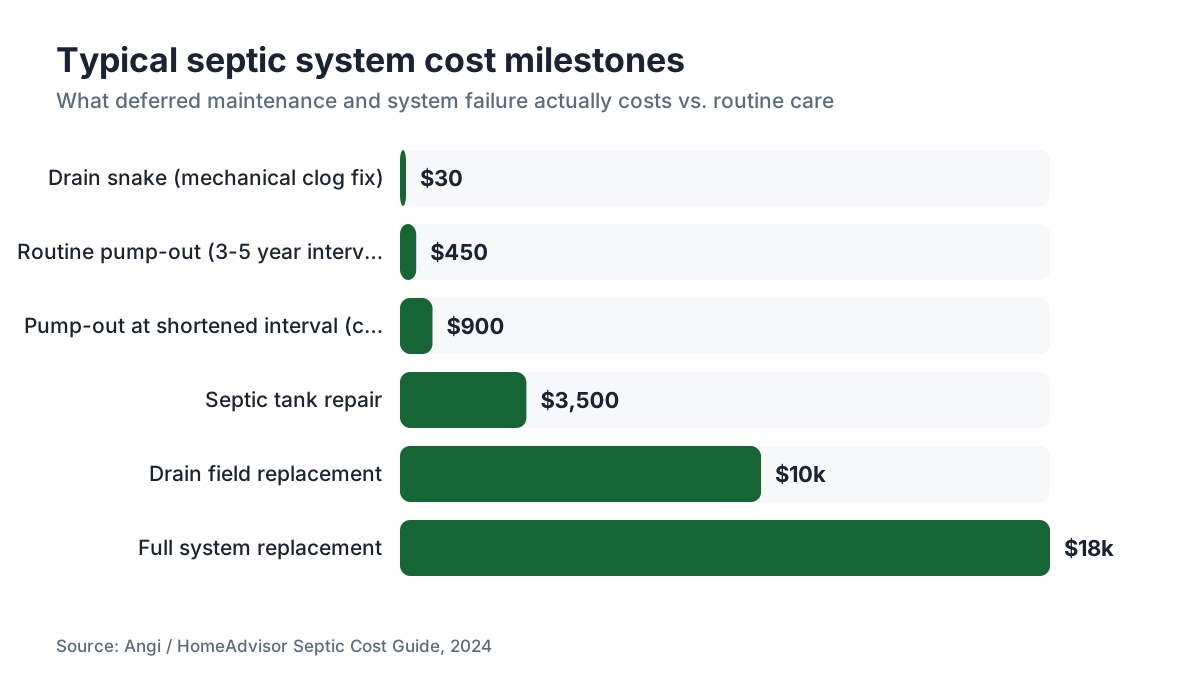
The math makes the case better than the biology does. A drain snake costs $30. A failed drain field costs thousands. Everything in between rides on how well you protect the bacteria.
A healthy, well-maintained tank typically needs pumping every 3 to 5 years for a family of four with a 1,000-gallon tank. [2] That runs about $300 to $600 per pump-out in most U.S. markets. [6]
A tank that's chronically stressed (by chemicals, overuse, or the wrong inputs) fills with unprocessed solids faster. Septic technicians report that households using heavy chemical drain cleaners sometimes need pump-outs every 18 to 24 months. Nobody has a clean controlled study on this, but the mechanism is real: slower bacterial activity means solids pile up faster. At $400 per pump-out, cutting your interval from 4 years to 2 years costs an extra $200 a year, indefinitely.
Drain field failure is the catastrophic outcome. Replacing a failed field runs $3,000 to $15,000 for a conventional system in most U.S. states, and more for alternative systems or hard sites. [6] If you need a full replacement, the cost to install a septic system in 2024 ranges from $6,000 to $25,000 depending on system type and location. [6]
A $30 drain snake and 10 minutes of work sits on the other side of that ledger. The math isn't close.
SepticMind helps septic service operators track customer pump-out intervals and system histories, which is one reason operators on the platform tend to catch deteriorating systems earlier than average.
What are the safest products and habits for septic drain maintenance?
Mechanical tools, hot water, enzyme treatments, and pump-outs on schedule. That's the whole playbook, and none of it kills your tank.
Mechanical first: a hand auger for sink and tub drains, a closet auger for toilets, a plunger for everything. These are the right first response and they harm nothing.
Enzyme-based drain maintenance: products like Bio-Clean, Earthworms, or similar bacterial and enzyme blends add cultures that digest grease and organic buildup. They're slow (days to weeks versus minutes for caustic cleaners) but compatible with septic biology. Look for products that list live bacterial cultures on the label and state "safe for septic systems" outright.
Hot water flushes: for kitchen drains, running very hot water for 2 to 3 minutes after cooking keeps grease from solidifying in the trap. Free and genuinely effective.
Regular pump-outs: this one is non-negotiable. No maintenance product, enzyme, or additive substitutes for physically removing accumulated solids. EPA recommends every 3 to 5 years as a starting point, adjusted for household size and tank volume. [2] A septic tank emptying service can report your actual scum and sludge levels so you can set your schedule to real usage instead of a generic number.
Things to avoid beyond Drano: heavy use of antibacterial soaps, bleach-based cleaners poured straight down drains, any solvent (paint thinner, acetone, mineral spirits), and cooking grease down the kitchen sink. Grease is the number one cause of kitchen drain clogs and a big contributor to tank solids.
Frequently asked questions
Can you use Drano on septic systems at all, even just once?
A single use probably won't destroy a healthy system, but it isn't harmless. Sodium hydroxide at drain-cleaner strength kills anaerobic bacteria and spikes tank pH. Recovery takes two to four weeks. If the clog is in the pipe itself (say, hair in the trap), a drain snake does the same job with zero risk. There's no scenario where Drano is the best choice for a septic household.
Is Drano safe on septic systems if I use it rarely?
Rare, sparing use is less harmful than regular use, but EPA still advises against chemical drain cleaners for septic households regardless of frequency. You don't know how much reaches the tank versus staying in the pipe, and you can't control the hit to your bacteria once it arrives. A large, healthy tank may recover fine from an occasional dose. It's still an unnecessary risk when mechanical tools exist.
Are flushable wipes safe for septic systems?
No. A 2019 Water Research Foundation study tested 101 wipe products labeled flushable or dispersible and found very few broke down adequately. In septic tanks, which have less mechanical agitation than municipal sewers, breakdown is even slower. Wipes pile up as solids, speed tank filling, and can clog the inlet baffle. EPA SepticSmart guidance is explicit: only flush human waste and toilet paper.
Are dude wipes safe for septic systems?
Dude Wipes are marketed as flushable and plant-fiber based, but independent testing of similar products consistently shows much slower breakdown than toilet paper, often by a factor of 10 or more in simulated conditions. Septic tanks have even less agitation than those test setups, so breakdown runs slower still. The correct answer: put a trash can next to the toilet and don't flush any wipe product on a septic system.
Is OxiClean safe for septic systems?
At normal laundry doses, OxiClean (sodium percarbonate) is generally considered acceptable for septic systems. By the time it reaches the tank it's far more dilute than a concentrated drain treatment. EPA's septic laundry guidance focuses more on phosphate content and surfactant type than percarbonate. Using OxiClean as a laundry booster is probably fine. Pouring concentrated doses straight down a drain as a drain treatment is not.
What drain cleaner is safe for a septic system?
No caustic or bleach-based liquid drain cleaner is genuinely safe for a septic system. The safest option is mechanical: a drain snake or plunger. If you want a chemical product, use an enzyme or live-bacteria drain treatment labeled for septic use, such as Bio-Clean. These work with your tank's biology instead of killing it, though they take longer to clear a clog.
How long after using Drano is my septic tank affected?
Bacterial populations in a septic tank typically take two to four weeks to recover from a significant caustic or bleach exposure, based on lab studies of anaerobic bacterial kill and regrowth rates. During that window the tank processes waste less efficiently and solids build up faster. If you've already used Drano, don't panic. Avoid further chemical exposure, keep to toilet-paper-only flushing, and let the tank biology re-establish itself.
Can I use bleach to clean my toilet if I have a septic system?
Occasional toilet bowl cleaning with a normal amount of bleach-based cleaner is unlikely to cause serious harm, because the diluted cleaner reaches the tank at low concentration. Heavy or frequent bleach use, or pouring bleach straight down drains, is a different matter. EPA advises limiting products that kill beneficial bacteria. Use bleach-based cleaners sparingly, rinse thoroughly, and don't let them sit in the drain.
Does Drano claim to be safe for septic systems?
Some Drano products have carried "septic safe" marketing language based on lab studies showing bacterial populations recovered after exposure. Consumer and environmental advocates have criticized these claims as misleading, arguing the tests don't reflect real-world conditions or cumulative use. EPA and most state extension programs do not endorse chemical drain cleaners as compatible with septic system health, regardless of the label.
What happens if you put Drano in a septic tank regularly?
Regular Drano use keeps your tank's bacterial population in a chronically stressed, partly depleted state. Solids build up faster because biological breakdown slows. You'll likely need more frequent pump-outs at $300 to $600 each. Over years, the accelerated buildup raises the odds of solid material reaching the drain field, which can cause biomat failure. Drain field replacement costs $3,000 to $15,000 or more depending on system type and location.
Is Rid-X or a septic additive better than Drano for maintaining a septic system?
Rid-X and similar bacterial or enzyme additives are far less harmful than caustic drain cleaners, but EPA's position is that additives have not been proven to benefit a properly functioning system. A tank with a healthy bacterial population and pump-outs on schedule doesn't need supplemental bacteria. Put the additive budget toward pump-out costs instead. If your system is genuinely struggling, a professional inspection beats any additive.
Are paper towels or cotton balls safe to flush on a septic system?
No. Paper towels, cotton balls, cotton swabs, feminine hygiene products, and thick two-ply tissues that aren't standard toilet paper do not break down adequately in septic systems. They pile up as solids and speed tank filling. EPA SepticSmart guidance is explicit: flush only human waste and toilet paper. Everything else goes in the trash. This is one of the simplest habits for extending your system's service life.
How often should a septic tank be pumped if I've been using chemical drain cleaners?
If you've used chemical drain cleaners regularly, have the tank inspected and the sludge and scum levels measured rather than going by a fixed calendar. A technician can tell you the real accumulation rate. A chemically stressed tank may hit the pump-out threshold sooner than a standard 3-to-5-year schedule suggests. After you stop using chemicals, give the tank at least one full pump-out cycle to reset, then return to schedule-based maintenance.
Sources
- SC Johnson / Drano product safety data sheet (SDS) for Drano Max Gel: Drano Max Gel lists sodium hydroxide and sodium hypochlorite (bleach) as active ingredients; pH approximately 13-14
- U.S. Environmental Protection Agency, SepticSmart homeowner guidance: EPA SepticSmart advises homeowners to avoid chemicals that kill beneficial bacteria, flush only human waste and toilet paper, and pump tanks every 3-5 years; direct quote: 'Never pour chemicals, paint, or medications down the drain, as these can be harmful to your septic system.'
- University of Nebraska-Lincoln Extension, 'Your Septic System: Care and Maintenance': Anaerobic bacteria in septic tanks are pH-sensitive; optimal range approximately 6.0-7.5; alkaline spikes from caustic chemicals reduce enzymatic activity and can cause die-off of methane-forming archaea
- Consumer Reports, investigation of 'septic safe' drain cleaner labeling claims: SC Johnson's septic safe claim for some Drano products is based on internal testing of bacterial recovery; independent and regulatory experts have questioned whether lab conditions reflect real-world septic system impacts
- University of Minnesota Extension, 'Caring for Your Septic System': Strong chemical drain cleaners can harm the bacterial ecosystem in a septic tank; enzyme-based alternatives and mechanical clearing recommended; liquid detergents preferred over powder for septic households
- HomeAdvisor / Angi, Septic System Cost Guide (2024): Residential septic tank pump-out costs $300-$600 in most U.S. markets; drain field replacement $3,000-$15,000; full system installation $6,000-$25,000 depending on system type and region
- U.S. Federal Trade Commission, action against wipe manufacturers for misleading 'flushable' labeling: FTC took enforcement action against wipe manufacturers whose 'flushable' labeling was found to be deceptive because products did not break down adequately in sewer and septic conditions
- Water Research Foundation, 'Flushability Testing of Nonwoven Products' (2019): 2019 WRF study tested 101 wipe products labeled flushable or dispersible; the majority did not break down sufficiently to meet minimal flushability standards; most behaved like rags in plumbing and wastewater systems
- National Environmental Services Center (NESC) at West Virginia University, 'Septic System Owner's Guide': Oxygen-releasing compounds like sodium percarbonate (OxiClean) at normal laundry dilution rates are considered low risk for septic tank bacterial populations; concentrated doses directed into drains pose higher risk
- Washington State Department of Health, Onsite Sewage System homeowner guidance: Washington DOH guidance lists chemical drain cleaners as incompatible with septic system biology and advises against their use in homes on septic systems
- U.S. EPA, 'How Your Septic System Works': EPA describes septic tank as a living bioreactor relying on anaerobic bacterial communities to break down organic waste into liquid effluent suitable for drain field treatment
- NSF International, Standard 40 and 245 for residential wastewater treatment systems: NSF standards for septic system components do not include requirements for chemical drain cleaner compatibility; bacterial treatment performance is a core certification criterion
Last updated 2026-07-09