Septic tank pump replacement: costs, signs, and how it works
By the SepticMind Editorial Team
TL;DR
- Replacing a septic tank pump costs roughly $200, $1,500 for parts, plus $150, $400 in labor.
- Effluent and grinder pumps sit at the higher end, float switches at the lower.
- You know it's time when the alarm sounds, sewage backs up, or the pump runs nonstop without moving water.
- Most jobs take a licensed contractor 2 to 4 hours.
What does a septic tank pump actually do?
Most conventional gravity-fed septic systems don't have a pump at all. Waste flows downhill from the house into the tank, solids settle, and clarified effluent drains passively into the leach field. A pump only enters the picture when gravity can't do the job.
There are three situations where that happens. The drain field sits uphill from the tank. The system uses a pressurized dosing design that pushes effluent out in timed, measured batches instead of letting it trickle. Or the household has a grinder pump system, common with low-pressure sewer lines and macerating toilets, where raw sewage gets shredded and pushed long distances.
The EPA's SepticSmart program flags pump-dependent systems, often called "pump-to-field" or "pressure distribution" systems, as needing more frequent inspection because the pump is the single point of failure that decides whether effluent reaches the drain field at all [1]. When the pump dies, the whole system stops. That's not a thing you want to learn on a holiday weekend.
Know which type you have before you price anything. An effluent pump moves clarified liquid from a pump chamber after the main tank. A grinder pump handles raw sewage and costs a lot more to replace. A dosing pump is basically an effluent pump on a timer. Float switches and control panels are separate parts that often fail on their own, independent of the pump.
What are the signs that a septic pump needs replacing?
The loudest sign is an alarm. Most pump systems have a high-water alarm, a float wired to a panel that trips when the pump chamber fills above a set level because the pump isn't keeping up [2]. The alarm isn't the problem. It's the symptom. Don't silence it and walk away.
Sewage backing up into the lowest drains in the house, usually a basement floor drain or a ground-floor toilet, points to a pump that has stopped moving liquid. Slow drains throughout the house are a softer signal, easy to confuse with a clog. But if they show up alongside an alarm, the pump is your prime suspect.
A pump that runs and runs without cycling off is another red flag. Either the float switch is stuck, or the pump is running but too weak to empty the chamber, which usually means a worn impeller or a motor pulling current without producing flow. Some homeowners catch this by noticing the panel's run-light never goes dark.
Alerts you shouldn't ignore:
- High-water alarm sounding for more than a few hours
- Sewage odors near the pump chamber lid
- Wet ground or lush green patches over the drain field paired with any pump symptom
- Tripped breaker on the pump circuit (reset it once; if it trips again, call a pro before touching it a third time)
- Pump that hums but doesn't move water
One thing that fools people: a failed float switch can make a perfectly good pump look dead. The switch is cheap, $20 to $80. Before anyone condemns the pump, a good technician tests the float first [3].
How much does septic pump replacement cost?
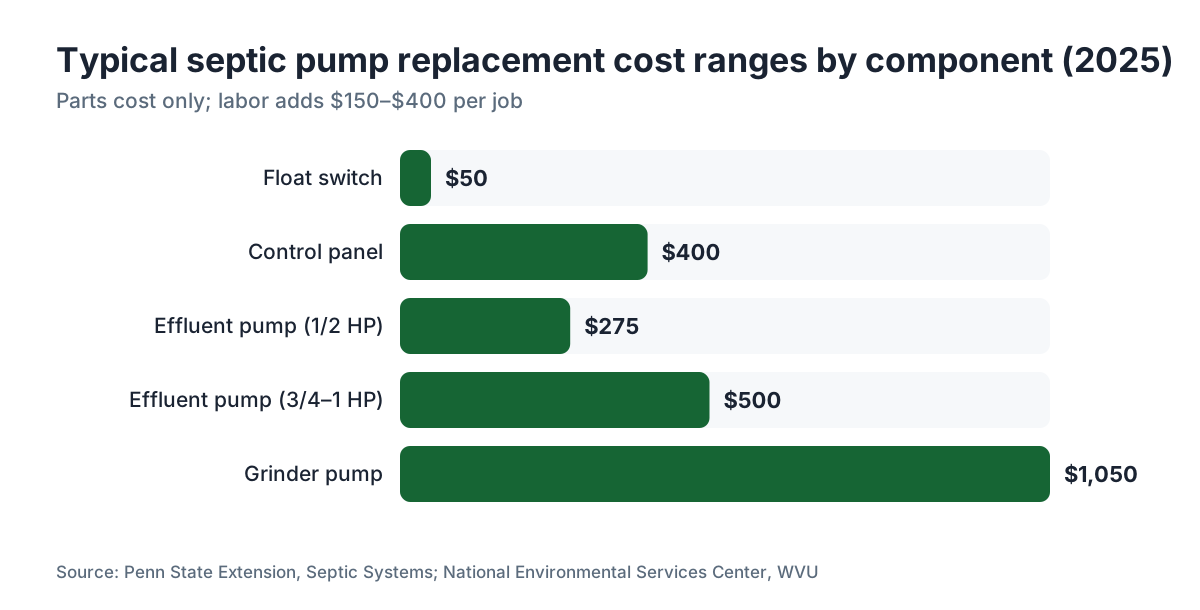
Cost splits into parts and labor, and it swings more than most homeowners expect. Here's a realistic picture based on published contractor pricing and equipment costs as of 2025.
| Component | Typical cost range | Notes |
|---|---|---|
| Effluent pump (1/2 HP) | $150, $400 | Most common residential pump |
| Effluent pump (3/4 to 1 HP) | $300, $700 | Larger homes or longer runs |
| Grinder pump | $600, $1,500 | Higher pressure, handles raw sewage |
| Float switch | $20, $80 | Often replaced alongside pump |
| Control panel | $200, $600 | Replaced less often than pump |
| Labor (2 to 4 hrs) | $150, $400 | More in high cost-of-living areas |
| Emergency/after-hours surcharge | $100, $300 | Common since alarms tend to trip at night |
| Pump chamber access/cleaning | $100, $250 | Sometimes needed if the chamber hasn't been serviced |
A straightforward effluent pump swap in an accessible chamber, pump plus labor, usually lands between $400 and $900 total. A grinder pump replacement with panel work can run $1,500 to $2,500. Nobody has clean national data on this. The ranges above come from contractor pricing guides and state extension cost estimates, not a single controlled study, so treat them as a solid ballpark, not a promise [4].
If a septic tank pump out is needed at the same time, add $300 to $600. Many technicians won't drop in a new effluent pump without first confirming the pump chamber and main tank aren't due for service, which is fair. Nobody wants to install a new pump into a chamber full of solids.
Geography moves the needle hard. Rural areas with fewer licensed contractors tend to have higher labor rates, not lower. Emergency calls almost always cost more than scheduled ones, sometimes by 50%.
What types of septic pumps are there, and which one do you have?
Getting the replacement right starts with knowing exactly what you're swapping. The three main types are effluent pumps, grinder pumps, and sump-style dosing pumps. They are not interchangeable.
Effluent pumps sit in a separate pump chamber downstream of the septic tank. By the time liquid reaches them, the heavy solids have already settled out. These pumps move relatively clean liquid at moderate pressure and are the most common type in residential pressure-distribution drain field systems. Zoeller, Liberty Pumps, and Myers are well-established brands here. Typical residential ratings run 1/2 to 3/4 HP.
Grinder pumps handle raw or lightly screened sewage, shredding solids before pumping them under high pressure, sometimes over 100 feet of vertical rise or hundreds of feet horizontally. They're standard in community low-pressure sewer systems and in homes where a basement bathroom sits below the gravity sewer line. They cost more and work harder, so their service life is shorter, typically 7 to 12 years against 10 to 15 for a well-sized effluent pump [5].
Dosing pumps are mechanically close to effluent pumps but run off a timer panel instead of just a float. The timer doses effluent to the drain field in set volumes at set intervals, which protects certain field designs from hydraulic overload. Mound system, drip irrigation, recirculating sand filter? You almost certainly have a dosing pump.
Your system's as-built drawing, filed with your county health or environmental department when the system went in, names the pump type and model. If you don't have the document, your county may. Get it before you call for quotes.
Does septic pump replacement involve a pump truck?
This trips people up, and the terminology doesn't help. "Pump" means two different things in the septic world.
A septic tank pumping truck, sometimes called a pump truck or vacuum truck, uses a large vacuum pump to suck accumulated solids out of the tank and haul them off for disposal. That's routine tank maintenance. It's not the same as replacing the submersible pump inside the tank or pump chamber.
The two services often happen together, though. When a technician opens a pump chamber to replace a failed submersible pump, they frequently find the chamber holds solids or the main tank is overdue. A pump truck visit at the same time is efficient and often smart. Some contractors bring both capabilities to one job; others subcontract the vacuum work.
Call a septic company and say "my pump needs replacing," and the dispatcher should ask which pump you mean. A good company clarifies. A sloppy one sends the wrong crew or the wrong truck.
For routine tank maintenance, see our guide on how often to pump your septic tank. The EPA recommends inspecting septic systems every 1 to 3 years and pumping every 3 to 5 years for a typical household [1], but pump-dependent systems warrant more frequent inspection given the risk a pump failure poses to everything downstream.
How do you replace a septic pump, step by step?
Here's what a professional replacement looks like start to finish. I'd steer you hard away from DIY on anything past a float switch swap, not because it's technically impossible, but because most jurisdictions require a licensed contractor for septic work, and a bad install can void a warranty, fail an inspection, or create a health hazard [6].
- Confirm the fault. The tech checks the alarm panel, tests the float switch with a manual override, and measures voltage at the pump. If the pump hums but won't move water, that points to motor or impeller failure. If there's no voltage at the pump, the trouble is the float, breaker, or panel, not the pump itself.
- De-energize the circuit. The pump breaker gets locked out before anyone touches wiring or the pump. This part isn't optional.
- Open and assess the chamber. The access lid comes off. If the chamber holds real solids accumulation, a pump truck gets called or the job pauses. Installing a pump into a dirty chamber is bad practice.
- Pull the old pump. Most residential pumps hang on a discharge pipe with a quick-connect fitting. The tech lifts it out by the safety rope. There should always be a safety rope attached to the pump and anchored to the lid; if there isn't, that gets fixed. They record the brand, model number, HP rating, and discharge size.
- Size the replacement. The new pump has to match or exceed the old pump's flow rate and head pressure. An undersized pump is a common mistake that leads to early failure or weak dosing. The system design documents state the required gallons per minute and total dynamic head.
- Install and wire. The new pump goes in with the float set to the correct trigger level. Wiring connections are waterproof. The safety rope goes back on.
- Test. The tech triggers the pump manually, checks for flow at the discharge point, and confirms the float cycles the pump on and off at the right water levels. The alarm gets tested too.
- Document. A good contractor hands you a written record of pump make, model, HP, install date, and any notes on chamber condition. Keep it with your system records.
The whole job usually runs 2 to 4 hours for a straightforward effluent pump. A grinder pump replacement, with a larger pump, higher-pressure fittings, and more complex wiring, can take 4 to 6 hours.
How long does a septic pump last, and what shortens its life?
A well-sized effluent pump in a healthy system typically lasts 10 to 15 years. Grinder pumps run harder and land at 7 to 12 years. Float switches often quit before the pump does and should get checked at every service visit [5].
What kills pumps early:
Too much water at once. Everyone showers, the dishwasher runs, the washing machine cycles, all on the same morning, and the pump chamber fills faster than the design allows. The pump runs longer, heats up, and wears out sooner. Spreading water use through the day genuinely helps a pump last.
Running dry. A float stuck in the "off" position keeps the pump from running, the chamber overflows, and by the time anyone notices the pump may have been cycling erratically in a half-drained chamber. A float stuck "on" runs the pump dry and burns out the motor fast.
Flushing the wrong stuff. Wipes (even "flushable" ones), feminine hygiene products, and similar junk reach grinder pumps and clog or wreck the impeller. Effluent pumps take damage from any solids that slip past the main tank, which shouldn't happen if the tank is maintained. See our overview of septic tank cleaning for why regular maintenance protects pump life.
Power quality. Voltage swings and frequent outages stress pump motors. A surge protector on the pump circuit is cheap insurance.
Cold ground in northern climates can affect chamber performance where insulation is thin, though the pump itself sits submerged and usually isn't the weak point. Discharge lines above the frost line are the more common cold-weather failure.
Can you replace a septic pump yourself, or do you need a permit?
Honest answer: it depends on your state and sometimes your county. But most jurisdictions require a licensed pro for any septic repair that involves opening the system and swapping a component [6].
A handful of states let homeowners maintain their own systems, sometimes with limits. "Maintenance" is usually defined narrowly, though, and rarely covers replacing electrical parts like pumps and panels. The risk isn't only legal. Submersible pump installs involve 120V or 240V in a wet environment. Wiring errors can create shock hazards, electrocute someone reaching into the chamber, or start a fire in the panel.
A permit matters for resale too. When you sell the home, a septic tank inspection is often required. Unpermitted work that shows up during that inspection can delay or kill the sale. Unpermitted repairs also don't reset the warranty clock, since most manufacturers require professional installation for coverage.
The practical move: call your county health department or environmental office and ask flat out whether homeowner replacement is allowed for your system type. They'll tell you. If a permit is required, it usually runs $50 to $150 and it's worth every dollar for the cover it gives you.
For broader context on what septic repairs need permits and licensed contractors, see our guide on septic system repair.
What happens if you ignore a failed septic pump?
Nothing good. And it gets worse fast.
In the first day or two, the pump chamber fills to capacity. Effluent backs up into the septic tank, which then fills faster than normal. Drains slow. The alarm, if you have one, keeps sounding.
Within a few days to a week, the system likely hits overflow. Effluent backs up into the house through the lowest drain points, usually a basement floor drain or a toilet. Raw sewage inside the house is a health hazard and a cleanup bill that dwarfs the pump replacement price.
Outside, you may see ponding or saturated soil near the tank or pump chamber. Effluent surfacing in the yard is a public health violation in every state, subject to fines and mandatory repair orders [7]. Some states can issue cease-and-desist orders requiring the household to stop using water until the system is fixed.
The drain field takes damage too. Pressure-distribution systems rely on timed, controlled doses so the soil rests between applications. Without the pump dosing right, raw effluent can flood parts of the field and drive biomat formation that takes years to recover, or forces a full leach field replacement at $5,000 to $20,000 [8].
A $500 pump replacement ignored for two weeks can become a $15,000 drain field replacement. That's not hypothetical. It's the exact failure mode these systems are designed around.
How do you find a qualified contractor for pump replacement?
Start with your state's licensing database. Most states license septic installers and pumpers separately from general plumbers. An "onsite wastewater" or "septic installer" license is what you want for pump work. Not every licensed plumber has the training or authorization to work on septic systems in every state [9].
The National Onsite Wastewater Recycling Association (NOWRA) and the National Association of Wastewater Technicians (NAWT) both keep contractor directories and run voluntary certification programs [10]. A NAWT-certified inspector or NOWRA-member contractor is a reasonable signal of professionalism, though plenty of good local contractors aren't members.
When you call for quotes:
- Ask specifically whether they replace the type of pump you have (effluent vs. grinder)
- Ask whether they pull permits for pump replacement in your jurisdiction
- Ask for a written estimate that breaks out parts and labor separately
- Ask how they handle disposal of the old pump and any pumped solids
Operators running multi-truck septic businesses often use scheduling and job-tracking software to manage pump replacement work alongside routine septic tank pump out routes. SepticMind, for example, is built for septic service operators to manage jobs, equipment records, and compliance documentation in one place, which matters when a customer calls back two years later asking what pump you installed.
Get at least two quotes for any job over $800. Price spread between contractors for the same pump replacement can hit $300 to $600, and it's usually worth one phone call to find out.
How do you maintain a septic pump to make it last longer?
The best thing you can do is have the system inspected on a schedule. The EPA recommends inspecting pump-dependent systems annually [1]. A technician can test the float switch, measure pump run times, and catch a failing impeller before it quits entirely.
Past inspections:
Spread water use. Don't run four loads of laundry and the dishwasher on the same day you have ten people over. Sounds extreme, but a system sized for a family of four can get its pump chamber swamped by a party. Hydraulic overload shortens pump life.
Protect the inlet from solids. The tank does the heavy lifting of keeping solids out of the pump chamber, but only if it's pumped on schedule. An overfull tank passes solids into the chamber, where they jam or grind down the impeller. Regular septic tank pumping is direct pump protection.
Keep the lid accessible. Buried access lids get driven over, cracked, or seized shut. When a pump fails and the lid won't open fast, emergency repair costs climb. Risers that bring the lid to grade are worth the $200 to $400 install.
Check your alarm. Test it once a year by manually lifting the high-water float. If the alarm doesn't sound, the monitoring has failed separately from the pump and you've lost your early warning. Replacing a $30 alarm float beats discovering a dead alarm while the chamber overflows.
For tracking service intervals and pump runtime across multiple properties, septic management software can automate those reminders, a feature septic service operators find genuinely useful across dozens of accounts.
What should you expect during a septic pump replacement visit?
Knowing what a normal service call looks like helps you spot when something's being skipped.
A good technician shows up with the likely replacement pump on the truck, or at minimum the tools to diagnose first and come back with the right part. They'll ask about the alarm history, how long drains have been slow, and whether the system has a service record. That context matters for diagnosing right.
They'll want access to the control panel and the pump chamber lid. If the lid is buried, expect some digging. They should de-energize the circuit before opening the chamber. If they don't, that's a safety flag.
After pulling the old pump, a good tech shows it to you and explains why it failed. A burned-out motor looks and smells different from a jammed impeller. Understanding the failure mode helps stop a repeat.
The invoice should itemize the pump model and specs, the float switch if replaced, labor hours, any permit fees, and disposal charges. A vague invoice that just says "pump replacement, $800" is a yellow flag. You want that paperwork for resale and for warranty claims.
If the tech recommends more work, like a control panel replacement or a septic tank repair they spotted while in the chamber, ask to see what prompted it. A photo or a physical explanation is fair. You're not obligated to approve extra work on the spot, and a second opinion on anything over $500 is sensible.
Most pump replacements finish in one visit. If the contractor has to order a part, a temporary bypass or manual pumping may keep the household running in the meantime. Ask about that plan upfront.
Frequently asked questions
How much does it cost to replace a septic pump?
Total cost for most residential septic pump replacements runs $400 to $900 for a standard effluent pump swap, including parts and 2 to 4 hours of labor. Grinder pump replacements typically cost $1,500 to $2,500. Factors that raise the price include emergency timing, hard-to-access chambers, simultaneous pump-out service, and high cost-of-living regions. Get itemized quotes from at least two licensed contractors before authorizing work.
How long does a septic pump last?
Effluent pumps in properly maintained systems typically last 10 to 15 years. Grinder pumps, which handle raw sewage under higher pressure, usually run 7 to 12 years. Float switches often fail sooner than the pump itself and should get checked at every service visit. Oversized water loads, running the pump dry, and flushing non-biodegradable items all shorten pump life significantly.
What are the signs that my septic pump is failing?
The most reliable signs are a sounding high-water alarm, sewage backing up into the lowest drains in the house, and a pump that runs continuously without cycling off. A pump that hums but doesn't move water usually has a failed impeller or seized motor. Wet spots or unusually lush grass over the pump chamber or drain field, paired with slow drains, also point to pump failure.
Can I replace a septic pump myself?
Most states require a licensed septic contractor for pump replacement. Even where homeowner work is technically allowed, pump chambers involve 120V or 240V wiring in a wet environment, which makes DIY genuinely hazardous. Unpermitted work can also complicate home sales when a septic inspection is required. Call your county health department to confirm local rules before attempting any pump work.
Do I need a permit to replace a septic pump?
In most jurisdictions, yes. Septic pump replacement is classified as a system repair and requires a permit plus a licensed contractor. Permit costs typically run $50 to $150. Without one, you risk fines, complications during a home sale inspection, and voided equipment warranties. Your county health or environmental office can tell you exactly what's required for your location and system type.
What is the difference between a septic pump and a septic pump truck?
A septic pump truck (vacuum truck) removes accumulated solids from the tank, which is routine maintenance. A septic pump, in the context of replacement, is the submersible pump inside the tank or pump chamber that moves effluent to the drain field. The two services use completely different equipment. They sometimes happen at the same service call but are billed separately.
What type of septic pump do I have?
Check the as-built drawing filed with your county health or environmental department when the system was installed. Effluent pumps move clarified liquid from a separate pump chamber to the drain field. Grinder pumps handle raw sewage and are common in low-pressure sewer connections and below-grade bathrooms. Dosing pumps are effluent pumps controlled by a timer. Knowing the type before calling for quotes prevents miscommunication and wrong-part trips.
How often should a septic pump be inspected?
The EPA recommends inspecting pump-dependent septic systems annually, compared to every 1 to 3 years for gravity systems. Annual inspection lets a technician test the float switch, measure pump run times, and catch early signs of impeller wear before complete failure. Many pump failures that become emergencies could have been caught at a routine inspection, so the service visit cost is real preventive value.
What happens if a septic pump fails and is not replaced quickly?
Within days, the pump chamber fills, effluent backs up into the house, and the system may overflow in the yard. Surfacing effluent is a health violation subject to fines and mandatory repair orders in every state. Prolonged pump failure can hydraulically overload and permanently damage the drain field, turning a $500 to $900 pump replacement into a $5,000 to $20,000 drain field replacement. Speed genuinely matters here.
Can a failed float switch cause the same symptoms as a bad pump?
Yes, and it's the first thing a good technician checks. A float switch stuck in the off position keeps the pump from running at all, causing chamber overflow identical to a dead pump. A float stuck on burns out the motor. Float switches cost $20 to $80 and are a straightforward replacement. Technicians typically test the float with a manual override before diagnosing the pump itself as failed.
How do I find a licensed septic contractor for pump replacement?
Start with your state's contractor licensing database, searching for "onsite wastewater" or "septic installer" licenses. The National Association of Wastewater Technicians (NAWT) and the National Onsite Wastewater Recycling Association (NOWRA) both keep contractor directories. Ask any contractor whether they pull permits for pump replacement in your county, request itemized written quotes, and get at least two bids for jobs over $800.
Does replacing a septic pump require pumping out the tank first?
Not always, but the two services often happen together. If the pump chamber holds significant accumulated solids, most technicians will recommend pumping before installing the new pump to protect it. If the main tank is due for pumping anyway, combining the visits saves a mobilization charge. Ask the contractor to assess the chamber before the job and tell you whether a pump-out is genuinely needed or just a convenient upsell.
What pump brands are commonly used for septic system replacement?
Zoeller, Liberty Pumps, and Myers are widely used and stocked brands in the residential effluent pump category. For grinder pumps, E/One (Environment One) and Goulds are common in community low-pressure systems. Brand matters less than getting the correct HP rating, flow rate, and total dynamic head for your system's design specs, which should appear in the as-built documentation on file with your county.
Sources
- EPA SepticSmart Program: EPA recommends inspecting septic systems every 1 to 3 years and pumping every 3 to 5 years; pump-dependent systems require more frequent inspection
- EPA, Onsite Wastewater Treatment Systems Manual: High-water alarms are required components of pump-dependent systems to signal when the pump chamber exceeds safe operating level
- University of Minnesota Extension, Onsite Sewage Treatment Program: Float switch failure is a common cause of pump system alarms and should be checked before assuming pump motor failure
- Penn State Extension, Septic Systems: Effluent pump replacement costs including parts and labor typically range $400, $900 for standard residential systems
- North Carolina State Extension: Effluent pumps typically last 10 to 15 years; grinder pumps 7 to 12 years; float switches are a more frequent failure point and should be inspected regularly
- National Environmental Services Center (NESC), West Virginia University: Most state regulations require licensed contractors for septic pump replacement; homeowner DIY is restricted or prohibited in the majority of jurisdictions
- EPA, How to Care for Your Septic System: Surfacing effluent in the yard is a public health violation subject to mandatory repair orders in all states
- Virginia Cooperative Extension: Hydraulic overload from pump failure can cause biomat formation in drain fields, potentially requiring full field replacement at $5,000, $20,000
- National Onsite Wastewater Recycling Association (NOWRA): NOWRA maintains a contractor directory and notes that onsite wastewater licensing requirements differ from general plumbing licenses by state
- National Association of Wastewater Technicians (NAWT): NAWT offers voluntary certification for septic professionals and maintains a directory of certified inspectors and technicians
Last updated 2026-07-09