Well and septic inspection: what it covers, costs, and red flags
By the SepticMind Editorial Team
TL;DR
- A well and septic inspection checks your drinking water supply and onsite wastewater system before you buy a home or during routine service.
- Combined inspections run $400 to $2,500, depending on the water tests you order and whether the tank needs pumping.
- Failing either system costs $5,000 to $50,000+ to fix, so skipping the inspection rarely pays off.
What is a septic inspection, and what does a well inspection include?
A septic inspection is a physical exam of your onsite wastewater system: the tank, the inlet and outlet baffles, the distribution box, and the drain field (also called a leach field). A thorough inspector opens the tank lids, measures the sludge and scum layers, checks for effluent backing up or standing water over the drain field, and confirms the system is sized for the house. Some inspections stop at a visual check. Others include a load test, where the inspector runs water through the system while watching the drain field for surfacing liquid.
A well inspection is the other half. It covers the physical condition of the wellhead and casing (looking for cracks, bad grouting, or surface water getting in), the pressure tank and pump, and the water quality itself. Water testing is where most of the cost and most of the risk live. A basic coliform bacteria test costs $30 to $100 and tells you whether sewage contamination is present [1]. A full panel that checks nitrates, arsenic, lead, pH, hardness, volatile organic compounds, and radon can run $200 to $500 or more depending on the lab [2].
The two systems get inspected together because they share a property. A leaking septic system can contaminate a private well, especially if the separation distance is too short or the soil drains oddly. The EPA recommends a minimum 50-foot separation between a private well and any septic system component, but many state codes require 100 feet or more [3]. When both systems sit on the same half-acre lot, that distance is worth confirming with a site plan before you trust the tap water results alone.
Why do buyers and lenders require a well and septic inspection?
Most conventional mortgage lenders do not require a septic inspection by default, but FHA and USDA loans do when the property has an onsite system. FHA guidelines (HUD Handbook 4000.1) state that the appraiser must note any evidence of system failure and that a septic certification is required if failure is observed or if the local health authority requires one [4]. USDA rural development loans take a similar position. VA loans require the appraiser to confirm the system is adequate and flag any concerns.
Even when no lender mandates it, a combined well and septic inspection is one of the highest-return due-diligence steps a buyer can take. Replacing a failed drain field runs $3,000 to $20,000. Installing a new conventional septic system from scratch can cost $10,000 to $50,000 depending on soil conditions and local permitting [5]. A $600 inspection that surfaces a problem before closing puts the repair cost on the negotiating table instead of on your credit card.
Sellers benefit from pre-listing inspections too. A clean report removes one of the most common deal-killers in rural real estate. Some states, including Massachusetts and Connecticut, require sellers to disclose known system defects, and a few require a passing inspection before transfer [6].
How much does a well and septic inspection cost?
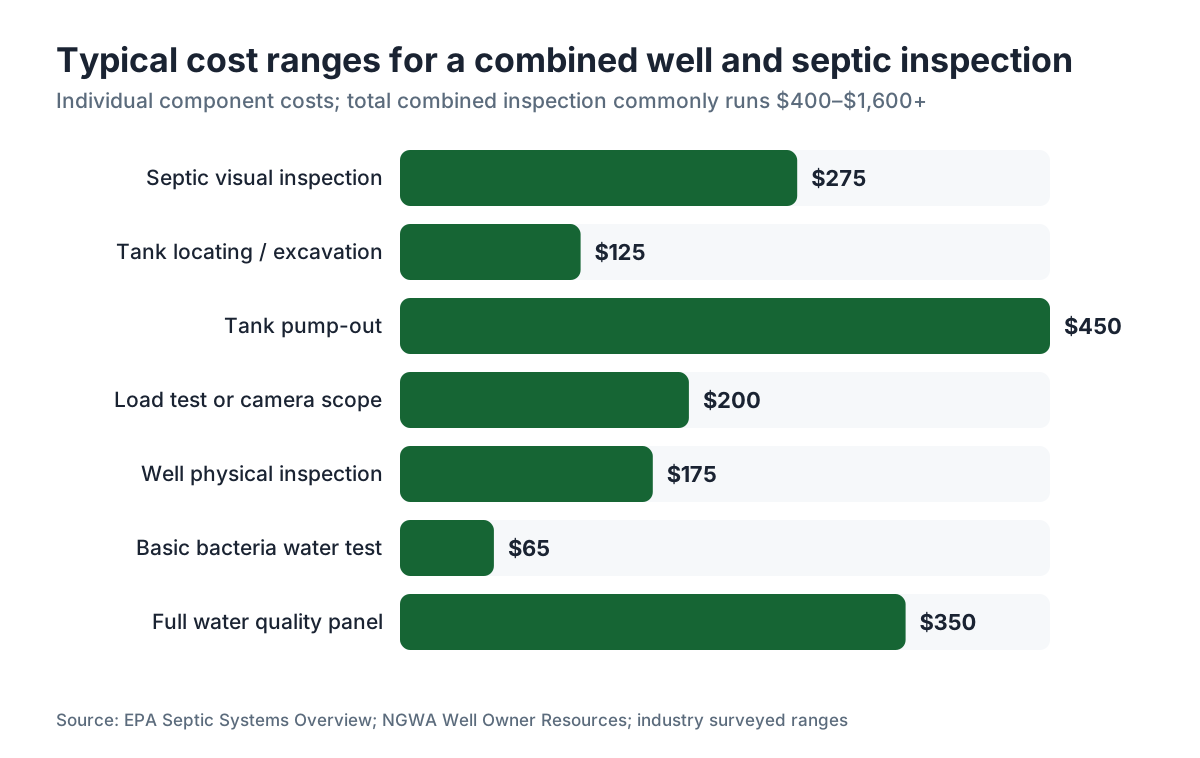
Cost ranges vary enough that a single number is misleading. Here is a realistic breakdown of what you are actually paying for.
The septic inspection itself, meaning a visual exam with lid opening and level measurements, runs about $150 to $400. If the inspector cannot locate the tank or the lids are buried, add $50 to $200 for locating and excavation. If the tank needs pumping before the inspection can happen, that adds another $300 to $600 depending on tank size and your region. You can read more about what pumping alone costs at septic tank pumping.
A load test or full inspection with camera scoping of the outlet line adds $100 to $300 more. A well inspection without water testing usually runs $100 to $250. Water testing is where costs stack: a bacteria-only test is cheap, but a full panel including nitrates, heavy metals, and VOCs commonly runs $200 to $500. Some labs in high-radon states charge $100 to $150 just for radon.
Put it together and a genuinely thorough combined well and septic inspection, with pump-out and a solid water panel, runs $900 to $1,600 in most markets. Rural areas with high travel costs or states with strict required testing can push that past $2,000. The cost of a well and septic system itself, if you were installing both from scratch, is a completely different number: expect $15,000 to $50,000 or more depending on site conditions, well depth, and local regulations [5].
| Component | Typical Low | Typical High |
|---|---|---|
| Septic visual inspection | $150 | $400 |
| Tank locating / excavation | $50 | $200 |
| Tank pump-out | $300 | $600 |
| Load test or camera scope | $100 | $300 |
| Well physical inspection | $100 | $250 |
| Basic bacteria water test | $30 | $100 |
| Full water quality panel | $200 | $500 |
| Combined total (typical) | $400 | $1,600+ |
Who should perform the inspection, and how do you find a qualified inspector?
Licensing rules for septic inspectors differ by state. Some states license inspectors directly through the department of health or environmental services. Others require that inspections be performed or supervised by a licensed professional engineer or a certified installer. A few states have no formal licensing at all, so quality swings wildly.
For the septic side, look for inspectors certified by the National Association of Wastewater Technicians (NAWT) or by your state's onsite wastewater program. For well inspections, the National Ground Water Association (NGWA) certifies well drillers and pump installers, and many states require licensed water well contractors to perform well assessments [7]. A home inspector with a septic add-on is not the same as a dedicated septic professional. Home inspectors are generally not trained to open and assess tank internals, measure sludge depth, or read drain field conditions.
The best approach for a real estate transaction is to hire two separate specialists: a septic pumper/inspector for the tank and field, and a licensed well contractor or independent water testing lab for the well. Some companies offer both, which cuts cost and scheduling hassle, but confirm that each part is handled by someone with credentials in that specific area.
Ask any prospective inspector these questions before you hire. Do you open and enter the tank or just locate and probe? Will you measure sludge and scum depths and give me a written number? Do you walk the drain field and look for surfacing effluent? Will you provide a written report I can share with a lender? If they hesitate on any of those, keep looking.
What does a septic inspector actually check during the inspection?
A real septic inspection covers more ground than most buyers expect. Here is what a thorough one looks like.
The inspector starts by locating all system components using the as-built drawing on file with the county health department. If no drawing exists, they use a probe or electronic locator. They uncover both the inlet and outlet lids (more than one), inspect the baffles for deterioration, and measure the liquid level. If liquid sits above the outlet pipe, that is a sign of drain field failure or a blocked outlet.
Sludge and scum layers get measured with a sludge judge or similar device. Most guidelines call for pumping when sludge fills more than one-third of the tank's liquid volume or scum is within 3 inches of the outlet baffle [8]. An inspector who skips this step is giving you half a picture. The septic tank pump out step often ties to this finding.
The inspector then walks the drain field looking for wet spots, unusually lush grass, odors, or surfacing effluent. They check the distribution box (if the system has one) for equal flow to all laterals. Unequal flow means some lines get overloaded while others sit idle, which shortens field life. They also confirm the system size against the house's bedroom count. Many states size septic systems by bedroom count, typically 150 gallons per day per bedroom [9].
A load test means running several hundred gallons through the system while watching for backing up or surfacing. It is the closest thing to a stress test short of leaving the system in full household use. Some inspectors run a dye test instead, dropping a dye tablet into a toilet and looking for colored water surfacing over the field, though dye tests have real limits and are not accepted by all jurisdictions as definitive.
What do well inspectors look for, and what water tests should you order?
The physical well inspection checks that the wellhead sits above grade and seals against surface runoff, that the casing is not cracked or corroded, that the well cap is vermin-proof, and that electrical connections to the pump are safe. The inspector tests flow rate and recovery rate, which tells you whether the well can meet household demand. A minimum 1 gallon per minute sustained flow is a common threshold for residential use, though state standards vary [7].
Water testing is separate from the physical inspection. The minimum tests most buyers should order:
- Total coliform and E. coli bacteria (indicates fecal contamination, which can come from a nearby failing septic system)
- Nitrates (the EPA maximum contaminant level is 10 mg/L for nitrate-nitrogen; elevated nitrate in well water near septic systems is a documented contamination pathway) [3]
- pH, hardness, and iron (affects water quality and plumbing)
Depending on local geology and land use history, you may also want arsenic (naturally elevated in parts of New England, the Midwest, and the Southwest), lead (older well casings and plumbing), radon (elevated in granite bedrock areas), manganese, and VOCs if there is any industrial or agricultural history nearby.
The EPA's SepticSmart program notes that "a failing septic system can contaminate nearby wells with bacteria and nitrates," which is exactly why testing both systems at once gives you a fuller picture than testing either alone [3]. If your well test comes back high in nitrates and your lot is small, dig harder into the septic system's condition even if the tank itself looks fine.
Some inspectors also test water pressure at the tap and check the pressure tank's bladder for waterlogging. A waterlogged pressure tank causes the pump to short-cycle, wearing it out early. Pump replacement runs $800 to $2,500 depending on well depth and pump type.
What are the most common reasons a well or septic inspection fails?
On the septic side, the most common inspection failures are drain field problems, tank structural failures, and bad baffles.
Drain field saturation or failure. This is the big one. Biomat buildup in the soil, roots from nearby trees, hydraulic overload from heavy water use, or plain old age can leave a drain field unable to accept effluent. Repair options range from resting one section of the field to full replacement. See leach field for more on what causes failures and how they get fixed.
Cracked or collapsed tanks. Concrete tanks from the 1960s and 1970s are prone to structural failure, especially the inlet end where corrosive hydrogen sulfide attacks the concrete. An inspector who opens the lids and sees bare rebar or chunks of concrete in the tank is finding a structural failure. The septic tank repair or septic system repair path depends on how widespread the damage is.
Missing or deteriorated baffles. The outlet baffle keeps floating scum from passing into the drain field. If it is gone, scum has likely been coating the soil for years and the drain field may be closer to failure than it looks.
On the well side, the most common failures are bacteria contamination, low yield, and high nitrates.
Bacteria contamination. Coliform or E. coli in the water usually means surface water is getting into the well, often through a cracked casing or a poorly grouted annular space. Shock chlorination can fix a one-time event, but repeated positive tests point to a structural problem.
Low yield. If the well cannot sustain 0.5 to 1 gallon per minute through a pump test, it may not support full household use. Fixes range from hydrofracturing the formation to drilling a new well.
High nitrates. Levels above 10 mg/L require treatment (reverse osmosis is the most reliable option) or a new well location. If the source is a failing septic system on the same property, treating the water without fixing the septic just treats the symptom.
How long does a combined well and septic inspection take?
Budget two to four hours for a thorough combined inspection. The septic portion, if the tank lids are accessible and the tank does not need pumping first, takes about 45 to 90 minutes. If the pumper comes out separately or the inspector has to locate buried components, add another one to two hours.
The well physical inspection itself is faster, usually 30 to 60 minutes. The water test results take longer: most state-certified labs return results in three to seven business days for basic panels. Full panels with VOC testing or radon can take 10 to 14 business days.
For real estate transactions, this timeline matters. Build the inspection contingency window to cover lab turnaround. A five-day inspection period is not enough if you are ordering a full water panel. Ten to fourteen days is more realistic when both systems need thorough evaluation.
If both systems are on a tight lot and you suspect proximity issues, ask the inspector for GPS coordinates of the well and the septic components so you can calculate the actual separation distance instead of trusting the seller's representation.
How often should you get well and septic inspections on a home you already own?
The EPA's SepticSmart guidelines recommend having your septic system inspected by a professional every one to three years and pumped every three to five years, though the right pumping frequency depends on household size and tank size [8]. A family of four with a 1,000-gallon tank typically needs pumping every three to four years. Smaller tanks or larger families need it more often. You can work through the math in more detail at how often to pump septic tank.
For wells, the National Ground Water Association recommends a professional inspection once a year and water testing at least annually for bacteria and nitrates [7]. Testing the full panel every year is overkill for most stable systems, but bacteria and nitrates are cheap enough that testing them yearly makes sense. If you have had a positive test in the past, test more often until you have a clean baseline.
Most homeowners do not follow these schedules. A 2019 survey by the Water Research Foundation found that a large share of private well owners test their water less often than recommended, with cost and lack of awareness as the primary barriers [12]. Nobody has great national data on septic inspection compliance, but state health department records consistently show that most systems are not inspected until they fail or a sale triggers the requirement.
SepticMind's service scheduling tools help operators track these recurring inspection and pumping intervals across their customer base, which cuts the number of systems that reach the failure stage before anyone looks at them.
If you own the home and are not in a sale, the practical minimum is this: pump and inspect the septic every three to five years, and test the well water for bacteria and nitrates every one to two years. Do not wait for a smell or a wet spot to tell you something is wrong.
What should you do if the inspection finds a problem?
The right response depends on what failed and how badly. For real estate transactions, you have four main options: ask the seller to repair before closing, negotiate a price reduction equal to the estimated repair cost, ask for a repair credit at closing, or walk away if the problem is too large or too uncertain to price accurately.
For septic failures, get at least two contractor estimates before negotiating. A drain field that looks bad on inspection might need a repair zone rather than full replacement, which is a $3,000 to $8,000 fix instead of a $15,000 to $25,000 one. An inspector who says "the field is failing" is not the same as a contractor who has dug test pits and confirmed the failure mode. Push for specifics. You can see what full replacement actually involves at cost to install septic system or septic tank installation.
For well problems, the repair path depends on the cause. A cracked well cap is a $50 fix. A compromised casing may need a liner or a new well. Bacteria contamination from a one-time surface event can sometimes be handled with shock chlorination and retesting. Structural contamination or proximity to a failing septic system is a bigger conversation.
For existing homeowners not in a sale, a failed inspection is a maintenance signal, not a crisis, as long as you catch it before the system actually stops working. A tank that needs pumping more often than expected, or a drain field that saturates in wet weather but recovers in dry weather, is stressed but not yet failed. That is the right time to look at septic tank cleaning schedules and water conservation before the situation becomes a true emergency.
Document everything. Get written reports, more than verbal summaries. Photographs of the tank interior, baffles, and drain field surface are worth asking for. If you ever sell the home or file an insurance claim, that paper trail matters.
Are there state-specific rules that affect what your inspection must cover?
Yes, and they vary more than most buyers realize. Massachusetts requires a Title 5 inspection before any property transfer involving a septic system. The protocol is defined by 310 CMR 15.000 and must be performed by a licensed inspector; a passing or conditionally passing report is required for the sale to proceed [6]. Connecticut, New Hampshire, and several other New England states have similar point-of-sale requirements.
Florida requires onsite sewage treatment and disposal systems to meet standards under Chapter 64E-6 of the Florida Administrative Code, administered by county health departments [11]. California regulates individual well and septic systems through county environmental health departments under the authority of the California Department of Water Resources and the State Water Resources Control Board.
Texas has historically had lighter state-level oversight of private septic systems, though the TCEQ sets minimum standards and many counties have adopted extra rules. In rural Texas, you will sometimes find systems permitted decades ago under rules that would not pass today.
For wells, state primacy under the Safe Drinking Water Act means each state sets its own standards for private wells (which are explicitly excluded from federal regulation under the SDWA) [10]. That is why water testing recommendations differ so much depending on where you live. Your state health department's environmental or drinking water division keeps a list of state-certified labs and, often, a free or subsidized testing program.
Always pull the permit history for both the well and the septic system from the county health department before the inspection. The permitted capacity, system type, soil report, and any prior violation history tell you a lot before the inspector even sets foot on the property.
How does the age of the system affect what you should inspect and worry about?
Age is not destiny with septic systems, but it is a real risk factor. A conventional gravity-fed system in good soil with moderate household use can last 20 to 40 years. A system that has been hydraulically overloaded or fed improper solids can fail in 10 years. The septic tank installation date on the permit tells you when the clock started.
Concrete tanks built before the late 1980s often used Portland cement mixes more vulnerable to hydrogen sulfide corrosion. Steel tanks, common in some parts of the country through the 1980s, corrode and should be treated as structurally suspect once they pass 30 years. Plastic and fiberglass tanks resist corrosion better but can shift or float in high water table situations.
For drain fields, the biomat that forms at the soil interface over the life of the system is the main limiting factor. Older fields often carry heavy biomat accumulation. That is not always a problem, because a healthy biomat can actually improve treatment, but excessive buildup restricts absorption. Slow drainage or minor surfacing in wet weather on a 30-year-old system is a more serious warning than the same finding on a 5-year-old system.
For wells, age affects the casing, the grouting around it, and the pump. Most submersible pumps last 10 to 25 years. A well with a pump near 20 years that has not been serviced recently is one stress event away from needing replacement. Casing integrity in wells over 40 years old is worth camera-scoping if you are buying the property. It is an add-on cost, but it turns a guess into a known condition.
Operators tracking system age across a customer base can use a platform like SepticMind to flag systems approaching key age thresholds for proactive outreach, which beats waiting for emergency calls.
Frequently asked questions
How much does a well and septic inspection cost on average?
A combined well and septic inspection typically runs $400 to $1,600, depending on whether the tank needs pumping, how extensive the water testing panel is, and your region's labor costs. A basic inspection with bacteria-only water testing sits near the low end. A full inspection with pump-out and a broad water quality panel including nitrates, arsenic, and VOCs sits near or above $1,500 in many markets.
Do I need a well and septic inspection to get a mortgage?
FHA and USDA loans require a septic certification if the appraiser notes signs of failure or if the local health authority requires one. VA loans require the appraiser to confirm adequacy. Conventional loans usually do not mandate it, but many lenders ask for one on rural properties. Even when not required, the inspection is one of the best-value due-diligence steps in any rural home purchase.
Can the same inspector do both the well and septic inspection?
Some companies offer both services, which simplifies scheduling and can cut cost. But confirm that each part is handled by someone credentialed in that specific area. A septic pumper/inspector and a licensed well contractor have different training. A general home inspector with add-on certifications is usually not the right choice for a thorough evaluation of either system.
How long does a well and septic inspection take?
The on-site inspection takes two to four hours for both systems combined. Water test results from a state-certified lab take three to seven business days for basic panels and up to 14 days for broad panels including VOCs. For real estate transactions, build at least a 10- to 14-day contingency window to allow for lab turnaround.
What water tests should I order for a private well near a septic system?
At minimum, order total coliform, E. coli, and nitrates. The EPA maximum contaminant level for nitrate-nitrogen is 10 mg/L; levels above that near a septic system suggest contamination. Add arsenic, pH, hardness, and iron for a fuller picture. If you are in a granite bedrock area, add radon. If there is any industrial or farming history nearby, add a VOC panel.
What is the minimum separation distance between a well and septic system?
The EPA recommends at least 50 feet of separation, but most state codes require 100 feet or more. Some states set different minimums for the tank versus the drain field. Check your state's onsite wastewater code and the county health department's permit records to confirm the actual distance on your specific property, more than the seller's word.
How often should a septic system be inspected when you already own the home?
The EPA's SepticSmart program recommends professional inspection every one to three years and pumping every three to five years. A family of four with a standard 1,000-gallon tank generally needs pumping every three to four years. Smaller tanks or larger households need more frequent service. Annual bacteria and nitrate testing for the well is a reasonable minimum.
What happens if the septic inspection fails during a home sale?
You have four options: require the seller to repair before closing, negotiate a price reduction based on contractor estimates, ask for a repair credit at closing, or walk away. Get at least two independent repair estimates before negotiating. A failing drain field might need a partial repair ($3,000 to $8,000) rather than full replacement ($15,000 to $25,000), so the specific failure mode matters.
Does a home inspection cover the well and septic system?
Standard home inspections typically note visible signs of septic or well problems but do not include opening the septic tank, measuring sludge levels, performing a load test, or testing water quality. For anything beyond a surface-level observation, hire a licensed septic inspector and a licensed well contractor separately. The cost difference is worth it.
What is the cost of a well and septic system if I need to install both from scratch?
Installing a new conventional septic system costs $10,000 to $50,000 depending on soil conditions, system type, tank size, and local permitting. Drilling a new well adds $5,000 to $15,000 or more depending on well depth and geology. Together, a new well and septic system on a single property commonly runs $15,000 to $60,000. Complex sites with poor soil or deep rock can exceed that range significantly.
Are there states where a septic inspection is required before selling a home?
Yes. Massachusetts requires a Title 5 inspection under 310 CMR 15.000 before any property transfer involving a septic system. Connecticut, New Hampshire, and several other states have point-of-sale inspection requirements. Requirements vary by state and sometimes by county. Always check with the local health department before listing or making an offer on a property with an onsite system.
What is a septic load test, and is it worth the extra cost?
A load test means running several hundred gallons of water through the system while the inspector watches the drain field for surfacing effluent or backing up in the tank. It is the closest thing to a stress test for the drain field. For older systems or any property where you cannot verify the field's condition visually, the extra $100 to $300 is almost always worth it.
Can a failing septic system contaminate a private well?
Yes, and this is well documented. The EPA's SepticSmart program explicitly states that a failing septic system can contaminate nearby wells with bacteria and nitrates. Elevated nitrates in well water combined with a small lot and an aging septic system are a serious red flag. Testing both systems together gives you the information to connect the dots.
How do I find the permit history for a well or septic system?
Contact the county health department, county environmental health office, or state department of environmental services. Most counties keep permit records for septic systems going back decades. Well permits are usually held by the same agency or by the state drinking water program. Some counties have online permit lookup tools. Request the as-built drawing along with the permit; it shows component locations and system sizing.
Sources
- EPA, Private Drinking Water Wells: Coliform bacteria testing is the standard initial test for well water contamination; basic tests run $30 to $100 at certified labs.
- CDC, Private Ground Water Wells: Full water quality panels testing for nitrates, arsenic, lead, pH, VOCs, and other contaminants are recommended for private wells.
- EPA, SepticSmart Program: EPA recommends a minimum 50-foot separation between a private well and any septic system component, and notes that failing septic systems can contaminate nearby wells with bacteria and nitrates.
- HUD, FHA Single Family Housing Policy Handbook 4000.1: FHA guidelines require a septic certification when the appraiser observes signs of failure or when the local health authority requires one.
- Massachusetts Department of Environmental Protection, Title 5 Septic System Regulations (310 CMR 15.000): Massachusetts requires a Title 5 septic inspection before any property transfer involving an onsite system; the protocol is defined in 310 CMR 15.000.
- EPA, How to Care for Your Septic System: EPA SepticSmart guidelines recommend septic inspection every one to three years and pumping every three to five years; pumping is typically needed when sludge fills more than one-third of the tank's liquid volume.
- EPA, Safe Drinking Water Act Overview: Private wells are explicitly excluded from federal regulation under the Safe Drinking Water Act; each state sets its own standards for private well water quality.
- Florida Department of Health, Onsite Sewage Programs (Chapter 64E-6 F.A.C.): Florida regulates onsite sewage treatment and disposal systems through county health departments under Chapter 64E-6 of the Florida Administrative Code.
- Water Research Foundation, Homeowner Awareness of Well Water Quality: A 2019 Water Research Foundation survey found that a large share of private well owners test their water less frequently than recommended, citing cost and lack of awareness as primary barriers.
Last updated 2026-07-09