Organic septic tank treatment: what actually works
By the SepticMind Editorial Team
TL;DR
- Organic septic tank treatments add live bacteria or enzymes to your tank to help break down waste.
- EPA research finds healthy tanks don't need them, but they can help after antibiotic use, heavy cleaning chemicals, or a pump-out.
- They cost $10-$60 per dose and won't fix a failing drain field.
- Pump on schedule.
- Treat additives as a supplement, never a substitute.
What is organic septic tank treatment and how does it work?
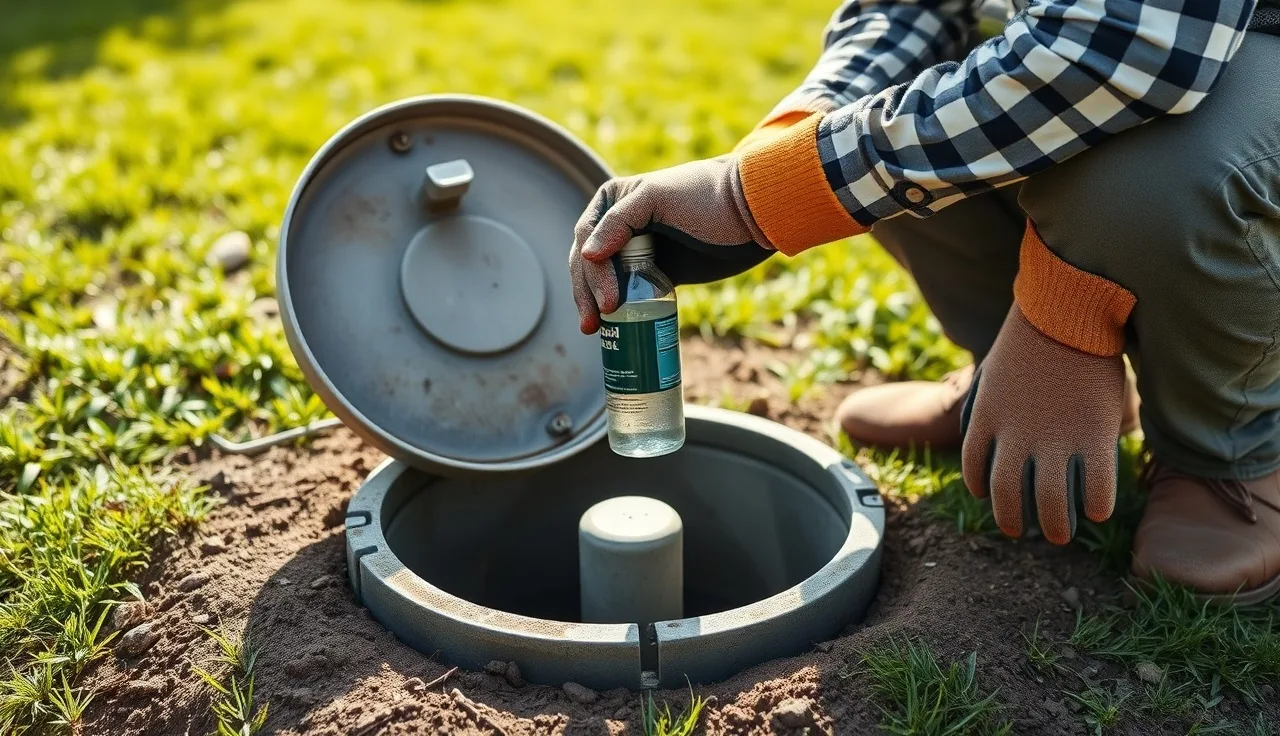
Organic septic tank treatment means adding live microorganisms, enzymes, or both to your septic tank to help digest solid waste. "Organic" here just means the active ingredients are biological rather than chemical. No bleach, no acids, no synthetic surfactants.
A working septic tank is already packed with bacteria. Anaerobic bacteria break down the solids that settle to the bottom (the sludge layer), facultative bacteria handle the middle liquid zone (effluent), and a floating scum layer of fats and oils sits on top [1]. Those bacteria make enzymes on their own. A product labeled "organic septic treatment" usually contains one or more of the following:
- Bacillus strains (spore-forming, shelf-stable, tolerate wide pH swings)
- Lactobacillus strains (sometimes added for their enzyme output)
- Cellulase, lipase, or protease enzymes to pre-break specific waste types
- Yeast (Saccharomyces cerevisiae in a few older formulas)
Flush or pour a dose into the toilet, and the bacteria colonize the tank and start producing enzymes that attack fats, proteins, and cellulose. In theory, more bacteria means faster sludge digestion and cleaner effluent heading for the drain field.
Here's the catch. Your tank is not a sterile jar waiting to be seeded. It already holds billions of bacteria per milliliter. Adding more is like pouring a cup of water into a swimming pool and expecting the level to change. That tension sits behind every organic treatment product on the shelf.
Does EPA recommend using organic septic additives?
EPA's SepticSmart program is the closest thing to a federal position on this, and the agency is measured but skeptical. EPA states that "biological additives (bacteria, enzymes, and yeast) haven't been proven to improve the performance of a properly functioning septic system" [2]. That line comes straight from the agency's septic guidance.
EPA does not ban biological additives, and it does not call them harmful. The agency's read is that routine use in a healthy tank is unnecessary, not dangerous. That distinction matters. If a product claims to eliminate the need for pumping, federal guidance does not back it up.
Some states go further. Washington State's Department of Health keeps a list of registered additives and notes that no additive has been shown to substitute for regular pumping or repair a failing system [3]. Massachusetts and Maryland have both gone on record that additives will not bring back a failed leach field.
A 1997 federal study, the primary research most often cited in this space, found that many additive formulations showed no statistically significant benefit to sludge reduction or effluent quality compared to untreated control tanks [9]. The study has aged. Nobody has produced a well-controlled field trial that overturns it in the peer-reviewed record.
So here's the honest position. For a healthy tank with normal household use, an organic treatment is probably neutral at best. There are narrower situations, covered below, where a case exists for using one.
Are there situations where an organic treatment actually helps?
Yes. Being specific about those situations matters a lot.
After a pump-out, your tank is suddenly emptied of nearly all its microbial biomass. It will re-populate on its own from incoming waste, but adding a bacterial product the day of or the day after a pump-out gives the tank a head start. The working population re-establishes faster. This is the most defensible use case for an organic product.
After heavy antibiotic use in the household. If someone is on a broad-spectrum antibiotic course (think ciprofloxacin for a serious infection, not a short round of amoxicillin), a real fraction of that drug passes through the body and into the tank. Tank bacteria are not immune to antibiotics. A dose of spore-forming Bacillus species, which shrug off antibiotics better than most vegetative bacteria, can restore populations faster [4]. This is anecdotal and unproven in large trials, but the mechanism holds up.
After pouring strong disinfectants down the drain. Bleach, quaternary ammonium compounds (the common antibacterial kitchen sprays), and drain cleaners all reach the tank and stress the microbes. Normal household amounts are diluted enough that the effect stays minor. But if someone ran a heavy cleaning job with a gallon of bleach or a concentrated disinfectant, a follow-up bacterial treatment makes sense.
Tanks with chronic grease loads are another case. Restaurants on septic systems (more common in rural areas than you'd think) sometimes use lipase-heavy enzyme products between pump-outs to slow scum buildup. That won't replace more frequent pumping, but it can stretch the interval a little.
Vacation homes and seasonal properties fit too. When a tank sits dormant for months, a bacterial dose at startup re-establishes the community before heavy use returns.
What won't work: using organic treatments to skip pumping, fix a failing drain field, clear slow drains caused by root intrusion, or rescue a drainfield that's already saturated. If your system shows signs of failure, see septic system repair and septic tank repair instead of pouring in more bacteria.
What makes one product better than another? How to read a label
The additive market is poorly regulated at the federal level. EPA does not pre-approve or certify septic additives before they hit the shelf. Some states require registration but not independent efficacy testing. Label claims are largely the manufacturer's word.
Here's what to actually look for on a label:
Colony-forming units (CFU) count. A serious bacterial product states its CFU count per dose, usually in billions (10^9). Products listing CFUs in the millions are likely underdosed for a 1,000-gallon tank. Aim for at least 2-4 billion CFUs per dose.
Named bacterial species. Generic claims like "active bacteria" are a red flag. Good products name their strains: Bacillus subtilis, Bacillus licheniformis, Bacillus amyloliquefaciens. Spore-forming Bacillus species keep longer on the shelf and survive tank pH swings better than most non-spore formers.
Shelf life and storage. Live bacterial products degrade. A product with a manufacturing date more than 12-18 months old may carry far fewer viable cells than the label claims. Look for an expiration date or a use-by window.
No surfactants or biocides. Some cheaper products add foaming agents or preservatives that work against the bacteria. Read the full ingredient list.
BioOne septic tank treatment is one example of a bacterial additive that lists specific Bacillus strains and CFU counts on its label, which at least lets you evaluate what you're buying. Whether any single product beats others in real field conditions is mostly unproven. The honest answer: formulations with high CFU counts of named Bacillus strains and no added biocides are your best bet inside a category with thin independent verification.
When comparing products, a simple table helps.
How much do organic septic treatments cost?
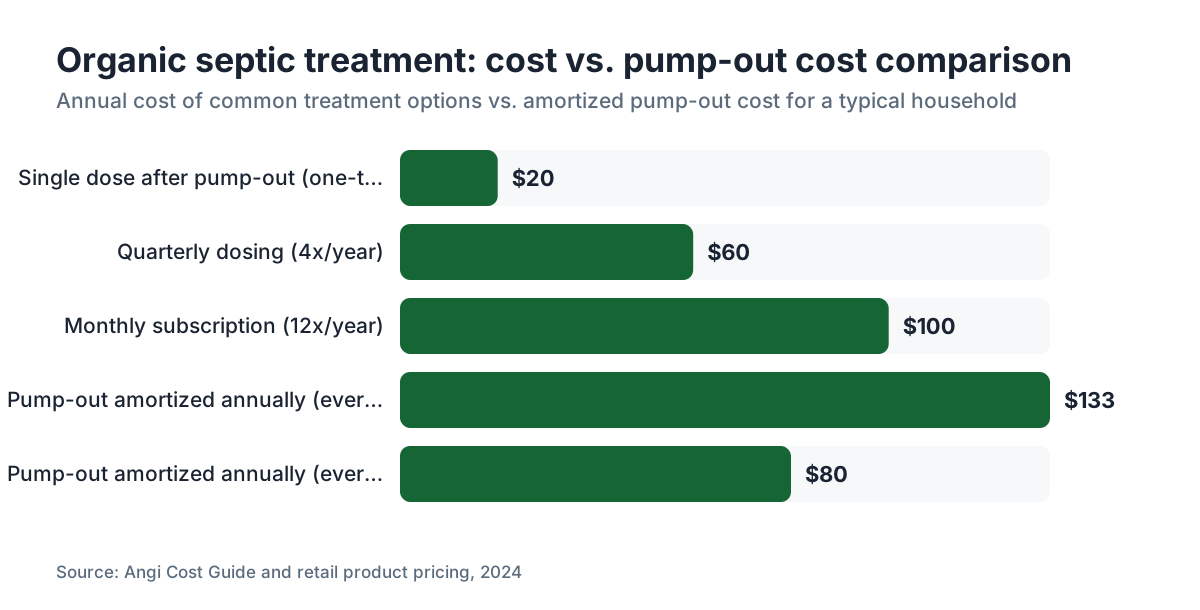
Retail prices stay fairly steady across the category. A single-dose packet runs $10-$25. Monthly subscription packs (12 doses) typically cost $50-$120 per year, which pencils out to $4-$10 per dose.
Professional-grade products sold in bulk to service operators run cheaper per dose, sometimes $1-$3 per application at high volume. Some pump-and-service companies add a bacterial treatment to the tank after pumping, already baked into the pump-out price [5].
For reference, a single pump-out costs $300-$600 for a typical 1,000-gallon residential tank, depending on region [5]. At that scale, spending $50-$100 a year on treatment to stretch pump intervals only pays off if it truly delays pumping by 12-18 months, and the evidence for that outcome is thin.
My honest take: if you're buying an organic treatment, the monthly subscription is a waste for a healthy tank. Buy one dose after a pump-out, one after any heavy disinfectant event, and stop there. A jar of bacteria at $15-$20 twice a year is fine. A $100-a-year subscription for a 3-person household with normal habits is hard to justify.
For overall system costs and what routine maintenance runs, the how often to pump septic tank guide covers the full picture.
Are organic treatments safe for the tank, pipes, and drain field?
Biological additives (bacteria and enzymes) are generally safe for every part of a conventional septic system. They don't corrode PVC or concrete, don't alter soil chemistry in the drain field, and don't harm the environment the way chemical additives can [6].
Chemical septic additives are a different story. Products with strong acids, solvents, or heavy loads of surfactants can corrode tank components, kill the beneficial microbes in drain field soil, and leach contaminants into groundwater. Several states, including Wisconsin and Minnesota, have banned or restricted chemical-based septic additives for exactly this reason [7].
Organic and biological products don't carry those risks, which is one reason they dominate the retail market. The microorganisms in them are common environmental bacteria. They're not introducing anything that doesn't already live in soil and waste.
The one indirect safety concern: if a biological product lowers your sense of urgency about pumping and you start skipping cycles, the sludge level climbs unchecked. That's not exactly the product's fault, but it's a real downstream risk of treating these things as a maintenance substitute instead of a supplement.
Your leach field is the most expensive part of the system to replace. Don't let any product, or the marketing around it, talk you out of protecting it with a real pump schedule.
How do you use organic septic treatment correctly?
Most products are simple: flush the packet or pour the liquid dose right into the toilet and flush. The goal is getting bacteria into the tank, not the pipes. Flushing puts them on the shortest path.
A few usage rules that actually matter:
Don't run heavy-duty drain cleaner in the 24-48 hours before or after dosing. You'd kill the bacteria before they establish.
Flush the dose at night when household water use is low. The bacteria need time in the tank without a surge of incoming water sweeping them straight out.
For monthly treatments, consistency beats the exact date. Once a month on payday is fine. Every six weeks won't cause a catastrophe.
After a septic tank pump out, dose the tank within 24-48 hours. This is the highest-value moment for a bacterial product.
Don't overdose expecting faster results. The tank's environment (pH, temperature, retention time) limits microbial growth far more than the size of the initial inoculant. Double the bacteria on day one doesn't buy you double the digestion rate by week two.
Keep the product dry and at room temperature until use. Spore-forming bacteria last better than vegetative cells, but heat and moisture still wear them down over time.
What's the difference between bacterial additives, enzyme treatments, and yeast-based products?
These three types get lumped under "organic," but they work differently.
Bacterial additives contain live microorganisms that colonize the tank and produce enzymes continuously as they metabolize waste. This is the most durable approach, because the bacteria keep working as long as conditions support them. Shelf life is the weak point: the product needs enough viable cells at the time you use it.
Enzyme treatments contain purified enzymes (cellulase, lipase, amylase, protease) with no live bacteria. Enzymes are proteins that catalyze specific reactions. They break down grease, starch, protein, or cellulose, but they get consumed in the process and need replenishing. They act faster at first (no lag while bacteria colonize) but don't self-replicate, so a single dose has a finite life.
Yeast-based products use baker's yeast (Saccharomyces cerevisiae) or similar strains. Yeast makes enzymes and costs almost nothing, which is why the old folk remedy for septic systems is flushing a packet of active dry yeast. Yeast is a fungus, not a bacterium. It ferments carbohydrates well but does a poor job on fats and proteins. It's not harmful, just the least targeted option for a tank handling typical household waste.
For most homeowners, a product that pairs live Bacillus strains with enzyme supplementation covers the widest range of waste types. Products listing only enzymes and no live cultures act faster at first but won't maintain bacterial populations between doses.
Some operators using SepticMind to track their customer fleet have noticed that customers who switch from enzyme-only to combined bacterial-enzyme products report fewer grease-related service calls. That's observational, not a controlled study.
Can organic treatment replace regular pumping?
No. This is the single most important thing to understand about the whole category.
EPA recommends pumping a septic tank every 3-5 years for a typical household [2]. That interval depends on tank size, number of occupants, and water use. Organic treatments don't change any of those enough to skip or meaningfully stretch a pump cycle.
The reason is simple. Bacteria digest biodegradable organic matter, but they can't eat everything that lands in the tank. Inorganic solids (sand, grit, synthetic fibers from "flushable" wipes), non-biodegradable plastics, and the leftover ash from fully mineralized organic matter all pile up as sludge that no bacterium will ever clear. That sludge physically fills the tank over time. Let it creep too close to the outlet baffle and solids push out into the drain field, and the field fails.
A septic tank cleaning or septic tank pumping appointment removes what no biological product can touch. Products claiming to eliminate pumping are making a claim the physics of a tank won't support.
There's some evidence enzyme products slow the rate of sludge buildup slightly, which might add a few months to a pump interval under ideal conditions. Nobody has a well-controlled field study proving they add years. Treat it as a minor benefit, not a maintenance plan.
If your last pump-out was more than five years ago, skip the additive aisle and call a pump truck. See the septic tank emptying guide for what to expect.
Are natural home remedies (yeast, baking soda, vinegar) as good as commercial products?
Flushing a packet of active dry yeast is probably the oldest septic "treatment" in the residential toolkit. It costs almost nothing, adds live microorganisms, and does no harm. As noted above, yeast is less targeted than Bacillus strains for fat and protein digestion, but for a carbohydrate-heavy waste stream it's not useless.
Baking soda (sodium bicarbonate) gets recommended as a pH buffer for tanks that have turned too acidic. Septic tanks do run slightly acidic, and extreme acidity (below pH 5.5) suppresses methanogens and slows digestion. But normal household waste holds tank pH in the 6.5-7.5 range without any help. An occasional dose of baking soda is harmless and probably doing nothing, unless you've been pouring large amounts of acidic products down the drain.
Vinegar as a septic treatment makes no sense. Vinegar is acetic acid. Pouring acid into a tank you want to keep slightly alkaline works against you. Normal household vinegar (cooking or cleaning) in small amounts is fine and heavily diluted by the time it reaches the tank. Using it as a deliberate treatment has no mechanism behind it.
The honest comparison: a $15 packet of high-CFU Bacillus product after a pump-out probably beats a packet of bread yeast for targeted digestion. But both matter so much less than your pump schedule and water use that the difference is noise.
Save the home remedy debates for social media. Keep your pump schedule on a calendar.
What does a good organic septic treatment maintenance schedule look like?
Here's a practical schedule that matches what the evidence supports, without overselling the products:
After every pump-out: One full dose of a Bacillus-based bacterial product, flushed within 24-48 hours of the service. This is when bacterial additives earn their keep.
After heavy antibiotic courses: One dose after the household member finishes the full prescription.
After major cleaning events: If someone used a gallon of bleach or heavy disinfectant in a short window, one dose a day or two later.
Monthly for high-risk households: A home with a garbage disposal, a large family (5+ people), or a heavy fat and protein waste load can reasonably run a monthly maintenance dose. Everyone else: quarterly at most.
Seasonal properties: One dose when you open the property for the season, after months of no use.
For pump timing itself, the EPA 3-5 year guideline for a typical family of four with a 1,000-gallon tank is the baseline [2]. A tank serving two people might go 5-7 years. A tank serving six might need service every 2-3 years. No additive changes that math enough to matter.
If you manage multiple properties or run a service business and want to track treatment logs alongside pump history and inspections, tools like SepticMind let operators attach product notes and service records to individual systems. That helps when the same tank serves rotating tenants or seasonal guests.
The septic tank inspection guide covers what to check between service visits.
Frequently asked questions
Do I need to use organic septic treatment every month?
No. Monthly dosing is only defensible for high-risk households: large families, heavy garbage disposal use, or lots of grease. For a typical 3-4 person household with normal water use, dosing after pump-outs and after heavy chemical events covers the main cases. The monthly subscription model most brands sell is marketing, not a maintenance requirement backed by evidence.
Is BioOne septic tank treatment a good product?
BioOne is a bacterial enzyme product that lists specific Bacillus strains and CFU counts, which puts it ahead of products with vague labeling. EPA does not certify or endorse any specific additive, so no product can claim official approval. BioOne's transparent label makes it easier to evaluate than most competitors. Whether it beats other well-labeled Bacillus products in field conditions is not proven by independent controlled trials.
Can organic septic additives damage my tank or drain field?
Biological additives (bacteria and enzymes) are safe for all standard septic components, including concrete tanks, PVC baffles, distribution boxes, and drain field soil. They won't corrode pipes or alter soil chemistry. Chemical-based additives are a different category and can damage systems and groundwater. If a product lists acids, solvents, or strong surfactants, don't use it. Stick to products listing only bacterial strains and enzymes as active ingredients.
What happens if I never use any septic treatment products?
Nothing bad, as long as you keep your pump schedule and use the system normally. Healthy tanks build their own dense microbial communities from household waste alone. EPA's own guidance says properly functioning tanks don't need additives. Homeowners who pump on schedule, avoid flushing non-degradables, and limit heavy chemical use have no demonstrated need for any additive. The products are a supplement, not a requirement.
How long after pumping should I add a bacterial treatment?
Within 24-48 hours is ideal. Pumping strips the tank of nearly all its bacteria, and seeding it quickly gives the new bacteria time to establish before heavy waste loads arrive. Flush the product at night when water use is low, so the bacteria get maximum contact time in the tank before the next big flush. Waiting more than a week after pumping reduces the benefit.
Can organic septic treatment fix a slow-draining toilet or backup?
No. Slow drains and backups come from pipe blockages, root intrusion, a full tank, or a failing drain field. Bacteria and enzymes won't clear a physical blockage or cut through roots. If you have active backup symptoms, you need a pump-out and possibly a camera inspection of the line or field. Adding a bacterial product to a backed-up system just adds expense without touching the actual cause.
Are enzyme treatments or bacterial treatments better?
Combined bacterial-enzyme products are the best choice for most homeowners. Pure enzyme products act faster at first because there's no bacterial lag phase, but they get consumed and don't self-replicate. Live bacterial products (especially Bacillus strains) produce enzymes continuously and hold populations between doses. A product with both gives you quick action plus sustained bacterial colonization. If you must pick one, choose bacteria over enzymes for long-term tank health.
Does flushing yeast down the toilet actually help a septic tank?
It's harmless and adds live microorganisms at almost no cost. Yeast (Saccharomyces cerevisiae) digests carbohydrates well but is weaker on fats and proteins than Bacillus strains. The folk remedy of flushing a packet of active dry bread yeast monthly is probably neutral to slightly positive for carbohydrate-heavy waste. It won't hurt anything, but a dedicated Bacillus product covers more waste types more effectively.
Can I use organic septic treatment with a garbage disposal?
Yes, and homes with garbage disposals are one of the stronger cases for regular bacterial additives. Disposals push far more ground food solids into the tank than a disposal-free household, which speeds sludge buildup a lot. EPA and most extension services advise against garbage disposals on septic systems for this reason. If you have one, pump more often (every 2-3 years instead of 3-5), and a monthly bacterial dose makes more sense than for the average household.
What should I look for on a septic treatment product label?
Named bacterial species (Bacillus subtilis, B. licheniformis, B. amyloliquefaciens), a CFU count per dose in the billions (at least 2 billion), an expiration date, and a full ingredient list with no added surfactants, preservatives, or biocides. Avoid products with vague language like 'active cultures' and no species names or CFU count. Label transparency is the only signal you have, since there's no federal pre-market certification for these products.
How do I know if my septic system needs repair instead of just treatment?
Warning signs that call for a professional, not a bottle of bacteria: sewage smell near the drain field or in the yard, wet soggy patches over the field, sewage backup into the home, gurgling drains, or lush green grass right over the field lines. None of these respond to organic treatment. You need a pump-out, an inspection, and possibly repair. See the septic system repair guide for next steps.
Are there states that have banned septic additives?
A few states restrict or ban specific additive categories. Wisconsin prohibits the sale of septic additives that claim to eliminate pumping. Washington State requires registration of additives but doesn't endorse efficacy claims. Chemical-based additives (acids, solvents) face broader restrictions in states including Minnesota and California under groundwater protection rules. Biological additives are generally permitted everywhere but face registration requirements in some states. Check your state environmental or health department for local rules.
How much bacteria is in a typical organic treatment dose?
Quality products contain 2-8 billion CFUs (colony-forming units) per dose. Some premium formulations reach 50 billion CFUs. For comparison, your tank already holds roughly 10 million to 1 billion bacteria per milliliter of sludge across hundreds of gallons. A single dose is a small fraction of the existing population in a healthy tank, which is why the benefit in a working system stays modest. After a pump-out, that inoculant matters more because the tank is nearly sterile.
Sources
- EPA, Septic Systems (How Your Septic System Works): Description of anaerobic bacteria breaking down sludge, scum layer composition, and effluent zones in a conventional septic tank
- EPA SepticSmart Program, Septic System Additives guidance: EPA states biological additives haven't been proven to improve performance of a properly functioning system and recommends pumping every 3-5 years
- Washington State Department of Health, On-Site Sewage Systems: No additive has been shown to substitute for regular pumping or repair a failing system; registration requirements for additives in Washington
- University of Minnesota Extension: Discussion of antibiotic effects on septic tank bacterial populations and Bacillus spore-forming resistance characteristics
- HomeAdvisor / Angi, Septic Tank Pumping Cost Guide (national average data): Pump-out costs $300-$600 for a typical 1,000-gallon residential tank depending on region; some operators include bacterial treatment in service price
- U.S. EPA, National Pollutant Discharge Elimination System (NPDES): Chemical additives including acids and solvents can damage system components and contaminate groundwater; biological additives do not carry same risks
- Wisconsin Department of Natural Resources: Wisconsin prohibits sale of septic additives claiming to eliminate pumping; chemical additive restrictions
- Penn State Extension: Garbage disposals significantly increase sludge accumulation rate in septic tanks; households with disposals should pump every 2-3 years
- North Carolina State University Cooperative Extension, Septic Tank Additives: 1997 federal study and subsequent reviews found most additive formulations showed no statistically significant benefit to sludge reduction compared to untreated control tanks
- EPA SepticSmart, System Owner Guidance on Pumping Frequency: EPA recommendation to pump septic tanks every 3-5 years for typical household; factors affecting pump interval include tank size, number of occupants, water use
- Minnesota Pollution Control Agency: Chemical-based additives restricted in Minnesota due to groundwater protection; biological additives permitted but efficacy unproven
Last updated 2026-07-09