VA septic inspection requirements: what homeowners need to know
By the SepticMind Editorial Team
TL;DR
- Virginia has no single statewide law forcing a septic inspection on every home sale.
- But most lenders require one, VA and FHA loans especially, and many local health departments require an inspection or pump-out before transfer.
- Inspections run $200 to $600 and cover the tank, distribution box, and drain field.
Does Virginia require a septic inspection to sell a home?
No single Virginia statute says every home sale triggers a mandatory septic inspection. What the state has instead is a patchwork: local health department rules, lender requirements, and real estate contract norms that together make an inspection almost impossible to skip. [1]
Virginia's Sewage Handling and Disposal Regulations, found in 12VAC5-610, give local health departments authority to enforce onsite sewage standards. Several localities use that authority to require a Title V-style inspection or a pump-out at the point of sale. Others leave it to the buyer and seller. So your first call is to the health department in the county where the property sits, not to the state.
Sellers should not read silence as freedom. Even where no local ordinance exists, a buyer's lender almost always attaches an inspection requirement to the loan. VA and FHA loans are the strictest. Conventional loans vary by lender and appraiser. Cash buyers can waive it, but most don't.
What do VA loan septic inspection requirements actually demand?
This is where it gets specific. The Department of Veterans Affairs requires water and sewage systems to be adequate and in proper working order as a condition of the appraisal. The VA Lender's Handbook (VA Pamphlet 26-7) states that if the property has a private sewage disposal system, the appraiser must note it, and if there's any sign of malfunction or if local rules mandate an inspection, a professional inspection is required before the loan closes. [2]
VA appraisers flag septic systems routinely. Odors near the drain field, wet spots, slow drains, or a system that looks older than 20 years with no pump record: any of these will get the appraisal conditioned on a septic inspection and clearance. Once that condition is placed, neither the buyer nor the lender can waive it.
Who pays? The VA lets sellers cover inspection costs without it counting against the seller concession cap. Most VA purchase contracts in Virginia put the cost on the seller, since the seller controls access to the system and its records. Nothing stops a buyer from agreeing to pay instead.
If the inspection finds a problem, the VA requires repairs before closing. There's no option to close now and fix later. That's the biggest practical gap between VA loans and conventional financing, and it blindsides sellers regularly.
What does a septic inspection cover in Virginia?
A Virginia septic inspection comes in two tiers. A visual or basic inspection runs $150 to $300. The inspector locates the tank, checks the lids, looks at the inlet and outlet baffles, confirms the tank isn't overflowing, and eyeballs the drain field surface for wet spots or odors. This level often satisfies a basic lender condition but usually falls short of a VA appraisal condition.
A full or loaded inspection runs $300 to $600 or more and requires pumping the tank first. With the tank empty, the inspector can see the structural condition of the tank walls, confirm the baffles are intact, check the distribution box for level and cracks, and run a hydraulic load test on the drain field. For a system serving a 3-bedroom home, that test usually means running 150 to 200 gallons through the system while the inspector watches the field for surfacing effluent. [3]
On older systems or systems with pressure dosing, the pump and float assembly should get tested too. Many inspectors skip this unless you ask. Ask.
After the inspection you should get a written report. In Virginia, inspectors doing these evaluations are typically licensed by the Department of Professional and Occupational Regulation (DPOR) as onsite sewage professionals or as home inspectors with a specific onsite sewage endorsement. The Virginia Onsite Wastewater Recycling Association (VOWRA) keeps a list of certified practitioners. [4]
If you're scheduling a septic tank inspection, ask straight out whether the price includes pumping. Many quotes don't.
Which Virginia localities require a septic inspection at point of sale?
As of 2025, no single public database tracks every Virginia locality's point-of-sale requirement. The picture is genuinely fragmented. What follows is the general pattern from publicly available health department guidance.
Loudoun County, Fairfax County, and several other Northern Virginia jurisdictions have historically required pump-outs or inspections at transfer for systems above a certain age or in certain zoning districts. Shenandoah County and several Western Virginia counties have similar requirements tied to their local subdivision ordinances. Rural Southside Virginia localities often have no formal requirement at all. [1]
The table below shows the general framework, not an exhaustive list of every county:
| Requirement type | What triggers it | Who typically handles it |
|---|---|---|
| Local health dept pump-out at sale | Local ordinance, varies by county | Seller, licensed pumper |
| VA/FHA loan inspection | Appraiser flags concern, or loan type mandates | Buyer's lender conditions loan |
| Conventional lender inspection | Lender or underwriter discretion | Varies |
| Buyer-requested inspection | Buyer negotiation, contract contingency | Buyer or seller by agreement |
| New construction final approval | Virginia 12VAC5-610 permit process | VDH, local environmental health staff |
The safest move for any seller is one phone call to the local health department environmental health office 60 to 90 days before listing. That buys you time to schedule a pump-out, pull records together, and fix small problems before a buyer's inspector finds them.
How much does a septic inspection cost in Virginia?
Prices swing with region, system complexity, and whether pumping is included. Based on reported ranges from Virginia service providers and national cost surveys, here's the honest picture:
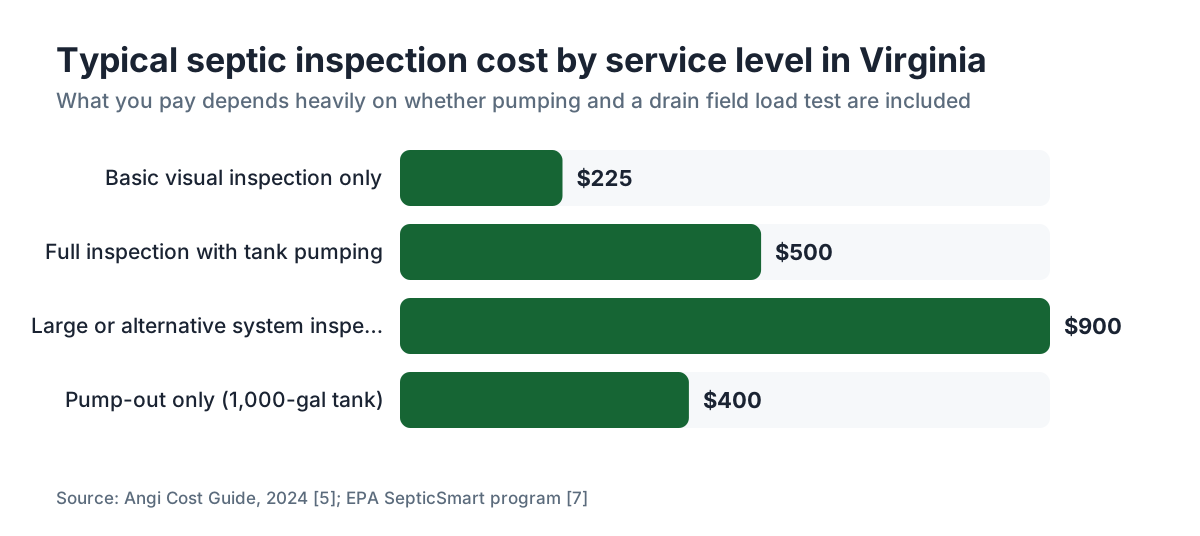
Basic visual inspection: $150 to $300. Full inspection with pumping: $350 to $700. Large systems (5+ bedrooms, commercial property, alternative technology): $600 to $1,200 or more. Emergency or same-week scheduling: add $75 to $150. [5]
Pumping alone for a standard 1,000-gallon tank in Virginia typically runs $300 to $500 depending on location and haul distance to the nearest treatment facility. Bundle a pump-out with an inspection and the combined price usually beats ordering them separately. Our septic tank pump out guide has the full breakdown.
Don't assume the lowest quote covers everything. Ask the inspector directly: does the price include tank pumping, a written report, and a drain field hydraulic load test? If not, get a full price for all three before you book.
Repairs can spike the total fast. A failed distribution box costs $500 to $1,500 to replace. A compromised baffle is $200 to $600. A failed drain field is a whole different category. See our leach field guide for what field rehab and replacement actually cost.
What happens if the septic system fails inspection in Virginia?
This is the scenario everyone wants to avoid and nobody likes to talk about straight. A failed inspection leads to one of four outcomes.
First, the seller repairs the system before closing. For minor issues like a cracked baffle or a clogged distribution box, this is often the right path. The seller hires a licensed Virginia onsite sewage professional, makes the repair, and gets the system re-inspected. [4]
Second, the parties renegotiate. The seller credits the buyer for repair costs, lowers the price, or both. This works on conventional or cash deals. It does not work on VA loans, where the VA won't close until the system is physically repaired and re-inspected.
Third, the buyer walks. Most Virginia real estate contracts include a septic contingency. If the inspection turns up a defect and the parties can't agree on a fix, the buyer can terminate and recover their earnest money.
Fourth, the failure triggers a Virginia Department of Health notice of violation. If the inspector is a licensed VDH-authorized evaluator and the system is actively malfunctioning (surfacing effluent, say), they are in some cases required to report it. At that point the seller has a legal obligation to address it whether or not the sale goes through. Virginia Code Section 32.1-164 gives the State Health Commissioner authority to require corrective action for failing sewage systems. [6]
For what repairs actually involve, the septic system repair and septic tank repair articles cover the options in detail.
Does Virginia require a septic inspection for refinancing?
Generally, no. A rate-and-term refinance on a conventional loan doesn't typically trigger a septic inspection in Virginia. The existing lender already holds the lien and isn't underwriting a new purchase risk.
VA Interest Rate Reduction Refinance Loans (IRRRLs) are also generally exempt from a new appraisal or septic inspection, because the VA treats the loan as already properly secured. Cash-out refinances are a different animal. A VA cash-out refinance requires a full new appraisal, and if the appraiser flags a septic concern, the same inspection-before-closing rule kicks in. [2]
FHA streamline refinances follow the same logic: no new appraisal, so no triggered inspection. FHA standard refinances with a new appraisal bring the full FHA well-and-septic rules back into play.
The practical takeaway: a simple rate reduction, don't worry about it. Pulling cash out, treat the transaction like a purchase.
What records should a Virginia homeowner keep about their septic system?
This comes up every time a homeowner hits an inspection and can't find a scrap of paper. The ideal records package: the original VDH construction permit and as-built drawing showing tank location, tank size, and drain field location; every pump-out receipt with date, volume pumped, and condition notes; any repair permits and completion records; and the most recent inspection report. [7]
Virginia health departments retain permit records, but the older the system, the harder those records are to pull. Systems installed before 1970 may have no formal records at all.
Owned the home more than five years and can't remember the last pump-out? Schedule one now. The EPA's SepticSmart program recommends pumping every three to five years for a typical household, and the condition notes from a recent pump-out are the single most useful document you can hand a buyer's inspector. The EPA SepticSmart page states: "Have your septic system inspected at least every 3 years by a licensed professional, and have your septic tank pumped when necessary, generally every 3 to 5 years." [7]
Operators who manage multiple accounts and need one place to track pump-out histories, service records, and inspection reports across a client base might look at SepticMind, which is built for that workflow.
For scheduling and timing, see how often to pump septic tank.
How does Virginia regulate new septic system installations and permits?
New installations in Virginia fall under 12VAC5-610, the Sewage Handling and Disposal Regulations administered by the Virginia Department of Health. Before any new system goes in, the applicant has to get a construction permit from the local VDH environmental health office. That permit rests on a site evaluation: soil morphology, percolation rate, and setback distances from wells, property lines, and waterways. [1]
Virginia requires new conventional drainfields to sit at least 100 feet from a private well and 50 feet from a property line in most residential cases, though those distances shift with local amendments and system type. Alternative systems (pressure dosing, drip irrigation, aerobic treatment units) have their own approval paths and usually require a maintenance contract with a licensed operator as a condition of the permit. [1]
After installation, VDH issues an operation permit. That permit, plus the as-built drawing, is what you want in your records file. It's also what a future buyer's lender will ask to see.
Building from scratch or replacing a failed system? The cost to install septic system and cost to put in a septic tank guides cover what Virginia homeowners actually pay.
What should buyers ask before waiving a septic contingency in Virginia?
In hot markets, buyers feel pressure to waive inspection contingencies to sweeten an offer. For septic, that's a gamble worth understanding before you take it.
A failed conventional drain field costs $5,000 to $25,000 or more to replace in Virginia, depending on soil, system size, and lot constraints. An aerobic treatment unit needing a rebuild can run $8,000 to $15,000. These are not small fixes. [8]
Before waiving a septic contingency, at minimum ask the seller for the VDH construction permit and as-built, all pump records for the past 10 years, the most recent inspection report, and disclosure of any known repairs or problems. Virginia's Residential Property Disclosure Act (Virginia Code Section 55.1-700 et seq.) requires sellers to disclose known material defects, which includes known septic problems. A seller can't legally hide a defect they know about. [9]
Cash buyer skipping lender requirements? Hire an independent inspector anyway. A full inspection costs almost nothing against a drain field replacement. See septic tank pumping and septic tank cleaning for what routine maintenance looks like, so you can gauge how well the current owner cared for the system.
How do Virginia's septic requirements compare to FHA requirements?
FHA loans carry their own handbook requirements for septic systems, found in HUD Handbook 4000.1. FHA requires individual water supply and sewage disposal systems to meet local requirements and be safe, sanitary, and adequate for the property. Like VA, an FHA appraiser's concern triggers a professional inspection condition. [10]
The practical difference between VA and FHA on septic is mostly enforcement rigor. VA appraisers tend to be a touch more aggressive about flagging older systems than FHA appraisers in Virginia, based on the general experience of real estate practitioners in the state. Both loan types bar closing with a known failing system.
USDA Rural Development loans (common in rural Virginia) run the same pattern: appraiser identifies concerns, inspection is required, repairs come before closing. USDA also sets explicit separation distances between septic and well that can bite on small rural Virginia lots. [11]
| Loan type | Inspection required by rule? | When inspection is triggered | Repair before closing required? |
|---|---|---|---|
| VA purchase | Not always, but appraiser routinely conditions | Appraiser concern or local requirement | Yes, always |
| FHA purchase | Not always, appraiser-triggered | Appraiser concern | Yes |
| USDA Rural Dev | Appraiser-triggered | Appraiser concern or local requirement | Yes |
| Conventional | Lender/underwriter discretion | Varies | Usually yes |
| Cash purchase | No requirement | Buyer choice | No |
Sources: VA Pamphlet 26-7 [2], HUD Handbook 4000.1 [10], USDA RD Instruction 1980-D [11].
How can septic service operators manage inspection documentation in Virginia?
For operators doing these inspections, the paperwork load is real. Virginia's 12VAC5-610 framework means you're generating VDH-reportable findings on some jobs, holding licensed professional sign-off requirements, and managing records that buyers, lenders, and health departments may all request separately.
SepticMind is built for this workflow: tracking inspection history, pump records, and service alerts across an entire customer base, so when a homeowner calls three years after a pump-out asking for records before closing, you're not digging through paper files. Operators running inspection-heavy workloads in Northern Virginia and the Richmond metro have found centralized record management the single biggest time saver in their operation.
For the pump-out side of the workflow, see septic tank emptying for what a proper service visit should document.
Frequently asked questions
Does Virginia law require a septic inspection before selling a house?
Virginia has no single statewide law requiring a septic inspection on every home sale. But many local health departments have point-of-sale requirements under 12VAC5-610 authority, and VA, FHA, and USDA loans almost always trigger an inspection through the appraisal process. Call the county health department environmental health office and your buyer's lender to confirm what applies to your specific transaction.
How long does a VA septic inspection take?
A basic visual inspection takes about 30 to 60 minutes on site. A full inspection that includes pumping the tank and running a hydraulic load test on the drain field usually takes 2 to 4 hours. If the inspector has to locate a buried tank before starting, add another 30 to 60 minutes. Written reports are usually delivered within 24 to 48 hours.
Who pays for the septic inspection on a VA loan in Virginia?
VA loan rules let the seller pay the septic inspection cost without it counting against the seller's concession cap. In Virginia practice, sellers typically pay since they control access to the system and its records. Nothing legally stops a buyer from agreeing to pay, and in competitive situations buyers sometimes do. Negotiate it in the contract before the appraisal is ordered.
Can a VA loan close with a failing septic system?
No. If a septic inspection reveals a failure or significant deficiency, the VA will not allow the loan to close until the system is repaired and a re-inspection confirms it works. There's no escrow holdback or repair credit workaround available on VA loans for this. The physical repair has to happen before the closing date.
How often should a Virginia homeowner pump their septic tank?
The EPA SepticSmart program recommends pumping every 3 to 5 years for a typical household. Virginia has no statewide mandatory pumping interval, but several local ordinances trigger a required pump-out at point of sale regardless of interval. For a single-family home with 3 to 4 occupants, a 1,000-gallon tank generally needs pumping every 3 to 4 years under normal use.
What is the difference between a septic inspection and a septic pump-out in Virginia?
A pump-out removes accumulated solids from the tank. An inspection evaluates the mechanical and structural condition of the whole system: tank, baffles, distribution box, and drain field. Many inspectors require a pump-out as part of a full inspection because you can't properly see tank condition without emptying it first. A pump-out alone does not satisfy a lender's inspection requirement.
Does Virginia require a septic inspection for a refinance?
Generally no. Rate-and-term refinances and VA IRRRL loans don't typically require a new appraisal, so no septic inspection is triggered. Cash-out refinances require a full new appraisal under both VA and FHA programs, which can trigger an inspection condition if the appraiser flags a concern. Conventional cash-out refinances vary by lender.
How far does a septic system need to be from a well in Virginia?
Under 12VAC5-610, conventional Virginia drainfields must typically sit at least 100 feet from a private well. The tank itself must be at least 50 feet from a well. These distances can be modified by site-specific variance or by the type of alternative system installed. USDA Rural Development loans also impose their own minimum separation distances as a loan condition.
What happens if a Virginia septic system is found to be failing during an inspection?
The seller can repair the system before closing, negotiate a price reduction or credit (on non-VA/FHA loans), or the buyer can terminate under the contingency. If the inspector is a licensed VDH evaluator and the system is actively surfacing effluent, they may be required to report it to the health department, which can result in a notice of violation requiring corrective action regardless of whether the sale proceeds.
What Virginia code governs septic system installation and operation?
12VAC5-610, the Sewage Handling and Disposal Regulations, is the primary Virginia code. It's administered by the Virginia Department of Health through local environmental health offices. Virginia Code Section 32.1-164 gives the State Health Commissioner authority to require corrective action for failing systems. Local ordinances can add requirements on top of the state baseline.
Do Virginia sellers have to disclose known septic problems?
Yes. Virginia's Residential Property Disclosure Act (Virginia Code Section 55.1-700 et seq.) requires sellers to disclose known material defects, and a known septic problem qualifies. Sellers aware of a failing drainfield, cracked tank, or prior VDH notice of violation cannot legally conceal it from buyers. Buyers should still get an independent inspection, since disclosure only covers what the seller actually knows.
How do I find a licensed septic inspector in Virginia?
Virginia's Department of Professional and Occupational Regulation (DPOR) licenses onsite sewage professionals and home inspectors with onsite endorsements. The Virginia Onsite Wastewater Recycling Association (VOWRA) also keeps a practitioner directory. When hiring, confirm the inspector holds a current Virginia license and ask specifically whether they're authorized to perform VDH-reportable evaluations for real estate transactions.
What is a hydraulic load test and when is it required in Virginia?
A hydraulic load test pumps a large volume of water through the system (typically 150 to 200 gallons for a 3-bedroom home) while the inspector watches the drain field for surfacing effluent, ponding, or backup. It's the most reliable field test for drain field function short of full excavation. VA and FHA lenders frequently require it when the appraiser has flagged the drain field condition.
Can I install a new septic system in Virginia without a permit?
No. Virginia requires a VDH construction permit before any new onsite sewage system is installed. The permit rests on a site evaluation covering soil type, percolation rate, and setback distances. Installing without a permit violates state code and can result in an order to remove the system. Alternative systems also require an ongoing operation permit and a maintenance contract with a licensed operator.
Sources
- Virginia Department of Health, Sewage Handling and Disposal Regulations 12VAC5-610: Virginia onsite sewage permitting and standards authority held by VDH local environmental health offices under 12VAC5-610
- U.S. Department of Veterans Affairs, VA Lender's Handbook (VA Pamphlet 26-7), Chapter 12: Minimum Property Requirements: VA requires private sewage disposal systems to be adequate and in proper working order; appraiser must note and condition on inspection if malfunction is indicated or local rules require
- EPA SepticSmart Program, Homeowner's Guide to Septic Systems: Full inspection procedures including observation of drain field performance during hydraulic loading
- Virginia Department of Professional and Occupational Regulation (DPOR), Onsite Sewage Professionals: Virginia licenses onsite sewage professionals and home inspectors with onsite sewage endorsements through DPOR
- HomeAdvisor / Angi, Septic Inspection Cost Guide (national and regional cost data): Typical septic inspection costs nationally and regionally range from $150 to $700 depending on scope and pumping inclusion
- Virginia Code Section 32.1-164, Powers and duties of Commissioner relating to sewage: State Health Commissioner has authority to require corrective action for failing private sewage disposal systems in Virginia
- EPA SepticSmart Program, Protect Your Investment: Maintain Your Septic System: EPA SepticSmart states: 'Have your septic system inspected at least every 3 years by a licensed professional, and have your septic tank pumped when necessary, generally every 3 to 5 years.'
- Virginia Cooperative Extension, On-Site Sewage Disposal Systems publication 452-800: Drain field replacement costs in Virginia can range from several thousand to over $20,000 depending on system type and soil conditions
- Virginia Code Section 55.1-700, Residential Property Disclosure Act: Virginia sellers required to disclose known material defects including known septic system problems under the Residential Property Disclosure Act
- HUD Handbook 4000.1, FHA Single Family Housing Policy Handbook, Section II.A.3: Minimum Property Requirements: FHA requires individual sewage disposal systems to be safe, sanitary, and adequate; appraiser-flagged concerns trigger required professional inspection before closing
- USDA Rural Development, Single Family Housing Guaranteed Loan Program Technical Handbook: USDA Rural Development loans require appraiser-flagged septic concerns to be resolved and impose minimum well-to-septic separation distances as loan conditions
- Virginia Onsite Wastewater Recycling Association (VOWRA), Practitioner Directory: VOWRA maintains a directory of certified onsite sewage practitioners in Virginia
Last updated 2026-07-09