Well and septic inspection in Marysville, WA: what to expect
By the SepticMind Editorial Team
TL;DR
- A combined well and septic inspection in Marysville, WA runs $400 to $900 and takes one to two days to schedule.
- Washington law requires a septic inspection before any property with an on-site system changes hands.
- Inspectors check the tank, drain field, pump, and the well's flow rate and water quality.
- Snohomish Health District enforces local rules on top of state code.
Why do you need a well and septic inspection in Marysville, WA?
Most of Marysville sits outside city sewer service. That means a lot of homes run on private wells and septic systems, and if you're buying or selling one of them, an inspection isn't optional. Washington makes it mandatory.
RCW 70A.305 requires that any on-site sewage system (OSS) be inspected before a property transfers. [1] The seller usually arranges it. Buyers often hire their own inspector too, because the money at risk is real. A failed drain field costs $10,000 to $30,000 to replace. [2]
The well side is a separate requirement. Washington's Department of Ecology and Department of Health both regulate private wells, and lenders backed by FHA or USDA almost always want a water quality test before closing. [3] Even if your lender doesn't demand it, skipping a well test in the lower Snohomish County area is a gamble given the farmland nearby.
So most buyers in Marysville end up getting both. Bundling them with one company usually saves $50 to $150 over hiring two separate vendors.
What does a septic inspection in Marysville actually involve?
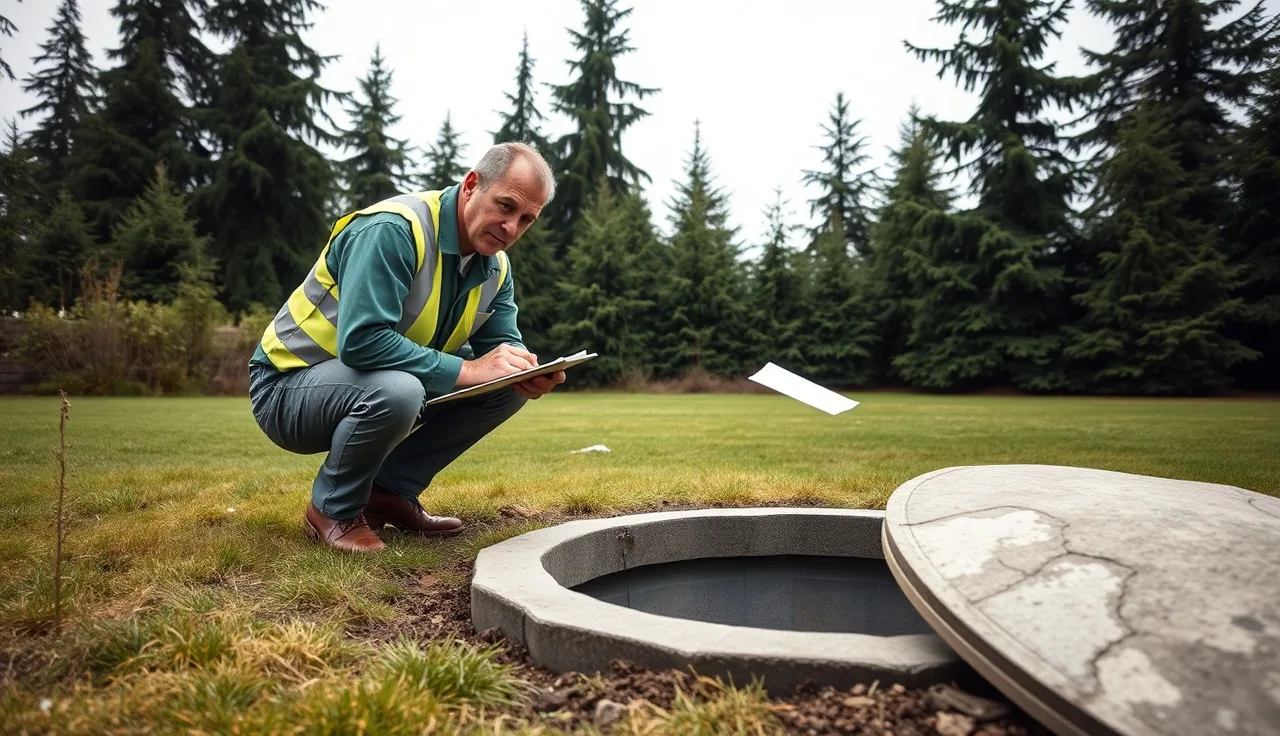
A real septic inspection is not a drive-by. A certified inspector locates the tank, exposes at least one access lid, and looks inside. They check the liquid level, the inlet and outlet baffles, any effluent filter, and signs of backup or surfacing effluent. Then they probe the drain field, looking for soggy ground, odors, or lush green stripes that say effluent is breaking through.
Snohomish Health District governs on-site sewage systems in the county and in city limits where it holds delegated authority. [4] Its rules follow Washington Administrative Code (WAC) 246-272A, the statewide standard for OSS design, installation, and maintenance. [5]
There are two inspection types you'll hear about.
Level 1 (operation and maintenance): A licensed OSS maintenance provider visits, checks the tank, pumps if due, and files a report with the health district. This satisfies the transfer requirement in many cases.
Level 2 (full or pre-sale inspection): A deeper exam. The inspector does everything in Level 1, then dye-tests or flow-tests the drain field, checks the distribution box, and may camera-inspect the lines. Some systems also get a hydraulic load test where water is added to stress the field.
For a sale in Marysville, expect a Level 2 or the county's equivalent transfer inspection. Ask the inspector flat out which level they're performing and whether their report meets the health district's transfer requirements. Get that wrong and you're paying to do it twice.
If the tank hasn't been pumped recently, budget for a septic tank pump out as part of the visit. Inspectors can't judge baffle condition through a full tank, and most require pumping before they sign off.
What does a well inspection cover in Marysville, WA?
A well inspection has two distinct parts: the physical inspection and the water quality test. They're related but not the same thing.
The physical inspection looks at the wellhead. The inspector checks the casing, the cap or seal (a broken seal lets surface water and pests in), the pressure tank, the pump, and the electrical connections. They usually measure flow rate in gallons per minute (GPM). FHA looks for a sustained yield around 3 to 5 GPM for a single-family home, though Washington Department of Health guidance treats roughly 1 GPM as usable for a storage-tank setup. [3] A well that can't hold 1 GPM through a 4-hour pump test is a red flag worth negotiating over.
The water quality test is a separate lab process. A sample gets collected, sent to a certified lab, and tested for coliform bacteria, nitrates, and sometimes a broader panel that adds arsenic, lead, hardness, and iron. Results come back in 24 to 72 hours from a standard lab. [6]
In Snohomish County, the minimum panel for a home sale usually includes total coliform, fecal coliform or E. coli, and nitrates. Near farms or older buildings, ask for a broader panel with arsenic and lead. The gap between a basic panel ($40 to $80) and an extended one ($100 to $250) is small next to the cost of missing a contamination problem. [6]
Wells and septic systems can interact badly. If the well sits upgradient from the drain field and inside the minimum separation distance, that's a permit issue that can stall closing. Washington requires at least 100 feet between a well and a septic drain field under most conditions. [5]
How much does a combined well and septic inspection cost in Marysville?
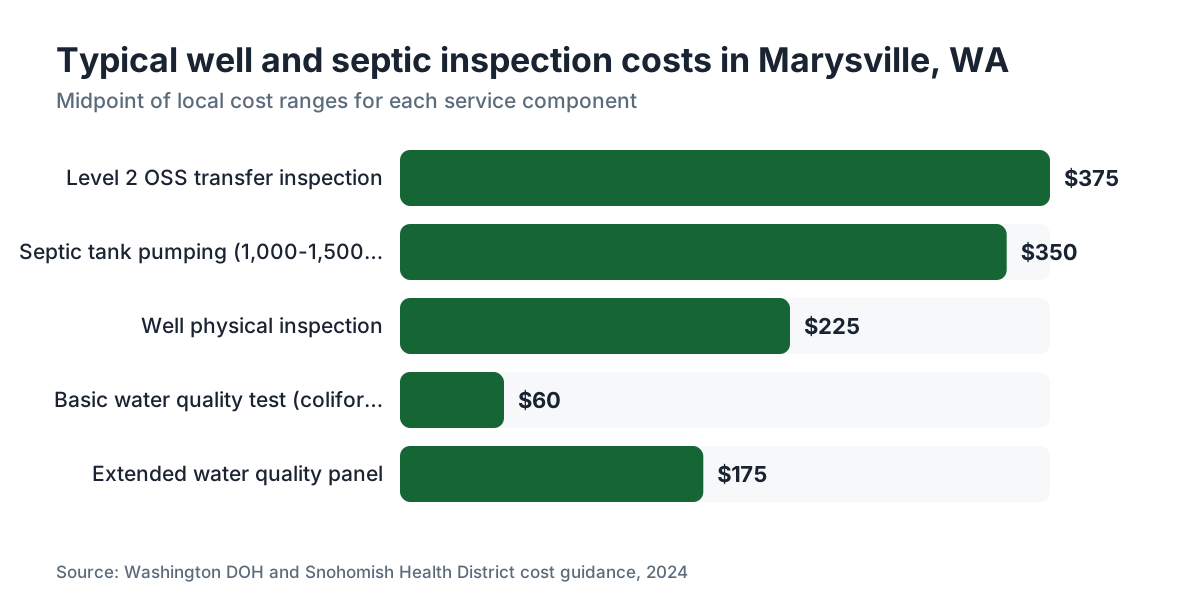
A combined well and septic inspection in Marysville runs $500 to $900 when one company handles both in a single trip. Prices move with system size, tank depth, whether the tank needs pumping, and travel distance. Here are realistic ranges for the area based on typical Snohomish County contractor pricing.
| Service | Typical Cost Range |
|---|---|
| Level 1 OSS inspection (no pumping) | $150 to $300 |
| Level 2 / transfer OSS inspection | $250 to $500 |
| Septic tank pumping (1,000 to 1,500 gal) | $250 to $450 |
| Well physical inspection | $150 to $300 |
| Basic water quality test (coliform + nitrates) | $40 to $80 |
| Extended water quality panel | $100 to $250 |
| Combined well + septic bundle | $500 to $900 |
That bundle range assumes one trip, one inspector or company handling both, and a tank that doesn't take heavy digging to find. Tanks buried unusually deep (more than 18 to 24 inches below grade) may need excavation, which adds $150 to $400 or more depending on soil. [2]
If the system hasn't been serviced in years, add septic tank pumping to the budget. Most inspectors pump during the visit if you ask upfront.
For what a failed system costs to fix, see our breakdown of cost to install septic system. Next to a $20,000 drain field, the inspection fee is cheap insurance.
Who is licensed to perform septic inspections in Washington state?
Washington requires that on-site sewage system inspections be done by an approved OSS maintenance provider or a licensed professional engineer. [5] Not every septic pumper qualifies. Ask any company whether they hold current Snohomish Health District approval and whether their inspector is certified under WAC 246-272A.
For well inspections, look for a licensed well driller or a certified water system inspector. The Washington Department of Ecology licenses well drillers and keeps the records public. [7] Some home inspectors throw a basic well flow test into a general home inspection, but that's not a dedicated well inspection, and it usually skips water quality sampling.
A few things to check when vetting companies in Marysville:
- Can they pull the system's permit history from the health district before they arrive? That tells them the original design specs and any prior violations.
- Do they file the inspection report directly with the county, or hand you a paper and expect you to file it? Direct filing is faster and cleaner for a closing timeline.
- Do they have a local Marysville or Snohomish County address? Proximity matters when you're coordinating a closing with tight deadlines.
Septic operators who want to smooth out inspection scheduling, report filing, and customer communication in the Marysville market may find that SepticMind's operations platform cuts the back-and-forth that slows closings down.
What does Snohomish Health District require for a property transfer?
Snohomish Health District is the local authority. Its OSS program requires that a property with an on-site sewage system have an inspection completed and reported to the county before the sale. [4]
The specific requirements as of this writing:
- The inspection must be done by a health-district-approved OSS maintenance provider or a professional engineer.
- The completed report must be submitted to the county. The health district keeps an online OSS database where you can look up prior inspection records by parcel.
- If the system fails, the seller has options: repair before closing, reduce the price with escrow funds held for the fix, or in some cases get a time-limited permit that lets the sale close while repairs are scheduled.
- Systems installed before modern code (often pre-1977 here) may be flagged "pre-existing nonconforming." They aren't automatically condemned, but any repair or expansion triggers current code.
One thing that trips up Marysville buyers: the county database sometimes shows a system as "unknown" because it was permitted through the city rather than the county, or because old records were never digitized. A good local inspector knows how to dig into paper records or call the right office for the specs. A blank database record doesn't mean there's no system and no history.
The statute behind all this is RCW 70A.305, updated in 2021 to tighten OSS transfer inspection rules statewide. [1]
What are the most common septic problems found during Marysville inspections?
Marysville soils run from sandy loam to heavier clay depending on whether you're near the river floodplain or up on the uplands. Soil type drives both drain field performance and how a field fails.
The issues inspectors find most:
Biomat buildup in the drain field. This is the organic mat that forms at the trench bottom over time. A little is normal. A thick, sealed-off biomat means the field is failing hydraulically. It shows up as slow drains, gurgling toilets, and soggy ground. A failing drain field is the priciest repair in residential septic, often $8,000 to $25,000 to replace in Snohomish County. [2]
Deteriorated or missing baffles. The inlet and outlet baffles keep solids from riding out to the drain field. Old concrete tanks often have baffles that rotted or fell off. Replacement is cheap ($150 to $400), but inspectors flag it because it's a leading cause of premature field failure.
High solids level in the tank. If the tank hasn't been pumped in more than 3 to 5 years, solids can build up and start spilling into the outlet pipe. Pumping fixes it on the spot. See how often to pump septic tank for the schedule that prevents it.
Pump failure on pressure-dosed systems. Many Marysville systems built after the mid-1990s use a pump to dose the drain field in cycles. A dead pump means effluent backing up. Pump replacement costs $400 to $1,200 with labor. [2]
Setback violations. Sometimes a shed, deck, or addition sits over or too close to the drain field. That's a code problem. Structures over a field compact the soil and crush distribution pipes.
What are the most common well problems found in Marysville-area inspections?
Wells around Marysville draw from alluvial aquifers that produce well but sit close to the surface in spots, which makes them more open to contamination than deep confined aquifers.
What comes up most:
Coliform contamination. Total coliform or E. coli in the sample is one of the most common reasons a well fails. It usually means surface water is getting in through a cracked casing or a failed cap. The fix is either shock chlorination (cheap, around $150 to $300 done professionally) or an ongoing UV or chlorination system ($500 to $2,000 installed). [6]
Low yield. Some older dug wells or shallow driven wells struggle to hold the flow a modern household expects. A 4-hour pump test documents the true yield. Lenders may reject a well below 1 GPM without a storage tank solution.
Elevated nitrates. Farming in the Marysville and Snohomish River valley area drives nitrate risk in shallow aquifers. The EPA maximum contaminant level (MCL) for nitrates in drinking water is 10 mg/L (milligrams per liter). [8] Anything above that needs treatment or an alternate water source, which becomes a serious negotiating point in a sale.
Old steel casing corrosion. Wells drilled before the 1970s often have steel casing. Steel corrodes, which puts iron, manganese, and rust into the water and eventually lets aquifer contamination through. Modern wells use PVC or stainless casing.
A coliform failure is usually a straightforward fix. A nitrate failure above 10 mg/L is a longer conversation about treatment costs and where the contamination comes from.
How long does a well and septic inspection take in Marysville?
On-site, the inspector is at your property 2 to 4 hours for a combined well and septic inspection. Simple systems land on the short end. Systems with pumps, multiple tanks, or hard-to-find components run longer.
What adds time:
- Tank lids buried under landscaping or concrete (locating and uncovering can add 30 to 60 minutes)
- Pumping the tank on-site (add 30 to 45 minutes)
- A 4-hour well pump test (this stretches the visit or forces a return trip)
- A distribution box that's hard to locate or reach
Water quality lab results take 24 to 72 hours from sample collection. Standard turnaround from most labs Snohomish County inspectors use is 48 hours. Rush processing is sometimes available for an extra fee.
For a closing on a tight timeline, tell your inspector the closing date upfront. Good local inspectors sequence the work so lab results land before the inspection contingency deadline. Cutting it close is common. Plan for it.
What happens if the septic system or well fails inspection?
"Fails" means different things depending on how bad it is. A missing baffle or a disconnected pump alarm wire is a repair, not a dead deal. A saturated drain field with sewage surfacing is a different conversation.
For septic failures, the usual paths:
- Seller repairs before closing. The cleanest route. Baffle replacement takes a day. Drain field replacement can take 4 to 8 weeks with permit, design, and installation. [2]
- Escrow holdback. Buyer and seller agree on an estimated repair cost, that money is held in escrow, and the sale closes. The buyer handles the repair afterward. Lenders vary on whether they allow this.
- Price reduction. The seller drops the price by the estimated repair cost and the buyer takes on the work. Better for buyers with cash to front the repair.
- Deal collapses. If the system is a total failure and the lot has no room for a replacement (too small, wrong soils, setback constraints), the property may not sell at current expectations. Rare, but it happens on small lots in this region.
For wells, coliform is usually fixable. Nitrates above the MCL or a well that physically can't produce enough water are bigger problems. The Washington Department of Health's guidance on private well water is a solid starting point. [9]
For what repairs actually look like and cost, our septic tank repair and septic system repair articles walk through the specifics.
How do you find a qualified well and septic inspector in Marysville, WA?
Start with Snohomish Health District's list of approved OSS maintenance providers. The district keeps it current. [4] Any inspector you use for the transfer inspection has to be on that list or be a licensed PE.
For the well side, the Washington Department of Ecology keeps a licensed well driller database. [7] Not every well inspector is a driller, but the licensing path runs through Ecology, so the database is a reasonable place to start.
Practical vetting:
- Ask directly: "Have you done transfer inspections in Marysville, and do you file directly with the health district?" Local experience matters.
- Ask for a sample inspection report. It should be detailed enough that an engineer could size up the system from the document alone.
- Ask how they handle a system they can't locate. Old Marysville systems sometimes have no clear record of tank location. Good inspectors use probes, locators, or read the yard for clues.
- Get the quote in writing and confirm what's included. Pumping, excavation, and lab fees are the usual surprise add-ons.
For operators running inspection businesses in Snohomish County, the county reporting workflow eats time. SepticMind's platform helps operators manage inspection scheduling and county reporting without the paperwork pile.
Once the inspection clears and the system checks out, keeping up with routine septic tank cleaning on a set schedule is the single best thing a new homeowner can do to protect the investment.
What questions should you ask before buying a home on well and septic in Marysville?
The inspection answers a lot, but the conversation before you make an offer matters too. Here's what to ask the listing agent or seller.
For the septic system:
- What year was the system installed and permitted?
- When was it last pumped, and by whom? Ask for receipts.
- Has it ever had repairs, alarm events, or sewage surface in the yard?
- What size is the tank, and how many bedrooms was it designed for? Adding bedrooms later needs a permit and maybe a system upgrade.
- Where is the drain field? Walk the yard and look for the markers.
For the well:
- When was the well drilled, and what's the documented yield?
- Is there a well log on file with the Department of Ecology? Well logs are public record and searchable online. [7]
- When was the last water quality test? Ask to see the lab report.
- Has the well ever gone dry in summer?
These don't replace the inspection, but the answers tell you whether you're looking at a well-kept system or one that's been ignored for years. A seller who can't answer any of them is telling you something.
If you end up needing a new system after purchase, our leach field guide explains how drain fields are designed and what sets their lifespan. And if you're weighing upfront costs, our cost to put in a septic tank article covers what to expect in the Pacific Northwest.
Frequently asked questions
Is a septic inspection required to sell a home in Marysville, WA?
Yes. Washington law under RCW 70A.305 requires an on-site sewage system inspection before a property with a septic system changes ownership. In Marysville and the rest of Snohomish County, Snohomish Health District enforces this, and the inspection report has to be filed with them. The seller usually arranges it, but buyers often get an independent inspection too.
Who pays for the septic inspection in a Washington state real estate transaction?
Washington law doesn't name who pays, so it's negotiated between buyer and seller. In practice, sellers in Snohomish County usually pay for the required transfer inspection because they're the ones obligated to have it done. Buyers who want a second independent inspection pay for that themselves. The inspection alone runs $250 to $500, more if pumping is needed.
How close can a septic system be to a well in Washington state?
Washington Administrative Code (WAC 246-272A) sets the minimum separation at 100 feet between a well and a septic drain field under most soil conditions. The setback between a well and the septic tank itself is shorter, typically 50 feet, but these distances shift with site-specific conditions and local county rules. A surveyor or engineer can measure compliance on your property.
How long does it take to get a well and septic inspection scheduled in Marysville?
Most Snohomish County providers can schedule a combined inspection within 3 to 10 business days. During spring real estate season, that stretches to about 2 weeks. If you're in a competitive offer, tell the inspector the closing deadline upfront so they can prioritize. Water quality lab results add another 48 to 72 hours.
What water quality tests are required for a well in Snohomish County?
For most home sales, lenders and local health officials want at minimum total coliform, E. coli, and nitrates. FHA and USDA loans have their own lab requirements that generally match this. If the property is near farms, old industrial sites, or has older plumbing, a broader panel with arsenic, lead, and iron is worth adding. The expanded panel costs roughly $100 to $250 from a certified lab.
Can a septic inspection kill a real estate deal in Washington?
It can, but it's uncommon. A failed inspection usually triggers negotiation, not cancellation. Minor repairs like baffle replacement or pump servicing get resolved fast. Drain field failure is more serious and can cost $10,000 to $30,000 to fix. If the lot physically can't support a replacement system due to size or soil, the deal may genuinely fall apart. That's the rare but real worst case.
How often should a septic tank be pumped in Marysville, WA?
The EPA and Washington Department of Health both recommend pumping a typical residential septic tank every 3 to 5 years for a household of 4. Smaller tanks or larger households should pump more often. In Snohomish County, some health-district maintenance programs set specific inspection intervals by system type. Gravity systems generally need less frequent attention than pressure-dosed systems with pumps.
What's the difference between a Level 1 and Level 2 septic inspection in Washington?
A Level 1 inspection is an operation and maintenance check: the tank is pumped, components are looked over, and a report is filed. A Level 2 goes further and includes a hydraulic load or dye test of the drain field to see how it handles stress. For property transfers in Snohomish County, the county typically requires the equivalent of a Level 2 to document system condition at sale.
Does a home inspector in Marysville cover the septic and well?
A general home inspector may spot obvious red flags like wet spots near the drain field or a dead pressure tank, but they usually don't perform a code-compliant transfer inspection or collect water samples for lab testing. For a Washington property transfer, you need a separate health-district-approved OSS maintenance provider for the septic and a certified well inspector or licensed driller for the well.
What is the EPA's guidance on septic system inspections?
The EPA SepticSmart program recommends inspecting your septic system every 3 years with a professional and pumping the tank every 3 to 5 years depending on household size and tank capacity. The program also stresses protecting the drain field from vehicle traffic, excess water, and non-biodegradable materials. EPA notes a well-maintained septic system typically lasts 25 to 30 years.
How do I look up the permit history for a septic system in Marysville, WA?
Snohomish Health District keeps an online OSS database searchable by parcel number or address. You can also request paper records directly from the district for older systems. The Washington Department of Ecology's well log viewer lets you search well records by location. Both databases are public and free. Your inspector should pull both records before arriving on-site.
What nitrate level fails a well water test in Washington?
The EPA maximum contaminant level (MCL) for nitrates in drinking water is 10 milligrams per liter (mg/L), the same threshold Washington Department of Health uses for private wells. Nitrates above 10 mg/L are a health concern, especially for infants. If a test comes back above that level, the well fails the drinking water standard, and treatment or an alternate water source is required.
Can I sell my Marysville home if the septic system fails inspection?
Yes, but you have to disclose the failure and either repair it before closing, hold funds in escrow for the repair, or negotiate a price reduction. Washington law doesn't require a system to be in perfect condition to transfer, but the buyer and their lender have to agree to the terms. Some lenders, especially FHA and USDA, won't allow closing until the system passes inspection.
Sources
- Washington State Legislature, RCW 70A.305 (On-site sewage systems): Washington state requires an on-site sewage system inspection before property transfer under RCW 70A.305
- Washington State Department of Health, wastewater management section: Drain field replacement costs and repair cost context for Washington on-site sewage systems
- Washington State Department of Health, private well and drinking water guidance: Washington DOH guidance on private well water quality testing and yield requirements
- Washington Administrative Code WAC 246-272A, On-Site Sewage Systems: WAC 246-272A sets statewide standards for OSS design, installation, setback distances, and inspection requirements
- Washington State Department of Health, testing your drinking water guidance: Water quality test types, costs, and lab turnaround times for private well owners in Washington
- Washington State Department of Ecology, well construction and licensing: Ecology maintains a searchable well log database and licenses well drillers in Washington state
- U.S. Environmental Protection Agency, National Primary Drinking Water Regulations: EPA maximum contaminant level (MCL) for nitrates in drinking water is 10 mg/L
- Washington State Department of Health, well water treatment guidance: DOH guidance on treatment options for wells that fail water quality standards including coliform and nitrates
- U.S. EPA SepticSmart Program: EPA recommends inspecting septic systems every 3 years and pumping every 3 to 5 years; well-maintained systems last 25 to 30 years
Last updated 2026-07-09