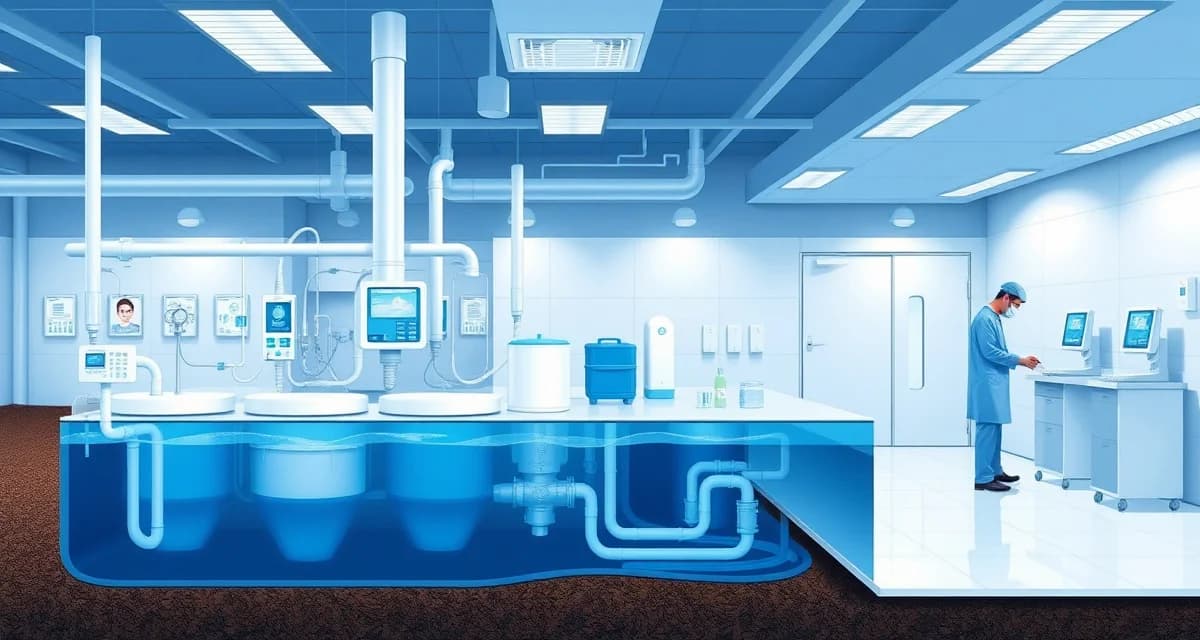
Septic Service for Dialysis Centers and Specialty Medical Clinics
By the SepticMind Editorial Team
CMS and state health departments require functioning sanitation systems for dialysis center operations, and dialysis facility wastewater contains medication residues that can pass through conventional septic systems into groundwater. Dialysis centers are among the most water-intensive medical facilities per treatment -- a single dialysis treatment requires 30-50 gallons of treated water -- and that water becomes pharmaceutical-laden wastewater that needs proper management before any onsite septic disposal.
TL;DR
- Dialysis Centers facilities have distinct wastewater loading patterns that affect septic system sizing, service frequency, and permit requirements.
- Commercial and institutional properties like dialysis centers typically require more frequent pumping than residential systems due to higher daily usage.
- Some dialysis centers operations generate waste streams (grease, chemicals, or high-volume flow) that require pre-treatment before reaching the septic system.
- Service contracts for dialysis centers provide predictable recurring revenue and are easier to manage with a platform that tracks commercial account schedules.
- Health department inspections for dialysis centers properties may require septic system condition documentation as part of facility licensing.
- Septic companies specializing in dialysis centers service build referral networks with property managers, architects, and health inspectors in that niche.
SepticMind's medical clinic account type documents pharmaceutical load compliance for septic scheduling, giving specialty medical facilities the compliance framework their regulatory environment requires.
Why Dialysis Centers Are a Special Case
Hemodialysis, the most common dialysis treatment modality, works by circulating a patient's blood through a dialysis machine that uses a dialysate solution to remove waste products and excess fluid. The process generates large volumes of wastewater:
High water volume: A typical dialysis session uses 30-50 gallons of purified water per treatment. A center with 20 treatment stations running 3 sessions per day generates 1,800-3,000 gallons of dialysis-related wastewater per day, in addition to standard facility wastewater from restrooms and staff areas.
Pharmaceutical content: Dialysis patients receive medications during treatment, and some medication residues pass through the dialysis membrane into the dialysate. Additionally, anticoagulants used during treatment (primarily heparin) are present in the wastewater stream.
Blood and biological material: Small amounts of blood and biological material may be present in dialysis machine rinse water from treatment. This creates both a biological hazard consideration and a regulatory classification question about whether the wastewater requires treatment as biohazardous waste.
Chemical dialysate compounds: The bicarbonate-based dialysate solution itself contains compounds that, while relatively benign in the environment, create high-conductivity wastewater that affects the biological treatment process in conventional septic systems differently than standard wastewater.
Regulatory Framework for Dialysis Facilities
Dialysis centers are among the most heavily regulated outpatient medical facilities:
CMS certification: End Stage Renal Disease (ESRD) facilities that participate in Medicare must be certified by CMS under ESRD Conditions for Coverage, which include facility maintenance and sanitation standards. A sanitation failure that affects patient care can jeopardize CMS certification.
State health department licensing: Dialysis centers are licensed by state health departments with specific facility standards that include sanitation requirements.
EPA pretreatment: High-volume dialysis facilities that discharge to public sewer systems are often subject to EPA industrial pretreatment requirements for specific wastewater constituents. For facilities on onsite septic, pretreatment requirements may be imposed by state environmental agencies through operating permit conditions.
Medical waste regulations: Wastewater containing blood or biological material may be subject to state medical waste regulations that require specific disposal pathways rather than direct septic disposal.
Pretreatment Considerations
For dialysis centers on onsite septic systems, the regulatory question is whether any pretreatment is required before dialysis wastewater enters the septic system:
Volume management: The sheer volume of dialysis wastewater -- potentially 3,000+ gallons per day -- may exceed what a conventional onsite system was designed to handle. System capacity relative to dialysis-related wastewater volume needs to be assessed.
Chemical oxygen demand: Dialysis wastewater has elevated chemical oxygen demand (COD) from organic compounds in the dialysate. High COD wastewater loads the biological treatment process in septic systems beyond what standard residential or commercial wastewater creates.
pH: Dialysate solution pH varies. Some centers' wastewater is alkaline enough to require neutralization before septic disposal to avoid disrupting the biological treatment process.
Silver in dialysis water purification: Some dialysis water treatment systems use silver-containing media for bacterial control. Blowdown from these systems contains silver that is regulated under pretreatment standards.
Specialty medical facilities like dialysis centers should work with an environmental engineer or wastewater consultant to determine what pretreatment, if any, is required for their specific wastewater profile before connecting to any onsite system.
Service Frequency and System Sizing
A dialysis center generating 3,000 gallons of wastewater per day is operating at commercial-industrial scale for wastewater volume. Service intervals need to reflect this:
For systems receiving dialysis center wastewater: Monthly service at minimum for any system receiving full dialysis center daily flows. The volume alone, independent of pharmaceutical content, drives this interval.
For systems receiving only restroom and staff area flows: If dialysis machine wastewater is separately managed (holding tank, sewer connection, or treatment system) and only restroom and office wastewater goes to the onsite septic, the service interval can be calculated from that lower-volume flow.
Grease trap service: If the center has a kitchen or break room that contributes grease-bearing wastewater, the grease trap needs separate service on an interval appropriate for the food service activity.
Verifying how the dialysis center's different waste streams are routed before setting a service schedule is essential. Servicing a system that's receiving full dialysis center wastewater on an annual interval is a path to system failure.
Get Started with SepticMind
Dialysis Centers facilities need a service provider who understands the specific wastewater challenges of their operations. SepticMind makes it easy to manage commercial service contracts, track inspection schedules, and document service visits for every account in your portfolio. See how it supports commercial account management.
Frequently Asked Questions
What pretreatment requirements apply to dialysis facility wastewater entering onsite septic?
Pretreatment requirements for dialysis facility wastewater vary by state and by the specific characteristics of the facility's wastewater. High-volume facilities generating thousands of gallons per day may need to manage wastewater through holding tanks serviced by licensed haulers rather than onsite septic, if the system wasn't designed for commercial-industrial flow volumes. Facilities with silver in their water treatment systems or biological material concerns may need specific pretreatment before septic discharge. State environmental agencies set pretreatment requirements through operating permit conditions for facilities above minimum discharge thresholds. Dialysis centers should consult with the state environmental agency and an environmental engineer before connecting to any onsite system to determine what treatment is required for their specific wastewater profile.
How often should a dialysis center's onsite wastewater system be serviced?
A dialysis center's service frequency depends on how dialysis machine wastewater is routed and what volume the onsite system actually receives. For systems receiving full dialysis center wastewater -- machine effluent plus restroom and facility flows -- monthly service is a minimum starting point for systems designed for the volume. For systems receiving only restroom and staff facility flows because machine wastewater goes to a separate holding tank or municipal sewer, commercial service intervals appropriate for the facility's employee and patient count apply. Grease traps for any kitchen or break room facilities need separate service independent of the septic interval. Verify the actual routing of different waste streams before establishing any service schedule.
Does SepticMind track pretreatment compliance for medical specialty clinic accounts?
Yes. SepticMind's medical clinic account type includes fields for documenting pretreatment system type, operating permit conditions, and any state health department or CMS-required maintenance documentation. For dialysis centers with holding tanks or separate pretreatment systems, those components are tracked separately within the clinic account with their own service schedules and compliance history. Regulatory documentation for CMS certification reviews, state health department inspections, and environmental agency permit compliance is maintained in formats appropriate for each regulatory audience. Service records for medical facility accounts include the technician's license information and are dated and signed in formats that meet healthcare regulatory documentation standards.
How often should a septic system serving a dialysis centers property be inspected?
Septic systems at dialysis centers properties should be inspected at least annually and pumped more frequently than residential systems, since commercial-scale daily water usage accelerates sludge and grease accumulation. The exact frequency depends on the specific activities at the facility, peak occupancy, any food service or chemical use on-site, and local regulatory requirements. A service provider familiar with dialysis centers operations can recommend an appropriate inspection and pumping schedule based on the system's actual usage profile.
What septic system issues are most common at dialysis centers properties?
The most common septic problems at dialysis centers properties are rapid sludge accumulation from high occupancy, grease trap failure if food service is involved, hydraulic overloading during peak-use periods, and non-biodegradable waste disposal from cleaning or maintenance activities. Regular inspection and a service contract with clear maintenance intervals are the most effective ways to catch these problems before they cause system failure or regulatory violations.
Try These Free Tools
Sources
- National Onsite Wastewater Recycling Association (NOWRA)
- US EPA Office of Wastewater Management
- NSF International
- Water Environment Federation
- National Environmental Services Center (NESC)