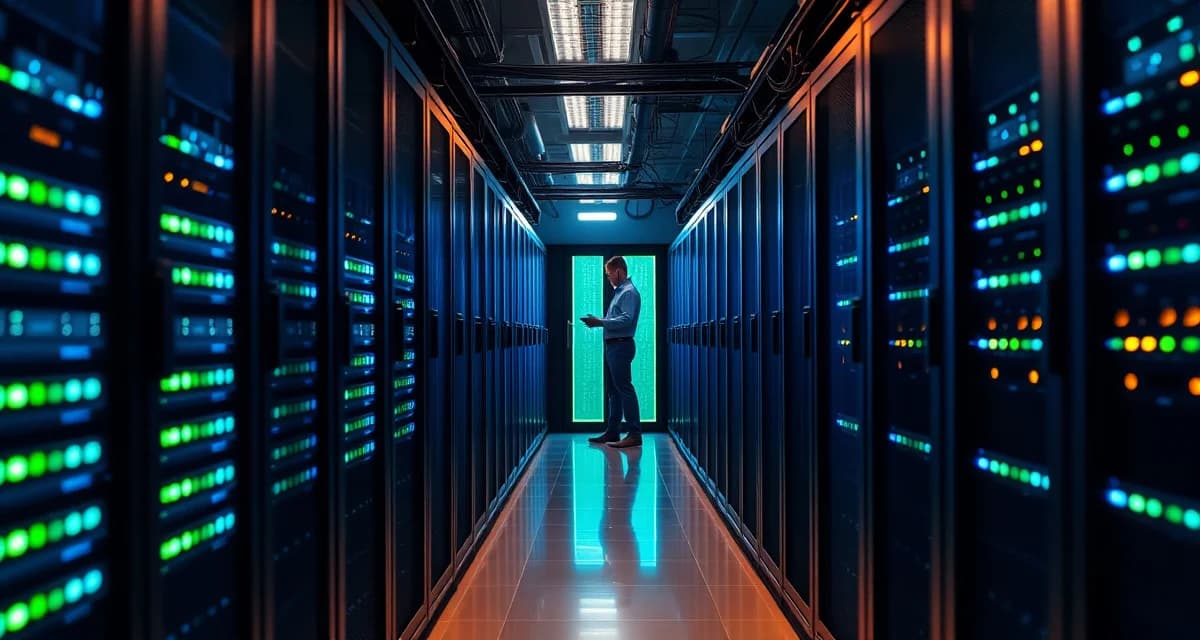
Septic Service for Small Data Centers and Technology Facilities
By the SepticMind Editorial Team
Data centers are primarily electrical infrastructure. Their environmental footprint is dominated by power consumption, cooling systems, and hardware waste, not wastewater. But small data centers with 24/7 staff require reliable septic service for continuous operations facilities, and data center operational compliance requires functioning sanitation for continuous operation certification.
TL;DR
- Data Centers facilities have distinct wastewater loading patterns that affect septic system sizing, service frequency, and permit requirements.
- Commercial and institutional properties like data centers typically require more frequent pumping than residential systems due to higher daily usage.
- Some data centers operations generate waste streams (grease, chemicals, or high-volume flow) that require pre-treatment before reaching the septic system.
- Service contracts for data centers provide predictable recurring revenue and are easier to manage with a platform that tracks commercial account schedules.
- Health department inspections for data facility of this type may require septic system condition documentation as part of facility licensing.
- Septic companies specializing in data centers service build referral networks with property managers, architects, and health inspectors in that niche.
The wastewater considerations at a small data center are modest in volume but significant in reliability requirements. A data center that loses its restroom facilities due to a septic failure can't simply close for the day like most businesses. Operations continue whether or not the sanitation infrastructure is functional, which means the problem just gets worse until it's addressed.
Who Is on Site at a Small Data Center?
The wastewater load at a data center depends on staffing models:
Network operations center (NOC) staff: 24/7 data centers have continuous staffing for monitoring and incident response. A small data center with 10-15 NOC staff on rotating shifts generates steady daily wastewater around the clock.
Maintenance technicians: Hardware maintenance, power systems work, cooling maintenance, and network infrastructure work bring additional personnel on a scheduled basis. These visits may be brief but add to the daily load.
Cafeteria or break room: Many data centers include at least a break room or small cafeteria for staff convenience. Food prep and cleaning add kitchen gray water to the wastewater stream.
Visitor and customer access: Data centers that offer colocation services may have customer equipment access visits regularly. Some have dedicated customer lounges or conference areas.
The total daily wastewater volume is typically modest, similar to a small commercial office building. But the 24/7 nature of the operation means that unlike a business that closes at 5pm, wastewater generation never fully stops.
Continuous Operations and Septic Failures
For most businesses, a septic failure is a bad day. Customers are inconvenienced, the health department may be called, and the facility closes until repairs are made. For a data center with service level agreements, uptime commitments, and customers whose operations depend on the facility being functional, a septic failure is an operational incident.
This doesn't mean data center septic systems are technically more complex than any other commercial facility's. It means they need more proactive maintenance because the consequences of failure are more significant.
SepticMind's technology facility account type tracks data center septic service with service agreement scheduling. Preventive maintenance is scheduled on a defined calendar, service agreements include guaranteed response times, and service history is documented so operations managers can show the system is being managed.
Service Intervals for Data Centers
A small data center with 10-20 on-site staff and a small break room is generating modest daily wastewater. A properly sized commercial system should need pump-outs every 2-3 years under normal conditions, with annual inspections.
The key is to confirm that the system was properly sized for the actual staffing level when the facility was built or when you moved in. Data centers sometimes repurpose industrial or commercial buildings whose previous occupants had very different wastewater profiles. Make sure the system was sized for human occupancy, not for a previous warehouse or manufacturing use.
If the facility includes a significant cafeteria or food preparation area serving daily meals for staff, the service interval moves closer to annual given the food service loads.
Uptime and Service Agreement Coordination
Data center operations teams are used to managing vendor service agreements with SLAs and response time guarantees. Applying the same rigor to septic service makes sense. Your septic service agreement management should specify:
- Scheduled preventive maintenance visits with guaranteed scheduling windows
- Emergency response time commitments for unplanned service needs
- After-hours contact procedures for facilities that can't wait until business hours
A data center that discovers a septic problem at 2am on a Saturday needs to know who to call and what response time to expect.
For comparison with other technology and industrial facilities, see the septic service for industrial properties guide.
Get Started with SepticMind
Managing service contracts for data facility of this type is easier with a platform built for the septic trade. SepticMind tracks commercial service schedules, documents every inspection visit, and keeps your compliance records organized by property. See how it handles your commercial account portfolio.
Frequently Asked Questions
What septic service is required for a small data center with on-site staff?
A small data center with 24/7 on-site staff needs a commercial-grade onsite septic system properly sized for the staffing level, with regular maintenance on a documented schedule. Annual inspections and pump-outs every 2-3 years are a reasonable baseline for facilities with 10-20 staff. If the facility has a cafeteria or significant food preparation, service should be more frequent. The most important element for a data center specifically is having a service agreement with guaranteed emergency response capability, since the 24/7 nature of operations means a septic problem can't be ignored until normal business hours.
How often should a data center facility with a cafeteria service its septic system?
A data center with a cafeteria should treat the food service load as a separate maintenance consideration from the general facility load. The cafeteria's grease trap, if present, needs service every 1-3 months depending on cooking volume. The main septic tank serving the entire facility, including cafeteria wastewater after the grease trap, should receive annual inspections with pump-outs every 1-2 years depending on cafeteria volume and total staff count. Don't apply a generic office-building interval to a facility that includes commercial food service. The cafeteria load changes the calculation meaningfully.
Does SepticMind support continuous operations facility account management for data centers?
Yes. SepticMind's technology facility account type is designed for 24/7 facilities that need reliable, documented septic maintenance. The account tracks preventive maintenance scheduling, service agreement terms, and complete service history. Emergency contact information is stored in the account for after-hours incident response. Service reminders account for the continuous operations environment where scheduled maintenance needs to be coordinated around operational windows rather than just calendar dates. For data center operators managing multiple facilities, all sites can be tracked under a single organizational account with separate records for each location.
How often should a septic system serving a data centers property be inspected?
Septic systems at data facility of this type should be inspected at least annually and pumped more frequently than residential systems, since commercial-scale daily water usage accelerates sludge and grease accumulation. The exact frequency depends on the specific activities at the facility, peak occupancy, any food service or chemical use on-site, and local regulatory requirements. A service provider familiar with data centers operations can recommend an appropriate inspection and pumping schedule based on the system's actual usage profile.
What septic system issues are most common at data facility of this type?
The most common septic problems at data facility of this type are rapid sludge accumulation from high occupancy, grease trap failure if food service is involved, hydraulic overloading during peak-use periods, and non-biodegradable waste disposal from cleaning or maintenance activities. Regular inspection and a service contract with clear maintenance intervals are the most effective ways to catch these problems before they cause system failure or regulatory violations.
Try These Free Tools
Sources
- National Onsite Wastewater Recycling Association (NOWRA)
- US EPA Office of Wastewater Management
- NSF International
- Water Environment Federation
- National Environmental Services Center (NESC)