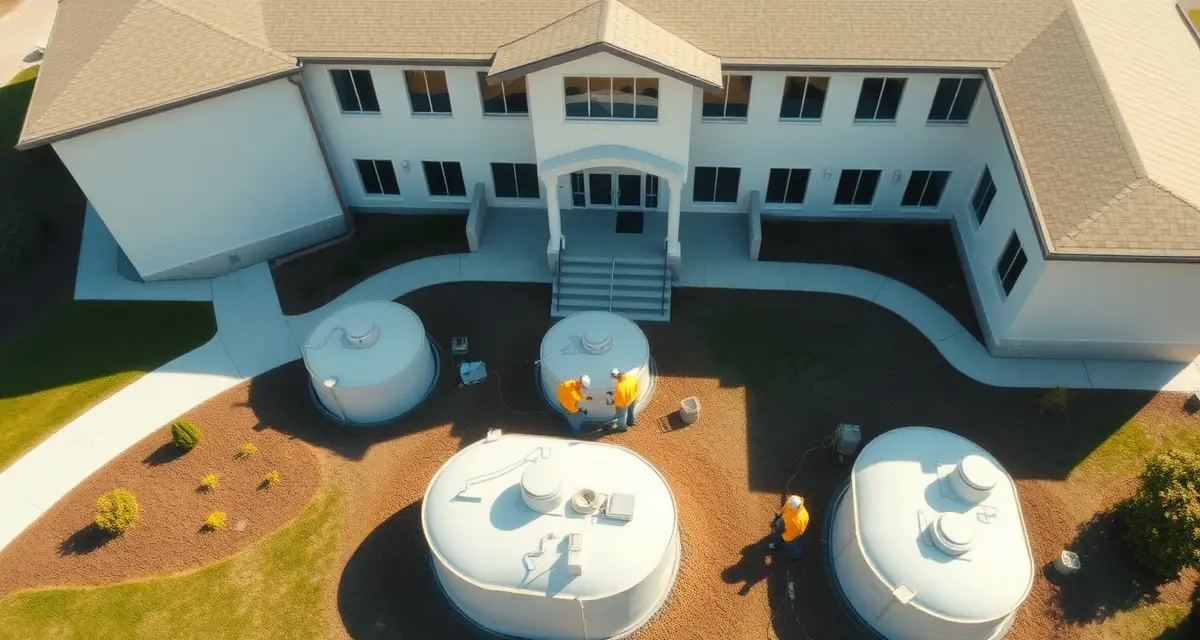
Septic Service for Community Centers and Recreation Facilities
By the SepticMind Editorial Team
Septic failures at community centers during public events trigger health department notifications. Community center septic systems face high variable loads during summer programming that accelerate tank filling. SepticMind's community center account type schedules pre-season service before summer programming begins.
TL;DR
- Community Centers facilities have distinct wastewater loading patterns that affect septic system sizing, service frequency, and permit requirements.
- Commercial and institutional properties like community centers typically require more frequent pumping than residential systems due to higher daily usage.
- Some community centers operations generate waste streams (grease, chemicals, or high-volume flow) that require pre-treatment before reaching the septic system.
- Service contracts for community centers provide predictable recurring revenue and are easier to manage with a platform that tracks commercial account schedules.
- Health department inspections for community centers properties may require septic system condition documentation as part of facility licensing.
- Septic companies specializing in community centers service build referral networks with property managers, architects, and health inspectors in that niche.
The Variable Load Challenge
Community centers serve a dramatically different use pattern than most commercial properties. A community center in a small town might host:
- Monday through Friday morning: Seniors program with 20-30 attendees
- Evenings: Youth sports leagues with 100-200 participants and parents
- Weekends: Rental events (birthday parties, community meetings, civic organization dinners)
- Summer: Full programming with day camps and activities from 7 AM to 6 PM
The load on the septic system from these different uses varies enormously throughout the week and the year. A Tuesday morning seniors coffee has a fraction of the septic demand of a Saturday evening dinner for 150 people.
This variability means standard annual service intervals calibrated to average use consistently underservice community center systems during peak periods.
Summer Programming: The Peak Challenge
Summer is when most community center septic systems face their most sustained stress. Summer day camps, aquatic programs, youth sports leagues, and extended programming hours drive daily attendance numbers that can be 3-5x winter programming.
Summer programming also creates a specific dynamic: the highest loads occur when access for service is most difficult (schedules are full, parking is occupied, staff are stretched). Pre-season service -- completing the pump-out and system assessment before summer programming begins -- resolves this by entering the high-use period with a freshly serviced system.
The service calendar for community centers should be built around the programming calendar, not a fixed date:
Pre-season service (April-May): Pump-out, full system inspection, condition documentation before summer programming begins.
Mid-season check (July): A brief site visit and tank level assessment at the height of summer programming. If the tank is filling faster than expected, schedule a pump-out before the end of summer.
Post-season service (September): Post-summer assessment and pump-out to clear accumulated load.
Holiday event service: If the center hosts major holiday events (Thanksgiving dinners, community Christmas parties), pre-event service is appropriate for large gatherings.
Rental Events and Variable Attendance
Many community centers generate revenue through facility rentals for private events. Birthday parties, business meetings, civic organization dinners, and community celebrations all create event-level septic loads.
The challenge is that rental events create unpredictable load spikes that the regular service schedule doesn't account for. A Saturday evening with a 150-person retirement party creates a load that the system wasn't planning for on that particular weekend.
Managing this requires one of two approaches:
Pre-event size thresholds: Establish with the community center that events above a certain size (e.g., 100+ guests) trigger a pre-event service request. Build this into the service agreement.
Calendar awareness: Get access to the facility's event calendar or regular communication about large upcoming rentals. Schedule service before large events proactively.
Seasonal and Year-Round Programming
Community centers vary significantly in their year-round activity level:
High year-round use: Urban and suburban community centers that run year-round programming have sustained high loads with seasonal spikes. Service quarterly with pre-season service before each peak programming period.
Summer-dominant use: Recreation facilities that primarily serve summer programming may have minimal use in winter. Semi-annual service (pre-summer and mid-fall) may be adequate.
Event-dominant use: Centers that primarily operate as event rental facilities need event-driven scheduling rather than interval-based scheduling.
Understanding your specific account's programming calendar is the foundation for the right service plan.
Compliance Documentation for Public Facilities
Community centers operated by municipal governments, nonprofits, or community organizations face compliance expectations appropriate for public facilities:
- Health department requires functioning sanitation for public assembly facilities
- Government-operated centers face municipal compliance standards
- Events at public facilities trigger health department oversight if sanitation fails
Documentation for community center accounts should include all standard service records plus any system assessment reports that can be provided to the organization's board or management for budgeting and planning purposes. Public facilities often need to justify septic maintenance expenses to boards or funding committees -- a professional assessment report with condition notes and recommendations serves this purpose.
The septic service for churches page covers a similar account type with comparable programming patterns. The septic service agreement management resource covers how to structure service contracts that reflect seasonal programming needs.
Get Started with SepticMind
Managing service contracts for community centers properties is easier with a platform built for the septic trade. SepticMind tracks commercial service schedules, documents every inspection visit, and keeps your compliance records organized by property. See how it handles your commercial account portfolio.
Frequently Asked Questions
How often should a community center septic system be serviced?
A community center with active year-round programming needs quarterly service at minimum. Centers with heavy summer programming that drives attendance 3-5x above winter levels need pre-season service before summer and a mid-summer assessment in addition to the base quarterly schedule. Community centers that host large rental events regularly benefit from event-driven pre-service scheduling for gatherings above 100 guests. Annual or semi-annual service is only appropriate for centers with very limited programming (fewer than 50 daily participants on most active days).
What seasonal service schedule is recommended for a community center with summer programming?
A four-service annual schedule works well for most summer-programming-focused community centers: pre-season service in April or May (before summer programming begins), mid-season service in July (during peak programming), post-season service in September (after summer programming concludes), and a winter service in January or February (after holiday events). This schedule ensures the system enters each peak period with maximum capacity and gets a condition assessment at each service. For centers with major holiday events (community Thanksgiving dinner, Christmas party), add a pre-event service call before those events.
Does SepticMind support seasonal service scheduling for community center accounts?
Yes. SepticMind's community center account type supports season-based service scheduling that aligns with programming calendars rather than fixed calendar intervals. Pre-season service reminders trigger a defined period before the programming start date. Event-driven service reminders can be set for large rental events when calendar information is available. Account notes document the programming calendar so any technician working the account understands the seasonal context. Year-round programming calendars and event rental information stored in the account record support proactive service planning rather than reactive response to system problems.
How often should a septic system serving a community centers property be inspected?
Septic systems at community centers properties should be inspected at least annually and pumped more frequently than residential systems, since commercial-scale daily water usage accelerates sludge and grease accumulation. The exact frequency depends on the specific activities at the facility, peak occupancy, any food service or chemical use on-site, and local regulatory requirements. A service provider familiar with community centers operations can recommend an appropriate inspection and pumping schedule based on the system's actual usage profile.
What septic system issues are most common at community centers properties?
The most common septic problems at community centers properties are rapid sludge accumulation from high occupancy, grease trap failure if food service is involved, hydraulic overloading during peak-use periods, and non-biodegradable waste disposal from cleaning or maintenance activities. Regular inspection and a service contract with clear maintenance intervals are the most effective ways to catch these problems before they cause system failure or regulatory violations.
Try These Free Tools
Sources
- National Onsite Wastewater Recycling Association (NOWRA)
- US EPA Office of Wastewater Management
- NSF International
- Water Environment Federation
- National Environmental Services Center (NESC)