Septic inspections in Fort Worth TX: what to expect and what it costs
By the SepticMind Editorial Team

TL;DR
- A septic inspection in Fort Worth costs $150 to $500, depending on inspection type and system size.
- Texas requires licensed On-Site Sewage Facility (OSSF) inspectors under 30 TAC Chapter 285.
- You need one when buying or selling a home, after a repair, or any time you suspect a problem.
- Tarrant County enforces the local OSSF rules through its Development Services office.
What does a septic inspection in Fort Worth actually involve?
A septic inspection is a hands-on evaluation of every part of your on-site sewage facility that the inspector can reach. It starts at the house. The inspector checks the cleanout, then moves to the tank, locates and opens the lids, measures the scum and sludge layers, looks for cracks or structural damage, and confirms the inlet and outlet baffles are intact. After the tank comes the drain field (also called the leach field). The inspector walks it looking for wet spots, lush green stripes, odors, or standing water. Any of those signals the soil has stopped absorbing effluent.
In Texas the inspector also confirms the system matches the design the county originally permitted. That means the tank capacity fits the home's bedroom count, setbacks from wells and property lines are respected, and any aerobic treatment unit (ATU) is running and under an active maintenance contract as state rule requires.
A basic visual inspection takes about an hour on a straightforward gravity-flow system. An aerobic system with spray heads, pumps, and a control panel runs closer to two hours, because the inspector tests each pump, checks float levels, and verifies the chlorine or UV disinfection. Can't find the tank? Need to camera the lines? Add time and cost.
Here's what a standard inspection does NOT include: pumping the tank (that's a separate service, see septic tank pump out), pressure-testing lines, or soil testing. Ask what's covered before you book. Assume nothing.
What are the Texas rules that govern septic inspections?
Texas regulates all on-site sewage facilities under Title 30 of the Texas Administrative Code, Chapter 285, administered by the Texas Commission on Environmental Quality (TCEQ) [1]. The rule covers permitting, design, installation, and inspection of any OSSF serving a property that isn't on a municipal sewer.
For inspections, 30 TAC §285.10 requires that anyone inspecting an OSSF for a real estate transaction hold a valid TCEQ OSSF license [9]. Those licenses come in tiers: Site Evaluator, Installer I, Installer II, Maintenance Provider, and Maintenance Technician. For a standard real estate inspection you want someone with at least an Installer II license or a Designated Representative credential issued through the local authorized agent.
Tarrant County is the local authorized agent (LAA) for OSSF regulation across most of the Fort Worth area [2]. The county's Development Services department enforces 30 TAC 285 locally and handles permits, inspections, and complaints. If your property sits inside Fort Worth city limits or another incorporated city, that city may add its own layer on top of the state rules, though most Tarrant County municipalities defer to the county on OSSF matters.
Aerobic treatment units draw extra scrutiny. Texas requires a two-year maintenance contract with a licensed provider, and that provider must inspect the unit at least four times a year [1]. Buy a home with an ATU and no active maintenance contract, and that compliance gap is yours the moment you close.
The EPA's SepticSmart program tells owners to "have your system inspected regularly by a qualified professional" and points to an inspection every three years as a common benchmark for conventional systems, though local rules can be stricter [3].
How much does a septic inspection cost in Fort Worth?
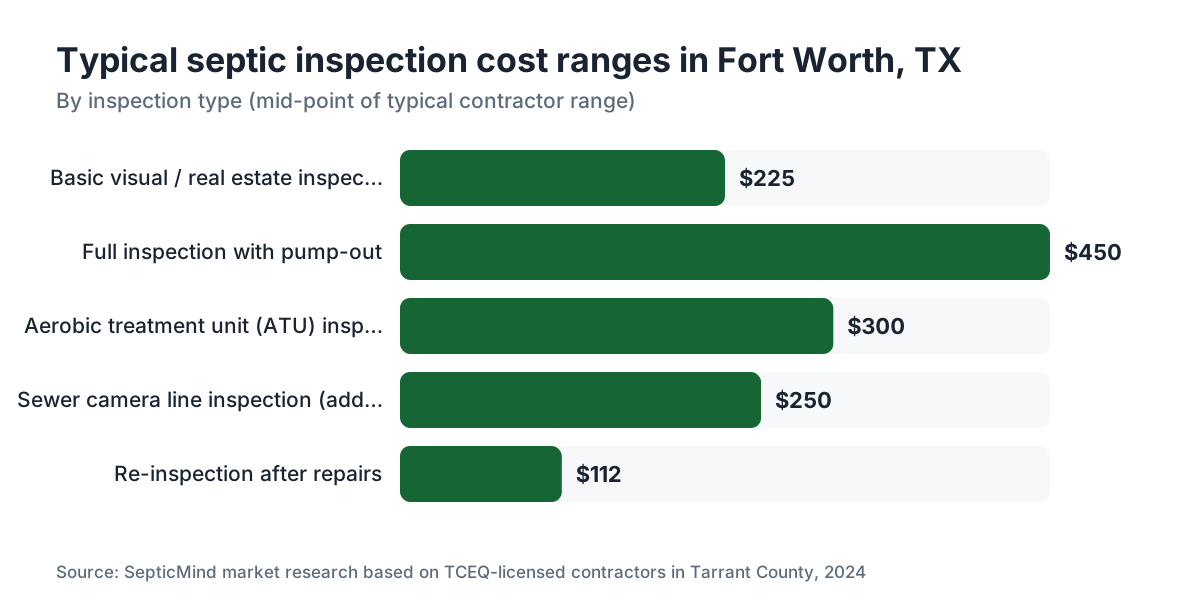
A septic inspection in Fort Worth runs $150 to $500 for most jobs, and the price tracks the inspection type and system complexity. The table below shows honest working ranges based on what licensed OSSF inspectors in the Dallas-Fort Worth market charge. These aren't quotes. They're the numbers to expect before you pick up the phone.
| Inspection type | Typical cost range | Notes |
|---|---|---|
| Basic visual / real estate inspection | $150 to $300 | Conventional gravity system, tank lids accessible |
| Full inspection with pump-out included | $350 to $550 | Inspector coordinates with pumper; most accurate read of tank condition |
| Aerobic treatment unit (ATU) inspection | $200 to $400 | Includes pump test, chlorine check, spray head verification |
| Sewer camera / line inspection add-on | $150 to $350 | Extra if pipes need video inspection |
| Re-inspection after repairs | $75 to $150 | Many inspectors charge a reduced revisit fee |
A few things drive the price up fast. Tank lids buried under soil or a deck mean the inspector spends labor locating and digging. A system that hasn't been pumped in years forces a choice, because a responsible inspector will push you to pump before or during the visit so they can actually see baffle condition and check for cracks. That means you pay for septic tank pumping on top of the inspection fee.
The cheapest option isn't the smart one. A $150 drive-by that skips opening the tank and walking the drain field is close to worthless for a real estate deal. Pay for the inspection that includes lid removal and a walk of the field. Skimping here can cost you tens of thousands later.
When do you actually need a septic inspection in Fort Worth?
Real estate transactions are the most common trigger. Texas has no statewide law requiring a septic inspection before every home sale, but lenders often demand one, and skipping it as a buyer is reckless. A failing system can cost $8,000 to $30,000 or more to fix or replace, and sellers don't always volunteer the symptoms they've trained themselves to ignore [4].
Schedule an inspection if any of these apply:
You've never had the system checked and you've lived there more than three years. You're adding bedrooms or a bathroom, which changes the hydraulic load calculation and may require a permit and TCEQ review. You've come through a wet season and you're seeing soggy ground near the drain field. You notice slow drains throughout the house, gurgling sounds, or sewage odors inside or out. You're about to have the tank pumped anyway, in which case pairing the inspection with the septic tank cleaning makes sense economically.
For aerobic systems, the mandatory quarterly visits from your licensed provider function as inspections four times a year. But those are maintenance checks by the service company, not independent inspections. Selling a home with an ATU? Get an independent TCEQ-licensed inspection on top.
New construction in Tarrant County requires a TCEQ-compliant inspection before a permit closes out. The county's OSSF program handles that. It isn't something you arrange separately as a homeowner.
How do you find a licensed septic inspector in the Fort Worth area?
Start with TCEQ's official license verification. TCEQ keeps a searchable database of licensed OSSF professionals on its website, and you can search by county, license type, and name [1]. This is the only reliable way to confirm someone is actually licensed. Anyone who can't produce a current TCEQ license number has no business inspecting an OSSF in Texas. Full stop.
Tarrant County Development Services also keeps a list of authorized OSSF inspectors and can point you to people who work the county often and know the local soils and system types [2]. Local knowledge matters more than you'd guess. The shrink-swell clay common in Tarrant County makes drain fields behave differently than sandy loam does, and an inspector who has read hundreds of local systems spots those patterns fast.
When you call, ask four things before you book. Is your TCEQ OSSF license current, and what type? Do you open all accessible tank lids in your standard fee? Do you walk the drain field and check for ponding or wet areas? If you find a problem, do you give me a written report I can hand to contractors? A good inspector says yes to all four without stalling.
Skip any inspector who won't give you a written report. In a real estate deal you need documentation, not a verbal thumbs-up.
What do inspectors commonly find in Fort Worth-area septic systems?
The Tarrant County and greater DFW area has a specific set of problems that turn up again and again during inspections.
Cracked concrete tanks lead the list on older properties. Plenty of homes built from the 1960s through the 1990s have poured concrete tanks that spent decades soaking up hydrogen sulfide gas and fighting root intrusion. The walls thin out, hairline cracks form, and the tank can eventually collapse. An inspector who doesn't pump and probe can walk right past a partially failed tank.
Baffle failure runs a close second. The inlet baffle slows incoming sewage so it doesn't stir up the settled sludge. The outlet baffle keeps floating scum from escaping to the drain field. Both are concrete, PVC, or fiberglass, and both wear out. When the outlet baffle fails, solids ride out to the field and clog the soil. This is the single most preventable cause of drain field failure, and it costs a few hundred dollars to fix at the baffle stage versus tens of thousands to replace a dead field [5].
Shrink-swell clay is a real complication for local drain fields. Dry, the soil shrinks and cracks, and effluent races along those cracks instead of filtering slowly through the soil. Wet, the clay swells and percolation crawls. A system that seems fine in August can back up in February. Inspectors who know local soils always ask about seasonal patterns [10].
Aerobic system neglect keeps growing. A homeowner buys a place with an ATU, lets the maintenance contract lapse, and the aerobic process eventually fails, pushing partially treated effluent to the spray heads. That's a health hazard and a TCEQ violation at the same time.
If your inspector finds a problem, septic system repair is your next read for how the fix actually works.
What's the difference between a real estate inspection and a routine maintenance inspection?
They look alike but serve different purposes and answer to different standards.
A real estate inspection is done by an independent TCEQ-licensed OSSF professional to judge system condition for a transaction. The point is disclosure. Does this system work, is it permitted right, are there signs of failure coming? The report should be written, detailed, and usable as a negotiating tool or as documentation for lender requirements. A real estate inspector should have no financial stake in the repairs they recommend.
A routine maintenance inspection is usually done by your septic service company on a scheduled visit, often paired with pumping. It's less formal. The pumper checks baffle condition, notes sludge and scum depths, looks for obvious cracks, and makes recommendations. Good preventive care, but no substitute for a licensed OSSF inspection when you're buying a home or answering a county compliance inquiry.
Operators who want to run both kinds of visits and keep customer inspection records straight can look at SepticMind, which is built for septic service operators handling scheduling, reporting, and compliance documentation at scale.
For buyers, one warning: don't accept the seller's last pump-out receipt as an inspection. They're not the same thing. Pumping empties the tank. An inspection evaluates the whole system.
How does the inspection process interact with Tarrant County permits?
Tarrant County requires an OSSF permit for any new installation, repair, or modification of a septic system. The permit process includes a design review, an installation inspection by the county's authorized agent, and a final approval before the system goes into service [2].
If you're doing septic tank repair beyond minor maintenance, like replacing a baffle, adding a riser, or fixing a cracked tank wall, you may need a permit depending on scope. The county's OSSF staff can tell you over the phone whether your planned work triggers one. Make that call. Unpermitted repairs can void your system's compliance status and blow up when you try to sell.
For a real estate transaction, the inspection itself doesn't pull a permit or notify the county. But if the inspector finds the system was modified without a permit, that goes in the report, and the buyer and seller then have to figure out how to clear it before or after closing.
If the system is failing and needs replacement, you're looking at a full OSSF permit for a new installation. That means a site evaluation (soil testing and site measurement), a design by a licensed engineer or site evaluator, county review, and an installation inspection. Budget 8 to 16 weeks for the full permitting cycle in Tarrant County under normal conditions. See cost to install septic system for what that spend looks like.
How often should a septic system in Fort Worth be inspected?
For a conventional gravity-flow system, the EPA SepticSmart program recommends an inspection every three years [3]. TCEQ and most Texas county rules don't set a mandatory interval for routine inspections on conventional systems, but three years is a reasonable target for most households.
Pair that with pumping. The EPA and most extension guidance put pumping at every three to five years for a typical household, and the smartest move is to have the inspector show up the same day as the pumper so the tank gets evaluated empty, with every surface visible [6]. See how often to pump septic tank for the factors that shift the interval (household size, garbage disposal use, system age).
For aerobic systems, the mandatory quarterly maintenance visits mean the system gets professional eyes on it four times a year. But those are maintenance technician visits, not independent inspections. Even with an ATU, an independent OSSF inspection every three to five years is worth doing, especially near a sale or once the system passes ten years old.
A few situations call for an inspection now, schedule aside: sewage odors inside the house, gurgling drains, wet spots near the tank or field during dry weather, or a jump in the water bill with no plumbing explanation.
What should the written inspection report include?
A report you can actually use lists the inspector's name, company, and TCEQ license number; the property address and inspection date; the system type (conventional, ATU, low-pressure dosing, and so on); tank size, material, and age if determinable; the condition of each component with specific findings, more than pass/fail checkboxes; photos of the tank interior, baffles, and any problem areas; sludge and scum depth measurements; drain field observations covering wet areas, odors, or odd vegetation; a plain statement of whether the system appears to be working as designed; and any recommended repairs with a rough sense of urgency.
For a real estate transaction, also look for whether the system matches the permitted design on record with Tarrant County, whether the setback distances appear to be met, and whether an aerobic system has a current maintenance contract in place.
Reports that say only "system appears functional at time of inspection" with no measurements and no photos are close to worthless. Push back if that's all you get. A thorough written report protects the inspector too, so any professional working the right way should welcome the standard.
What happens if the inspection finds a problem?
The severity of the finding drives what happens next.
Minor issues like a cracked riser lid, a missing access cover, or a baffle that needs replacing are cheap, often $100 to $400, and shouldn't derail a deal. Get them fixed by a licensed installer and get a re-inspection to document the repair.
Moderate issues like a tank that needs replacing, a failed pump in an ATU, or a drain field showing early stress but not outright failure are negotiating points. In a real estate deal the buyer usually asks for a repair credit or a price cut. A new septic tank runs $1,500 to $5,000 installed, depending on size and material [4]. See cost to put in a septic tank for current estimates.
Major failures are the serious ones: a drain field that has stopped taking effluent, or a tank that has collapsed. A drain field replacement in Texas runs $5,000 to $20,000 or more depending on soil and system type [4]. In clay-heavy Tarrant County soils the cost lands at the high end, because the site work is harder and some soils demand alternative system designs. This is where deals sometimes fall apart, or where buyers pull big price concessions.
If the inspector finds a failing system that's actively discharging to the surface, TCEQ rules treat that as a public health hazard, and the county's authorized agent may require emergency repair on a short timeline. Rare, but it happens.
Is a septic inspection required when selling a home in Fort Worth?
Texas has no statewide statute making a septic inspection a condition of every home sale. But several things effectively require one in practice.
Start with lenders. FHA and USDA loans require a satisfactory septic inspection as a condition of loan approval on properties with on-site sewage systems [7]. Conventional lenders often want one too, especially in the rural and suburban areas where OSSF systems are common. If your buyer is financing, assume an inspection is coming.
Next, disclosure. Texas Property Code §5.008 requires sellers to disclose known defects in the property's on-site wastewater system on the Seller's Disclosure Notice [8]. That doesn't force an inspection, but it means a seller who knows about a septic problem has to disclose it. Buyers who don't order their own inspection are just choosing not to know.
Then Tarrant County OSSF rules. If the system has unpermitted modifications, the sale can surface that and trigger a compliance requirement. The inspection is how buyers and sellers catch it before closing.
Here's the honest read: even when it isn't legally mandated, skipping a septic inspection on a Fort Worth home purchase is a gamble that can cost you five figures. Get the inspection.
Frequently asked questions
How long does a septic inspection take in Fort Worth?
A conventional gravity-flow inspection takes roughly one hour if the tank lids are accessible and the system is straightforward. Aerobic treatment units take one and a half to two hours because the inspector tests pumps, spray heads, floats, and disinfection. Add time if the tank needs locating or if a camera inspection of the lines is included.
Do I need to pump my septic tank before an inspection?
Not always, but it helps. Pumping before or during the inspection lets the inspector see every interior tank surface, check for cracks, and verify baffle condition clearly. Many inspectors coordinate with a pumping company on the same visit. If the tank is nearly full, pumping is effectively required to inspect it well. Plan for the combined cost.
Who regulates septic inspectors in Texas?
The Texas Commission on Environmental Quality (TCEQ) licenses all On-Site Sewage Facility professionals under 30 TAC Chapter 285. In Tarrant County, the county's Development Services department acts as the local authorized agent, enforcing TCEQ rules and issuing local permits. You can verify any inspector's license on the TCEQ website before booking.
Can I inspect my own septic system in Fort Worth?
You can do basic homeowner checks: look for wet spots near the drain field, sniff for odors, note slow drains. But Texas requires a TCEQ-licensed OSSF professional for any inspection used in a real estate transaction or submitted to satisfy a county compliance requirement. DIY observations help you decide whether to call a pro. They don't replace a licensed inspection.
What is the difference between an aerobic and conventional septic system inspection?
A conventional inspection covers the tank, inlet and outlet baffles, and the drain field. An aerobic inspection includes all of that plus testing the air compressor, circulation and dosing pumps, float switches, control panel, spray heads or surface emitters, and the disinfection system (chlorine tablets or UV). Aerobic inspections cost more and take longer because there are more mechanical parts to check.
How much does it cost to replace a septic system in Tarrant County if it fails inspection?
A full system replacement in Tarrant County typically runs $10,000 to $30,000 depending on lot size, soil conditions, and the system type the site evaluation requires. Clay-heavy soils common in the county often force alternative designs like low-pressure dosing or aerobic systems, which push costs toward the high end. Permitting, design, and installation are all separate line items.
What permits does Tarrant County require for septic work?
Tarrant County requires an OSSF permit for new installations, replacements, and modifications beyond routine maintenance. The permit process includes a site evaluation, design approval, installation inspection, and final sign-off. Minor repairs like baffle replacement may not need a permit, but call the county's OSSF office first. Unpermitted work can create title and compliance problems when you sell.
Does homeowner's insurance cover a failed septic system in Texas?
Standard homeowner's policies in Texas generally do not cover septic failure caused by normal wear and deterioration. Some policies cover sudden and accidental damage, like a tank rupture from a vehicle running over it, but slow failures, drain field clogs, and aging components are almost always excluded. Read your policy carefully and ask your agent specifically about OSSF coverage.
How do I find the location of my septic tank in Fort Worth before an inspection?
Start with Tarrant County's OSSF permit records, which should include an as-built drawing showing tank location. If that isn't available, look for cleanout pipes near the house, probe the yard with a metal rod along the sewer line direction, or watch for a subtle rectangular depression in the soil. Some inspectors include tank locating in their fee; others charge extra. A plumber with a sewer camera can also trace the line from the house.
What is an OSSF maintenance contract and do I need one?
An OSSF maintenance contract is a service agreement with a TCEQ-licensed provider who performs regular inspections and upkeep on your aerobic treatment unit. Texas law requires a two-year maintenance contract for all ATUs, with the provider visiting at least four times per year. Conventional gravity systems don't carry a legal contract requirement, but regular pump-outs and inspections are still strongly recommended.
How do I know if my drain field is failing before calling an inspector?
Watch for soft or spongy ground over the drain field, a persistent outdoor sewage odor, an unusually lush green strip over the field lines, slow drains throughout the house not tied to a plumbing clog, and sewage backing up into the lowest fixtures. Any one of these is reason enough to call a licensed OSSF inspector. Don't wait for a second symptom.
Can a home fail to sell because of a septic inspection?
Yes. If the inspection reveals a failing or non-compliant system, lenders can deny financing, buyers can walk under the inspection contingency, or the county can require repairs before a permit closes out. In practice, most transactions with septic issues get resolved through price negotiation or seller-funded repairs rather than dying outright, but serious failures do sometimes kill deals.
Sources
- Texas Commission on Environmental Quality (TCEQ) - On-Site Sewage Facilities: Texas regulates OSSF under 30 TAC Chapter 285; aerobic systems require four maintenance visits per year under a two-year maintenance contract
- Tarrant County Public Health / Development Services - On-Site Sewage Facilities: Tarrant County is the local authorized agent enforcing 30 TAC 285 and issuing OSSF permits in the Fort Worth area
- U.S. EPA SepticSmart Program: EPA recommends having a septic system inspected by a qualified professional; conventional systems inspected every three years is a common benchmark
- U.S. EPA - Septic System Owner's Guide (SepticSmart): A failing septic system can cost thousands to tens of thousands of dollars to repair or replace; drain field replacement costs are substantial
- U.S. EPA - How Your Septic System Works: Failed outlet baffles let solids reach the drain field and clog the soil, a leading cause of drain field failure
- U.S. EPA - How to Care for Your Septic System: EPA recommends pumping a septic tank every three to five years for a typical household
- U.S. Department of Housing and Urban Development (HUD) - FHA Single Family Housing: FHA loans require a satisfactory septic inspection on properties with on-site sewage systems as a condition of loan approval
- Texas Property Code §5.008 - Seller's Disclosure of Property Condition: Texas law requires sellers to disclose known defects in on-site wastewater systems on the Seller's Disclosure Notice
- Texas Administrative Code Title 30 Chapter 285 - On-Site Sewage Facilities: 30 TAC §285.10 requires TCEQ OSSF licensure for persons inspecting an OSSF for a real estate transaction in Texas
- Texas A&M AgriLife Extension - Water Resources: Shrink-swell clay soils common in North Texas create variable drain field performance depending on seasonal moisture conditions
Last updated 2026-07-09