Septic inspections in northern Virginia: what to expect and what it costs
By the SepticMind Editorial Team
TL;DR
- A standard septic inspection in northern Virginia runs $150 to $600 depending on the type.
- Virginia requires a licensed Onsite Soil Evaluator or Professional Engineer for most formal inspections.
- The inspector checks the tank, baffles, distribution box, and drain field for function and code compliance.
- Home sales, permit applications, and failure warning signs each call for a different level of inspection.
What does a septic inspection in northern Virginia actually involve?
A septic inspection is a structured check of every part of your onsite sewage system: the tank, the inlet and outlet baffles, the distribution box or manifold, the drain field lines, and the soil absorption area. The inspector pumps or probes the tank, reads the liquid level, looks for cracks, confirms the baffles are intact, then walks the drain field hunting for soggy ground, surface breakout, or dead vegetation patterns that point to a failing lateral.
Northern Virginia sits on clay-heavy soils with high water tables, and that makes drain field performance genuinely variable. Fairfax, Loudoun, Prince William, Fauquier, and Stafford counties all carry a large septic inventory across their rural and suburban lots, and each county health department enforces Virginia's onsite sewage rules. The Virginia Department of Health (VDH) is the state authority. Its Sewage Handling and Disposal Regulations (12 VAC 5-610) govern everything from soil evaluation to component standards [1].
Inspections come in three real tiers. A basic visual inspection covers accessible components without pumping. A standard inspection adds pumping and a look inside the tank. A full or advanced inspection layers on camera work in the drain lines, dye testing, hydraulic load testing, and sometimes soil borings near the field. For a home sale in Loudoun County, most buyers' agents now insist on at least the standard level.
How much does a septic inspection cost in northern Virginia?
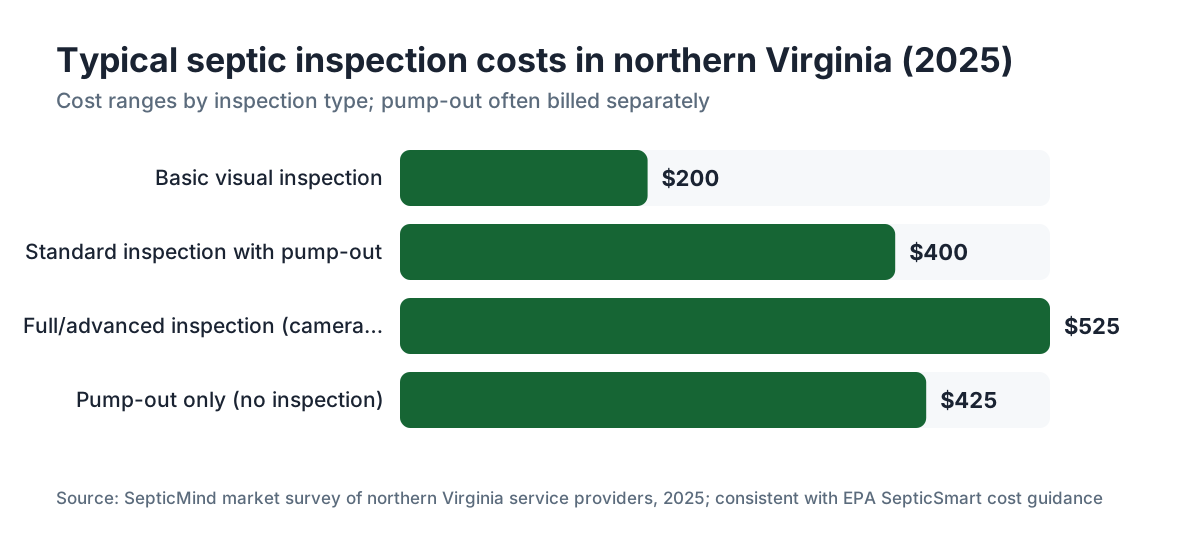
Expect $150 to $250 for a basic visual inspection, $300 to $500 for a standard inspection with pumping, and $450 to $600 or more for a full advanced inspection with camera and dye testing. These are real market ranges for the northern Virginia metro area in 2025. Prices in outer Fauquier and Culpeper counties run about 10 to 15 percent below Fairfax or Loudoun.
Pumping is often quoted separately. A septic tank pump out in northern Virginia typically costs $300 to $550 for a standard 1,000 to 1,500 gallon tank. Some inspectors bundle it into the inspection fee, others bill it as a line item. Ask before you book.
If the inspection turns up a problem, repair costs swing hard. A baffle replacement runs $150 to $300. A distribution box swap costs $500 to $1,500. A full septic system repair that touches the drain field can reach $5,000 to $30,000 here, depending on soil conditions, permitting, and whether a new field goes in conventionally or needs an engineered alternative system. Get that context before you negotiate on a home purchase.
| Inspection type | Typical cost (NoVA, 2025) | What's included |
|---|---|---|
| Basic visual | $150, $250 | Accessible components, no pumping |
| Standard with pumping | $300, $500 | Tank pumped, baffles checked, field walk |
| Full / advanced | $450, $600+ | Camera, dye test, hydraulic load test |
| Pump-out only (no inspection) | $300, $550 | Tank emptied, basic condition note |
Who is licensed to perform septic inspections in Virginia?
Virginia requires a licensed Onsite Soil Evaluator (OSE) or a Professional Engineer (PE) with onsite wastewater expertise for any evaluation tied to a permit or a regulatory decision [1]. For a real estate transaction, a licensed home inspector with a septic endorsement can handle the basic level. The serious due-diligence work, and anything that feeds a permit application, needs an OSE or PE.
The Virginia Department of Professional and Occupational Regulation (DPOR) keeps the OSE licensing database [2]. You can verify a license in about two minutes on their site. Do it. A report from an unlicensed person has no standing with the county health department, and that gap turns into a real problem if a disclosure dispute pops up after closing.
Local health departments in Fairfax, Loudoun, Prince William, and Fauquier counties staff environmental health teams who handle permits and complaints. They don't do private inspections for a sale. They're the regulator, not your inspector.
Some pumping companies in the region carry OSE staff on the roster. That pump-and-inspect combination is often the best value. When you call, ask whether the person who evaluates the system is licensed as an OSE, more than a licensed pumper.
When do you actually need a septic inspection in northern Virginia?
Four situations reliably call for one. First, any home sale involving a property on septic. Virginia doesn't mandate a septic inspection at every sale the way some states do, but Fairfax County and Loudoun County both carry local requirements that can trigger inspection obligations depending on a property's permit history, and lenders (FHA and VA loans especially) often require one anyway [3].
Second, a building permit that adds plumbing load. A bedroom addition or an accessory dwelling unit means the county health department wants proof the existing system can handle the extra flow. That's an inspection plus, usually, a formal capacity evaluation by an OSE.
Third, warning signs. Slow drains across the whole house (not one fixture), a sewage smell near the tank or field, wet or spongy ground over the drain field, or a strip of unusually lush green grass over the lateral lines. Those signs mean don't wait.
Fourth, routine timing. The EPA SepticSmart program recommends inspecting every three years and pumping every three to five years [4]. If you can't remember the last time anyone looked at your system, that's your answer.
What do northern Virginia counties specifically require for septic inspections?
Virginia runs a state-level framework under VDH and 12 VAC 5-610, and the five main northern Virginia counties each add local practices and sometimes local ordinances on top [1].
Fairfax County: The Fairfax County Health Department requires a septic inspection and approval before it issues permits for additions that raise sewage flow. Its environmental health division works off VDH standards. No blanket county ordinance forces an inspection at every sale, but the county pushes hard for one, and many title companies ask for a letter of compliance [5].
Loudoun County: Loudoun has an active inspection culture, driven by heavy conversion of rural lots to developed properties. The county health department can require a system evaluation when a complaint is filed or during permit review [6].
Prince William County: Follows VDH regulations. The county has roughly 14,000 septic systems, and its health department tracks older ones, particularly those installed before 1972 when modern standards took effect.
Fauquier and Stafford counties: More rural, more soil variation. Inspectors here routinely flag the clay soils in Piedmont areas as a saturation risk. Expect OSEs in these counties to dig especially hard into field assessments.
One thing holds across the region. The 1,000-gallon minimum tank size in state code is a floor, not a standard. Plenty of older homes here sit on undersized tanks or systems that no longer meet current setbacks from wells, streams, or property lines. An inspection surfaces those problems.
What are the signs a septic system is failing in northern Virginia?
The most common failure here is drain field saturation, and it follows a predictable order. Slow drainage in the house that keeps getting worse. Then gurgling toilets when other fixtures run. Then wet spots or standing water over the field, usually with a strong odor. Finally, sewage backing up into the lowest fixtures in the house.
Clay soils speed the whole thing up. When a field is undersized for the load, or it has run 20-plus years without pumping, the biomat (the biological layer at the soil interface) thickens until it blocks water movement entirely. At that point the field is functionally dead and needs remediation or replacement.
Other failure signs specific to the region: tree root intrusion into older concrete tanks and distribution boxes is common on the mature wooded lots of Fairfax and Loudoun. Iron bacteria (a reddish-orange slime) shows up in systems drawing iron-rich groundwater. Baffle rot is nearly universal in tanks older than 25 years that have never been pumped, because hydrogen sulfide gas eats concrete baffles from the top down.
See any of these? Get a septic tank inspection on the calendar within days, not weeks. A failing system is a public health issue in Virginia and can draw a VDH notice of violation.
How do you find and vet a septic inspector in northern Virginia?
Start with the DPOR license lookup to confirm OSE status [2]. Then check the Virginia Onsite Wastewater Recycling Association (VOWRA), which lists member contractors working in this field [7]. National Association of Wastewater Technicians (NAWT) certification is another credential worth asking about, since it signals training built specifically for septic system evaluation [8].
Ask four questions when you call. Is the inspector licensed as an OSE, or do you have one on staff? Will you pump the tank as part of the inspection, or is that separate? What exactly does the written report include? And do you carry errors and omissions insurance? That last one filters out the marginal operators fast.
Get at least two quotes. Prices in this market vary enough that a second call earns back the five minutes. For a home purchase, I'd lean toward a company that does this full time over a general home inspector who treats septic as a checkbox. Systems here, especially older ones in Fauquier or the rural stretches of Prince William, are complicated enough that experience pays.
Neighbors on the same well-and-septic setup, local Facebook groups tied to specific subdivisions, and Nextdoor surface the reliable operators faster than generic review sites. Ask who people have actually used, not who has the most stars.
What does a septic inspection report include and what should you do with it?
A solid report documents the date and weather, the tank size and material, the liquid level at inspection, the condition of the inlet and outlet baffles, the effluent quality, the drain field location and observable condition, the distance to any wells or water features, and a clear finding: functioning, functioning with concerns, or failing.
For a sale, that report goes to your agent and, ideally, to the county health department if the inspector issues a formal letter. Most OSEs can write a letter of compliance for a functioning system, which some lenders require.
If the report notes concerns short of failure, take them seriously. A cracked distribution box is a $500 fix today and a $15,000 drain field replacement in two years if you ignore it. A deteriorated outlet baffle lets solids ride into the field within months. These are not items to trade for a seller credit and then forget.
If the system is flagged as failing, you have three real options in a transaction: require the seller to repair before closing, negotiate a price cut and hire your own licensed contractor after closing, or walk away. The cost of septic tank repair or a full replacement in northern Virginia belongs in your offer math, not in a pile of surprises.
For operators running inspections across many properties, tools like SepticMind centralize reports, track follow-up work orders, and flag properties due for reinspection. That matters when you're juggling multiple counties with different permit workflows.
How often should you pump and inspect your septic system in northern Virginia?
EPA SepticSmart guidance is every three to five years for pumping and every three years for inspection [4]. That's a reasonable starting point. The right answer for your system rides on three variables: tank size, household size, and whether you run a garbage disposal.
A 1,000-gallon tank serving a family of four with a garbage disposal in heavy use should probably be pumped every two to three years. The same tank serving a couple with no disposal might stretch four to five years. A 1,500-gallon tank on a vacation property used seasonally is a different calculation again.
On how often to pump a septic tank, the county health departments here echo the EPA guidance but note that Virginia's clay soils push drain fields closer to their limits than sandy-soil systems on the coast. That makes regular pumping more important here, not less.
One point inspectors in this region keep making: people pump every five years and never once check the field. A pump-out tells you about the tank. A drain field inspection tells you whether the system lasts another decade or is already compromised. Do both.
Septic tank cleaning and septic tank emptying pair with inspection for a plain reason. You can't accurately read baffle condition, crack patterns, or inlet geometry until the tank is pumped down to working level.
What happens if a septic inspection reveals a failing system?
A failing system in Virginia triggers a defined regulatory process. The inspector or the health department issues a notice, and the owner gets a fixed window to submit a repair or replacement plan through a licensed OSE or PE. The timeline varies by county but generally runs 30 to 90 days to submit a plan, with a further period to finish permitted repairs [1].
Repair options depend on the site. If the original field has failed but there's room for a new conventional field that meets current setbacks, that's usually the cheapest path. If the lot is boxed in by setbacks to wells, streams, or property lines, an engineered alternative system may be required. Alternative systems in northern Virginia include low-pressure dosing systems, drip irrigation systems, and mound systems. They work. They also cost more to install and require annual maintenance contracts under Virginia regulations.
A new septic system in northern Virginia runs $10,000 to $30,000 for a conventional system and $20,000 to $50,000 or more for an engineered alternative, depending on soil conditions and permit complexity (see cost to install septic system). The leach field replacement alone, with no tank work, runs $8,000 to $20,000.
Ignoring a failing system is not an option. Virginia treats discharging untreated sewage as a public health violation. The health department can issue a cease and desist order that bans use of the property's plumbing, which is essentially a condemnation for residential purposes. That outcome is rare, but it's real.
Is a septic inspection required when buying a home in northern Virginia?
Virginia state law does not require a septic inspection as a universal condition of every home sale. The practical reality is that most buyers get one anyway, for good reason.
FHA loans require a satisfactory septic inspection when there's any evidence of malfunction or when the property is flagged during the appraisal [3]. VA loans (the military benefit product) carry similar requirements. Conventional lenders usually follow the appraiser's lead. If the appraiser notes a sewage odor, wet ground near the tank, or field-surface breakout, expect the lender to require an inspection before closing.
Beyond lender rules, Virginia's Residential Property Disclosure Act (Va. Code § 55.1-703) requires sellers to disclose known material defects [9]. A known failing septic system that goes undisclosed is a legal liability. As a buyer, you have the right to write an inspection contingency into your contract, and in most northern Virginia markets through 2024 and 2025, sellers of rural properties expect that request.
My honest take: if you're buying a home on septic in Loudoun, Fauquier, or the rural parts of Prince William, paying $400 for a proper inspection isn't optional. It's good math against a potential $20,000 to $50,000 problem. Don't let a seller's agent talk you out of it in a hot market.
What should septic service operators in northern Virginia know about inspections?
The northern Virginia market carries a few operational realities for companies doing inspection work. The permit and licensing requirements are real and enforced. Running inspection services without OSE capacity on your team creates liability exposure and caps the scope of work you can document in a report with regulatory standing.
The coordination burden is heavy. County health departments in Fairfax, Loudoun, Prince William, Fauquier, and Stafford run different forms, different portals, and different inspector relationships. Tracking permit status, inspection scheduling, and follow-up work orders across those counties takes either a good system or a full-time coordinator.
Real estate inspections run on a clock that routine maintenance doesn't. A closing deadline puts a hard deadline on the inspection, the report, and any repair permits. Operators who reliably turn reports around in 48 to 72 hours, and who have working relationships with county health department staff, hold a genuine edge in this market.
For operators handling real inspection volume across a multi-county environment, platforms like SepticMind handle scheduling, county-specific workflow tracking, and report generation in a way manual job management can't scale to. That matters when your team is inspecting in Fairfax on Monday and Fauquier on Thursday under different regulatory expectations.
Frequently asked questions
How long does a septic inspection take in northern Virginia?
A standard inspection with pumping takes two to four hours on site. A basic visual inspection without pumping runs one to two hours. A full advanced inspection with camera work and dye testing can take half a day. Factor in tank access: if the lid is buried, add 30 to 60 minutes to locate and uncover it. Most inspectors appreciate a heads-up when the lid location is unknown.
Can I use a home inspector for a septic inspection in Virginia, or do I need an OSE?
A licensed home inspector can perform a basic visual septic evaluation, but anything that produces a report with regulatory standing or feeds a permit decision requires a licensed Onsite Soil Evaluator or PE. For a sale where a lender or county review may be involved, hiring an OSE is the safer choice. Virginia DPOR's OSE license lookup confirms credentials before you book.
What is the Virginia law on septic system inspections?
Virginia's Sewage Handling and Disposal Regulations (12 VAC 5-610) govern onsite system standards, permits, and required evaluations, and they require licensed OSEs or PEs for formal evaluations tied to permits. Virginia Code § 55.1-703 requires sellers to disclose known septic defects. No statewide law mandates inspection at every sale, but county-level requirements and lender rules often make one necessary in practice.
How do I find the location of my septic tank in northern Virginia?
Start with the county health department. Fairfax, Loudoun, Prince William, Fauquier, and Stafford counties all keep onsite sewage permit records that include as-built diagrams, requestable through the environmental health division. If no records exist for an older system, a licensed inspector can probe the yard, use a metal detector for metal tanks, or run a sewer camera through a cleanout to find concrete tanks.
What does a failing drain field look like in northern Virginia?
Look for wet or spongy ground over the lateral lines, a strip of unusually green grass against the surrounding lawn, a sewage odor near the field, or standing water that won't drain after rain. In winter, snow melting faster over the field lines than elsewhere is a classic sign. Inside, slow drains throughout the house and gurgling toilets are the earliest warnings, ahead of any field symptoms.
Does Virginia require a septic inspection for a VA or FHA loan?
FHA and VA loans both require satisfactory septic function when any malfunction evidence shows up during appraisal. FHA's minimum property standards include working sanitation systems, and an appraiser who notes odors, wet ground, or system-age concerns triggers an inspection requirement before loan approval. Even without a specific flag, many northern Virginia lenders now routinely request a septic inspection letter for rural properties.
How much does it cost to replace a septic system in northern Virginia?
A conventional replacement in northern Virginia runs $10,000 to $30,000 depending on tank size, field size, soil conditions, and permit fees. Engineered alternative systems required on constrained lots can reach $30,000 to $50,000 or more. Drain field replacement alone, with no tank work, typically runs $8,000 to $20,000. Get a site evaluation from a licensed OSE before you budget, because soil conditions here vary a lot.
How often does a septic system need to be pumped in Virginia?
The EPA recommends every three to five years as a general guideline. Virginia's clay soils stress drain fields more than sandy coastal soils, so leaning toward the shorter end makes sense here. A 1,000-gallon tank serving four people with a garbage disposal should likely be pumped every two to three years. Have a licensed inspector confirm the right interval for your tank size and household.
What are the setback requirements for septic systems in northern Virginia?
Virginia's 12 VAC 5-610 sets statewide minimum setbacks: 100 feet from most water supplies, 50 feet from streams, plus set distances from property lines, buildings, and slopes. Local jurisdictions can go stricter. In Loudoun and Fairfax counties, proximity to streams and floodplains often creates tighter effective setbacks for replacement fields. An OSE evaluates site-specific setback compliance as part of any permit or repair evaluation.
Can I inspect my own septic system in northern Virginia?
You can open the tank lid, read the liquid level, and note obvious problems, but a self-assessment has no regulatory standing and won't tell you what's happening in the drain field. You also can't safely enter a septic tank: hydrogen sulfide and methane in a confined space can be fatal. For anything past a visual check of surface conditions, hire a licensed professional. The cost of a proper inspection is small against the risk.
What bacteria or additives should I use to maintain my septic system?
The EPA does not recommend septic tank additives as a substitute for regular pumping, and there's no credible evidence commercial bacterial additives improve performance or extend field life. A healthy tank already holds the bacterial community it needs. What actually maintains the system: regular pumping, keeping non-biodegradables out of the drain, going easy on the garbage disposal, and keeping heavy vehicles off the drain field.
Are there any financial assistance programs for septic repairs in northern Virginia?
Yes. The Virginia Department of Health runs a program offering financial assistance to low-income homeowners for failing system repairs. Some northern Virginia localities also tie into Virginia Water Quality Improvement Fund programs. USDA Rural Development offers loans and grants for water and wastewater systems in eligible rural areas. Eligibility is income-based and location-based; contact your county health department to apply.
How do septic inspections differ for real estate versus routine maintenance?
A real estate inspection is more formal. It produces a written report with findings that may go to a lender, title company, or county health department, and it typically includes pumping, a full interior tank assessment, baffle documentation, and a drain field walk. A routine maintenance check is looser, focused on current function and pump scheduling over regulatory documentation. For a purchase, always request the formal inspection with a written report over a plain pump-out.
Sources
- Virginia Department of Health, Environmental Health (Onsite Sewage / 12 VAC 5-610 Sewage Handling and Disposal Regulations): Virginia's Sewage Handling and Disposal Regulations (12 VAC 5-610) govern onsite sewage system standards, soil evaluation, setbacks, and required licensed evaluations
- Virginia Department of Professional and Occupational Regulation, License Lookup: DPOR maintains the licensing database for Onsite Soil Evaluators in Virginia; licenses are verifiable online
- U.S. Department of Housing and Urban Development, Single Family Housing Policy Handbook 4000.1 (FHA Minimum Property Standards): FHA loans require satisfactory sanitation systems including septic function as a condition of loan approval when malfunction evidence is present
- U.S. Environmental Protection Agency, SepticSmart Program: EPA SepticSmart recommends inspecting septic systems every three years and pumping every three to five years depending on household size and tank capacity
- Fairfax County Health Department, Environmental Health Services: Fairfax County Health Department requires septic inspection and approval before permitting additions that increase sewage flow and works from VDH standards
- Loudoun County Health Department, Environmental Health and Onsite Sewage: Loudoun County Health Department oversees onsite sewage permits and system evaluation requirements under VDH regulations
- Virginia Onsite Wastewater Recycling Association (VOWRA): VOWRA is the primary professional association for onsite wastewater contractors and evaluators operating in Virginia
- National Association of Wastewater Technicians (NAWT), Certification Programs: NAWT offers inspector certifications specific to onsite sewage system evaluation; certification indicates specialized training beyond basic pumper licensing
- Virginia General Assembly, Code of Virginia § 55.1-703, Residential Property Disclosure Act: Virginia Code § 55.1-703 requires residential sellers to disclose known material defects, including known failing septic systems, to prospective buyers
- U.S. EPA, How Your Septic System Works: EPA describes the functional components of a septic system including tank, drain field, and soil absorption area and their maintenance requirements
- USDA Rural Development, Water and Environmental Programs: USDA Rural Development offers loans and grants for water and wastewater infrastructure including individual septic systems in eligible rural areas
Last updated 2026-07-09