Septic inspection when buying a house: what you need to know
By the SepticMind Editorial Team
TL;DR
- Yes, get a septic inspection when buying a house on a septic system.
- A full inspection costs $250 to $600, takes two to four hours, and can uncover drain field failures or tank damage that run $3,000 to $30,000 to fix.
- Make it a contingency in your offer.
- Most states don't require it, but skipping it is one of the costliest mistakes buyers make.
Why does a septic inspection matter when buying a house?
A home inspector will flush the toilets, watch the water go down, and call that good enough. It is not. A standard home inspection tells you almost nothing about the septic system buried in the yard. That system, if it fails, costs you anywhere from $3,000 for a straightforward tank repair to $30,000 or more for a full drain field replacement on a difficult lot. [1]
The EPA estimates that more than 20 percent of U.S. households rely on onsite wastewater treatment, which means septic. [2] Plenty of those systems are old, unmaintained, or near the end of their design life. A tank installed in the 1970s is over 50 years old now. Concrete cracks. Drain fields load up with biomat. Baffles rot off. None of that shows up at a showing.
The money alone makes the case. But there is more. A failing system is a public health problem, because poorly treated sewage can reach groundwater and nearby wells. Several states now require point-of-sale septic inspections for exactly that reason, and more are headed there. [3] Even where the law stays quiet, your lender may not, especially on a USDA or FHA loan for a rural property.
The $300 to $500 you spend on a septic inspection is the cheapest insurance in the whole transaction.
What does a septic inspection actually include?
There is a real gap between a basic septic inspection and a full one, and you want to know which you are buying before you write the check.
A basic inspection, sometimes called a visual or Title 5 inspection (the name comes from Massachusetts's Title 5 regulation), covers the tank, the inlet and outlet baffles, the distribution box, and a probe of the drain field area. The inspector pumps the tank, checks for overflow or backflow, and notes whether components look structurally sound. That runs $250 to $400. [4]
A full or Level 3 inspection adds a camera scope of the inlet and outlet pipes, dye testing or pressure testing of the drain field laterals, and sometimes a hydraulic load test where the inspector pushes large volumes of water through the system to watch how it handles stress. Expect $400 to $650 for that level. [4]
Here is what a thorough inspection covers:
- Tank condition: concrete integrity, fiberglass or poly cracking, lid condition
- Inlet and outlet baffles: present, intact, functional
- Effluent level: is it at or above the outlet pipe (a sign of drain field failure)?
- Distribution box: cracked, unlevel, or corroded boxes cause uneven field loading
- Drain field: surface saturation, odors, abnormally lush grass patches
- Separation distances: from wells, property lines, and buildings
- Pump and alarm function (for systems with a lift station or pressure dosing)
- Age and permit records: when was it installed, has it ever been altered without a permit?
If the inspector does not pump the tank before inspecting, that is a problem. Pumping is the only way to see the tank interior and confirm baffle positions. Some inspectors schedule the pump truck separately; others are certified operators themselves. Confirm the protocol before you book. See also: [septic tank pump out]
Who pays for the septic inspection when buying a house?
The buyer usually pays, ordering the inspection as part of due diligence. That is the convention in most states, though it is negotiable like everything else in a real estate deal.
You are already paying for a home inspection, a radon test, and maybe a well water test. The septic inspection goes on the same card. Buyers generally want to control who does the work so they can trust the results, and that argument is hard to counter.
In some markets, particularly where point-of-sale inspections are legally required (Massachusetts, New Hampshire, and parts of New Jersey, for example), the seller has to provide a passing report before closing. [3] There, the seller pays, the seller hires the inspector, and a failed inspection can force repairs before the sale moves forward.
There is a middle path. Split the cost with the seller, or ask for a credit at closing if a problem turns up. When an inspection finds a borderline system that will need pumping and minor repairs within a year or two, a $1,500 closing credit is often easier to get than a pre-closing repair.
One warning. If the seller hands you an inspection report, find out when it was done and whether it included a pump-out. A three-year-old report on a tank nobody has pumped since is worth almost nothing.
How much does a septic inspection cost when buying a house?
The honest range is $250 to $650 for most residential properties in the continental U.S., with real regional variation. [4]
The pump-out, if it is not included, adds $200 to $600 depending on tank size and your local market. [5] Some inspectors bundle the pump into their fee; others coordinate with a separate pumping company. Always ask what is included before booking.
Pump the tank even if the inspector does not require it. You get a clean view of the tank interior, a baseline record of sludge and scum levels, and the pumping cost itself becomes a bargaining chip. If the tank has never been pumped (and plenty have not), that tells you how the whole system has been maintained.
Specialty testing adds cost:
| Add-on | Approximate cost |
|---|---|
| Camera scoping (pipe inspection) | $100, $300 |
| Dye testing / hydraulic load test | $75, $200 |
| Soil perc test (if you suspect field issues) | $300, $1,000 |
| Permit record research | Often free through county health dept |
For a large or complex system (mound system, aerobic treatment unit, drip irrigation field), budget toward the high end. More components, longer evaluation.
For context: the National Association of Realtors 2023 Profile of Home Buyers and Sellers found that inspection contingencies stay among the most common contract protections buyers use, though the survey does not break out septic specifically. [6] A $400 inspection on a $350,000 property is 0.11 percent of the purchase price. The math is not close.
What are the most common problems found during a septic inspection?
You might assume inspectors mostly find things that are fine. They do not. Here is what comes up regularly, ranked roughly from most to least common.
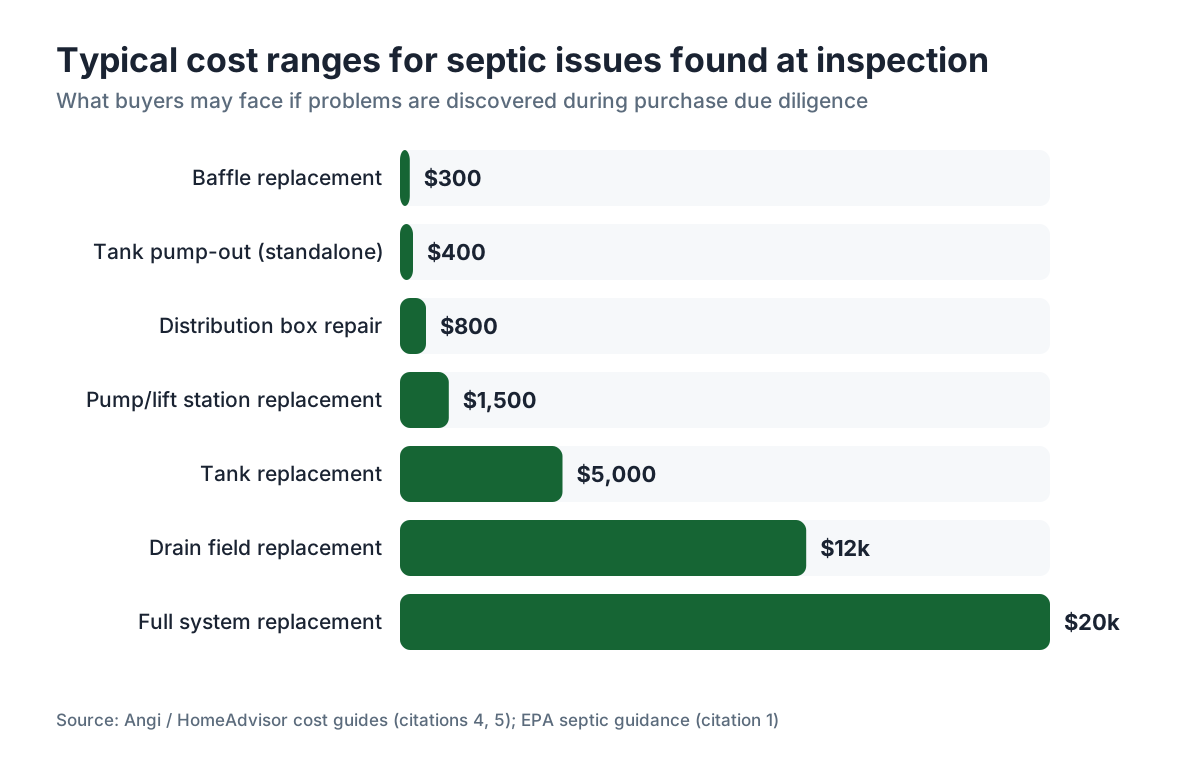
Drain field failure or impending failure. This is the big one. The drain field, also called the leach field or leach lines, is where treated effluent disperses into the soil. Over time a biomat layer builds up and blocks absorption. Signs include saturated soil, sewage smells outdoors, and high effluent levels in the tank. See: [leach field] Replacing a drain field runs $5,000 to $20,000 or more depending on lot conditions, soil, and permitting. [1]
Missing or failed baffles. The inlet baffle keeps solids from short-circuiting into the outlet. The outlet baffle keeps floating scum out of the drain field. Both are cheap to replace (often $100 to $300), but an outlet baffle that has been gone for years may have already sent scum into the field and sped up its decline.
Cracked or structurally compromised tank. Older concrete tanks crack, and the damage runs from a hairline leak to a partial collapse. Full tank replacement runs $3,000 to $7,000 installed. [5]
Improper setback distances. If a previous owner added a deck, garage, or garden bed over the drain field or too close to the tank, that can violate local code and require correction before the property can be sold. Some lenders will not close without setback compliance.
Unpermitted alterations. Added bedrooms over the years but never upgraded the system? That is a code problem and maybe a sizing problem. A tank sized for a three-bedroom house may be undersized for a five-bedroom house.
Pump failure (for systems with a pump). Submersible pumps in lift stations or pressure-dose systems fail. Replacement is $500 to $1,500, and an inspector who does not test the pump will miss it.
None of these means walk away automatically. They mean renegotiate the price, ask for repairs, or understand exactly what you are buying.
Should you get a septic inspection when buying a house, or just trust the sellers?
Trust, but verify. Every time.
Sellers often have no idea what shape their septic system is in. They lived in the house 20 years, never had a backup, flushed normally, and honestly believe everything is fine. They are not lying. They just have no information. A septic system can be within 12 months of drain field failure and show zero indoor symptoms.
Some sellers do know there is a problem and will not disclose it. Disclosure laws require sellers to share known material defects in most states, but "known" is the operative word, and proving knowledge after the fact is difficult and expensive.
Your own inspection removes the ambiguity. You are not leaning on seller disclosure or a report you did not commission. You have findings from a licensed inspector who looked at the system on your behalf.
Buyers sometimes skip the inspection in a hot seller's market, where waiving contingencies feels like the price of winning a bid. Waiving the inspection contingency is a different thing from waiving your right to inspect. You can often still inspect; you just lose the right to exit based on findings. That distinction matters, and in a competitive market you can sometimes negotiate a three-day inspection window even without a formal contingency. Get the information regardless.
Who should perform the septic inspection?
This varies by state, and it matters more than most buyers realize.
In states with formal septic inspection programs (Massachusetts, New Hampshire, New Jersey, Washington, among others), inspectors must be licensed by the state environmental or health agency. [3] Massachusetts Title 5 inspectors, for example, are licensed by MassDEP and have to follow a set protocol. [7] Using an unlicensed inspector in a regulated state means the report has no legal standing.
In states without a formal licensing requirement, look for inspectors who hold at least one of these credentials:
- Registered Sanitarian (RS) or Registered Environmental Health Specialist (REHS) through the National Environmental Health Association [8]
- Certified Inspector through the National Onsite Wastewater Recycling Association (NOWRA) [9]
- State-licensed professional engineer with onsite wastewater experience
Your real estate agent will often recommend someone. That recommendation is worth considering and worth verifying. Ask the inspector how many systems they have inspected in the past year, what equipment they bring, and whether the inspection includes a pump-out. An inspector who cannot answer those three questions confidently is not your person.
Do not use the seller's regular pumping company as your inspector. Even if they are honest, the optics are wrong and the conflict is real.
What do state regulations say about point-of-sale septic inspections?
There is no federal requirement for point-of-sale septic inspections. The EPA's SepticSmart program encourages regular maintenance and inspections but leaves the regulatory framework entirely to states and local health departments. [2]
The result is a patchwork.
Massachusetts has the best-known law: Title 5 (310 CMR 15.000) requires a septic system inspection within two years before a property transfer, or within six months after. A system that fails must be upgraded before closing, or the buyer has to accept a recorded agreement to upgrade within two years. [7]
New Hampshire requires inspection at the time of sale for systems serving properties with pre-1983 installations in certain designated groundwater protection areas.
New Jersey's private well testing rules include provisions for septic inspection in certain counties.
Washington State requires sellers to disclose known septic system defects, and some counties (King County, for example) require inspection before sale.
Many states have no statewide requirement at all, leaving it to individual county health departments. Your county's environmental health or onsite wastewater office is the authoritative source for your location. That is not a vague suggestion: call them, ask what is required at transfer, and get the answer in writing. [3]
Federal loan programs add another layer. FHA and VA loans require that the property's sewage disposal be functional and compliant with local regulations. USDA Rural Development loans have similar requirements. [10] Lenders underwriting these loans will often require a septic inspection even when state law does not. Check with your lender early.
What happens if the septic inspection reveals a problem?
First, breathe. A problem on the report is not the same as a dead deal. It is information, and information gives you options.
Minor issues (a baffle that needs replacing, a tank that needs pumping, a damaged lid) are negotiating points. Ask the seller to repair the items before closing, or ask for a credit equal to the repair cost. Most sellers accommodate reasonable requests for genuine safety or compliance issues.
Major issues (failing drain field, cracked tank, a three-bedroom system on a four-bedroom house) call for a harder conversation. You have several paths:
- Require the seller to repair before closing. Get a contractor's written scope and bid, make repairs a condition, and verify completion with a reinspection.
- Negotiate a price reduction. Get two or three bids on the repair. Subtract the median from the purchase price and back the number up with the bids in hand.
- Walk away. If you have an inspection contingency, you exit the contract and get your earnest money back. A system that needs a $25,000 drain field replacement on a lot that may not have room for a new field is sometimes a genuine walk-away.
The one move you should not make: ignore the findings and close anyway without accounting for them. That is how buyers end up with sewage bubbling into the yard six months after moving in.
For systems that need full replacement, understand the real cost before you negotiate. The cost to install a septic system swings hard on lot conditions, soil type, and local permit requirements. Get real bids before you settle on a price adjustment.
How do you find septic records and permits before or during inspection?
Permit and inspection records are public documents in almost every jurisdiction, and getting them costs nothing but time.
Start with the county or municipal health department. In most places, septic permits, as-built drawings, and inspection records are filed with the county health department or environmental services office. You want the original permit (which shows the system design and approved bedroom count), any alteration permits, and any prior inspection reports on file.
Ask the seller's agent for the as-built drawing. This is a diagram showing the tank location, drain field layout, and distances. It is invaluable for the inspector and should be on file with the health department if not with the seller.
Check for permit history on unpermitted work. If the home has had additions, a permitted septic alteration should go with any bedroom addition. A new addition with no septic alteration permit is a flag.
Some counties have digitized their records and you can search online. Others want a phone call or a visit. Either way, do this before the inspection, not after. Your inspector needs the as-built drawing to find the tank and drain field fast, and you want to know the system's permitted capacity before you hear it might be undersized.
SepticMind's record-keeping tools are one way operators and inspectors in some markets organize historical data for their client properties, but the primary source is always the county health department.
How should you negotiate after a septic inspection?
The inspection report is a document. Treat it that way. Bring it to the table with specific line items and repair bids attached.
Vague requests get vague responses. "The septic needs work" is not a negotiating position. "The outlet baffle is missing, the tank needs pumping, and the distribution box is cracked; total repair estimate from two licensed contractors is $1,850; we are requesting a $1,850 closing credit" is a negotiating position.
For large issues like drain field failure, the math gets more complex. Drain field replacement costs lean hard on site conditions. If there is no room for a replacement field in the conventional spot, an alternative system (mound, drip irrigation, aerobic treatment unit) may be required, and those cost more. Get bids that account for the actual site constraints, not the cheapest possible scenario.
A few notes on how these deals tend to go:
Sellers who are motivated to close will often accept a reasonable credit rather than supervise repairs. Repairs mean contractors, scheduling, and delays.
Sellers who are certain the system is fine may push back. Ask for a second opinion inspection. If both inspectors agree there is a problem, the seller's position weakens fast.
Do not use the septic findings to renegotiate everything else in the deal at once. Pick the septic issue and keep the negotiation clean. Piling on items from the home inspection at the same time breeds resentment and often gets you less total.
If you end up buying a property with known deferred maintenance on the septic, make septic tank pumping your first scheduled service after moving in. Do not wait for symptoms.
What should you do with the septic system after you close?
You bought the house. You have the inspection report. Now what?
If the system passed, you still need a maintenance plan. The EPA's SepticSmart program, the agency's main public-facing guidance on onsite wastewater, says households should have their septic system inspected by a professional every one to three years and the tank pumped every three to five years, depending on household size and tank capacity. [2] That range is a starting point; how often to pump your septic tank depends on your specific household size and tank volume.
If the report flagged minor issues, address them promptly. A cracked lid is a safety hazard (children can fall in) and a water intrusion point. A slow drain can signal a developing clog in the outlet line. Catching these early is dramatically cheaper than reacting to a backup. See septic tank repair for what repairs typically cost and when to call a pro.
Keep a file with:
- The inspection report
- The as-built drawing
- Pump-out records (the pumping company should give you a manifest)
- Any repair invoices
- County permit records
This file is worth real money when you eventually sell. A buyer who gets a complete maintenance history and a recent clean inspection is a much calmer buyer, and a nervous buyer is one who negotiates harder.
SepticMind's homeowner tools help you track service records and set reminders for your next pump-out, so the maintenance does not slip through the cracks during a busy first year in a new house.
Frequently asked questions
Is a septic inspection required when buying a house?
There is no federal requirement. Some states require it: Massachusetts mandates a Title 5 inspection within two years before property transfer, and several other states have similar rules. FHA, VA, and USDA loan programs often require proof that the system is functional and code-compliant. Even where there is no legal requirement, skipping it is a serious financial risk. Check with your county health department for your jurisdiction's rules.
How long does a septic inspection take?
A standard inspection with a pump-out takes two to four hours. More complex systems with a pump chamber, pressure dosing, or aerobic treatment unit take longer. If the inspector has to locate an unmarked tank, add time for probing or soil disturbance. Plan for a half-day and have the seller's permission to access the full property, including areas that may need to be dug up.
Can a septic system fail an inspection even if the house has no backups?
Yes, this happens regularly. A drain field can be within months of failure while the system still drains normally indoors. The field's absorption capacity degrades gradually, and by the time you see backups or surface saturation, the damage is done. An inspector measuring the effluent level in the tank relative to the outlet pipe, or probing the field for saturation, will catch conditions that produce no indoor symptoms yet.
Who pays for septic repairs found during inspection when buying a house?
This is negotiated between buyer and seller. You can request the seller repair specific items before closing, ask for a closing credit equal to the repair cost, or negotiate a price reduction. In states with mandatory point-of-sale inspections, like Massachusetts, sellers must repair or get a buyer to sign a recorded upgrade agreement. In all other cases, it comes down to bargaining power, motivation, and who wants the deal more.
What is the difference between a septic inspection and a home inspection?
A general home inspection covers the house structure, roof, electrical, plumbing, HVAC, and visible interior systems. Septic is almost never included in any meaningful depth. A septic inspection is a dedicated evaluation of the underground tank, distribution system, and drain field, typically involving tank pumping, baffle inspection, and field probing. You need both. They are separate appointments with separate specialists and separate fees.
How much does it cost to replace a septic system if the inspection reveals failure?
Full septic system replacement typically runs $10,000 to $30,000 for a conventional gravity system, though costs vary widely by lot size, soil conditions, local permit fees, and whether an alternative system design is required. A drain field replacement alone without a new tank runs $5,000 to $20,000. Get at least two licensed contractor bids based on the specific findings in the inspection report before negotiating a price adjustment.
Can I waive the septic inspection to win a bidding war?
You can waive the inspection contingency (your right to exit the deal based on findings) without waiving your right to inspect. In competitive markets, some buyers agree to inspect within a short window and accept the results. Waiving the inspection entirely, meaning you close with no information about the system, is a financial gamble that exposes you to a five-figure repair you had no warning about. That is rarely a good trade.
What does a septic inspection report look like and what should it include?
A complete report should document the tank size, material, and condition; baffle status; effluent level at inspection; drain field probe results or hydraulic test findings; pump function (if applicable); and the inspector's overall pass, fail, or conditional pass determination. Photos of the open tank and any problem areas should be included. The report should identify the inspection standard used (e.g., Title 5 in Massachusetts) and the inspector's license number.
Should I get a septic inspection even if the house has a newer septic system?
Yes. A system installed five or eight years ago can still have failed baffles, an improperly installed distribution box, or an undersized tank for the household. New installations are not immune to contractor error or early failure from heavy use or poor materials. The inspection also gives you baseline documentation that pays off when you eventually sell. Cost versus benefit still strongly favors inspecting.
What is the difference between a Title 5 inspection and a regular septic inspection?
Title 5 refers to Massachusetts's state regulation (310 CMR 15.000) governing onsite septic systems. A Title 5 inspection follows a specific legally defined protocol, must be performed by a licensed inspector, and produces a report with legal standing for property transfer. A 'regular' septic inspection in other states follows no single mandated standard and varies by inspector. Title 5 is widely considered one of the more thorough frameworks in the country.
How do I find a qualified septic inspector in my area?
Start with your state's environmental or health agency, which maintains a list of licensed inspectors where licensing is required. The National Onsite Wastewater Recycling Association (NOWRA) has a member directory. Your county health department can often recommend certified inspectors. Avoid inspectors recommended solely by the seller. Look for someone who can show credentials, carry professional liability insurance, and provide a written protocol for what the inspection covers.
Does the FHA require a septic inspection when buying a house?
FHA guidelines require that a property's sewage disposal system be functional and compliant with local regulations. Lenders underwriting FHA loans will often require a septic inspection, especially in rural areas or when the appraiser notes concerns. The specific requirement is confirmed through the lender and the FHA-approved appraiser's report. USDA Rural Development loans have similar requirements given the rural properties they typically finance.
Can a septic inspection be done in winter when the ground is frozen?
It is possible but limited. Inspectors can still access and pump the tank, but probing a frozen drain field for saturation is unreliable. Locating buried components under snow is harder. Some states that require point-of-sale inspections allow an extension when weather makes inspection impossible. If you are buying in winter, ask the inspector what they can and cannot evaluate, and consider scheduling a field assessment for spring as a follow-up condition.
Sources
- EPA, "Septic System Costs" guidance page: Drain field replacement and full system replacement costs can range into the tens of thousands of dollars depending on site conditions and system type.
- EPA SepticSmart program homepage: More than 20 percent of U.S. households rely on septic or other onsite wastewater treatment systems; EPA recommends inspection every one to three years and pumping every three to five years.
- EPA, "How to Care for Your Septic System", state regulation overview: Septic system regulation, including point-of-sale inspection requirements, is handled by state and local health departments rather than federal law.
- HomeAdvisor / Angi, Septic Inspection Cost Guide: Septic inspection costs typically range from $250 to $650 for residential systems, with full inspection including pump-out at the higher end of that range.
- HomeAdvisor / Angi, Septic Tank Pumping and Replacement Cost Guide: Septic tank pump-out costs $200 to $600 for average residential tanks; tank replacement runs $3,000 to $7,000 installed.
- National Association of Realtors, 2023 Profile of Home Buyers and Sellers: Inspection contingencies remain among the most common buyer protections in residential real estate transactions.
- Massachusetts DEP, Title 5 Inspection Program (310 CMR 15.000): Massachusetts Title 5 requires a septic inspection within two years before property transfer; failed systems must be upgraded before or shortly after closing.
- National Environmental Health Association, Registered Sanitarian credential: NEHA credentials including Registered Sanitarian (RS) are recognized qualifications for septic and environmental health inspectors.
- National Onsite Wastewater Recycling Association (NOWRA): NOWRA offers certified inspector credentials and maintains a member directory for finding qualified onsite wastewater professionals.
- HUD, FHA Single Family Housing Policy Handbook 4000.1: FHA requires that a property's sewage disposal system be functional and compliant with local health regulations as a condition of loan eligibility.
- USDA Rural Development, Single Family Housing Guaranteed Loan Program: USDA Rural Development loan programs require that properties have adequate, safe, and sanitary sewage disposal systems as a condition of financing.
- Penn State Extension, Septic System Basics: Biomat accumulation in drain fields is a primary cause of absorption failure and can develop without any visible indoor symptoms for extended periods.
Last updated 2026-07-09