Septic tank treatment: what actually works (and what doesn't)
By the SepticMind Editorial Team
TL;DR
- Most septic tank treatments sold at hardware stores do little to nothing for a healthy tank.
- A working system already holds billions of native bacteria.
- The treatments with the most evidence behind them are live bacterial products used after a disruption like antibiotic use or a pump-out.
- Chemical additives, especially acids and solvents, can wreck your drain field and are banned in several states.
What is septic tank treatment and why does it matter?
Septic tank treatment is any product or practice meant to support or restore the biological and chemical processes inside your septic tank. The category covers live bacterial cultures, enzyme concentrates, chemical solvents, yeast packets, and aeration additives. Each type works differently. The evidence behind each one varies enormously.
Your septic tank is more than a holding vessel. It's a three-layer system: a top scum layer of fats and oils, a middle liquid layer called effluent, and a bottom sludge layer of settled solids. Naturally occurring anaerobic bacteria in that middle layer break down organic waste around the clock. When the system is healthy, those bacteria don't need outside help.
That context matters because the septic additive market runs roughly $100 million a year in the United States, and most of it sells on the promise that monthly treatments replace pumping. They don't. [1] The EPA's SepticSmart program states plainly that "there is little scientific evidence that biological additives improve the performance of a properly functioning septic system." [1]
Treatments aren't universally useless, though. A few specific situations make them worth the money. The rest of this article maps out which ones.
What are the main types of septic tank additives?
The industry sorts additives into three buckets: biological, enzyme-based, and chemical. The differences matter a lot.
Biological additives contain live bacteria, usually strains of Bacillus or other anaerobes, sometimes mixed with aerobic bacteria or yeast. The idea is to seed the tank with high concentrations of digesting organisms. These are the safest category and the only one with any credible research behind it, though even that evidence is mixed. [2]
Enzyme additives contain pre-formed enzymes (lipases, proteases, amylases) that break down fats, proteins, and starches. Enzymes don't reproduce, so any effect fades fast. Many products pair enzymes with live bacteria. Pure enzyme products are unlikely to cause harm, but they don't add much in a working tank because your resident bacteria already make those enzymes on their own.
Chemical additives split into two sub-types. Inorganic acids (sulfuric or hydrochloric acid) and inorganic bases (sodium hydroxide, potassium hydroxide) got marketed in the 1970s and 1980s as sludge busters. They dissolve solids chemically, but the resulting chemistry can kill beneficial bacteria, corrode concrete tanks, and push heavy metals and other contaminants into the soil absorption system. Organic solvents like methylene chloride were once common too. California, Massachusetts, and Washington have banned or heavily restricted chemical septic additives. [3]
| Category | Examples | Does it help? | Risk to system? |
|---|---|---|---|
| Biological (bacteria) | Rid-X Septi-Pacs, Bio-Tab, Cabin Obsession | Possibly, after disruption | Very low |
| Enzyme-only | Various enzyme packets | Unlikely in healthy tank | Very low |
| Inorganic acid/base | Old-formula products | No; damages tank | High |
| Organic solvents | Methylene chloride products | No | High; carcinogenic |
| Yeast (DIY) | Active dry yeast | No measurable effect [2] | Very low |
If you buy anything in this category, buy live bacterial products only, and skip the rest.
What does the EPA say about septic tank treatments?
The EPA's position hasn't budged in more than 20 years. Its SepticSmart initiative, the agency's main homeowner education program on onsite wastewater, states: "EPA and state environmental and health agencies have generally concluded that biological additives do not appear to improve the performance of a properly functioning septic system, and chemical additives can be harmful." [1]
Sit with that quote for a second. The EPA is not saying every treatment is dangerous. It's saying a healthy system doesn't need them, and the chemical ones cause real damage.
The agency's guidance also notes that no additive removes the need for regular pumping. Sludge accumulates no matter what. EPA's standard recommendation is to pump a residential tank every three to five years, depending on household size and tank volume. [1] A 1,000-gallon tank serving a family of four typically hits the pump threshold in three to four years. Skipping pumps because you're dropping in monthly packets is the single most common way people end up with a failed drain field. See our guide to septic tank pumping for the full schedule.
Nine states had outright bans on specific chemical additives as of the last broad survey, and many others require registration or limit marketing claims. The EPA does not pre-approve additives, so any product claiming EPA approval is misrepresenting the situation. [3]
Is there any real evidence that bacterial additives work?
This is where honest uncertainty is warranted. The research base is thin, and a lot of it is funded by manufacturers.
A frequently cited study is the 1997 report by the National Small Flows Clearinghouse (now NESC at West Virginia University), which reviewed 17 septic additive products and found no evidence that biological or chemical additives improved system performance in field conditions. [2] That study is old, but more recent reviews haven't moved the conclusion much.
A 2001 review from the University of Minnesota Extension examined field and lab research and found that while some bacterial additives cut BOD (biochemical oxygen demand) in controlled lab settings, those effects didn't consistently translate to better field performance. [4]
Nobody has great long-term controlled field trial data here. The closest thing to a consensus across extension services and state health departments is this: live bacterial additives are probably harmless, possibly helpful after a specific disruption, and definitely not a substitute for pumping.
The disruption case is worth taking seriously. If a household member has taken a heavy course of broad-spectrum antibiotics, that can knock down bacterial populations in the tank for a while. If your tank was just pumped (removing most of the bacterial population along with the sludge), adding a bacterial starter culture might help activity ramp back up faster. Most extension guides flag these two scenarios as the ones where a treatment makes practical sense. [4]
What's the best septic tank treatment you can actually buy?
Given the evidence, "best" is a low bar. No product will dramatically improve a working tank. But if you want to use something after a pump-out or an antibiotic disruption, the products with the most reasonable formulations are live bacterial products with high CFU (colony-forming unit) counts, usually listed in the billions per dose.
Products like Rid-X, Bio-Tab, and similar store brands all contain strains of Bacillus bacteria. Rid-X's primary strain is Bacillus subtilis and related species, and their product documentation lists enzyme activity as well. CFU counts vary by product, but look for at least 1 billion CFU per dose. Products that name specific bacterial strains and enzyme types on the label are more credible than vague "active cultures" language.
For operators managing multiple systems, some professional-grade biological products come in bulk concentrate form with higher CFU counts per dollar than retail packets. The unit economics favor concentrate for anything past a single household.
What to skip:
- Any product claiming to "eliminate" the need for pumping. That's a false claim.
- Products that don't list their bacterial strains or CFU count.
- Anything with surfactants, acids, or solvents.
- DIY yeast treatments. No extension or university study has found measurable benefit from baker's yeast. [2]
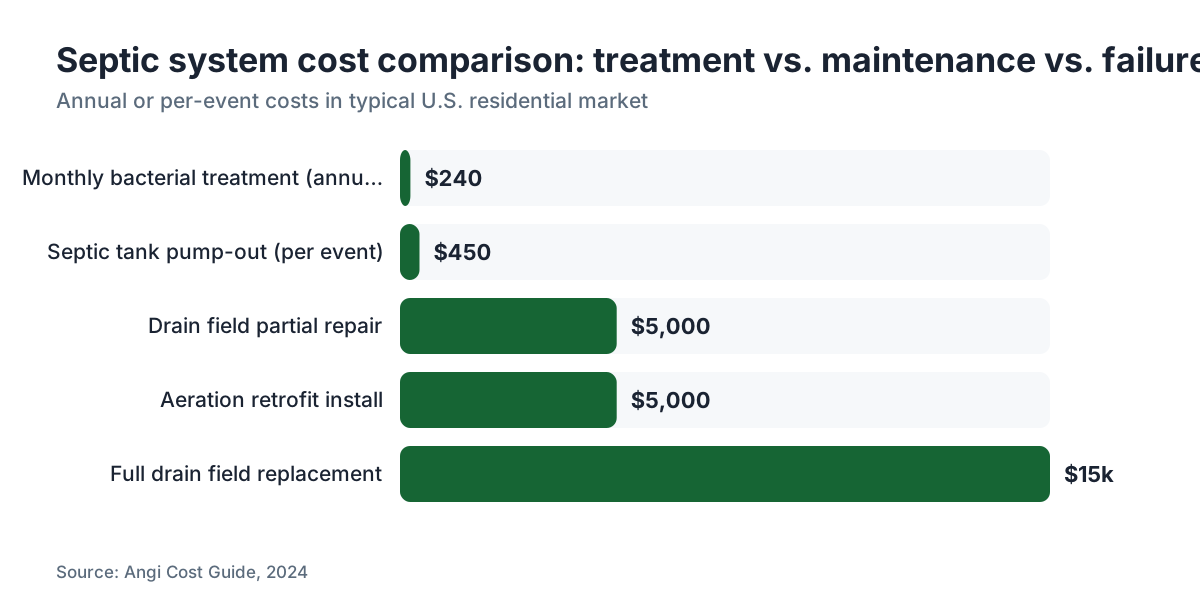
Price-wise, retail bacterial treatments run $10 to $30 for a monthly supply. Over a year that's $120 to $360, which approaches the cost of a pump-out in some markets. Spend the money on the pump-out.
Can septic tank treatments replace pumping?
No. Full stop.
This is the claim that does the most damage. Every credible agency guide, from EPA to state health departments to university extension services, is explicit: no additive removes the inorganic sludge layer that builds up over time. [1] Grit, hair, synthetic fibers, and mineral deposits simply do not dissolve. Bacteria can reduce the organic fraction of sludge, but not to zero, and not forever.
The sludge and scum layers grow until they take up too much of the tank's working volume. At that point solids push out into the drain field. Once solids clog the drain field's soil matrix, you're looking at expensive repairs or full replacement. Drain field restoration can cost $5,000 to $20,000 or more depending on soil conditions and local labor rates. A pump-out is $300 to $600 in most U.S. markets. [5]
If you've been skipping pumping and leaning on treatments, read our septic tank pump out guide for what to expect.
EPA recommends pumping every three to five years for a typical household. Households with garbage disposals, more occupants, or smaller tanks should be on the shorter end. [1] See how often to pump a septic tank for a full breakdown by household size and tank volume.
Are there natural or DIY septic treatments that actually help?
The DIY septic treatment world runs on a few stubborn myths. Yeast packets, molasses, and buttermilk all get recommended on homesteading forums as ways to "feed" your septic bacteria. None of these has been shown to improve tank performance in controlled studies. [2] The bacteria already living in your tank don't need molasses. They need organic waste to digest, which your household supplies in abundance.
The most effective "treatment" you can do yourself is behavioral. The EPA SepticSmart program's core homeowner guidance emphasizes what not to put in the tank far more than what additives to add. [1]
Things that genuinely help your system:
- Spreading laundry loads across the week instead of six loads on Saturday (a hydraulic surge damages the bacterial layer)
- Using liquid laundry detergent instead of powder (powders can carry clay fillers that add to sludge)
- Going easy on the garbage disposal (food waste adds a lot to how fast sludge builds)
- Keeping harsh cleaning chemicals like bleach and drain cleaners out of the drains when you can
Things that genuinely hurt your system:
- Flushing wipes (even "flushable" ones), feminine hygiene products, or medications
- Pouring cooking grease down the drain
- Using antibacterial soaps and cleaners in high volume
None of these require buying anything. Good habits beat any additive on the shelf.
Does using a garbage disposal change what treatments you need?
Yes, and not in a way more treatment fixes.
A garbage disposal adds a lot of organic load to your septic tank. The University of Minnesota Extension estimates that heavy garbage disposal use can shorten the interval between pump-outs by a third or more. [4] You're sending ground-up food solids straight to the tank, which speeds up sludge buildup faster than bacterial additives can keep pace with.
Some septic installers recommend against garbage disposals entirely on systems with marginal drain field capacity. If you have one and run it daily, get on a two-to-three-year pump schedule rather than five, no matter what treatment you're using.
If you're managing a rental property or a home where you inherited a garbage disposal you don't want to rip out, that's the scenario where a high-CFU bacterial treatment is most defensible as a supplement. Not a replacement for more frequent pumping. A supplement to it.
How do state regulations affect which treatments you can use?
State rules vary a lot. California, Washington, and Massachusetts have the strictest frameworks, with specific prohibitions on chemical additives and, in some cases, required registration for any biological product sold for septic use. [3]
Florida's administrative code regulates septic additives under Rule 64E-6, requiring that products not be harmful to the system, the public, or the environment. Texas, through the TCEQ, has similar language in its onsite sewage facility rules. Most states lean on this general harm-prevention standard rather than pre-approval, which means plenty of marginal products stay on the market legally.
The EPA does not regulate or approve septic additives. Any product label that says "EPA Approved" or implies EPA endorsement is making a false claim. The EPA's own guidance is explicit about this. [1]
For homeowners in states with active programs, the state health department's onsite wastewater office is the right place to check whether a specific product is listed or restricted. Most state extension services also keep lists of approved or prohibited additives.
For operators managing fleets of systems across multiple states, tracking this patchwork is genuinely tedious. Tools like SepticMind can help operators log which products were used on which systems and flag jurisdictions with additive restrictions, keeping service records clean for inspection.
When does a septic system actually need treatment beyond maintenance?
Sometimes a tank or drain field needs intervention beyond routine pumping. That's a different question from the monthly-treatment one, and it's worth keeping the two apart.
If you have a sluggish drain field, the cause is almost never a lack of bacterial activity in the tank. The usual causes are hydraulic overload, biomat accumulation in the soil, compaction from traffic or planting over the field, or root intrusion. Bacterial additives don't fix any of those.
Biomat management is one legitimate area where some aeration-based treatments have shown promise. Forced aeration of the tank shifts the microbial environment from anaerobic to aerobic, which produces a different quality of effluent that some research suggests can partly restore clogged drain field soils. This is not a DIY additive product. It's a system modification with an aerator, a dosing pump, and sometimes a secondary treatment stage. Aeration retrofits run $2,000 to $8,000 installed depending on system size. [5]
For drain field problems, read our septic drain field guide before you assume any liquid treatment will solve it. And if your tank itself has structural issues, see septic tank repair for what those repairs actually involve.
Here's the honest framing: if your system is failing or underperforming, you need a site evaluation by a licensed inspector, not a bottle of bacteria. Treatments are for maintenance, not for fixing problems.
How should you read the label on a septic treatment product?
A few things to look for before you spend money.
First, check the active ingredient list. Legitimate biological products name specific bacterial genera and species (Bacillus subtilis, B. licheniformis, Pseudomonas, and so on) and list CFU count per dose. If the label says only "active cultures" or "proprietary blend" with no specifics, the manufacturer isn't confident in their formulation.
Second, look at the enzyme types. Amylase, lipase, protease, and cellulase are the four enzymes most relevant to septic waste. A product listing all four in measurable units is more credible than one with vague "enzyme blend" language.
Third, ignore the "replaces pumping" language entirely. No regulatory body endorses that claim. Products making it are betting on homeowner ignorance.
Fourth, check the dosing instructions. A product that wants daily or weekly use is maximizing your consumption, not your system's performance. Monthly maintenance doses are what most bacteriologists recommend if you're going to use anything at all.
The SepticMind maintenance tracking tools can help homeowners log treatment applications, pump-out dates, and inspection notes in one place, which makes it easier to spot whether treatments are actually correlating with any system behavior over time.
For how a full septic tank cleaning differs from a simple pump-out, that guide covers the distinction in detail.
What's the real cost-benefit of septic tank treatment products?
Let's put numbers to it.
A typical retail bacterial treatment product costs $10 to $30 per month, or $120 to $360 per year. Over five years between pump-outs, that's $600 to $1,800 in treatment costs on top of the $300 to $600 pump-out. [5]
If treatments actually stretched the pump interval, the math might work. But since EPA and extension research finds no evidence that treatments reduce sludge accumulation enough to delay pumping, you're paying for something that doesn't change the maintenance schedule.
Compare that to a drain field failure. Drain field repair runs $1,500 to $10,000 for partial restoration. Full replacement can reach $20,000 or more in difficult soil. [5] The failure pathway most often starts with skipped pump-outs, not with too little additive.
The single best investment for long-term septic health is a consistent pump-out schedule and good household habits. That's not satisfying marketing copy, but it's what the evidence supports.
If you're buying a home with a septic system or planning new construction, understanding the full cost to install a septic system and cost to put in a septic tank gives you the right frame for what you're protecting with maintenance.
Frequently asked questions
What's the best septic tank treatment for a healthy system?
For a healthy, well-maintained system, the honest answer is that no treatment is necessary. EPA guidance is explicit that biological additives don't improve a functioning system. If you want to use something as a precaution, a live bacterial product with at least 1 billion CFU per dose is the safest choice. Prioritize regular pumping every three to five years over any monthly additive.
How often should I treat my septic tank?
If you choose to use a biological additive, monthly application is the standard recommendation on most product labels. More frequent use doesn't improve results and just runs up the cost. More importantly, no treatment schedule replaces pumping. EPA recommends pumping every three to five years for a typical household. That schedule should not change based on whether you're using treatments.
Can I use Rid-X instead of pumping my septic tank?
No. Rid-X and similar products state outright that they do not replace pumping, and the EPA agrees. Rid-X contains Bacillus bacteria and enzymes that can aid organic breakdown, but they cannot remove the inorganic sludge layer that piles up over time. Relying on Rid-X instead of pumping is a reliable way to eventually push solids into your drain field and cause a costly failure.
Do enzyme-based septic treatments work?
Enzyme-only products (lipase, protease, amylase) are unlikely to cause harm, but they also don't add much to a working tank. Your resident bacteria already produce these enzymes around the clock. Enzyme products don't reproduce, so any effect is temporary. Products combining live bacteria with enzymes are more defensible than enzyme-only formulas, but the overall evidence base for both is weak.
Are chemical septic tank additives safe?
No. Chemical additives including inorganic acids, bases, and organic solvents like methylene chloride can kill beneficial bacteria, corrode concrete tanks, and push harmful compounds into the drain field soil. California, Massachusetts, and Washington have restricted or banned them. EPA guidance advises against chemical additives. There's no scenario where a homeowner should use a chemical additive in a residential septic system.
Will adding yeast to my septic tank help it work better?
There's no credible evidence that baker's yeast improves septic tank performance. The idea circulates on homesteading and DIY forums, but controlled studies have found no measurable benefit. Your septic tank already holds far larger native bacterial populations than yeast can provide. It won't harm the system in normal quantities, but it won't help either. Skip it.
What happens if I never treat my septic tank?
Nothing bad, as long as you pump on schedule. A healthy septic tank doesn't need external treatment. The bacteria that break down waste show up naturally from household use. What you cannot skip is pumping every three to five years, keeping heavy chemicals out of the drains, and not flushing solids. Those practices matter far more than any additive product.
Can septic treatments fix a slow or failing drain field?
No additive sold at a hardware store will restore a clogged drain field. Drain field failure comes from biomat buildup, hydraulic overload, soil compaction, or root intrusion. Aeration-based system modifications can sometimes partly restore drain field function, but that's a professional installation, not a bottle of bacteria. A failing drain field needs a licensed inspector, not a treatment product.
How long after pumping should I add septic bacteria?
If you want to re-seed bacterial populations after a pump-out, adding a live bacterial product within the first few days makes some practical sense. The pump-out removes most of the existing bacterial population along with the sludge. One dose after pumping is reasonable. Normal household use will naturally re-establish bacterial populations within a few weeks anyway, so don't feel obligated to keep dosing monthly.
Do antibiotics in my household affect my septic system?
Antibiotics can temporarily knock down bacterial populations in your septic tank, especially after heavy or extended courses. This is one of the two scenarios where a live bacterial treatment is most defensible, the other being right after a pump-out. The effect is usually temporary. Your system will likely re-establish adequate bacterial activity on its own, but a bacterial additive after a heavy antibiotic course is a low-cost, low-risk precaution.
Are septic tank treatments worth the money?
For most homeowners with a functioning system on a regular pump schedule, no. The annual cost of monthly treatments runs $120 to $360, and the evidence for benefit in a healthy system is weak. That money is better spent toward a pump-out, which typically costs $300 to $600 and actually removes sludge. Treatments are a worthwhile small expense only after pump-outs or heavy antibiotic use.
What does EPA say is the best way to maintain a septic system?
EPA's SepticSmart program identifies four core practices: pump every three to five years, use water efficiently to avoid hydraulic overload, avoid flushing anything other than human waste and toilet paper, and protect the drain field from traffic and planting. EPA guidance does not recommend any additive treatment for a properly functioning system. Source: EPA SepticSmart homeowner guidance.
Can I use bleach or antibacterial products with a septic system?
Normal household use of bleach, antibacterial hand soap, and disinfectant cleaners in reasonable quantities is unlikely to crash your septic tank's bacterial population. The volume of dilution in typical household wastewater is large. Heavy industrial use or frequent pouring of undiluted bleach down drains can cause problems. Moderation is the practical rule, not total avoidance of every cleaning product.
Which states ban septic tank additives?
California, Massachusetts, and Washington have the most active restrictions on chemical septic additives. Many other states regulate the marketing claims that can be made about biological products. No state currently bans live bacterial additives, but several require product registration. The EPA does not pre-approve any septic additive, so any product claiming EPA approval is making a false claim.
Sources
- U.S. EPA, SepticSmart Homeowner Guide: EPA states there is little scientific evidence that biological additives improve a properly functioning septic system, and chemical additives can be harmful; pumping every three to five years is the standard recommendation.
- National Environmental Services Center (NESC), West Virginia University, Septic Tank Additives Review: 1997 NESC review of 17 septic additive products found no evidence that biological or chemical additives improved system performance in field conditions; yeast-based treatments showed no measurable benefit.
- U.S. EPA, Septic System Additives State Regulation Overview: Nine or more states had bans or restrictions on specific chemical septic additives; EPA does not pre-approve or endorse any septic additive product.
- University of Minnesota Extension, Septic System Owner's Guide: University of Minnesota Extension review found biological additives showed lab-level BOD reduction but not consistent field performance improvement; heavy garbage disposal use can reduce pump interval by a third or more.
- HomeAdvisor / Angi, Septic Tank Pumping and Repair Cost Guide: Septic pump-out costs $300 to $600 in most U.S. markets; drain field repair ranges $1,500 to $10,000 for partial restoration; aeration retrofits cost $2,000 to $8,000 installed; full drain field replacement can exceed $20,000.
- California State Water Resources Control Board, Onsite Wastewater Treatment System Policy: California regulates and restricts chemical septic additives under its onsite wastewater framework.
- Washington State Department of Health, OSS Regulations: Washington State has restrictions on chemical septic additives under its onsite sewage system rules.
- Massachusetts Department of Environmental Protection, Title 5 Septic System Regulations: Massachusetts Title 5 regulations restrict the use of chemical septic additives and require products not harm the system or receiving environment.
- Florida Department of Health, Rule 64E-6 Onsite Sewage Treatment and Disposal Systems: Florida Rule 64E-6 requires septic additives not be harmful to the system, public health, or the environment.
- Texas Commission on Environmental Quality (TCEQ), Onsite Sewage Facility Rules: TCEQ onsite sewage facility rules include harm-prevention standards applicable to septic additives used in Texas systems.
Last updated 2026-07-09