Septic tank smell treatment: what actually works and why
By the SepticMind Editorial Team
TL;DR
- Septic smells usually trace to one of five things: a full tank, a dry or broken plumbing trap, a blocked vent pipe, dead tank bacteria, or a failing drain field.
- Each has one targeted fix.
- Pump an overfull tank, refill a dry trap, clear a vent, or seed bacteria after a die-off.
- A rotten-egg smell spreading across the yard usually means a drain field problem that needs a pro.
Why does my septic tank smell bad in the first place?
Septic odors are not random. Every bad smell has a specific source, and treating the wrong one wastes money.
The gas you're smelling is almost always hydrogen sulfide, the rotten-egg compound that anaerobic bacteria produce as they break down organic matter inside the tank [1]. A healthy tank makes that gas nonstop. A working system just keeps it underground. When you smell it in the house, at the tank lid, or across the yard, some link in the containment chain has broken.
There are six places that containment fails:
- The tank is over-full or carries a thick scum layer that throws off the bacterial balance.
- A plumbing trap has gone dry. P-traps under sinks, showers, and floor drains hold a water plug that blocks sewer gas. Let a fixture sit unused for weeks and the water evaporates, so gas walks straight into the house.
- The roof vent stack is blocked (leaves, bird nests, winter ice) or was installed too short. Vents carry tank gas up and away. Without airflow the system back-pressurizes into the house.
- The inlet or outlet baffles inside the tank are corroded or gone. Baffles direct flow and hold scum back. Broken ones let solids push toward the drain field and let gas travel backward.
- The drain field is saturated or failing. Soggy soil can't absorb effluent, so gas and liquid push back toward the surface.
- The tank lid or access riser is cracked. Rare, but it leaks gas at ground level near the tank.
Figuring out which one you've got takes about 15 minutes of looking around. Do it before you spend a dollar on any treatment product.
How do I figure out where the septic smell is coming from?
Follow the smell. Its location tells you almost everything, and the diagnosis costs nothing but 15 minutes.
Start inside the house. If the smell is indoors, work fixture by fixture. Run water down every drain that's been sitting, including basement and utility-room floor drains. If the odor drops within a few minutes, a dry trap was the culprit. That fix is free.
Still smelling it after wetting every trap? Go to the roof and look down the vent pipe. You should see sky. A blocked vent is a common winter problem in cold climates where ice seals the pipe [2]. In mild weather it's a garden-hose-and-ladder job.
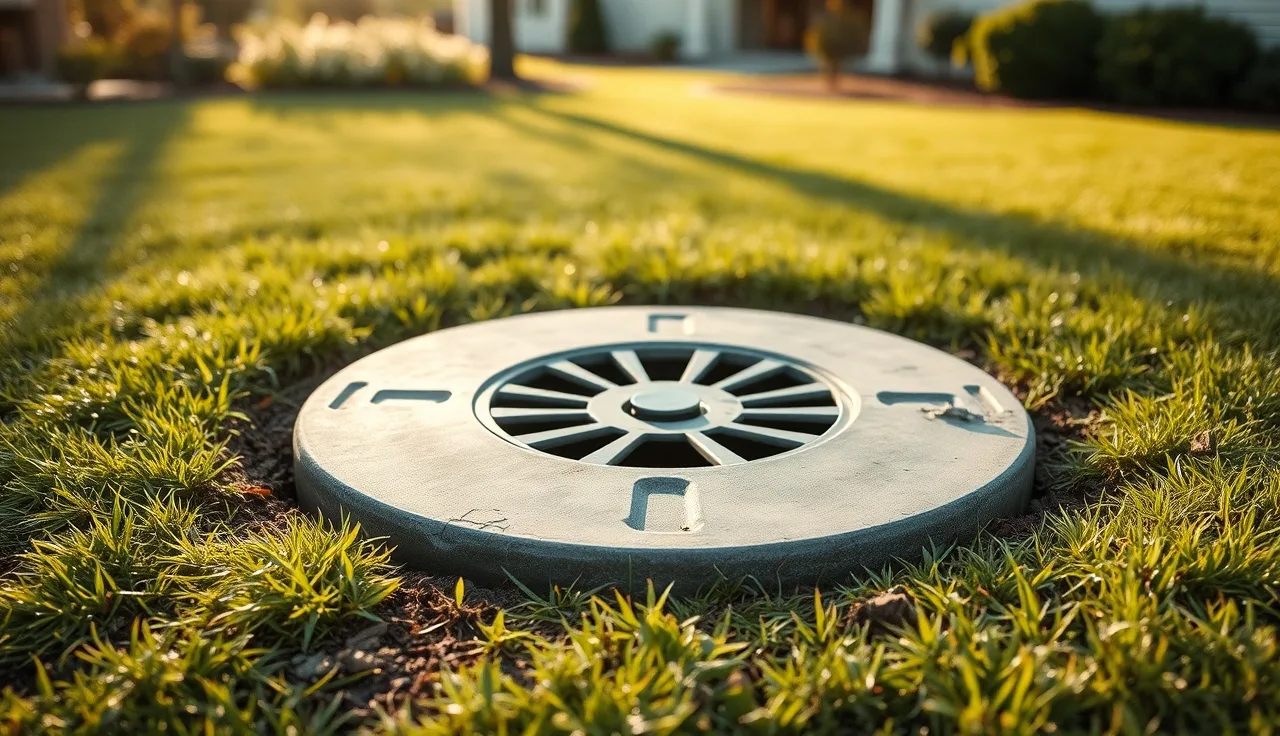
Smell outside near the tank lid? Get down and sniff each lid on its own. A strong, concentrated odor at a lid says the tank is full or a lid is cracked. If you haven't had the tank pumped in the last 3 to 5 years and the house has been lived in the whole time, assume it's full. Septic tank pumping is the fix, not a bottle of enzymes.
Smell drifting across the yard, especially over the drain field, with grass that's oddly green or ground that feels soft underfoot? That's a drain field problem. No odor product touches it. You need a septic tank inspection and probably a talk about septic system repair.
Write down what you find before you call anyone. A good tech asks these exact questions, and having the answers ready can save a diagnostic charge.
What actually works for septic tank smell treatment?
The right treatment depends entirely on the cause. No single product fixes every septic odor, and anyone who tells you otherwise is selling something.
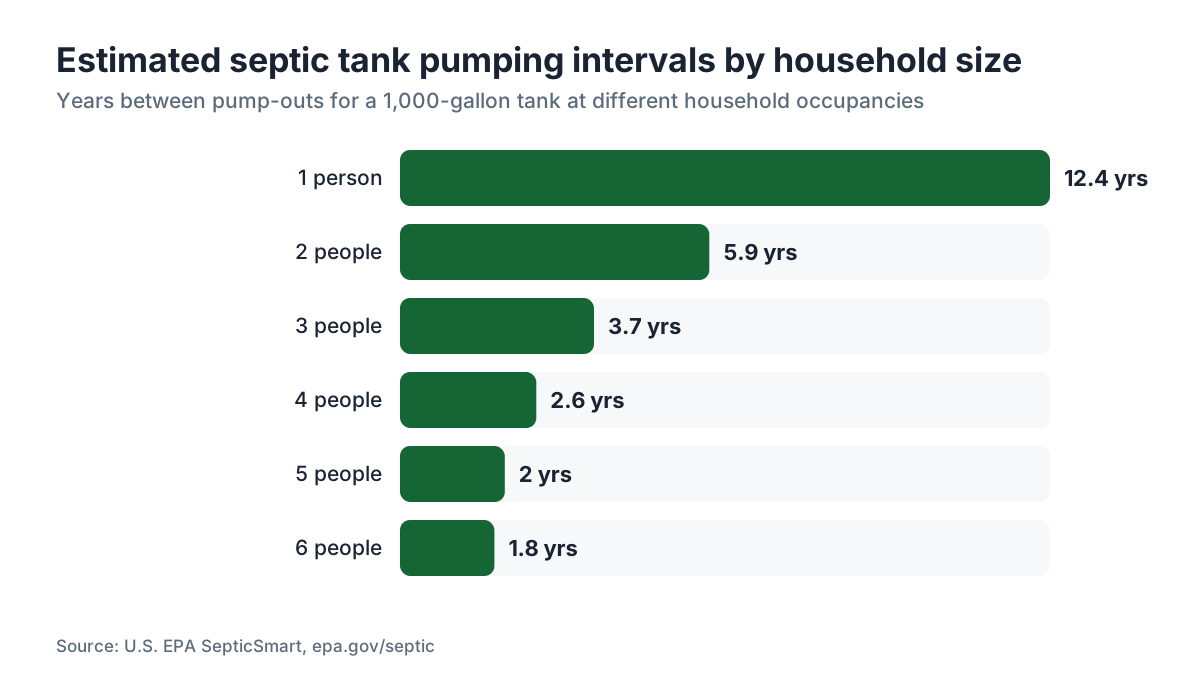
Pumping the tank. If the tank is full or sludge has built past the one-third-depth mark, pumping is the only real fix. EPA SepticSmart guidance says most households should pump every 3 to 5 years, depending on household size and tank volume [1]. A 1,000-gallon tank serving a family of four usually needs pumping about every 3 years. After a pump-out, odor from a healthy system clears within a day or two as the bacteria re-establish.
Fixing the trap or vent. These are free or near-free. A dry trap gets a cup of water. A blocked vent gets cleared with a hose, or a plumber's snake if the clog sits deeper.
Biological additives (bacteria and enzyme products). These are the packets and liquid doses on the hardware-store shelf. They work in one narrow way: they add facultative bacteria and enzymes that break down solids faster. A 1997 University of Wisconsin review of the additive research, still one of the more thorough analyses out there, found that biological additives don't replace pumping and give little measurable benefit in already-healthy systems [3]. Where they earn their keep is after a tank has been pumped clean (no seed bacteria left), after a household course of antibiotics has knocked back the tank microbes, or in a tank that's sat inactive for months. In those cases a good additive helps restart digestion and cuts odor during the re-colonization window.
What to look for in a biological product. A credible treatment for smell has multiple strains of anaerobic and facultative bacteria (more bacteria than enzymes), lists colony-forming units (CFU) per dose, and carries no surfactants or bleach. Packets are handy because you flush one at a set interval, usually monthly. Skip anything labeled "chemical deodorizer." Surfactants kill the bacteria you're trying to protect. The best treatment for smell rebuilds the bacterial colony instead of masking the hydrogen sulfide.
Aeration. In aerobic treatment units (ATUs), which inject air into the tank, odor usually traces to a dead aerator pump. New pump runs $150 to $400 in parts and clears the smell inside 24 to 48 hours, because aerobic conditions crush hydrogen sulfide production.
Replacing baffles. A concrete or PVC T-baffle costs $20 to $60 in materials and drops in during a pumping visit. If your tech finds the baffle gone mid-pump-out, have them set a new one on the spot. It's one of the highest-value, lowest-cost repairs in the whole system.
Do septic tank treatment packets actually reduce odor?
They can, in the right situation. They won't in the wrong one.
Biological packets work by dumping in a dense population of bacteria that eat the organic matter making hydrogen sulfide. Healthy tanks already have those bacteria by the billion. Pouring in more doesn't speed anything up, because the food supply, not the bacteria count, is what limits digestion. That's why the Wisconsin review found little measurable benefit in normal operating systems [3].
After a pump-out, after a family finishes a course of antibiotics, or after a heavy run of antibacterial cleaners, the tank's native colony can crash. That's exactly when a monthly packet earns its $5 to $15 per-dose cost. You're seeding a tank that's struggling, not dosing one that's fine.
A few manufacturers publish third-party CFU counts. Check for that before you buy. A product listing under 1 billion CFU per dose is probably underpowered for a standard 1,000-gallon tank.
For recurring seasonal odor, usually in summer when the tank heats up and bacterial activity spikes, a monthly dose plus a confirmed-clear vent is a reasonable low-cost move. Just don't let it stall a pump-out that's already overdue.
What causes septic smell in the house specifically?
Indoor septic odor almost always traces to one of three things: a dry trap, a bad vent, or (less often) a failed toilet wax ring.
Dry traps are the most common cause and the most overlooked. The P-trap under any drain holds a water plug that blocks sewer gas. Basement floor drains, utility sinks, and guest-bath drains can sit unused for weeks, and that plug evaporates. Pour a cup of water and a tablespoon of cooking oil down each idle drain. The water refills the trap; the oil floats on top and slows the next evaporation. Smell usually gone within an hour.
Vent problems come second. The vent stack should rise at least 6 inches above the roofline, and many local codes require more, with some cold-climate amendments requiring larger diameters to resist ice [2]. If the pipe stops below the roofline or sits near a window or fresh-air intake, gas drifts indoors. A plumber can extend or move a vent for $200 to $600 depending on attic access.
A failed toilet wax ring lets sewer gas seep into the bathroom, and it usually comes with a toilet that rocks slightly when you push it. Two bolts and a new wax ring, under $50 in parts if you do it yourself.
Ruled out all three and still smelling it? Have a plumber run a smoke test on the drain lines. Smoke testing pushes harmless white smoke through the drain system and reveals every crack, open cleanout cap, and bad joint in about 30 minutes [4].
Why does my septic tank smell worse in summer?
Heat speeds up bacterial metabolism. Summer bacteria pump out hydrogen sulfide faster than a marginal vent can carry it off. Gas pressure climbs, and it pushes odor through any weak point: a half-dried trap, a slow-closing toilet, a vent that only barely works in winter.
High spring groundwater can saturate a drain field for a while and throw surface odor until the soil drains. A yard smell that started in spring and still hasn't cleared by July or August is a warning that the field never recovered and may be failing.
Summer water use climbs too (irrigation, kids home, guests), which can hydraulically overload a system that was already scraping by. Spreading laundry across the week instead of running six loads on Saturday isn't a treatment, but it genuinely cuts the load spikes [11].
How much does it cost to fix a septic odor problem?
Most homeowners fix a septic odor for under $600. What you pay depends entirely on what's actually broken, and the table below lays out the common causes.
| Cause | Typical fix | DIY cost | Pro cost |
|---|---|---|---|
| Dry trap | Pour water + oil down drain | $0 | N/A |
| Blocked vent pipe | Clear with hose or snake | $0 to $20 | $75 to $200 |
| Over-full tank | Pump out | N/A | $300 to $600 [5] |
| Missing or broken baffle | Replace T-baffle | $20 to $60 parts | Add-on during pump-out |
| Biological depletion | Monthly treatment packets | $5 to $15/month | N/A |
| Failed wax ring | Replace wax ring | $15 to $40 parts | $150 to $300 |
| Extend vent stack | Plumber | N/A | $200 to $600 |
| Drain field saturation | Repair or replacement | N/A | $3,000 to $20,000+ [6] |
| Cracked tank lid | Replace lid/riser | $50 to $200 parts | $100 to $400 |
The wide spread on drain field work is the gap between fixing one bad lateral and replacing an entire leach field. Full replacement can push toward $20,000 in poor soil or where code forces a drip irrigation system.
The expensive end only shows up when someone ignored the odor long enough for the underlying failure to compound. A $400 pump-out today beats a $15,000 field tomorrow.
Are there things you should never put in a septic tank to avoid smells?
Yes, and some of them get marketed as helpful cleaning products.
Bleach is the big one. A splash of laundry bleach per load probably won't crash the system, but heavy bleach use kills the anaerobic bacteria doing the actual digestion. Fewer bacteria means undigested solids, more hydrogen sulfide, and faster sludge buildup. Switch to oxygen-based or enzyme cleaners where you can.
Antibacterial soaps and drain cleaners cause the same trouble. Occasional use is fine. Daily heavy use of products with triclosan or quaternary ammonium compounds grinds down the tank colony over time.
Grease and fats cause a different problem. They pile up in the scum layer and can block the outlet baffle or push into the drain field, which fails and smells far worse than a balanced tank ever will. Scrape plates before washing. Never pour cooking grease down any drain.
Wipes, even the ones labeled "flushable," don't break down in a septic system. The Water Research Foundation tested common flushable-wipe products and found they did not disintegrate under conditions matching residential plumbing [7]. They stack up in the tank and can jam pump impellers in ATU systems.
Flushed medications don't cause odor directly, but they disrupt the bacterial colony and are flagged as an environmental concern in EPA disposal guidance [8]. Return unused medications to a take-back program instead.
When is a septic smell a sign of a serious problem?
Smell alone doesn't tell you how bad things are. Location and persistence do.
A smell that shows up suddenly after heavy rain and sits over the drain field is serious. Saturated soil can't absorb effluent, so it surfaces. If that condition lasts more than a week after the rain stops, the field may be permanently impaired.
A smell paired with slow drains across the whole house, more than one fixture, points to a system-wide backup. That's an emergency. Sewage rising through floor drains exposes people to pathogens and can wreck the house.
A smell that comes with soggy ground over the drain field in dry weather is a late-stage warning. The field is likely failing. A professional septic tank inspection tells you whether repair is possible or replacement is coming. Many states require a licensed inspector or engineer to condemn a field before they'll issue a replacement permit.
EPA warns that a failing septic system can contaminate nearby groundwater and wells with bacteria, nitrates, and pathogens [1]. If you have a private well within 100 feet of a field showing surface failure, test the well water while you line up repairs.
For operators running multiple properties, logging odor complaints by location and recurrence date separates chronic field failures from one-off vent or trap issues. A tool like SepticMind can hold complaint history next to pump-out records so a pattern shows up before it turns into an emergency call.
If you suspect a real failure, start with septic tank repair basics and get two quotes. Prices vary enough that the first contractor to show up is rarely the cheapest.
How often should I treat my septic tank to prevent smells?
Pump-out frequency matters far more than additive frequency. EPA SepticSmart guidance recommends inspecting the system every 3 years and pumping every 3 to 5 years for a standard gravity-fed tank [1]. Mechanical systems with pumps, floats, or aerators need a look every year.
The how often to pump septic tank question gets a sharper answer once you know household size and tank volume. A 1,500-gallon tank serving two people might run 7 to 10 years between pump-outs. A 1,000-gallon tank serving five might need service every 2 years. The table below draws on EPA SepticSmart estimates [1].
| Tank size (gal) | 1 person | 2 people | 4 people | 6 people |
|---|---|---|---|---|
| 500 | 5.8 yrs | 2.6 yrs | 1.0 yr | 0.7 yr |
| 750 | 9.1 yrs | 4.2 yrs | 1.8 yrs | 1.3 yrs |
| 1,000 | 12.4 yrs | 5.9 yrs | 2.6 yrs | 1.8 yrs |
| 1,250 | 15.6 yrs | 7.5 yrs | 3.4 yrs | 2.3 yrs |
| 1,500 | 18.9 yrs | 9.1 yrs | 4.2 yrs | 2.9 yrs |
For biological additives, a monthly dose after anything that knocks back tank bacteria (heavy antibiotics, a big bleach cleaning job, a fresh pump-out) makes sense. Year-round monthly dosing in a healthy tank is low-value, though also low-harm as long as the product has no surfactants.
Check vent pipes every fall before winter hits. Clear leaves, look for bird nests. In hard-freeze climates a vent under 3 inches wide ices shut easily. Upgrading to a 4-inch vent runs $100 to $200 and kills a recurring winter odor call for good.
What do state codes say about septic odor and system maintenance?
State onsite wastewater codes rarely regulate odor directly, but they set the standards that prevent most odor when you follow them.
Most states require setback distances between septic parts and wells, property lines, and buildings, precisely because a failing system means both odor and contamination. The numbers vary. Washington State's Department of Health requires conventional systems to sit at least 100 feet from a drinking water well [9]. Texas rules under Title 30 TAC Chapter 285 set minimum distances and soil-evaluation requirements that decide which system a site can even support [10].
Many states have mandatory inspection triggers: change of ownership, a building permit, or system age. A few (Massachusetts is the well-known one) require inspection before a home sale closes, and repair or upgrade if the system fails.
Some counties stack their own rules on top of the state minimums. If you're facing a stubborn odor and thinking about repair or replacement, pull your county's onsite wastewater ordinance before you hire anyone. It spells out the required permit, the designs allowed in your soil type, and which contractors need a license for the work.
EPA's SepticSmart program (their page is at https://www.epa.gov/septic) gives federal best-practice guidance, but the real authority sits with state and local agencies. Your state environmental or health department publishes the binding rules.
A quick checklist: diagnosing and treating septic tank smell step by step
This is the sequence a good tech runs. Work it yourself before you pay for a service call.
- Locate the smell (inside the house, at tank lids, over the drain field, or all three).
- Inside: run water down every unused drain. Wait 10 minutes. Smell gone? Dry trap. Done.
- Still inside after step 2: look down the roof vent opening. Blocked? Clear it.
- At tank lids: check the pump-out date. Over 3 to 5 years ago? Schedule septic tank cleaning. Check the lids for cracks while you're down there.
- During pump-out: ask the tech to check both baffles. If either is gone or crumbling, replace it on the spot.
- After pump-out: add a biological treatment packet or liquid dose to seed the tank. Repeat monthly for 3 to 6 months.
- Over the drain field: look for wet spots in dry weather. Persistent smell? Stop adding water to the system and call for an inspection. This is not a product fix.
- Cause still unclear? Have a plumber run a smoke test on the house drain lines.
For operators: if you run a property portfolio, SepticMind's job history tracking flags systems overdue for service or carrying repeat odor complaints, so you catch problems before they become emergency calls.
Odor problems that get a real diagnosis and a targeted fix almost always resolve. The ones that linger are the ones where someone bought a treatment packet hoping it would cover a failing field or a blocked vent. It won't. But for the one job it's built for, keeping a healthy tank's bacterial colony alive, a good biological product earns its modest price.
Frequently asked questions
Can I use baking soda to get rid of septic tank smell?
Baking soda down the drain is safe for the tank and won't kill bacteria the way bleach can. But it's a temporary deodorizer, not a treatment. It neutralizes some acid in drain lines and may briefly cut odor at a drain opening, and it does nothing about gas production in the tank, a blocked vent, or a dry trap. Find the source first. Baking soda alone won't fix it.
How long does it take for septic smell to go away after pumping?
Most homeowners notice improvement within 24 to 48 hours of a pump-out. The bacterial colony needs a few days to rebuild, which is why adding a biological packet right after pumping helps. If the smell hasn't dropped noticeably within 72 hours, the source is elsewhere, likely a dry trap, blocked vent, or drain field issue the pump-out never touched.
Is septic tank smell dangerous to my health?
At the levels found around a residential tank, hydrogen sulfide causes headaches and nausea in some people but rarely does acute harm from brief outdoor exposure. Indoor exposure worries me more because gas can build up in enclosed space. OSHA sets a permissible exposure limit of 20 ppm for hydrogen sulfide at work, and levels above 100 ppm are immediately dangerous, though a residential system under normal conditions doesn't reach those.
What is the best septic tank treatment for smell that I can buy at a hardware store?
Look for a biological product listing multiple bacterial strains, colony-forming units (CFU) per dose (at least 1 billion for a standard tank), and no surfactants or bleach. Packet form makes monthly dosing easy. Enzyme-only products fall short because they don't replenish the bacteria doing the digestion. Skip anything sold mainly as a chemical deodorizer; those mask hydrogen sulfide instead of cutting its production.
Why does my septic system smell after heavy rain?
Rain raises the soil water table, which can saturate the drain field and block effluent absorption. Gas that normally seeps slowly through soil gets displaced and rises to the surface. A brief post-rain smell that clears within 24 to 48 hours is usually normal. Smell that lingers, or shows up with wet spots over the field in dry weather a week later, points to a drainage or field-capacity problem that needs a pro.
Can a full septic tank cause smell inside the house?
Yes. Once a tank hits capacity, solids and gas have nowhere to go but back up the inlet pipe toward the house. You'll often notice slow drains, gurgling, and a sulfur smell near floor drains or toilets. A full tank is the most common cause of house odor in systems that skipped their pump schedule. Pumping resolves it. Don't reach for biological treatments expecting them to stand in for a pump-out.
How do I stop my septic tank from smelling in winter?
Cold thickens tank contents and slows the bacteria, which can raise odor. The more immediate winter problem is a vent pipe freezing shut, which back-pressurizes the system into the house. Make sure vent pipes are at least 4 inches wide to resist ice closure, and keep interior rooms warm so drain pipes don't freeze. Monthly biological dosing helps hold bacterial activity through the cold months when digestion slows.
Why does my bathroom smell like septic even though the toilet flushes fine?
A toilet that flushes fine but smells of sewer almost always has one of two problems: a dried P-trap in a nearby floor drain or a rarely used second toilet, or a failed wax ring at the toilet base. Rock the toilet gently; any movement means the wax ring is shot. Run water down every drain in the room and in nearby utility areas. If the smell clears, you found it.
Do septic tank enzymes actually work or are they a waste of money?
Enzymes break down specific compounds (fats, proteins, cellulose) but don't repopulate the tank with bacteria the way biological products do. In a well-running tank they're mostly redundant. They add some value breaking down grease in the inlet pipe or baffles. A combined enzyme-plus-bacteria product covers both jobs. Enzyme-only products are weaker than multi-strain biological treatments for odor control specifically.
How do I know if my septic smell is from the drain field failing versus the tank?
Location is the tell. A failing drain field throws odor over the field itself, often with wet or spongy ground in dry weather and unusually green grass above the laterals. Tank-related odors concentrate near the lids and the inlet vent area. Indoor odors point to the plumbing (traps and vents), not the field. A professional inspection with a dye test or camera confirms which part is failing.
Is it normal for a new septic system to smell?
A brand-new system may give off a mild odor for the first few weeks while the bacterial colony sets up. It should fade steadily and be gone within a month under normal use. A new system that smells strongly, or that develops odor after those first weeks, was either installed with a defect, has a trap problem, or is taking more water or solids than it was sized for. A post-installation walkthrough with the contractor is fair to ask for.
Can I use vinegar to treat septic tank odor?
White vinegar in modest amounts (a cup or two now and then) is close enough to pH-neutral that it won't seriously disrupt tank bacteria, but it has essentially no effect on odor in the tank. It may freshen drain lines briefly. As a system treatment it does nothing. Same goes for most home remedies: yeast, coffee grounds, and the like don't touch the gas production or containment failure causing the smell.
What happens if I ignore septic tank smell for a long time?
It depends on the cause. An ignored dry trap stays a minor nuisance. An ignored full tank progresses to backup, possible sewage intrusion into the house, and faster drain field failure as solids migrate past the outlet. An ignored failing field can contaminate groundwater and may force a full replacement instead of a cheaper repair. Repair costs roughly double at each stage of delay past the first warning signs.
Sources
- U.S. EPA, SepticSmart homeowner guidance: Most households should have their septic system inspected every 3 years and pumped every 3 to 5 years; pumping intervals vary by tank size and household size as shown in EPA SepticSmart tables.
- International Code Council, International Plumbing Code (vent pipe termination requirements): Vent pipes must terminate at least 6 inches above the roof surface under model plumbing codes; local cold-climate amendments often require more.
- University of Wisconsin-Madison Extension, Small-Scale Waste Management Project review of septic additives (1997): A review of septic additive research found biological and enzyme additives provide minimal measurable benefit in properly operating systems and do not substitute for routine pumping.
- U.S. EPA, Onsite Wastewater Treatment Systems Manual (EPA/625/R-00/008): Smoke testing pressurizes drain systems to reveal cracks and open joints as a diagnostic tool for sewer gas infiltration.
- Angi (formerly HomeAdvisor) national cost data, septic tank pumping: National average cost to pump a septic tank ranges from $300 to $600 for a standard residential tank.
- Angi (formerly HomeAdvisor) national cost data, drain field repair and replacement: Drain field repair or replacement costs range from $3,000 for minor repairs to over $20,000 for full replacement in difficult soil conditions.
- Water Research Foundation, flushability of nonwoven fabrics study: Testing of flushable wipe products found they did not disintegrate under conditions mimicking residential plumbing and accumulate in septic tanks.
- U.S. EPA, hazardous waste and pharmaceutical disposal guidance: EPA advises against flushing medications because they can disrupt biological treatment processes and contaminate water supplies; take-back programs are the preferred disposal method.
- Washington State Department of Health, onsite sewage systems setback requirements: Washington State requires conventional septic systems to maintain at least 100 feet of separation from a drinking water well.
- Texas Commission on Environmental Quality, Title 30 TAC Chapter 285 on-site sewage facilities: Texas TCEQ rules set minimum setback distances and soil evaluation requirements determining what type of septic system a given site can support.
- U.S. EPA SepticSmart, care and maintenance guidance: Staggering laundry loads through the week rather than doing all loads on one day reduces hydraulic overload on the septic system and is recommended by EPA SepticSmart.
- OSHA, hydrogen sulfide occupational exposure guidance: OSHA sets a permissible exposure limit of 20 ppm for hydrogen sulfide in occupational settings; concentrations above 100 ppm are classified as immediately dangerous to life or health.
Last updated 2026-07-09