Septic tank pump to drain field: how it works and what fails
By the SepticMind Editorial Team
TL;DR
- A septic effluent pump (or dosing pump) moves partially treated wastewater from your tank to the drain field in timed doses, which keeps the soil from flooding.
- Most pumps last 7 to 15 years, cost $300 to $1,200 to replace, and need a yearly inspection.
- Gravity systems skip the pump entirely.
- Pressure-dosed and mound systems always need one.
What does the pump between a septic tank and drain field actually do?
A septic pump, usually called an effluent pump or dosing pump, has one job: push liquid effluent out of the tank (or a separate pump chamber) and into the drain field in controlled bursts. It does not remove solids. It does not clean the water. It moves liquid.
Gravity-fed septic systems skip the pump entirely. If your tank sits higher than the drain field, or close enough that slope carries the flow, you may have no pump at all. Once the yard gets hilly, the soil gets tricky, or the county requires a mound system or drip-irrigation leach field, a pump becomes unavoidable.
The pump sits in a separate pump chamber (also called a dose chamber or wet well) downstream of the main tank, or inside a compartmented tank. Floats or a timer control its cycles. When effluent reaches a trigger level, the pump fires, sends a measured dose to the leach field, then shuts off. That dosing cycle gives the soil time to rest and absorb between slugs of water, which is exactly why pressure-dosed systems often outperform gravity systems on marginal soils [1].
Without a working pump, effluent either backs up into the house, ponds over the drain field, or both. Neither outcome is subtle.
What types of pumps are used to dose a drain field?
Three pump types show up on residential systems. Most homes have the first one.
Effluent pumps (submersible centrifugal). These are the workhorses. They sit submerged at the bottom of the pump chamber, handle screened effluent (not raw sewage), and move 15 to 60 gallons per minute at typical residential heads. They are not built to pass solids, so a working septic tank upstream is non-negotiable.
Sewage ejector pumps. Bigger impeller clearances let these handle some solids. You find them where the tank itself must pump uphill before any treatment happens, or in basements that drain below the drain field. They cost more and work harder than effluent pumps.
Turbine/jet pumps. Less common on residential sites, occasionally seen on drip-irrigation leach systems where precise low-volume dosing matters. They generate higher pressure than centrifugal pumps at low flow, which some drip emitters need.
For a standard pressure-dosed conventional drain field, a submersible effluent pump in the 1/2 to 3/4 horsepower range handles most homes. The installer sizes the pump to the required dose volume, the total head (vertical lift plus pipe friction), and the field's absorption capacity [2].
One useful comparison:
| Pump type | Solids handling | Typical HP | Best fit |
|---|---|---|---|
| Effluent (submersible) | Screened effluent only | 0.33 to 1.0 | Pressure-dosed drain fields |
| Sewage ejector | Small solids OK | 0.5 to 2.0 | Uphill tank-to-tank lifts |
| Turbine/jet | Screened effluent | 0.5 to 1.5 | Drip-irrigation leach systems |
| None (gravity) | N/A | N/A | Sites with adequate slope |
How does a pressure-dosed drain field system work from start to finish?
Walk through one cycle and every piece starts to make sense.
Wastewater leaves the house and enters the septic tank. Solids settle into sludge or float into scum; the clarified middle layer is what matters here. When effluent reaches a set level in the pump chamber, the pump activates and sends a measured dose, maybe 75 to 150 gallons for a two-bedroom home, through a pressurized manifold into the drain field laterals. Small orifices (typically 1/8-inch to 3/16-inch holes) push flow evenly along the whole length of every lateral at once. The soil absorbs the dose. The pump shuts off, and the system rests until the next cycle [1][3].
Compare that to a gravity system, where effluent dribbles continuously from the outlet end of the tank into whichever lateral sits highest. Over years, gravity systems load the soil unevenly, drowning the near end while the far end stays dry. Pressure dosing fixes that, which is why most state codes now require it on new installations, especially on mounds, drip systems, and in nitrogen-sensitive areas [3].
The timer and float settings are not arbitrary. Your designer set them from your household's daily flow (typically 50 to 75 gallons per person per day) and the soil's long-term acceptance rate, a number that comes from a perc test or soil morphology evaluation [4]. Bump the timer settings, or keep running the pump through an ignored high-water alarm, and the field can flood. That matters more than most homeowners realize.
For the wider picture, see our guide on septic tank pumping, which covers what happens inside the tank before liquid ever reaches the pump chamber.
How long do septic effluent pumps last?
Manufacturers rate submersible effluent pumps for 7 to 15 years of service. Real-world life depends on three things: water table, cycling frequency, and whether raw solids ever reach the pump.
A pump in a high water table area runs against more back-pressure. A pump in a heavy-use household (four teenagers, laundry running all day) cycles more often and wears faster. A pump that swallows solids because the main tank was never cleaned clogs its impeller and fails early.
The biggest killer of drain field pumps is a neglected septic tank pump out. When sludge builds past the scum and effluent layers, partially digested solids carry over into the pump chamber and foul the pump. Regular pumping, every 3 to 5 years for most households (the exact interval depends on tank size and household size), protects pump life directly [5].
Here's the honest caveat: nobody has great industry-wide data on average pump lifespan. The 7 to 15 year range comes from manufacturer specs and trade experience, not a controlled long-term study. Some pumps die at year 4 from a surge or a bad install. Some run 20 years in easy conditions.
What are the signs that your septic pump is failing?
The high-water alarm is the clearest sign. Most pump chambers have a float set above the dose trigger that sets off an alarm (a buzzer, a light on the control panel, or a phone alert from a smart controller) when effluent rises past safe levels. If that alarm fires, take it seriously. You have hours, not days, before the problem reaches your drain field or your house.
Other warning signs are quieter:
- Slow drains throughout the house, at more than one fixture. A single slow drain is usually a clog. Everything draining slowly often means the tank or pump chamber is backing up.
- Wet, spongy, or unusually green grass right over the drain field. The field is saturated. Sometimes that's the pump, sometimes it's the field, but either way you need a diagnosis.
- The pump runs constantly without shutting off. A stuck float or a pump that can't keep up with inflow both do this.
- New noises, grinding or rattling. That's impeller damage. Do not wait.
- Total silence for days. In some systems you can hear a faint vibration or watch the level in the inspection port drop after a dose. Nothing at all sometimes means the pump has stopped.
For steps past the pump, the broader septic system repair guide covers how technicians tell whether the problem is the pump, the chamber, or the field.
How much does it cost to replace a septic pump to the drain field?
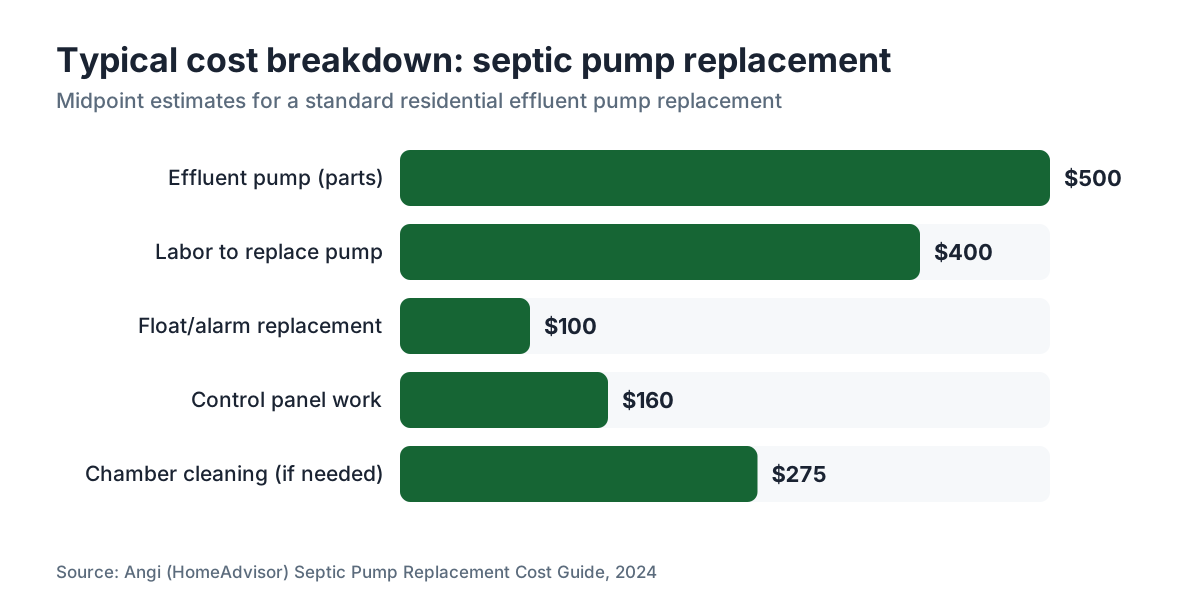
Expect to pay $300 to $700 for the pump itself, depending on horsepower and brand. Labor to pull the old pump, test the chamber, and install the new one usually adds $200 to $600 depending on your market and pump depth. Total replacement cost most often lands between $500 and $1,200, though hard-access chambers or jobs that also need float or control panel work can push past $1,500 [6].
Costs that sneak up on homeowners:
- Alarm float replacement ($50 to $150 parts and labor) is often needed at the same time as a pump swap.
- Control panel fuses or relays, another $75 to $250.
- If solids reached the chamber, the chamber itself may need cleaning before the new pump goes in.
- Permit fees vary by county. Some jurisdictions require a permit for pump replacement, others don't.
For comparison, a septic tank repair on the tank body (baffles, risers, lids) usually runs $150 to $1,500 depending on what failed. Pump replacement sits mid-range for septic repairs.
SepticMind's service workflow tools help operators track pump replacement jobs, warranty dates, and scheduled follow-ups, which earns its keep when you're managing dozens of accounts with mixed pump ages.
| Job component | Typical cost range |
|---|---|
| Effluent pump (parts) | $300 to $700 |
| Labor to replace pump | $200 to $600 |
| Float/alarm replacement | $50 to $150 |
| Control panel work | $75 to $250 |
| Chamber cleaning (if fouled) | $150 to $400 |
| Total typical range | $500 to $1,500+ |
Can you install or replace a drain field pump yourself?
Technically, pulling a pump from a chamber isn't hard. The pump connects to a discharge pipe and a power cord. You lift it out by its rope or handle, disconnect the cord, swap the pump, and reverse the process. Plenty of homeowners have done it.
The reasons to hire a licensed contractor anyway are real. Most states require permitted work for any septic system repair, and unpermitted work can void your system's permit status, complicate a home sale, and expose you to fines [7]. The electrical side (240V submersible pump circuits, weatherproof junction boxes, control panels) does not forgive mistakes. And if you get the pump sizing wrong, you either underload the field (wasting the pump's capacity) or overdose it (drowning the soil).
That said, knowing how to check whether your pump is running, how to test a float by hand, and how to read your control panel is real homeowner knowledge. You should not be in the dark about your own system.
How often should you inspect and maintain the pump system?
Once a year. That's the standard from the EPA's SepticSmart program, which says a well-maintained system includes checking the pump, floats, and alarm every year [5]. Some states put it in code: North Carolina, for example, requires an operation permit and annual inspection for all systems with pumps [7].
What an annual inspection covers:
- Visual check of float positions and operation (the dose float, the off float, and the alarm float).
- Pump run test: trigger the pump manually and verify it moves the expected dose volume in the expected time.
- Check discharge pressure if the system uses a pressure manifold.
- Inspect the control panel for corrosion, tripped breakers, or error codes.
- Measure effluent level in the pump chamber against expected normals.
- Confirm the high-water alarm actually fires.
Between professional visits, the homeowner's job is simple. Don't ignore alarms. Don't flush non-degradable material that overloads the main tank. And pump the tank on schedule. Those three habits prevent most pump failures.
What happens to the drain field if the pump fails for days or weeks?
Short failures, a day or two, rarely do lasting harm. The system backs up, you stop getting drainage, you may get a sewage smell or slow drains, but a brief rest doesn't damage the field.
Long failures are another story. If the pump quits and the household keeps using water, effluent finds another path: back into the house through floor drains or toilets, or up and over the pump chamber lid onto the yard. Surfacing effluent is a public health hazard and an environmental violation in every state.
The worse long-term risk shows up when someone rigs the system to "keep things moving" during an outage. Running raw effluent straight into the drain field without proper dosing saturates the soil and builds biomat, a biological crust that chokes off permeability. Severe biomat can permanently cut field capacity and force a drain field repair or replacement that costs far more than any pump [8].
See also: septic tank inspection for what a professional checks when the system shows backup or saturation.
What do state and EPA codes require for septic pump systems?
The EPA does not directly regulate individual septic systems. That authority sits with states and counties. The EPA's SepticSmart initiative provides guidance, and the agency's technical manual, "Onsite Wastewater Treatment Systems Manual," is the reference most state programs use as a baseline [1].
At the state level, requirements vary a lot. Virginia's regulations require alternative systems (which includes pressure-dosed systems) to have an operation permit, a licensed operator, and annual inspections [9]. Florida's 64E-6 rules require pump systems to meet specific dosing volume calculations and alarm requirements [10]. Coastal states and states over sensitive aquifers tend to have the strictest rules.
The EPA's own homeowner guidance puts it plainly: "Alternative systems use pumps or gravity to help septic tank effluent trickle through sand, organic matter, constructed wetlands, or other media to remove or neutralize pollutants," and it recommends a service contract because these systems "have mechanized parts" [5].
For homeowners: check your county health department or state environmental agency for your exact requirements. In many states, failing to maintain a permitted system triggers an enforcement order and a demand to upgrade or replace. This is about more than performance. There's regulatory exposure too.
If yours fails completely and you're pricing a new system, see our breakdown on cost to install a septic system and cost to put in a septic tank for current figures by system type.
What is the difference between a pump-to-drain-field system and a gravity system?
Gravity systems are simpler. Effluent flows by slope from the tank outlet to the drain field inlet: no electricity, no floats, no alarm panel. On a suitable site they run reliably for decades. Most older rural systems are gravity-fed.
Pressure-dosed (pumped) systems cost more upfront and add maintenance, but they buy you real advantages:
- Even distribution across all laterals at once, not sequential loading from the near end.
- Freedom to place the drain field uphill or far from the tank.
- Smaller-diameter laterals and tighter orifice spacing, which some soils require.
- On nitrogen-sensitive sites, time-dosed delivery can be tuned to cut nitrogen loading to groundwater.
Mound systems, drip irrigation systems, and shallow narrow systems nearly always require a pump. Conventional gravel-and-pipe in-ground fields often don't, if the slope cooperates.
For homeowners shopping a new system, the choice usually isn't yours. Your site's topography and soil evaluation dictate it. If your site needs a pump, your designer will spec one. Your job is to confirm the system is sized and installed right, and to understand what maintenance it needs. See septic tank installation for what goes into a proper setup.
SepticMind's inspection and scheduling tools are worth a look for operators running a mix of gravity and pumped systems, since the maintenance schedules and checklist items differ sharply between the two.
How do you troubleshoot a drain field pump that won't run?
Start at the control panel. A tripped breaker or blown fuse is the most common cause of a sudden pump failure and the cheapest fix. Reset the breaker, then watch whether it trips again. If it trips right away, there's an electrical fault in the pump or wiring, not a nuisance trip.
If the breaker holds, check the floats. Float switches get tangled, coated in grease, or stuck in the "off" position. Most control panels have a manual override or a "hand" setting that runs the pump directly to confirm it works. If the pump runs on manual but not automatic, the float is the problem.
If the pump won't run even on manual, the motor may be burned out (you'll often smell it) or the impeller may be jammed. At that point you're pulling the pump for inspection or replacement.
Check the flow path too. A running pump doesn't help if the discharge line is frozen (in cold climates), blocked, or has a failed check valve. Listen for the pump running, then check whether the dose chamber level is actually dropping. If it runs and the level holds, the effluent is going nowhere useful.
For stubborn issues, especially anything touching the drain field laterals or manifold, get a licensed septic technician. The septic tank cleaning and chamber cleaning step often happens on the same visit as a pump replacement, so bundling them makes economic sense.
Frequently asked questions
Does every septic system have a pump to the drain field?
No. Many systems rely on gravity to move effluent from the tank to the drain field, with no pump at all. You need a pump when the drain field sits uphill from the tank, far away, or when the system type (mound, drip irrigation, pressure-dosed) requires controlled dosing. Gravity systems are simpler and cheaper to operate but only work on sites with enough slope.
What size pump do I need for my septic system?
Pump sizing depends on three numbers: the required dose volume (from your household's daily flow), the total dynamic head (vertical lift plus pipe friction losses), and the field's absorption rate. A licensed designer or engineer calculates this during system design. For most residential systems a 0.5 to 0.75 horsepower submersible effluent pump covers the range, but never guess. An undersized pump underserves the field and an oversized one overdoses it.
How do I know if my septic pump is running?
Most pump chambers have a control panel with indicator lights showing when the pump is active. You can also listen near the pump chamber lid for a low hum during dose cycles. Some homeowners open the inspection port and watch the effluent level drop after a cycle. If your system has a smart controller or telemetry, you can monitor cycles remotely. If you're not sure, a technician can verify operation during an annual inspection.
Can a septic pump fail suddenly or does it usually give warning signs?
Both happen. Some pumps fail gradually, cycling less efficiently, running longer, tripping the high-water alarm occasionally before quitting. Others fail suddenly from a burned motor or an electrical fault. The high-water alarm is your early warning for gradual failures; for sudden ones, you usually find out when drains stop working or the alarm fires. That's why annual testing of the alarm float matters.
How long does it take to replace a septic effluent pump?
A straightforward pump swap takes 1 to 3 hours. The technician pulls the old pump, tests the chamber and floats, installs and wires the new pump, verifies operation, and confirms the control panel reads correctly. If the chamber is fouled with solids or the control panel also needs work, the job can stretch to half a day. Most contractors can schedule same-day or next-day service for pump failures.
What happens if I ignore the high-water alarm on my septic pump chamber?
The effluent level in the pump chamber keeps rising. Eventually it backs up into the house through the lowest fixtures, overflows the chamber lid onto the yard, or both. Surfacing sewage is a public health violation in every state and an environmental enforcement issue. Beyond the immediate mess, sustained high water can push under-treated effluent into the drain field and cause soil clogging that permanently cuts field capacity.
Will homeowner's insurance cover a failed septic pump?
Usually not under a standard policy. Most homeowner policies exclude septic system components unless you add a specific rider or hold a home warranty that covers mechanical systems. A few home warranty plans cover effluent pumps; read the exclusions carefully, because many exclude systems that haven't been on a documented maintenance schedule. Check your policy before you need it, not after.
How often should septic pump floats be replaced?
Float switches typically last 5 to 10 years, though they're often replaced along with the pump since you're already in the chamber. Signs of a failing float include erratic pump cycling, the pump running when it shouldn't, or the alarm firing even though effluent levels look normal. Floats are inexpensive ($20 to $80 each), and replacing them during a pump swap makes sense.
Does a septic pump to drain field require a permit?
In most states, yes. Any repair or replacement of septic system components, including the pump, typically requires a permit from the county health department or state environmental agency, and the work must be done by a licensed contractor. Requirements vary by state and county. Unpermitted work can complicate a future home sale and may expose you to fines. Contact your local health department before starting any work.
Can tree roots damage a septic pump or the lines to the drain field?
Roots generally don't reach the submersible pump itself, since it sits inside a sealed chamber. They can infiltrate the discharge line between the pump chamber and the drain field manifold, restricting flow or blocking it entirely. Roots entering the distribution laterals in the drain field are a separate and serious problem. If you have mature trees near your system, periodic camera inspection of the discharge line is worth the cost.
What is the difference between a septic pump and a sewage ejector pump?
An effluent pump handles screened, clarified liquid that has already been through septic tank settling. It cannot pass solids. A sewage ejector pump has a larger impeller clearance and can handle some raw solids, used when a pump must move unsettled sewage uphill before it reaches the tank. Using an effluent pump where a sewage ejector is needed will destroy the pump fast.
How do pump systems affect drain field longevity?
Properly dosed pump systems generally extend drain field life compared to gravity systems on marginal soils. Timed doses give the soil absorption zone time to dry between slugs of water, which slows biomat formation and preserves permeability. Overloaded pump systems, from wrong timer settings, a failed check valve that allows backflow, or a household that uses far more water than the design allows, can damage the field faster than gravity would.
Is it worth installing a backup septic pump?
On a primary home where pump failure means immediate backup into the house, a backup pump (or at minimum a spare pump in storage sized to your system) is reasonable insurance. Some installers offer dual-pump chambers. A second pump in the chamber adds $400 to $800 to installation but eliminates emergency service calls at weekend rates. For vacation homes that sit empty, a smart alarm that sends phone alerts is more practical than a backup pump.
Sources
- U.S. EPA, Onsite Wastewater Treatment Systems Manual (EPA/625/R-00/008): Pressure dosing distributes effluent evenly across all laterals simultaneously, giving soil time to rest between doses, and is recommended for marginal soils.
- Penn State Extension, Septic Systems section: Pressure-dosed systems use small orifices (typically 1/8 to 3/16 inch) to distribute flow evenly along all laterals and are increasingly required by state codes for new installations.
- U.S. EPA, Septic Systems (SepticSmart) program: Household wastewater flow is typically estimated at 50 to 75 gallons per person per day for system sizing purposes.
- U.S. EPA, SepticSmart: How to Care for Your Septic System: The EPA SepticSmart program recommends regular inspection of pumps, floats, and alarms, and advises a service contract for alternative systems because they 'have mechanized parts.'
- Angi (formerly HomeAdvisor), Septic Pump Replacement Cost Guide: Septic effluent pump replacement costs typically range from $500 to $1,200 including parts and labor, with total costs reaching $1,500 or more for complex installations.
- North Carolina Department of Environmental Quality, Water Resources permitting: North Carolina requires an operation permit and annual inspection for septic systems with pumps and alternative components.
- University of Wisconsin-Madison Division of Extension, Soil and Water: Overloading a drain field with unsettled effluent or without proper dosing intervals accelerates biomat formation and can permanently reduce field permeability.
- Virginia Department of Health, Onsite Sewage and Water Services: Virginia's regulations require alternative and pump-dependent septic systems to have a licensed operator and annual inspections under an operation permit.
- Florida Department of Health, Onsite Sewage Programs (Chapter 64E-6): Florida's 64E-6 rules require pump systems to meet specific dosing volume calculations, alarm requirements, and inspection standards.
Last updated 2026-07-09