Companies that pump septic tanks: how to find and vet one
By the SepticMind Editorial Team
TL;DR
- Septic pumping companies are licensed waste haulers who vacuum sludge and scum from your tank every 3 to 5 years on average.
- A standard residential pump-out costs $250 to $600.
- Finding a good one means checking your state's licensed hauler registry, reading reviews from the last year, and confirming the company pumps to an approved disposal site.
What exactly does a septic pumping company do?
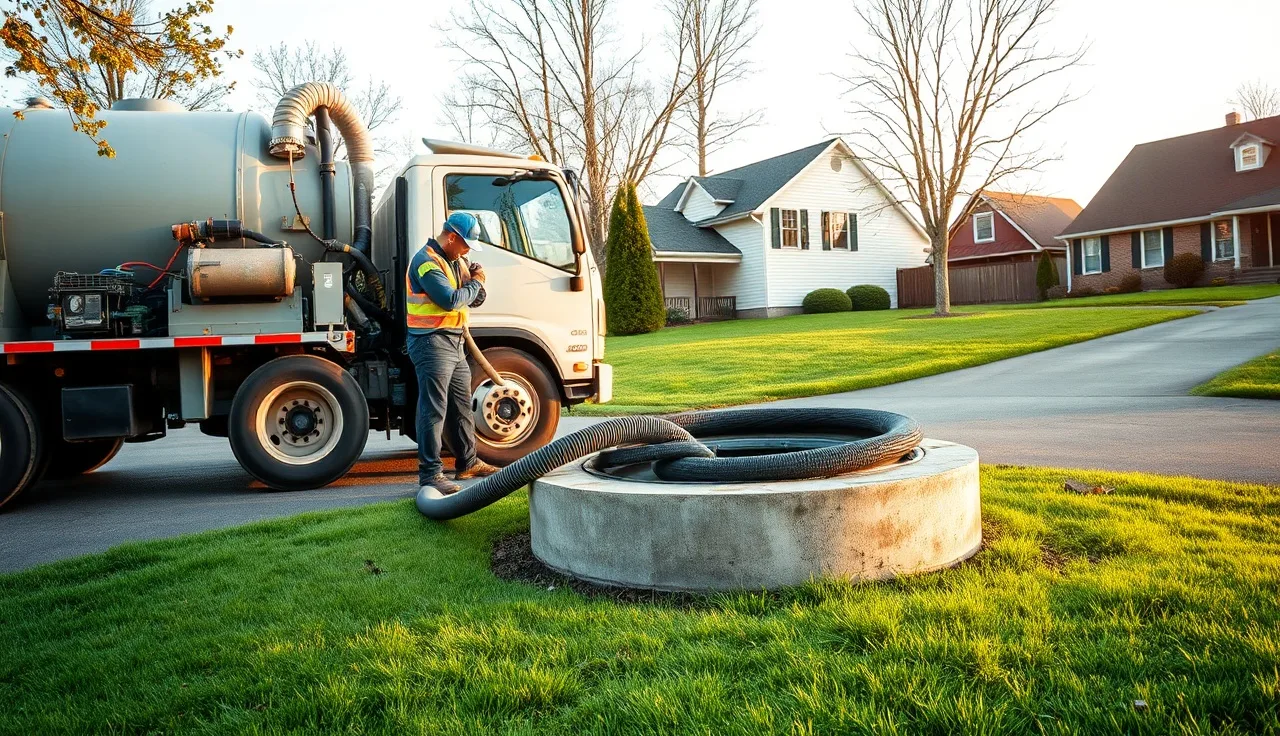
A septic pumping company, called a septage hauler or liquid waste transporter in most state codes, drives a vacuum truck to your property, finds your tank lids, and pulls out the sludge (the heavy solids on the bottom) and scum (the greasy layer on top) with a big hose. The liquid effluent in between comes out too. You need the tank mostly empty to inspect it and to break up any caked material stuck to the walls.
A single-compartment tank usually takes 30 to 60 minutes on site. A two-compartment tank takes longer. A thorough crew doesn't just suck and leave. They check the inlet and outlet baffles, look at the tank walls for cracks, and write down the sludge depth from before the pump-out so you have a baseline for the next visit.
Then the truck drives off with your septage and has to put it somewhere legal. In most states that means a licensed wastewater treatment plant or a permitted land-application site. The EPA's SepticSmart program treats improper septage disposal as a federal and state violation, so hire someone who can name where your waste ends up [1].
What types of companies pump septic tanks?
The market splits into a few groups, and knowing which one you're hiring matters more than you'd think.
Dedicated septic service companies. These are the specialists. They pump, inspect, repair, and sometimes install. Because the whole business runs on onsite wastewater, their techs know what a failing baffle looks like and can tell you if your drain field is showing early stress. If your system is older than 20 years, pay the modest premium for a specialist.
Plumbing companies with a septic division. A big regional plumber often bolts septic pumping on as an add-on. Quality is all over the map. Some employ certified operators. Others send a general plumber with a rented vacuum truck. Ask directly whether the person coming out holds a state pumper or septic technician license.
Portable-sanitation companies that also haul septage. These firms run port-a-potties and event restrooms, then move into residential septic because the truck fleet already exists. They can pump your tank fine. They're less likely to hand you a real inspection report.
National franchise networks. Roto-Rooter and Mr. Rooter operate directly in some metros and subcontract in others. The brand sets a quality floor, but you're still dealing with a local franchisee, so read that location's reviews specifically.
For a closer look at the actual pump-out service, see our guide to septic tank pump out.
How do you find licensed septic pumping companies in your area?
Your state's licensing or environmental agency is the best starting point. Every state that requires septage hauler licenses (which is basically all of them) keeps a public registry. Search "[your state] septage hauler license lookup" and it almost always turns up. Florida's Department of Health runs a septic contractor lookup by county [2], and the Texas Commission on Environmental Quality publishes licensed sewage hauler lists [3]. These tell you whether a company's license is current and whether it has any disciplinary history.
Four other sources are worth your time:
- Your local health department. County environmental health offices often keep their own list of approved haulers tied to the permits they issue.
- The National Association of Wastewater Technicians (NAWT) member directory. Members have completed standardized training [8].
- Google reviews from the last 12 months. Ignore older ones. Ownership and crews turn over fast in this trade.
- Neighbors on well-and-septic. Word from someone with the same soil who has used a company twice beats a star rating.
Walk away from any company that won't hand over its state hauler license number when you ask. That number is the proof they're legally allowed to haul septage on public roads. No number, no job.
How much do septic pumping companies charge?
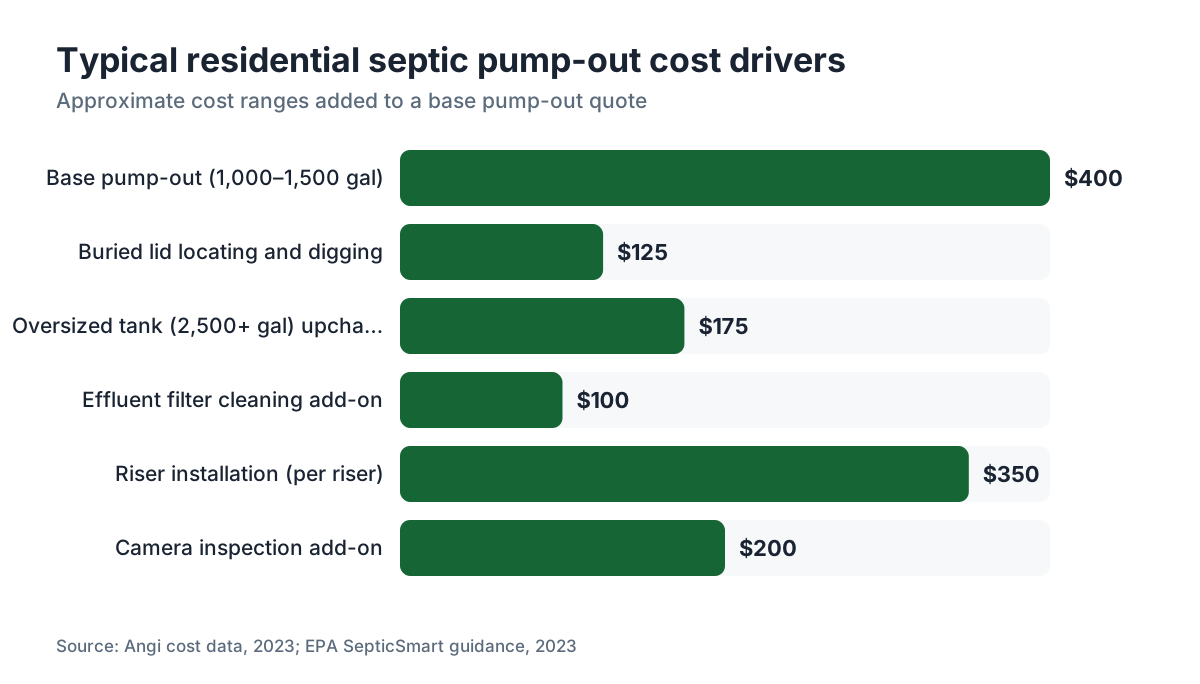
A standard residential pump-out runs $250 to $600 for a 1,000 to 1,500 gallon tank. The EPA's SepticSmart materials cite a similar range [1]. Angi's 2023 cost data, built from actual homeowner project reports, puts the average near $400 [4]. Treat both as a ballpark, not a quote, because real prices move on tank size, access, and local disposal fees.
Here's what pushes the price up:
- Tank size. A 2,500-gallon tank costs a lot more to empty than a 1,000-gallon one. Some companies charge by the gallon (roughly $0.20 to $0.40 a gallon); others charge flat with a size cap.
- Lid location and depth. Lids buried under 12 inches of soil or a deck mean a digging fee of $50 to $150 or more.
- Pumping frequency. A tank untouched for 10 years has compacted sludge that takes longer to break up. Some companies add an "extra heavy" charge.
- Inspection add-ons. A camera inspection or written condition report costs more, and it's worth doing every other pump-out on a system past 15 years.
- Location. Rural properties with long drives often carry a travel surcharge.
For the full cost picture, see our septic tank pumping cost guide.
One thing is a plain waste of money: paying extra for the enzyme or bacterial additives some crews try to sell you at the truck. The EPA says flatly that no scientific evidence supports the claim that these products are necessary for a working septic system [1]. Skip them.
How often should a company pump your tank?
The EPA recommends pumping every 3 to 5 years for a typical household [1]. That range is wide on purpose. The real answer depends on tank size, how many people live there, and what goes down the drains.
Forget the calendar. The actual rule is simpler: pump before the sludge and scum layers together fill more than about a third of the tank's working volume. A good company measures sludge depth on every visit with a "sludge judge" (a clear tube that shows where liquid ends and solids begin) and records the number. Penn State Extension treats that measurement as the accurate way to set pump-out timing [10]. After two or three visits, you have your own household's data instead of a generic guess.
A four-person house with a 1,000-gallon tank almost always needs pumping around every 3 years. A retired couple in the same house might stretch to 5 to 7. A vacation home used 8 weeks a year might go a decade. Our guide on how often to pump septic tank walks through the math.
What should a reputable septic pumping company do during the visit?
Pumping is the floor. A good company does more.
Before they pump, they find both access ports, inlet and outlet, not only the easy one. Pumping from a single port is faster for the crew and leaves sludge sitting in the other compartment. Ask up front whether they pump from both sides.
During the pump, a good tech notes the liquid level before the hose starts pulling. Normal operating level is fine. Flooded above the outlet pipe is a red flag for drain field backup, and you want to hear about it that day.
After pumping, they check the baffles. Baffles are the plastic or concrete T-shaped fittings that direct flow. When they fail, solids slip into the drain field and cause expensive damage. Replacing a bad baffle costs $100 to $300 and heads off a $5,000 to $20,000 drain field repair [5].
They leave you a written record: the date, gallons removed, the sludge depth before pumping, and the condition of everything they could see. That paperwork earns its keep when you sell the house or need to prove maintenance history at an inspection.
For what inspectors look for, see our septic tank inspection guide.
What are the red flags that a septic pumping company is bad?
Some are obvious. Others slip past homeowners.
No license number offered. Any legitimate hauler gives you a state license number in 30 seconds. If they dodge or say "we're registered, don't worry," hang up.
They pump from only one lid. Single-port pumping leaves a full compartment of sludge behind. You paid for a pump-out and got half of one.
They drive on your lawn without knowing where the tank is. A loaded vacuum truck weighs 40,000 pounds or more. Roll that over a buried tank or distribution box and you crack it. A careful company asks where your system sits or probes before driving.
Pressure washing the tank interior as a routine upsell. In almost every residential system, pressure washing the walls is pointless and can wipe out the bacteria doing the work. A few cases warrant it (certain failures, a pre-sale inspection on a very old tank), but routine washing is a margin builder, not a service.
No written receipt. Some outfits take cash and leave nothing behind. That's a compliance problem in states that require pumping records, and it leaves you with no proof of maintenance.
Dumping in an unknown location. Ask where your septage goes. "Our usual treatment plant" is a fine answer. A vague non-answer is not. Illegal dumping in a field, a ditch, or a wetland is still a live problem in some regions, and you don't want your tank to be the origin point.
How do you compare quotes from multiple septic companies?
Get at least three quotes for any pump-out, especially as a new customer with no relationship yet. Make sure each quote covers the same scope before you compare the numbers.
| What to compare | Why it matters |
|---|---|
| Whether both access lids are included | Single-lid jobs leave sludge behind |
| Lid-locating fee (if lids are buried) | Can add $75, $200 |
| Written condition report included? | Some charge extra for this |
| Disposal facility named | Confirms legal disposal |
| License number on the quote | Baseline legitimacy check |
| Travel/distance surcharge | Matters in rural areas |
The cheapest quote isn't automatically the worst pick. But a quote 40 percent below the others deserves a hard question: what's excluded? Usually the low number is a teaser for a small tank with easy access, and your real bill lands higher.
Some companies sell annual service contracts that bundle one pump-out per cycle plus priority scheduling. If you've found a company you trust, a multi-year agreement often saves 10 to 15 percent per visit and kills the yearly shopping chore.
Are there certifications or credentials that matter for septic pumping companies?
Yes, and they vary by state.
At the state level, most jurisdictions require a septage hauler license or liquid waste transporter permit. Some states, North Carolina among them, also require the individual technician to hold a certified pumper credential on top of the company license [6]. When you call, ask: "Does your technician hold a state septic or pumper certification?" The answer tells you a lot about the outfit.
At the national level, NAWT offers a Certified Pumper credential covering pumping procedures, safety, and system assessment through training and testing [8]. It's not required in most states, but it signals a company that invests in the craft.
Some states go further and require continuing education for renewal. The EPA's SepticSmart guidance tells homeowners to hire "a qualified professional" partly because inadequate pumping is one of the leading causes of premature drain field failure [1].
For operators tracking technician credentials and service records across a fleet, software like SepticMind keeps certification expiration dates and job documentation in one place so nothing slips.
One more credential to check on repairs: if the company offers to fix the tank or a baffle after pumping, ask whether they hold a separate installer or contractor license. That's distinct from the hauler license in most states. See our guide on septic tank repair for what that work involves.
What happens if your septic system needs more than just pumping?
Pumping is maintenance. It does not fix a failing system. Some companies blur that line because repairs pay better.
If the tech says the drain field is saturated and pitches a field restoration treatment or a new system, get the assessment in writing and get a second opinion from a licensed site evaluator or an environmental engineer before you spend a dime. Drain field problems are real and serious. A diagnosis from a pumping tech is a starting point, not a verdict.
Honest follow-up items that often come out of a pump-out include:
- Baffle replacement ($100, $300): routine and worth doing if it's deteriorated.
- Effluent filter cleaning or replacement ($50, $150 to clean, $100, $250 for a new filter): often needed on newer systems.
- Riser installation ($200, $500 per riser): brings the access point to grade so future pump-outs cost less. Worth doing once.
- Inlet or outlet line jetting ($150, $400): for partial blockages. Legitimate when there's an actual blockage.
For bigger concerns, see our guides on septic system repair and leach field issues. If the system is genuinely at end of life, the cost to install septic system guide has realistic replacement numbers.
How do septic pumping companies dispose of the waste legally?
This is more regulated than most homeowners realize. The EPA's 40 CFR Part 503 sets minimum national standards for the use and disposal of sewage sludge, including septage [7]. States pile their own rules on top, and in most cases the truck driver carries manifest paperwork showing where each load went.
Approved disposal routes generally include:
- Municipal wastewater treatment plants that accept septage. Not all do. Capacity and pre-treatment requirements vary.
- Permitted land application sites, where septage goes onto farm fields as a soil amendment under pathogen-reduction and setback rules.
- Commercial composting operations at facilities permitted for this waste stream.
So when you ask "where does my waste go," a legitimate answer names a specific facility or a specific permitted farm. The EPA notes illegal septage dumping contaminates groundwater and surface water and violates the Clean Water Act [7]. That's not abstract. It's a real enforcement issue in rural regions with thin disposal infrastructure.
The question doubles as a vetting filter. Legitimate operators answer it without a pause.
How do I prepare for a septic tank pumping appointment?
A little prep on your end speeds the job and protects your yard.
First, know where your tank is. If you don't, your county health department may have a septic permit on file with a diagram. If not, the pumping company can locate it (sometimes for a fee) with a probe rod or electronic locator. A septic tank inspection report that maps the system is worth buying once so you have the layout for good.
Second, mark any underground utilities, irrigation lines, or shallow structures between the street and the tank. The driver has to park the truck and run a hose, and most hoses reach 100 feet, not 200.
Third, make the lids reachable. Mow the area and flag the spot. If you already know the lids are buried, say so when you book so the company brings digging tools and blocks out the time.
Fourth, keep kids and pets inside during the visit. The gear is loud and an open tank is a real hazard.
Last, skip the laundry and dishwasher the morning of the appointment if you can. A surge of water right before pumping raises the liquid level and dilutes the sludge, which throws off the depth reading. For everything that goes into a full clean-out, see our septic tank cleaning overview.
Frequently asked questions
How do I find a septic pumping company in my area?
Start with your state's environmental or health department website and search for a licensed septage hauler registry. Most states publish these as public records. Your county health department often keeps a local list too. After confirming a current license, check Google reviews from the last 12 months and ask neighbors on well-and-septic systems for referrals.
What does a septic company charge to pump a tank?
A standard residential pump-out costs $250 to $600 for a 1,000 to 1,500 gallon tank. Angi's aggregated homeowner data puts the average around $400. Larger tanks, buried lids, long drives, or heavily compacted sludge from infrequent pumping all push the price up. Get three quotes and confirm each one covers pumping from both access ports, more than one.
How often do I need to have my septic tank pumped?
The EPA recommends every 3 to 5 years for a typical household. The real trigger is sludge depth: pump before sludge and scum together fill about a third of the tank's volume. A two-person household with a large tank might safely go 7 years; a large family in a small house might need pumping every 2. Ask your pumper to record sludge depth so you can build your own schedule.
Are septic pumping companies regulated?
Yes. Every state requires septage haulers to hold a license or permit to transport liquid waste on public roads and to discharge at approved facilities. Federal EPA rules under 40 CFR Part 503 set minimum standards for septage disposal. Many states add installer and technician certification requirements on top. Always ask a company for its state license number before hiring.
What is the difference between septic pumping and septic cleaning?
Pumping removes sludge and scum from the tank. Cleaning usually means the same thing in everyday use, though some companies use "cleaning" to imply a fuller service that includes checking baffles, cleaning the effluent filter, and sometimes rinsing the tank walls. Ask what's included. Routine pressure-washing of tank walls is generally unnecessary and not worth paying extra for.
Can a septic pumping company tell me if my drain field is failing?
A pumping tech can flag warning signs, like a tank flooded above the outlet pipe before pumping, which suggests the drain field isn't absorbing effluent. But they can't definitively diagnose a drain field from the tank alone. For a real assessment you need a licensed site evaluator or engineer who can run a load test or soil investigation. Treat a pumper's drain field concern as a reason for a second opinion, not an automatic repair order.
Should I use a national franchise or a local septic company?
Both can do good work. National franchises offer a brand-floor consistency and easy scheduling, but you're dealing with a local franchisee whose quality varies. A local independent with a long track record in your county often knows the soil types, common system layouts, and disposal facilities better. Check the specific location's reviews either way. License status matters more than the logo on the truck.
What questions should I ask before hiring a septic pumping company?
Ask: What's your state hauler license number? Do you pump from both access ports? What disposal facility do you use? Do you leave a written service report? Does the technician hold an individual pumper or septic technician certification? What's included in the price, and what costs extra? These take two minutes and filter out most of the bad actors.
How long does a septic pump-out take?
For a single-compartment 1,000 to 1,500 gallon tank with accessible lids, plan on 30 to 60 minutes from arrival to departure. A two-compartment tank, buried lids that need digging, or a tank packed with compacted sludge from years of deferred maintenance can stretch that to 90 minutes or more. Travel time is separate and affects when they show up.
What should a septic pumping company leave me with after the visit?
A written service receipt showing the date, address, estimated gallons removed, pre-pump sludge depth reading, condition of the inlet and outlet baffles, and any issues observed. Some companies also note the liquid level before pumping and whether the effluent filter was cleaned. This record matters for resale disclosure, insurance claims, and scheduling the next pump-out.
Is it worth getting a septic inspection when you pump?
Generally yes, especially for systems over 15 years old or before buying a home. A basic visual inspection during pumping costs little or nothing extra and catches deteriorated baffles (a $100 to $300 fix that prevents much larger drain field damage). A camera inspection of the outlet line is an optional add-on worth doing every second or third pump-out on an aging system.
Do septic pumping companies offer service contracts or maintenance plans?
Many do, and they're often worth considering once you've found a company you trust. A typical contract covers one scheduled pump-out per cycle (every 1 to 3 years depending on household size), priority scheduling, and sometimes discounted repairs or inspections. Annual contracts usually save 10 to 15 percent per visit and take the remembering-to-call chore off your plate.
What happens if I wait too long to pump my septic tank?
Sludge builds up past the outlet baffle and starts flowing into the drain field, where it clogs the soil pores. Once that happens you're looking at field restoration or full replacement, which costs $5,000 to $20,000 or more, versus a $250 to $600 pump-out. The EPA's SepticSmart program names infrequent pumping as one of the top causes of premature system failure.
Sources
- U.S. EPA, SepticSmart program homeowner guidance: EPA recommends pumping every 3 to 5 years; states no scientific evidence supports septic additives; notes improper septage disposal violates federal and state law; recommends qualified professionals for pumping; names infrequent pumping as a top cause of premature drain field failure
- Florida Department of Health, Environmental Health: Florida maintains a public lookup for licensed septic contractors by county
- Texas Commission on Environmental Quality, Licensing: Texas TCEQ publishes licensed sewage hauler lists as a public record
- Angi, Septic Tank Pumping Cost Guide (2023): Angi aggregated homeowner project data puts average septic pump-out cost around $400
- University of Minnesota Extension: Failed baffles allow solids to reach the drain field; baffle replacement is $100 to $300 and prevents expensive field damage
- North Carolina Department of Environmental Quality: North Carolina requires individual certified pumper credentials in addition to the company hauler license
- U.S. EPA, Biosolids Laws and Regulations (40 CFR Part 503): Federal 40 CFR Part 503 sets minimum national standards for septage disposal; illegal dumping violates the Clean Water Act
- National Association of Wastewater Technicians (NAWT), Certified Pumper Program: NAWT offers a nationally recognized Certified Pumper credential covering pumping procedures, safety, and system assessment, and maintains a member directory
- Penn State Extension: Sludge depth measurement using a sludge judge is the accurate method for determining pump-out frequency
Last updated 2026-07-09