Commercial grade septic tank treatment: what actually works
By the SepticMind Editorial Team

TL;DR
- Commercial grade septic tank treatment products pack 100 billion to several trillion CFU per dose, far above retail formulas.
- They help keep bacterial populations active between pump-outs, but they do not replace pumping and cannot rescue a failing drain field.
- The EPA warns against additives as a substitute for regular maintenance.
- Choose products by third-party CFU verification and enzyme activity data, not marketing.
What does 'commercial grade' actually mean for septic treatments?
There is no federal definition of 'commercial grade' for septic additives. Manufacturers use the term to signal a higher concentration of active bacteria, a broader enzyme profile, or a formula built for high-use systems like restaurants, campgrounds, and RV parks instead of single-family homes. The one difference that carries real weight is the colony-forming unit count per dose.
Retail products at hardware stores usually run 1 billion to 10 billion CFU per packet or ounce. Products sold to service operators and commercial properties often land between 100 billion and 2 trillion CFU per dose, sometimes higher. That gap matters. A septic tank is an active anaerobic environment, and any bacteria you add face immediate competition from resident microbes, pH swings from cleaning chemicals, and temperature changes. A higher starting count gives introduced strains a better shot at settling in before they get outcompeted or flushed toward the drain field. [1]
Enzyme concentration is the other number worth watching. Commercial formulas carry higher activity units of cellulase (breaks down paper and plant matter), protease (proteins and greases), lipase (fats and oils), and amylase (starches). A restaurant grease trap or school kitchen produces a waste profile nothing like a residential tank, and the enzyme blend has to match it. Residential retail products rarely carry enough lipase to stay ahead of a commercial kitchen load.
One honest caveat: almost no independent, peer-reviewed testing of specific commercial products exists. The EPA's Onsite Wastewater Treatment Systems Manual says research on biological additives has produced 'mixed results,' with some studies showing modest gains in effluent quality and others showing no detectable difference. [2] That uncertainty should shape your expectations. These products can help maintain a healthy microbial community. They cannot fix structural problems or replace the mechanical removal of solids.
Do septic tank treatments actually work, or are they a waste of money?
Honest answer: it depends what you mean by work. The science broadly supports the idea that biological additives raise bacterial diversity and enzyme activity inside a tank. A 2014 study in the Journal of Environmental Quality found biological additives improved total nitrogen removal and volatile solids reduction against untreated controls. [3] That's a real, measured benefit. The same body of research also shows, over and over, that additives don't cut sludge accumulation fast enough to stretch out pump-out intervals.
Chemical additives are a different animal, and not a friendly one. Products with solvents, acids, or hydrogen peroxide can eat tank walls, kill the anaerobic bacteria you want, and shove partially dissolved solids into the drain field where they clog soil pores. The EPA's SepticSmart guidance is blunt: 'Household chemicals like paint thinner and other solvents can destroy the biological digestion taking place within your system.' [4] That warning covers some commercial 'shock treatment' products too.
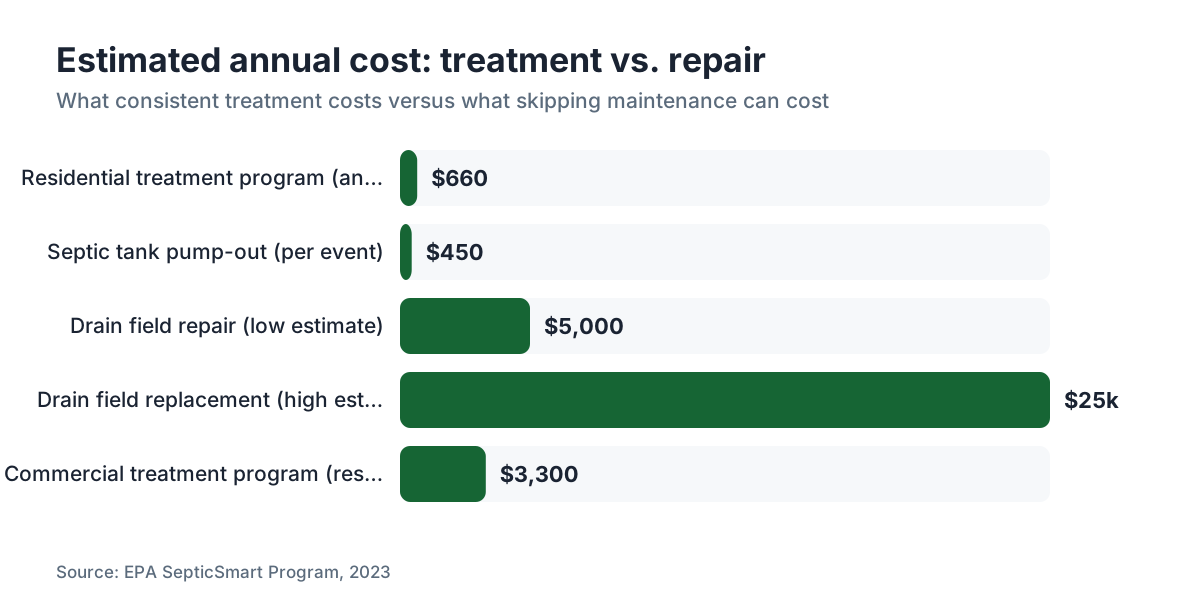
For biological products (bacterial and enzymatic formulas), here's the honest summary. They help maintain a functioning system and earn their keep after a household member finishes an antibiotic course, after a long vacancy, or after a heavy cleaning-chemical event that knocks back the tank's microbes. They are not a maintenance shortcut. Used consistently in a well-kept system, they cost $50 to $200 per year depending on formula and dosing, which is cheap insurance when a leach field replacement runs $5,000 to $25,000. [5]
Where commercial treatments earn their price is high-load work: restaurant grease traps, food processing plants, RV dump stations, and any system soaking up heavy surfactant or disinfectant loads. In those settings the native bacteria live under constant chemical stress, and dosing a high-CFU commercial product makes a measurable operational difference.
What types of commercial septic treatment products are on the market?
The market splits into four categories, and picking the wrong one can hurt your system.
Biological (bacterial) additives are the most defensible category. They carry live or dormant facultative and anaerobic bacteria, usually Bacillus species that are spore-forming and shelf-stable, sometimes blended with Lactobacillus or proprietary strains. Dose monthly or quarterly by load. This is what most reputable operators reach for.
Enzymatic additives contain purified enzymes and no live bacteria. They break down specific substrates fast, handy for targeted problems like grease buildup, but the enzymes degrade over days to weeks and don't self-replicate the way bacteria do. Many commercial products blend both for a quick initial hit plus lasting activity.
Chemical additives include surfactant 'liquefiers,' solvent-based drain openers, and oxidizers. Avoid these in any septic system. University extension guidance on septic maintenance is consistent that chemical additives can harm both the tank bacteria and the soil in the drain field. [6] Some are outright banned for septic use under state rules.
Yeast-based products (often homemade recipes involving baker's yeast flushed monthly) have thin evidence supporting them and thin evidence of harm. Not worth your money when real bacterial products exist.
| Category | Active Ingredient | Typical CFU/Dose | Evidence Level | Risk |
|---|---|---|---|---|
| Biological (Bacillus) | Live/spore bacteria | 100B to 2T | Moderate positive | Very low |
| Enzymatic | Purified enzymes | N/A | Moderate positive for grease | Very low |
| Chemical solvent | Methylene chloride or acids | N/A | No benefit shown | High, damages system |
| Oxidizer | Hydrogen peroxide | N/A | No benefit shown | Moderate, kills microbes |
| Yeast | Saccharomyces cerevisiae | Low | Anecdotal only | Very low |
For a commercial property, the practical pick is a high-CFU biological product with a multi-enzyme blend, dosed on a schedule tied to tank volume and daily flow.
How often should commercial systems be dosed with treatment products?
Dosing frequency comes down to three things: tank volume, daily hydraulic load, and the biological stress the system takes from cleaning chemicals or antibiotics.
For a standard residential system (1,000 to 1,500 gallons) on a commercial-grade product, a monthly dose of 50 to 100 billion CFU holds bacterial populations steady under normal load. If someone in the house just finished a two-week antibiotic course, a heavier dose right after the course ends makes sense, then back to the monthly rhythm.
Commercial applications swing wider. A restaurant putting out 200 to 400 gallons of wastewater a day, with heavy grease and surfactant loads from kitchen cleaning, usually needs weekly dosing to keep biology stable between professional grease trap services. Campground and RV park systems, where the crowd using the system rises and falls by season, often do best with an 'activation dose' (3 to 5 times the normal amount) at the start of peak season, then weekly or bi-weekly maintenance doses through the busy months.
One thing operators overlook: dose when the system is at low flow, usually overnight, so bacteria have time to colonize before the next heavy flush. Flushing a dose at 7 AM on a Monday in a busy commercial building sends most of the introduced bacteria toward the drain field before they can establish. [10]
None of this changes pump-out frequency. A commercial system under heavy load still needs septic tank pumping at whatever interval its permit and real sludge accumulation dictate, which for busy properties can be every 3 to 12 months. Treatment maintains biology. Pumping removes the solids biology can't digest away.
What CFU count should you actually look for in a commercial product?
This is where the marketing gets slippery. A label screaming '2 trillion CFU' sounds impressive, but the number only means something if it's third-party verified and the organisms are the right species for anaerobic digestion.
For a residential tank treated monthly, a product delivering 50 to 100 billion CFU per dose from a Bacillus-dominant blend does the job. Below that, you're paying for water and filler. For a commercial or institutional system under constant load, look for 200 billion to 1 trillion CFU per maintenance dose, with the option to hit a higher activation dose at startup or after a disruption. [11]
Species matter as much as count. Bacillus subtilis and Bacillus licheniformis are the most-used and best-studied strains for septic work. They're spore-forming, so they survive the shelf and tolerate brief oxygen exposure during handling. Skip products that list only a 'proprietary bacterial blend' without naming species. That's a red flag.
Ask vendors for a Certificate of Analysis (COA) from a third-party lab confirming the CFU count at manufacture and the shelf-life projection. Reputable commercial suppliers hand these over. Shelf life counts because spore populations decay over time, and a product that sat in a warehouse 18 months may deliver a fraction of its labeled potency by the time you dose it.
Operators who run multiple properties and need a way to track treatment schedules, product usage, and system status across accounts may find field software like SepticMind useful for stopping the missed doses that let a commercial system slide between service visits.
Are commercial septic treatments regulated, and what do states require?
Federal oversight of septic additives is thin. The EPA does not approve or certify septic treatment products. The Clean Water Act regulates discharges from wastewater treatment systems, but it doesn't reach into what additives a homeowner or operator drops into a tank. [7]
State regulation is where the action is, and the patchwork runs deep. Some states restrict or prohibit certain additives outright:
- Washington State prohibits chemical additives in onsite sewage systems under WAC 246-272A. [8]
- Wisconsin requires that any commercial additive used in a permitted septic system not harm the system or its receiving environment, which effectively bans solvent-based products.
- Florida and California set specific rules on what can go into septic systems in sensitive recharge zones and near coastal waters.
Before you buy any commercial treatment for a permitted system, check your state's onsite wastewater program requirements. Most state environmental agency websites list approved or prohibited product categories, and the EPA's septic pages point you toward those state programs. [7]
Commercial properties face extra scrutiny because their permits often carry conditions on effluent quality and reporting. A food service facility using an industrial enzyme treatment to manage grease trap performance may need to document that practice as part of its compliance record. Call the county environmental health office before you lock in a product protocol.
During a septic tank inspection, some inspectors will ask what treatment products you've used as part of the system history, especially on commercial systems where chemical use runs more varied.
Can commercial treatments save a failing drain field?
No. This is the single most important thing to say plainly, and the industry has an ugly history of products sold on exactly this false promise.
A failing leach field usually got there through biomat buildup (an anaerobic layer of sludge and microbial debris clogging soil pores), hydraulic overload, structural damage, or root intrusion. No biological additive reverses biomat that has already choked the soil pores. The physics don't allow it. Pouring high-CFU bacteria into a saturated, failing drain field gets you the same result as pouring them into a flooded yard: the bacteria can't restore soil permeability.
Some soil rehabilitation techniques can sometimes recover a moderately clogged field. Aerobic treatment units (ATUs) produce higher-quality effluent that can slowly let biomat decompose over months to years. Resting a drain field (diverting flow to an alternate field, if one exists) can let aerobic soil bacteria recover over 6 to 12 months. Neither is an additive-based fix.
If your drain field is wet, surfacing effluent, or throwing sewage odors, you need a septic system repair evaluation from a licensed professional, not a bucket of bacteria. Nursing a failing field along with treatment products usually just delays the diagnosis and runs up the eventual repair bill.
The honest role for commercial treatments is prevention, not rescue. A well-kept tank with healthy bacterial populations produces better effluent, which protects the drain field over the long haul. That's the case for consistent treatment, and it's a sound one.
What's the real cost of commercial grade treatment programs?
Costs move with system size and product tier, but here are realistic numbers.
For a residential system on a monthly commercial-grade protocol, expect $30 to $80 per month, or $360 to $960 a year. Buying a full year at once usually knocks 20 to 30 percent off the per-dose cost. That's a small slice of the $300 to $600 typical cost of septic tank pumping every three to five years, and a rounding error next to drain field replacement. [5]
Commercial properties flip the math. A restaurant with a 2,000-gallon grease trap on weekly dosing might spend $150 to $400 per month on a high-CFU product. That's $1,800 to $4,800 a year. Set that against an emergency grease trap pump-out at $800 to $2,000 per event, or a failed leach field at $10,000 to $30,000, and the treatment budget looks cheap.
Operators running multiple commercial accounts can fold treatment cost into a service contract. Many offer 'maintenance plan' pricing that bundles monthly dosing with scheduled pump-outs, a cleaner revenue model than waiting for emergency calls. SepticMind's operator tools include scheduling and route management that make bundled service programs easier to run across a customer base.
Here's a rough cost comparison by system type and treatment approach:
| System Type | System Size | Product Cost/Month | Annual Treatment Cost |
|---|---|---|---|
| Residential, standard | 1,000 gal | $30 to $60 | $360 to $720 |
| Residential, high use | 1,500 gal | $50 to $80 | $600 to $960 |
| Small commercial | 2,000 gal | $80 to $150 | $960 to $1,800 |
| Restaurant/food service | 3,000+ gal | $150 to $400 | $1,800 to $4,800 |
| RV park/campground | Varies | $200 to $600 | $2,400 to $7,200 |
How do commercial treatments compare to just pumping more frequently?
This is a real trade-off worth thinking through. Septic tank pumping is the only intervention that physically removes accumulated solids from the tank. Treatment products can't replace it. But the two aren't rivals. They work together.
The case for more frequent pumping: it removes biosolids, lowers the biological oxygen demand hitting the drain field, and gives you a physical look inside the tank on every visit. For a residential system with four or five occupants, pumping every two years instead of every three to four adds roughly $150 to $200 a year but cuts sludge-loading risk hard. [9]
The case for treatment plus standard pumping intervals: a healthy microbial population in the tank improves effluent quality (lower biochemical oxygen demand, better suspended solids removal) before wastewater reaches the field. That protects the field's long-term permeability, and it's arguably more protective than frequent pumping alone if the field is already getting decent effluent.
For most residential systems, pumping every three to five years (by household size, per EPA SepticSmart guidance [4]) plus consistent biological treatment is the lowest-cost, lowest-risk path. For commercial systems under high load, more frequent pumping (sometimes quarterly) plus weekly dosing is basically mandatory to stay ahead of solids and grease.
One thing pumping gives you that no additive can: a direct look at tank condition, the inlet and outlet baffle state, and the scum and sludge layer thickness. That inspection data is how you catch problems early. See the septic tank inspection guide for what to ask for during each pump-out.
Which commercial treatment products do septic professionals actually use?
Operators are pragmatic about this. The products with the strongest professional following are the ones with verified CFU counts, real enzyme activity data, and a track record of causing no trouble. A few names come up over and over in operator talk: Roebic, Bio-Active, Rid-X Professional (the contractor tier, not the retail box), and various private-label products moving through pump truck supply companies.
What operators steer clear of: anything sold as a 'drain field restorer,' anything with solvents or hydrogen peroxide, and any product whose maker can't or won't hand over a Certificate of Analysis. The 'restorer' category in particular has a history of legal action and state-level bans over false efficacy claims.
For grease-heavy commercial work, enzyme-forward products with high lipase and protease activity are the standard. Some operators pair a biological maintenance dose with a periodic enzyme shock treatment timed to low-use windows (overnight, weekends) for faster grease digestion without wrecking the tank's bacterial balance during peak flow.
The honest operator consensus: consistent treatment with a reliable product beats chasing the biggest CFU number on the label. A 200-billion CFU product dosed reliably every month outperforms a 2-trillion CFU product dosed whenever someone remembers to buy it. Schedule and consistency are the variables that actually move outcomes, which is why operators who run structured maintenance programs see better system longevity across their customers than the ones who only answer emergency calls.
What mistakes do people make with commercial septic treatments?
A few patterns show up again and again.
The biggest: expecting treatment to substitute for pumping. People read the marketing ('keeps your system healthy, reduces pump-out frequency') and stop scheduling septic tank pump-out service. Solids pile up, scum thickens, baffles get overwhelmed, and the drain field starts taking progressively worse effluent. By the time the field shows symptoms, the system is already in trouble.
Second most common: dosing right after heavy antibiotic or disinfectant use without bumping the dose up. If someone just poured three jugs of bleach down the drains cleaning up after a norovirus outbreak, the tank's bacteria took a hit. A standard monthly dose may not rebuild a healthy population fast enough. A double or triple dose in the week after a big antimicrobial event makes far more sense.
Third: flushing treatment during peak flow. As noted above, morning rush in a commercial building, or the first flush after a busy weekend at home, sends the bacteria toward the field before they can settle and colonize. Dose overnight or during a confirmed low-flow window.
Fourth: buying on price alone. The cheapest products often carry no third-party CFU verification. A $10 product with unverified claims may deliver essentially zero active bacteria. Now you've spent money for nothing and carry false confidence that your system is covered.
For septic tank cleaning, physical cleaning of the tank interior during a pump-out stays necessary no matter how well-treated the system is. Treatment maintains biology. Cleaning removes the physical buildup that biology can't fully break down.
Frequently asked questions
Is commercial grade septic treatment safe for all types of septic systems?
Biological and enzymatic commercial treatments are safe for conventional gravity systems, aerobic treatment units, mound systems, and chamber-style drain fields. They don't interfere with ATU mechanical parts or media. Chemical additives, especially solvent-based ones, are not safe for any septic system and are banned for septic use in several states including Washington. Confirm compatibility with your system type and local regulations before using any additive.
How long does it take for commercial septic bacteria to start working?
Spore-forming Bacillus bacteria usually activate within 24 to 72 hours in a warm, moist tank. Measurable increases in enzyme activity and BOD reduction in the effluent have shown up within 3 to 7 days in controlled studies. Full colonization to a stable new population takes 2 to 4 weeks of consistent dosing. Don't expect overnight results, especially if antibiotics or disinfectants recently disrupted the tank's existing bacterial community.
Can I use commercial septic treatment products in a grease trap?
Yes, and it's one of the strongest evidence-backed use cases. Grease traps in commercial kitchens accumulate fats, oils, and greases (FOG) that overwhelm standard bacterial populations. High-lipase enzymatic and bacterial products dosed weekly can extend the interval between required pump-outs and cut backup risk. Some municipalities require proof of treatment as part of grease trap permits. Check local FOG ordinances before starting a program.
Does the EPA recommend or endorse any specific septic treatment products?
No. The EPA does not approve, certify, or endorse any commercial septic additive. The EPA's SepticSmart program recommends regular pumping and water conservation as the base of septic maintenance and warns against using additives as a substitute for scheduled pump-outs. The EPA's position is that biological additives may offer some benefit but the evidence is mixed, and no product has earned an official endorsement.
How do I know if a commercial treatment product is high quality?
Ask the supplier for a Certificate of Analysis (COA) from a third-party lab confirming CFU count, species identification, and shelf-life projection. Reputable products name specific Bacillus species (subtilis, licheniformis, amyloliquefaciens) instead of vague 'proprietary blend' language. Verify enzyme activity units are listed for lipase, protease, amylase, and cellulase. Avoid any product that can't produce third-party testing on request.
Can commercial septic treatment reduce how often I need to pump my tank?
Probably not by much. The EPA and most state onsite wastewater programs base pumping on household size and tank volume, typically every 3 to 5 years for residential systems. Biological treatments improve effluent quality and microbial health but don't sharply cut sludge accumulation. Some studies suggest modest gains, not enough to safely skip pump-outs. Treat and pump on schedule; don't use one to justify skipping the other.
What happens if I overdose my septic tank with treatment bacteria?
Overdosing with a biological product carries very low risk. Septic tanks are naturally buffered, and excess introduced bacteria either die off or get flushed into the drain field as spores, where they pose no known harm. You won't damage the system by using twice the recommended dose. That said, chronic overdosing wastes money with no added benefit once the tank's population reaches saturation. Follow the manufacturer's dosing after any initial activation period.
Are there states where commercial septic additives are banned or restricted?
Yes. Washington State prohibits chemical additives in onsite septic systems under WAC 246-272A. Wisconsin, Massachusetts, and several other states restrict or prohibit solvent-based or oxidizer products. Some states require that any additive used in a permitted system not harm soil or groundwater. Check your state's environmental health or onsite wastewater program rules before purchasing, especially for commercial systems running under a permit with compliance conditions.
What's the difference between commercial grade and retail septic treatments sold at hardware stores?
The main differences are CFU concentration and enzyme activity. Retail products like Rid-X typically carry 1 billion to 10 billion CFU per dose. Commercial-grade products sold through service operators or specialty distributors deliver 100 billion to 2 trillion CFU per dose with higher enzyme activity per gram. Commercial products also tend to come with documented third-party verification, bulk packaging, and formulas tailored to specific waste types like high-grease or high-surfactant environments.
Can I use commercial septic treatment in an RV or boat holding tank?
Yes. High-CFU biological products work in holding tanks, though the dynamics differ from a ground-installed septic system. RV holding tanks are smaller (typically 20 to 50 gallons), emptied more often, and often sit unused for weeks. Use a maintenance dose after each pump-out or at the start of a trip. Avoid formaldehyde-based RV tank deodorizers, which kill bacteria and are banned for septic use in most states.
How do commercial properties track septic treatment program compliance?
Most commercial properties under local health department permits should keep a maintenance log documenting pump-out dates, treatment product use, and any system issues. Some permits require this as part of annual compliance reporting. Operators servicing multiple commercial accounts often use field service software to log treatment dates, product batch numbers, and dosing amounts per property. That documentation also protects the operator if a system problem arises and a client questions the maintenance history.
Do commercial septic treatments help with septic odors?
Sometimes, yes. Odors from the tank or venting system usually signal incomplete anaerobic digestion, often because the bacterial population is stressed or depleted. Rebuilding a healthy community through consistent biological treatment can reduce odor over 2 to 4 weeks. But odors can also come from structural problems like a cracked baffle, blocked vent pipe, or failing drain field, none of which any treatment product fixes. If odors persist after 30 days of treatment, get a physical inspection.
Sources
- EPA, Onsite Wastewater Treatment Systems Manual (EPA/625/R-00/008): Research on biological additives for septic systems has produced mixed results; higher CFU concentrations improve odds of colonization against competition from existing microbial populations.
- EPA, Onsite Wastewater Treatment Systems Manual: EPA notes biological additive research has produced mixed results, with some studies showing modest effluent improvement and others showing no detectable difference.
- Journal of Environmental Quality (Wiley/ACSESS), 2014 study on biological additives and nitrogen removal in onsite systems: Biological additives improved total nitrogen removal and volatile solids reduction compared to untreated septic system controls.
- EPA SepticSmart Program, homeowner guidance: EPA SepticSmart states: 'Household chemicals like paint thinner and other solvents can destroy the biological digestion taking place within your system.'
- EPA, Care for Your Septic System (homeowner guidance): Drain field replacement costs can range from $5,000 to $25,000 depending on system size and soil conditions; EPA recommends pumping every 3 to 5 years for residential systems.
- University of Minnesota Extension, Septic System Owner's Guide: University extension guidance states that chemical additives can harm the beneficial bacteria in the tank and the soil in the drain field.
- EPA, Septic Systems program (state onsite wastewater program information): EPA does not approve or certify septic additive products; regulation occurs at the state level under state onsite wastewater programs.
- Washington State Department of Health, WAC 246-272A Onsite Sewage Systems: Washington State prohibits the use of chemical additives in onsite sewage systems under WAC 246-272A.
- EPA, Care for Your Septic System (inspect and pump frequently): EPA recommends septic tanks be pumped every 3 to 5 years for a household of four with a 1,000-gallon tank; more frequent pumping reduces drain field loading risk.
- University of Minnesota Extension, Septic System Owner's Guide: Consistent biological treatment dosing during low-flow periods increases bacterial colonization success compared to dosing during peak flow events.
- North Carolina State University Extension, home septic system maintenance: Commercial-grade biological products with verified Bacillus species at 100B+ CFU per dose are appropriate for high-use and commercial septic applications.
Last updated 2026-07-09