Septic inspection in Bayport: what to expect, what it costs, and what can go wrong
By the SepticMind Editorial Team
TL;DR
- A septic inspection in Bayport, NY runs $300, $600 for a standard visual or operational inspection, and $400, $900+ if the inspector pumps and probes the tank.
- Inspectors check tank condition, inlet and outlet baffles, the distribution box, and the drain field.
- Suffolk County has its own onsite wastewater rules, and most home sales require at least an operational inspection before closing.
What exactly is a septic inspection in Bayport?
A septic inspection is a professional look at every part of your onsite wastewater system: the tank, the baffles, any pump or distribution box, and the drain field. Bayport sits in the Town of Islip in Suffolk County, and that puts your system inside one of the more regulated onsite wastewater jurisdictions in New York State. The density and the groundwater here drive the rules.
There are three inspection types you'll hear about. A visual inspection is the lightest: the inspector finds the tank, pulls the lid, and looks for obvious problems without pumping. An operational inspection (sometimes called a Title V equivalent, though that's Massachusetts terminology that leaked into Long Island real estate talk) runs water through the system while the tank is open, so the inspector can watch how it flows. A full pump-and-inspect is what it sounds like: the tank gets pumped first, then every interior surface and component gets examined.
For a home sale in Bayport, buyers almost always want an operational or full pump-and-inspect. A visual alone tells you almost nothing.
Inspectors in Suffolk County work under the county's Article 19 sanitary code, and they typically carry additional New York State Department of Environmental Conservation credentials for handling effluent. Don't hire anyone who can't show you both.
How much does a septic inspection cost in Bayport?
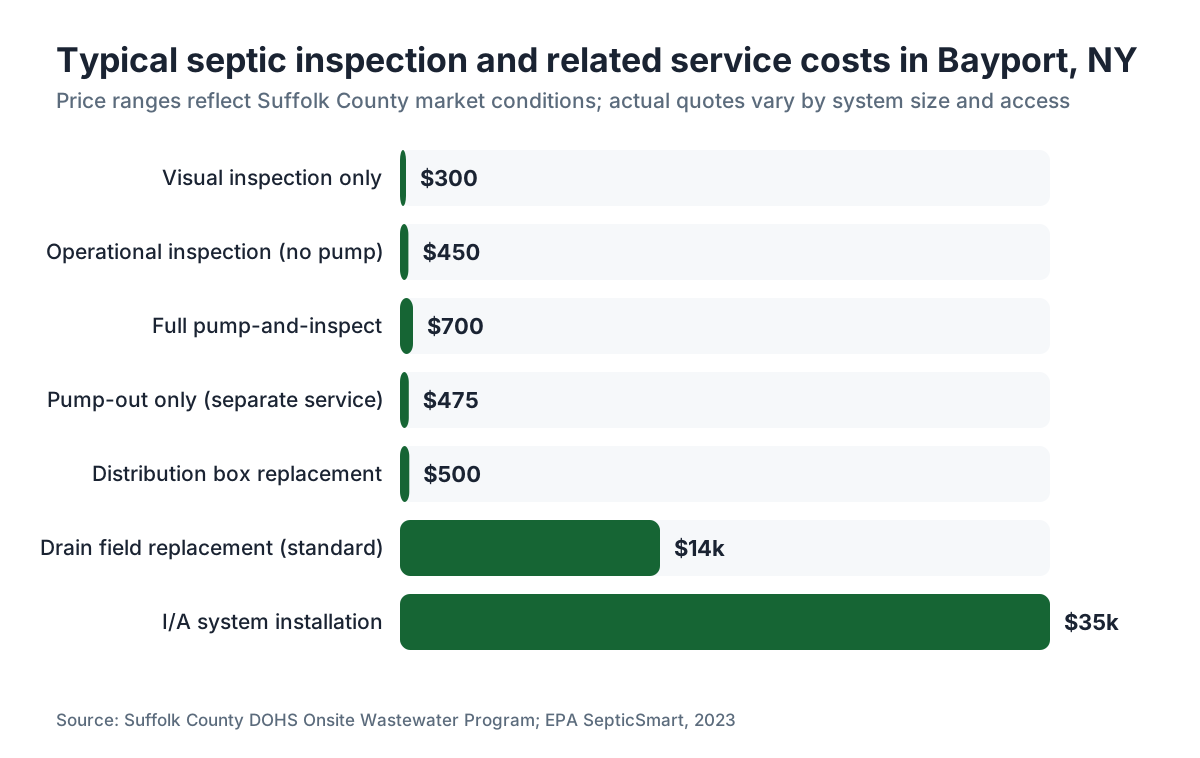
A standard operational inspection in Bayport without pumping runs $300 to $600. Add pumping and the scope jumps to $400, $900 or more. Pumping a tank in Suffolk County on its own costs $350, $600 depending on tank size and access [1], so bundling the two usually earns you a small discount.
A few things push the price higher. A tank buried more than 18 inches needs hand or mechanical excavation to expose the lid, which adds $75, $200. A pump chamber or a pressure-dosed system means extra time to evaluate those parts, and the inspector charges for it. If nobody knows where the drain field is, some inspectors bill separately for a locate-and-flag service.
Suffolk County's Article 19 inspection requirement for real estate transfers doesn't set a fee schedule, so pricing is market-driven. Get at least two quotes. Ask specifically whether each quote includes pumping, lid excavation, and a written report.
The written report is the whole point. A good one names the tank material (concrete, fiberglass, or steel), the age if known, baffle condition, effluent level, any signs of surfacing in the drain field, and a pass/fail opinion. A verbal thumbs-up with no paper is worth nothing at closing.
What does a Bayport septic inspector actually check?
The inspection starts at the house. The inspector looks at where the building sewer exits the foundation and traces it toward the tank. Cracks, offset joints, or root intrusion here cause backups that have nothing to do with the tank itself.
At the tank, these are the key items:
| Component | What they're looking for |
|---|---|
| Tank walls and lid | Cracks, settlement, corrosion (a real problem in old steel tanks) |
| Inlet baffle | Intact, not rotted or missing; keeps flow from short-circuiting |
| Outlet baffle or tee | Intact; keeps scum out of the drain field |
| Effluent level | Should sit at the outlet pipe; a high level suggests a failing field |
| Scum and sludge layers | Combined, they should leave at least 12 inches of clear zone [2] |
| Roots inside the tank | Even small root intrusion signals a lid or joint problem |
After the tank comes the distribution box (D-box), if there is one. An unlevel D-box dumps all the effluent into one arm of the field and starves the rest, which kills the field unevenly. It's one of the most common fixable problems in Suffolk County systems.
The drain field gets a visual scan for soft spots, wet areas, odors, or bright green stripes in the grass during dry weather. None of those signs are subtle once you know what you're looking at. Some inspectors carry a soil probe and push it into the field to check for saturation. Others drop a camera into the distribution box outlet arms.
Long Island sits over the Nassau/Suffolk aquifer, and the county cares a lot about that. Inspectors note setback distances to wells and property lines, because Suffolk County has setback rules that older systems may not meet [3].
Does Suffolk County require a septic inspection to sell a home in Bayport?
Suffolk County has no single blanket transfer-of-title inspection law the way some Massachusetts or New Jersey counties do. What it has is Article 19 of the Suffolk County Sanitary Code, which sets minimum standards for onsite wastewater systems, plus a real estate market where lenders and buyers turned inspections into the default.
If the buyer uses a conventional, FHA, or VA mortgage, the lender will almost certainly require a passing septic inspection as a loan condition. FHA and VA guidelines require the septic system to be working properly at the time of sale [4]. That's what makes inspections effectively mandatory for most Bayport sales even without a county statute ordering one.
Beyond financing, a seller who knows about a defect and hides it can face liability under New York's Property Condition Disclosure Act [6]. A septic inspection before you list protects you too.
One Bayport-specific wrinkle: the Town of Islip has extra code requirements for systems within certain distances of Great South Bay and other protected surface waters [10]. If the property is near a tidal wetland, expect harder questions about the system's design capacity and age.
How long does a septic inspection take?
A straightforward operational inspection with accessible lids takes 45 minutes to an hour and a half. Add pumping and you're at two to three hours total, because the pump truck has to arrive, the driver empties the tank, and then the inspector does the walkthrough with the tank open and empty.
If lids need to be excavated, or if the property has an older cesspool instead of a true septic tank and drain field, add another 30 to 60 minutes. Cesspools are common in older Bayport neighborhoods, and they get a different inspection checklist.
Be there if you can. A good inspector walks you through what they're seeing in real time, and that conversation often beats the written report.
What's the difference between a cesspool and a septic system, and does it matter for Bayport inspections?
This confuses people in Bayport because homeowners use the terms interchangeably, and a lot of older properties have cesspools instead of what engineers call a true septic system.
A cesspool is a buried chamber, usually concrete rings, with perforated walls that let liquid seep straight into the soil. There's no separate tank for settling solids and no engineered drain field. Solids pile up at the bottom, and the perforations clog over time.
A true septic system runs a two-stage process. Solids settle and partly break down in the tank, then clarified effluent flows to a distribution box and drain field trenches filled with stone [8].
Suffolk County has been pushing cesspool abandonment and replacement with modern systems under its Reclaim Our Water initiative and later programs. The county has offered rebates to encourage upgrades, especially near nitrogen-sensitive water bodies around Bayport [3]. An inspector notes whether the system is a cesspool or a septic system, and that call can move resale value and change the terms of a sale.
Buying a Bayport property with a cesspool? Budget for replacement. A new conventional septic system in Suffolk County runs $15,000, $35,000 depending on site conditions. An innovative/alternative (I/A) system with nitrogen reduction, now required in certain zones, can run $20,000, $50,000 or more [1]. See cost to install a septic system for a fuller breakdown.
What can fail a septic inspection in Bayport?
Most inspections don't end in a clean pass or a hard fail. They produce a condition report, with findings that run from cosmetic to deal-ending. Here's what lands in the serious pile:
Surfacing effluent. Sewage or gray-tinted water above ground in the yard is a public health hazard and an automatic red flag. In Suffolk County it can trigger a mandatory repair notice from the county Department of Health.
Missing or collapsed outlet baffle. Without it, solids run into the drain field and kill it. This one is common and often repairable without replacing the whole system. See septic tank repair for what that work involves.
High effluent level with no other explanation. If the tank is full to the inlet pipe and there hasn't been recent heavy rain, the drain field is probably failing.
Cracked or corroded tank. Older steel tanks in Bayport often show wall perforation or collapse. A failed steel tank needs full replacement.
Improper setbacks. A system too close to a well, property line, or surface water may be grandfathered for existing use but could require an upgrade before a sale closes, depending on how the county reads the transfer.
Cesspool overflow. A cesspool with solid caking on every perforated surface and high liquid with nowhere to go is at end of life.
For cosmetic or maintenance findings like low sludge clearance, the fix is usually a septic tank pump out followed by a re-inspection.
How do you find a qualified septic inspector in Bayport, NY?
Start with the Suffolk County Department of Health Services. They keep a list of licensed onsite wastewater professionals, and verifying a license takes five minutes on their site. If an inspector isn't on that list, don't hire them for a Suffolk County property.
Past the county list, ask whether the inspector writes a report and what it includes. Ask whether they coordinate with a pumping company or expect you to line that up yourself. Ask whether they've worked in the Town of Islip and know the local setback rules, because a legitimate inspector who works mostly in Nassau County can miss Islip-specific code.
Real estate agents in Bayport keep short lists of inspectors they see at closings. That's a fine starting point, but confirm the inspector yourself rather than taking one referral as gospel. The agent's job is closing the deal. Your job is knowing exactly what you're buying.
Septic operators running inspection workflows across multiple Suffolk County jobs can use SepticMind for scheduling and reporting, which keeps job documentation in one place when you're juggling inspection reports, pump-out records, and follow-up repair orders.
How often should a Bayport homeowner get a septic inspection?
EPA's SepticSmart guidance recommends inspecting your septic system every one to three years, with pumping every three to five years for a typical household [2]. In practice, those two events usually happen together.
For Bayport, three years is a reasonable default. The high water table in some zones and the density around South Bay communities put systems under more stress, and stressed systems show problems faster than systems in drier, lower-density areas.
Some events should trigger an inspection off-schedule: you bought the home with no recent inspection on record, several fixtures drain slowly at once, you smell sewage in the yard, you added people to the household or started using a garbage disposal, or a neighbor's system just failed (a hint of a shared soil condition).
For pumping frequency, see how often to pump septic tank. The short answer for a four-bedroom Bayport home with four residents is roughly every three to four years, though real use moves that number.
What happens after a failed septic inspection in Bayport?
A failed inspection doesn't automatically kill a sale. It changes the negotiation. Buyers can ask sellers to repair the system before closing, credit the buyer the estimated repair cost, or cut the sale price. In New York, sellers can also walk away from the contract if repair costs are too high, depending on how the purchase contract reads.
Repair costs cover a wide range. Replacing a baffle costs a few hundred dollars. Leveling a distribution box is usually under $500. Replacing a drain field in Bayport can run $8,000, $20,000 for a standard trench system, more if the site needs a mound or an I/A system. A full replacement with an I/A unit can top $40,000 on a tight lot [1].
Suffolk County requires a permit for any septic repair or replacement, and a licensed installer has to do the work [7]. This isn't optional, and it's not worth shortcutting. Unpermitted work creates problems at the next sale, and the county inspects the finished repair before issuing a certificate of compliance.
Staring down a major repair after a failed inspection? Read through septic system repair before you talk to any contractor.
After repairs, get a follow-up inspection. Some lenders require it before they'll fund the loan, and it's good practice either way. A follow-up runs $150, $300, since the inspector already knows the system layout.
Is a septic inspection different from a general home inspection in Bayport?
Yes, and the gap is big. A general home inspector looks at visible parts of the house: roof, electrical panel, plumbing fixtures, HVAC, foundation. They may note that a septic tank exists and suggest a specialist, but they won't open the tank, probe the field, or run an operational flow test.
In New York, home inspectors work under Article 12-B of the Real Property Law and are licensed through the Department of State [5]. Septic inspectors are licensed separately through county health departments for onsite wastewater. Different license, different training, different scope.
Never let a general home inspector sign off on your septic system unless they hold explicit onsite wastewater credentials. It happens, and buyers regret it.
Scheduling both inspections in the same week is smart, though. If the home inspector finds plumbing problems inside the house, that shapes how you read the septic findings. A slow drain might be a clogged pipe, not a failing field, and seeing both systems together gives you a clearer picture.
SepticMind's operator tools help inspection companies manage the reporting, keeping septic inspection reports separate from general home inspection records so nothing gets confused at closing.
What should Bayport homeowners do to prepare for a septic inspection?
Find your records first. The Suffolk County Health Department keeps permit files for septic systems, and you can request them. Knowing your tank size, system design, and last pump date saves time and gives the inspector context.
If you have a concrete lid with no riser (a plastic or fiberglass extension that brings the lid up to grade), excavation is coming. You can have risers installed during the inspection for $200, $400 per lid, and that makes every future inspection faster and cheaper. It's one of the better maintenance buys you can make.
Don't pump the tank in the two or three days before an operational inspection. The inspector needs the effluent at its normal level to judge whether the field is taking liquid. Pumping right before hides that.
Do note recent changes: added occupants, a new washing machine, a garbage disposal you've started using, or any part of the yard that's been soft or smelly. That context helps the inspector read what they find.
And clear the area around the tank and drain field if you know where they are. Inspectors would rather not move patio furniture or garden beds before they can start.
Frequently asked questions
How much does a septic inspection cost in Bayport, NY?
Expect $300, $600 for an operational inspection without pumping, and $400, $900+ when pumping is included. Costs climb with tank depth, tough access, or a pump chamber. Always ask for a quote that spells out whether pumping, lid excavation, and a written report are included, since inspectors bundle these services differently.
Do I need a septic inspection to sell my Bayport house?
Suffolk County has no universal transfer inspection law, but most buyers using conventional, FHA, or VA financing will require one as a loan condition. FHA and VA guidelines require a functioning septic system at sale. If your buyer has a mortgage, you're getting an inspection. A pre-listing inspection protects you from surprise repair demands at closing.
How long is a septic inspection valid for in Suffolk County?
There's no single county-mandated validity period, but most lenders and buyers treat an inspection as current for 30 to 90 days. If more than three months pass between the inspection and closing, expect the buyer or lender to ask for a new one, especially if the property sat on the market. Check the specific lender's policy.
What's the difference between a cesspool and a septic system in Bayport?
A cesspool is a perforated concrete ring structure with no separate settling tank or drain field. Effluent seeps straight through the ring walls. A septic system has a tank for solids separation and an engineered drain field for final treatment. Many older Bayport homes have cesspools. Suffolk County runs incentive programs to replace them, especially near nitrogen-sensitive water bodies.
Can a septic inspection be done in winter in Bayport?
Yes. Inspectors work year-round on Long Island. Winter inspections are generally reliable, since frozen ground is unusual in Bayport except in a hard cold snap. Significant frost makes excavating lids harder, which can add cost. The inspection itself, including opening the tank and running an operational flow test, works fine in winter.
Who is responsible for septic inspection costs in a Bayport home sale?
By custom in New York, the buyer pays for inspections they order, including the septic inspection. A seller who orders a pre-listing inspection pays for it. Repair costs after a failed inspection get negotiated: buyers typically ask sellers to fix the problem, credit the purchase price, or drop the sale price by the estimated repair amount.
What happens if the septic system fails inspection right before closing?
You have a few options depending on the contract. Buyers can request repairs before closing, negotiate a price cut, or in some cases walk away if the contract has a septic contingency. Sellers can offer a repair credit or fix the problem and arrange a follow-up inspection. A failed inspection rarely kills a deal outright; it almost always shifts into a cost negotiation.
Do Bayport's I/A (innovative/alternative) septic systems need special inspections?
Yes. Innovative/alternative systems with nitrogen-reduction technology, which Suffolk County now requires in certain proximity zones near sensitive waterways, carry extra maintenance and inspection requirements. Most I/A systems need service contracts with a certified technician who inspects and samples effluent on a schedule set by the county, typically annually, beyond the standard septic inspection.
How do I find my septic tank location before the inspector arrives?
Start with Suffolk County Health Department records; they keep permit files with system diagrams. You can also probe the yard with a metal rod about four feet from the house along the sewer exit line. Septic tanks usually sit 10 to 25 feet from the foundation. Some inspectors include a locate service if no records exist; expect a small added charge for that work.
How often should I pump my septic tank in Bayport?
Every three to five years for a typical household, per EPA SepticSmart guidance. A four-bedroom house with four full-time residents in Bayport should lean toward the three-year end, given Long Island's water table and system ages. An annual look at the scum and sludge layers tells you when pumping is actually due before you hit the three-year mark.
Will the septic inspector check the drain field?
Yes, though the depth of the field evaluation varies by inspector. At minimum, they walk the drain field looking for soft spots, standing water, odors, and off-color grass. Better inspectors probe the soil with a steel rod and may camera the outlet arms of the distribution box. If you want a full field evaluation, ask for it explicitly when you book.
Can I buy a Bayport home with a failed septic system?
Yes, if you negotiate the price or repair costs accordingly and your lender agrees. Some lenders will escrow funds for repairs instead of requiring them before closing. FHA and VA loans are stricter and usually won't close with a known failed septic system. Conventional loans are more flexible, but each lender sets its own threshold. Get your lender's position in writing before you commit.
Sources
- Suffolk County Department of Health Services, Onsite Wastewater Management Program: Suffolk County regulates onsite wastewater systems under Article 19 of the Suffolk County Sanitary Code; new I/A systems in sensitive areas can exceed $20,000, $50,000 installed.
- U.S. EPA, SepticSmart: Proper Care and Maintenance: EPA recommends inspecting septic systems every one to three years and pumping every three to five years; combined scum and sludge layers should leave adequate clear zone above the outlet.
- Suffolk County Reclaim Our Water Initiative: Suffolk County has run rebate and incentive programs for cesspool-to-septic upgrades, especially near nitrogen-sensitive water bodies including those near Bayport and the South Shore.
- U.S. Department of Housing and Urban Development, FHA Single Family Housing Policy Handbook 4000.1: FHA guidelines require that individual sewage disposal systems be functioning properly at the time of appraisal and sale for loan eligibility.
- New York State Department of State, Division of Licensing Services (home inspectors, Article 12-B Real Property Law): New York licenses home inspectors under Article 12-B of the Real Property Law; this license does not cover onsite wastewater inspection, which requires separate county licensing.
- New York State Department of State, Property Condition Disclosure Act (Real Property Law Article 14): Sellers in New York are required to disclose known material defects, including septic system conditions, under the Property Condition Disclosure Act.
- Suffolk County Department of Health Services, Sanitary Code Article 19: Article 19 of the Suffolk County Sanitary Code sets minimum standards for onsite wastewater systems and requires licensed professionals for inspection and installation.
- U.S. EPA, How Your Septic System Works: A properly functioning septic system separates solids in the tank and disperses clarified effluent through a drain field; missing or damaged baffles allow solids to flow to and damage the field.
- Cornell Cooperative Extension of Suffolk County: Cornell Cooperative Extension provides onsite wastewater education resources for Suffolk County homeowners, including guidance on system types and maintenance schedules suited to Long Island conditions.
- Town of Islip, New York (municipal government): The Town of Islip has additional local requirements for systems near Great South Bay and tidal wetlands, affecting setback and design standards for properties in communities including Bayport.
Last updated 2026-07-09