Septic inspection in Bellingham, WA: what to expect and what it costs
By the SepticMind Editorial Team
TL;DR
- A septic inspection in Bellingham, WA costs roughly $250 to $600 for a standard visual and operational check, rising to $400 to $900 if the inspector pumps the tank first.
- Whatcom County requires inspections at point-of-sale and for any new permits.
- Most inspections take two to four hours.
- A failed drain field check can trigger repair costs of $5,000 to $30,000.
What does a septic inspection in Bellingham actually involve?
A septic inspection is not one fixed thing. The term covers at least three scopes of work, and knowing which one you're ordering matters a lot before you write the check.
The most basic level is a visual inspection. The inspector finds the tank and access lids, checks for obvious surface failure (wet spots, odors, lush green patches over the drain field), and looks at the inlet and outlet baffles if they're reachable. This takes an hour or less and tells you almost nothing you couldn't see yourself on a bad day.
The next level is a full operational inspection. This is what most Whatcom County real estate transactions require. The inspector pumps or opens the tank, measures scum and sludge layers, checks baffles, tests the distribution box, and runs water through the system while watching how the drain field behaves. Some inspectors add a dye test: food-safe dye goes into the toilets, and the inspector looks for it surfacing over the drain field or in nearby ditches [1]. The EPA's SepticSmart program says an inspection should cover both the tank and the soil absorption system, not the tank alone [2].
The most rigorous option is a full inspection with camera. A small waterproof camera goes down the outlet pipe and into the distribution lines, showing root intrusion, cracks, and failed laterals in real time. Worth the extra $150 to $300 if the home is more than 25 years old or the drain field location is unknown.
For a home sale in Bellingham, standard practice is the full operational inspection, usually ordered by the buyer's agent and paid by either party depending on the contract. Sellers who order their own pre-listing inspection tend to close smoother, because there are no surprises at the negotiating table.
What are the Whatcom County rules for septic inspections?
Whatcom County operates under Washington State's rules for on-site sewage systems, set by the Washington State Department of Health under WAC 246-272A [3]. The county's Environmental Health division runs local permits and inspections.
Washington has no universal point-of-sale inspection mandate at the state level. But Whatcom County has adopted local rules that effectively require one for most real estate deals involving an on-site system. WAC 246-272A-0270 requires that any "change in use" triggering a new permit include a system inspection, and most western Washington health departments treat a property sale as the trigger for verifying that the system is adequate [3].
Adding a bedroom, converting from seasonal to year-round use, or building an accessory dwelling unit all send you to Whatcom County Environmental Health for a septic design review and often a full inspection before a permit issues [4]. The system has to be sized for the projected daily flow of the proposed use, and older systems built for smaller loads may not pass.
The county also has a Local Health Officer order that applies in certain critical areas, particularly near Bellingham Bay and sensitive shellfish growing areas. Properties in those zones can face more frequent inspections and stricter repair timelines if a failure shows up. The county publishes the specific critical area boundaries on its GIS portal [4].
One practical thing to know: Washington-licensed inspectors have to hold an on-site system certification from the Department of Health [3]. Ask any inspector you're considering for their license number and verify it on the DOH credential search before you pay a deposit.
How much does a septic inspection cost in Bellingham?
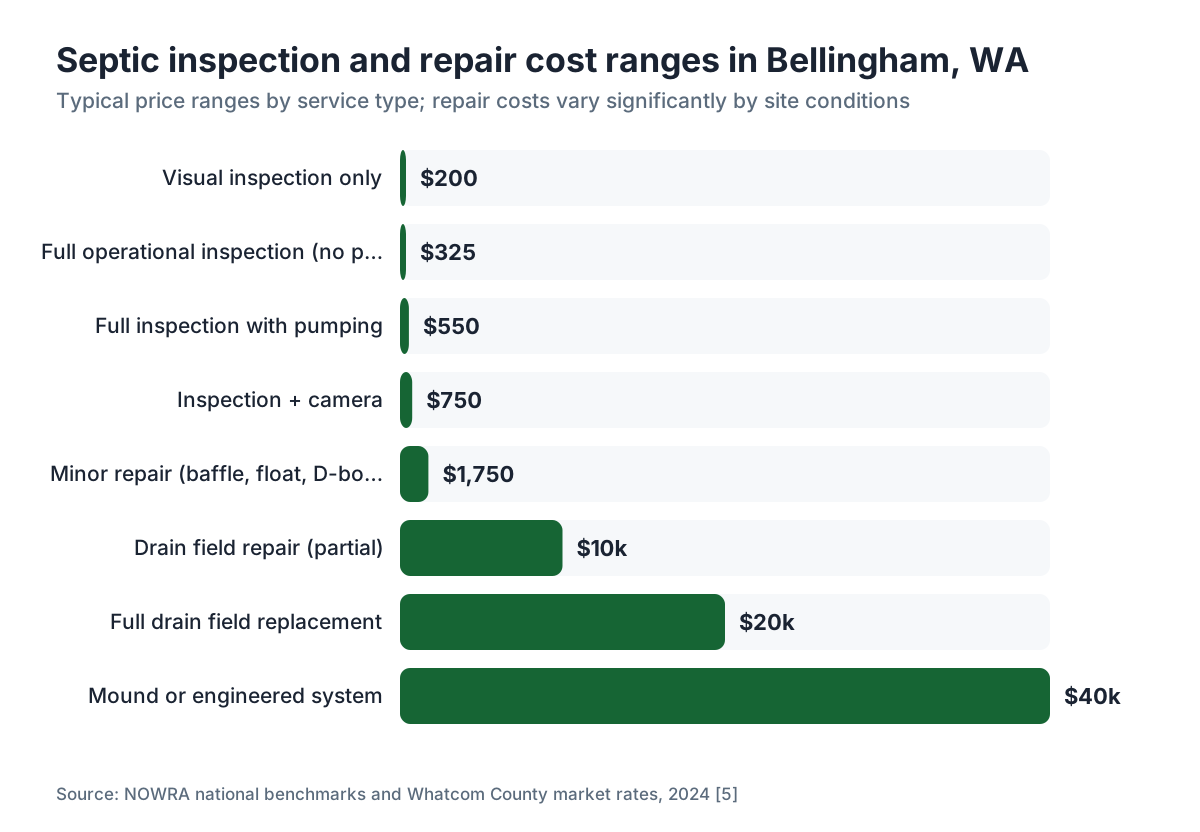
Price depends heavily on the scope of work. Here's an honest breakdown based on current regional market rates, which line up with national data from the National Onsite Wastewater Recycling Association (NOWRA) [5].
| Inspection type | Typical Bellingham price range |
|---|---|
| Visual inspection only | $150 to $250 |
| Full operational inspection (no pump) | $250 to $400 |
| Full operational inspection with pumping | $400 to $700 |
| Camera inspection of laterals | Add $150 to $300 |
| Inspection plus perc/soil evaluation | $500 to $1,200 |
Pumping is often the only way to see the condition of the tank baffles and the inlet pipe, so inspectors who skip the pump-out are handing you an incomplete picture. If someone quotes a very low flat fee and says pumping isn't included, push back on it.
A septic tank pump out done as part of an inspection runs roughly $300 to $450 in Whatcom County for a standard 1,000-gallon tank. That's usually separate from the inspection fee, though some companies bundle the two.
Most Bellingham buyers fold the inspection cost into their offer. It's a small number next to what a failed system costs. A failed drain field can mean $8,000 to $30,000 for a leach field replacement, depending on soil conditions and how much usable land the parcel has [5].
How long does a septic inspection take in Bellingham?
Plan on two to four hours for a complete inspection with pumping. The spread depends on how easy the tank lids are to reach (some older Bellingham homes have tanks buried three feet down with no riser), how far the inspector walks to the drain field, and whether the system is a simple conventional gravity setup or something more involved like a mound or pressure-distribution system.
Bellingham's older housing stock, especially homes built before 1980 in neighborhoods like Birchwood, the Lettered Streets, and the Squalicum area, often has tanks with no risers and hand-drawn or missing as-built records. Finding the tank can add 30 to 60 minutes when nobody knows where it is. A metal probe and a copy of the county as-built records (available from Whatcom County Environmental Health) cut that down a lot [4].
After the site work, inspectors usually deliver a written report within 24 to 48 hours. On a tight closing timeline, confirm the turnaround before you book.
What do inspectors specifically look for on Bellingham properties?
Bellingham gets heavy annual rainfall (around 35 inches a year) and soils that swing from well-draining glacial outwash gravels near the waterfront to tight clay-heavy soils in the foothills toward the Cascades [6]. That soil variability matters. Slow-draining soils load drain fields faster, and a system that looked fine in a dry August can fail hard in a wet January.
Inspectors working in Whatcom County look for:
Scum and sludge accumulation in the tank. The rule of thumb is that pumping is due when the sludge layer sits within 12 inches of the bottom of the outlet baffle, or when total solids fill more than a third of the tank's liquid capacity [2]. For most households that means pumping every three to five years. Here's more on how often to pump septic tank by household size.
Inlet and outlet baffles. Missing or degraded baffles let solids pass into the drain field, and that's the single most common cause of premature drain field failure.
Distribution box condition. A cracked or settled D-box sends all the flow to one lateral instead of spreading it. One overloaded lateral can fail while the others look fine.
Surface ponding over the drain field. Any visible effluent, saturated soil, or unusually green grass over the field is a red flag.
System age against load. A 1,000-gallon tank serving a three-bedroom home is the minimum under Washington State code [3]. If a seller added a bedroom without a permit, the system may be undersized.
On pump and pressure-distribution systems, the inspector also checks the pump chamber float settings, pump run times, and alarm function. Bellingham has a fair number of these on properties with marginal soils or awkward topography.
What happens if your septic system fails inspection in Bellingham?
A failed inspection triggers a notice of violation or a repair requirement from Whatcom County Environmental Health, depending on severity [4]. Minor issues like a cracked baffle or a failing pump float get fixed fast, for a few hundred to a couple thousand dollars. A septic tank repair on a single component is a different animal from a full system failure.
Drain field failure is the expensive one. If the soil absorption system is saturated and not recovering, the county can require a full replacement. In Bellingham, land for a new drain field is often tight, especially on smaller lots in town or on waterfront parcels. Limited land pushes you toward engineered alternatives like mound systems or drip-irrigation, which cost more than conventional gravity.
A full septic system repair or replacement in Whatcom County usually runs $10,000 to $30,000 for a conventional new drain field on a property with enough space and suitable soil. Mound or pressure-distribution systems on difficult sites run $20,000 to $50,000 or more. The cost to install septic system shifts with soil type, parcel size, system design, and contractor, so get at least two bids.
On a real estate deal, a failed inspection hands the negotiating power to the buyer. The seller fixes the system before closing, credits the buyer for the estimated repair, or the deal falls apart. Most lenders, including FHA and VA loan programs, won't close on a property with a known active septic failure [7].
If you're the seller and you know the system has problems, disclose them. Washington State has strict seller disclosure requirements for known material defects, and a failed septic system is about as material as it gets [8].
Who can perform a septic inspection in Bellingham, WA?
Washington State requires that on-site sewage system inspections be done by someone with the right credentials. The practical options:
A licensed on-site system inspector. Washington DOH certifies Operation and Maintenance (O&M) specialists and designers. For a real estate inspection, you want someone with an O&M certification at minimum [3].
A licensed professional engineer with relevant experience. PEs can perform and sign off on inspections, particularly for complex systems or when the inspection needs to support a permit application.
A licensed septic pumper with inspection authorization. Some pumping companies around Bellingham hold certifications that let them write inspection reports alongside the pump-out. That's often the cheapest route when pumping is needed anyway, since you skip a second mobilization fee.
For real estate transactions, confirm that your inspector's report format is acceptable to the lender and to Whatcom County. Some lenders have their own required forms. Ask before the inspection, not after.
SepticMind's service operator directory helps you find certified inspectors in the Whatcom County area who are actively taking new clients, since availability swings seasonally and real estate inspection demand spikes in spring and summer.
One thing worth knowing: home inspectors who aren't specifically certified for on-site systems often include a visual glance at the septic system as part of a general home inspection. That is not a septic inspection. It's a scan from someone who isn't qualified to assess how the system functions. Don't count it as satisfying a lender's or county's requirement.
How do you prepare for a septic inspection in Bellingham?
Good prep saves time and heads off surprises. Here's what actually helps.
Locate your as-built records. Whatcom County Environmental Health keeps records of permitted septic systems. Request them from the county or pull them through the county's permitting portal [4]. The as-built shows tank size, tank location, number of laterals, and drain field dimensions. Inspectors work faster with it in hand.
Don't pump the tank right before the inspection. This one's counterintuitive. Pumping removes the scum and sludge the inspector needs to measure to judge how the system has been maintained. Pump two days before an inspection and the inspector can't read accumulation rates. Pumping during the inspection is fine, because the inspector measures before the truck arrives.
Avoid heavy water use for 24 hours before. A drain field saturated by a laundry marathon the day before can mimic a failing system. Normal household use is fine.
Clear access to the tank lids. Dig down to buried lids yourself. Inspectors typically don't excavate, and if they can't reach the tank, you pay for their time and book another visit.
Have your pump history ready. Receipts from past septic tank pumping or septic tank cleaning show maintenance history and help the inspector judge whether accumulation rates are normal.
Even a rough note of when the last septic tank emptying happened helps the inspector make sense of the sludge levels.
How often should Bellingham homeowners get a septic inspection?
The EPA's SepticSmart guidelines say to have a septic system inspected by a professional every one to three years, with pumping every three to five years for a typical household [2]. Washington State's O&M rules for certain advanced treatment systems require annual inspections by a certified O&M specialist as a condition of the operating permit [3].
For a standard gravity system in Bellingham with no prior failure history, every three years is a reasonable interval. Given the rainfall and the clay-heavy soils in parts of Whatcom County, leaning toward the shorter end makes sense. Systems serving larger households or aging drain fields deserve eyes on them more often.
Just bought a home with septic and no reliable inspection history? Get one done in the first year regardless of the last inspection date. You want a baseline.
The EPA notes that "a properly designed, installed, and maintained septic system can last for decades," with maintenance as the key variable [2]. Skipping inspections for ten years and then finding a failed drain field is orders of magnitude more expensive than paying as you go.
For operators running multiple properties or rental units in Whatcom County, tracking inspection intervals across a portfolio gets messy fast. Software built for septic service management, like SepticMind, automates scheduling reminders and keeps digital records of inspection reports per property, which matters when county compliance deadlines differ address to address.
What's the difference between a septic inspection and a septic permit in Bellingham?
These are different things that get confused during building projects and property sales.
A septic inspection is an assessment of an existing system's condition and function. No permit is needed to have one done.
A septic permit is what Whatcom County issues when a new system goes in, an existing system gets repaired, or a change in use triggers a design review. You cannot legally install or substantially repair a septic system in Whatcom County without a permit from Environmental Health [4]. Permits require a site evaluation (soil testing, site survey), a system design prepared or reviewed by a licensed designer, and county inspections at set construction stages.
For a new septic tank installation, the Whatcom County process runs roughly: site evaluation, design submission, permit issuance, installation, county inspection, final approval. The permit fee itself is a few hundred dollars, but the design, installation, and inspection together are what drive the cost to put in a septic tank into the thousands.
For a real estate deal, the buyer's lender wants an inspection report showing the existing system works. That's not a permit. It's a certified inspector's written assessment. Make sure everyone on the deal knows which document they're actually asking for.
Are there environmental or waterway concerns that affect Bellingham septic inspections?
Yes, and Bellingham-area homeowners should take it seriously. Whatcom County holds Bellingham Bay, the Nooksack River watershed, and shellfish-growing areas in Samish Bay and Chuckanut Bay. The Washington State Department of Ecology and Whatcom County have both flagged failing septic systems as a source of fecal coliform contamination in local waterways [9].
The Washington State Department of Health periodically closes shellfish harvest areas when fecal coliform counts spike, and malfunctioning septic systems near the shoreline are among the cited contributors [9]. Properties in critical areas near these waterways can face more frequent inspections and faster mandatory repair timelines.
The Whatcom Conservation District and WSU Extension have run outreach in the county aimed at homeowners in the Nooksack watershed to get failing systems fixed [10]. If you live near any creek, bay, or wetland in Whatcom County, that's one more reason to keep your system current on inspections and maintenance.
Practically, if you're buying waterfront or near-water property in Bellingham, budget for the full inspection including camera work. High water tables, heavy rain, and environmental sensitivity make drain field problems more common and more consequential in those spots.
Frequently asked questions
Is a septic inspection required to sell a home in Bellingham, WA?
Washington State has no blanket statewide point-of-sale inspection mandate, but Whatcom County and most lenders effectively require one. FHA, VA, and many conventional loans won't close on a property with a known septic issue, and most buyers' agents request a full operational inspection as a contract contingency. In practice, nearly every Bellingham home sale involving a septic system gets inspected.
How do I find the location of my septic tank in Whatcom County?
Start with Whatcom County Environmental Health's permitting records. If the system was permitted, an as-built drawing should be on file showing tank location, size, and drain field layout. Request it from the county directly or check the county's online records portal. If the property predates permits or the records are missing, a licensed inspector with a metal probe and possibly a drain camera can locate the tank on site.
What is an O&M inspection and do I need one in Whatcom County?
An Operation and Maintenance (O&M) inspection is a formal inspection by a Washington DOH-certified O&M specialist. It's required for certain advanced treatment systems (aerobic treatment units, drip-irrigation) under WAC 246-272A as a condition of the operating permit, typically annually. Standard gravity systems don't require a formal O&M permit, but getting a qualified inspector to check them every one to three years is still good practice and may be required for a sale.
How much does it cost to fix a septic system in Bellingham if it fails inspection?
Minor repairs like replacing a baffle, fixing a pump float, or swapping a distribution box typically cost $500 to $3,000. A drain field repair or partial replacement runs $5,000 to $15,000. A full drain field replacement on a property with adequate suitable soils runs $10,000 to $30,000. On difficult lots needing a mound system or engineered alternative, costs can reach $40,000 to $60,000. Get at least two bids from licensed contractors and confirm they pull Whatcom County permits.
Can a general home inspector do the septic inspection in Bellingham?
No, not for official purposes. A general home inspector can note obvious external signs of a failing system, but they aren't certified to perform a functional septic inspection under Washington State rules. Their report won't satisfy Whatcom County's requirements or most lenders' requirements. You need a Washington DOH-certified on-site system inspector, a licensed O&M specialist, or a licensed PE with relevant experience.
Does Bellingham have public sewer in most neighborhoods, or is septic still common?
The City of Bellingham has an extensive public sewer system covering most of the urban core, so homes inside city limits are typically on city sewer. Septic systems are most common in Whatcom County's unincorporated areas: rural Lynden, Ferndale outskirts, Sudden Valley, Birch Bay, and areas east and south of the city along the foothills. Buying a property outside Bellingham city limits in Whatcom County? Assume septic until you verify otherwise.
How long does a septic system last in the Bellingham area?
A well-maintained conventional gravity septic system can last 25 to 40 years or longer. Drain fields in Whatcom County's clay-heavy soils lean toward the shorter end because water percolates slower. Systems that were never pumped, had tree roots intrude, or got overloaded by added bedrooms without a permit can fail in 15 to 20 years. Regular pumping and inspections are the single biggest factor in how long a system lasts.
What is a dye test and does it satisfy Whatcom County's inspection requirement?
A dye test puts food-safe fluorescent dye into the household plumbing, and the inspector watches for dye surfacing over the drain field or in nearby ditches. It can catch active surface failures but misses many early-stage problems. Whatcom County and most lenders don't consider a dye test alone a complete inspection. It can be one component of a full operational inspection, but it shouldn't be the only assessment tool.
What's the typical septic tank size for a three-bedroom home in Whatcom County?
Washington State code under WAC 246-272A sets 1,000 gallons as the minimum tank size for a three-bedroom home based on a design flow of 360 gallons per day. Many older Bellingham-area homes have 750-gallon or 800-gallon tanks that were code-compliant at installation but are undersized by current standards. If an inspector finds an undersized tank, the county may require upgrading it, particularly when the property changes hands or use.
How do I get Whatcom County as-built septic records for my property?
Contact Whatcom County Environmental Health directly at their Bellingham office. They maintain permit files including as-built drawings for most systems installed or permitted after the 1970s. Some records are accessible online through the county's permitting portal. For older systems or properties with unpermitted work, records may not exist, in which case a licensed inspector will need to locate and document the system in person.
Does heavy rainfall in Bellingham affect septic system performance?
Yes, a lot. Bellingham averages around 35 inches of rain a year, and the wet season runs October through April. Saturated soils during heavy rain cut a drain field's ability to absorb effluent, which can cause temporary surfacing or slow drainage even in a system that's otherwise fine. A system already stressed will fail outright during a wet winter. That's why inspections in late fall or winter sometimes reveal problems that were invisible in summer.
Can I install a septic system myself in Whatcom County to save money?
No. Whatcom County requires a permit from Environmental Health for any new septic installation or substantial repair, and the permit process requires a licensed designer and county inspections at construction milestones. Installation must be done by a licensed contractor in most cases. Unpermitted septic work is a material defect you'd have to disclose on resale and can bring fines and mandatory removal. The savings aren't real, because unlicensed work won't pass inspection.
What's the difference between a septic inspection and a perc test?
A perc test (percolation test) measures how fast water drains through the soil and is used to design a new system or determine if a site can support septic at all. It's a soil evaluation, not an inspection of an existing system. A septic inspection evaluates the condition and function of a system already in the ground. You need a perc test when designing a new system or evaluating land for development, not for assessing an existing system's health.
Sources
- Washington State Department of Health, On-Site Sewage Systems: Washington State licenses and certifies on-site sewage system inspectors and O&M specialists; inspection requirements and dye test use are governed by state rules.
- U.S. EPA SepticSmart Program: The EPA recommends professional septic inspections every one to three years and pumping every three to five years; inspections should cover both the tank and the soil absorption system.
- Washington Administrative Code WAC 246-272A, On-Site Sewage Systems: WAC 246-272A governs on-site sewage system design, installation, operation, and maintenance statewide, including minimum tank sizes (1,000 gallons for a 3-bedroom home) and O&M inspection requirements for advanced treatment systems.
- Whatcom County Health and Community Services: Whatcom County Environmental Health administers local septic permits, maintains as-built records, and enforces inspection requirements for properties in critical areas and at change of use.
- National Onsite Wastewater Recycling Association (NOWRA): NOWRA publishes cost benchmarks for septic inspection, pumping, and repair; drain field replacement costs typically range from $8,000 to $30,000 depending on system type and site conditions.
- USDA Natural Resources Conservation Service, Web Soil Survey: Whatcom County soils range from well-draining glacial outwash gravels near Bellingham Bay to clay-heavy soils in foothills areas, affecting drain field performance and percolation rates.
- U.S. Department of Housing and Urban Development, FHA Single Family Handbook 4000.1: FHA loan guidelines require that septic systems be in proper working order at closing; known active failures must be repaired before loan approval.
- Washington State Legislature, RCW 64.06, Seller Disclosure Act: Washington State's Seller Disclosure Act requires sellers to disclose known material defects including sewage and septic system problems on the standard Form 17 disclosure.
- Washington State Department of Ecology: Failing septic systems are identified as a contributing source of fecal coliform contamination in Samish Bay and Chuckanut Bay shellfish-growing areas in Whatcom County.
- WSU Extension, Whatcom County: WSU Extension and the Whatcom Conservation District have conducted outreach programs in the Nooksack watershed targeting homeowners with failing on-site sewage systems.
Last updated 2026-07-09