Septic tank lid: find it, inspect it, replace it
By the SepticMind Editorial Team

TL;DR
- Your septic tank lid sits 6 to 24 inches underground, directly above the tank, usually 10 to 25 feet from the house.
- Concrete lids are most common on older tanks; modern systems often use plastic risers with lockable lids at grade.
- A broken or missing lid is a safety emergency.
- Replacement lids run $30 to $400 depending on material and size.
What exactly is a septic tank lid, and why does it matter?
A septic tank lid is the removable cover that closes off the access opening, or manhole, on top of your septic tank. Every tank has at least one. Most two-compartment tanks have two or three: one over each compartment and sometimes one directly over the inlet baffle. The lid lets pumpers, inspectors, and repair techs get into the tank without digging up the whole yard.
The lid does more than provide access. It keeps surface water from flushing into the tank and diluting the bacteria that break down waste. It keeps children, pets, and adults from falling into a tank full of toxic, oxygen-starved gas. That sounds dramatic. It isn't. Falls into open septic tanks kill people. The Occupational Safety and Health Administration classifies septic tanks as permit-required confined spaces because the hydrogen sulfide and methane inside can knock someone out within seconds [1].
It also keeps the smell down. A lid that's cracked or seated wrong vents hydrogen sulfide gas into the yard at concentrations that range from unpleasant to hazardous.
So: find it, keep it sealed, replace it the moment it's damaged.
What are septic tank lids made of, and which type do you have?
The material comes down to when your tank was installed and what the tank itself is made of.
Concrete lids are the most common by a wide margin. Precast concrete tanks were the industry standard from roughly the 1950s through the 1990s, and they came with precast concrete lids. A typical concrete lid is 20 to 24 inches across, 3 to 5 inches thick, and weighs 60 to 150 pounds. They last decades but crack under freeze-thaw cycles, vehicle traffic, or plain old age. A concrete lid that's been buried 30 or 40 years is often half-deteriorated and should be replaced, not trusted to hold weight [2].
Fiberglass and polyethylene lids come on plastic and fiberglass tanks, which showed up in the 1980s and dominate new installs today. These lids are light (often under 20 pounds), don't corrode, and are easy to handle. Many thread on or snap-fit with a gasket seal.
Cast iron lids turn up occasionally on very old systems, especially in cities or on tanks originally installed as cesspools. They're heavy and they rust. Find a cast iron lid and the tank below it probably needs a full inspection before you rely on it.
Riser lids are their own category. A septic tank riser is a vertical pipe extension that brings the access point to or near grade. The lid on a riser is usually high-density polyethylene, 12 to 24 inches across, and often has a child-resistant lock. If your system has risers, you reach your tank without digging at all.
How do you find your septic tank lid?
This is the question most homeowners ask first. The answer has a few layers, and the fastest path depends on your paperwork.
Start with your county records. When a septic system gets permitted, the installer files an as-built drawing (sometimes called a site plan or sanitarian sketch) showing where the tank sits. Your county health department or environmental services office holds these, and most are public. Call them or check the online portal. Some states run statewide databases; Florida's health department keeps septic permit records searchable by address [3].
Check your inspection report. Had a septic inspection at purchase? The inspector almost certainly noted the tank location and probably photographed it. Pull that report.
Follow the pipe from the house. Your main sewer line exits the house somewhere in the basement or crawlspace, usually a 4-inch pipe. It runs downhill at about 1/4 inch per foot toward the tank. In most residential jobs the tank sits 10 to 25 feet from the foundation. Mark where the pipe leaves the house, face that direction, and probe the ground every couple feet with a thin metal rod (a fence post works) at depths of 6 to 24 inches.
Look for visual clues. A patch of unusually green grass in a rough circle or rectangle. Ground that's slightly raised or sunken. An area the previous owner always avoided parking on. Older systems sometimes have a vent pipe poking up nearby.
Use a soil probe or metal detector. A steel probe lets you feel the hollow thud of a buried lid against the resistance of packed soil. A metal detector won't find concrete or fiberglass tanks, but it can pick up metal handles or frames on the lid itself.
Hire a locating service. Plumbers and septic companies can snake an electronic transmitter through your cleanout and trace the pipe straight to the tank inlet. It takes 30 to 60 minutes and runs $100 to $200. Worth every dollar if you've been probing for an hour with nothing to show.
Once you find the lid, mark it for good. A landscaping flag works short-term. A septic tank riser installed at the next pump-out is the real fix: it brings the access to grade and ends the search forever.
How deep is a septic tank lid buried?
Most residential septic tank lids sit 6 to 24 inches below the surface. Codes vary by state and era. The EPA's SepticSmart program notes that burial depth depends on local frost line requirements and how the yard was originally graded [4]. In cold climates like Minnesota or Maine, tanks go deeper to keep the liquid from freezing, which pushes lids to 18 to 36 inches down. In warm southern states, lids sometimes sit just 2 to 4 inches under.
Digging by hand to expose a lid? Plan to move soil in a roughly 3-foot circle. Use a flat spade and go slow. Concrete lids get fragile after decades underground, and driving a pointed shovel into a cracked lid can drop the whole thing into the tank.
Once you've found and uncovered a lid, write down the depth and a measurement from a fixed point like a house corner. Snap a photo with your phone. That one note saves you 30 minutes of searching at the next service visit.
How do you safely open and handle a septic tank lid?
Before you lift any lid, know what's under it. A septic tank is a confined space holding measurable hydrogen sulfide (H2S) and methane. H2S smells like rotten eggs at low levels but deadens your sense of smell at higher ones, so if the stink suddenly vanishes after you open a lid, that's a warning, not relief. OSHA's permit-required confined space standard, 29 CFR 1910.146, requires atmospheric testing and standby rescue before anyone enters a confined space [1]. Opening the lid to inspect from outside is fine. Climbing inside is not something homeowners should ever do.
For concrete lids, use a pry bar or a lid hook. There's usually a small notch or hole cast into the lid for exactly this. Work the bar in, lift one edge, then slide the lid to the side. Don't deadlift a concrete lid straight up. They're awkward and heavy, and a dropped one can crack or shatter.
For riser lids, most have two hand grips and a locking screw or tab. Pop the lock, grip both handles, lift straight up.
Keep everyone upwind of the open tank. Keep children and pets back. Replace the lid the second the work is done, and make sure it seats flat, not cocked at an angle.
How do you inspect a septic tank lid for damage?
A visual inspection takes five minutes and should happen every time the tank gets pumped, ideally every 3 to 5 years [4]. Here's what you're hunting for.
Cracks. Hairline cracks in concrete are common and worth watching. Cracks wider than 1/4 inch, cracks that have shifted (one side higher than the other), or cracks running all the way through are grounds for immediate replacement. A cracked lid can give way under foot or vehicle traffic with no warning.
Spalling. Concrete that's crumbling, pitting, or flaking on its underside is losing strength. That spalled material falls into the tank and settles as grit.
Missing or broken sections. A lid with a chunk gone is not a lid. Replace it.
Improper fit. The lid should sit flat in its frame, no rocking, no gap. A lid that won't seat right lets in runoff and pests.
Missing or broken lock. On riser lids with childproof locks, a broken tab means the lid is no longer secured. Many states require locking lids by code. Virginia, for one, requires all access openings to be secured against unauthorized entry [5].
Not pumping on a regular schedule? At minimum, do a visual and tap check once a year after the ground thaws in spring. A hollow or gritty sound from a concrete lid compared to past years points to deterioration inside.
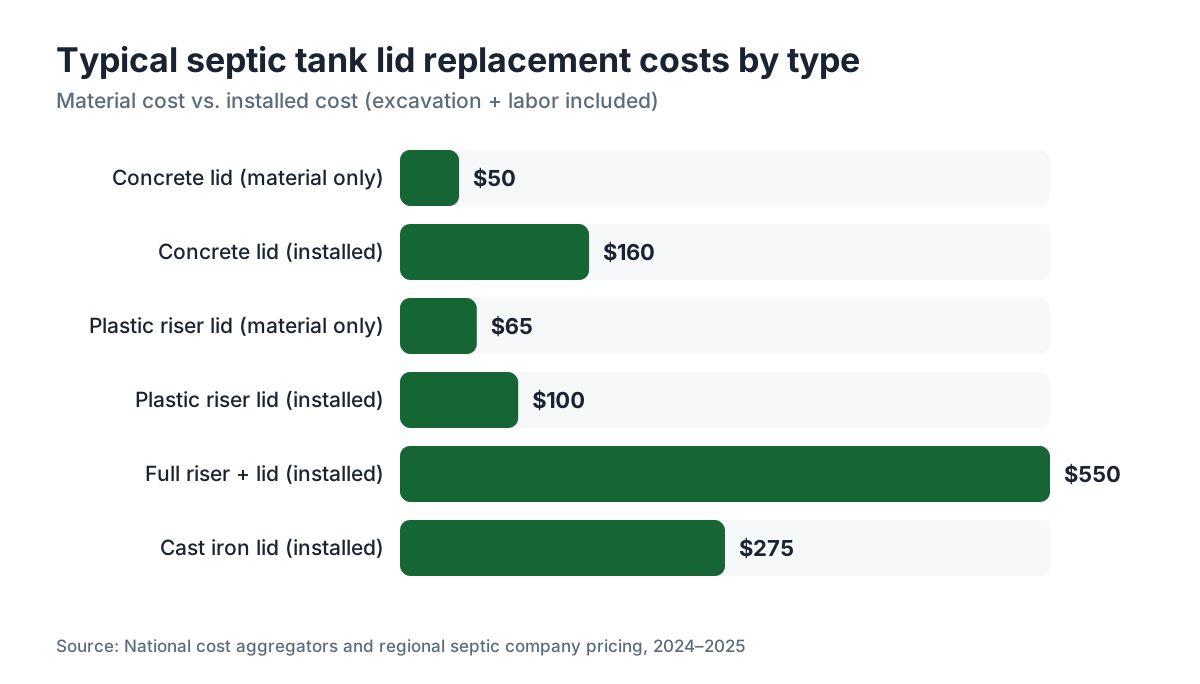
What does it cost to replace a septic tank lid?
Lid replacement is one of the cheapest septic repairs there is. The range is wide, though, and it comes down to material and how buried the thing is.
| Lid type | Material cost | Typical installed cost |
|---|---|---|
| Concrete replacement lid (precast) | $20 to $80 | $75 to $250 (includes labor to excavate and swap) |
| Plastic/poly riser lid (12 to 24 in.) | $30 to $100 | $50 to $150 |
| Full riser + lid installation | $200 to $600 | $300 to $800 |
| Cast iron replacement | $80 to $200 | $150 to $400 |
These ranges come from national cost aggregators and regional septic company pricing as of 2024 to 2025, and actual prices swing a lot by region. Labor to excavate and re-bury is usually the bigger cost than the lid itself.
If your contractor spots a cracked concrete lid during a septic tank pump out, ask them to swap it right there. The hole is already open, so the extra labor is next to nothing. Scheduling a separate trip for lid replacement costs more.
A full septic tank riser install runs $300 to $800 for most tanks and ends future excavation for good. If you're pumping every 3 to 5 years at $300 to $600 a visit, the riser pays for itself in two or three pump cycles on saved dig fees alone.
Can you replace a septic tank lid yourself?
On simple systems with an accessible, undamaged frame, yes. Swapping a plastic riser lid is about as hard as replacing a pool skimmer cover. Buy the right diameter lid (measure the opening before you order), pull the old one, seat the new one, engage the lock. Done.
Replacing a concrete lid is harder. The new lid has to match the opening exactly. Precast concrete lids come from most concrete products suppliers in standard sizes, commonly 18, 20, 22, and 24 inches. Bring the old lid or its exact measurements when you shop. The thickness matters too; a lid that's too thin won't hold foot traffic or the occasional light vehicle load.
What you should not DIY: any replacement that needs more than 12 to 18 inches of excavation, any case where the frame (the concrete ring the lid sits in) is also damaged, and any system where you suspect the tank itself is compromised. A damaged frame means water intrusion and possible tank failure, which is a septic tank repair job, not a lid swap.
Check local code too. Some states require a licensed contractor for any work on a septic system, lid replacement included. Your county health department can answer that in one phone call.
What can go wrong if you ignore a damaged lid?
A failing lid is not a cosmetic problem. The consequences pile up fast.
A cracked or badly seated lid lets in surface water. Every heavy rain can push 20 to 50 gallons of stormwater into the tank, diluting the bacterial action that processes waste and hydraulically overloading the septic drain field. The EPA's technical manual on decentralized wastewater treatment names surface water infiltration through access openings as a leading cause of system failure [6].
A cracked concrete lid that collapses is a physical hazard of the worst kind. There are documented deaths of both children and adults who fell into open or failed septic tanks. A lid can crack yet stay in place, hiding the opening below while it waits to give way under the next footstep. That's the scenario that kills people.
Ignoring a lid problem also means ignoring whatever broke it. Vehicle traffic that cracked a lid may have cracked the tank. Ground settlement that shifted a lid may mean the tank has shifted. A lid problem is sometimes a symptom, not the disease. Have the tank inspected when you replace a compromised lid.
Septic system failures cost $3,000 to $30,000 to fix, depending on whether you're dealing with a tank repair or a full drain field replacement [7]. A $75 lid replacement is the better bet.
How do I keep track of my septic lid and system for the long term?
The most useful thing you can do is document your system right now. Photograph the lid location against a permanent feature (the back corner of the house, a fence post). Measure the distance from two fixed points. Note the lid material, diameter, and depth. Write down the tank size and installer name if the permit has them.
Put it somewhere you'll actually find it: a folder in your email, a note on your phone, or a physical binder labeled "house systems" taped inside the electrical panel door.
Run a septic service business managing dozens or hundreds of systems? That documentation problem scales fast. SepticMind is built for exactly this: tracking pump history, lid condition notes, riser status, and service intervals across a whole customer base so nothing slips between visits.
For homeowners, the EPA's SepticSmart program offers a free system owner's guide and annual maintenance checklist [4]. It takes 20 minutes to fill out and saves your next septic tech a lot of guesswork.
Schedule septic tank pumping every 3 to 5 years and get the lid condition checked at every visit. See how often to pump septic tank for the full breakdown of pump intervals by household size and tank capacity.
State code requirements for septic tank lids: what does your state require?
There's no single federal standard for how a septic tank lid is built, but the EPA's guidance under the Clean Water Act and its decentralized wastewater manual shapes state codes heavily [6]. Every state writes its own onsite wastewater rules, and they differ enough to matter.
Common requirements across state codes:
- Lids must be watertight (no gaps, no cracks that let water in)
- Access openings must be secured against unauthorized entry, especially by children (childproof locks or bolted lids come up again and again)
- Lids must handle a minimum surface load, often specified as H-10 or H-20 loading for lids that might see vehicle traffic
- The tank must have at least one inspection port a pumper can reach without heavy excavation
North Carolina's onsite wastewater rules (15A NCAC 18E), for example, require access openings to have tight-fitting, secured covers [8]. Texas requires lids to be locked or require a tool to open, under Title 30, Chapter 285 of the Texas Administrative Code [9].
If your system predates your state's current code, it may be grandfathered in. But many states require an upgrade to current standards at the time of sale or major repair. Check with your county environmental health office before listing a home or starting a septic system repair.
Frequently asked questions
How do I find my septic tank when I have no records?
Start where the main sewer line leaves your house, usually a 4-inch pipe in the basement or crawlspace. Probe the soil in the direction the pipe runs, 10 to 25 feet from the foundation, at depths of 6 to 24 inches. Your county health department also holds permit records for most systems installed after the 1970s. A plumber or septic company can trace the pipe electronically for $100 to $200.
How do I find septic tank lids specifically, vs. just the tank?
Once you know where the tank is, the lids sit directly above it. Most two-compartment tanks have one lid over each compartment, roughly centered on the tank's width and about 1/3 and 2/3 of the way along its length. Probe in a grid pattern over that area. Concrete lids sound hollow when you strike them with a rod. Plastic riser lids often show a slight ground depression or a visible cap if the riser reaches grade.
Can a septic tank lid be driven over?
Most residential septic tank lids are rated for foot traffic only. Driving over one, even with a small lawn tractor, can crack a concrete lid or damage the tank below. If vehicles regularly cross your tank area, you need an H-20-rated lid, engineered for highway-load vehicles. Standard residential precast lids are not H-20. Keep vehicles off the tank and drain field entirely.
What size is a standard septic tank lid?
The most common diameters for residential concrete septic tank lids are 18, 20, and 24 inches. Riser lids typically come in 12, 16, 20, and 24-inch diameters. There's no universal standard; your tank's manufacturer or the original permit spec set the opening size. Always measure your existing opening before ordering a replacement lid.
How heavy is a concrete septic tank lid?
A 20-inch concrete lid that's 4 inches thick weighs roughly 75 to 100 pounds. A 24-inch lid can hit 120 to 150 pounds. These are two-person lifts at minimum. Don't try to move one alone. If the lid is cracked, it may break unpredictably under load and expose the opening all at once.
How much does it cost to have a septic lid found and uncovered?
Most septic pumping companies include uncovering one lid in a standard pump-out if it sits within 6 to 12 inches of the surface. If the lid is deeper, or they have to locate the tank first, expect an extra $50 to $150 for excavation. Some companies charge $50 to $100 per foot of depth beyond the first foot. Installing a riser wipes out this cost at every future service.
What happens if a septic lid is cracked?
A cracked lid lets in surface water, which dilutes the tank's bacterial treatment and can hydraulically overload the drain field. It also poses a collapse risk, since a child or adult can fall through a lid that looks intact from above. Replace any lid with through-cracks or structurally compromised concrete. It's a $75 to $250 fix that heads off a $3,000 to $30,000 system failure.
Do septic tank lids need to be locked?
Many states require septic access openings to be secured against unauthorized entry, especially child access. Check your state's onsite wastewater regulations. Virginia, North Carolina, and Texas all require secured or locked covers. Even where your state doesn't require it, a locking riser lid ($30 to $100) is worth adding if children play in the yard near the tank.
How often should I inspect my septic tank lid?
Every time the tank is pumped, which should be every 3 to 5 years for most households. At minimum, do a surface check every spring: look for ground settlement, cracking, or a patch of unusually lush grass over the tank. See any of those signs and have the lid uncovered and inspected even if a pump-out isn't due yet.
Can I replace a concrete septic lid with a plastic one?
In most cases, yes, and it's often the right call. A new plastic or HDPE lid paired with a riser is lighter, won't crack, and brings the access point to grade. The riser and lid assembly has to fit your tank's opening diameter. A septic contractor can fit a riser adapter to most concrete tanks in 1 to 2 hours. Check local code first, since some jurisdictions have material requirements.
Will my homeowner's insurance cover a failed septic lid?
Standard homeowner's policies typically exclude septic system components, lids included. Some insurers offer optional sewage and septic endorsements or riders, and some policies cover sudden, accidental collapse. Read your policy language carefully. A routine lid failure from age is almost always treated as maintenance and excluded. A sudden structural failure that causes property damage might be covered under certain policies.
What do I do if I find an uncovered or missing septic lid?
Treat it as an emergency. Keep people and pets away from the area. Temporarily cover the opening with a sheet of plywood weighted at the corners, heavy enough that it can't be shoved aside by accident but not so heavy it drops in. Call a septic contractor to replace the lid that day or the next morning. Never leave an open septic tank unguarded overnight.
Sources
- OSHA, Permit-Required Confined Spaces (29 CFR 1910.146): Septic tanks qualify as permit-required confined spaces due to atmospheric hazards including hydrogen sulfide and methane; entry requires atmospheric testing and standby rescue.
- University of Minnesota Extension, Onsite Sewage Treatment Program: Concrete septic tank components degrade over decades; lids showing cracking or spalling should be evaluated for replacement.
- Florida Department of Health, Onsite Sewage Programs: Florida maintains a searchable public database of septic system permits by address.
- U.S. EPA, SepticSmart Program: EPA SepticSmart recommends inspecting septic systems every 3 years and pumping every 3 to 5 years; burial depth of lids depends on local frost line and original grading.
- Virginia Department of Health, Onsite Sewage and Water Services (12VAC5-610): Virginia regulations require all septic access openings to be secured against unauthorized entry.
- U.S. EPA, Onsite Wastewater Treatment Systems Manual (EPA/625/R-00/008): Surface water infiltration through access openings is identified as a leading cause of septic system failure in EPA technical guidance.
- U.S. EPA, How Your Septic System Works: The EPA notes that septic system failures can cost thousands to tens of thousands of dollars to remediate.
- North Carolina Department of Health and Human Services, Environmental Health (15A NCAC 18E): North Carolina rules require all septic access openings to have tight-fitting, secured covers.
- Texas Commission on Environmental Quality, On-Site Sewage Facilities (30 TAC Chapter 285): Texas requires septic access lids to be locked or require a tool to open.
- Penn State Extension: Regular inspection of septic tank lids and access risers is recommended at each pump-out service.
- National Onsite Wastewater Recycling Association (NOWRA): Industry guidance specifies structural load ratings for septic access lids, distinguishing pedestrian-rated from vehicle-rated (H-20) covers.
Last updated 2026-07-09