Septic inspection in Bellport, NY: what to expect and what it costs
By the SepticMind Editorial Team
TL;DR
- A standard septic inspection in Bellport, NY runs $300 to $450 for a visual and operational check.
- Add a dye test or a pump-and-inspect and you are looking at $500 to $750 total.
- Suffolk County Sanitary Code Article 6 governs every inspection.
- Inspectors check the tank, the distribution box, and the leach field.
- Nearly every financed home sale in Bellport needs one before closing.
Why does Bellport specifically need a septic inspection?
Bellport sits on the south shore of Long Island, in the Town of Brookhaven, Suffolk County. The whole village sits over the shallow, highly permeable Magothy aquifer, the primary drinking-water source for most of Long Island. That geology turns a failing septic system into a direct threat to drinking water, not a distant one.
Suffolk County has one of the highest densities of cesspools and older septic systems in New York State. The county health department has documented nitrogen loading from septic systems as a major driver of coastal water-quality decline in Great South Bay and the Carmans River estuary, both a short drive from Bellport. [1]
The county has answered with real regulatory pressure. The Suffolk County Sanitary Code, specifically Article 6, governs the construction, modification, and inspection of all private wastewater systems in the county. [2] A property sale is the most common trigger for an inspection, but any significant addition or renovation that adds bedrooms triggers one too.
The short version: Bellport's soils drain fast, the water table is shallow, and the bay is close. An uninspected system here carries more risk than the same system would in a less sensitive watershed.
What does a septic inspection in Bellport actually involve?
A standard inspection has three parts: locating and opening the tank, an operational check while water runs, and a field evaluation. Expect the inspector on site for a couple of hours.
Locating the tank sounds trivial. Often it isn't. Many Bellport homes date to the mid-20th century, and the original as-built drawings may be long gone. A good inspector uses a probe rod, a metal detector for steel lids, or prior permit records pulled from the Suffolk County Department of Health Services (SCDHS) to find the access points. [2]
Once the lid is off, the inspector looks at:
- Scum and sludge depth. When the two layers together approach 30 to 50% of liquid capacity, it's time to pump. The EPA's guidance says most tanks need pumping every 3 to 5 years, though a garbage disposal or a big household pushes that sooner. [8]
- Baffles and tees. The inlet baffle keeps solids from short-circuiting straight to the outlet. Missing or corroded baffles are common in older concrete tanks.
- Structural condition. Cracks, root intrusion, and corrosion on the lid or walls.
- Effluent level. Liquid backed up above the outlet invert usually means the drain field is saturated or failing.
The operational check means running water inside the house (flushing toilets, running the dishwasher) while the inspector watches the tank and, if it's accessible, the distribution box (D-box). The D-box splits effluent to the leach field laterals. A cracked or flooded D-box points straight at distribution failure.
The leach field (also called the drain field or absorption field) gets a surface inspection. Soft spongy soil, sewage breaking through to the surface, unusually lush green stripes of grass, or a smell all say the field is saturated or dead. In Bellport's sandy soils, breakout can happen faster than in clay because there's less treatment distance before groundwater. [1]
A dye test adds one step. A non-toxic fluorescein dye goes through the system, and the inspector watches for it at the surface or in nearby water. Suffolk County does not mandate dye tests on every sale, but buyers' attorneys and lenders often ask for them. Budget $75 to $150 extra if yours does.
What does a septic inspection cost in Bellport, NY?
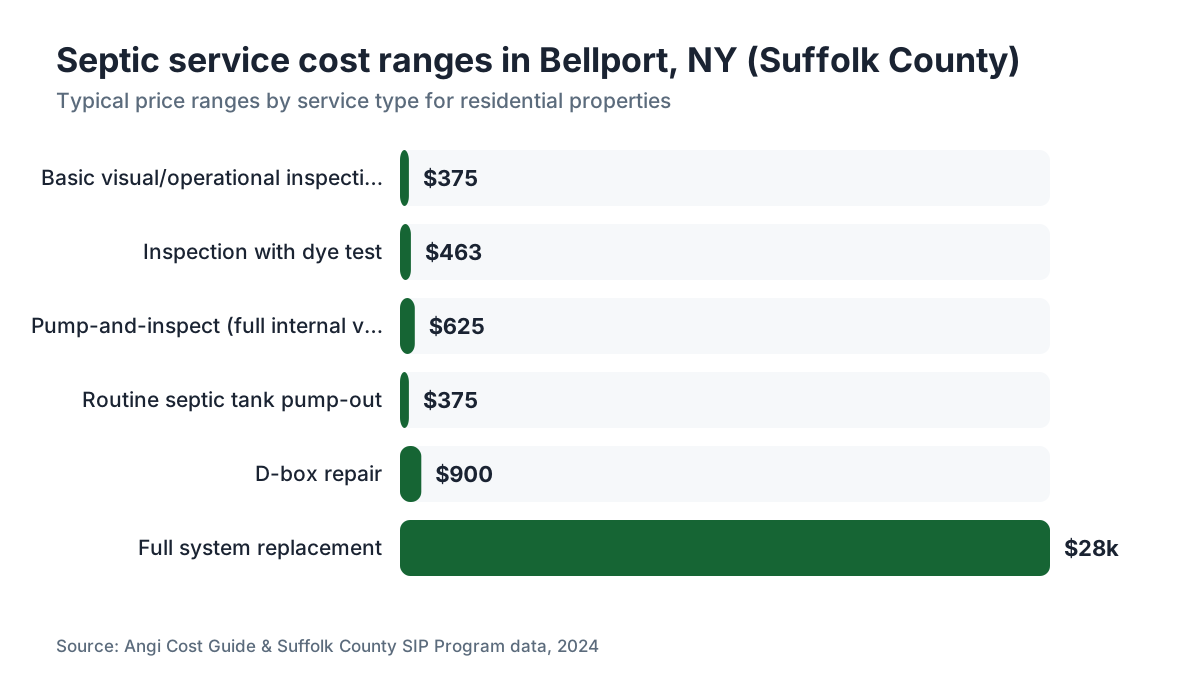
A basic visual and operational inspection in Bellport runs $300 to $450. Add a dye test and it climbs to $375 to $550. A pump-and-inspect, where the tank gets emptied for a full internal view, runs $500 to $750. Long Island prices sit at the top of the national range because labor costs more and the paperwork runs deeper.
| Inspection type | Typical Bellport/Suffolk County range |
|---|---|
| Basic visual/operational (no pump-out) | $300 to $450 |
| Inspection with dye test | $375 to $550 |
| Pump-and-inspect (tank pumped, full internal view) | $500 to $750 |
| SCDHS records search + permit pull | $50 to $150 (often bundled) |
| Cesspool inspection (older systems) | $250 to $500 |
These ranges come from aggregated contractor quotes in Suffolk County, and they move with the company and the season. Spring and fall are the busy months, which pushes both prices and wait times up. [4]
If you're the buyer, the inspection cost is almost always yours. It's also a real negotiating lever. A written report documenting a partially failed D-box or a tank at 40% sludge is worth more at the table than anything else you'll spend $400 on.
The national average for a septic inspection runs $300 to $600 according to Angi's cost guide, so Bellport lands in the upper half. [4] No surprise, given Suffolk County's cost of living. Our guide to septic tank inspection has the national cost comparison.
How does Suffolk County regulate septic inspections?
Suffolk County runs its own inspection and upgrade rules through SCDHS, and in several respects they're stricter than New York State's baseline. (Title 5, which some sellers reference, is a Massachusetts standard, not New York's.)
The framework is the Suffolk County Sanitary Code, Article 6. Under it, any change of occupancy, addition of bedrooms, or property sale that triggers a health department review requires the system to be inspected and, if needed, upgraded to current standards. [2]
The county also runs the Septic Improvement Program (SIP), a rebate and low-interest loan program that helps homeowners swap cesspools and older systems for nitrogen-reducing systems (NRS). Rebates run up to $30,000 for eligible properties. [5] Bellport homes inside a priority groundwater zone or near an impaired water body may face mandatory upgrade timelines.
The SCDHS Office of Wastewater Management is the permitting authority. For a report to be accepted for a permit or a sale, the inspector usually has to be a licensed professional engineer (PE) or a licensed home inspector with septic experience in New York State. [2] Ask for the license number before you hire anyone.
One practical tip: Suffolk County keeps a public database of septic permits. Before you pay for anything, look up the property address at the SCDHS portal. You may pull the original installation records: tank size, system type, even the soil percolation results from the day it was permitted. [2]
What are the biggest red flags inspectors find in Bellport homes?
A handful of failure patterns show up over and over in Suffolk County health records and in the systems local contractors keep pulling apart. Here are the five worth knowing.
Cesspools posing as septic systems. Many homes built before 1973 in Bellport have a cesspool (a single chamber with no separate leach field), not a two-part septic system. Cesspools are legal to keep but can't be expanded, and they fail faster. If a seller calls the system a "septic," pull the SCDHS records and confirm.
Undersized tanks for modern households. A 1,000-gallon tank sized for a 3-bedroom home in 1965 was built for much lower water use per person. The EPA estimates the average American now uses 80 to 100 gallons of water per day; in 1960 that number was closer to 50. [3] More flow means faster sludge buildup, which means more frequent pumping. Skip the pumping and failure arrives early.
Root intrusion in older concrete tanks. Bellport has a lot of mature tree cover. Oak and pine roots don't quit. A tank that looked fine 10 years ago can have root-fractured baffles or a cracked wall today.
High groundwater in spring. Run the inspection in March or April after a wet winter and the water table in many parts of Bellport sits within 18 to 24 inches of the surface. That temporarily drowns a drain field, so it looks failed when it might work fine in July. A good inspector notes the season and groundwater in the report. A bad one calls the field dead and walks. Ask what the seasonal groundwater depth is and whether the inspector accounted for it.
Missing or clogged effluent filters. Newer tanks (post-1990s) often carry an effluent filter at the outlet baffle. They're cheap and they keep solids out of the drain field, but they clog if nobody cleans them once a year. A clogged filter backs the tank up and mimics a failed field. Our leach field guide covers how drain field failures actually unfold.
How do you find a qualified septic inspector in Bellport?
New York State licenses septic inspectors. For a report a lender or the health department will accept, you want a licensed PE (Professional Engineer) or a licensed home inspector working under the New York State Home Inspection Professional Licensing Act. [6]
The Suffolk County Department of Health Services keeps a list of approved engineers and licensed professionals for septic work. The National Association of Wastewater Technicians (NAWT) also certifies inspectors nationally and publishes a searchable directory. [7]
When you call inspectors, ask:
- Are you licensed in New York State? (license number, please)
- Have you pulled permits or done inspections in the Town of Brookhaven or Bellport specifically?
- Does your report format satisfy SCDHS requirements for real estate transactions?
- Do you include a dye test, and what does it add to the cost?
- Do you carry errors-and-omissions insurance?
Walk away from any company that offers to "pass" the system before they've seen it, or that can't name its licensing credential. That's not how a legitimate inspection works.
If you're buying, hire the inspector yourself. Never use the one the seller recommends. Same logic as not sharing an attorney with the person on the other side of the table.
What happens if the septic system fails the inspection?
A failed inspection in Bellport doesn't automatically kill a sale, but it forces a decision. You've got four paths.
Repair or replace before closing. A cracked D-box or a missing baffle is a cheap fix ($300 to $1,500 in most cases). The seller makes the repair, gets it re-inspected, and the deal moves. Our guide to septic system repair walks through typical repairs and costs.
Price reduction and escrow. If the drain field is partly failed or the tank needs replacing, buyer and seller can negotiate a credit at closing and the buyer handles the repair after taking ownership. Lenders vary on whether they'll fund this. FHA and VA loans usually require the system to be working at closing.
Full system replacement. If SCDHS condemns the system or the drain field has failed completely, you need a new one. In Suffolk County the replacement has to meet current standards, which often means an advanced nitrogen-removing system. Installation in Bellport runs $15,000 to $40,000 depending on system type and soil. [5] The SIP rebate can offset a real chunk of that for eligible properties. [5]
Do nothing and disclose. A seller can legally disclose the failure and sell as-is, but most lenders won't finance a home with a condemned septic system. That leaves cash buyers.
The most expensive mistake buyers make is waiving the septic inspection to win a competitive offer. You save a week. You might also inherit a $35,000 replacement. The math never works out.
How often should Bellport homeowners get a septic inspection even without a sale?
The EPA recommends inspecting a conventional septic system at least every 3 years and pumping every 3 to 5 years depending on household size. [3] Mechanical systems (pump-assisted or aerobic) should get an annual look.
For Bellport, given the closeness to Great South Bay and the groundwater sensitivity, I'd push to the short end: inspect every 3 years, pump every 3 to 4. Add a garbage disposal and I'd pump every 2. Our full guide to how often to pump a septic tank breaks it down by household size.
Signs that mean call now, no waiting for the schedule:
- Slow drains across more than one fixture
- Gurgling in the plumbing
- Sewage odors inside or outside
- Wet or spongy ground over the drain field
- Sewage backing up into the lowest drain in the house
Maintenance is genuinely cheaper than repair. The EPA puts routine pumping at $250 to $500 and a failed drain field replacement at $3,000 to $30,000. [3] Nobody enjoys paying to pump a tank. It's still the cheapest insurance you'll buy for your house.
What permits and records should Bellport homeowners have on file?
Every legal septic system in Suffolk County has a permit on file with SCDHS. That permit holds the original design, the soil percolation results, the tank size and type, and the absorption field dimensions. No copy of yours? Request it from the SCDHS Office of Wastewater Management or search the county's online permit portal. [2]
In a sale, the buyer's attorney typically requests these records during due diligence. A gap in the record (a system with no permit) is a red flag that work happened without approval. Unpermitted septic work in Suffolk County can end with the county ordering full replacement at the owner's expense.
Homeowners should keep:
- The original SCDHS permit and as-built drawing
- All pump-out receipts (dates, volumes, the pumping company's license number)
- Any repair invoices
- Previous inspection reports
Many septic operators now run software that tracks service history and generates reports on its own. SepticMind is one platform operators in the region use to keep digital service records, which makes pulling documentation for a sale far faster than digging through a paper folder.
Keep at least 5 years of records. In a sale, that history gives buyers confidence and can back up a higher asking price.
How does Bellport compare to nearby communities for septic requirements?
Bellport falls under the Town of Brookhaven and Suffolk County, so the governing rules match Mastic, Shirley, Patchogue, and the other nearby communities. All sit under SCDHS Article 6. [2]
The real difference is geography. Bellport sits closer to Great South Bay and carries a higher share of older housing than some of the newer hamlets to the north. That means more cesspools relative to modern septic systems, and more systems installed before the county tightened setback and minimum-tank rules in the 1980s and 1990s.
The county's priority groundwater protection zones, mapped by SCDHS, include parts of the Bellport area. Properties in those zones can face extra scrutiny during permit review and may get priority for the SIP upgrade rebate. [5]
For comparison, Nassau County runs its own Board of Health code. The details differ, but the basic inspection-before-sale expectation is similar. If you've bought a home in Nassau, the Suffolk process will feel familiar.
What should you do immediately after getting a septic inspection report?
Read the whole report before you call anyone. Most reports open with a summary, but the body explains the severity. "Sludge at 35% capacity" reads alarming and actually means the tank doesn't need pumping yet. "Effluent surfacing at leach field" means the system is failing right now.
If the report says pump, schedule it soon. A septic tank pump out gives you or the next inspector a much cleaner view of the tank's insides. Many inspectors recommend pumping as part of a thorough inspection anyway. See also septic tank pumping and septic tank cleaning for what that service covers.
If the report flags structural defects (cracked concrete, corroded steel, broken baffles), get two or three quotes from licensed contractors before you commit to repair or replacement. In Suffolk County, any repair touching the absorption field or a tank replacement needs a new SCDHS permit. Don't let a contractor break ground without the permit in hand.
In a real estate transaction, send the report to your attorney immediately. They'll set the negotiating posture. Do not hand it to the listing agent before your attorney has read it.
And if the system runs normally: file the report, note the reinspection date, and set a calendar reminder to pump. That's it. Most inspections end with good news and a simple maintenance schedule. The point is information, not drama.
Frequently asked questions
Is a septic inspection required to sell a home in Bellport, NY?
Suffolk County has no universal mandatory pre-sale inspection law like Massachusetts Title 5, but lenders (especially FHA and VA) routinely require one, and SCDHS review is triggered whenever a change of occupancy or permit is involved. In practice, nearly all financed sales in Bellport include a septic inspection. Cash buyers can waive it, but that carries real risk.
How long does a septic inspection take in Bellport?
Plan for 1.5 to 3 hours on site. Locating and uncovering the tank eats time if the access covers are buried. The operational test, D-box check, and field walk add 30 to 60 minutes. A dye test adds another 20 to 30 minutes of watching. Written reports usually land within 24 to 48 hours.
Can I use a cesspool in Bellport or does it have to be a full septic system?
Existing cesspools in Suffolk County are legal to keep using, but they can't be expanded or upgraded piecemeal. If a cesspool fails or a property is renovated to add bedrooms, SCDHS requires replacement with a system that meets current standards, which in most priority groundwater areas means an advanced treatment unit. The SIP rebate can offset up to $30,000 of that cost.
What is the Suffolk County Septic Improvement Program and does Bellport qualify?
The Suffolk County SIP offers rebates up to $30,000 and low-interest loans to help homeowners replace cesspools and conventional septic systems with nitrogen-reducing systems. Bellport properties, especially those near Great South Bay or in designated groundwater protection zones, are eligible. Applications go through SCDHS. The program has income-tiered rebate levels and a waitlist during high-demand periods.
How much does it cost to replace a septic system in Bellport if it fails?
Full replacement in Bellport typically runs $15,000 to $40,000, depending on whether a conventional system or a nitrogen-reducing advanced treatment unit is required, site conditions, and excavation complexity. Suffolk County's sandy soils are generally good for installation, but high water tables in low-lying Bellport areas add cost. The SIP rebate can reduce the net cost a lot for eligible properties.
What is the difference between a septic inspection and a septic pump-out?
An inspection is an evaluation: the inspector assesses condition, function, and remaining useful life, then writes a report. A pump-out removes accumulated solids but includes no formal evaluation or report. Many inspectors recommend pumping the tank before or during an inspection because an empty tank gives a much clearer view of the interior walls, baffles, and outlet. The two are complementary, not the same service.
How do I find the records for my septic system in Bellport?
Contact the Suffolk County Department of Health Services, Office of Wastewater Management. SCDHS holds permit records for every legal septic system in the county, including original installation permits, as-built drawings, and soil perc data. Many records are searchable online through the SCDHS portal by address. Records for systems installed before the 1970s may be incomplete or paper only.
How often should I pump my septic tank in Bellport?
The EPA recommends pumping every 3 to 5 years for a conventional household. For a 3-bedroom home with 4 occupants and a 1,000-gallon tank, every 3 to 4 years is a reasonable target. Households with garbage disposals, higher occupancy, or older undersized tanks should pump closer to every 2 to 3 years. Bellport's groundwater sensitivity makes regular pumping especially important.
What soil conditions in Bellport affect septic system performance?
Bellport sits on outwash sands and gravels that drain very fast. That's good for absorption but means contaminants reach groundwater quickly with little filtration. The water table in low-lying areas near the bay can sit within 2 to 4 feet of the surface seasonally. Systems must keep adequate separation between the absorption field bottom and the seasonal high groundwater mark, which SCDHS sets in its design standards.
Will my homeowner's insurance cover a failed septic system in Bellport?
Standard homeowner's policies exclude septic failures caused by wear and neglect, which is most failures. Some insurers offer equipment breakdown endorsements or service line coverage that can include septic components. Read your policy carefully. This is a reason to keep inspection and pumping records: documented maintenance gives you a stronger argument in any coverage dispute. Septic riders vary a lot by carrier.
What nitrogen-reducing septic systems are approved in Suffolk County?
SCDHS maintains a list of approved innovative and alternative (IA) nitrogen-reducing systems. Approved technologies include systems from manufacturers such as Fuji Clean, Hydro-Action, and Norweco, among others. The SIP program requires an approved IA system to qualify for the rebate. Approval status and the approved product list live on the SCDHS website and get updated as new systems finish review.
Can a buyer back out of a Bellport home purchase if the septic fails inspection?
It depends on the contract. Most standard New York purchase contracts include an inspection contingency. If the septic inspection reveals a material defect within the contingency period, the buyer can usually request repairs, a credit, or cancellation without penalty. Buyers who waive inspection contingencies to compete in a hot market give up that protection. Review the contingency language with your attorney before signing.
Are there any Bellport-specific local rules beyond Suffolk County code?
The Village of Bellport is an incorporated village within the Town of Brookhaven. Incorporated villages in New York can adopt local building rules, but for septic systems the SCDHS Article 6 code is the governing authority and applies uniformly across the county. The village has no separate septic code. Local zoning may affect setbacks from lot lines and wetlands, which indirectly affects where a replacement system can go.
Sources
- Suffolk County, NY - Water Quality and Nitrogen Pollution Overview: Nitrogen loading from septic systems is a documented driver of coastal water-quality decline in Suffolk County, including Great South Bay and the Carmans River estuary near Bellport.
- Suffolk County Department of Health Services - Office of Wastewater Management: Suffolk County Sanitary Code Article 6 governs the construction, modification, and inspection of private wastewater systems; SCDHS maintains permit records searchable by address.
- US EPA SepticSmart Program: EPA recommends septic systems be inspected every 3 years and pumped every 3-5 years; the average American uses 80-100 gallons of water per day; routine pumping costs $250-$500 vs. $3,000-$30,000 for a failed drain field.
- Angi - Septic Tank Inspection Cost Guide: National average for a septic inspection runs $300-$600; Long Island and Suffolk County prices sit at the upper half of that range due to higher labor costs.
- Suffolk County Septic Improvement Program (SIP): Suffolk County SIP offers rebates up to $30,000 and low-interest loans to help homeowners replace cesspools and older systems with nitrogen-reducing systems; full system replacement in Suffolk County runs $15,000-$40,000.
- New York State Department of State - Home Inspection Professional Licensing: New York State licenses home inspectors under the Home Inspection Professional Licensing Act; formal septic inspections require a licensed PE or licensed home inspector.
- National Association of Wastewater Technicians (NAWT): NAWT certifies septic inspectors nationally and publishes a searchable directory of certified professionals.
- US EPA - How Your Septic System Works: When combined scum and sludge layers approach 30-50% of liquid capacity, tank pumping is recommended; the EPA SepticSmart program documents standard inspection and maintenance guidance.
- Cornell Cooperative Extension of Suffolk County: Cornell Cooperative Extension provides guidance on septic maintenance for Suffolk County homeowners, noting the sensitivity of local groundwater and the prevalence of older cesspool systems in south shore communities.
Last updated 2026-07-09