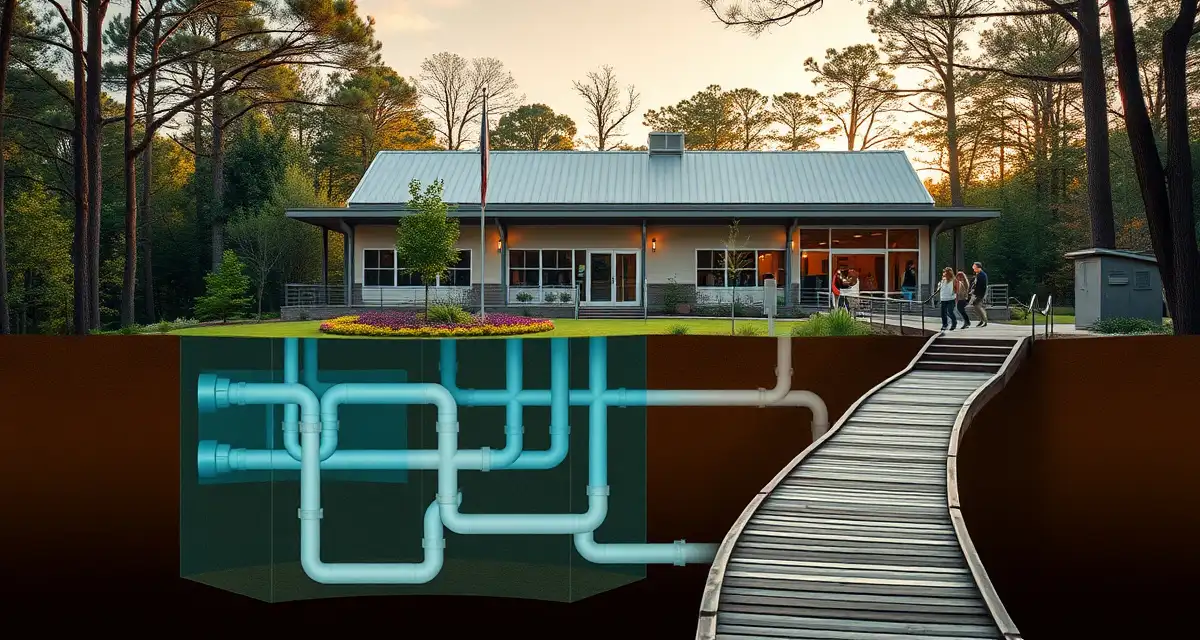
Septic Service for Nature Centers and Environmental Education Facilities
By the SepticMind Editorial Team
Environmental education facilities that fail septic compliance create public credibility problems. Nature centers are often held to higher environmental standards than other small public facilities, and for good reason: these organizations spend their days teaching visitors about environmental responsibility. A nature center with a failing septic system that's discharging to the environment is undermining its own educational mission.
TL;DR
- Nature Centers facilities have distinct wastewater loading patterns that affect septic system sizing, service frequency, and permit requirements.
- Commercial and institutional properties like nature centers typically require more frequent pumping than residential systems due to higher daily usage.
- Some nature centers operations generate waste streams (grease, chemicals, or high-volume flow) that require pre-treatment before reaching the septic system.
- Service contracts for nature centers provide predictable recurring revenue and are easier to manage with a platform that tracks commercial account schedules.
- Health department inspections for nature centers properties may require septic system condition documentation as part of facility licensing.
- Septic companies specializing in nature centers service build referral networks with property managers, architects, and health inspectors in that niche.
The good news is that most nature centers have the institutional values to take septic management seriously once they understand the connection between their onsite wastewater system and the environmental stewardship they teach.
The Credibility Connection
Nature centers attract visitors who care about environmental outcomes. Donors, funders, school groups, and community members choose nature centers as partners because they trust the organization to practice what it preaches.
A septic system that's overdue for service isn't just a maintenance issue. It's a potential environmental compliance problem that, if it becomes a surface discharge or groundwater contamination event, creates a credibility crisis the organization can't easily recover from.
The flip side: nature centers that can point to exemplary environmental management practices, including their onsite septic system, have a genuine stewardship story to tell. Documentation of responsible facility management supports grant applications, donor communications, and educational programming about environmental stewardship in everyday operations.
SepticMind's environmental facility account type documents exemplary green compliance practices for nature centers. The account isn't just a maintenance record. It's a stewardship documentation tool.
Green Septic Options for Environmental Education Facilities
Nature centers that are building or upgrading their facilities have an opportunity to model innovative onsite wastewater approaches that align with their environmental mission:
Aerobic treatment units (ATUs): Produce higher-quality treated effluent than conventional systems. The cleaner effluent reduces environmental impact and may be appropriate for sensitive locations. The alternative septic system management guide covers ATU monitoring and documentation.
Constructed wetlands: Treat wastewater through natural biological processes using wetland plants and soil filtration. Particularly relevant for nature centers with wetland habitats, as a well-designed constructed wetland can serve as both a treatment system and an educational demonstration.
Composting toilets: Eliminate the liquid wastewater component entirely for toilet waste. Works well in dry locations or where water supply is limited. Requires maintenance and compost management but produces no liquid effluent.
Rainwater harvesting with drip irrigation of treated effluent: Some advanced systems pair ATU treatment with drip irrigation of the treated effluent for landscape irrigation. The effluent reuse component reduces discharge to the environment.
Native plant drainfields: Using native plants in the drainfield area rather than conventional grass allows the drainfield to serve dual purposes: wastewater treatment and native plant habitat demonstration.
State Park and Forest Service Adjacent Compliance
Many nature centers are located adjacent to state parks, national forests, or other protected lands. This proximity creates environmental compliance considerations beyond standard county septic rules:
Buffer zone requirements: Many states require minimum setbacks from protected lands for new or modified septic systems.
Water quality standards: Nature centers near sensitive water bodies face stricter effluent quality requirements.
USFS or state park coordination: If your facility uses access through protected land or has easements affected by land management agencies, those relationships may include environmental compliance commitments.
For state parks with similar environmental sensitivity considerations, and for national parks with federal environmental standards, those guides cover the adjacent land management compliance frameworks.
Service Intervals for Nature Center Facilities
Nature centers range from small visitor centers with modest daily use to larger facilities with classrooms, overnight programs, and significant daily visitor counts. Service intervals should be based on actual daily occupancy.
For a small nature center with 20-50 daily visitors and minimal staff, annual inspections with pump-outs every 2-3 years is appropriate. Larger facilities with overnight programs, school group accommodations, and high daily visitor counts may need annual service.
Get Started with SepticMind
Managing service contracts for nature centers properties is easier with a platform built for the septic trade. SepticMind tracks commercial service schedules, documents every inspection visit, and keeps your compliance records organized by property. See how it handles your commercial account portfolio.
Frequently Asked Questions
What septic compliance practices are appropriate for an environmental education center?
Environmental education centers should meet all county health department requirements as a minimum, including current commercial permits, regular service on an appropriate interval for the facility's occupancy, and complete service documentation. Beyond minimums, nature centers can model exemplary practices: using green system alternatives where appropriate (constructed wetlands, composting toilets, ATUs), documenting their environmental performance in annual reports and donor communications, and using their septic management as a teaching example for visitors. The credibility of environmental education is enhanced, not diminished, by showing that the organization manages its own facility with the same care it encourages in others.
What green septic system options work for an environmental nature center?
Several alternatives align well with environmental education values: constructed wetlands that treat wastewater through natural biological processes and can serve as educational demonstrations; aerobic treatment units that produce cleaner effluent for lower environmental impact; composting toilets that eliminate liquid waste discharge entirely; and treated effluent drip irrigation systems that reuse treated water for landscape irrigation. The right option depends on site conditions, applicable county and state permits, and the facility's educational mission. Work with a licensed engineer who has experience with alternative systems and can help design a solution that's both compliant and consistent with the organization's environmental values.
Does SepticMind support green compliance documentation for environmental facility accounts?
Yes. SepticMind's environmental facility account type captures the system type and environmental performance characteristics of the nature center's wastewater system, not just the standard pump-out schedule. Green compliance documentation can be stored in the account for use in grant applications, annual reports, and donor communications. For facilities with constructed wetlands or other alternative systems, the specialized monitoring and maintenance requirements are tracked alongside standard compliance records. County health department compliance and any additional environmental agency requirements for protected-area-adjacent facilities are documented in the same account.
How often should a septic system serving a nature centers property be inspected?
Septic systems at nature centers properties should be inspected at least annually and pumped more frequently than residential systems, since commercial-scale daily water usage accelerates sludge and grease accumulation. The exact frequency depends on the specific activities at the facility, peak occupancy, any food service or chemical use on-site, and local regulatory requirements. A service provider familiar with nature centers operations can recommend an appropriate inspection and pumping schedule based on the system's actual usage profile.
What septic system issues are most common at nature centers properties?
The most common septic problems at nature centers properties are rapid sludge accumulation from high occupancy, grease trap failure if food service is involved, hydraulic overloading during peak-use periods, and non-biodegradable waste disposal from cleaning or maintenance activities. Regular inspection and a service contract with clear maintenance intervals are the most effective ways to catch these problems before they cause system failure or regulatory violations.
Try These Free Tools
Sources
- National Onsite Wastewater Recycling Association (NOWRA)
- US EPA Office of Wastewater Management
- NSF International
- Water Environment Federation
- National Environmental Services Center (NESC)