Residential septic system cost: what homeowners actually pay
By the SepticMind Editorial Team
TL;DR
- A new residential septic system costs $3,500 to $15,000 or more, with the typical homeowner spending $6,000 to $10,000 fully installed.
- Your soil, lot size, system type, and local permit rules drive most of the variance.
- Annual upkeep runs $250 to $600.
- Skip the maintenance and a $500 pump-out becomes a $20,000 drain field replacement.
What does a residential septic system cost?
The honest answer: your lot decides more than your wallet does. A conventional gravity system on a flat lot with sandy loam soil lands around $3,500 to $6,000. Put that same house on a rocky hillside with tight clay, or in a county that demands engineered plans and multiple inspections, and you're looking at $15,000 to $20,000 or more.
The EPA's SepticSmart program pegs the average new system at roughly $3,000 to $10,000, though that range is a few years old and doesn't fully reflect current labor and materials inflation [1]. Contractors in higher-cost states and mountainous regions like Colorado report typical installs of $8,000 to $15,000 for a standard three-bedroom home today.
Here's what homeowners actually pay for the major pieces:
| Cost component | Typical range |
|---|---|
| Perc test and soil evaluation | $250, $1,200 |
| Engineering and design (if required) | $500, $3,000 |
| Permits | $200, $1,500 |
| Tank (1,000 to 1,500 gal concrete or plastic) | $600, $2,500 |
| Tank installation (excavation, labor) | $1,500, $4,000 |
| Conventional drain field (leach field) | $2,000, $10,000 |
| Alternative system upcharge | $5,000, $15,000 |
| Total, conventional system | $4,000, $15,000 |
| Total, alternative/advanced system | $10,000, $30,000+ |
Those ranges are wide because the job itself is wide. A 1,000-gallon plastic tank runs $600 to $900 at supply houses. A 1,500-gallon precast concrete tank in a remote area can cost $2,500 for the tank alone, plus a crane to set it. Excavation and plumbing labor swings 2x between rural Midwest markets and coastal or mountain ones.
What factors change the price the most?
Soil is the single biggest cost driver. A perc test that fails, or a site evaluation showing high groundwater or shallow bedrock, means no conventional gravity system for you. Now you're pricing a mound, an aerobic treatment unit (ATU), or a drip irrigation system. All of them cost more and demand more upkeep.
Lot topography matters almost as much. Flat, accessible lots are cheap to dig. Rocky terrain or tight equipment access can double the excavation bill. Some sites in the Colorado Front Range foothills need blasting, which tacks on $3,000 to $8,000 by itself.
Household size sets the minimum tank and field. Most states size systems by bedrooms, not actual occupants. A three-bedroom home usually needs a 1,000-gallon tank and a field sized for 300 to 450 gallons per day. Add a fourth bedroom and you'll size up both. The Colorado Department of Public Health and Environment's Water Quality Control Division uses a table of design flows by dwelling size to set minimum capacity [2].
Local permitting adds real cost and time. Some counties require a licensed engineer's stamped design; others take a contractor's field sketch. Permit fees run from under $200 in rural counties to over $1,500 in sensitive watersheds. Inspection schedules, setbacks from wells and property lines, and mandated system types (some counties ban cesspools or require ATUs near lakes) all shift by jurisdiction.
Materials prices have climbed. PVC pipe, concrete, and diesel touch every install. Most markets have raised prices 15 to 25 percent since 2021, and lead times on some precast tanks have stretched into weeks.
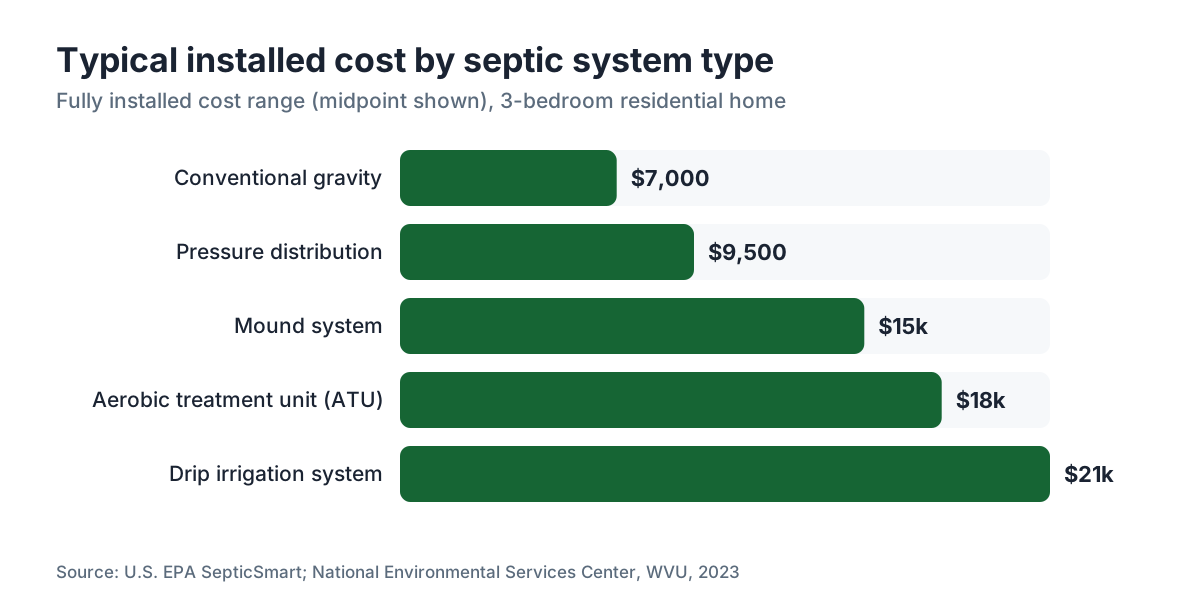
How much does each type of septic system cost?
Not all septic systems are built the same, and the type you can legally install is mostly decided by your soil and local code, not your budget.
Conventional gravity system ($4,000 to $10,000). The standard. A tank collects solids and sends clarified effluent to a gravel-filled trench field. It works on sites that pass a perc test and have enough separation from groundwater. Lowest cost, lowest maintenance. Most suburban and rural homes run this.
Pressure distribution system ($7,000 to $12,000). Adds a pump and distribution manifold so effluent doses the field evenly. Required where soil percolates too fast or where even distribution matters for compliance. The pump adds $500 to $1,500 upfront and a recurring maintenance line long-term.
Mound system ($10,000 to $20,000). Built on top of existing grade when you don't have enough natural separation from groundwater or bedrock. It's a manufactured soil bed sitting above your yard. High labor and fill cost. Common in Wisconsin, Minnesota, and parts of the Mid-Atlantic. The University of Minnesota Extension's onsite sewage treatment program notes mound systems require imported sand of specific gradation and precise construction to work correctly [3].
Aerobic treatment unit (ATU) ($10,000 to $25,000). A multi-chamber system that pumps air in to speed bacterial digestion, producing much cleaner effluent. Required in some states and counties, especially Texas, where conventional systems often can't meet setbacks. Higher upfront cost, plus annual service contracts ($150 to $300 a year) and eventual component replacement.
Drip irrigation system ($12,000 to $30,000). Pumps treated effluent through small-diameter tubing buried just below a lawn or landscape bed. Works on sites that can't support a traditional field. Very even distribution, but plenty of mechanical parts that can fail.
Constructed wetland ($10,000 to $20,000). Used in specific environmental or regulatory situations, mostly the Southeast and parts of the Pacific Northwest. Uncommon for typical homes.
For most homeowners without a failing perc test or a strange lot, the conventional system (with pressure distribution if needed) is the right call. ATUs and drip systems get sold to people who don't strictly need them. Get a second opinion before you commit to a system that costs twice as much.
Researching install costs specifically? The deeper breakdown in our cost to install septic system guide covers contractor selection and bid comparison.
What does septic system installation cost by region?
Location moves the price more than almost anything else, even for the same system type. Labor rates, permit costs, and soil all cluster geographically.
| Region | Typical installed cost range |
|---|---|
| Rural Midwest (flat, sandy soil) | $4,000, $8,000 |
| Southeast (variable soil) | $5,000, $12,000 |
| Pacific Northwest (wet, clay soil) | $8,000, $18,000 |
| Colorado and Rocky Mountain states | $8,000, $20,000+ |
| New England (shallow bedrock common) | $8,000, $20,000 |
| California (strict regulations) | $10,000, $25,000 |
Colorado runs on the high end for a few reasons that stack up: rocky or clay-heavy soils across much of the state, county-by-county permitting that often requires engineered designs, and altitude plus access headaches on mountain properties [2]. El Paso County, Jefferson County, and most of the Western Slope layer their own standards on top of CDPHE rules. A standard three-bedroom install in Douglas or Elbert County often runs $10,000 to $15,000. A mountain property in Gilpin or Clear Creek County can hit $20,000 to $30,000 once soil remediation, a mound, or an ATU comes into play.
For a detailed look at what drives tank-only costs, see our cost to put in a septic tank guide.
What are the ongoing maintenance costs for a septic system?
Purchase price isn't the real cost of ownership. Maintenance skipped this year becomes a repair that costs ten times more next year.
Pumping is the baseline. A conventional system needs pumping every three to five years, depending on household size. Septic tank pumping costs $300 to $600 for most residential tanks, and remote or hard-access jobs run higher. Our how often to pump septic tank guide walks through the sizing math.
Inspections should happen every one to three years. A basic septic tank inspection runs $100 to $300. A full system inspection that probes the drain field and checks the distribution box runs $200 to $600. The EPA's SepticSmart program recommends yearly inspections for systems with mechanical parts (pumps, float switches, aerators) [1].
Repairs are where costs spike. A failed float switch is $150. A cracked baffle is $300 to $800. A clogged distribution box costs $400 to $1,200 to dig up and fix. A septic tank repair for a broken inlet or outlet baffle usually stays under $1,000 if you catch it early. A collapsed tank or failed leach field is $5,000 to $20,000. Our septic system repair guide breaks down what fails and what the fix costs.
Typical annual maintenance cost by system type:
| System type | Annual maintenance cost |
|---|---|
| Conventional gravity | $100, $300 (amortized pump-out + inspection) |
| Pressure distribution | $150, $400 (add pump maintenance) |
| Mound system | $200, $500 |
| ATU (aerobic) | $300, $600 (includes required service contract) |
| Drip irrigation | $400, $800 |
The EPA estimates that maintaining a septic system properly runs roughly $250 to $500 a year, and that a neglected system can fail early instead of lasting the 25 to 30 years a cared-for system reaches [1].
How much does a septic system cost compared to public sewer?
This one is worth answering straight, because plenty of homeowners think they're stuck when they aren't, or think sewer is obviously better when it isn't.
Connecting to a municipal sewer line, if one runs past your property, costs $3,000 to $15,000 in tap fees, connection fees, and the plumbing to abandon the old septic. After that you pay a monthly sewer bill of $30 to $100 or more, depending on your city. Over 20 years, those monthly fees alone total $7,200 to $24,000, before you count the connection.
A well-maintained conventional septic system costs $4,000 to $10,000 to install and $250 to $500 a year to keep up, totaling $9,000 to $20,000 over 20 years. The long-run numbers often land close. On rural lots where extending a sewer main would cost $20,000 to $100,000 per household (you usually pay a share of that extension), septic wins on economics without a contest.
The real septic advantage is independence. No utility rate hikes, no sewer district assessments, no service interruptions. The real risk: a failing system can cost $10,000 to $30,000 to replace or remediate, especially if drain field contamination has to be dealt with.
What does it cost to replace a failed septic system?
Replacing a failed system always costs more than maintaining one. You're paying for emergency scheduling, possible contamination cleanup, new permits, and maybe a different (pricier) system type if the original footprint is compromised.
A full replacement, new tank and new drain field, runs $8,000 to $25,000 for a conventional system and $15,000 to $40,000 for a required alternative. If the field failed from saturated soil and you have no second field area on the lot, options get expensive fast: mound systems, ATUs, or connecting to sewer where it's available.
Drain field restoration products (bacterial additives, aeration systems) get sold as the cheap alternative to replacement. Nobody has good independent long-term data on them. The most honest summary I've seen comes from University of Minnesota Extension, which notes that aeration of failed leach systems shows variable results in research and isn't a reliable substitute for replacement once biomat buildup is extensive [3].
The worst case is a system that has contaminated groundwater or a nearby well. Remediation can mean excavating and replacing soil, with costs reaching $50,000 to $100,000 in extreme cases. That's rare. It's also why the EPA's SepticSmart program pushes regular maintenance so hard [1].
For repair cost specifics, the septic tank repair and septic system repair guides sort out which failures are fixable and which force a full replacement.
Are there grants or financing options for septic system costs?
Yes, and more people qualify than realize it.
The USDA Rural Development program offers grants and loans for septic repairs and replacements under the Section 504 Home Repair program. Income-eligible homeowners in rural areas can get grants up to $10,000 for repairs or low-interest loans up to $40,000 for bigger projects. You apply through your local USDA Rural Development office [4].
The EPA's Clean Water State Revolving Fund (CWSRF) is a federal-state partnership that states use to fund water quality projects, including onsite wastewater systems. Several states have used CWSRF money to stand up low-interest loan programs specifically for homeowner septic upgrades [5].
Many states run their own grant programs. Florida's Small County Onsite Sewage Program, for instance, has funded septic-to-sewer conversions and system upgrades in certain counties. Check your state environmental agency's website for what's live now.
County-level programs exist too, usually tied to watershed protection goals. If you live near a sensitive water body (a lake, an estuary, a drinking water source), your county may offer rebates of $1,000 to $5,000 for upgrading to an advanced treatment system.
Without grants, most septic contractors offer payment plans, and a home improvement loan through a bank or credit union is a reasonable route for a $5,000 to $15,000 project. Home equity financing works if you have the equity. Steer clear of contractor-arranged financing with high interest rates, which some companies push hard.
How can I get an accurate estimate for my specific situation?
Get at least three bids, all for the same scope. Most contractors do a site visit and give a written estimate for free or for $100 to $200, often credited toward the job. Make sure each bid spells out: perc test or site evaluation (if not already done), permit fees, tank cost and size, drain field type and square footage, all labor, and any required inspections.
Ask each contractor what happens if they hit rock or high groundwater. Get a clear answer on change orders: what triggers one, how much notice you get, and what your approval rights are. Surprises are common in excavation, and a contractor who builds in a realistic contingency (10 to 15 percent) is more trustworthy than one who hands you a suspiciously tight number.
Confirm your contractor is licensed and insured in your state. Most states require a specific license for onsite wastewater installers, separate from a general contractor's license. Your state health department or environmental agency keeps a list of licensed installers [2].
Service operators tracking installs and maintenance across multiple properties can run job costing, permit tracking, and service scheduling in one place with SepticMind's operations platform (septicmind.com).
One thing worth doing before any bids: pull your county's current permit fee schedule and required setbacks. Knowing what your county demands before the contractor shows up lets you spot a bid that's cutting corners on permits or lowballing required specs.
What routine services keep septic costs low over time?
The math here is unusually clear. Pumping every three to five years at $300 to $600 costs you, at most, $2,000 over twenty years. A drain field failure from a tank that was never pumped and let solids overflow costs $5,000 to $20,000. It's one of the best deals in home ownership.
Beyond pumping, water use matters. Spreading laundry across the week instead of six loads on Saturday gives the field time to recover. Low-flow fixtures cut the hydraulic load. The EPA's SepticSmart guidance notes a single leaky toilet can waste 200 gallons a day, enough to hydraulically overload a system sized for a small household [1].
Keep grease, wipes (even the "flushable" ones), medications, and harsh chemical cleaners out of the system. They either kill the bacterial culture in the tank or physically clog the field. A septic tank cleaning that removes accumulated grease and includes a baffle inspection is worth doing anytime you notice slow drains or odors.
Keep records. Know your tank location, size, last pump-out date, and system type. Buying a home on septic? Get a pre-purchase septic tank inspection and ask for every maintenance record. That $200 to $600 inspection is nothing next to finding a failing drain field after closing.
Frequently asked questions
How much does a septic system cost for a 3-bedroom house?
A conventional septic system for a three-bedroom home typically costs $6,000 to $12,000 fully installed, including the tank, drain field, labor, and permits. Difficult soil, a required engineered design, or an alternative system type can push the total to $15,000 to $25,000. The three-bedroom size usually needs a 1,000-gallon tank and a drain field sized for 300 to 450 gallons per day.
What is the cheapest type of septic system?
A conventional gravity-fed system is the least expensive, typically $4,000 to $8,000 installed. It has no mechanical parts, minimal maintenance, and a long service life when the field is properly sized and the tank gets pumped on schedule. The catch: it only works on lots with suitable soil and enough separation from groundwater. If your site fails a perc test, you can't build the cheap system no matter how much you'd prefer it.
How long does a septic system last?
A well-maintained conventional septic system lasts 25 to 40 years. The tank itself (concrete or fiberglass) can last 50 years or more if it doesn't crack or corrode. The drain field is the limiting part, typically 25 to 30 years with proper care. Neglected systems, where the tank is never pumped and solids migrate into the field, can fail in 10 to 15 years.
Does a septic system add value to a home?
A functioning, well-maintained septic system is neutral to mildly positive for value. Rural buyers expect it, and it doesn't hurt you. A system close to its rated capacity for the household, or one with no maintenance records, creates negotiating pressure at sale. A failing system is a material defect that must be disclosed in most states and will cut the sale price by more than the repair costs.
How much does a septic system cost in Colorado?
Colorado septic installs typically run $8,000 to $20,000, with mountain properties often above that. Rocky soils, high groundwater in mountain valleys, strict county permitting, and frequent engineered-design requirements push costs over the national average. Jefferson, Gilpin, and Clear Creek counties often require alternative systems that add $5,000 to $15,000 over a basic conventional setup. The Colorado DPHE sets the baseline standards every county program builds on [2].
Can I install a septic system myself to save money?
In most states, no. Onsite wastewater installation requires a licensed installer, engineered permits, and county inspections. Installing without permits creates major liability at resale and can bring fines. A few rural states allow owner-installation on your own property with a permit, but you'd still have to pass inspections. The savings rarely justify the risk, and unpermitted systems are a deal-killer in real estate transactions.
How much does it cost to pump a septic tank?
Septic tank pumping costs $300 to $600 for most residential systems, with the national average around $400. Remote properties, tanks left unpumped for years (which take extra time), or tanks with access issues run higher. Pumping should happen every three to five years for a typical household. See our detailed septic tank pump out guide for what a proper service includes.
What happens if I don't pump my septic tank?
Solid waste builds up until it exceeds the tank's capacity and flows into the drain field with the effluent. Those solids clog the soil pores, creating a biomat that stops drainage. Once a field is clogged, restoration is difficult and often impossible. You're looking at field replacement costing $5,000 to $20,000. The EPA's SepticSmart program directly links skipped pump-outs to premature drain field failure [1].
Are there grants to help pay for a septic system?
Yes. The USDA Rural Development Section 504 program offers grants up to $10,000 and loans up to $40,000 for income-eligible rural homeowners [4]. The EPA's Clean Water State Revolving Fund supports state-level low-interest loan programs in many states. Some counties near sensitive water bodies offer rebates of $1,000 to $5,000 for system upgrades. Check your state environmental agency and local USDA office for current availability.
How much does a drain field replacement cost?
Replacing a failed drain field (leach field) costs $5,000 to $20,000 for a conventional replacement, more if the site requires a mound, ATU, or drip system. The range is wide because soil, field size, site access, and local permit fees all vary. If the original field area is contaminated, you may need to place the new field elsewhere on the lot, which adds design and permitting costs.
What is included in a septic system inspection?
A basic inspection covers locating and opening the tank, checking liquid levels, inspecting inlet and outlet baffles, and looking for backup or overflow. A thorough inspection also probes the drain field for soft spots or surfacing effluent, checks the distribution box, and tests any pumps or mechanical parts. Costs range from $100 to $600 depending on depth. See our septic tank inspection guide for what to ask for.
How do I know if my septic system is failing?
Common signs: slow drains throughout the house (more than one fixture), gurgling in the pipes, wet or unusually green patches over the drain field, sewage odors inside or out, and sewage backing up into fixtures. Any of these warrants an immediate inspection. Drain field failure is often silent until it's severe, which is why proactive inspections every one to three years beat waiting for symptoms.
How does household size affect septic system cost?
Most states size systems by number of bedrooms, assuming a set daily flow per bedroom. More bedrooms mean a bigger tank and bigger field, both of which cost more. Adding a bedroom to an existing home can trigger a permit review and possibly force a tank or field upgrade. The formula varies by state but commonly assumes 100 to 150 gallons per day per bedroom.
Sources
- U.S. EPA, SepticSmart Program: Average new septic system cost $3,000 to $10,000; annual maintenance $250 to $500; neglected systems can fail prematurely; leaky toilet can waste 200 gallons per day
- Colorado DPHE, Water Quality Control Division, Regulation 43 (Onsite Wastewater Treatment Systems): Colorado state standards for septic system design flows, sizing by bedrooms, and county-level permitting requirements
- University of Minnesota Extension: Mound systems require imported sand of specific gradation; aeration of failed leach systems has variable results and is not a reliable substitute for replacement when biomat accumulation is extensive
- USDA Rural Development, Single Family Housing Programs (Section 504 Home Repair): Income-eligible rural homeowners can receive grants up to $10,000 and loans up to $40,000 for home repairs including septic systems
- U.S. EPA, Clean Water State Revolving Fund: Federal-state partnership funding water quality projects including low-interest loans for onsite wastewater system upgrades in multiple states
- National Environmental Services Center, West Virginia University: Cost ranges for septic system types including conventional, pressure distribution, mound, and aerobic treatment units for residential applications
- U.S. EPA, Septic Systems Homeowner Resources: Septic system inspection recommendations; system lifespan with and without maintenance; components of a full system inspection
- Virginia Department of Health: State-level onsite wastewater program using CWSRF funding for homeowner loan programs and permit requirements
- North Carolina Department of Health and Human Services: State permitting requirements, licensed installer requirements, and system type restrictions for residential septic in North Carolina
- Texas Commission on Environmental Quality: ATU (aerobic treatment unit) requirements and annual service contract mandates for Texas residential septic systems
Last updated 2026-07-09