Septic tank pumping schedule: how often does yours really need it?
By the SepticMind Editorial Team
TL;DR
- The EPA recommends pumping your septic tank every 3 to 5 years for a typical household.
- Your real interval depends on tank size, number of people in the home, and how much solid waste you generate.
- A 1,000-gallon tank serving four people usually hits the 3-year mark.
- Larger tanks or smaller households can stretch to 5 years or beyond.
Why does pumping frequency matter so much?
Skipping pumps is the single most common reason septic systems fail early. Here's the simple mechanics: your tank separates waste into three layers. Scum floats on top, effluent sits in the middle, and sludge settles at the bottom. The tank holds those solids while clarified liquid flows out to the leach field. When sludge and scum grow thick enough to crowd out the liquid zone, solids escape into the drain field and clog it permanently.
Drain field replacement costs between $5,000 and $25,000 depending on soil and system type [1]. A pump-out runs $300 to $600 in most markets. That math is pretty hard to argue with.
The EPA's SepticSmart program puts it plainly: "Have your septic system inspected and pumped regularly by a licensed contractor." Regular pumping is the cheapest insurance a homeowner can buy [2].
There's a second reason that gets less attention. A pumped tank gives a technician a clear view of the interior. Cracks, baffle damage, and inlet pipe problems show up at pump-out time, not after they've already caused a failure. Think of it as a maintenance inspection that happens to also remove waste.
How often should you pump a septic tank?
The short answer: every 3 to 5 years for most homes, confirmed by both the EPA and state extension programs across the country [2][3]. But that range is wide enough to be almost useless without the two numbers that actually drive it: tank size and household size.
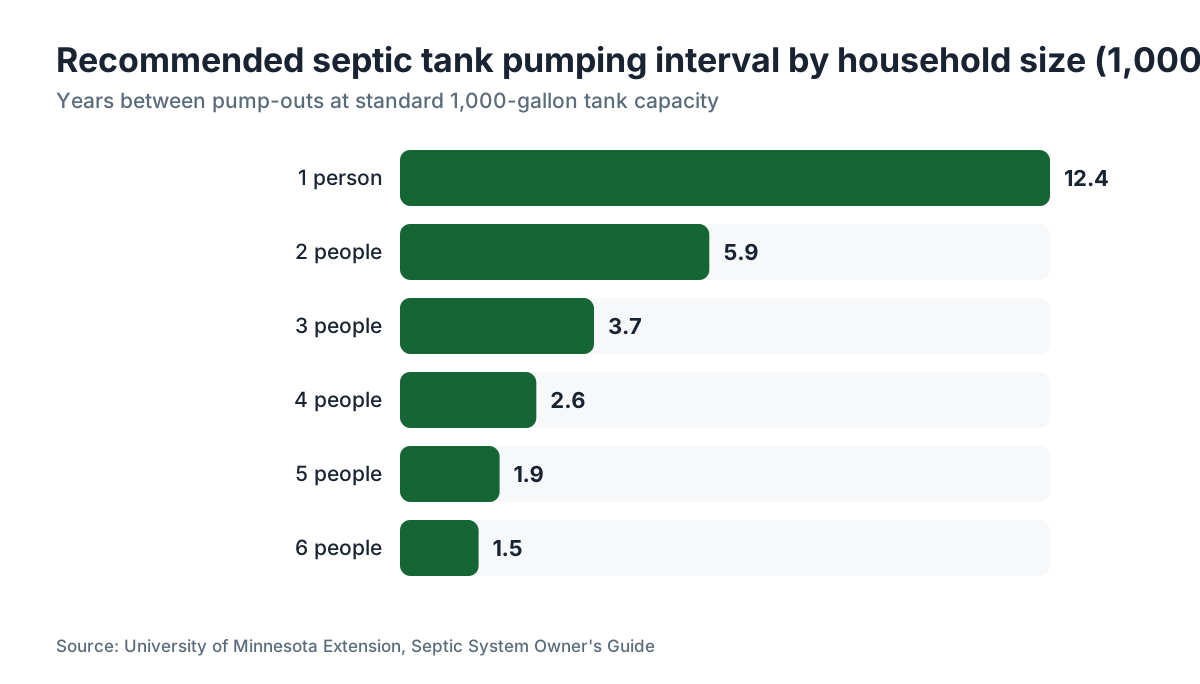
The table below shows recommended pumping intervals based on those two variables. These figures come from the University of Minnesota Extension's pumping frequency table, which is one of the most widely cited resources in the industry [3].
| Household size (people) | 500-gal tank | 750-gal tank | 1,000-gal tank | 1,250-gal tank | 1,500-gal tank |
|---|---|---|---|---|---|
| 1 | 5.8 yrs | 9.1 yrs | 12.4 yrs | 15.6 yrs | 18.9 yrs |
| 2 | 2.6 yrs | 4.2 yrs | 5.9 yrs | 7.5 yrs | 9.1 yrs |
| 3 | 1.5 yrs | 2.6 yrs | 3.7 yrs | 4.8 yrs | 5.9 yrs |
| 4 | 1.0 yr | 1.8 yrs | 2.6 yrs | 3.4 yrs | 4.2 yrs |
| 5 | 0.7 yrs | 1.3 yrs | 1.9 yrs | 2.6 yrs | 3.3 yrs |
| 6 | 0.4 yrs | 1.0 yr | 1.5 yrs | 2.0 yrs | 2.6 yrs |
A few things stand out. A 500-gallon tank serving four people needs annual pumping. Most codes require at least a 1,000-gallon tank for a three-bedroom home, which is one reason that size became the default minimum in most states. Single-person households in adequately sized tanks can often go a decade between pump-outs, though most practitioners still recommend a check-in at five years.
For a closer look at the mechanics behind how often to pump a septic tank, the interval logic gets more nuanced when you factor in garbage disposals and seasonal use.
What variables push your interval shorter or longer?
Tank size and household size explain most of the variance. They don't explain all of it. Several other factors can move your schedule.
Garbage disposals. This one matters more than most homeowners expect. Running food waste through a disposal raises the solids load entering your tank substantially. Oregon State University Extension notes that garbage disposal use can reduce pumping intervals by 50 percent or more in some cases [4]. If you have one and use it regularly, subtract at least a year from whatever the table above suggests.
Household habits. Frequent guests, teenagers (higher water use), and home-based businesses that add bathroom load all increase the effective household size. A couple who hosts family for three months a year might function more like a four-person household for calculation purposes.
Water softener discharge. Brine backwash from a water softener adds salt and extra water to the tank, which can disrupt the microbial balance and flush solids toward the drain field faster. Some states restrict or prohibit softener discharge to septic systems for exactly this reason.
The "25% rule." Most practitioners use a simple field benchmark: when combined sludge and scum layers take up more than 25 to 33 percent of the tank's liquid volume, it's time to pump [3]. A licensed technician measures this with a sludge judge during a septic tank inspection. If you're not sure where you stand, scheduling an inspection beats guessing.
Older tanks. Concrete tanks built before the 1980s often have corroded baffles or degraded inlet pipes, which let more solids pass through. Older systems need more frequent attention regardless of what the math says.
Seasonal and vacation properties. A cabin used eight weeks a year generates a fraction of the waste of a full-time residence. These systems can often go five to ten years between pump-outs, but they still need periodic inspection because sitting idle creates its own problems with dried-out seals and cracked concrete.
Does a full septic tank always mean it's time to pump?
No. A septic tank that looks full is not automatically overdue. A properly working tank is always full to the outlet pipe level. That's normal. What matters is whether the sludge and scum layers have grown to the point where they crowd the working liquid zone.
So "the tank is full" is the wrong question. The right question: how thick are the bottom sludge layer and the top scum layer? When the sludge layer is within 6 inches of the bottom of the outlet baffle, or the scum layer is within 3 inches of the bottom of the outlet, it's time to pump [3].
A qualified pumper measures this on arrival and tells you honestly whether the tank needed service or whether you called a year early. Most will. If a company refuses to measure and just pumps regardless, that's a sign they're billing for convenience rather than need. Even an "early" pump isn't wasted money if the inspection catches a baffle problem.
If you're seeing sewage backup into the house or wet spots over the drain field, those are emergency signs that go beyond a routine pump schedule. At that point you're looking at potential septic tank repair or septic system repair work, not a routine service call.
What do state regulations say about pumping frequency?
Federal law doesn't set a mandatory pump interval, so this falls to state and local codes. Requirements vary considerably.
Many states tie frequency to property sales rather than a fixed calendar. In Massachusetts, a septic inspection is required at the time of property transfer, and the system must meet Title 5 standards or the seller must escrow funds for repairs [5]. That's a point-in-time requirement, not an ongoing schedule mandate.
Other states are more prescriptive. Some counties in Florida require pumping every 3 to 5 years and keep records with the local health department [6]. Virginia's regulations require pumping when solids reach the 25-to-33-percent threshold but don't mandate a fixed interval [7].
A few jurisdictions have moved to mandatory pump-and-inspect programs with enforcement teeth. The Chesapeake Bay watershed states have faced the most regulatory pressure because of water quality concerns downstream.
The practical upshot: check with your county health department or state environmental agency for your specific requirement. For most homeowners, following the EPA's 3-to-5-year guidance and keeping records puts you in a defensible position with any regulator and protects you at resale.
Keeping those records matters more than most people realize. If you ever need to sell the home, refinance, or deal with a neighbor complaint about a failing system, a documented pump history is proof you maintained the system. Operators who want to automate that documentation trail can look at platforms like SepticMind, which tracks service records and reminder schedules across their customer base.
For context on full installation requirements and what your state might mandate at the design stage, see cost to install septic system.
How do you build your own pumping schedule?
Start with the table in the second section. Find your household size on the left and your tank size across the top. If you don't know your tank size, check your permit records at the county health department, look for the original as-built drawing filed when the home was built, or ask a pumper to measure the tank during the next service call.
Then adjust for the factors above. Garbage disposal? Subtract a year. Frequent guests or a teenager? Add a person to your household count. Older tank with questionable baffles? Shorten the interval by six months.
Set a calendar reminder. I'd set it six months before the target date so you can schedule during off-peak season, usually late spring or early fall when pumpers aren't buried in emergency calls. Getting on the schedule early also means you can shop competitive quotes rather than calling in a panic.
After each pump-out, ask the technician two things: what were the sludge and scum measurements, and did they see anything unusual inside the tank? Document both. Those numbers over time give you a real-world read on your actual accumulation rate, which beats any table.
If the last pump-out is a mystery because you just bought the home, schedule a service call within the first year regardless of the seller's claims. A septic tank pump out and inspection on move-in is cheap next to discovering a failed system after the fact.
What does a septic pump-out actually cost?
Nationally, a standard residential septic tank pump-out runs between $300 and $600, with the median somewhere around $400 to $450 for a 1,000-gallon tank [8]. That range is wide because costs vary sharply by region, access difficulty, and whether any extra work is needed.
Here's how the price components break down:
| Cost factor | Typical range | Notes |
|---|---|---|
| Standard pump-out (1,000-gal) | $300 to $500 | Most common residential scenario |
| Larger tanks (1,500+ gal) | $400 to $650 | Charged by volume or flat rate |
| Locating buried lid | $50 to $150 | One-time fee; install a riser to avoid repeat charges |
| Riser installation | $200 to $400 | Eliminates lid-location fee permanently |
| Filter cleaning | $0 to $75 | Many pumpers include this; ask upfront |
| Travel/distance surcharge | $0 to $100 | Rural properties farther from disposal sites |
The single best way to cut long-run costs is to install risers if your lids are buried. You pay once, and every future pump-out skips the locate fee. Over a 20-year ownership span with pumping every 3 years, that's potentially $1,000 saved.
Prices also reflect local disposal costs at approved septage receiving facilities. In dense markets with multiple providers, prices stay competitive. In rural areas with one pumper and a long haul to disposal, expect the higher end of the range.
Call two or three providers for quotes and confirm they're licensed in your state. Licensing matters because unlicensed haulers may not dispose of waste at approved facilities, which is an environmental violation that can come back to you.
What happens during a pump-out, and what should you ask for?
A professional pump-out uses a vacuum truck, which pulls the tank's contents into an on-board holding tank. The technician should remove both the liquid zone and the sludge layer at the bottom. Some pumpers do a "clean pump" that removes everything; others do a partial pump. Always ask for a full clean-out.
Before the truck leaves, a good technician inspects the visible components. That includes checking inlet and outlet baffles or tees, looking for cracks in the tank walls, and examining the effluent filter if one is installed. Effluent filters, located at the outlet baffle, catch solids before they reach the drain field and need cleaning every pump cycle [9].
After pumping, ask the technician to run water from inside the house briefly to confirm the inlet flow looks normal and the outlet isn't backing up. It's a 30-second check that verifies the basic flow path is intact.
Request a written service report showing the sludge and scum depths measured before pumping, the approximate volume removed, and any notes on tank condition. Most reputable companies provide this. If yours doesn't, ask for it specifically. That document is your maintenance record.
For more on what a full service visit covers, see septic tank cleaning and septic tank emptying for the distinction between routine pump-outs and more intensive cleaning procedures.
Can additives, enzymes, or treatments replace or extend pumping?
No. This is a flat answer backed by consistent research. The EPA states directly that "biological additives do not eliminate the need for routine pumping" and that some chemical additives can damage the system or contaminate groundwater [2]. A study published by the National Small Flows Clearinghouse found no evidence that commercially available septic additives meaningfully extended pump intervals or improved system performance [10].
The septic additive market is large and the marketing claims are aggressive. The pitch usually goes: our product boosts the bacterial population in your tank, so solids break down faster and you don't need to pump as often. The problem is that a healthy septic tank already holds billions of anaerobic bacteria doing exactly that work. Adding more bacteria from a packet doesn't speed up solids removal in any measurable way. The math of accumulation is dominated by inorganic solids, which no bacteria can break down at all.
Money spent on additives is money that should go toward the pump-out itself. There is no shortcut here.
The one thing you can do to support healthy tank biology is to avoid killing it. Antibacterial soaps, bleach in large quantities, and harsh drain cleaners all cut bacterial activity in the tank. Moderate use is generally fine; the system handles normal household cleaning products. Bulk dumping of any of these is a different story.
How do you find and schedule a reputable local pumper?
Start with your state's licensing database for septic or onsite wastewater contractors. Every state has one, usually run by the department of health or environmental quality. A quick search for "[your state] septic pumper license lookup" usually finds it directly. Licensing confirms legal compliance with waste disposal requirements.
Beyond licensing, look for:
- Membership in the National Association of Wastewater Technicians (NAWT) or the National Onsite Wastewater Recycling Association (NOWRA), both of which have training requirements [11]
- Verified reviews on Google or the Better Business Bureau, specifically looking for mentions of written reports and professional conduct
- A company that asks you questions before quoting, such as tank size and last pump date, rather than immediately naming a price
Scheduling tip: late fall and early spring are generally the best windows for non-emergency pump-outs. Summer is peak season for plumbing and septic emergencies, and winter access gets complicated in cold climates. A pumper who can reach your tank in comfortable conditions does a more thorough job.
Operators managing high volumes of customer relationships across service territories sometimes use scheduling and record-keeping software like SepticMind to track pump dates, system specs, and service history at scale. For homeowners, a simple spreadsheet or calendar reminder covers what you need.
For related guidance on finding qualified help for other work, see septic tank pumping for a full overview of the service itself.
What are the warning signs that you've waited too long?
Most septic systems fail gradually, not overnight. By the time you see obvious signs, damage is often already done. Here's what to watch for.
Slow drains throughout the house. One slow drain is usually a localized clog. Multiple slow drains, or slow drains combined with gurgling sounds, suggest a backed-up system.
Sewage odors indoors or outdoors. A sulfur smell inside the house, especially near floor drains in the basement, suggests liquid is finding its way back. Outdoors, a persistent odor over the tank or drain field area means gases or effluent are escaping.
Wet, spongy ground over the drain field. Standing water or unusually lush green grass over the drain field lines is a classic sign of hydraulic overload. The drain field can't absorb effluent fast enough.
Sewage backup into the house. This is the worst-case presentation. At this stage you need an emergency service call, not a routine pump appointment.
High nitrate readings in a nearby well. If you test your well water annually (which you should if the well is within 100 feet of the septic system), a spike in nitrates can indicate effluent breakthrough [12].
Any of the last three signs warrants immediate attention and possible repair work. A pump-out may buy temporary relief, but it won't fix a drain field already clogged with biomat. At that stage you need a diagnosis, not a vacuum truck. See leach field for what drain field failure looks like and what remediation options exist.
Frequently asked questions
How often should a septic tank be pumped for a family of 4?
A family of four using a standard 1,000-gallon tank should pump every 2.6 years according to University of Minnesota Extension pumping frequency data. Rounding up to every 2 to 3 years is a safe practical rule. If you have a larger 1,250-gallon tank, you can stretch to about 3.4 years. Use a garbage disposal regularly and trim both numbers by roughly a year.
What is the average cost of a septic tank pump-out?
Most homeowners pay between $300 and $600 for a standard residential pump-out, with the national median around $400 to $450 for a 1,000-gallon tank. Larger tanks, buried lids requiring locating, or long travel distances to disposal facilities push costs toward the higher end. Installing access risers over buried lids eliminates the locate fee on every future service call.
Can I pump my septic tank too often?
Technically yes, but it's rarely a real problem. Over-pumping removes beneficial bacteria and can briefly disrupt system biology, but the tank rebuilds its microbial population within days of normal use. The bigger risk is under-pumping, not over-pumping. If your pumper measures sludge and scum depths and says the tank didn't need service yet, you just paid for an early pump, which is not harmful.
How do I know when my septic tank is full and needs pumping?
A tank at normal operating level is always full of liquid, so "full" is not the right benchmark. The real signal is sludge depth: when the bottom sludge layer is within 6 inches of the outlet baffle, or the scum layer within 3 inches, it's time to pump. A technician measures this with a sludge judge during a service call. Slow drains, odors, or wet ground over the drain field are late-stage warning signs.
Do I need to pump a septic tank before selling my house?
It depends on your state. Massachusetts requires a full Title 5 inspection at property transfer and the system must pass or the seller must escrow funds for repairs. Many other states require inspection or pumping records as part of the transaction. Even where it's not legally required, buyers and their inspectors routinely request recent pump records. A tank pumped and inspected in the past year is a clean disclosure item.
Does a garbage disposal affect how often I need to pump?
Yes, significantly. Garbage disposals send food solids into the tank that would otherwise go in the trash. Oregon State University Extension notes that disposal use can cut pumping intervals by 50 percent or more. If you use a disposal regularly, subtract at least a year from the standard interval your tank size and household size would otherwise suggest, and consider increasing tank size if you're installing a new system.
What happens if I never pump my septic tank?
Sludge and scum layers keep growing until they crowd out the liquid zone. Solids then escape into the drain field, clogging the soil pores that treat and absorb effluent. Once a drain field is clogged with biomat, pumping alone won't fix it. Replacement costs between $5,000 and $25,000 depending on system type and soil conditions. Skipping pumps is the most common preventable cause of total system failure.
How long does a septic tank pump-out take?
For a typical 1,000-gallon residential tank with accessible lids, a pump-out takes 30 to 60 minutes from truck arrival to departure. If lids are buried and need to be located, add 20 to 30 minutes. A thorough inspection of baffles and interior condition adds another 10 to 15 minutes but is worth every bit of it. A crew that leaves in under 20 minutes probably didn't do a complete job.
Do septic additives and enzymes actually work?
No. The EPA states clearly that biological additives do not eliminate the need for pumping, and research from the National Small Flows Clearinghouse found no evidence that commercial additives meaningfully reduce solids accumulation. A healthy tank already contains billions of naturally occurring anaerobic bacteria. Save the money you'd spend on additives and put it toward the pump-out itself, where it will actually do something.
How often should a vacation home septic tank be pumped?
Less often than a full-time residence, because the system sees far less use. A cabin used 8 to 10 weeks per year generates roughly 20 percent of the annual waste load of a primary home. Many vacation property systems go 5 to 10 years between pump-outs. That said, inspect every 5 years regardless, because idle tanks can develop cracked concrete, dried gaskets, or rodent damage that pumping alone won't reveal.
Is it okay to pump a septic tank in winter?
Yes, but it's harder and sometimes more expensive. Frozen ground can make locating and opening lids difficult, and the vacuum hose can freeze in extreme cold. If you're in a cold climate, fall pumping before the ground freezes is the practical preference. If you have an emergency in winter, qualified pumpers handle it routinely. Just expect some access complications and potentially a higher service charge.
What size septic tank do most homes have?
Most single-family homes built after the 1970s have a 1,000-gallon tank as the minimum, which is the standard required by most state codes for a three-bedroom home. Larger homes or those built to higher local standards may have 1,250 or 1,500-gallon tanks. Older homes sometimes have 500 or 750-gallon tanks that are undersized by today's standards and need more frequent pumping.
What questions should I ask when hiring a local septic pumping company?
Ask whether they're licensed in your state, whether they provide a written service report showing sludge and scum depths, whether their price includes a full clean-out rather than a partial pump, and whether they'll clean the effluent filter if one is installed. Also confirm they dispose of waste at a licensed septage receiving facility. A company that answers all five questions confidently is worth hiring.
How do I find out when my septic tank was last pumped?
Check with the previous homeowner if you recently bought the property. Your county health department sometimes maintains pump records, especially in areas with mandatory inspection programs. A local pumping company may have records if they've serviced the home before. If none of those options work, schedule a service call and have the technician inspect and pump the tank; the sludge depth will tell them roughly how long it's been.
Sources
- EPA SepticSmart Week homeowner page: Drain field replacement is among the most expensive septic repairs a homeowner can face; EPA emphasizes pumping as preventive maintenance
- EPA SepticSmart: How to Care for Your Septic System: EPA recommends septic tank inspection and pumping every 3 to 5 years and states that biological additives do not eliminate the need for routine pumping
- University of Minnesota Extension: Septic System Owner's Guide: Pumping frequency table by household size and tank size; 25-to-33-percent sludge/scum threshold for when to pump
- Oregon State University Extension: Septic System Owner's Manual: Garbage disposal use can reduce pumping intervals by 50 percent or more
- Massachusetts DEP Title 5 Onsite Septic Regulations (310 CMR 15.000): Massachusetts requires a septic system inspection at point of property transfer under Title 5 regulations
- Florida Department of Health: Onsite Sewage Treatment and Disposal Systems: Some Florida counties require septic pumping every 3 to 5 years with records maintained at the local health department
- Virginia Department of Health: Sewage Handling and Disposal Regulations: Virginia regulations require pumping when solids reach the 25-to-33-percent threshold but do not mandate a fixed calendar interval
- HomeAdvisor (Angi): Septic Tank Pumping Cost Guide: National average cost for a residential septic tank pump-out is approximately $300 to $600 with median around $400 to $450
- EPA: A Homeowner's Guide to Septic Systems: Effluent filters at the outlet baffle require cleaning at each pump-out cycle to prevent solids from reaching the drain field
- National Environmental Services Center (NESC) / National Small Flows Clearinghouse: Septic System Additives: Research found no evidence that commercially available septic additives meaningfully reduce solids accumulation or extend pump intervals
- National Association of Wastewater Technicians (NAWT): NAWT provides training and certification requirements for septic service technicians
- CDC Private Well Water Testing Guidance: Homeowners with wells near septic systems should test annually for nitrates as elevated levels can indicate effluent breakthrough
Last updated 2026-07-09