Gravity septic systems: how they work, cost, and last
By the SepticMind Editorial Team
TL;DR
- A gravity septic system moves wastewater from your house through a septic tank and into a drain field using only slope and gravity, no pumps or electricity required.
- It's the simplest, lowest-cost onsite sewage system, usually $3,000 to $15,000 installed.
- With pumping every 3 to 5 years, expect 25 to 40 years of service.
What is a gravity septic system and how does it work?
A gravity septic system is the oldest and most common type of onsite sewage treatment in the United States. Wastewater leaves your house through a main drain line, flows downhill into a buried septic tank, gets partially treated there, and then moves by gravity through perforated pipes into a drain field, where soil microbes finish the job. No electricity. No pump. Just slope.
The system has three parts: the building sewer (the pipe from your house), the septic tank, and the soil absorption system, usually called a drain field or leach field. All three sit at successively lower elevations, which is why gravity systems only work on lots with enough natural fall from the house to the drain field.
Inside the tank, heavy solids settle to the bottom as sludge, grease and lighter material float to the top as scum, and the liquid in the middle, called effluent, exits through a baffle into the drain field pipes. The soil does the final heavy lifting: filtering pathogens, absorbing nutrients, and returning clean water to the groundwater table. The EPA's SepticSmart program describes a septic system as a treatment system that, when properly sited and maintained, protects both public health and nearby water sources. [1]
The elegance is the simplicity. Nothing burns out. No float switches fail. No control panel to decode. That's also the trade-off: the site has to cooperate. If your lot is flat, the soil drains too slowly, or the water table sits too high, you need a different system type, usually a pressure-dosed or mound system.
What are the main components of a gravity septic system?
Knowing the parts makes maintenance far less mysterious. Here's what a standard gravity system actually contains.
The inlet pipe and distribution box. Wastewater enters the tank through an inlet baffle, which slows the flow so it doesn't churn the settled sludge. Some systems route effluent from the tank into a distribution box (D-box) before the drain field; the D-box splits flow evenly among multiple lateral lines.
The septic tank. Most residential tanks hold 1,000 to 1,500 gallons and are made of precast concrete, fiberglass, or polyethylene. Concrete dominates because it's durable and available everywhere. A two-compartment tank beats a single-compartment design, and most state codes now require it: the first chamber handles the bulk of solids settling, the second gives clearer effluent quieter conditions to form before it leaves toward the drain field. [2]
Outlet baffle or effluent filter. The outlet baffle keeps floating scum from leaving the tank. Many modern installations add an effluent filter here, a simple cartridge that catches fine solids. These filters need cleaning every 1 to 3 years, and they add years to drain field life. Worth every dollar.
The drain field (leach field). Perforated pipes, typically 4-inch PVC, run through trenches filled with washed gravel or, in newer designs, chambers (open-bottomed plastic arches). Effluent seeps out of the pipes, through the gravel, and into the native soil. Trench depth, width, and total linear footage come from a percolation test and local code. Most residential drain fields run 600 to 1,500 square feet of absorption area. [3]
Cleanouts and access risers. These are the lids you see in your yard. Modern installations bring risers up to ground level so pumpers and inspectors don't have to dig. If yours are buried, adding risers at your next pump-out is money well spent.
What does a gravity septic system cost to install?
Installation cost swings widely. It depends on tank size, drain field size, site conditions, local permit fees, and your regional labor market. Here's an honest range based on industry data and state extension programs.
For a standard 3 to 4 bedroom home, a complete gravity system (tank, drain field, permits, excavation, backfill, and risers) usually runs $3,000 to $15,000. The low end shows up in rural areas with easy soil, simple permits, and cooperative topography. The high end reflects rocky terrain, required engineered designs, or large lots in higher-cost states. [4]
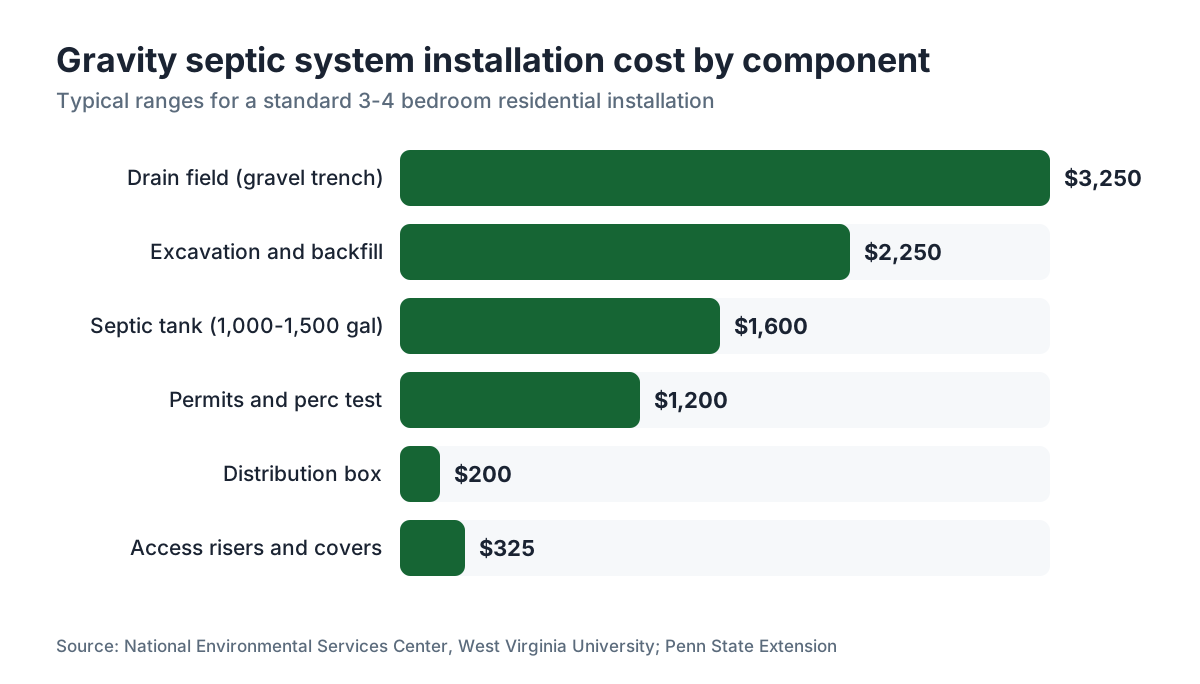
See the chart below for a breakdown by component.
Soil testing (perc test plus soil evaluation) adds $300 to $1,500 depending on whether a licensed soil scientist or engineer is required. Many states, including North Carolina and Virginia, now require a licensed evaluator rather than a contractor-run perc test. [10]
Permit fees run from $50 in some rural counties to more than $1,000 in states with heavier review. Massachusetts is a clear example: Title 5 regulations require engineer involvement and can push total costs toward the top of the range. [5]
Comparing gravity to the alternatives: a mound system usually adds $5,000 to $15,000 over a conventional gravity system, and an aerobic treatment unit (ATU) with pressure dosing can add $10,000 to $20,000. When gravity works for your site, it's always the cheapest option. For a broader look at total project budgets, the cost to install septic system guide breaks down numbers by system type and region.
| Component | Typical cost range |
|---|---|
| Septic tank (1,000 to 1,500 gal, concrete) | $700 to $2,500 |
| Excavation and backfill | $1,000 to $3,500 |
| Drain field (gravel trench, standard lot) | $1,500 to $5,000 |
| Distribution box | $100 to $300 |
| Permits and perc test | $400 to $2,000 |
| Access risers and covers | $150 to $500 |
| Total installed | $3,000 to $15,000 |
What site conditions are required for a gravity system?
Gravity systems are picky about three things: slope, soil, and separation distances. Miss any one and you won't get a permit.
Slope. You need enough fall from the house drain to the tank, and from the tank to the drain field, to hit a minimum 1/8 to 1/4 inch drop per foot of horizontal run (1 to 2% grade). That's not steep. But a dead-flat lot, or a drain field that would sit uphill from the house, rules gravity out entirely.
Soil percolation. The native soil has to accept water at a rate that matches your expected daily flow without flooding the trenches. A percolation test measures how fast water drops in a pre-soaked test hole, expressed in minutes per inch (mpi). Most states allow gravity systems on soils from about 1 mpi (very fast, sometimes needs special treatment) up to 60 to 90 mpi. Soil faster than 1 mpi may need a treatment curtain; soil slower than 90 mpi typically forces an alternative system. [1]
Separation distances. Every state sets minimum horizontal setbacks between drain field components and features like wells, property lines, buildings, and surface water. The EPA recommends at least 50 feet between a septic drain field and any private well, and many states require 100 feet or more. Vertical separation matters just as much: the bottom of the trenches typically needs 2 to 4 feet of unsaturated native soil above the seasonal high water table. [1]
That's not a contractor opinion. It's the code. An honest site evaluation from a licensed soil evaluator, done before you spend money on design, tells you which direction to go.
How long does a gravity septic system last?
A properly installed and maintained gravity septic system lasts 25 to 40 years, sometimes longer. The drain field is usually the part that gives out first. A quality concrete tank can outlast the house. Fiberglass and poly tanks are lighter and easier to install but can shift in high water table conditions, which is one reason concrete still dominates for longevity.
Drain field lifespan depends heavily on what you send into it. Fields that get poorly treated effluent (from an overloaded or rarely pumped tank), excess water (from a leaking toilet or water softener backwash), or solids carryover (from a broken outlet baffle) fail much sooner. The single most common cause of early drain field failure is a tank that wasn't pumped often enough, which lets solids escape and clog the soil pores. That clogging, called biomat formation, is largely irreversible once it gets severe.
Here's the good news. A well-maintained gravity system is one of the most reliable pieces of infrastructure on a residential property. Plenty of systems installed in the 1970s and 1980s still run today with no major component replaced. The ones that fail early almost always have a documented history of neglect, or they were installed in marginal soil to begin with.
The EPA's SepticSmart materials note that a properly maintained septic system can last for decades, with regular inspection and pumping as the main drivers of that lifespan. [1]
How often should you pump a gravity septic system?
The general rule is every 3 to 5 years for a typical household. The right interval for your system depends on tank size and how many people use it.
A 1,000-gallon tank serving two people might go 5 to 7 years between pump-outs. That same tank serving five people might need it every 2 to 3 years. The EPA recommends pumping when sludge depth reaches one-third of the tank's liquid volume, and most pros measure this with a "sludge judge" probe during each service visit. [1]
Nobody has great national data on average pump-out intervals. The most consistent guidance comes from state extension programs. The University of Minnesota Extension recommends checking your tank annually and pumping based on measured sludge accumulation rather than a fixed calendar. [6]
The how often to pump septic tank guide walks through the math by household size and tank volume if you want a precise number.
Pumping costs $250 to $600 in most markets, more in remote areas or when the tank is hard to reach. [9] That's cheap insurance against a drain field replacement, which starts around $5,000 and often runs $10,000 to $20,000.
A few things speed up sludge accumulation and push you toward more frequent pumping: garbage disposals (they add a heavy solids load), large households, long-staying guests, and fats, oils, and greases going down the drain.
What can go wrong with a gravity septic system?
Gravity systems fail in predictable ways. Knowing the failure modes helps you catch trouble early, while repairs are still cheap.
Drain field saturation or biomat. This is the most common serious failure. Biomat is a biological layer that forms at the soil-gravel interface and chokes off water absorption. Mild biomat can sometimes recover with resting (alternating between drain field zones), but advanced biomat means field replacement. Warning signs: slow drains throughout the house, wet spots or lush green patches over the field, and sewage odors outdoors.
Broken or crushed pipes. Driving heavy vehicles over the drain field or tank, root intrusion, or soil settling can crack laterals or inlet and outlet pipes. A camera inspection confirms it fast.
Tank inlet or outlet baffle failure. Baffles are often the first thing to go, especially in older concrete tanks where the original baffles were cast concrete and corrode from hydrogen sulfide gas. Replacing a failed baffle is a straightforward septic tank repair, usually $100 to $300 in parts and labor. Catching the failure before solids escape into the field is the whole point.
Distribution box problems. A cracked or shifted D-box can dump all the flow into one lateral instead of spreading it, overloading one section while starving the rest. D-box replacement costs $200 to $500.
High water table flooding. A wet season can raise the water table and flood the field, causing backups. Usually temporary. But if it keeps happening, the system may have been permitted with marginal separation distance.
For most of these, early detection through annual visual inspection and regular pumping heads off the expensive outcomes. The septic system repair guide covers diagnosis and repair options in more depth.
What maintenance does a gravity septic system need?
Gravity systems are low-maintenance, but low doesn't mean none. Here's what a responsible schedule looks like.
Annual visual inspection. Walk the drain field once a year, ideally in spring after the ground thaws. Look for wet spots, depressions, odors, or unusually lush growth. Check that all access riser lids are intact, not cracked or sunken.
Pump-out every 3 to 5 years. See the pumping section above. When you schedule a septic tank pump out, ask the pumper to inspect the baffles and note the sludge and scum levels in writing. A good pumper documents the tank's condition at every visit.
Effluent filter cleaning. If your system has one (and it should), clean or replace it per the manufacturer's guidance, usually every 1 to 3 years. Many pumpers include this in their service.
Water conservation. Every gallon you push through the system is a gallon the drain field has to absorb. Fix leaky toilets, run full dishwasher and laundry loads, and spread laundry across the week instead of ten loads on Saturday. A running toilet can add 200 gallons a day to your system load.
What to keep out. So-called flushable wipes, feminine hygiene products, cooking grease, medications, and harsh chemical drain cleaners all hurt the biology in your tank and field. The EPA SepticSmart program publishes a specific do-not-flush list. [1]
Operators managing multiple client systems can track inspection intervals, pump-out dates, and service notes in software like SepticMind, which is built for septic service businesses. That kind of digital recordkeeping earns its keep the day a homeowner asks for maintenance history at resale.
For routine septic tank cleaning questions, including what happens during a service visit and what the pumper should check, that guide covers the process in detail.
How does a gravity system compare to a pressure-dosed or mound system?
The comparison that matters most: do you need a gravity system, or something more expensive? Here's how the three stack up.
| Feature | Gravity system | Pressure-dosed system | Mound system |
|---|---|---|---|
| Electricity required | No | Yes (pump) | Yes (pump) |
| Pump maintenance | None | Every 3 to 7 years | Every 3 to 7 years |
| Site requirements | Adequate slope + perc | More flexible | Marginal soils, high water table |
| Installed cost | $3,000 to $15,000 | $8,000 to $25,000 | $10,000 to $30,000+ |
| Annual operating cost | Low | Moderate (electricity + alarm) | Moderate |
| Failure complexity | Drain field clogs | Pump failure + field issues | Pump failure + mound issues |
Pressure-dosed systems use a pump to send effluent in timed doses instead of continuously, which helps slow-draining soils and extends field life. They work well on flatter sites and marginal soils. The trade-off is a pump that needs periodic replacement (typical pump life is 7 to 15 years, replacement around $500 to $1,500 including labor) and an alarm to warn you when it fails.
Mound systems raise the drain field above the native soil surface using sand fill, so they can work where the soil is too tight or the water table too shallow. They cost more to install, need ongoing monitoring in many states, and the mound itself has to stay clear of deep-rooted plants and traffic.
If your site qualifies for gravity, use gravity. It's simpler and cheaper over its whole life. If it doesn't qualify, a licensed designer tells you which alternative fits your conditions.
What do gravity septic systems mean for property value and home sales?
A working, well-maintained gravity septic system is basically a neutral factor in most real estate deals. Buyers in rural areas expect septic and price it in. What creates problems at sale is a failed inspection, a recently failed drain field, or missing maintenance records.
Most states and many counties require a septic inspection as part of a sale. Massachusetts Title 5 requires it. New Hampshire requires it in most municipalities. Even in states without a statewide mandate, lenders, buyers' agents, and home inspectors routinely ask for one. A septic tank inspection that turns up major issues can sink a deal or trigger seller-funded repairs as a condition of closing.
A septic inspection runs from about $150 (visual plus records check) to $400 to $700 for a full inspection with pump-out, dye test, and load test. Worth it before listing.
Sellers who can show records of regular pumping and clean inspections are in a far stronger position than sellers who say "I think it works fine, we've never had it pumped." That last line tells a buyer the tank holds 20 years of sludge and the drain field is at risk. Keep your pump receipts.
For homes with a failing or aging system, the cost to put in a septic tank guide gives you a realistic replacement number to negotiate around or address before listing.
Are there regulations that govern gravity septic system design and use?
Yes, and they stack in three layers: federal, state, and local.
At the federal level, the EPA provides guidance and runs the SepticSmart program, but it doesn't directly regulate individual onsite systems. The Clean Water Act (33 U.S.C. § 1251 et seq.) sets the broad framework for protecting water quality, and EPA guidance documents set minimum recommended standards that states often adopt or exceed. [7]
State regulations are where the real rules live. Every state has an onsite wastewater code that specifies minimum tank sizes, setback distances, soil requirements, drain field sizing methods, and licensing for installers and designers. Some states regulate directly (Massachusetts Title 5, 310 CMR 15.00 [5]); others delegate to counties, as California does under the state's Porter-Cologne Water Quality Control Act.
Local health departments typically issue permits for new installations, require inspections, and handle complaints about failing systems.
The practical takeaway for homeowners: you cannot legally install or significantly alter a septic system without a permit. Unpermitted systems create liability at resale, can be ordered decommissioned, and may not be covered by homeowner's insurance if they contaminate a neighbor's well.
Buying a home with an old system? Ask the local health department whether the system has a permit on file and whether any violations are recorded. That's public information in nearly every jurisdiction.
For state-specific code links, the National Environmental Services Center at West Virginia University keeps an updated index of state onsite wastewater programs. [8]
How do you know when a gravity septic system needs to be replaced?
Repair-or-replace calls are judgment, but a few signals push hard toward replacement.
Replace when the drain field has advanced biomat with widespread surfacing effluent and no untouched reserve area remains; when a camera inspection shows the laterals are collapsed or root-choked across their full length; when a hydraulic load test confirms the field no longer absorbs at the permitted rate; or when your local health department has issued a notice of violation requiring corrective action.
Repair when the problem is isolated: a single broken baffle, a cracked inlet pipe, a failed D-box, or one of several lateral lines that you can abandon and replace with a spare field area. Many properties carry a designated reserve drain field area required by the original permit. If yours does and it's never been used, that's a major asset the day the primary field fails.
The honest answer is that a professional assessment beats any checklist. A licensed inspector who can pump the tank, probe the field, and run a basic hydraulic test gives you better information than symptoms alone. That evaluation runs $300 to $600 and is almost always worth it before committing to a $10,000-plus replacement.
Replacing the drain field without fixing what killed the first one is a common, expensive mistake. If the tank was never pumped, install the new field and start pumping. If a leaking toilet was overloading the system, fix the toilet. The new field won't outlive the old one if the root cause stays.
The septic tank repair and septic system repair guides cover the decision tree in more detail, including costs for common repairs versus full replacement.
Frequently asked questions
Can a gravity septic system work on a flat lot?
It depends on how flat. You need at least 1 to 2% slope (1 to 2 feet of fall per 100 feet of run) from the house to the drain field. A perfectly flat lot usually rules out gravity, but a licensed designer may still find a route with enough natural fall. If not, a pressure-dosed system with a pump can move effluent uphill to a suitable drain field location.
What is the difference between a gravity septic system and a conventional septic system?
They're essentially the same thing. "Conventional septic system" is the term most state codes use for a gravity-fed, soil-absorption system consisting of a septic tank and a gravel trench or chamber drain field. Both terms describe the same basic design. Some sources use "conventional" to set it apart from alternatives like mounds, aerobic units, or drip irrigation systems.
How much does it cost to replace a gravity septic system drain field?
Drain field replacement usually costs $5,000 to $20,000 depending on field size, site access, soil conditions, and whether a new design and permit are required. A reserve field area (if your original permit designated one) can keep costs toward the low end. In areas with difficult access, rocky terrain, or complex regulatory review, costs can top $20,000.
Do gravity septic systems need electricity?
No. A standard gravity system has no electrical components at all. Wastewater moves entirely by gravity from the house to the tank to the drain field. That makes gravity systems immune to power outages and eliminates pump replacement costs. If your system has a pump of any kind, it's either a pressure-dosed system or has had a pump added after the original installation.
How do I find my gravity septic system's drain field location?
Start with your county health department or building department. The original permit usually includes a site plan showing the tank location and drain field footprint. Your local assessor's office may also have records. On the ground, look for a rectangular area of evenly spaced slight depressions or grass of a different color. A septic service company can probe the yard or run a pipe camera to trace the drain line from the tank.
Can you add a garbage disposal if you have a gravity septic system?
You can, but it sharply increases the solids load entering your tank. Most septic pros recommend against it, or at least recommend sizing up to a larger tank if you install one. The EPA SepticSmart program cautions against garbage disposals on septic systems because the extra food waste can overwhelm the tank and lead to solids carryover into the drain field. If you already have one, pump more often.
How do I know if my gravity septic system is failing?
The clearest signs are slow drains across multiple fixtures, gurgling in the plumbing, sewage odors indoors or near the drain field, and wet or spongy ground over the field, sometimes with liquid surfacing. Lush, unusually green grass directly over the field compared to surrounding areas is another tell. Any one of these warrants a professional inspection, not more drain cleaner.
What is a perc test and do I need one for a gravity system?
A percolation test measures how fast water absorbs into your native soil, expressed in minutes per inch (mpi). You almost always need one before installing a gravity system, though some jurisdictions now require a full soil morphology evaluation by a licensed soil scientist instead of or in addition to a perc test. The results decide whether gravity is even permitted, and how large the drain field has to be.
How long does it take to install a gravity septic system?
The physical install usually takes 1 to 3 days for a standard residential system once permits are approved. Permitting is the slow part: most jurisdictions take 2 to 8 weeks to process an application, and some require multiple inspections during installation. Perc testing, design, and permit approval can add 1 to 3 months before a shovel goes in the ground. Plan for that if you're on a construction schedule.
Are gravity septic systems allowed everywhere in the US?
No. Whether a gravity system is permitted depends on your lot's soil, topography, setback distances, and local code. Sites with high water tables, very slow or very fast soils, too little fall from house to field, or wells and surface water nearby will be denied a gravity permit and steered toward an alternative design. Your local health department or a licensed designer determines eligibility during the site evaluation.
What additives or treatments help a gravity septic system?
Most septic additives sold at hardware stores show no proven benefit in a working system. A healthy tank already holds billions of naturally occurring bacteria. The EPA notes that biological additives have not been shown to reduce the need for pumping. Some chemical additives can actually harm the biological process. Save the money. What reliably extends gravity system life is regular pumping, water conservation, and keeping harmful materials out of the drain. [11]
Does a gravity septic system require any permit or inspection to maintain?
Routine maintenance like pumping and effluent filter cleaning generally needs no permit. But any repair that alters the system, replacing a tank, rerouting pipes, or expanding the drain field, typically requires a permit from your local health department. Some counties also require a permit to pump and abandon (decommission) a tank. Check with your local authority before doing anything beyond routine service.
Sources
- US EPA, SepticSmart program: EPA guidance on gravity septic system function, perc rate requirements, separation distances, maintenance recommendations including pump-out frequency, and the do-not-flush list
- US EPA, Onsite Wastewater Treatment Systems Manual (2002): Description of septic tank design standards including two-compartment tank requirements and effluent quality expectations
- North Carolina State University, NC State Extension: Drain field sizing standards, trench design specifications, and soil absorption area requirements for residential gravity systems
- National Environmental Services Center, West Virginia University: Cost ranges for conventional gravity septic system installation: $3,000 to $15,000 depending on site and region
- Massachusetts Department of Environmental Protection, Title 5 (310 CMR 15.00): Massachusetts Title 5 regulations requiring engineer involvement and inspection at real estate transfer, contributing to higher installation costs
- University of Minnesota Extension: Recommendation to inspect tanks annually and pump based on sludge accumulation measurement rather than fixed calendar intervals
- US EPA, Summary of the Clean Water Act (33 U.S.C. § 1251 et seq.): Federal statutory basis for water quality protection that underlies state onsite wastewater regulations
- National Environmental Services Center, West Virginia University: Regularly updated index of state-level onsite wastewater regulations and permitting programs across the US
- Penn State Extension: Pump-out cost ranges ($250 to $600), tank sludge accumulation rates, and guidance on effects of garbage disposals on septic systems
- Virginia Department of Health, Onsite Sewage and Water Services: Virginia requirement for licensed soil evaluators for percolation and soil testing prior to gravity system permitting
- US EPA, SepticSmart program: EPA finding that biological additives have not been shown to reduce the need for pumping in properly functioning septic systems
Last updated 2026-07-09