Septic inspection in Islandia, NY: what to expect and what it costs
By the SepticMind Editorial Team
TL;DR
- A septic inspection in Islandia, NY runs $300 to $600 for a basic visual check and $650 to $1,100 when pumping is included.
- The Suffolk County Department of Health Services enforces standards under Article 6 of the county sanitary code, stricter than New York's 10 NYCRR Part 75.
- Inspectors check the tank, baffles, distribution box, and leach field.
- Most sales here require documented inspection before closing.
What does a septic inspection in Islandia actually involve?
A real septic inspection covers every working part of the system, more than a peek under a lid. That means the tank, the inlet and outlet baffles, the distribution box (people call it the D-box), the lateral lines, and the leach field or cesspool, whichever you have.[1]
The inspector locates the tank first, which can mean probing the yard if the records are old or missing. They open the access ports, look for cracks and structural failure, measure the scum and sludge layers, and confirm the baffles are still intact. Then they follow the effluent path to the D-box and check whether flow reaches every lateral evenly. Last, they walk the drain field looking for ponding, soft ground, or odor. Any of those three means trouble.
Islandia sits in the Town of Islip inside Suffolk County, and the county's Department of Health Services (SCDHS) is the authority that governs onsite wastewater systems here.[2] That matters to you. SCDHS runs its own construction and inspection standards on top of the state rules, so an inspector who mostly works Nassau or upstate may not know the local permit history or the county's cesspool-to-septic upgrade rules.
Here's what most homeowners miss. Suffolk County has a huge stock of old cesspools, not true septic systems. If your Islandia property still drains to a cesspool instead of a leach field, the inspection plays out a little differently, and the pressure to upgrade keeps climbing under the county's cesspool phase-out law (Suffolk County Local Law 38-2020, effective 2023).[3]
How much does a septic inspection in Islandia cost?
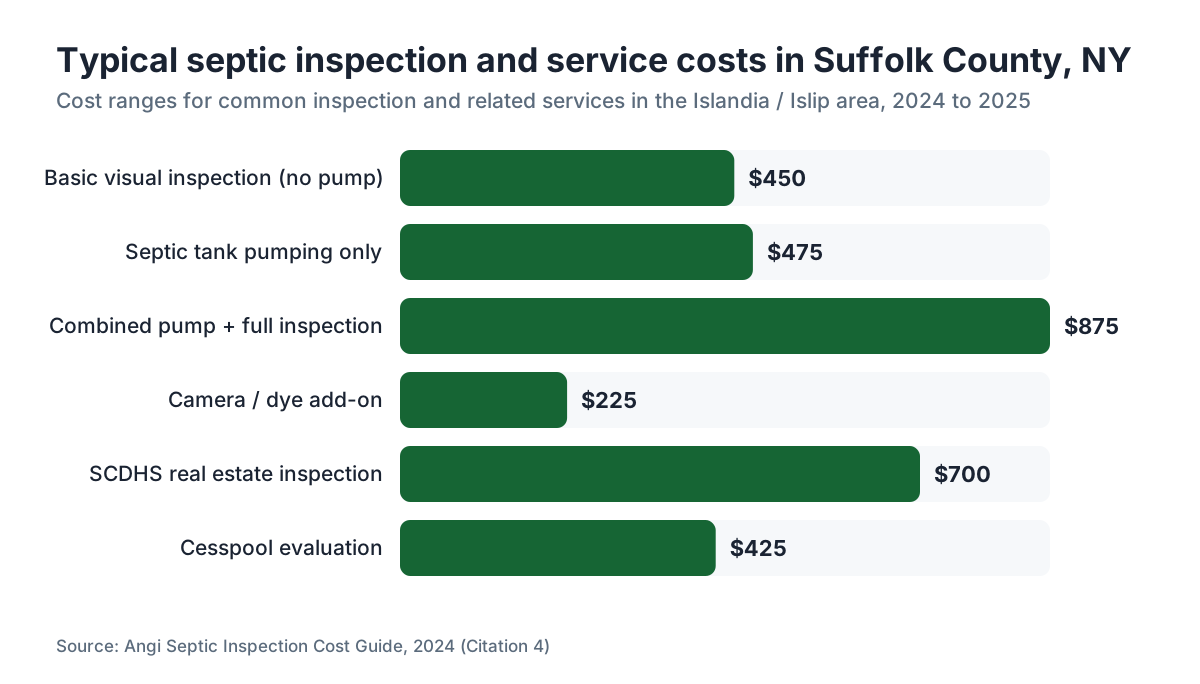
A standard inspection without pumping runs $300 to $600 in this part of Long Island. If the inspector has to pump the tank first to read the interior properly, add $350 to $600 for that, which pushes a combined pump-and-inspect toward $650 to $1,100.[4]
A few things push the price up locally. Suffolk County has fewer licensed inspectors than the demand calls for, especially during the spring and fall real estate crush. Disposal costs add up too, because haulers pay tipping fees at county-approved facilities and pass those along. Systems that haven't been pumped in years, or odd setups like multiple tanks or an old cesspool cluster, take longer and cost more.
For a home sale, some buyers' agents ask for the SCDHS-documented inspection, which comes with county-approved criteria and paperwork. That can mean extra documentation and, once in a while, a follow-up site visit if the inspector finds problems.
The table below gives you a quick reference.
| Service | Typical Islandia / Suffolk County range |
|---|---|
| Basic visual inspection (no pumping) | $300 to $600 |
| Tank pumping only | $350 to $600 |
| Combined pump + full inspection | $650 to $1,100 |
| Camera / dye inspection add-on | $150 to $300 additional |
| SCDHS-documented real estate inspection | $500 to $900 |
| Cesspool evaluation (legacy system) | $300 to $550 |
These ranges come from published cost surveys and regional provider pricing across 2024 and 2025. Your actual quote moves with the company, how hard the tank is to reach, and tank size.[4]
What Suffolk County rules govern septic inspections near Islandia?
Suffolk County runs under Article 6 of the Suffolk County Sanitary Code, which sets the minimum standards for septic design, installation, and maintenance.[2] New York's main onsite wastewater law lives in 10 NYCRR Part 75, but in Suffolk County the local code is usually stricter and controls in practice.
For sales, SCDHS has long required a Certificate of Existing Sewage Disposal on private systems before title changes hands. The exact triggers for that certificate have shifted over the years, and the county updates the process now and then, so confirm the current rules with SCDHS or a licensed inspector before you assume last year's version still applies.[2]
Suffolk County Local Law 38-2020 is the one that matters most right now. It requires cesspools in certain setback zones from surface water to be upgraded to Innovative/Alternative (I/A) nitrogen-reducing systems on a set schedule, and it starts a countywide phase-out for systems within 500 feet of surface water or in Groundwater Management Zone IV, which covers parts of Islip.[3] If your Islandia property has a cesspool and you're selling or doing a big renovation, an inspector will flag it, and you may face an upgrade requirement before or soon after the sale.
Nitrogen is the reason behind all of it. Cornell Cooperative Extension of Suffolk County has tied high cesspool density to nitrogen loading in the county's sole-source aquifer, the drinking water supply for most of Long Island.[11] The EPA's SepticSmart program supplies the baseline good-practice standards inspectors fall back on when no tighter local rule applies.[5]
How do you find a licensed septic inspector in Islandia, NY?
In New York, septic inspectors are usually licensed professional engineers (PEs), licensed sanitarians, or contractors the county licenses to do inspection work. Suffolk County runs its own licensing program for septic installers and inspectors under SCDHS.[2]
Start with the SCDHS Bureau of Public Health Protection, which can point you to its registered installers and inspectors. Your real estate attorney and agent will have referrals from recent Islip Town deals too. Ask directly whether the inspector has worked on the cesspool-plus-septic hybrid setups that are common on Long Island, more than the conventional two-compartment tank with a leach field you see everywhere else.
When you call, ask three questions. Are you licensed in Suffolk County? Do you do the inspection yourself or send a technician? Does your report format meet SCDHS transfer requirements? A company that hedges on any of those three deserves a second look.
Operators juggling inspections across a stack of Long Island properties can use tools like SepticMind to track inspection records, permit deadlines, and service history in one place. That gets useful fast as the county's cesspool upgrade deadlines drive a surge of required work.
Get at least two quotes. In a tight market like Suffolk County, the same scope of work can vary by $200 or more between companies.
What are the most common septic problems found during Islandia inspections?
Baffle deterioration is the finding that shows up most on older Islandia properties. Concrete baffles, standard before the 1990s, break down in the acidic air inside a tank. A missing or collapsed baffle lets solids run straight toward the drain field, and that shortens field life fast.[1]
Cesspool failure comes second. Plenty of Islandia homes went up in the 1960s and 1970s on cesspools that are now past 50 years old. Nobody designed them to last this long. Inspectors look for collapsed sidewalls, chambers so full there's no room left for effluent to soak away, and sewage breaking out at the surface.
High groundwater is a problem baked into Long Island's geology. The water table across much of Suffolk County sits close to the surface, and after heavy rain or in a wet year, groundwater can back up into a leach field and choke it off. An inspector who visits right after a storm may flag a field that runs fine in dry weather. The EPA notes that groundwater depth is one of the most important site factors for whether a system works at all.[5]
D-box problems turn up in maybe a third of inspections on systems that skipped maintenance. A cracked or settled D-box sends too much flow to one lateral and starves the rest, so one branch fails early while the others sit half-used. Caught early, it's a cheap fix.
Sometimes the inspection turns up no records at all. Islandia saw heavy building in the 1960s, and old permit files can be spotty. Without records, an inspector can't confirm what's actually buried without probing, and that adds time and money.
Does a home sale in Islandia require a septic inspection?
Yes, for all practical purposes. New York has no single statewide law forcing a septic inspection on every real estate deal, but Suffolk County's Certificate of Existing Sewage Disposal requirement makes an inspection necessary for most sales of properties on private systems.[2]
Lenders often demand it on their own. FHA and VA guidelines require that the septic system work and meet local health standards, and conventional-loan underwriters will often condition approval on a clean inspection in places like Suffolk County where onsite systems are everywhere and cesspool failures are well documented.[6]
Even where no rule forces the issue, any buyer with a competent agent should order one. A septic tank inspection costs almost nothing against a failing drain field, which can run $15,000 to $30,000 or more to replace in Suffolk County, where permitting, engineered designs, and labor all cost more. See our guide to a septic tank inspection for what the process covers.[7]
Selling? Get an inspection before you list. A problem the buyer's inspector finds can sink a deal or force a last-minute price cut bigger than the repair itself. Get ahead of it and you either fix the thing or price it into the sale on your own terms.
How often should Islandia homeowners have their septic system inspected?
The EPA SepticSmart program recommends inspecting your septic system every three years and pumping every three to five, depending on household size and tank volume.[5] A cesspool-style system usually needs a shorter interval, because it holds less and can hit failure faster.
For a typical Islandia single-family home with a 1,000-gallon tank and two to four people, every three to four years works for both inspection and pumping. Got a garbage disposal? Shorten it. Disposals dump a lot of extra solids into the tank and build sludge faster than most people expect.
After a big storm, or any wet stretch that leaves standing water in the yard, it's worth having the field checked even if you're not due for a full inspection. Long Island's water table can rise and create temporary wet-field conditions that look like failure but aren't.
See how often to pump septic tank for a full breakdown of pumping intervals by household size.
Don't wait for symptoms. By the time sewage backs up into a lower-level drain or you smell odor in the yard, the system is already under stress. Routine inspection is the only way to catch baffle wear, sludge buildup, and early D-box trouble before they turn into expensive repairs.
What happens if a septic inspection in Islandia finds a problem?
It depends how bad the finding is. Inspectors usually sort problems into three buckets: routine maintenance, repairable defects, and outright system failure.
Routine items, like a high sludge level or a corroded access riser, need septic tank pumping and some minor hardware work. A follow-up visit clears those, and they rarely move a real estate deal much.
Repairable defects cover a cracked D-box, a failed baffle, or a broken distribution line. A concrete baffle gets replaced with a plastic tee, and a D-box swap takes half a day. Septic tank repair of this kind usually runs $300 to $1,500 depending on what broke. These are negotiable in a sale: the buyer asks for a repair credit, or the seller fixes it before closing.
System failure is a different animal. A saturated or collapsed leach field, or a structurally compromised tank, means full septic system repair or replacement, and in Suffolk County that runs $20,000 to $40,000 once you add engineering, permits, and the county's push toward I/A systems in sensitive groundwater zones.[7] A finding like that will change the sale price or the timeline.
Cesspools get their own treatment. SCDHS may require an upgrade as a condition of any repair permit. The county's cesspool elimination effort has subsidy money through the Suffolk County Septic Improvement Program, which has offered rebates up to $30,000 for eligible low-to-moderate-income homeowners moving to I/A systems.[3] Check current funding straight with the county, since rounds open and close.
Documentation matters. Get the report in writing, with photos. If the inspector gives you verbal findings only, ask for a written summary before you sign anything tied to a sale.
What is the difference between a septic tank and a cesspool in Islandia?
This trips up a lot of Long Island homeowners, because people use the terms loosely. A true septic system has two stages: a tank where solids settle and anaerobic bacteria break down waste, and a separate leach field (also called a drain field) where the clarified effluent spreads into the soil. The soil does the final treatment.
A cesspool is a single underground chamber, usually concrete or block, that takes all the wastewater directly. Solids pile up at the bottom, and liquid seeps out through the walls and floor into the surrounding soil. No separate drain field. Cesspools treat wastewater less thoroughly and hold less, which is why they fail faster as water use climbs.
Islandia and the rest of Islip Town saw heavy building during the cesspool era. Many homes built before 1973 have cesspools. Homes built or permitted after that generally have conventional septic systems, though the exact cutoff varies house to house.
The system type changes what the inspector looks for. On a septic system, the leach field condition is the key output. On a cesspool, they're checking chamber integrity, the headspace above the sludge, and whether the surrounding soil still absorbs at a decent rate. Both types need regular septic tank pump out service, though the scheduling and logistics differ a bit.
How should Islandia homeowners prepare for a septic inspection?
Good prep cuts inspection time and cost, and it sometimes turns up problems you'd otherwise pay the inspector to find.
Dig up your system records first. SCDHS may have permit files on record; call the Bureau of Public Health Protection or check the county's online permit lookup. If the house came with any paperwork, find the as-built drawing that shows tank location and field layout. Got nothing? The inspector probes for the tank, which adds time.
Skip the laundry right before the inspection. A tank that just took a surge of water is harder to read accurately, because the liquid level sits artificially high and solids stay in suspension. The system should run on normal use for a few days before the inspector shows up.
Mark the tank location if you know it. Move heavy items, vehicles, or landscaping off the access risers. If the risers are buried, tell the inspector; they'll probe, but narrowing the search area saves time.
Ask what the report will cover and in what format. For a real estate deal, confirm the format works for SCDHS and the buyer's attorney, and get clarity on turnaround time for the written report.
Walk your yard and note any wet patches, odors, or oddly lush grass over what you think is the drain field. Tell the inspector. Those observations, even the ones that turn out to be nothing, give the inspector useful data.
SepticMind's homeowner maintenance tracker lets you log system records, set reminders, and store inspection reports digitally, so you're not hunting for paperwork before the next sale or service call.
Is it cheaper to repair or replace a failing septic system in Islandia?
Repair wins almost every time if the leach field is still good. A failed baffle, cracked tank wall, or broken D-box gets fixed for $500 to $3,000 in most cases and buys years of function. That math is easy.
The hard call comes when the drain field is saturated or the tank is structurally compromised. Full leach field replacement in Suffolk County runs roughly $15,000 to $35,000 for a standard install, more if you're going to an I/A system, which the county increasingly requires in groundwater-sensitive areas.[7] A new tank on top of that raises the total.
Some failing fields can be rehabbed without full replacement. Hydro-jetting lateral lines, resting one branch of a D-box while the other recovers, or adding a lateral to an underloaded zone can stretch field life by years. None of that is permanent, but it buys time and costs far less than a rebuild.
The hard truth on Long Island: if a cesspool has fully failed and the county requires an upgrade to a nitrogen-reducing I/A system, you're looking at $20,000 to $50,000 installed before any subsidy.[9] That's not a repair, that's a project. Check the Suffolk County Septic Improvement Program before you assume you're paying full freight. See cost to install septic system for a full breakdown of replacement cost factors.
Get a second opinion before you commit to full replacement. Some inspectors run conservative by nature, and some are tied to installation contractors. An independent engineer's review of a failed-field diagnosis is worth the $300 to $500 fee.
Frequently asked questions
Do I need a septic inspection to sell my house in Islandia, NY?
Yes, practically speaking. Suffolk County's Certificate of Existing Sewage Disposal requirement means most property transfers involving an onsite septic or cesspool system need an inspection and documentation. Lenders for FHA, VA, and many conventional loans require a passing inspection on their own. Even if no rule directly mandated it, any buyer's agent worth their commission will order one.
How long does a septic inspection take in Islandia?
A standard inspection without pumping takes 1 to 2 hours for a typical single-family property with accessible tank lids. Add 30 to 60 minutes if the tank needs pumping first for a proper interior read. Older properties with unknown or buried components can run 3 hours or more when the inspector has to probe for the tank location.
What is the Suffolk County Septic Improvement Program?
It's a county-funded rebate program that helps eligible homeowners replace failing cesspools with Innovative/Alternative nitrogen-reducing septic systems. Rebates have reached up to $30,000 for income-qualified households. The program runs in funding rounds and isn't always open. Contact Suffolk County directly for current availability and eligibility before you assume you qualify.
Can I use a septic dye test instead of a full inspection in Islandia?
A dye test alone isn't enough for most purposes in Suffolk County. It can confirm effluent is reaching the drain field, but it can't judge baffle condition, sludge levels, tank integrity, or whether a field is slowly failing under load. SCDHS real estate inspection requirements go well past what a dye test shows. Treat a dye test as a pass/fail screen, not a diagnosis.
What is an Innovative/Alternative (I/A) septic system and does my Islandia home need one?
I/A systems are advanced treatment units that strip nitrogen from effluent before it reaches the drain field or soil. Suffolk County's groundwater is heavily hit by nitrogen from onsite systems, and Local Law 38-2020 requires I/A systems in certain setback zones near surface water. Whether your Islandia property needs one depends on its location within groundwater management zones and what triggers the upgrade requirement.
How much does it cost to replace a drain field in Suffolk County?
Expect $15,000 to $35,000 for a standard leach field replacement in Suffolk County, depending on soil conditions, engineered design requirements, and system size. If the county requires an I/A system, installed costs can reach $20,000 to $50,000 before any rebate. Engineering and permit fees alone often run $2,000 to $5,000 on Long Island, where the rules are tougher than most regions.
What are signs my Islandia septic system is failing?
Slow drains throughout the house, sewage odors indoors or in the yard, wet or spongy ground over the drain field, oddly lush green grass above the leach field, and sewage backing up into lower-level fixtures are the main warning signs. Any of these warrants an immediate call to a licensed inspector, not a wait-and-see approach. Sewage breaking out at the surface is a public health issue, more than a maintenance one.
Does a cesspool count as a septic system in Islandia, and how is inspection different?
A cesspool is an older, simpler onsite wastewater system with no separate drain field. It's distinct from a true septic system. Inspecting a cesspool focuses on chamber integrity, headspace above the sludge, and the surrounding soil's absorption capacity. Cesspools are legal to maintain in Suffolk County but face growing pressure to upgrade under the county's cesspool elimination effort.
How often should I pump my septic tank in Islandia?
Every three to five years for a typical household is the EPA's general guidance. In practice, a 1,000-gallon tank serving four people should be pumped every three to four years. If you have a garbage disposal or run a home business with high water use, shorten that. Your inspector can measure the scum and sludge layers and give you a tighter number based on actual accumulation.
Who is responsible for a septic inspection when buying a home: the buyer or seller?
In most Islandia deals, the buyer orders and pays for the inspection as part of due diligence, like a home inspection. But sellers sometimes order pre-listing inspections to get ahead of surprises. When SCDHS documentation is required for title transfer, the seller usually provides it, and the cost may be negotiated. Confirm who bears which costs in your purchase contract.
Can I inspect my own septic system in Islandia?
You can look for surface symptoms and check accessible risers, but you can't do the subsurface evaluation a licensed inspector does, and self-inspection results won't satisfy SCDHS or lenders. Opening a septic tank without proper equipment also exposes you to hydrogen sulfide and other gases. Leave the formal inspection to a licensed professional every time.
What documents should I receive after a septic inspection in Islandia?
You should get a written report covering tank condition, baffle status, liquid and sludge levels, D-box assessment, and drain field or cesspool evaluation. For a real estate deal, you may also need a SCDHS Certificate of Existing Sewage Disposal. Ask for photos of every opened component. Keep every document: future buyers, lenders, and permit applications may all need them.
Does the age of my Islandia home affect how the septic system is inspected?
Yes, a lot. Homes built before 1973 almost certainly have cesspools and may lack permit records. Homes from the 1970s through 1990s likely have conventional septic systems with concrete parts that may show age-related wear. Newer systems tend to use PVC components and have better documentation. The inspector adjusts what they look for based on the likely vintage and construction of the system.
Sources
- EPA SepticSmart: How Your Septic System Works: A complete septic inspection covers the tank, baffles, distribution box, and drain field; the EPA SepticSmart program outlines these components as the core of onsite system evaluation.
- Suffolk County Department of Health Services, Bureau of Public Health Protection, Onsite Wastewater: SCDHS regulates septic system installation, inspection, and real estate transfer requirements under Article 6 of the Suffolk County Sanitary Code.
- Suffolk County Department of Health Services, Environmental Quality (Cesspool & Septic Improvement Program, Local Law 38-2020): Suffolk County Local Law 38-2020 mandates cesspool upgrades to I/A systems in setback zones near surface water and established the Septic Improvement Program with rebates up to $30,000 for eligible homeowners.
- Angi: Septic Inspection Cost Guide: Septic inspection costs nationally range from $300 to $600 for a standard inspection; adding pumping brings totals to $650 to $1,100; Suffolk County pricing runs at or above the high end of national ranges due to local labor and disposal costs.
- EPA SepticSmart: Maintenance and Site Factors: The EPA recommends inspecting septic systems every three years and pumping every three to five years, and identifies groundwater depth as one of the most important site factors for system performance.
- FHA Single Family Housing Policy Handbook 4000.1, HUD: FHA loan guidelines require that the septic system be functional and meet local health standards; underwriters require satisfactory inspection results in areas with onsite systems.
- New York State Department of Health: Onsite Wastewater Treatment Systems: New York State onsite wastewater standards are set under 10 NYCRR Part 75; Suffolk County's local sanitary code is more stringent and governs local installations and inspections.
- U.S. Census Bureau: American Housing Survey: The American Housing Survey collects plumbing and sewage disposal data used to estimate the concentration of onsite septic and cesspool systems in suburban counties like Suffolk County that developed before sewer expansion.
- Suffolk County Department of Health Services: Environmental Quality (Innovative/Alternative Systems): Suffolk County requires I/A nitrogen-reducing systems in groundwater management zones and within setback distances from surface water bodies, with installed costs often reaching $20,000 to $50,000.
- Cornell Cooperative Extension of Suffolk County: Cornell Cooperative Extension's Suffolk County program has documented the relationship between high groundwater, cesspool density, and nitrogen loading in Suffolk County's sole-source aquifer.
Last updated 2026-07-09