Septic inspection in Greenport, NY: what to expect and what it costs
By the SepticMind Editorial Team
TL;DR
- A septic inspection in Greenport, NY runs about $450 to $700 with pumping, and Suffolk County requires one at most property transfers.
- The inspector pumps the tank, checks the baffles, distribution box, and leach field, and may run a dye test.
- Plan 2 to 4 hours on site.
- A failed inspection means required repairs before the property can legally change hands.
Why does Greenport specifically require a septic inspection?
Greenport sits on the North Fork of Long Island, in the Town of Southold, Suffolk County. Almost every home outside the village's small sewer district runs on its own onsite wastewater system, usually an older cesspool or a conventional tank and leach field. All those systems sit above a sole-source aquifer, which is Long Island's only drinking water supply. That's the whole reason Suffolk County runs some of the strictest septic oversight in New York State.
Suffolk County Sanitary Code Article 6 governs onsite wastewater systems. It sets the baseline standards for construction, alteration, and transfer of property [1]. Suffolk County Department of Health Services (SCDHS) has spent years pushing to replace cesspools and failing systems, because nitrogen from those systems flows straight into Peconic Bay and Long Island Sound through the North Fork's groundwater. The county's Reclaim Our Water initiative lays out that connection in plain terms [2].
Buy, sell, or seriously renovate a home in Greenport, and the inspection is not optional. It's the tool the county uses to catch a failing system before it becomes the next owner's expensive surprise.
What does a septic inspection in Greenport actually check?
A real inspection is a lot more than lifting the tank lid and looking in. Here's the sequence a qualified inspector works through on a typical Greenport property.
First, they find everything. Older North Fork homes often have hand-drawn as-built maps or none at all, so the inspector probes the yard or pulls SCDHS permit records to locate the tank, the distribution box, and the leach pools or drain field.
Then the tank gets pumped. You almost never get a reliable read without pumping first, because sludge and scum hide cracks, baffle damage, and liquid level problems. Septic tank pumping is usually bundled into the inspection fee or billed separately at $300 to $500 for a typical 1,000-gallon tank on Long Island [3].
With the tank open and empty, the inspector checks:
- Inlet and outlet baffles or tees (cracked or missing baffles are one of the most common failures)
- Tank walls and bottom for cracks or structural damage
- Liquid level against the outlet (a high level often means a blocked or failing leach field)
- Signs of root intrusion
- Condition of risers and lids
Next is the distribution box, if the system has one. A D-box that's tilted, cracked, or passing solids from the tank is a serious red flag. Uneven flow to the leach pools burns out one section while the rest sit unused.
The leach field or leach pools get a visual and sometimes a probe. Surfacing effluent, soggy ground, or lush green stripes over the field lines during dry weather all point to a system in trouble. Many North Fork homes have cesspool rings instead of a true drain field, so the inspector judges depth to groundwater and whether the bottom of the cesspool has sealed up with sludge [4].
Last, the inspector writes it all up. SCDHS requires a written report for property transfer inspections, and it goes to both parties and the county.
How much does a septic inspection cost in Greenport?
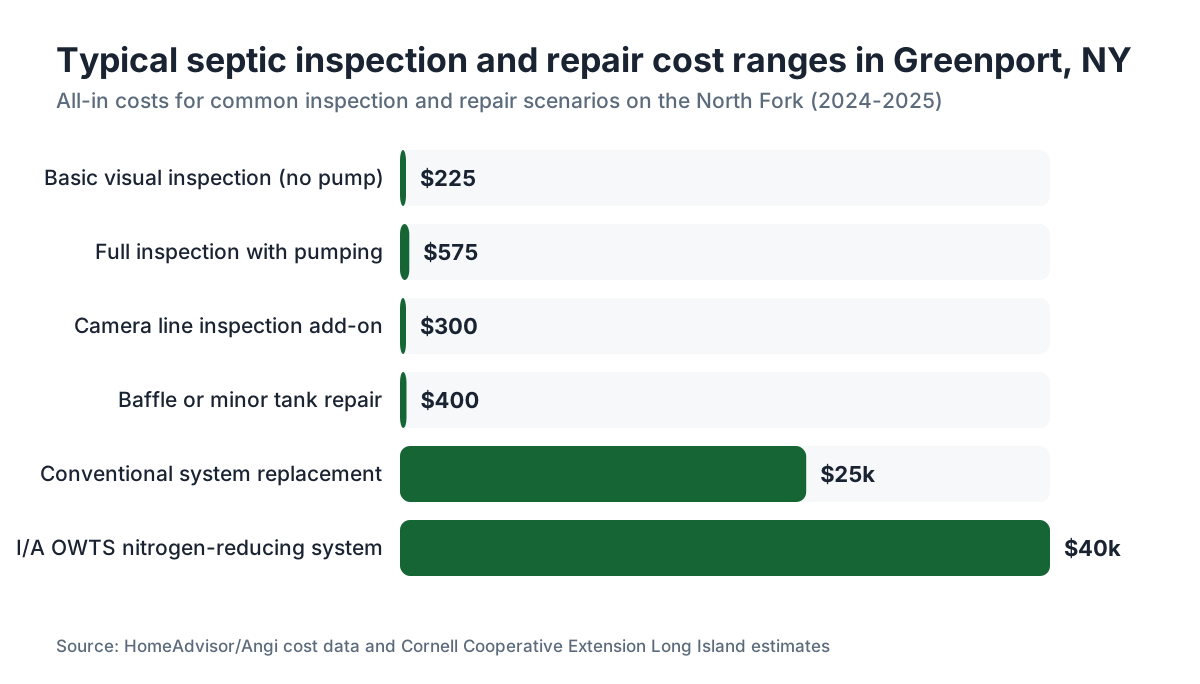
A full inspection with pumping runs about $450 to $700 all in on the North Fork in 2024 to 2025. Prices here run higher than upstate because contractor overhead is higher and travel time eats the day on a rural peninsula. Here's a realistic breakdown.
| Service | Typical Greenport/North Fork range |
|---|---|
| Basic visual inspection (no pumping) | $150 to $300 |
| Full inspection with pumping | $450 to $800 |
| Dye test add-on | $75 to $150 |
| Camera inspection of lines | $200 to $400 |
| SCDHS filing fee (if required) | $50 to $150 |
| Perc test (new system siting) | $500 to $1,500 |
Some inspectors quote a flat rate that includes the pump-out. Others bill it separately. Ask before you book.
When the inspection finds problems, the numbers climb fast. A septic tank repair for something simple like a baffle swap might run $200 to $600. A failed leach field that needs replacement can cost $15,000 to $40,000 on Long Island once you add up soil conditions, permitting, and contractor rates [5]. A full septic system repair or replacement runs higher still. Skipping the inspection to save a few hundred dollars is how buyers end up eating a five-figure repair after closing.
Who is qualified to do a septic inspection in Greenport?
For a real estate transfer, the inspection has to come from a licensed engineer or an inspection company approved by SCDHS. That's the short answer. New York has no single statewide septic inspector license covering every inspection type, which trips people up, so here's how it actually works on the North Fork.
Many buyers use a septic pumping company that employs or subcontracts a licensed engineer to sign the report. The engineer's Professional Engineer (PE) stamp is what the county accepts on a transfer.
Home inspectors in New York are licensed under Article 12-B of the Real Property Law. They can run a general home inspection, but they cannot issue the official SCDHS transfer report unless they also hold an engineering license. A general home inspector's visual notes are useful. They just don't satisfy the county's transfer requirement.
A title company or lender closing on a property with an onsite system will want the county-approved, PE-stamped document. Ask any inspector whether their report meets SCDHS requirements before you hand over a deposit.
Local septic companies with long histories across Riverhead, Mattituck, and Greenport usually know the county requirements cold. A newer or out-of-area company might not have the paperwork or the county relationships right.
Operators running inspections across the East End can track schedules, permit deadlines, and county filing requirements in one place with tools like SepticMind, which helps when you're juggling work orders across a dozen properties at once.
What triggers a required septic inspection in Greenport?
A real estate sale is the most common trigger. Suffolk County Sanitary Code requires an inspection at property transfer for homes on onsite systems in most cases [1]. The seller usually orders and pays for it, though the contract can shift that.
Other triggers:
Renovations or additions. Add a bedroom, bathroom, or square footage past a set threshold and SCDHS wants a new septic evaluation, because flow to the system goes up. The threshold varies, but even a single bedroom addition can trigger a permit review and a system check.
Complaints or failures. If a neighbor or a municipal inspector spots surfacing sewage, or the county gets a complaint, SCDHS can order an inspection.
New construction or full replacement. Any new onsite system in Greenport needs SCDHS permits, an engineered design, and a final inspection [1].
Voluntary checks. Some homeowners inspect on a routine every 3 to 5 years, especially with an older system. The EPA's SepticSmart program recommends inspecting every 1 to 3 years depending on system type [6]. That pace is aggressive for most Long Island homes, but given how often North Fork systems fail, it isn't wrong.
Refinancing. Some lenders, especially those using FHA or VA financing, require a septic inspection during the appraisal. Conventional loans are less consistent about it, but it comes up.
What does a Greenport septic inspection report say, and what happens if you fail?
The SCDHS report puts the system into one of three buckets: pass, conditional pass, or fail. Which one you land in decides whether the sale moves forward.
Pass. The system works, the tank is sound, and the leach field shows no signs of trouble. The county accepts the report, title transfers, and you move on.
Conditional pass. Minor problems exist, like a deteriorating baffle, a missing lid, or a riser that needs work. SCDHS usually lets the sale proceed if the buyer or seller commits in writing to specific repairs within a set window, often 30 to 90 days after closing. On the North Fork, with its stock of older systems, this is common.
Fail. The system has a real failure: surfacing effluent, a collapsed tank, a fully saturated cesspool, or a system with no soil absorption capacity left. SCDHS will not approve the transfer until it's repaired or replaced and re-inspected. This is where negotiations get hard, because repair or replacement can run into five figures.
If you're the buyer and the inspection fails, you have real bargaining power. Require the seller to fix the system as a condition of sale. Negotiate a price cut and handle the repair yourself. Or walk. A failed septic system is a legitimate reason to terminate a purchase contract under most standard New York real estate agreements.
Sellers who suspect a questionable system sometimes run a pre-listing inspection to see what they're facing before a buyer's inspector does. That's usually the smart move. Surprises rarely help the seller.
How long does a septic inspection take in Greenport?
On-site time for a full inspection with pumping is 2 to 4 hours for a typical single-family home. A larger system, a home with multiple tanks, or a property where nobody knows where the system is can stretch that to a full day.
Scheduling is the bigger holdup. The North Fork has a strong seasonal real estate market, and good inspectors get backed up from April through October. In those months you may wait 1 to 2 weeks for an appointment. In winter, lead times drop, sometimes to a few days.
The written report usually lands within 2 to 5 business days. If the inspector files with SCDHS directly, county processing adds a week or more on top. Build that into your closing timeline. Buyers who expect a fast close on a septic-dependent property and don't budget for scheduling and county review run into delays all the time.
What's the difference between a cesspool and a septic system in Greenport, and does it matter for inspection?
It matters more than most buyers expect. A large share of Greenport-area homes, especially those built before 1973, have cesspools rather than modern septic systems. A cesspool is a single perforated ring or a stack of rings buried in the ground. Raw sewage flows in, liquid seeps out through the walls and bottom, and solids pile up at the bottom. No tank. No treatment layer. No separate leach field in the usual sense.
A conventional septic system has a tank where solids settle and anaerobic treatment starts, a distribution box, and a drain field or leach pools where the clarified effluent spreads into the soil. That two-stage process treats waste better and lasts longer.
Cesspools are harder to inspect. Because solids and liquid share one chamber, judging liquid level, structural condition, and remaining absorption capacity gets murky. An inspector pumping a cesspool has to decide whether the bottom still drains or has sealed off with a biological mat.
Suffolk County has been pushing cesspool replacement through the Septic Improvement Program (SIP), which offers grants and low-interest loans to swap cesspools for nitrogen-reducing systems [2]. Recent program years offered grants up to $30,000 for qualifying homeowners. Buying a home with a cesspool in Greenport? Ask whether the property qualifies and whether the seller already applied.
Knowing what type of system a property has before inspection day saves time and sets the right expectations on both sides.
What do North Fork soil conditions mean for septic systems?
The North Fork has generally sandy, well-draining soil. That sounds great for septic, and sometimes it is. Sandy soil lets effluent percolate fast. But fast percolation without enough soil depth above groundwater means less treatment before the effluent reaches the aquifer.
Depth to groundwater is the whole game. SCDHS requires a minimum separation between the bottom of a leach pool and seasonal high groundwater. In low spots near Greenport harbor, Shelter Island Sound, or the creeks and wetlands running through the North Fork, the water table sits close to the surface. That limits where a new system can go and how big it has to be.
The leach field design has to match actual soil percolation rates, found through a percolation test (perc test), and the depth to groundwater measured by a licensed engineer. Properties near water bodies face the tightest rules.
For older systems that predate current groundwater separation rules, an inspection may show the existing setup wouldn't be permitted today. That doesn't automatically fail the system. It does mean any replacement has to meet current standards, which often calls for engineered designs, nitrogen-reducing technology, or both.
Nitrogen reduction is more than a preference out here. Suffolk County keeps tightening requirements for advanced treatment in nitrogen-sensitive areas, and some zones in the Peconic Bay watershed now require nitrogen-reducing systems for any new install or major replacement [2].
How should homeowners maintain their septic system between inspections in Greenport?
Greenport homeowners on septic don't have to do much day to day. But the few things they do have to do carry real weight.
Pump on schedule. For a typical household, how often you pump the septic tank depends on tank size and how many people live there. The EPA recommends pumping a conventional tank every 3 to 5 years [6]. On the North Fork, where systems run older and the aquifer is sensitive, leaning toward every 3 years is defensible. A septic tank pump out and septic tank cleaning are the single most effective things a homeowner can do to stretch system life.
Watch what goes in. No flushable wipes (they don't break down in a septic system, no matter what the box says), no cooking grease, no heavy bleach, no old pharmaceuticals. Heavy garbage disposal use piles on organic load and speeds up sludge buildup.
Protect the drain field. Don't park on it. Don't plant trees within 30 feet of leach pools or field lines. Keep roof drains and surface runoff away from the absorption area.
Know where your system is. Keep a copy of the as-built plans. SCDHS permit records are public, and many are searchable through the county's online permit lookup. That documentation makes every future inspection and any emergency service faster and cheaper.
Seasonal residents, common in Greenport, have to think about winterization too. A system that sits empty for months and then takes sudden heavy use needs a pump-out before the season starts, not after the tank backs up. This kind of recurring scheduling is exactly where a maintenance tool earns its keep.
SepticMind's maintenance tracking is built for owners who want to stay ahead of pump-out schedules and inspection deadlines without paper records, which helps a lot if you own a vacation property you're not living in full time.
How much does it cost to replace a failing septic system in Greenport?
A conventional replacement (new tank plus leach pools or drain field) typically runs $15,000 to $35,000 for a standard single-family home in Suffolk County, based on contractor quotes and extension service estimates [5]. Add $5,000 to $20,000 if the property needs a nitrogen-reducing I/A OWTS (Innovative/Alternative Onsite Wastewater Treatment System) [2]. The final number swings on lot size, soil, depth to groundwater, and whether nitrogen reduction is required.
Permitting adds cost. SCDHS requires engineered design drawings, permit fees, and a final inspection on any new install. Engineering fees alone run $2,000 to $5,000.
The Suffolk County Septic Improvement Program can knock a real chunk off that for qualifying homeowners. The program has offered grants up to $30,000 plus low-interest loans. Not every property qualifies, and funding cycles open and close, so check current availability directly with SCDHS [2].
For more on full installation costs, see the cost to install a septic system and cost to put in a septic tank guides. If you're at the stage of a septic tank installation or septic tank emptying before a full assessment, those are separate decisions worth understanding before you sit down with a contractor.
How do I find a reputable septic inspector in Greenport?
Start with SCDHS. The county keeps a list of licensed engineers and approved inspection companies. Call SCDHS directly at 631-852-2100 for environmental quality and ask for approved inspectors in the Greenport/Southold area. That's a legitimate first move [1].
Your real estate attorney or buyer's agent on the East End will have referrals too. Agents who work North Fork real estate have watched inspection results across dozens of deals and know which companies write reliable reports and which tend to miss things.
Ask specifically whether the inspector has worked the North Fork's mix of cesspools and conventional systems. Inspecting older, cesspool-heavy properties in groundwater-sensitive areas is a different job from inspecting newer construction elsewhere on Long Island.
Get a written quote that spells out what's included: pumping or not, which forms they'll complete, whether they file with SCDHS directly, and how long the report takes. Any reputable company gives you this in writing.
Two things to avoid. First, inspectors who quote an unusually low price and then pile on charges for pumping, filing, and dye tests. Second, inspectors with a financial tie to a repair company that gets called in every time an inspection fails. That's an obvious conflict, and it's not always disclosed.
Frequently asked questions
Is a septic inspection required to sell a home in Greenport, NY?
Yes, in most cases. Suffolk County Sanitary Code Article 6 requires an inspection of onsite wastewater systems at property transfer for homes outside a public sewer district. The seller typically arranges and pays for it, and the results go to SCDHS before the transfer is approved. There are narrow exceptions, but buyers and sellers in Greenport should plan for this as a required step.
How often should I pump my septic tank in Greenport?
Every 3 to 5 years for a typical household is the EPA's baseline. On the North Fork, where many systems are older and the aquifer and coastal waters make failures more costly, pumping every 3 years is a reasonable target. Seasonal homes that sit empty for months and then take heavy use should pump before peak season, not after a problem shows up.
What happens if a septic inspection fails before closing in Greenport?
A failed inspection in Suffolk County usually means the transfer can't proceed until the problem is fixed and re-inspected. Buyers can require the seller to repair it, negotiate a price cut and take on the repair themselves, or walk away. Most standard New York purchase contracts let buyers terminate over a failed septic inspection, but have your attorney confirm the specific contract language.
Can a home inspector do a septic inspection in Greenport instead of a licensed engineer?
A licensed home inspector can give a general visual assessment, but they cannot issue the SCDHS transfer form unless they also hold a Professional Engineer license. Any inspection tied to a real estate sale or county permit needs a PE-stamped report from an engineer or a company that employs one. Ask any inspector upfront whether their report meets SCDHS requirements.
What is the Suffolk County Septic Improvement Program and can I use it in Greenport?
The Suffolk County Septic Improvement Program offers grants up to $30,000 and low-interest loans to qualifying homeowners who replace cesspools or failing systems with nitrogen-reducing innovative and alternative systems. Greenport and the surrounding Town of Southold generally sit in the eligible area because of the Peconic Bay watershed. Funding isn't always open, so check current status directly with Suffolk County Department of Health Services.
How long does a septic inspection take in Greenport?
On-site time is usually 2 to 4 hours for a full inspection with pumping on a typical single-family home. The written report follows in 2 to 5 business days, and SCDHS processing adds more time after submission. During the April to October season, inspector scheduling runs 1 to 2 weeks out. Plan on at least 3 to 4 weeks from booking to an approved county report during busy months.
What is an I/A OWTS and does my Greenport property need one?
An I/A OWTS is an innovative or alternative onsite wastewater treatment system that cuts nitrogen output compared to a conventional setup. Suffolk County increasingly requires them for new installs or replacements in nitrogen-sensitive areas, including many zones near Peconic Bay and Long Island Sound. If your Greenport property sits in a designated nitrogen-sensitive area, a standard replacement may not be permitted. A licensed engineer or SCDHS can tell you what applies to your parcel.
Does the buyer or seller pay for the septic inspection in Greenport?
By default and common practice on Long Island, the seller pays for the mandatory transfer inspection. But that's a negotiable term in the contract. In some deals, especially when a buyer wants an independent inspection beyond the seller's, the buyer pays for their own evaluation. Real estate attorneys in the area know how to handle this in the contract language.
What is the difference between a cesspool and a septic system for inspection purposes in Greenport?
A cesspool is a single perforated ring or pit where raw sewage enters and liquid seeps out with no separate treatment tank. Many older Greenport homes have them. Inspecting a cesspool is harder because there's no separate tank to pump and evaluate on its own. Cesspools also have shorter useful lives and are the main target of Suffolk County's replacement incentive programs.
How close to the water can a septic system be in Greenport?
SCDHS sets setbacks from surface water, wetlands, wells, and property lines. For leach pools and drain fields, setbacks from surface water bodies typically range from 100 to 150 feet depending on the water body's classification, though the exact distance depends on the system type and the sensitivity of the adjacent resource. Properties near Greenport harbor, Peconic Bay, or tidal creeks face the tightest constraints. An engineer must confirm the setbacks for your lot.
What can I do to prepare my home for a septic inspection in Greenport?
Find your as-built plans and share them with the inspector. Clear the area above the tank and leach field, so move parked cars, stored equipment, and dense plantings out of the way. Skip large laundry loads and dishwasher cycles in the 24 hours before the inspection so the tank liquid level reads normal. Have past pump-out records handy; an inspector who can see the pumping history gets a much clearer picture.
Are there grants available to help pay for septic repairs or replacement in Greenport?
Yes. The Suffolk County Septic Improvement Program is the main source, with grants up to $30,000 and low-interest loans for qualifying replacements. Some applicants have combined SIP funding with New York State Clean Water Infrastructure Act funds administered through the county. Income limits and property eligibility rules apply, and funding rounds open and close. Contact SCDHS at 631-852-2100 to check current availability for your Greenport property.
How deep is the water table in Greenport and why does it matter for septic?
Water table depth varies a lot across the North Fork. In low-lying coastal areas near Greenport harbor and the surrounding wetlands, seasonal high groundwater can sit within 3 to 6 feet of the surface. SCDHS requires a minimum separation between the bottom of leach pools and the seasonal high water table, typically 2 feet or more. A shallow water table limits options for new or replacement systems and may force elevated or engineered designs.
Sources
- Suffolk County Department of Health Services, Sanitary Code Article 6: Suffolk County Sanitary Code Article 6 governs onsite wastewater systems and requires inspection at property transfer for homes on individual systems
- Suffolk County Department of Health Services, Reclaim Our Water / Septic Improvement Program: Suffolk County Septic Improvement Program offers grants up to $30,000 and low-interest loans for cesspool replacement with nitrogen-reducing systems; nitrogen from onsite systems flows to Peconic Bay and Long Island Sound
- HomeAdvisor / Angi, Septic Tank Pumping Cost Guide: Septic tank pumping costs $300 to $500 for a typical 1,000-gallon tank in Long Island-area markets
- New York State Department of Health, Individual Residential Wastewater Treatment Systems: NYS DOH provides guidance on cesspool construction, inspection standards, and permitted alternatives to cesspools
- Cornell Cooperative Extension, Onsite Wastewater Treatment Systems on Long Island: Full septic system replacement on Long Island typically costs $15,000 to $35,000 for conventional systems, with higher costs for nitrogen-reducing technologies
- U.S. EPA SepticSmart Program: EPA SepticSmart recommends inspecting septic systems every 1 to 3 years and pumping every 3 to 5 years depending on household size and system type
- U.S. EPA, How Your Septic System Works: Conventional septic systems consist of a septic tank and a drain field; proper maintenance extends system life and protects groundwater quality
- Suffolk County Department of Health Services, Environmental Quality Division: SCDHS maintains public permit records for onsite wastewater systems and can be reached at 631-852-2100 for environmental quality inquiries
Last updated 2026-07-09