Septic inspection in Great River, NY: what to expect and what it costs
By the SepticMind Editorial Team
TL;DR
- A septic inspection in Great River, NY runs $250 to $600 for a standard visual and operational check, climbing to $400 to $900 if you add a dye test or a full pump-out.
- Suffolk County regulates these systems under Article 6 of its Sanitary Code.
- An inspection is required at real estate transfer and recommended every three years for maintenance.
What is a septic inspection and why does it matter in Great River?
Great River is a small hamlet in the Town of Islip, Suffolk County, on the south shore of Long Island. Almost every home there sits on a private septic system, because the area has no municipal sewer service. The ground under each property does the work a treatment plant does elsewhere. When it fails, the mess is yours.
A septic inspection is a structured check of the whole onsite wastewater system: the tank, the distribution box, the leach field, and the pipes that connect them. An inspector looks for structural damage, liquid levels, scum and sludge buildup, effluent backup, and signs of a saturated or failing drain field. It is not a camera scope of your sewer lateral (that is a separate service), and it is not a pumping. Good inspectors often suggest you book a septic tank pump out at the same time so they can see the tank floor clearly [1].
Here is why the stakes are higher in Great River than in most places. Long Island's sole-source aquifer, the one that supplies most of the island's drinking water, sits directly below these systems. The EPA has flagged nitrogen from septic systems as one of the main drivers of water quality damage in Long Island bays and groundwater [2]. Suffolk County answered with tighter inspection rules and a rebate program for upgrades. If you own or are buying a home here, understanding your system is not optional.
What does Suffolk County require for septic inspections?
Suffolk County regulates onsite wastewater systems under Article 6 of the Suffolk County Sanitary Code, administered by the Suffolk County Department of Health Services (SCDHS). The code sets construction standards, system sizing, setback distances, and inspection protocols [3].
For real estate deals, SCDHS folds a septic inspection into the Certificate of Occupancy and property transfer process. The inspector must be a licensed engineer or certified sanitarian in many cases, though licensed home inspectors carrying a specific endorsement can handle standard operational inspections. The county publishes a list of approved inspectors.
For properties that are not changing hands, Suffolk County code sets no mandatory annual inspection for conventional systems. But the county's 2019 Subwatersheds Wastewater Plan recommended inspection cycles of every three to five years, and some municipalities within Suffolk have local ordinances that go further [8]. The Town of Islip, which governs Great River, uses county code as its baseline.
One rule worth knowing: if your system is a cesspool rather than a true septic system with a leach field, Suffolk County has a separate set of rules. Cesspools are banned for new construction but still sit under tens of thousands of older properties. Suffolk County's Septic Improvement Program (SCIP) pays rebates of up to $30,000 to swap cesspools and conventional systems for Innovative and Alternative (I/A) nitrogen-reducing systems [4].
How much does a septic inspection cost in Great River, NY?
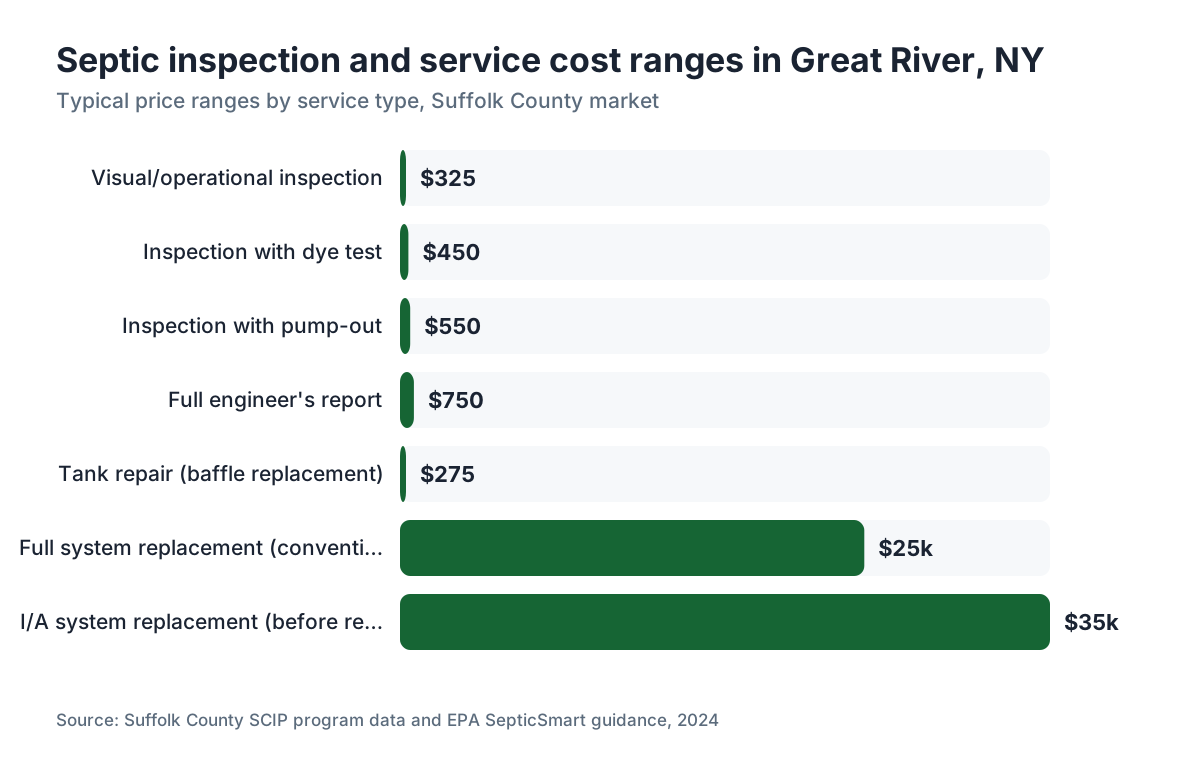
A standard visual inspection runs $250 to $400 in Great River. Add a dye test or a full pump-out and you are looking at $400 to $900. Cost tracks the scope of the work and the size of the system. Here is a realistic breakdown based on typical Long Island pricing.
| Inspection Type | Typical Cost Range | What Is Included |
|---|---|---|
| Visual/operational (no pump-out) | $250, $400 | Tank access, level check, inlet/outlet inspection, distribution box, drain field observation |
| Dye test added | +$75, $150 | Confirms drain field is accepting effluent, required by some lenders |
| With full pump-out | $400, $700 | Everything above plus tank emptying so inspector sees floor condition |
| Full engineer's report (I/A or real estate) | $600, $900+ | Stamped report, system sketch, SCDHS filing |
| Camera scope of inlet pipe | +$150, $300 | Optional add-on, checks for root intrusion or pipe collapse |
These ranges reflect what Suffolk County homeowners generally pay. Prices move with fuel costs, access difficulty (tanks buried under decks or driveways cost more to find), and whether you need a licensed professional engineer to sign off for a real estate deal.
One thing drives costs up in Great River specifically. Many older properties have tanks that were never mapped. If your tank has no riser and the inspector has to probe the yard to find the lid, expect an extra $75 to $150 for locate time. Installing risers afterward runs $200 to $500 and is worth every dollar for future pumping and inspection access [5].
What does a septic inspector actually check during the inspection?
A thorough inspection here follows a sequence any competent inspector should walk you through. Here is what happens, in order.
First, the inspector reviews records. SCDHS keeps system permits on file going back decades, and a good inspector pulls yours before arriving so they know the tank size, the permitted bedroom count, and where the distribution box and leach field should sit.
Second, they locate and uncover the tank. No risers means digging. They inspect the inlet baffle (which keeps solids from flowing back toward the house) and the outlet baffle (which keeps floating scum out of the drain field). Cracked or missing baffles are one of the most common findings and one of the cheaper fixes, usually $150 to $400 for a new sanitary tee or baffle [6].
Third, they check liquid levels. A tank where the liquid sits above the outlet pipe invert means the drain field is backing up, which is a failure signal. A level far below normal may mean a cracked tank or a broken inlet pipe.
Fourth, they measure sludge and scum. The rule of thumb: a tank needs pumping when the sludge layer reaches within 12 inches of the outlet pipe or the scum layer is within 3 inches of the bottom of the outlet baffle [1]. Our guide to how often to pump septic tank covers how these cycles work.
Fifth, they inspect the distribution box (D-box), if the system has one. Settled or shifted boxes send effluent unevenly to the leach field lines, which burns out individual runs early.
Sixth, they walk the drain field. They look for surface ponding, unusually green or lush grass over the field lines (a sign of hydraulic overload), sewage odors, and soft or spongy ground. Some use a probe rod to check soil saturation.
The inspector should hand you a written report. If they give you a verbal summary and leave, ask for something on paper. You need documentation, especially if you are buying.
When is a septic inspection required versus when is it just recommended?
Required inspections in Great River fall into two clear buckets.
The first is real estate transfer. When a property with a septic system sells, most lenders and the Suffolk County process require an inspection. FHA and VA loans have formal requirements: the appraiser must note the septic system's condition, and any evidence of failure has to be fixed before closing [7]. Conventional loans under Fannie Mae guidelines similarly flag septic condition as a property eligibility issue when failure is visible.
The second is after a permit-required modification. Add a bedroom, expand a structure, or install a fixture count that exceeds the original system's permitted capacity, and SCDHS requires an inspection and often an upgrade before it issues permits.
Recommended but not legally required inspections cover the routine maintenance check every three to five years, a check after any stretch of unusual usage (a long rental, a big family event, a house that sat empty for two years), and one before a major renovation that raises the wastewater load.
Buying a home in Great River? Treat the septic inspection as non-negotiable no matter what your contract says. A failing system costs $8,000 to $30,000 or more to replace [8]. The inspection costs a few hundred dollars. The math is obvious.
What are the most common septic problems found in Great River inspections?
Older homes in hamlets like Great River share a handful of issues that surface in inspections more than others.
Cesspools masquerading as septic systems. Many properties built before 1973 have cesspools: single-chamber pits with no outlet, no leach field, and no real treatment. They rely on the pit walls to absorb effluent into the soil. Once the biomat clogs those walls, the system fails. Inspectors find these regularly, and they cannot be repaired, only replaced.
Failed or absent baffles. Concrete baffles crumble over decades. Fiberglass and PVC replacements last longer, but plenty of tanks from the 1970s and 1980s still run their original concrete. A missing outlet baffle sends grease and scum straight into the drain field, which speeds up failure.
Saturated leach fields. The sandy soils of south Long Island drain well in normal conditions, but decades of loading build a biomat layer that cuts permeability. Once a leach field is saturated, it rarely recovers on its own. This is the priciest finding: full septic system repair or replacement.
Tree root intrusion. Great River has mature tree cover. Pine, oak, and maple roots chase moisture and can push into inlet pipes, distribution boxes, even tank walls. A camera inspection of the inlet line (an add-on) catches this before it becomes a full blockage.
Oversaturation from high water tables. The south shore has a seasonally high water table. Systems set at marginal depths take on groundwater through the tank, which dilutes treatment and can hydraulically overload the field even when the house is barely occupied.
How do you find a qualified septic inspector in Great River?
Start with SCDHS. The Suffolk County Department of Health Services keeps records of permitted installers and can point you toward licensed engineers and sanitarians who work the Islip area. Its Division of Environmental Quality handles onsite wastewater matters [3].
For routine inspections, any licensed septic pumping company in Suffolk County can do the operational portion, but they should carry liability insurance and provide written reports. Ask whether the person showing up holds a New York State certification or works under a licensed engineer's supervision.
For real estate deals, a licensed professional engineer (PE) or a certified home inspector with a septic endorsement is the safer bet, because their reports carry weight with lenders and SCDHS. You will pay more, around $500 to $900, but you get a stamped report that clears underwriting.
Some septic operators who use platforms like SepticMind generate structured digital inspection reports that meet SCDHS documentation standards, which makes the real estate file cleaner. Ask any operator what their report format looks like before you book.
Get at least two quotes. Prices on Long Island swing more than you would expect for the same job. The cheapest inspector is not always the one cutting corners, but it is worth asking exactly what is included in the fee before you assume anything.
What happens if the septic inspection fails in Great River?
A failed inspection does not mean the deal is dead or that you have to move out tonight. It means you have a documented problem that needs a response.
For real estate, a failed inspection usually triggers one of three outcomes. The seller fixes it before closing (most common in a buyer's market). The price drops and the buyer takes on the repair. Or the deal falls apart. Suffolk County allows a 60-day repair window in most cases, but the clock starts once SCDHS is notified.
For owners who are not selling, a failed inspection is a call to act, not a catastrophe. Minor findings like a missing baffle, a tank at pumping capacity, or a cracked riser are straightforward repairs. See our guides to septic tank repair and septic tank cleaning for what those jobs cost and involve.
A major finding like a saturated leach field or a failed cesspool needs a permitted repair or replacement. Under SCDHS rules, a licensed engineer has to design the replacement, pull permits, and certify the install. A full replacement in Suffolk County, including permitting, excavation, materials, and the engineer's fee, generally runs $15,000 to $35,000 for a conventional system and $20,000 to $50,000 or more for an I/A nitrogen-reducing system [8]. The SCIP rebate can knock $10,000 to $30,000 off that if you qualify [4].
Do not ignore a failed inspection and wait for the system to sort itself out. It will not. A drain field that is hydraulically overloaded fails completely, and complete failure means sewage surfacing in your yard or backing up into the house.
How does the Suffolk County Septic Improvement Program affect inspections?
The Suffolk County Septic Improvement Program (SCIP) matters here because it kicks in right after a failed or marginal inspection [4].
SCIP pays rebates to homeowners who replace failing cesspools or conventional septic systems with I/A (Innovative and Alternative) systems that cut nitrogen. These add a secondary treatment stage that reduces total nitrogen in the effluent by roughly 50% compared to a conventional tank-and-leach setup. The EPA's SepticSmart program calls advanced treatment a key tool for protecting groundwater in sensitive areas, noting that such systems "can significantly reduce the level of nitrogen in wastewater" [2].
Rebate amounts under SCIP range from $10,000 to $30,000 depending on income, and there is a low-interest loan for the balance. As of the program's most recent update, more than 10,000 applications had been processed countywide [4].
Here is the connection to inspections. If your inspection turns up a system that still works but is aging, and you sit in a water-quality-sensitive zone (which much of Great River does, given its proximity to the Connetquot River and tidal wetlands), upgrading now under SCIP often beats waiting for failure and paying full freight for an emergency replacement. Ask your inspector to note whether your property falls in a designated SCIP priority area.
How should you prepare for a septic inspection as a homeowner?
A few hours of prep makes the inspection faster, cheaper, and more useful.
Locate your tank before the inspector shows up, if you can. Your original SCDHS permit includes a site plan with the tank location. No permit? The county's online property record system sometimes has it. Knowing where the tank sits saves locate time, which saves money.
Dig to the lid or install risers. In Great River, many older tanks have lids buried 12 to 24 inches down. Inspectors charge extra for excavation. If you plan to own this house for a while, having risers installed so the lid sits at or near grade is one of the best low-cost moves you can make. Every future pumping and inspection gets faster.
Skip the washing machine and dishwasher the morning of the inspection. The inspector needs to read liquid levels at rest. Heavy water use in the hours before throws off the reading.
Pull together your records: old SCDHS permits, previous inspection reports, pumping receipts. If the last owner pumped every two years and you have the receipts, that context matters. If the tank has never been pumped and the house is 40 years old, that matters too, in a different way.
After the inspection, book a septic tank pumping if the inspector recommends it, even if the inspection passed. Pumping and inspection go together, and doing both in one visit (when the inspector can coordinate with a pumper) usually saves money and gives the clearest picture of the system's condition.
How does routine maintenance reduce your inspection risk over time?
Homeowners who keep up with their systems get far fewer surprises at inspection. The EPA's SepticSmart program lays out the core rules plainly: "Have your system inspected (generally every three years) by a qualified professional or maintained according to state or local requirements" [2]. For a household of four in Great River, that usually means pumping every three years, given the sandy soils and the system sizes SCDHS typically permits.
The habits that speed up failure, and show up as findings, are consistent. Flushing non-degradable wipes, leaning hard on the garbage disposal, pouring grease down drains, and dumping antibacterial cleaners in volumes that kill the tank's bacterial culture all wear the system down. None is catastrophic alone. They compound.
Water conservation matters more on a septic system than most homeowners realize. A leaking toilet flapper that wastes 200 gallons a day will hydraulically overload an undersized drain field in a way no bacterial additive can fix. Fix your leaks. Spread laundry across the week instead of running six loads on Saturday. These habits genuinely add years to system life.
For operators managing multiple properties around Great River, keeping digital records of pump-outs, inspection dates, and findings makes SCDHS compliance documentation cleaner. Tools like SepticMind help operators track this across a customer base and produce structured reports that hold up under regulatory review.
Here is the short version on maintenance. A system pumped on schedule and inspected within the past three years almost never fails spectacularly. Catastrophic failures happen to neglected systems. See our guide on septic tank emptying for what that service involves.
Frequently asked questions
Do I need a septic inspection to sell my house in Great River, NY?
Yes, in practice. New York State does not mandate one specific inspection form for all sales, but most lenders (especially FHA and VA) require evidence of a functional septic system before closing. Suffolk County's SCDHS transfer process typically involves an inspection too, and buyers' agents here routinely make it a contract contingency. Budget $400 to $900 for a licensed engineer's report that satisfies underwriting.
How long does a septic inspection take in Great River?
A standard inspection takes 1.5 to 3 hours on site. That covers locating and uncovering the tank, checking baffles and levels, inspecting the distribution box, and walking the drain field. If the inspector has to probe the yard for an unmapped tank, add 30 to 60 minutes. A full inspection with pump-out runs 2 to 4 hours depending on tank size and access.
What is the difference between a cesspool and a septic system in Suffolk County?
A cesspool is a single perforated pit that collects and tries to absorb all wastewater, with no separate tank or leach field. A septic system has a tank for settling and anaerobic treatment, then a leach field for soil absorption. Cesspools were standard on Long Island before 1973 but are now banned for new construction. Suffolk County's SCIP program specifically pays to replace cesspools with modern I/A systems.
Can I do my own septic inspection in New York State?
You can check your tank lids, look for surface ponding over the drain field, and note any odors, but that is not a certified inspection. For real estate deals or SCDHS compliance, the inspection has to be done by a licensed engineer, certified sanitarian, or licensed home inspector with the right credentials. Self-inspections carry no standing with lenders or the county.
How often should I pump my septic tank in Great River?
The EPA recommends pumping every three to five years for a typical household. In Great River, for a 1,000-gallon tank serving a family of four, three years is a reasonable cycle. Households with garbage disposals, hot tubs draining to the system, or higher-than-average water use should pump more often. An inspector can measure sludge and scum layers and give you a site-specific recommendation.
What does the Suffolk County Septic Improvement Program pay for?
SCIP pays rebates of $10,000 to $30,000 to homeowners who replace cesspools or conventional septic systems with nitrogen-reducing I/A systems. The rebate depends on household income. There is also a low-interest loan program for the balance. Properties in water-quality-sensitive areas, including much of Great River near the Connetquot River, get priority.
What is an I/A septic system and do I need one in Great River?
An Innovative and Alternative (I/A) system adds a secondary treatment stage that cuts nitrogen in the effluent by roughly 50% compared to a conventional system. You are not required to have one unless your current system fails and a replacement is triggered, or you upgrade voluntarily under SCIP. Given Great River's proximity to tidal waterways and the county's nitrogen goals, I/A systems are strongly encouraged and financially backed.
How much does it cost to replace a septic system in Great River, NY?
A full replacement in Suffolk County typically runs $15,000 to $35,000 for a conventional system, including engineering, permitting, excavation, and installation. An I/A nitrogen-reducing system costs $20,000 to $50,000 or more. The SCIP rebate can cut out-of-pocket costs by $10,000 to $30,000. Emergency replacements, where the system has failed and the timeline is urgent, cost more due to expedited permitting and scheduling.
Will my homeowner's insurance cover a failed septic system in New York?
Standard homeowner's policies in New York exclude septic system failure in most cases. Some cover sudden and accidental damage (like a tank cracked by a vehicle driving over it), but gradual failure from age or neglect is almost always excluded. A few specialty riders exist for service lines and septic systems; check your specific policy. One more reason to inspect and maintain proactively.
What records should I have for my Great River septic system?
You should have the original SCDHS permit and site plan showing tank location, tank size, and drain field layout; any previous inspection reports; and a pumping history with dates and volumes. If you do not have these, the SCDHS Division of Environmental Quality can pull permit records by property address. Keeping them on file makes every future inspection faster and proves maintenance if you ever sell.
How deep are septic tanks buried in Great River?
Most tanks in the area sit 12 to 36 inches below grade. Tanks installed in the 1960s and 1970s are often deeper and rarely have risers, which means locating and accessing them takes probing or excavation. Newer installs, and any system that has had modern service work, typically have plastic risers bringing the lid to just below or at grade. If your tank is deep-buried, riser installation is worth scheduling.
Can tree roots damage a septic system in Great River?
Yes. The mature tree cover in Great River, including oaks, pines, and maples, produces roots that actively chase moisture. Roots can push into the inlet pipe, crack distribution boxes, and compromise tank walls over time. An optional camera scope of the inlet sewer line (typically $150 to $300 added to an inspection) spots root intrusion before it causes a full blockage. If roots turn up, hydro-jetting and root-killing foam can extend pipe life.
What is a dye test for septic systems?
A dye test flushes a non-toxic fluorescent dye through the plumbing, then checks whether it surfaces in the yard or in nearby surface water, which would signal a failing drain field or a direct discharge. Some mortgage lenders and real estate contracts specifically require one. It adds $75 to $150 to the inspection cost and takes about 30 minutes of extra time after the dye is flushed.
Sources
- EPA, SepticSmart: Maintain Your Septic System: A tank needs pumping when the sludge layer reaches within 12 inches of the outlet pipe; the EPA recommends inspection every three years and pumping every three to five years.
- EPA, SepticSmart Program overview: Advanced treatment systems can significantly reduce nitrogen before effluent enters the soil; nitrogen loading from septic systems is a primary driver of water quality degradation on Long Island.
- Suffolk County Department of Health Services, Division of Environmental Quality: Suffolk County regulates onsite wastewater systems under Article 6 of the Suffolk County Sanitary Code, administered by SCDHS.
- Suffolk County, NY, Septic Improvement Program (SCIP): SCIP provides rebates of $10,000 to $30,000 for homeowners replacing cesspools or conventional systems with I/A nitrogen-reducing systems; over 10,000 applications processed countywide.
- EPA, How to Care for Your Septic System: Installing risers to bring tank lids to grade-level improves access for pumping and inspection and is a recommended maintenance upgrade.
- EPA, SepticSmart: Common Septic System Problems: Cracked or missing baffles are a common inspection finding; baffle or sanitary tee replacement is among the cheaper septic repairs.
- U.S. Department of Housing and Urban Development, FHA Single Family Housing Policy Handbook 4000.1: FHA appraisers must note septic system condition; evidence of failure must be remediated before loan closing.
- Suffolk County, NY, 2019 Subwatersheds Wastewater Plan: Full septic system replacement in Suffolk County generally runs $15,000 to $35,000 for conventional systems and $20,000 to $50,000 or more for I/A systems; the plan recommended inspection cycles of every three to five years.
- New York State Department of Health, Appendix 75-A: Wastewater Treatment Standards - Individual Household Systems: New York State sets baseline construction and design standards for individual household septic systems under Appendix 75-A, which county codes like Suffolk's Article 6 may exceed.
- Suffolk County Water Authority, Long Island's Sole Source Aquifer: Long Island's sole-source aquifer supplies most of the island's drinking water and is directly recharged by groundwater percolation including septic system effluent.
Last updated 2026-07-09