Gray water drain field: what it is, how it works, and when it fails
By the SepticMind Editorial Team
TL;DR
- A gray water drain field spreads wastewater from sinks, showers, and washing machines into the soil, skipping the septic tank.
- It's legal in roughly 30 states under strict rules: no toilet waste, capped daily flow, and setbacks from wells and property lines.
- Installed cost runs $500 to $6,500 depending on system type, soil, and local code.
What is a gray water drain field?
A gray water drain field is a shallow soil-absorption system that takes only lightly used household water: the stuff draining from your bathroom sinks, showers, tubs, and clothes washer. It handles no toilet waste. That water, called blackwater, still goes to a conventional septic tank or the sewer.
The logic is simple. Gray water carries far fewer pathogens, less nitrogen, and less biological oxygen demand than toilet waste, so it doesn't need the treatment a full septic tank provides. Push it through enough soil and it gets filtered and absorbed before it reaches groundwater or a neighbor's well.
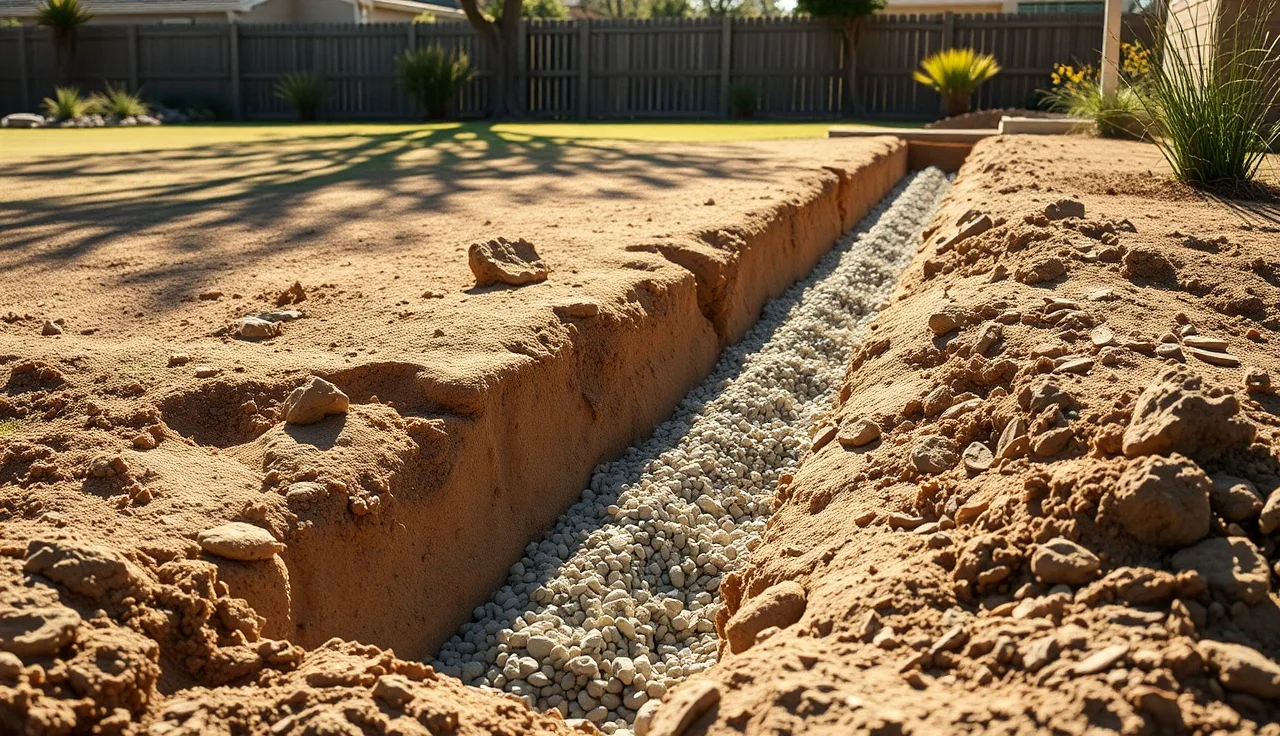
What makes these systems different from a standard leach field is that they receive pre-separated water. Your home needs either dual plumbing (separate drain lines for gray and black waste) or, in the simplest laundry-to-landscape setups, a single Y-diverter on the washing machine drain. The field itself looks a lot like a conventional drain field: perforated pipe in gravel trenches, or a run of mulch basins in low-tech permitted designs.
Not every jurisdiction calls it a "gray water drain field." You'll also see laundry-to-landscape system, subsurface drip system, or greywater disposal area. The spelling varies too. Gray, grey, both show up in regulations. The local code decides what's legal, not the label.
Is a gray water system legal where I live?
Answer this before you touch a shovel. Gray water reuse law in the U.S. is a patchwork. As of 2024, roughly 30 states have adopted some form of gray water code or permit pathway, while others effectively ban it by requiring all household wastewater to go to a licensed septic system or municipal sewer [1].
The most permissive rules sit in the arid West. Arizona, California, New Mexico, and Montana allow simple laundry-to-landscape systems without a permit for flows under 250 gallons per day, as long as you follow setback and mulch-cover rules [2][11][12]. California's tiered framework, codified in Title 22 of the California Code of Regulations, is one of the most copied in the country.
Many Southeastern and Northeastern states go the other way. They require a licensed engineer, a soil test, a permit, and an inspection for any gray water dispersal system. Some ban surface irrigation outright and force you into subsurface drip or a gravel trench.
Texas allows gray water reuse under 30 TAC Chapter 210 but ties it to treated effluent standards that most household systems can't hit without added treatment [3].
The EPA's SepticSmart program does not regulate gray water directly. It points homeowners to state and local health departments as the controlling authority and tells homeowners to "contact their local health department or state environmental agency for information on local regulations" [4]. That's real advice. Call your county health department before spending a dollar.
If you're on a full conventional septic system and thinking about adding a gray water field to take load off an aging leach field, that's a different permitting question than building a standalone system for a new structure. Both need a permit conversation. Neither is a DIY YouTube build.
How does a gray water drain field work?
Gray water leaves the house through a drain line, passes through a filter or surge tank, and enters perforated pipes buried in gravel trenches or mulched basins. Gravity moves the water. The soil does the treatment.
The treatment chain has four steps worth understanding.
- Primary filtering. Most code-compliant systems require a physical filter or a small settling chamber before the water reaches the field. This keeps lint, hair, soap scum, and food particles from clogging the perforations. Skip it and biomat forms fast, killing the field in a year or two.
- Distribution. Filtered water travels through distribution pipes to the absorption area. In laundry-to-landscape designs, that's a branching network of 1-inch polyethylene tubing discharging under a 3-inch mulch layer. In engineered systems, it's 4-inch perforated PVC in gravel trenches, the same as a standard septic drain field.
- Soil treatment. Once in the ground, aerobic and anaerobic bacteria break down leftover organics. The soil physically filters particles and holds some nutrients. This handles the pathogen and BOD load in gray water well. It does not handle sodium from laundry detergent over time, which is why detergent choice matters.
- Dispersal. Treated water moves down through the vadose zone and either evapotranspires (taken up by plant roots or evaporated) or percolates to groundwater. A properly sized system in decent soil disperses water before it reaches a well or surface water, given the required setbacks.
A gray water field fails in one of two ways. Hydraulic overload means you're putting in more water than the soil can absorb. Biomat clogging means the inlet zone gets coated in anaerobic slime. Catch either early and it's recoverable. Ignore either and the field is gone.
What are the different types of gray water systems?
Systems fall into a few broad categories. Which one you can build depends almost entirely on local code and your site's soil.
Laundry-to-landscape (L2L). The simplest legal option in permissive states. The washer drain gets re-plumbed with a 3-way valve: flip it one way for sewer or septic, the other for irrigation. Water flows on the washer's own pump pressure through buried 1-inch tubing to mulched basins around trees and shrubs. No permit in many California situations for flows under 250 gpd [2]. Parts run $200 to $800 if you do your own labor.
Branched-drain gravity system. Gray water from multiple fixtures flows by gravity through a 1-inch branching network to mulched basins. Slope maintenance is the catch: 2% minimum, held across the whole run. Code varies widely. Installed cost runs $500 to $2,000.
Constructed subsurface drip system. The most engineered option. Gray water gets filtered, sometimes settled in a small tank, then pushed through pressure-compensating drip emitters buried 6 to 12 inches down. Many states that allow gray water but ban surface contact require exactly this. Installed cost runs $2,000 to $6,500, depending on how tricky the site is.
Gravel trench absorption system. A standard leach field built specifically for gray water flows. Perforated pipe in a gravel trench, wrapped in filter fabric and covered with soil. This is what most state septic codes default to when they permit gray water at all. It's the safest option for regulatory acceptance and long-term performance. Installed cost runs $1,500 to $4,000 for a typical single-family home.
Gravel trench and drip systems are the ones licensed septic contractors install and warranty. DIY laundry-to-landscape systems are common in California and Arizona, but they live or die on product choices and setbacks.
How big does a gray water drain field need to be?
Sizing rides on three things: daily gray water flow, soil percolation rate, and local code.
Start with your daily volume. Showers produce 10 to 20 gallons per use. Bathroom sinks add 1 to 2 gallons per person per day. A standard top-loading washer uses 40 to 45 gallons per load, while a high-efficiency front-loader uses 14 to 25 gallons [5]. A family of four in a typical house makes roughly 100 to 150 gallons of gray water a day.
Next, your soil's percolation rate sets how many square feet of trench bottom you need. Most state codes use a loading rate table. In average sandy loam with a perc rate of 30 minutes per inch, you might get 0.5 to 1.0 gallon per square foot per day. Clay drops that to 0.1 to 0.25 gallons per square foot per day, which means a much bigger field.
Run the math. 120 gallons a day in soil rated at 0.6 gallon per square foot per day needs 200 square feet of trench bottom. At a 2-foot trench width, that's 100 linear feet of trench. Not a tiny system.
Third, most codes set minimum setbacks: 50 to 100 feet from drinking water wells, 5 to 25 feet from property lines, plus distances from structures, slopes, and surface water. On small lots the setbacks constrain your layout more than the perc rate does.
If your lot is tight or your soil is slow, a subsurface drip system usually fits better than a trench, because drip emitters spread water more evenly across the dispersal area.
What does a gray water drain field cost?
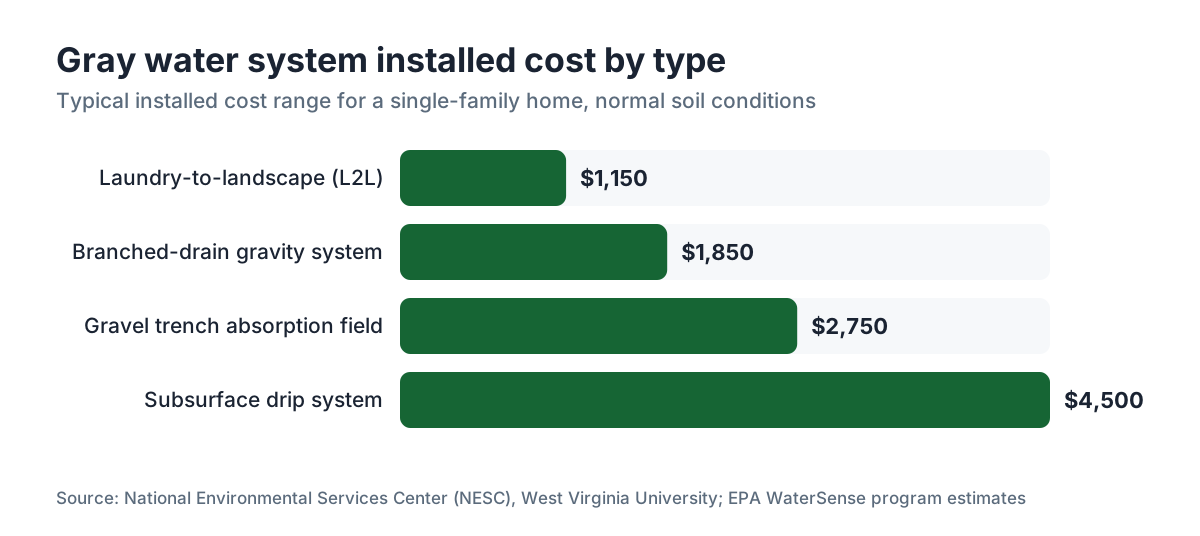
Installed cost runs $500 to $6,500 depending on system type, soil, and code. Averages here are almost misleading, so here's the honest breakdown by system type and regional labor [6].
| System type | DIY parts cost | Professionally installed |
|---|---|---|
| Laundry-to-landscape (L2L) | $200 to $600 | $800 to $1,500 |
| Branched-drain gravity system | $400 to $900 | $1,200 to $2,500 |
| Gravel trench absorption field | $600 to $1,500 | $1,500 to $4,000 |
| Subsurface drip system | $800 to $2,000 | $2,500 to $6,500 |
Those numbers assume normal soil, no rock, a reachable yard, and a permit that doesn't need engineered drawings. Add a perc test ($150 to $400), a permit fee ($50 to $500 depending on jurisdiction), and a site plan if your county wants one. The total for a professionally installed, permitted system usually lands between $2,000 and $5,000 for a typical single-family home.
Compare that to a full conventional septic replacement at $10,000 to $30,000 depending on system type (see cost to install septic system for the full breakdown). If your goal is to extend an existing drain field by pulling gray water load off it, a $3,000 gray water system is a far cheaper move than replacing the field.
The cheapest legitimate option is a permitted laundry-to-landscape system in a state that allows it, built yourself, with a $50 permit. The priciest is a subsurface drip system in a state with strict engineering rules. Know which one you're in before you set a budget.
What can and can't go into a gray water system?
This matters more than most homeowners think, and it's where a lot of DIY systems quietly fail.
Gray water can take water from bathroom sinks, showers, bathtubs, and clothes washers. That's the standard definition in most state codes, California's included [2].
Gray water cannot take water from toilets (always blackwater), kitchen sinks (grease, food waste, and pathogens from raw meat), dishwashers (hot water, heavy detergent), or utility sinks used for mop buckets or diapers.
Some states carve kitchen sink water into a separate "dark gray" category and ban it from simplified systems while allowing it in engineered ones. Others ban it flat out. If you're unsure about your jurisdiction, treat kitchen sink water as off-limits.
Product choices matter too. Standard laundry detergents run high in sodium, which degrades soil structure by displacing calcium and magnesium ions, causing clay particles to disperse and pore spaces to close [10]. This is a real agronomic problem, not a hypothetical one. Use plant-based, sodium-free, low-salinity detergents if your gray water irrigates soil where you want plants to grow. Look for products with sodium content under 60 mg/L at use dilution.
Chlorine bleach is the other common issue. An occasional load won't kill a gray water system, but regular bleach use disrupts the soil microbiology that does the treatment. Keep it to a minimum.
Shampoos, soaps, and body wash are generally fine at the concentrations they reach in gray water. Most soils handle them without trouble.
How long does a gray water drain field last?
A well-built gray water field with proper pretreatment lasts 15 to 25 years in most conditions. That's on par with a conventional septic drain field, for the same reason: the killer is almost always biomat or hydraulic overload, not pipe failure.
Biomat is a layer of anaerobic bacteria and organic material that forms at the soil-gravel interface and cuts permeability. In a conventional septic system it forms faster, because tank effluent still carries real BOD. Gray water carries less, so biomat builds more slowly. That's one argument for gray water fields outlasting blackwater fields.
The counterweight: gray water heavy in soap and detergent can clog a field faster than septic effluent in some soils. Sodium compounds the problem over years. A field working fine at year 10 might start backing up at year 12 if sodium has cut permeability enough [10].
Resting a field, the way you'd rest a leach field showing early trouble, works for gray water too. Most designs allow alternating fields. If you have the space, build two smaller fields and rotate them every six months. Total system life goes up a lot.
If you also run a conventional septic system on the property, keeping gray water off it slows septic tank pumping intervals and stretches your drain field's life. That's the most common practical reason homeowners add gray water systems where both are permitted.
What are the setback requirements for a gray water drain field?
Setbacks are the minimum distances between your gray water field and anything a failure could contaminate. They vary by state and system type. Here are the thresholds you'll run into most often [1][7].
| Feature | Typical minimum setback |
|---|---|
| Drinking water well | 50 to 100 ft |
| Surface water (streams, ponds) | 50 to 100 ft |
| Property line | 5 to 10 ft |
| Building foundation | 5 to 10 ft |
| Retaining wall | 2 to 5 ft |
| Steep slopes (>15%) | Often prohibited |
| Seasonal high groundwater | 2 to 4 ft clearance required |
California's simplified rules require at least 50 feet from a water supply well and 4 feet of clearance above seasonal high groundwater for subsurface systems [2]. Arizona's rules are similar, holding the well setback at 50 feet for low-flow systems [7].
Some jurisdictions add setbacks from public roads, easements, and septic components. If you already have a conventional septic system, you generally can't put a gray water field in the same area as your primary drain field or its required reserve area.
On small suburban lots, setbacks can make a legal gray water field geometrically impossible. That's a legitimate reason some homeowners drop the idea once they get into the numbers. Do the setback math on your lot before you spend anything on design or permits.
What are the signs a gray water drain field is failing?
Failure signs for a gray water field match a conventional drain field, just slower to show up.
The earliest warning is slow drains in the fixtures feeding the field. If your shower drains fine when the 3-way valve sends water to the sewer but crawls when it goes to the gray water field, the field's absorption rate is dropping. This is your window to act before full failure.
Surface ponding is the unmistakable sign. Wet, soggy soil over the trench lines, sometimes with a gray or sudsy sheen. The field is saturated and water is pushing back to the surface. At that point you've probably violated your permit conditions, and you need to divert back to septic or sewer right away.
Odor is common with gray water failures: a sour, soapy, faintly sulfurous smell around the absorption area. It's not as bad as a failed septic system (no fecal matter), but it's distinctive, and your neighbors will notice.
If your system feeds irrigation basins or mulched areas, dying plants over the dispersal zone are a tell. Sodium toxicity from laundry detergent kills plants even with water present. Look for leaf tip burn, yellowing, and stunted growth in the strip directly above the distribution lines.
For systems with a filter ahead of the field, a clogged filter causes backpressure long before the field itself fails. Build a filter inspection and cleaning into your annual routine and you'll add years to field life.
Operators tracking multiple client systems can use service scheduling tools like SepticMind to flag gray water systems for annual filter checks and route those visits alongside conventional septic calls.
Can I add a gray water system to reduce load on my existing septic drain field?
Yes, and it's often the smartest low-cost move for a stressed drain field. The permitting path, though, is the same as a new standalone system.
Here's when it makes sense. Your home's leach field is showing early stress: slow draining, minor surface dampness after heavy rain, or a septic tank inspection that turned up biomat at the field inlet. You don't need a full septic system repair yet, but you want to buy time.
Diverting gray water off the septic tank cuts hydraulic load on the drain field by 40 to 60 percent for most households [9]. That's a real reduction. Less water through the tank means the scum and sludge layers build more slowly, which means fewer solids reaching the field, which means biomat develops slower.
The catch: this only helps if the field's problem is hydraulic overload. If the field failed from root intrusion, compaction under vehicles, a collapsed pipe, or high groundwater, diverting gray water fixes nothing. Get a real diagnosis first. A septic tank inspection with a field evaluation tells you whether hydraulic relief would actually do anything.
Permitting a gray water field as an addition to an existing septic system sometimes needs a licensed engineer in states that treat it as a modification to a permitted wastewater system. Your county health department will tell you. Budget for a site visit and design review if you're in a regulated state.
If your field has truly failed, a gray water system won't save it. You'll need a septic system repair or replacement first. Gray water diversion is a preventive measure or an early-intervention tool, not a rescue for a field that's already gone.
What maintenance does a gray water drain field require?
Next to a full septic system, gray water maintenance is light. It's not zero.
Filter cleaning is the big one. Any system with a lint filter, sock filter, or settling chamber needs that part inspected every three to six months and cleaned as needed. A clogged filter backs pressure into the system and speeds up field clogging. Spend 15 minutes twice a year and you can double field life.
Annual inspection of distribution points matters too. For laundry-to-landscape systems, dig down and check the mulch basins once a year. Top off mulch if it's settled or broken down. Watch for root intrusion into the distribution tubes, common near trees and faster than people expect.
Detergent and product monitoring is ongoing. Keep a running list of what goes down the drains feeding the field. If someone swaps in a high-sodium laundry detergent, flag it. Small product choices stack into soil chemistry problems over years.
If you also have a conventional septic system, maintain it on its own. Gray water diversion does not end the need for regular septic tank pumping. You still have blackwater in the tank, and sludge piles up regardless. The EPA recommends pumping most residential septic tanks every three to five years [4]. Cutting gray water load may let you lean toward the five-year end of that range, but check the tank before you assume you can wait.
Keep records. Log the install date, permit number, filter maintenance, and any repairs. If you ever sell the house, a gray water system is a permitted improvement that needs disclosure, and good records make that conversation easy.
For septic companies running multiple properties with gray water systems mixed in with conventional clients, scheduling tools built for the wastewater trade (like SepticMind) make it easier to track filter service intervals alongside pumping schedules without letting gray water systems slip.
How does a gray water drain field compare to a conventional septic drain field?
This one comes up a lot, especially from homeowners planning a new build or an ADU and weighing their options.
The core difference is the waste stream. A conventional septic leach field takes all household wastewater after primary treatment in the tank, toilet waste included. A gray water drain field takes only lightly used water from non-toilet fixtures, with no tank treatment in the simpler designs.
Because gray water has lower pathogen loads, lower BOD, and none of the fecal coliform found in blackwater, gray water fields can often go in at shallower depths and with somewhat smaller footprints in permissive jurisdictions. Setbacks from wells and water bodies are often identical, though, because state codes take a precautionary line.
Cost tells the story. A full conventional septic system for a new home runs $10,000 to $30,000 installed (see septic tank installation). A standalone gray water system runs $500 to $6,500. But a gray water system still needs a blackwater solution, either municipal sewer or a conventional septic system for toilet waste. So gray water systems work as supplements or load-reduction measures, not as a complete wastewater fix for a home with flush toilets.
Lifespan is similar, 15 to 25 years for both with proper maintenance, and the failure modes match. The edge for gray water fields is that early symptoms often get caught sooner, because the system is simpler and people interact with it directly (watching it irrigate plants, cleaning the filter).
For a homeowner with a stressed conventional field who wants to extend it rather than replace it, the cost to put in a septic tank or a full replacement makes a $2,000 to $4,000 gray water field look very attractive as a first step.
Frequently asked questions
Do I need a permit to install a gray water drain field?
In most U.S. states, yes. Even in permissive states like California, anything past a basic laundry-to-landscape setup needs a permit. Many states require a licensed contractor, a soil test, and an inspection. Call your county health department before starting. Installing without a permit can trigger fines and a mandatory removal order, which costs far more than the permit would have.
Can I use gray water to irrigate vegetables?
Most state codes prohibit gray water irrigation of edible crops, especially root vegetables and leafy greens that touch the soil. Pathogen risk is the concern, even though gray water carries lower pathogen loads than blackwater. California explicitly bans gray water on vegetables eaten raw. Some states allow drip irrigation of fruit trees if the emitters are subsurface. Check your specific jurisdiction before irrigating any food crop.
What is the difference between gray water and blackwater?
Gray water is wastewater from non-toilet fixtures: sinks, showers, bathtubs, and washing machines. Blackwater is wastewater containing toilet waste. Blackwater carries high pathogen concentrations, high nitrogen, and high BOD, so it needs full septic tank treatment before dispersal. Gray water has lower concentrations of all three, which is why simpler treatment works in many jurisdictions. Kitchen sink water sits in a gray area in most codes and is often banned from gray water systems.
Will a gray water system smell bad?
A properly designed and maintained system shouldn't produce noticeable odor. Gray water starts to decompose and smell within 24 hours if it's stored, which is why most codes ban storage tanks and require same-day dispersal. If you smell a sour or soapy odor near the dispersal area, the field is likely saturated or the filter is clogged. Both are correctable if you address them quickly.
Can I install a gray water drain field myself?
Simple laundry-to-landscape systems are DIY-friendly in states that allow them without a permit, and the plumbing is basic. Gravel trenches and subsurface drip need proper grading, backfill, and filter installation that most homeowners aren't equipped for. More to the point, a failed DIY install that violates setbacks or pollutes groundwater creates real legal liability. If your state requires a permit, it almost certainly requires a licensed installer.
How much gray water does a typical household produce per day?
A family of four typically generates 100 to 150 gallons of gray water a day, from showers (10 to 20 gallons each), bathroom sinks (1 to 2 gallons per person), and laundry (14 to 45 gallons per load depending on machine). That's roughly 40 to 60 percent of total household water use. Sizing your field accurately means estimating your actual flow rather than leaning on an average.
Can a gray water system replace my septic system entirely?
No, not for a home with flush toilets. Toilet waste always needs a conventional septic system or a municipal sewer connection. A gray water drain field handles only the non-toilet share of household wastewater. You'd still need a working blackwater system. The one scenario where gray water disposal is your whole wastewater system is a composting toilet setup with no flush toilets at all.
What happens if my gray water drain field fails during a heavy rain?
Heavy rain saturates the soil and temporarily cuts the field's absorption capacity, causing sluggish drainage or surface ponding. This is common and usually temporary. The fix is to divert gray water back to the septic system or sewer using the bypass valve that all permitted systems are required to have, until the soil drains. Repeated wet-weather failures usually mean the field is undersized or the seasonal high groundwater table sits higher than the design assumed.
Do I need a separate tank or filter before the gray water drain field?
Most code-compliant systems require at least a lint or sock filter ahead of the dispersal area to catch solids that would clog the field. Simple laundry-to-landscape systems often use just a sock filter on the washer drain. Multi-fixture systems may need a small settling chamber. Subsurface drip systems typically need both a filter and a pressure-compensating pump. Skipping filtration is the single fastest way to ruin a gray water field.
Will a gray water system increase my home's resale value?
In arid states like California and Arizona, a permitted gray water system is a genuine selling point, especially for buyers watching their water use. In wetter states or under stricter codes, buyers and inspectors may see it as an unknown liability. The key word is 'permitted.' An unpermitted system found during a real estate inspection can complicate or kill a sale. Permitted systems with maintenance records are simple to disclose.
How do I know if my gray water drain field is the right size?
The size is right if the field absorbs your daily flow without surface ponding or sluggish drains under normal conditions. If you're seeing slow drainage with no obvious filter clog, the field may be undersized for your actual flow. A licensed installer can calculate the required square footage from your flow estimate and a perc test. Many DIY systems come out undersized because homeowners underestimate daily laundry and shower volume.
What detergents are safe to use with a gray water drain field?
Use plant-based, biodegradable, sodium-free or low-sodium detergents. Avoid products with borax (high pH), optical brighteners, or heavy sodium lauryl sulfate. Good options are labeled 'eco' or 'natural' and verified by third-party marks like EPA Safer Choice. High-sodium detergents degrade soil structure over years, cutting absorption capacity even when the water looks fine in the short term.
How is a gray water leach field different from a standard leach field?
A standard leach field takes septic tank effluent, which is partially treated but still carries toilet waste byproducts, high nitrogen, and real pathogen loads. A gray water leach field takes only water from non-toilet fixtures, with no tank treatment in simple designs. Gray water fields usually need simpler pretreatment (a filter rather than a full septic tank) and can sometimes go shallower, but setbacks from wells and surface water are often identical under state code.
Sources
- EPA, Onsite Wastewater Treatment Systems Manual: State and local health departments are the controlling authority for gray water and onsite wastewater system regulations in the U.S.
- California Department of Water Resources, Gray Water Use in the Landscape: California's tiered gray water code allows laundry-to-landscape systems under 250 gpd without a permit; subsurface systems require 50-foot well setback and 4-foot clearance above seasonal high groundwater.
- Texas Commission on Environmental Quality, 30 TAC Chapter 210, Use of Reclaimed Water: Texas allows gray water reuse under 30 TAC Chapter 210 but ties it to treated effluent standards.
- EPA SepticSmart Program, Homeowner Information: EPA recommends most residential septic tanks be pumped every 3 to 5 years; homeowners should contact local health departments for gray water regulations.
- EPA WaterSense, Indoor Water Use in the United States: Standard top-loading washers use 40 to 45 gallons per load; high-efficiency front-loaders use 14 to 25 gallons per load.
- National Environmental Services Center (NESC), West Virginia University: Installed costs for gray water systems range from under $1,000 for simple laundry systems to over $6,000 for subsurface drip systems.
- Arizona Department of Environmental Quality, Greywater Reuse Rules: Arizona requires a minimum 50-foot setback from water supply wells for gray water systems.
- Water Research Foundation, Residential End Uses of Water Study: Gray water from showers, sinks, and laundry represents approximately 40 to 60 percent of total household water use.
- University of Arizona Cooperative Extension, Residential Gray Water Guidelines: Sodium from laundry detergents can degrade soil structure over time, reducing permeability and gray water field absorption capacity.
- New Mexico Environment Department, Liquid Waste Bureau, Graywater Rules 20.7.3 NMAC: New Mexico allows simple gray water systems without permits for flows under 250 gallons per day with required setbacks.
- Montana Department of Environmental Quality, Circular DEQ-2: Montana permits simplified gray water reuse for laundry-to-landscape applications under specific flow and setback conditions.
Last updated 2026-07-09