Townsend septic inspections: what to expect and what they cost
By the SepticMind Editorial Team

TL;DR
- A septic inspection in Townsend (and most Massachusetts towns) runs $300 to $600 for a standard Title 5 inspection, takes two to four hours, and covers the tank, distribution box, and leach field.
- Failing a Title 5 inspection usually blocks a property transfer until you repair or replace the system.
- Routine maintenance inspections cost less and carry no legal weight.
What is a Townsend septic inspection and why does it matter?
Townsend is a small town in Middlesex County, Massachusetts. Like every municipality in the state, it runs under Massachusetts's Title 5 septic code (310 CMR 15.000), which is among the strictest onsite wastewater rules in the country. [1] When people search for a "Townsend septic inspection," they're almost always asking about one of two things: a Title 5 inspection triggered by a home sale or refinance, or a routine maintenance inspection a homeowner wants done for peace of mind.
Those two things are very different animals.
A Title 5 inspection is a legal document. A licensed inspector submits the results to the local Board of Health, and a failing or conditional-passing system typically blocks the property transfer until repairs are made. A routine inspection is more like a checkup. Nobody files anything with the town, and a finding of "the tank is 60% full" just means it's time to pump. Figure out which type you need before you call anyone. That's the first decision, and it changes everything about cost and stakes.
Townsend's Board of Health handles local enforcement of Title 5, so the inspector you hire has to be licensed by the Massachusetts Department of Environmental Protection (MassDEP). [1] The town doesn't run its own parallel inspection program, which keeps things simpler than in some coastal communities that pile on extra requirements.
When is a Title 5 inspection legally required in Townsend?
Massachusetts law requires a Title 5 inspection before any real estate transfer. [1] That covers sales, most refinances that involve a change of ownership, and any permit for an addition that increases the design flow of the system. In Townsend, the Board of Health may also require an inspection when a property changes from seasonal to year-round use.
The inspection has to be done no more than two years before the sale date, or three years if the system has been pumped annually and documented. [1] That three-year window trips people up constantly. Inspectors see homeowners who think a two-year-old report is still good, only to find the clock ran out. If you're not sure whether your existing report is still in date, call MassDEP's regional office in Worcester or check straight with Townsend's Board of Health.
A few situations skip the inspection at the point of sale. Transfers between spouses, transfers to trusts for estate planning, and some foreclosure situations have exemptions. Those exemptions are narrow and the details matter. Get confirmation from a real estate attorney in Townsend before you assume you qualify.
There's also an important wrinkle for systems that fail. Massachusetts allows a "conditional pass" under Title 5 for systems with certain deficiencies that don't pose an imminent public health threat. The buyer and seller can agree to escrow funds and finish repairs within a set timeline after transfer. [1] This isn't a loophole. The repairs still have to happen, and the Board of Health tracks compliance.
What does a Townsend septic inspector actually check?
A Title 5 inspector works a prescribed checklist with four parts: the septic tank, the distribution box (D-box), the leach field (also called the soil absorption system or SAS), and any pumping or dosing equipment.
For the tank, the inspector measures scum and sludge layers, checks the inlet and outlet baffles or tees, looks for cracks or structural damage, and notes the liquid level against the outlet. A tank at or above the outlet invert is already backing up and fails. [1] The inspector also confirms the tank holds water. Groundwater leaking into the tank is a red flag for both failure and groundwater contamination.
The D-box gets checked for equal distribution to all leach field trenches and for any groundwater or soil pushing in. An uneven D-box means one trench takes a beating while the others sit idle, and that shortens the whole system's life.
The leach field assessment matters most. The inspector probes the soil above the trenches and looks for ponding, surfacing effluent, or saturated soil. They check the high groundwater elevation against the bottom of the trenches. Title 5 requires a minimum four-foot separation between the bottom of the leach field and the high groundwater table in most cases. [1] In Townsend, with its mix of glacial soils and areas near the Squannacook River watershed, groundwater depth can swing a lot within a single neighborhood.
For pump systems, the inspector tests the pump, floats, and control panel. A failed float or corroded panel is often a straightforward fix, but it still gets noted as a deficiency.
The whole inspection usually takes two to four hours for a typical residential system. Bigger systems or ones with rough access take longer. See the septic tank inspection guide for the full step-by-step process.
How much does a septic inspection in Townsend cost?
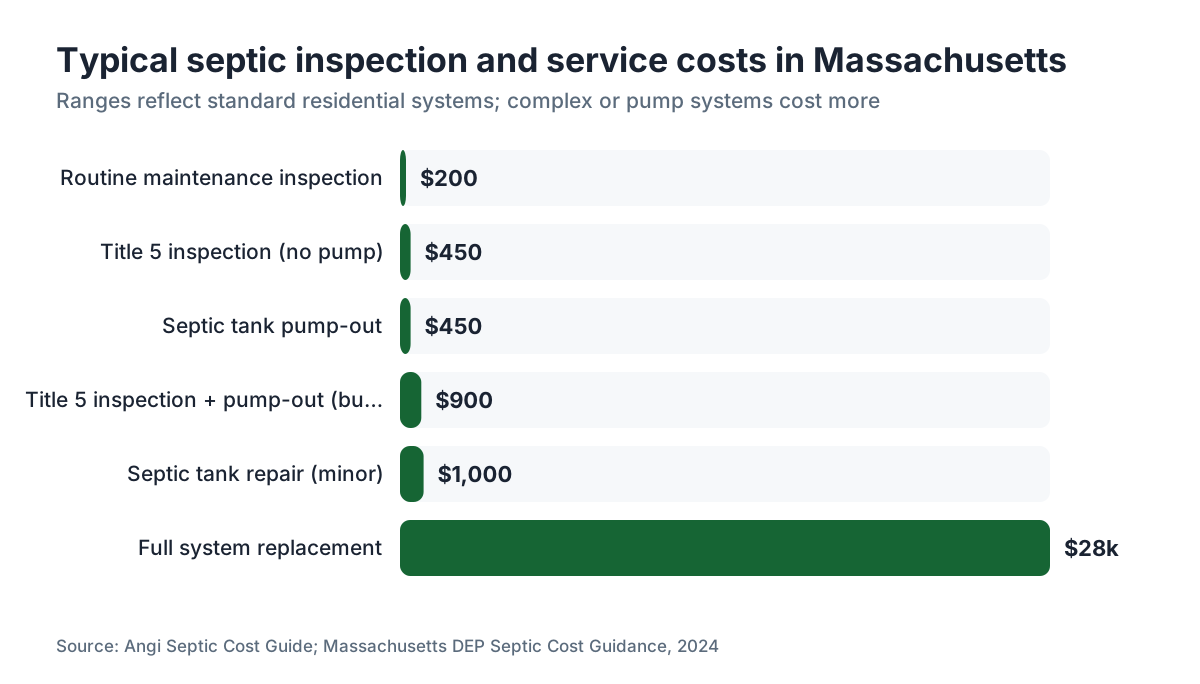
Title 5 inspections in Massachusetts generally run $300 to $600 for a standard single-family home, though the price moves with the inspector and how accessible your system is. [2] If the tank needs pumping as part of the inspection (which it often should, so the inspector can read the sludge and scum layers), add another $300 to $600 for the pump-out on top of the inspection fee. [2]
Some inspectors quote one bundled price that includes the pump-out. Others quote the inspection alone and line up a separate pumping company. Ask which is which before a bill surprises you.
Routine maintenance inspections that don't produce a Title 5 report cost less, often $150 to $250, because the paperwork burden is lower and the inspector files nothing with the town.
Cost factors that push you toward the high end:
- System has multiple tanks or a pump chamber (adds complexity and time)
- Tank lids sit more than six inches deep and need digging
- Property is hard to reach with a pump truck
- Inspector has to locate the system components first (no as-built on file)
If you don't have an as-built drawing on file with the Townsend Board of Health, call the town office before you schedule. Many older systems have records filed away, and finding them saves the inspector time and saves you money.
See national cost context at septic tank pump out and septic tank pumping.
What does a Title 5 inspection result actually mean: pass, fail, or conditional pass?
Massachusetts Title 5 has three outcomes: pass, fail, and conditional pass.
A pass means the system met every criterion on inspection day. The inspector files the report with the Board of Health, and the sale can move. Simple.
A fail means the system has a condition that Title 5 defines as failure. The usual suspects are hydraulic failure (effluent surfacing or backing into the house), a tank that tests as not watertight, a leach field with inadequate groundwater separation, or any discharge to surface water. A failed system in Townsend has to be repaired or replaced before the property can transfer, unless the parties negotiate a conditional arrangement with Board of Health approval.
A conditional pass is the middle ground. Certain defined deficiencies, like a cracked tank that isn't yet causing a backup or a working pump with a corroded float, can earn a conditional pass. The property can still transfer, but the deficiencies have to be fixed within a stated timeline, often two years. The Board of Health tracks these.
Here's what many homeowners miss. A Title 5 pass doesn't mean the system is in great shape or good for another 20 years. It means the system cleared the minimum legal bar on one specific day. A system can pass and still need real maintenance or repairs soon after. That's where a good inspector earns the fee, by giving you honest context past the checkbox result.
If you get a fail and need to understand repair paths, septic system repair and septic tank repair walk through what's usually involved.
How do you find a licensed septic inspector in Townsend, MA?
Massachusetts requires septic inspectors to hold a System Inspector license from MassDEP. [8] The license takes an exam and ongoing continuing education. You can verify any inspector's license status through MassDEP's online database. [8]
For Townsend, your best sources are:
- The Townsend Board of Health office, which often keeps a list of inspectors who work regularly in town and know the local soils and filing procedures. [7]
- MassDEP's licensed inspector list, filterable by county. [8]
- Referrals from local real estate agents who've watched many transactions and know which inspectors write clear, defensible reports.
Steer clear of inspectors who can't show you their MassDEP license number on request, who push you toward their affiliated repair contractor, or who quote a low fee and then stack on charges. Those are real patterns in this trade.
One practical note. If you're selling, the inspector works for you and you pay them, but their legal duty is to report accurately to the Board of Health. Don't hire someone expecting them to go easy on the system. Inspectors who keep writing favorable reports on bad systems lose their licenses. The good ones tell you the truth, and the truth is what you want before you're under contract.
What happens if your septic system fails inspection in Townsend?
A failing Title 5 report in Townsend sets off a defined sequence. The Board of Health gets the report. If you're in a sale, your real estate attorney and the buyer's attorney get notified. From there you have three main paths.
Repair the failed component. If the failure is a cracked distribution box, a bad baffle, or a pump that quit, the fix might be modest and the system can be re-inspected fast. [3]
Full system replacement. If the leach field has hydraulically failed or the soil just can't handle the load, you're looking at a new septic system design and installation. In Townsend that means a perc test and soil evaluation, a system design by a licensed engineer, a permit from the Board of Health, and installation by a licensed contractor. The full replacement runs months, not weeks. septic tank installation and cost to install septic system cover what that costs.
Alternative system design. Some failed systems in areas with high groundwater or tight soils can't support a conventional leach field. Massachusetts allows alternative technologies (peat biofilters, recirculating sand filters, drip irrigation systems) when conventional designs won't work. These cost more upfront and require ongoing maintenance contracts.
The Board of Health can grant a hardship variance in limited cases, but those are genuinely rare and don't erase the obligation to fix the system. They just adjust the timeline.
How often should you get a routine septic inspection in Townsend?
The EPA's SepticSmart program recommends inspecting your septic system every one to three years, depending on household size, system age, and whether it has mechanical parts. [4] MassDEP's guidance under Title 5 lines up with that, with the practical rule that a typical household should pump every three to five years. [1]
For a routine (non-Title 5) inspection in Townsend, every three years is a reasonable baseline for a conventional gravity system with no mechanical parts. If your system has a pump, aerator, or other mechanical component, check those parts annually.
The three-year pumping cycle matters legally too. Document annual pumping and your Title 5 certificate stays valid for three years instead of two before a sale. That's a real benefit, since these inspections cost money and having one expire right before a sale is a pain.
One number worth knowing: the EPA estimates that 10 to 20 percent of U.S. septic systems are failing at any given time. [4] Most of those homeowners have no idea. Regular inspections catch problems when they're $500 to $1,500 repairs instead of $15,000 to $40,000 replacements.
See how often to pump septic tank for household-size tables and a fuller breakdown.
SepticMind's maintenance tracking tools help homeowners and operators log inspection dates, pump-out records, and component notes in one place, which comes in handy when you need to prove pumping history to extend a Title 5 certificate's validity.
What's the leach field's role in whether your system passes or fails?
The leach field is almost always the make-or-break part of a Title 5 inspection. The tank and D-box can fail too, but those failures are usually cheaper to fix. A leach field failure often means a full replacement.
Title 5 defines leach field failure several ways. Surfacing effluent (sewage visible on the ground above the trenches) is an automatic fail. Backed-up effluent in the septic tank above the outlet elevation is a fail. Insufficient groundwater separation is a fail. [1]
In Townsend, groundwater depth is the most common complication. Parts of town near the Squannacook River and its tributaries have seasonally high water tables that cut the effective separation depth, sometimes below the four-foot minimum. If your property sits in one of those areas, a Title 5 inspection done in late summer (when the water table is lowest) can tell a different story than one done in April. Title 5 inspectors have to estimate the seasonal high water table using accepted soil morphology indicators, more than the water level on inspection day. [1]
For a deeper look at how leach fields work, what they cost to repair, and how to spot failure, see the leach field guide.
Here's the short version on leach fields. If the inspector probes the soil above your trenches and pulls up a probe wet with effluent, or there's a green, lush strip of grass over the trenches in a dry summer, take it seriously. Those are real warning signs.
How do you prepare your property for a septic inspection in Townsend?
Good prep makes the inspection faster and cheaper.
Locate and expose the tank lids. Most inspectors will either do this themselves for an extra charge or expect them uncovered when they arrive. If your lids are buried, rent a probe rod from a rental center or call the town for the as-built, which shows the tank location. Digging down two feet in the wrong spot wastes everyone's morning.
Don't pump the tank right before the inspection. This surprises people. The inspector needs to measure the sludge and scum layers to read the system's load and condition. An empty tank tells them nothing. If the tank needs pumping as part of the inspection, the inspector or a coordinating pumper handles it in the right sequence.
Skip the big laundry loads and the dishwasher the morning of. Normal household flow is fine, but sending a surge of water through the system right before the inspector reads the leach field adds noise to the assessment.
Have your records ready. Previous inspection reports, as-built drawings, pump-out receipts, repair permits, set them out. An inspector who can see the tank was last pumped 18 months ago and the D-box was rebuilt three years ago has real context for what they're looking at.
Mark the access point to the leach field if it's in a fenced area. Inspectors carry probes, not bolt cutters.
How do Townsend's soil and geography affect septic system performance?
Townsend sits in an area of Massachusetts with glacial till soils, outwash sands and gravels near river valleys, and some patches of dense glacial lake-bottom clay. [5] That variety matters a lot for septic systems.
Sandy outwash soils near the Squannacook River drain fast, which sounds great for a septic system but can mean effluent doesn't get treated enough before it hits the water table. Tight clay soils elsewhere in town barely percolate at all, which overloads a conventional leach field.
The sweet spot, well-draining glacial till with good organic matter, is where conventional septic systems do best. Most residential lots in Townsend built before 1995 were sited on simple perc tests that don't catch the seasonal high water table the way current soil morphology evaluations do. That's why some older systems that "passed" their original perc test now struggle or fail Title 5 inspections as the standards tightened.
Townsend is also in the Nashua River watershed. [5] The state has a specific interest in protecting this watershed from nitrogen and pathogen loading, and that's one reason local Boards of Health in the region take Title 5 enforcement seriously.
If you're planning a new system or a replacement in Townsend, hire a soil evaluator and designer with recent experience at Townsend's Board of Health. Local knowledge of which areas carry variance history, which reviewers sit on the Board, and which alternative technologies the town has approved before is genuinely worth paying for.
What does a septic inspection report include and how do you read it?
A Title 5 inspection report in Massachusetts follows a standardized MassDEP format. [10] The official form runs several pages and covers every component of the system in order. Inspectors have to submit the completed report to the local Board of Health within 30 days of the inspection. [10]
The first section identifies the property, the inspector, the inspection date, and the system location. It also notes whether the system design is on file with the town.
The tank section records the tank material, capacity, condition of baffles or tees, liquid level, and measured sludge and scum depths. Title 5 requires pumping when the scum layer is within three inches of the outlet baffle or the sludge layer is within 12 inches of the outlet. [1]
The distribution box section notes the number of outlets, whether they're equal, and any groundwater intrusion or deterioration.
The soil absorption system section is where the findings that matter live. The inspector records the system type (trench, bed, chamber), the conditions above the field, any ponding or surfacing, and the estimated depth to the seasonal high water table.
The conclusions page states the overall result: pass, conditional pass, or fail, with the specific conditions noted.
When the report lands, read the conclusions page first, then trace back through the findings to understand why. Phrases like "observed elevated liquid level in distribution box" or "noted discoloration of soil above leach trenches" mean the inspector saw early-stage problems even if the system passed. Don't file the report and forget it. Use it as a maintenance roadmap.
Operators managing multiple properties can use tools like SepticMind to track inspection reports, expiration dates, and follow-up tasks across a whole portfolio, which beats living in email and spreadsheets.
Frequently asked questions
Do I need a Title 5 inspection to sell my house in Townsend, MA?
Yes. Massachusetts law requires a Title 5 septic inspection before any residential property with a septic system can transfer ownership. [1] The inspection has to be completed no more than two years before the sale date, or three years if you have documented annual pump-out records. Townsend's Board of Health administers local compliance. An expired or failed inspection will delay or block closing.
How long does a septic inspection take in Townsend?
A typical Title 5 inspection takes two to four hours for a standard single-family home. More complex systems with pump chambers, multiple tanks, or hard-to-find components take longer. If the tank needs pumping as part of the inspection, budget an extra hour for the pump truck. Systems with buried lids that need excavation add time too.
Can I use a septic inspection report from two years ago for my Townsend home sale?
Maybe. A Title 5 report is valid for two years from the inspection date under standard rules. With documented annual pump-out records, that extends to three years. If your report is right at the two-year mark, check the exact dates and confirm with the Townsend Board of Health before assuming it's still good. A lapsed report means starting over.
What's the difference between a Title 5 inspection and a routine septic inspection?
A Title 5 inspection is a legally mandated, licensed assessment filed with the Board of Health. It results in a pass, conditional pass, or fail, and that outcome can block a property sale. A routine maintenance inspection is a checkup, usually cheaper, not filed with any government office, and not legally binding. Routine inspections help with ongoing maintenance; Title 5 inspections are required for real estate transactions.
How much does it cost to replace a septic system in Townsend if it fails inspection?
Full septic system replacement in Massachusetts typically runs $15,000 to $40,000, depending on system type, soil conditions, and site complexity. [6] In Townsend, tough soils or proximity to wetlands can push costs toward the high end or require more expensive alternative technologies. The design, permitting, and installation process usually takes several months from inspection failure to a working new system.
Who is responsible for the septic inspection when buying a house in Townsend, the buyer or the seller?
Under Massachusetts Title 5, the seller is responsible for completing and paying for the inspection before the sale. The seller hires the inspector and the report goes to the Board of Health. Buyers usually want to review the report during due diligence, and they can since it's a public record once filed. Buyers can also hire a separate inspector for their own assessment, though that's less common.
What are the most common reasons septic systems fail Title 5 inspections in Massachusetts?
The most common causes are hydraulic failure of the leach field (effluent surfacing or backing up), insufficient depth to the seasonal high groundwater table, a tank that fails the watertightness test, and failed or missing inlet/outlet baffles. Older systems built to pre-1995 standards often fail because those standards didn't require the groundwater separation distances Title 5 now mandates. [1]
Can a septic system pass a Title 5 inspection and still need repairs?
Yes, and it happens more than people expect. A passing inspection means the system met the minimum legal bar on inspection day. An inspector might note the tank is at 60% capacity and due for pumping, or a baffle is deteriorating but not yet failed. Those findings don't cause a failure, but ignoring them leads to a failure on the next cycle. Read the full report, more than the pass/fail line.
How do I find the as-built drawing for my Townsend septic system?
Start with the Townsend Board of Health office. [7] Systems permitted after the 1970s usually have as-built drawings on file with the town. If the town has no records, check with the original builder or prior owners, or look for a permit history at the town clerk's office. For systems with no records at all, a licensed inspector or engineer can locate components with a probe and create a new as-built.
How often should I pump my septic tank in Townsend?
Every three to five years is the general guideline for a typical household, and the EPA's SepticSmart program recommends inspecting the system every one to three years. [4] With four or more people in the household, a smaller tank, or a garbage disposal, pump closer to every two to three years. Regular pumping is also what qualifies you for the three-year (rather than two-year) Title 5 validity window.
What happens if I don't get a septic inspection before selling my Townsend home?
Selling a Massachusetts property without a valid Title 5 inspection is illegal unless the deal falls under a narrow exemption (estate transfers, certain foreclosures). Skipping it can delay or void closing, expose the seller to liability if the system fails shortly after transfer, and draw penalties from the Board of Health. Buyers and their attorneys check for the filed report as a standard part of due diligence.
Does a new septic system installation in Townsend require a different permit from the inspection?
Yes. Installation requires a separate design permit from the Townsend Board of Health, prepared by a licensed engineer based on soil evaluation results. The design permit, construction permit, and final inspection are all distinct steps. The Title 5 inspection is only one piece of the process. See the full breakdown at the septic tank installation and cost to install septic system guides.
What soil types in Townsend make septic systems harder to design?
Townsend has areas of dense glacial lake-bottom clay that perc very slowly, making conventional leach fields ineffective or impossible to permit. Areas near the Squannacook River have sandy soils with high seasonal water tables, which limits the depth available for effluent treatment. Either extreme often forces an alternative system design, which costs more upfront and requires ongoing maintenance agreements.
Is a septic inspection required for a refinance in Townsend?
It depends on the lender and the type of refinance. A straight rate-and-term refinance with no ownership change typically doesn't trigger a Title 5 requirement under Massachusetts law. Some lenders require one as a loan condition regardless of state law. Check with your lender directly and have the title company confirm what the loan commitment letter requires before assuming you're exempt.
Sources
- Massachusetts DEP, Title 5 of the State Environmental Code (310 CMR 15.000): Massachusetts Title 5 (310 CMR 15.000) governs all septic inspections including required conditions for pass/fail, groundwater separation minimums, inspection validity periods, and licensed inspector requirements.
- Angi, Septic Inspection Cost Guide: Title 5 septic inspections in Massachusetts typically cost $300 to $600; pump-outs add $300 to $600 on top of the inspection fee.
- Massachusetts DEP, Septic Systems (Title 5): Failed Title 5 systems must be repaired or replaced before property transfer; conditional passes allow transfer with Board of Health oversight of required repairs.
- U.S. EPA, SepticSmart Program: EPA SepticSmart recommends inspecting septic systems every one to three years and estimates 10 to 20 percent of U.S. septic systems are failing at any given time.
- USDA Natural Resources Conservation Service, Web Soil Survey: Townsend, MA has a mix of glacial till, outwash sands and gravels, and lake-bottom clay soils; the town sits within the Nashua River watershed.
- Massachusetts DEP, Septic System Costs and Financing: Full septic system replacement in Massachusetts typically costs $15,000 to $40,000 depending on system type, soils, and site complexity.
- Town of Townsend, MA (Board of Health): Townsend's Board of Health administers local enforcement of Title 5 and maintains records of filed inspection reports and as-built drawings.
- Massachusetts DEP, Find a Licensed Septic System Inspector: Massachusetts requires all Title 5 septic inspectors to be licensed by MassDEP; license status is publicly searchable.
- U.S. EPA, Septic Systems Overview: The EPA notes that roughly one in five U.S. households depends on an onsite septic system, and regular maintenance is the primary factor in system longevity.
- Massachusetts DEP, Title 5 System Inspection Guidance: Title 5 inspectors must follow the standardized MassDEP inspection form; results must be submitted to the local Board of Health within 30 days of inspection.
Last updated 2026-07-09