Tuf-Tite EF-4 residential series effluent filter: the complete guide
By the SepticMind Editorial Team

TL;DR
- The Tuf-Tite EF-4 is a plastic effluent filter that mounts inside a standard 4-inch septic outlet baffle and blocks solids larger than 1/16 inch from reaching your drain field.
- The filter alone costs about $20 to $45.
- Clean it every 1 to 3 years at pump-out.
- It's one of the most widely installed residential effluent filters in North America.
What is the Tuf-Tite EF-4 effluent filter and what does it do?
An effluent filter is a slotted plastic sleeve that sits inside your septic tank's outlet tee. Liquid wastewater, called effluent, has to pass through the slots before it exits to the drain field. Toilet paper fibers, grease clumps, and suspended solids get held back inside the tank where they belong.
The Tuf-Tite EF-4 fits standard 4-inch outlet baffles, which is what most residential septic tanks use. It slides in, locks in place, and hangs down into the tank's liquid zone so effluent enters through the submerged portion of the filter body and leaves clean. The slots run about 1/16 inch (roughly 1.6 mm), aggressive enough to catch the fibrous and floatable material that clogs drain field pipes over the years [1].
The EF-4 combo version, sometimes listed as the tuf-tite effluent filter ef-4 combo or ef-4 residential series effluent filter combo, adds an alarm float or a riser-ready cap assembly to the base filter. The filtration element is identical. The "combo" just bundles the extra hardware you'd otherwise buy separately.
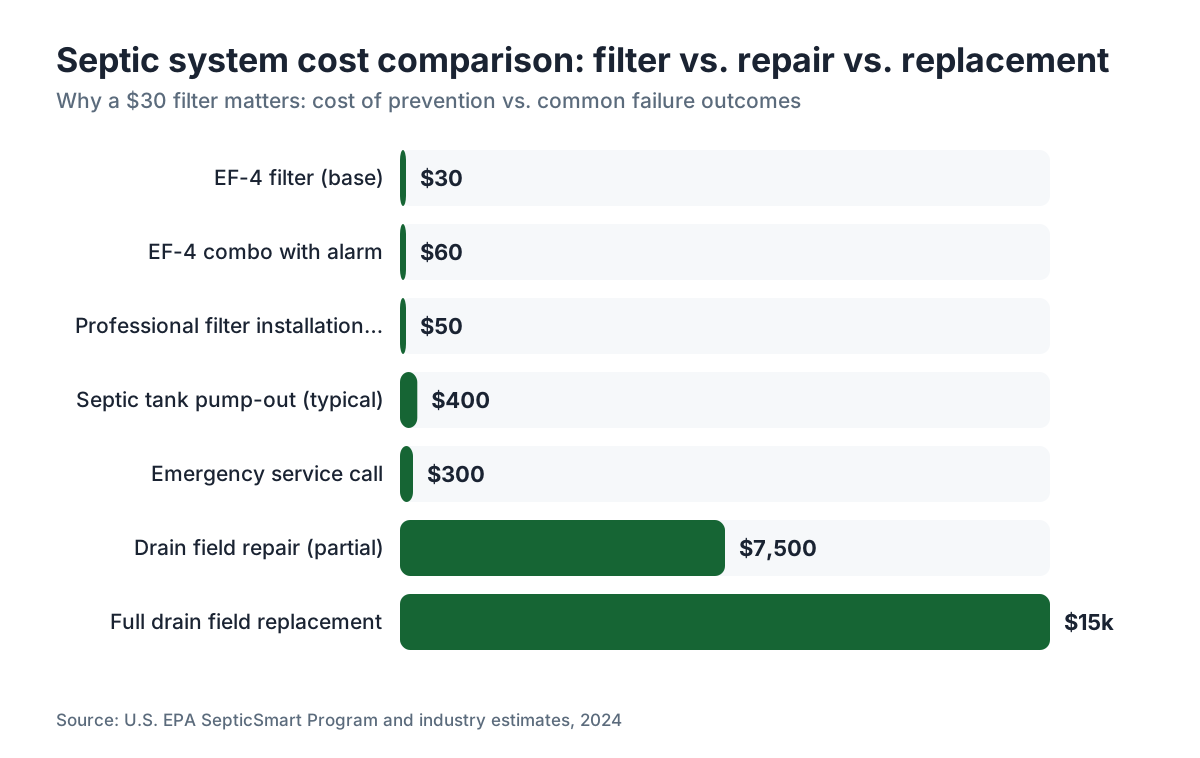
This filter doesn't treat effluent chemically. It's purely mechanical. That mechanical screening matters more than it sounds. The EPA's SepticSmart program identifies solids carryover into the soil absorption system as a primary cause of premature leach field failure [2]. A $30 filter that prevents a $10,000 drain field replacement is an easy argument to make.
What are the exact specs and dimensions of the EF-4?
The EF-4 fits a 4-inch Schedule 40 outlet pipe or baffle, the industry standard for single-family homes in nearly every U.S. state. Tuf-Tite molds the filter body from high-density polyethylene (HDPE), which handles the hydrogen sulfide atmosphere inside a septic tank without corroding the way old concrete or cast-iron baffles do [3].
Dimensions vary slightly by production run, but the working spec is:
| Specification | EF-4 Value |
|---|---|
| Pipe compatibility | 4-inch outlet tee/baffle |
| Filter slot size | ~1/16 inch (approx. 1.6 mm) |
| Filter body length | ~18 inches below outlet |
| Material | HDPE (high-density polyethylene) |
| Approvals | NSF/ANSI Standard 46 listed |
| Typical install orientation | Vertical, inside outlet baffle |
| Combo option | Adds alarm float or riser cap |
NSF/ANSI Standard 46 covers filtration products used in onsite wastewater systems, and Tuf-Tite lists the EF-4 as compliant [4]. If your state or county inspector asks for a certified filter, that listing is what satisfies the requirement.
The filter body is a single-piece molded sleeve with a collar that rests on the outlet baffle rim. No glue, no threading, no tools for routine removal. You pull it straight up by the handle stem that extends above the baffle into the access riser. That handle is what makes cleaning fast.
How does the EF-4 compare to the Tuf-Tite EF-6?
The tuf-tite ef-6 effluent filter is the 6-inch version. The filtration mechanism is the same. The only difference is the outlet pipe diameter it fits. Six-inch outlet baffles show up on larger tanks, commercial systems, and some older residential installations that used oversize outlet piping.
Not sure which size you have? Measure the inside diameter of your outlet baffle, or ask the pump technician. Ordering the wrong size is a common mistake, and neither filter works if it doesn't seat correctly in the baffle collar.
| Feature | EF-4 | EF-6 |
|---|---|---|
| Outlet pipe size | 4 inch | 6 inch |
| Typical use | Residential (most homes) | Larger tanks, commercial |
| Slot size | ~1/16 inch | ~1/16 inch |
| Filter body material | HDPE | HDPE |
| Combo version available | Yes | Yes |
| Relative cost | Lower | Higher |
For almost every single-family home built in the last 30 years, the EF-4 is the right choice. If your home has a pump chamber or a two-compartment tank with a 6-inch outlet on the second compartment, you might need the EF-6 on that chamber even if the primary tank uses a 4-inch baffle.
Some installers stock both sizes. If you run a route with dozens of tanks, software like SepticMind can log which filter size each tank uses so your technician shows up with the right part.
How is the EF-4 installed in a septic tank?
Installation is simple. Most homeowners comfortable removing a septic tank lid can do it, though I'd have a professional handle it during a scheduled pump-out. The tank is already open and the technician is standing right there.
Here's the basic process:
- Open the outlet-end access port or riser lid. The outlet end is the side where the pipe exits toward the drain field.
- Remove the existing outlet baffle if there is one. Concrete baffles on older tanks sometimes have to be broken out or unscrewed from a sanitary tee.
- Confirm the outlet pipe is 4-inch Schedule 40 PVC. The EF-4 collar needs to seat squarely on the pipe rim.
- Slide the EF-4 down into the outlet tee or baffle opening. The filter body hangs into the tank's liquid zone.
- The collar locks in place at the pipe rim. No adhesive.
- Installing the combo version with a riser cap? Attach that hardware per the included instructions before sealing up.
The filter should hang so the bottom of the body sits submerged in effluent. If your tank level is too low, usually because it was just pumped, wait for normal liquid levels to return before checking the position.
One thing trips people up. The EF-4 installs at the outlet, not the inlet. Some homeowners confuse the two openings. The inlet is where raw sewage enters from the house. A filter there would clog almost immediately.
After installation, fit the access riser with a watertight lid. The EPA recommends risers and lids that bring access to grade level so future inspections and cleanings don't require excavation [2]. If your tank doesn't have risers yet, this is a good time to add them. The septic tank installation guide covers riser options in detail.
How do you clean the Tuf-Tite EF-4 and how often?
Cleaning the EF-4 is the whole reason it has an accessible handle. Pull the filter straight up out of the baffle, hold it over the open tank, and rinse it with a garden hose. The solids caught by the filter fall back into the tank where they belong and get pumped out at the next service. Never hose the filter off onto the ground. That's a discharge violation in most states [5].
How often you clean it depends on your household's load. A family of four with a properly sized tank typically needs cleaning every 1 to 3 years. Signs it needs attention sooner:
- Slow drains throughout the house, especially several fixtures at once
- Sewage odors near the tank or inside the house
- Gurgling in drains after a toilet flush
- The alarm on a combo unit with a float switch
Many homeowners clean the EF-4 at the same time as their regular septic tank pump out. That's the smart move. The pump truck is already there, the tank is open, and the technician can check the filter, the baffles, and the liquid levels in one visit. Bundling it with pumping adds little or no cost at most service companies.
Got an unusually high load, like a home with a garbage disposal running daily, a large household, or a stream of guests? Check the filter annually. Garbage disposals are hard on effluent filters because they push fine food solids into the tank that wouldn't otherwise be there [6].
For how often to schedule the whole tank service, see how often to pump septic tank.
What does the EF-4 combo version include and is it worth it?
The ef-4 residential series effluent filter combo, also sold as the tuf-tite ef-4 combo, bundles the base EF-4 filter with one or more add-ons depending on the SKU:
- A high-water alarm float that hangs in the tank and triggers a buzzer or light if effluent backs up above normal levels (usually a sign the filter is clogged or the drain field is saturated)
- A riser-ready cap that lets the handle stem pass through a sealed lid without removing the lid for cleaning
- A locking lid attachment for security
Is the combo worth the extra $15 to $30? The alarm float is the one I'd actually pay for. If the filter clogs between scheduled cleanings, effluent backs up, and without an alarm you might not find out until sewage is coming up in the house or surfacing in the yard. The alarm warns you first. Several states now require high-water alarms on septic systems with effluent filters under their onsite wastewater codes [5].
The pass-through cap is mostly a convenience feature. It's nice, but if your pump technician cleans the filter at pump-out anyway, you don't gain much buying it on its own.
The base EF-4 with no combo add-ons retails for roughly $20 to $35. The combo with alarm float runs about $45 to $75 depending on the retailer. Plumbing wholesalers usually price 20 to 30 percent under big-box stores.
What does an EF-4 cost, and where do you buy one?
Here's a realistic price breakdown as of mid-2025:
| Item | Typical Retail Range |
|---|---|
| EF-4 base filter only | $20 - $35 |
| EF-4 combo with alarm float | $45 - $75 |
| EF-6 base filter only | $30 - $55 |
| Professional installation (labor) | $25 - $75 (if bundled with pump-out) |
| Professional installation (standalone visit) | $100 - $200 |
These are estimates. Regional labor costs vary a lot. Some service companies include filter cleaning in their standard pump-out price, others charge separately.
Where to buy: Tuf-Tite distributes through plumbing wholesalers, septic supply houses, and online retailers. Home improvement stores sometimes carry them in the plumbing/septic aisle, though stock can be spotty. Buying directly from a septic supply house is usually the most reliable way to get the right SKU.
Ordering online? Double-check the exact model number. The tuf-tite ef-4 effluent filter and the ef-6 share similar packaging, and marketplace listings sometimes post the wrong photos. Confirm "EF-4" appears in the product description, not only in the listing title.
For context on broader septic system costs, the cost to install septic system guide has current regional ranges.
What happens if you don't have an effluent filter, or skip cleaning it?
Without an effluent filter, or with one that's clogged and ignored, suspended solids and floating scum escape the tank and enter the distribution pipes running to your leach field. Those solids build up in the gravel or soil around the perforated pipes, forming a biomat layer that slowly blocks drainage.
Once a biomat sets in, it's very hard to reverse. Most failed drain fields need replacement, which costs $5,000 to $25,000 depending on soil conditions, system type, and local permit requirements [7]. The EPA's SepticSmart program puts it plainly: "A properly maintained system provides a lifetime of service." Neglected systems fail early and can contaminate groundwater with pathogens and nutrients [2].
A clogged EF-4 that nobody cleans causes a different but equally serious problem: sewage backs up into the house. The filter does its job too well when it's loaded with solids and effluent has nowhere to go. That's why the alarm float on the combo version earns its keep. It's real protection, not a marketing add-on.
Skipping filter cleaning drives a lot of the unnecessary service calls septic companies see. The septic tank repair and septic system repair guides both note that most emergency calls trace back to deferred routine maintenance, not inherent system failure.
The honest math: cleaning an EF-4 adds maybe 10 minutes to a pump-out call. Replacing a failed drain field costs more than most family vacations.
Is the Tuf-Tite EF-4 required by code in your state?
Effluent filters are required at new installation or major repair in a growing number of states and counties. As of 2024, states including California, Florida, North Carolina, and Colorado include effluent filter requirements in their onsite wastewater regulations, though the trigger (new construction only versus any repair) varies by jurisdiction [5].
California requires effluent filters on new and replacement systems under its state plumbing and environmental health codes [11]. Florida's onsite sewage treatment rules (Chapter 64E-6, Florida Administrative Code) require filters on systems serving certain flow rates [8]. North Carolina's wastewater rules similarly reference filtration for new installations.
Even if your state doesn't mandate a filter on an existing system, your county health department might. And some states that don't currently require them are revising their codes in that direction, following EPA SepticSmart guidance that encourages protective measures for soil absorption systems [2].
Doing a tank replacement or adding a riser? Check with your local health department before you assume a filter isn't required. Many inspectors now expect to see one at final inspection. The septic tank inspection guide covers what inspectors look for.
For operators tracking compliance across a service territory, keeping consistent records of which tanks have compliant filters installed matters more every year as state codes tighten.
How does the EF-4 affect your septic tank's overall maintenance schedule?
An effluent filter changes your maintenance schedule in one concrete way: you now check or clean the filter on a set interval instead of relying on pump-out timing alone. Most extension service guides say pair filter cleaning with every pump-out, which for a typical residential tank is every 3 to 5 years [9].
The University of Minnesota Extension, which publishes widely referenced guidance on residential septic systems, states that effluent filters should be cleaned whenever the septic tank is pumped, and that high-use households may need annual inspection [6].
Here's what an EF-4-equipped schedule looks like in practice:
- Every 1 to 3 years: Pump the tank. Clean the EF-4 at the same visit. Inspect the filter for cracks or deformation. Replace if damaged.
- Annually (high-load households): Pull and eyeball the filter even without pumping. Rinse if needed. Takes 10 minutes.
- If the alarm triggers: Clean the filter immediately. If it's clean and the alarm stays on, call a professional. The problem is downstream.
- Every 5 to 7 years: Full septic tank inspection, including baffle integrity, tank seams, and inlet conditions.
The EF-4 itself lasts many years. HDPE doesn't degrade in the septic environment under normal conditions. Still, check the body for cracking or warping each time you pull it. Replace any filter with physical damage.
For operators running multiple residential accounts, logging the filter's last-cleaned date next to the pump date makes scheduling easy. SepticMind's service tracking tools are built for exactly this kind of recurring task across a route.
See the septic tank cleaning guide for what the pump-out process involves end to end.
What are common problems with the EF-4 and how do you fix them?
The EF-4 is a simple device, so its failure modes are simple too. Here's what comes up most.
Filter clogs too quickly. Cleaning the filter every 6 months and it's already packed with solids? The upstream problem is usually a garbage disposal, high household occupancy relative to tank size, or tank sludge built up past normal levels. Pump the tank, address the overload source, and recheck at 6 months.
Filter won't pull out. HDPE can stick against the baffle if debris wedges around the collar. A firm straight pull usually breaks it free. Don't twist hard. You can crack the collar. If it's genuinely stuck, a pump technician can work it out with a probe rod.
Filter is cracked or broken. Replace it. A cracked EF-4 passes solids through the crack and gives you no protection. Replacement filters are cheap and the swap takes two minutes.
High-water alarm keeps triggering after cleaning. This usually means the drain field is saturated or failing, not a filter problem. The filter is working correctly. Call a professional for a leach field assessment.
Water bypasses the filter entirely. This happens when the collar isn't seated properly and effluent flows around the outside of the filter body instead of through it. Pull the filter, reseat it, and make sure the collar sits flush against the baffle rim with no gap.
No other maintenance headaches worth naming. That simplicity is the EF-4's best quality.
How do homeowners and technicians know the EF-4 is working correctly?
You can't see through a tank wall, so verification is indirect. Here are the practical signs the EF-4 is doing its job.
At pump-out, the technician can see how much solids accumulation the filter surface caught. A filter with a normal load of fibrous material and light scum is working right. A nearly clean filter in a tank with high scum levels might mean bypass.
Drain field performance is the longer-term indicator. A tank with a functional effluent filter shouldn't show early drain field saturation. If your field is failing within 10 to 15 years of installation, ask whether a filter was ever installed or maintained.
NSF/ANSI Standard 46 listed filters like the EF-4 are tested for filtration efficiency at their rated slot size [4]. That's a product-level assurance, not a field verification, but it tells you the device does what it claims under controlled conditions.
For operators, recording the filter's condition (clean, moderately loaded, heavily clogged, damaged) at each visit builds a useful history. A filter that's heavily clogged at every annual visit while the tank isn't being pumped more often is a signal to talk tank sizing or usage habits with the homeowner.
Frequently asked questions
What pipe size does the Tuf-Tite EF-4 fit?
The EF-4 fits a standard 4-inch outlet baffle or sanitary tee, the most common outlet pipe size in residential septic tanks. If your outlet pipe is 6 inches, you need the EF-6 instead. Measure the inside diameter of your outlet baffle before ordering. The wrong size means the collar won't seat properly and solids bypass the filter entirely.
What is the difference between the EF-4 and the EF-4 combo?
The base EF-4 is just the filtration sleeve. The combo version adds hardware, most often a high-water alarm float or a riser-compatible pass-through cap. The filtration element is identical in both. The combo is worth it mainly for the alarm float, which warns you if the filter clogs between cleanings and keeps sewage from backing up into the house.
How often should the Tuf-Tite EF-4 be cleaned?
Clean it every time you pump the septic tank, which for most households is every 3 to 5 years. High-use households, homes with garbage disposals, or undersized tanks should have the filter inspected annually. If your system has a high-water alarm and it triggers, clean the filter immediately regardless of schedule. The University of Minnesota Extension recommends cleaning at every pump-out as a baseline.
Can I install the EF-4 myself?
Yes. The EF-4 slides into the outlet baffle without tools and needs no adhesive. The main precautions: work at the outlet end (not the inlet), never enter or lean into an open septic tank because of toxic gas risk, and confirm the collar seats flush with no bypass gap. Most homeowners do it during a professional pump-out when the tank is open and a technician can verify placement.
What slot size does the Tuf-Tite EF-4 use?
The EF-4 has filter slots about 1/16 inch (roughly 1.6 mm) wide. That catches toilet paper fibers, suspended solids, and floating scum that would otherwise reach the drain field pipes. The slot size is consistent with NSF/ANSI Standard 46 requirements for effluent filtration products used in onsite wastewater systems.
Is an effluent filter required by law?
It depends on your state and county. California, Florida, North Carolina, and Colorado are among the states that require effluent filters on new or replacement systems. Many other jurisdictions strongly recommend them. Check with your local health department before any tank work. Even where they aren't legally required, most septic professionals treat an effluent filter as essential drain field protection.
Will the EF-4 cause sewage to back up into my house?
Only if it clogs and nobody cleans it. A loaded filter with nowhere for effluent to go backs up the system. That's exactly why the alarm float on the combo version matters. Maintain the filter on schedule and backup from the filter itself isn't a realistic risk. Most backups blamed on filters turn out to be tanks that haven't been pumped in 10 or more years.
How long does a Tuf-Tite EF-4 last before needing replacement?
The HDPE body is durable and doesn't corrode in a septic environment. Under normal conditions the filter can last 10 to 20 years or more. Inspect it at every cleaning for cracks, warping, or broken filter sections. Replace it immediately if you find physical damage. At $20 to $35 for a replacement, there's no reason to run a cracked filter.
What happens if I don't clean the EF-4 regularly?
The filter loads up with solids until effluent can't pass through it. At that point, wastewater backs up through your household drains. Before it gets there, a partially clogged filter can push solids around the body if any bypass gap exists, which defeats the purpose. Neglected filters are also frequently cited as contributors to premature drain field failure, which costs $5,000 to $25,000 to repair.
Where can I buy the Tuf-Tite EF-4?
Tuf-Tite filters sell through plumbing wholesalers, septic supply houses, and online retailers. Some home improvement stores stock them in the plumbing section. Wholesalers usually beat retail on price. Buying online, verify the model number reads EF-4 in the product specifications, not only in the title. The EF-4 and EF-6 look similar but have different collar diameters.
Does the EF-4 work with concrete septic tanks?
Yes. The EF-4 installs into the outlet baffle or sanitary tee, not the tank wall. Concrete, fiberglass, or plastic tank, it doesn't matter. What matters is the outlet pipe size (4 inches) and that the baffle or tee is in good enough condition for the collar to seat properly. On very old tanks with deteriorated concrete baffles, the technician may need to install a new PVC tee first.
Can the Tuf-Tite EF-4 be used in a pump chamber?
The EF-4 is built for gravity-flow outlet baffles in the main septic tank. Pump chambers use a float-controlled pump to dose the drain field, and filtration there is usually handled by the pump screen rather than an effluent filter sleeve. If your system has a pump chamber with a 4-inch outlet and no pump, installing an EF-4 is worth discussing with your installer, but it's not the filter's standard application.
What is NSF/ANSI Standard 46 and does it matter for the EF-4?
NSF/ANSI Standard 46 covers performance and material safety requirements for filtration products used in onsite wastewater systems. A filter listed to this standard has been tested to confirm it actually filters at its claimed slot size and that its materials won't leach harmful substances into the effluent. Many state codes require NSF 46 listed filters. The EF-4 carries this listing, which is what satisfies those requirements at inspection.
How does an effluent filter protect the drain field?
The filter blocks solids larger than about 1/16 inch from leaving the tank. Without it, those solids enter the distribution pipes and build up in the gravel or soil around the leach field, forming a biomat that slowly blocks drainage. Once a biomat sets in, it's extremely hard to reverse. Effluent filters are the cheapest single intervention to extend drain field life, which is why the EPA SepticSmart program recommends them.
Sources
- Tuf-Tite Inc., EF-4 Product Specification Sheet: EF-4 filter slot size approximately 1/16 inch, fits 4-inch outlet baffles, HDPE construction
- U.S. EPA, SepticSmart Program: Solids carryover into the soil absorption system is a primary cause of premature drain field failure; properly maintained systems provide a lifetime of service
- NSF International, NSF/ANSI Standard 46: Residential Waste Water Treatment Systems: NSF/ANSI 46 covers performance and material requirements for effluent filtration products in onsite wastewater systems
- NSF International, Certified Product Listings: Tuf-Tite EF-4 is listed under NSF/ANSI Standard 46 for residential onsite wastewater filtration
- National Onsite Wastewater Recycling Association (NOWRA), State Regulations Overview: Multiple states including California, Florida, North Carolina, and Colorado require effluent filters on new or replacement onsite systems; discharge of filter backwash off-site is a violation in most states
- University of Minnesota Extension, Septic System Owner's Guide: Effluent filters should be cleaned whenever the septic tank is pumped; garbage disposals increase fine solids load; high-use households may need annual inspection
- U.S. EPA, How to Care for Your Septic System: Drain field replacement costs are significant; neglected systems fail prematurely and can contaminate groundwater with pathogens and nutrients
- Florida Department of Health, Chapter 64E-6 Florida Administrative Code, Onsite Sewage Treatment and Disposal Systems: Florida's onsite sewage treatment rules require effluent filters on systems serving certain flow rates
- Penn State Extension, Septic System Maintenance: Regular pump-out every 3 to 5 years is the standard recommendation for residential septic tanks; filter cleaning should coincide with pump-out
- California State Water Resources Control Board, Onsite Wastewater Treatment System Policy: California requires effluent filters on new and replacement onsite wastewater treatment systems
Last updated 2026-07-09