Types of leach fields: which one fits your lot and soil
By the SepticMind Editorial Team
TL;DR
- Six leach field types cover almost every U.S.
- install: conventional gravel trenches, chamber systems, drip irrigation, mound systems, at-grade systems, and ATU dispersal fields.
- Which one you get depends on your soil's perc rate, depth to groundwater, available land, and local code.
- Conventional trenches cost the least.
- Mound and drip systems cost the most, but they work where standard fields fail.
What is a leach field and what does it actually do?
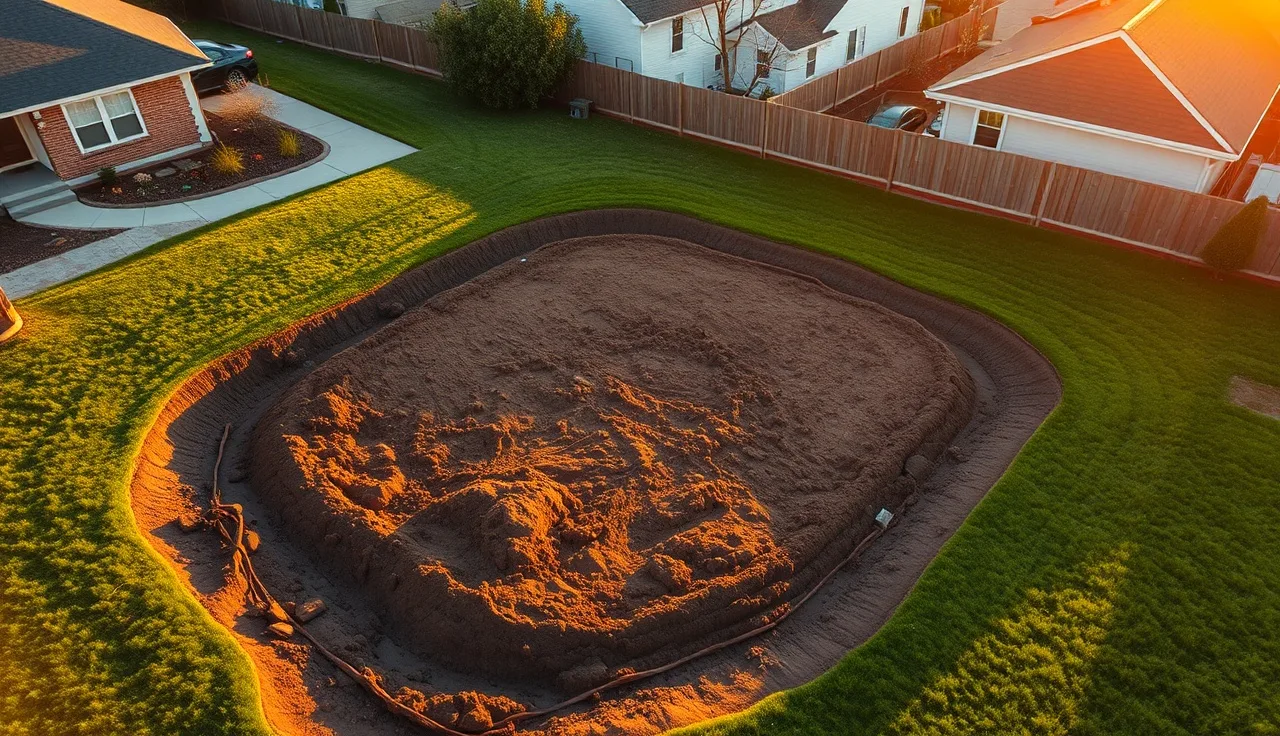
A leach field is the part of your septic system that takes clarified liquid from the tank and spreads it into the soil, where microbes and physical filtration strip out pathogens and nutrients before the water reaches groundwater. The tank handles solids. The field handles everything after that. You'll also hear it called a drain field or a soil absorption system. Same thing.
The soil does the real work. Aerobic bacteria in the top layers break down organic matter, clay particles trap pathogens, and the water percolates down to recharge the aquifer. The EPA's SepticSmart program describes a conventional drain field as "a network of perforated pipes buried in gravel-filled trenches," though several newer designs skip the gravel entirely [1].
So why does the type matter so much? Because not every soil handles the same loading rate. Sandy soils drain fast, sometimes too fast to treat the water well. Clay soils drain slowly and can push effluent to the surface. Your percolation test (perc test) and a soil evaluation from a licensed professional largely decide which field type your county health department will approve.
If you're starting from zero, our full guide on leach field basics covers the fundamentals.
What are the main types of leach fields?
Six types cover almost every residential and light commercial install in the U.S. Each one exists to solve a soil or site problem that plain gravel trenches couldn't.
- Conventional gravel trench systems
- Chamber (gravelless) systems
- Drip irrigation dispersal systems
- Mound systems
- At-grade systems
- Aerobic treatment unit (ATU) dispersal fields
A few niche designs exist, like textile filter systems and constructed wetlands, but they're rare in residential use and almost always need a special-use permit. The six above handle the vast majority of installations across all 50 states.
People mix up "leach field types" and "septic system types" all the time, and the confusion makes sense, because the dispersal field is the piece that varies most. The tank is usually concrete or polyethylene either way. What changes is how, where, and at what depth the effluent hits the soil.
How does a conventional gravel trench leach field work?
Conventional gravel trenches are the oldest design still in wide use, and the most common one in the U.S. A typical install digs trenches 18 to 36 inches wide and 4 to 6 feet deep, fills the bottom 12 inches with washed gravel, lays perforated PVC pipe on the gravel, adds more gravel above the pipe, then caps it with filter fabric and soil [2].
Effluent flows from the tank through a distribution box (D-box) that splits the flow evenly among the trenches. Gravity does most of the work. Some lots add a pressure distribution pump to spread effluent more evenly along the trench length. How much trench you need depends on your perc rate: faster soils need fewer linear feet, slower soils need more.
The gravel does two jobs. It holds up the pipe, and it creates void space where effluent pools for a moment before it soaks into the trench walls and bottom. Over time a biological mat called a biozone forms at the soil-gravel interface. That biozone actually improves treatment. But overload the system and the biozone clogs, and the trench fails.
When conventional trenches work: sandy or loamy soils with a perc rate of roughly 1 to 60 minutes per inch, enough vertical separation to seasonal high groundwater (typically 2 to 4 feet minimum, varies by state), and enough flat land to run the trenches inside your setbacks from wells, property lines, and structures. They're the cheapest option for a good reason. They work extremely well when the site cooperates.
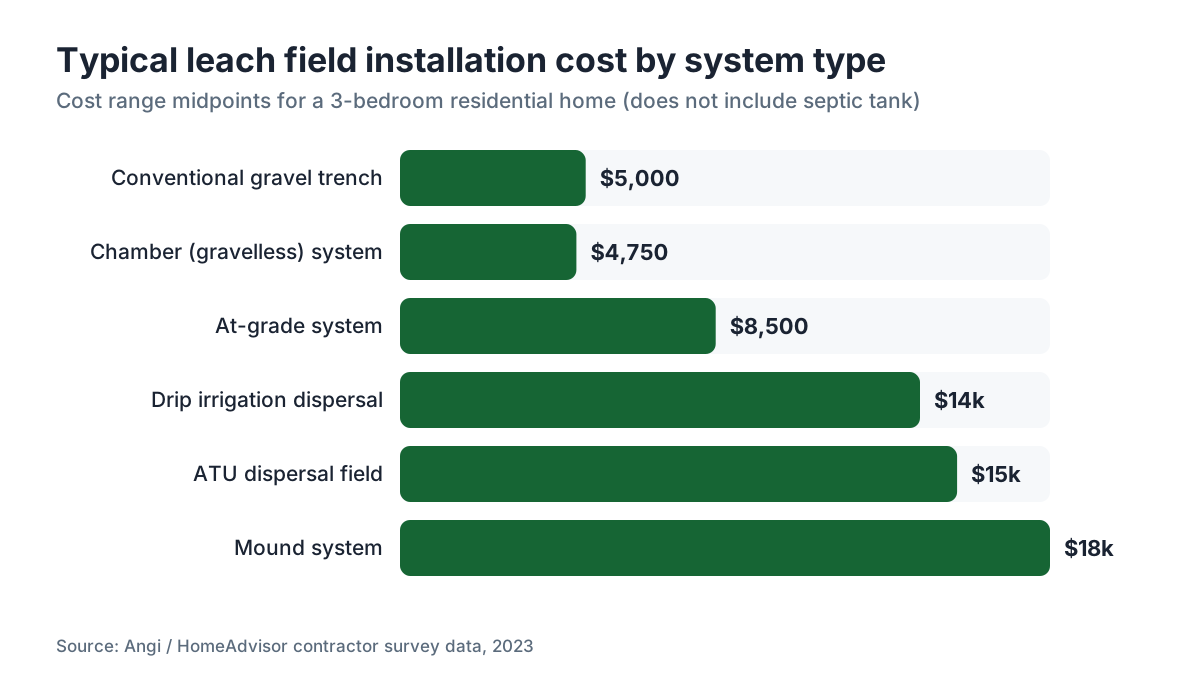
Cost range: $3,000 to $7,000 for a typical 3-bedroom home, not counting the septic tank [3].
What is a chamber leach field and is it better than gravel?
Chamber systems swap the gravel and perforated pipe for plastic arch-shaped chambers, most commonly the Infiltrator brand, that sit in a trench right on the native soil. Effluent flows in, pools on the exposed soil floor, and soaks away. No gravel, no filter fabric over the pipe, just open-bottom arches. For most residential lots, they're at least equal to gravel and easier to install.
The EPA's Office of Wastewater Management notes that chamber systems "may require less excavation" than gravel systems and perform comparably in most soil types [4]. Several states let chamber systems use a smaller footprint than equivalent gravel trenches, because the open bottom exposes more soil surface per linear foot.
Here's the honest case for them. Fewer heavy loads of stone to haul in, faster install, and the hollow chambers are easier to inspect with a camera later. Some engineers like them in cold climates because the plastic holds a little more heat around the pipe than gravel does.
Where chambers struggle: very fast soils where the manufacturer or state code still wants a gravel buffer, and extremely shallow sites where the chamber height adds depth you don't want. On price they land about even with gravel or slightly under, thanks to lower material and labor.
Cost range: $3,000 to $6,500 for a 3-bedroom home [3].
What is a drip irrigation leach field and when do you need one?
Drip dispersal pumps small, timed doses of pre-treated effluent through small-diameter tubing buried just 6 to 12 inches down. Emitters spaced every 2 to 3 feet release effluent at very low flow rates, a slow trickle instead of a flood. You need one when the soil is too slow, too shallow, or too steep for trenches.
Because the dose is small and frequent, the soil never saturates, which lets drip systems work in slow soils that would drown under conventional loading. They also fit steep slopes, odd-shaped lots, and sites with shallow bedrock or high groundwater, because you skip the deep trenches entirely.
Drip needs pre-treatment. The effluent has to be cleaner than what a standard tank produces before it hits the drip lines. Most drip installs pair with an aerobic treatment unit or a media filter, which adds cost and parts that can break. They also carry filters that need periodic cleaning, and the emitters clog if the pre-treatment isn't maintained.
The National Environmental Services Center at West Virginia University describes drip irrigation dispersal as a good fit for "challenging sites where conventional systems are not feasible," and points to its ability to spread effluent across a large area without trenching [5].
Cost range: $8,000 to $20,000 or more, driven mostly by lot size, the pre-treatment component, and local labor [3]. Our breakdown of cost to install septic system goes deeper on the line items.
What is a mound system and why does it cost so much?
A mound system builds the leach field above the native soil when that soil is too wet, too shallow, or too slow to treat effluent at grade. Contractors truck in clean sand fill, mound it 2 to 4 feet above existing grade, install gravel and pipe or chambers inside the mound, and pump effluent up from the tank on a timed dose schedule.
The sand supplies the treatment depth the native soil can't, and pumping gives precise dose control. Mounds are common in Wisconsin, Minnesota, and across the upper Midwest where high water tables are normal, and many states require them wherever seasonal high groundwater sits within 24 inches of the natural surface [8].
The cost is high for three reasons. The fill itself (sometimes hundreds of cubic yards of imported sand), the pump and control panel needed to dose the field, and the larger footprint, since mounds need real setbacks from their own edges and can't be driven over or planted with deep-rooted stuff.
Maintenance runs heavier too. Plan on the dose pump inspected yearly, the electrical controls checked, and the tank pumped carefully so solids don't get carried up to the mound. Our guide on how often to pump septic tank explains why mounds usually need pumping on the shorter end of the usual 3-to-5-year range.
Cost range: $10,000 to $25,000 or more for a typical residential mound [3].
That number stops people cold. But when the alternative is a failing drain field or a property that can't sell because it won't perc, a mound is often the only legal path forward.
What is an at-grade leach field?
At-grade systems sit at or just below the existing ground surface instead of down in deep trenches. Picture a shallow version of a mound: a thin layer of sand or gravel on the existing soil, perforated pipe running through it, the whole thing covered with a low berm of topsoil. They fit sites where trenches would hit rock or a saturated zone.
They work on shallow bedrock or very slow soils, as long as there's enough natural slope or soil structure to let effluent spread sideways. An at-grade sits between a conventional trench and a full mound: more fill and pumping than a trench, less engineering than a true mound.
States vary a lot on whether they approve at-grade designs and under what conditions. Wisconsin spells out at-grade requirements in its private onsite wastewater code (NR 113) [6]. Other states fold similar designs into broader "alternative system" categories. If your installer floats an at-grade design, ask to see the state code section that authorizes it and the design calculations behind it.
Cost range: $5,000 to $12,000, depending on how much fill and whether a pump is required [3].
What is an aerobic treatment unit (ATU) dispersal field?
An ATU isn't a leach field design. It's the treatment stage before the field. ATU dispersal earns its own category because the pre-treated, highly oxygenated effluent coming out of an ATU allows a smaller, shallower dispersal field than a plain septic tank would ever permit.
ATUs aerate the wastewater inside the tank, which speeds up biological treatment and produces cleaner effluent. That cleaner effluent can then go out through drip lines, small-diameter pressure-dosed pipes, or even spray heads on some rural non-residential sites. The dispersal area can run 30 to 50 percent smaller than a conventional field treating the same volume [7].
Where ATU dispersal earns its keep: small lots without room for a full-size conventional field, sites near sensitive water bodies where the state demands higher treatment, and replacements where a field has failed and there's no room for a new conventional one.
The tradeoff is maintenance cost. ATUs run mechanical parts: blowers, diffusers, and sometimes chlorination or UV disinfection, all of which need quarterly or semi-annual service by a licensed pro. Some states make a maintenance contract a condition of the permit. Budget $150 to $500 per year in service beyond normal pumping.
Cost range: $10,000 to $20,000 or more for the ATU plus the dispersal field [3].
How does soil type determine which leach field you get?
Percolation rate is the single biggest factor in leach field selection. Most state codes translate perc rate (measured in minutes per inch, or MPI) into a required absorption area per bedroom or per gallon per day of design flow. Slow soil means more area, or a different system entirely.
| Soil Type | Typical Perc Rate | Likely System Type |
|---|---|---|
| Coarse sand/gravel | <1 MPI | May require liner or modified trench (too fast) |
| Sandy loam | 1-10 MPI | Conventional gravel or chamber trench |
| Loam | 10-30 MPI | Conventional trench (standard sizing) |
| Silt loam | 30-60 MPI | Conventional trench (larger area) |
| Clay loam | 60-120 MPI | At-grade or mound system |
| Heavy clay / bedrock | >120 MPI or fails | Mound, ATU dispersal, or drip system |
A perc rate faster than 1 MPI is a problem, not a blessing. Water moves through so fast there isn't enough contact time for biological treatment, and some states flatly prohibit conventional leach fields in soil that fast without design changes like a layer of peat or textile media to slow things down [9].
Depth to groundwater matters just as much. Most state codes require at least 2 feet of vertical separation between the trench bottom and the seasonal high water table, and many require 3 or 4 feet. Where that separation doesn't exist naturally, a mound or ATU system builds it artificially [11].
For how the field drives total project cost, the guide to cost to put in a septic tank breaks it down.
How long does each type of leach field last?
Lifespan varies a lot, and the honest answer is that long-term data tracking leach field longevity by type is thin. Most of what we know comes from failure records and state inspection programs, not controlled studies. Treat the ranges below as field experience, not lab results.
Conventional gravel trenches, designed and maintained right, can last 25 to 50 years. The most common cause of early failure is sludge or scum from an un-pumped tank reaching the field and clogging the biozone. That's entirely preventable with regular septic tank pumping [10].
Chamber systems have been in wide use since the 1970s and have a longevity record comparable to gravel. The plastic arches don't degrade meaningfully once they're buried.
Drip and ATU systems carry more failure points because of their mechanical parts. Emitter clogging, pump failures, and control issues all shorten service life if you ignore them. A well-maintained drip system can still run 20 years or more. A neglected one can die in 5.
Mound systems in cold climates can freeze if the design is off or the berm is too small. Wisconsin's work on mound performance found that most failures traced back to inadequate maintenance of the dose pump rather than any structural failure of the mound itself [6].
The 25-to-50-year range is the honest estimate for most well-maintained systems. Poor maintenance, driving over the field, planting trees on it, or ignoring early warnings cuts that down fast. If you manage multiple systems, tools like SepticMind help operators track maintenance schedules and flag fields approaching a risk threshold.
What are the signs that a leach field is failing?
Leach field failure shows a few classic signs, and most are hard to miss once they start. Sewage odors in the yard over the field. Slow drains across more than one fixture. Wet, spongy ground above the field during dry weather. And in bad cases, sewage surfacing on the ground or backing up into the lowest drains in the house.
One more sign catches people off guard: bright green grass in a stripe over the trench lines while the rest of the lawn stays dry. The EPA SepticSmart program lists "lush, green grass growing over the drainfield even during dry weather" as one of four key warning signs [1][12]. That growth happens because nutrient-rich effluent is reaching the surface instead of percolating down.
For mound and ATU systems, watch for extra red flags: the dose pump alarm triggering over and over, too much liquid in the pump chamber, and odd odors from the control panel. These systems carry electronic monitoring precisely because they need it.
Catch failure early and you may be able to rest the field (divert flow to a second field if you have one), pump the tank, and get function back. Full replacement of a failed field is a major expense. Our guides on septic system repair and septic tank repair walk through what's recoverable and what isn't.
What does leach field installation actually involve?
Installation starts before anyone digs. A licensed engineer or soil scientist runs a site evaluation: perc tests, soil borings to find depth to groundwater and bedrock, a topographic survey, and setback measurements from wells, property lines, foundations, and water bodies. That evaluation decides which system types are even on the table.
Once the local health department approves a design, a conventional trench install usually takes 1 to 3 days of excavation and pipe-laying on a residential lot. Mounds take longer because of the fill hauling and grading. Drip and ATU systems add time for electrical work and the pre-treatment unit.
Permits are required in every state. The permit process runs 2 to 8 weeks in most jurisdictions, and some counties want a final inspection before you backfill the field. Don't let a contractor backfill before the inspector signs off. If the inspection fails after burial, you may have to dig it back up.
Here's one thing worth knowing. Some counties require a licensed inspector to run a pre-purchase or refinancing inspection, separate from the installation permit. If you're buying a home on septic, schedule a septic tank inspection that specifically evaluates the leach field, not only the tank.
The chart above summarizes typical residential cost ranges by system type from contractor survey data.
Can you replace just the leach field, or do you need to replace the whole system?
Most of the time, yes, you can replace just the leach field. The tank often has decades of life left when a field fails, especially if it was pumped on schedule and hasn't cracked or shifted. Replacing the field alone saves real money.
The replacement process starts with the same site evaluation as a new install: perc tests, soil borings, permit application. You'll also need a repair area, a section of the lot never used for a field before that meets all setbacks. Most states require owners to reserve a repair area when the original system is permitted, for exactly this scenario.
If your original field was a conventional trench that failed from overloading or poor maintenance, you may be able to build a new conventional field in the repair area. If site conditions have changed, or the repair area is tighter than ideal, an alternative system may be required instead.
Replacement costs mirror new-install costs: $3,000 to $7,000 for conventional trenches, $10,000 to $25,000 for mound or ATU systems [3]. Those numbers blindside plenty of homeowners. The best protection is treating the field like any expensive infrastructure: regular pumping, no heavy equipment over it, no deep-rooted plants, and attention to early warning signs.
Frequently asked questions
What is the most common type of leach field in the U.S.?
Conventional gravel trenches are still the most widely installed leach field type in the U.S. They work across the broadest range of soils, they're the least expensive to install, and they've been permitted and inspected under existing state codes for decades. Chamber systems have gained market share since the 1990s and are a close second in many states, but conventional gravel stays the default where site conditions allow.
How much does a leach field cost to install?
Conventional gravel trench fields typically cost $3,000 to $7,000 for a 3-bedroom home. Chamber systems run about the same or slightly less. Mound systems cost $10,000 to $25,000 because of the fill material and pumping equipment. Drip and ATU dispersal systems run $8,000 to $20,000 or more depending on pre-treatment and lot size. These figures leave out the septic tank and the site evaluation and permitting.
Can I install a leach field myself?
A handful of states let homeowners install their own septic system on their own property with a permit. Most states require a licensed contractor or engineer, and all states require a permit and inspection. Even where DIY is legal, the perc testing, soil evaluation, and design drawings usually require a licensed professional. Unpermitted fields become a serious problem when you go to sell the property.
How big does a leach field need to be?
Size depends on your soil's perc rate and your home's daily wastewater flow. Most design calculations use 75 to 150 gallons per day per bedroom as the design flow. A typical 3-bedroom home in loamy soil might need 400 to 600 linear feet of trench. Slower soils need more trench, faster soils need less. Your state's onsite wastewater code holds the exact sizing tables a designer has to follow.
What is the difference between a leach field and a drain field?
Nothing. Leach field, drain field, and soil absorption system all name the same component: the network of pipes or chambers that spreads septic tank effluent into the soil for final treatment. Regional terms vary. New England leans toward "leach field," the Southeast and Midwest often say "drain field," and engineers and regulators frequently use "soil absorption system" or "subsurface wastewater infiltration system." The function is identical.
How long does a leach field last?
A well-designed, properly maintained conventional leach field can last 25 to 50 years. The single biggest factor is whether the tank gets pumped on schedule. Sludge reaching the field clogs the biozone and causes failure you could have avoided entirely. Mound and drip systems have more mechanical parts that can shorten service life if neglected, but with proper maintenance they can also run 20 to 30 years.
What happens when a leach field fails?
A failing field can't absorb effluent fast enough, so wastewater backs up into the lowest drains in the house or surfaces in the yard above the field. You may notice sewage odors, slow drains throughout the house, or unusually lush grass over the field. Once a field is saturated and biomat-clogged, resting it (diverting to a second field) sometimes helps, but most failed fields need replacement. Leaving a failed system running contaminates groundwater and is illegal.
Do mound systems smell more than conventional systems?
Not inherently. A properly working mound is nearly odor-free. The effluent is pre-treated in the tank, and the mound's sand and soil cap treats it well. Odors from a mound usually flag a problem: too much flow, a failing dose pump letting the mound saturate, or a tank that needs pumping. The higher profile of the mound doesn't mean more odor under normal operation.
Can a leach field be repaired, or does it always need full replacement?
Some failing fields can be partially restored. If the failure is early-stage biomat clogging, resting the field while using a second field or a holding tank can allow recovery. Hydro-jetting and proprietary restoration treatments (like aeration methods) have had mixed results, and there's limited peer-reviewed data on their long-term effectiveness. Severely clogged or flooded fields generally need replacement in a new area of the lot.
What should I never put on or near a leach field?
Never drive vehicles or park heavy equipment over the field. The weight compacts the soil and crushes pipes. Never plant trees or large shrubs over it, since roots invade perforated pipe and can lift chambers. Avoid directing roof drains, sump pump discharge, or pool backwash toward the field, because oversaturation is a primary failure cause. Skip septic additives that claim to boost performance. Most have no documented benefit and some harm the biozone.
What is a drip irrigation septic system and is it high maintenance?
A drip dispersal system pumps small, timed doses of pre-treated effluent through small tubing and emitters buried 6 to 12 inches down. It needs an aerobic treatment unit or media filter upstream to clean the effluent first. Maintenance runs higher than conventional systems: emitter filters need cleaning every 6 to 12 months, the pump and controls need annual inspection, and the pre-treatment unit needs quarterly service. Budget $200 to $500 per year in service.
Is a chamber leach field better than a gravel trench?
For most residential sites, chamber systems perform at least as well as conventional gravel trenches and often cost slightly less to install because they cut out the gravel hauling. Several states allow a smaller footprint for chambers because the open-bottom arch exposes more soil per linear foot. The plastic holds up underground and is easier to inspect with a camera. Gravel still wins in very fast soils where it buffers flow, or on sites with specific local code requirements.
Does a leach field need to be inspected regularly?
Most states don't require periodic inspections for conventional systems unless the property is sold or refinanced. For alternative systems (mound, drip, ATU), most states require annual or semi-annual inspections as a permit condition. Even where it's not required, having a pro evaluate the field every 5 to 10 years is smart. Early signs of stress, like a rising water level in the distribution box, are fixable. Late-stage failure usually means full replacement.
Sources
- U.S. EPA SepticSmart: Protect Your Home's Septic System: EPA SepticSmart describes conventional drain fields as 'a network of perforated pipes buried in gravel-filled trenches' and lists lush grass over the drainfield as a key warning sign of failure.
- U.S. EPA: A Homeowner's Guide to Septic Systems: Conventional trench design: 18-36 inch wide trenches, gravel layer, perforated pipe, and filter fabric before soil cover.
- HomeAdvisor / Angi: Septic System Installation Cost Guide: Residential leach field and septic system cost ranges by type: conventional $3,000-$7,000; mound $10,000-$25,000; drip/ATU $8,000-$20,000+.
- U.S. EPA Office of Wastewater Management: Onsite Wastewater Treatment Systems Manual: Chamber systems 'may require less excavation' than gravel systems and perform comparably in most soil types.
- National Environmental Services Center (NESC), West Virginia University: NESC describes drip irrigation dispersal as suitable for challenging sites where conventional systems are not feasible, particularly for distributing effluent across large areas without deep trenching.
- Wisconsin Department of Natural Resources: NR 113 Private Onsite Wastewater Treatment Systems: Wisconsin NR 113 specifies mound and at-grade system design requirements including depth to seasonal high groundwater and that most mound failures are attributable to inadequate maintenance of the dose pump.
- U.S. EPA: Wastewater Technology Fact Sheet: Aerobic Treatment Units: ATU effluent allows dispersal area 30 to 50 percent smaller than a conventional system treating the same volume because of higher treatment levels.
- Minnesota Pollution Control Agency: Septic System Owner's Guide: Depth to seasonal high water table requirements and mound system requirements for sites with water table within 24 inches of the surface.
- University of Minnesota Extension: Septic System Basics: Soil percolation rate (MPI) classifications and corresponding system type recommendations for residential septic systems.
- Penn State Extension: Septic Systems and Their Maintenance: Conventional leach fields can last 25 to 50 years when properly designed and maintained; most premature failures are caused by un-pumped solids reaching the field.
- North Carolina State Extension: Wastewater Treatment in Onsite Systems: Soil texture classifications and their relationship to required absorption area per bedroom in onsite wastewater system sizing, and vertical separation to groundwater requirements.
- U.S. EPA SepticSmart Week Resources: Four key warning signs of drain field failure including sewage odors, slow drains, wet spots over the field, and lush green grass above the trenches.
Last updated 2026-07-09