Septic Service for Food Banks and Community Food Programs
By the SepticMind Editorial Team
Food banks and community food programs are mission-driven organizations focused on serving vulnerable populations, not on managing septic compliance. But the wastewater reality is that food bank commercial kitchens produce restaurant-level grease and food waste in their onsite septic systems. Operating a commercial kitchen with restaurant-scale food prep and then treating it as a low-priority maintenance issue is a recipe for a compliance failure at exactly the wrong time.
TL;DR
- Food Banks facilities have distinct wastewater loading patterns that affect septic system sizing, service frequency, and permit requirements.
- Commercial and institutional properties like food banks typically require more frequent pumping than residential systems due to higher daily usage.
- Some food banks operations generate waste streams (grease, chemicals, or high-volume flow) that require pre-treatment before reaching the septic system.
- Service contracts for food banks provide predictable recurring revenue and are easier to manage with a platform that tracks commercial account schedules.
- Health department inspections for food banks properties may require septic system condition documentation as part of facility licensing.
- Septic companies specializing in food banks service build referral networks with property managers, architects, and health inspectors in that niche.
Food bank compliance failures create public health concerns affecting vulnerable community members. The people who depend on food bank services are often least able to deal with the disruption of a facility closure. Getting septic management right protects your ability to serve your community consistently.
Why Food Bank Wastewater Is a Commercial-Scale Problem
Food banks aren't office buildings. Large food banks operate commercial kitchens that prepare hundreds or thousands of meals per day. They wash enormous volumes of produce, cook large batches of food, and clean commercial equipment repeatedly throughout the day.
That activity produces:
Grease and food waste: Commercial cooking generates fats, oils, and grease (FOG) at a rate that overwhelms septic tanks without proper pretreatment. Without a grease trap, your tank fills with grease faster than any other load, and grease-clogged systems are expensive to remediate.
High-volume gray water: Industrial dishwashers, large pot sinks, produce washing stations, and floor drains all contribute to the total daily water volume. A food bank kitchen serving 1,000 meals per day may generate as much wastewater as a commercial restaurant.
Organic waste: Food scraps, vegetable trimmings, and leftover food from meal prep add organic load to your system. If staff dispose of food waste down the drain rather than in trash or composting, this accelerates tank filling.
The comparison to restaurants is apt. If your local restaurant wouldn't go five years without grease trap service, neither should your food bank.
Grease Trap Requirements
Most county health departments require grease traps for commercial kitchen facilities above a certain cooking and water use threshold. Food banks operating commercial kitchens almost certainly meet that threshold.
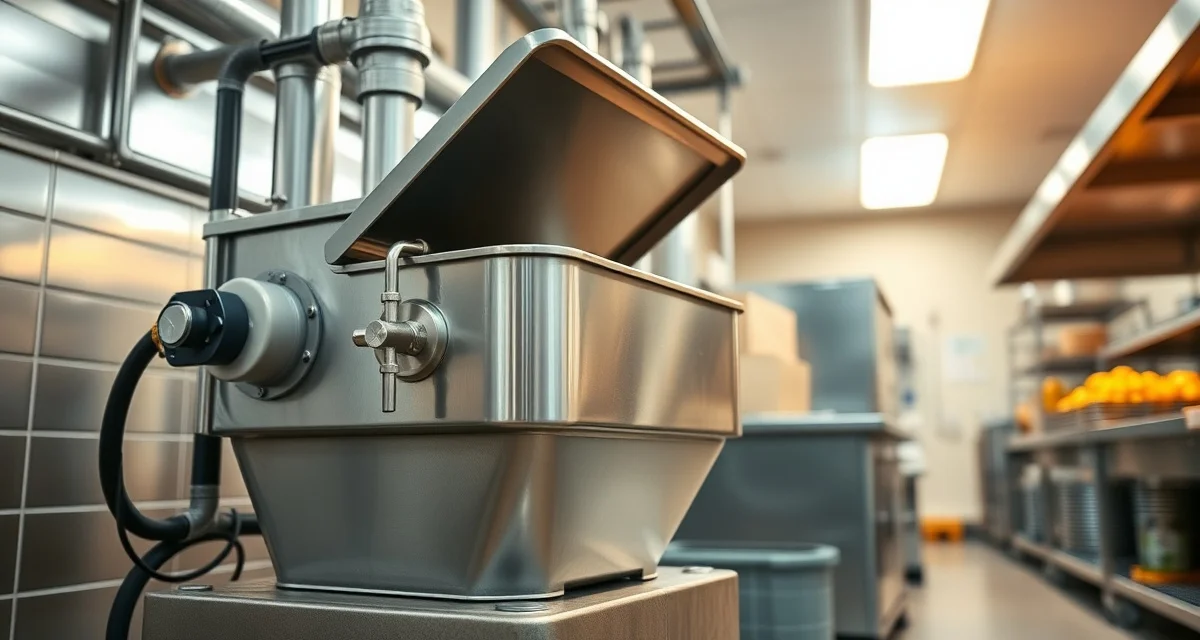
A grease trap intercepts FOG before it reaches your septic tank, capturing it for separate disposal. Without one, grease goes directly into the tank, where it accumulates as a floating scum layer that clogs your inlet baffle and eventually migrates to your drainfield.
Check with your county health department to confirm whether a grease trap is required for your facility. If you don't currently have one, the cost of installing a properly sized grease interceptor is far less than the cost of a grease-damaged drainfield.
Grease traps need their own service schedule, separate from your main tank. Commercial kitchens typically need grease trap service every 1-3 months depending on cooking volume.
Service Intervals for Food Banks
Service intervals for food bank facilities should be set based on commercial kitchen use, not on building size or a generic nonprofit schedule. The kitchen's daily output determines the load on your system.
A food bank with a commercial kitchen operating 5 days per week and serving 500+ meals per day needs annual tank pump-outs at minimum, and possibly semi-annual service if the kitchen is high-volume. A food pantry with minimal cooking that primarily distributes packaged food has a much lower load, closer to an office building.
Have your system professionally assessed based on your actual kitchen operation and let the service provider set a documented interval. Don't default to whatever the previous organization was doing without confirming it was appropriate.
SepticMind's food bank account type tracks commercial kitchen septic service with grease trap scheduling. Both your grease trap and your main tank have their own service records and reminders so neither gets overlooked.
Compliance and Funding Considerations
Food banks that receive government funding, USDA food program participation, or grants from foundations may have facility compliance requirements tied to continued funding. An organization that can't demonstrate it maintains its facility properly, including sanitation systems, may face questions during grant renewals or program audits.
Organized service records aren't just about avoiding health department penalties. They're documentation of responsible stewardship of the facility and the public trust. For donor relations and grant compliance, being able to show a clean maintenance record is a simple demonstration of good organizational management.
For community kitchens sharing a building with a food bank, the same commercial kitchen wastewater rules apply. See the septic service for restaurants guide for parallel guidance on commercial food service wastewater management.
For organizations managing multiple community food program locations, connecting all sites under one septic service agreement management account keeps service schedules organized across the portfolio.
Staff Education and Drain Discipline
Commercial kitchens generate septic problems when staff aren't trained on what can go down the drain. Common issues include:
- Pouring cooking oil or grease down sink drains instead of collecting it for disposal
- Disposing of food scraps into floor drains rather than trash
- Using excessive amounts of antibacterial cleaning products that disrupt tank bacteria
- Running garbage disposals that send organic material directly to the septic tank
A simple posted policy near kitchen sinks and drains costs nothing and prevents some of the most common causes of premature septic problems in commercial kitchens.
Get Started with SepticMind
Managing service contracts for food banks properties is easier with a platform built for the septic trade. SepticMind tracks commercial service schedules, documents every inspection visit, and keeps your compliance records organized by property. See how it handles your commercial account portfolio.
Frequently Asked Questions
What septic service intervals are appropriate for a food bank with a commercial kitchen?
A food bank operating a commercial kitchen at any significant scale should plan for annual septic pump-outs at minimum, with the grease trap serviced every one to three months depending on cooking volume. The commercial kitchen load from daily food preparation, produce washing, and equipment cleaning places food bank facilities in the same maintenance category as commercial restaurants. Smaller food pantries with minimal cooking and primarily packaged food distribution have lower loads and may need less frequent service, but even those facilities should have a professional assessment to set the right interval rather than assuming standard residential or office-building intervals apply.
Does a food bank need a grease trap for its commercial kitchen wastewater?
Almost certainly yes, if you operate a commercial-scale kitchen. Grease traps are required by most county health departments for facilities where commercial cooking generates fats, oils, and grease above a threshold volume. Food banks preparing hundreds of meals per day clearly meet that threshold in most jurisdictions. Without a grease trap, grease accumulates directly in the septic tank, rapidly filling the tank and potentially clogging the drainfield. The grease trap requires its own regular service, separate from the main tank. If you're operating without one, check with your county health department and consider having a licensed professional assess whether one needs to be installed.
Does SepticMind track grease trap service for food bank commercial kitchen accounts?
Yes. SepticMind's food bank account type maintains separate records for grease trap service and main septic tank pump-outs. Each has its own service schedule based on your kitchen's cooking volume and the grease trap capacity. Service reminders notify you when either is approaching its service interval. The grease trap and main tank records are linked to the same account, so you get a complete picture of your facility's wastewater system compliance in one view. When county health inspections come up, you can show complete service history for both components immediately.
How often should a septic system serving a food banks property be inspected?
Septic systems at food banks properties should be inspected at least annually and pumped more frequently than residential systems, since commercial-scale daily water usage accelerates sludge and grease accumulation. The exact frequency depends on the specific activities at the facility, peak occupancy, any food service or chemical use on-site, and local regulatory requirements. A service provider familiar with food banks operations can recommend an appropriate inspection and pumping schedule based on the system's actual usage profile.
What septic system issues are most common at food banks properties?
The most common septic problems at food banks properties are rapid sludge accumulation from high occupancy, grease trap failure if food service is involved, hydraulic overloading during peak-use periods, and non-biodegradable waste disposal from cleaning or maintenance activities. Regular inspection and a service contract with clear maintenance intervals are the most effective ways to catch these problems before they cause system failure or regulatory violations.
Try These Free Tools
Sources
- National Onsite Wastewater Recycling Association (NOWRA)
- US EPA Office of Wastewater Management
- NSF International
- Water Environment Federation
- National Environmental Services Center (NESC)