Septic inspection in Jamesport, NY: what to expect and what it costs
By the SepticMind Editorial Team
TL;DR
- A septic inspection in Jamesport, NY costs $300 to $600 and takes two to four hours.
- Inspectors check the tank, distribution box, and drain field under Suffolk County Department of Health Services rules.
- Most local sales need a property transfer clearance backed by an inspection report.
- Failing parts commonly cost $500 to $5,000 to fix before closing.
What is a septic inspection in Jamesport and why does it matter?
A septic inspection is a hands-on check of every working part of your onsite wastewater system: the tank, the distribution box, the drain field, and the pipes that connect them. Jamesport sits on the North Fork of Long Island in Riverhead Town. Almost every home there outside the small sewered pockets runs on a private septic system. So the inspection carries real weight for buyers and sellers.
Suffolk County regulates onsite systems through the Suffolk County Sanitary Code, Article 6 [1]. Unlike some upstate counties that lean loosely on the state's design standards, Suffolk runs its own permitting and its own inspection protocols through the Department of Health Services (SCDHS). When a property changes hands, SCDHS typically wants a property transfer clearance or a comparable documentation package before it updates its records. Local real estate attorneys treat the septic report the way they treat a structural inspection: a contingency that can move a closing.
There's a second reason inspections matter here, and it has nothing to do with paperwork. A failing system in Jamesport drains straight into groundwater that feeds private wells and, a short distance away, Peconic Bay. The EPA's SepticSmart program puts it plainly: "a properly functioning septic system treats wastewater before it reaches groundwater" [2]. On a sandy glacial-outwash peninsula, the buffer between a working system and a nitrogen problem in the bay is thin. That's not alarmism. That's the hydrology of the place.
What does a septic inspector actually check in Jamesport?
A good inspection follows a set order, from the house outward. The inspector starts at the building, confirms the bedroom count (which sets the design flow the system has to handle), and finds every cleanout and access point. Then the work moves down the line.
The septic tank gets opened and measured. The inspector checks scum depth at the top, sludge depth at the bottom, the condition of the inlet and outlet baffles, and whether the liquid level sits where it should. A high liquid level with no recent heavy rain usually means the drain field is backing up. A low level can mean a crack or a leak. The tank itself gets a visual check for structural cracks, root intrusion, and the state of the lid and risers. If the tank hasn't been pumped lately, most Jamesport inspectors either pump it as part of the visit or ask for a recent pump-out record before they'll judge sludge levels. See septic tank pump out for what that process involves.
The distribution box (D-box) comes next. In a conventional gravity system, the D-box splits effluent evenly across the leach field laterals. Inspectors look for roots inside, uneven flow that starves some laterals and floods others, and solids that carried over from the tank. A cracked or tilted D-box is one of the more common repair items in Jamesport's older homes.
The leach field gets a visual inspection and, often, a dye test or a probe test. Visual checks catch soggy or unusually lush grass, effluent breaking out at the surface (a clear fail), and settlement over the laterals. Some inspectors push a metal probe to gauge soil saturation. If the field shows trouble, the inspector documents where and how much. North Fork soils drain fast, which is good for field longevity and bad for the bay, because nitrogen moves through sand quickly.
Last, the inspector checks setback distances when records allow. SCDHS sets minimum separations between system parts and wells, property lines, and surface water [1]. Plenty of older North Fork parcels have systems that pre-date the current code. That doesn't make them illegal on its own, but it changes how the county treats them at transfer.
How much does a septic inspection cost in Jamesport, NY?
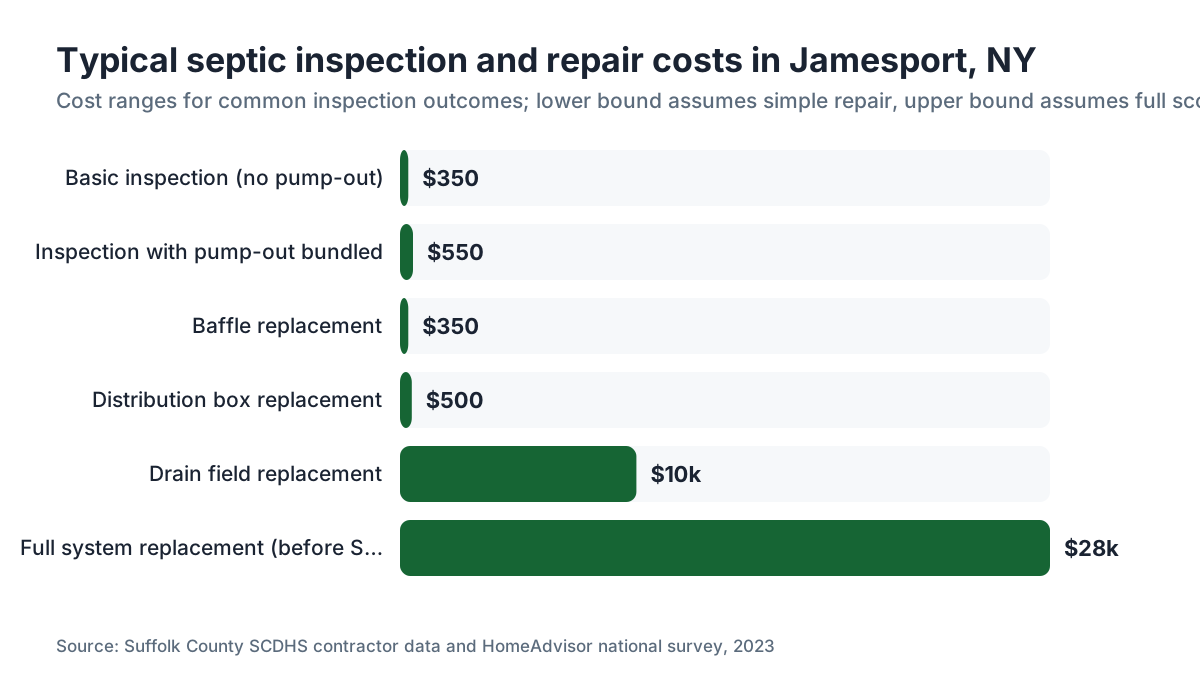
Expect $300 to $600 for a standard inspection in Jamesport. Whether pumping is bundled in and how complex the system is drive most of that range. A basic visual inspection with a dye test lands near the bottom. A full inspection with tank pumping, a camera run on the inlet line, and a written SCDHS-format report pushes toward $600 or more.
A few things move the price on the North Fork specifically:
- Travel time. Most licensed septic companies working this area are based in Riverhead, Southold, or Mattituck. A company driving out from further west often adds a travel surcharge.
- Tank pumping. If the tank hasn't been pumped in the last one to two years, most inspectors require it before they'll sign off on an assessment. Septic tank pumping runs $300 to $500 on its own in Suffolk County, or $150 to $250 added on when bundled with the inspection.
- System age and complexity. Homes built before 1980 may have cesspools rather than true septic systems with a separate leach field. Cesspool inspections take longer and the paperwork differs.
- Reinspection fees. If repairs are needed and SCDHS has to sign off again, a reinspection adds $75 to $200 depending on scope.
For context, a 2023 HomeAdvisor national survey put the average septic inspection at $375. Suffolk County runs higher than that because of local licensing rules and the plain cost of operating in the New York metro region [3].
What are the septic rules specific to Jamesport and Suffolk County?
Jamesport is in Riverhead Town, and all septic work there falls under Suffolk County Department of Health Services jurisdiction, layered on top of New York State's Part 75 standards for individual household systems [4]. The county's Sanitary Code Article 6 sets the design rules: minimum tank sizes, required setbacks from wells and water bodies, and acceptable soils for absorption. Those apply to new construction and replacements. Systems that pre-date the current code are grandfathered for ordinary operation but have to meet current standards if you replace them.
The county runs a Septic Improvement Program (SIP) with rebates up to $30,000 for swapping out cesspools and older systems for nitrogen-reducing technology [5]. This is a big deal in Jamesport, because the hamlet drains to Peconic Bay, a designated Significant Coastal Fish and Wildlife Habitat [6]. Nitrogen from failing septic systems has been tied to algal blooms in the bay, and the county funds upgrades specifically to slow that down. If you're staring at a full replacement, the SIP rebate changes the math in a hurry.
For sales, SCDHS wants a property transfer clearance before it updates permit records. The process means submitting inspection documentation that shows the system works, or getting county approval of a repair or replacement plan if it doesn't. Buyers' attorneys in Suffolk now routinely write this clearance into the closing as a condition. It can add two to six weeks to a deal when repairs are involved.
New York's Environmental Conservation Law also limits cesspool installation within 100 feet of a well or surface water body. Many Jamesport properties with old cesspools sit close to small ponds or tidal creeks, which is exactly why the county leans on owners here to upgrade.
What commonly fails a septic inspection in Jamesport?
Failures in Jamesport and across the North Fork fall into a short, predictable list.
Failed drain field. This is the big one. Saturated soil, effluent breaking out at the surface, or probe tests that hit standing water in the laterals all mean the field has lost its ability to absorb effluent. On older properties that never got an upgrade, this shows up a lot. A drain field replacement runs $5,000 to $15,000 in Suffolk County depending on size and site conditions. See cost to install septic system for what drives that.
Deteriorated baffles. Older tanks used concrete or steel baffles that break down over time. Without working baffles, solids carry into the drain field and speed up its death. Swapping in PVC sanitary tees is a $200 to $500 repair.
Cracked or collapsed distribution box. D-box failure is common in North Fork soils, where freeze-thaw and root pressure crack concrete year after year. A new D-box costs $300 to $700 installed.
Inadequate setbacks. If the inspector finds a well and a septic tank within 100 feet of each other, or a drain field crowding a property line, the county may want a component relocated. That's more a documentation and negotiation problem than a repair, but it can stall a sale.
High sludge levels in the tank. If sludge fills more than a third of the tank, the system needs pumping now. That's not a system failure on its own, but it tells you septic tank cleaning got skipped and that solids may already be reaching the field.
A cesspool instead of a true septic system. Suffolk County treats cesspools (single chambers with no separate leach field) as inferior to two-part systems. At transfer, SCDHS may require documentation of the system type and, in some cases, an upgrade as a condition of clearance, especially near a water body.
How long does a septic inspection take in Jamesport?
Plan for two to four hours on site for a standard inspection. The range comes down to how ready the property is. If the risers are accessible and the system records exist, an experienced inspector moves fast. If they have to hunt for and dig up buried lids, add an hour or more.
Written reports usually land within 24 to 72 hours of the visit. When the inspection feeds a real estate transaction that needs SCDHS filing, the county review runs on its own clock: clean approvals often come through in two to four weeks, but a required repair or variance pushes that to six to twelve weeks depending on the backlog.
Sellers who want to get ahead of all this should order the inspection two to three months before listing. You learn early what needs work. You get septic tank repair quotes without a closing date breathing down your neck. And you get to show a freshly pumped, inspected system as a selling point instead of a surprise.
How do you find a qualified septic inspector in Jamesport?
In New York, septic inspectors and installers get licensed through the county health department where they work. In Suffolk County, that's a SCDHS-issued Sewage Works Contractor license [1]. For an inspection meant to support a property transfer clearance, the inspector also has to be on the county's approved list for that service.
The SCDHS website keeps a list of licensed contractors. Past the license, you want someone with real North Fork experience, because the soils, the system ages, and the code details around water bodies all differ from western Suffolk. Ask how many inspections they've done in Riverhead Town. Ask whether they file with SCDHS for you or just hand you a report and leave you to the county.
For a sale, your real estate attorney can usually point you to inspectors who produce clean, SCDHS-acceptable reports. That matters, because a report missing the right documentation format triggers a county request for more information, and that costs you weeks.
If you run inspections across a lot of properties, software like SepticMind tracks inspection status, permit deadlines, and repair follow-ups across a portfolio so jobs don't slip.
Skip any inspector who won't carry liability insurance, won't produce a written report, or can't give you a license number to verify. This is not where you save money by hiring the cheapest name off a community forum.
What happens after a septic inspection in Jamesport?
Three things can come out of a Jamesport inspection.
The system passes. The inspector documents it as working, the report goes to SCDHS (or into your own file if this isn't a sale), and you move on. In a sale, the attorney submits the package for property transfer clearance. In a routine maintenance check, you now have a baseline and know when the next pump-out is due. The EPA recommends inspecting a system every one to three years and pumping every three to five [2].
Minor repairs are needed. Baffle replacement, a new D-box, lid repairs, or a pump-out to bring the tank back into spec. These items are usually negotiable in a sale: the seller fixes them, the buyer takes a credit, or the price shifts. Septic system repair for minor items generally runs $300 to $1,500.
The system has a major failure. Drain field replacement, a full upgrade to nitrogen-reducing technology, or a cesspool-to-septic conversion. This is where the Suffolk County SIP rebate earns its keep [5]. A major replacement costs $15,000 to $40,000 in Suffolk County for a standard residential system, and nitrogen-reducing advanced systems can cost more before the rebate. See cost to put in a septic tank for a breakdown of what drives those numbers.
In a sale, a major failure almost always reopens the negotiation. Buyers ask the seller to finish the replacement before closing, push for a price cut, or walk. Sellers come out ahead knowing all this before they list.
How often should Jamesport homeowners get their septic system inspected?
The EPA's SepticSmart guidelines recommend inspecting a standard septic system every one to three years, and pumping every three to five years for a household of four [2]. That's the national baseline. In Jamesport, three things argue for the frequent end of the range.
System age. The North Fork has a lot of housing built between the 1950s and 1980s, with older tanks and conventional fields. Older systems carry more risk and deserve closer attention.
Proximity to water. If you're near a pond, a creek, or Peconic Bay, catching a failure early protects both your system and the watershed.
Seasonal use. Many Jamesport properties run hard in summer and sit quiet the rest of the year. That uneven loading can wear on a drain field faster than steady year-round use.
A practical schedule: inspect and pump every three years if your system is under 20 years old and symptom-free. Every two years if it's older, or if you notice slow drains, wet spots, or odors. Every year if you've had prior problems or SCDHS has flagged the property. See how often to pump septic tank for the fuller version.
SepticMind's maintenance tools can set reminders for inspection and pumping cycles, which helps if you're managing a property remotely or juggling several at once.
Is a septic inspection required to sell a home in Jamesport?
New York State has no statewide mandatory septic inspection law for property transfers the way Massachusetts does with Title 5. But Suffolk County's property transfer clearance process creates the same requirement at the county level [1]. Without SCDHS clearance documentation, closing attorneys won't close, title companies won't insure, and lenders won't fund. So the practical answer is yes.
FHA and VA loans add another layer. Both require the septic system to be in good working condition at the time of appraisal, and both flag visible septic failures as loan conditions that have to clear before closing [7]. Conventional loans skip the explicit rule, but lenders can and do order inspections when the appraiser notes concerns.
Even an all-cash sale to a sophisticated buyer usually includes a septic inspection on the North Fork. The buyers know what they're taking on. Anyone who skips it is buying unknown liability, and most won't.
For Jamesport sellers, the move is simple: assume the inspection is required, order it early, and fix what needs fixing before you're under contract and on the clock.
What's the difference between a septic inspection and a cesspool inspection in Jamesport?
Jamesport has a lot of properties running cesspools rather than true two-part septic systems, and the distinction shapes the inspection.
A cesspool is a single buried chamber with perforated walls or a rubble stone base. Liquid seeps out through the sides and bottom. There's no separate tank and no dedicated drain field. Cesspools were the standard install on Long Island through the mid-20th century, and plenty still run today, though Suffolk County has been working hard to phase them out.
Inspecting a cesspool means checking chamber depth (cesspools fail when they fill with solids and the bottom seals off with grease and biomass), liquid level, cover condition, and distance to wells and water bodies. The tools are similar to a septic inspection, but the pass/fail lines differ. A working cesspool with adequate capacity and proper setbacks can sometimes still get SCDHS clearance at transfer. A failed or undersized one usually has to be upgraded to a two-part system.
Not sure which one your Jamesport property has? The SCDHS permit records for your address should say. If the records are missing or unclear, an inspector can usually tell within the first few minutes of opening it up.
Frequently asked questions
How much does a septic inspection cost in Jamesport, NY?
A standard septic inspection in Jamesport runs $300 to $600. That covers the visit, a dye or probe test, and a written report. If the tank needs pumping before the inspector can read sludge depth, add $150 to $250 bundled in, or $300 to $500 scheduled separately. Suffolk County pricing runs above the national average of roughly $375, mostly because of local licensing rules and metro-area operating costs.
Do I need a septic inspection to sell my house in Jamesport?
In practical terms, yes. Suffolk County requires a property transfer clearance from SCDHS before most home sales can close, and that clearance needs documentation of a working septic system. FHA and VA loans add explicit inspection requirements on top. Even cash buyers on the North Fork typically make an inspection a contingency. Assume it's required and schedule it two to three months before listing so you have time to fix any issues.
How long does a septic inspection take in Jamesport?
The on-site inspection takes two to four hours, depending on how accessible the tank and distribution box are and whether the inspector has to locate buried lids. Written reports come back within one to three days. If the report goes to SCDHS for property transfer clearance review, the county's process adds two to six weeks for straightforward cases, or longer when repairs are required before approval.
What do septic inspectors look for in a North Fork or Jamesport property?
Inspectors check the tank (baffles, cracks, sludge and scum levels), the distribution box (cracks, root intrusion, even flow), and the drain field (saturation, surface breakout, soil probe results). They verify setback distances from wells and water bodies under Suffolk County Sanitary Code Article 6. On older properties, they document whether the system is a true two-part septic system or a cesspool, which changes SCDHS clearance requirements.
What are the most common reasons a septic system fails inspection in Jamesport?
Failed or saturated drain fields are the most common major failure, followed by deteriorated baffles in older tanks, cracked distribution boxes, and inadequate setbacks from wells or water bodies. High sludge levels that point to years of missed pumping show up often on seasonal properties. Cesspools near water bodies also frequently trigger upgrade requirements under Suffolk County's nitrogen-reduction programs.
Does Suffolk County offer financial help for septic repairs or upgrades near Jamesport?
Yes. Suffolk County's Septic Improvement Program (SIP) offers rebates up to $30,000 for replacing cesspools and conventional systems with nitrogen-reducing advanced treatment units. Jamesport properties draining to Peconic Bay sit in a priority area for this funding. Applications go through the Suffolk County Department of Health Services. The rebate can substantially offset the $15,000 to $40,000 cost of a full system replacement.
How often should I pump my septic tank if I live in Jamesport?
The EPA recommends pumping every three to five years for a household of four with a standard system. In Jamesport, seasonal properties that see heavy summer loads and light winter use often do better pumping every three years rather than stretching to five. Older systems and properties with prior issues belong on a two-year cycle. An inspection every one to three years gives you a data point to calibrate the schedule to your actual usage.
Who can legally perform a septic inspection in Suffolk County?
Inspectors must hold a Suffolk County Department of Health Services Sewage Works Contractor license to perform inspections submitted for SCDHS property transfer clearance. General home inspectors without that credential can look at visible components, but their reports aren't accepted for county clearance. Verify the inspector's license number through the SCDHS website before hiring, and confirm they carry liability insurance.
What is the Suffolk County property transfer clearance process for septic systems?
Suffolk County SCDHS requires a licensed inspector to document the condition of the onsite sewage disposal system before a property changes hands. The inspector submits a report; if the system passes, SCDHS issues a clearance letter. If repairs are needed, the county approves a repair plan, a licensed contractor completes the work, and a reinspection confirms it. The process takes two to six weeks for clean cases and longer when major work is involved.
Can I inspect my own septic system in Jamesport, or do I need to hire a professional?
You can do basic visual monitoring: watch for wet spots or unusually green grass over the drain field, note slow drains, and track when the tank was last pumped. But for any formal inspection tied to a sale or SCDHS filing, you need a licensed Sewage Works Contractor. DIY checks are a useful early warning, not a substitute for a professional inspection with probe testing and a written report.
What is the difference between a cesspool and a septic system in Jamesport?
A cesspool is a single buried chamber that takes raw wastewater and lets liquid seep out through perforated walls or a rubble bottom. A two-part septic system has a tank that separates solids from liquid and a separate drain field that treats effluent through soil. Many Jamesport properties still run cesspools from pre-1970s construction. Suffolk County treats cesspools as inferior and may require upgrades, especially near water bodies.
How does a septic inspection in Jamesport relate to Peconic Bay water quality?
Jamesport drains straight into Peconic Bay, a designated Significant Coastal Fish and Wildlife Habitat. Failing septic systems and cesspools push nitrogen into groundwater, which feeds the bay and drives algal blooms. Suffolk County's SIP rebate program prioritizes this watershed for that reason. A working, inspected system is one of the most direct steps a Jamesport homeowner can take to cut their share of bay nitrogen loading.
What repairs are typically needed after a septic inspection in Jamesport, and what do they cost?
Minor repairs like baffle replacement ($200 to $500) or a new distribution box ($300 to $700 installed) are common and straightforward. Drain field replacement runs $5,000 to $15,000. A full system replacement with nitrogen-reducing technology costs $15,000 to $40,000 before any SIP rebate. The Suffolk County rebate of up to $30,000 for qualifying upgrades can bring the net cost of advanced systems in line with conventional replacement.
Sources
- Suffolk County Department of Health Services, Sanitary Code Article 6: Suffolk County Sanitary Code Article 6 governs onsite sewage disposal system design, permitting, setback requirements, and property transfer clearance in Jamesport and all of Suffolk County.
- U.S. EPA, SepticSmart Program: The EPA SepticSmart program states that 'a properly functioning septic system treats wastewater before it reaches groundwater' and recommends inspections every one to three years and pumping every three to five years.
- HomeAdvisor, Septic Tank Inspection Cost: A 2023 HomeAdvisor national survey put the average septic inspection cost at roughly $375, below the $300 to $600 range typical in Suffolk County.
- New York State Department of Health, Appendix 75-A Wastewater Treatment Standards: New York State Appendix 75-A sets baseline standards for individual household septic systems, which Suffolk County supplements with its own more stringent Sanitary Code.
- Suffolk County Department of Health Services, Septic Improvement Program: Suffolk County's Septic Improvement Program offers rebates of up to $30,000 for replacing cesspools and older systems with nitrogen-reducing advanced treatment technology, with Peconic Bay watershed properties in a priority area.
- New York State Department of Environmental Conservation, Peconic Estuary: Peconic Bay is a designated Significant Coastal Fish and Wildlife Habitat; nitrogen loading from onsite sewage systems has been identified as a contributor to water quality degradation in this estuary.
- U.S. Department of Housing and Urban Development, FHA Single Family Housing Policy Handbook 4000.1: FHA loan guidelines require that the septic system be in good working condition at the time of appraisal; appraisers must flag visible septic failures as conditions to be resolved before loan funding.
- Suffolk County Water Authority, Water Quality: Groundwater on Long Island's North Fork, including Jamesport, feeds both private wells and surface water bodies, making properly functioning septic systems directly relevant to drinking water quality.
- Cornell Cooperative Extension of Suffolk County, Onsite Wastewater Management: Cornell Cooperative Extension provides guidance on onsite wastewater system maintenance for Long Island homeowners, including drain field management and cesspool upgrade options.
Last updated 2026-07-09