Septic inspection in Mattituck, NY: what to expect and what it costs
By the SepticMind Editorial Team
TL;DR
- A septic inspection in Mattituck, NY runs $300 to $700, takes two to four hours, and follows Suffolk County Department of Health Services rules under Article 6 of the Suffolk County Sanitary Code.
- Inspectors locate the tank, probe the leaching pools, measure scum and sludge, and check for backup or surfacing sewage.
- Real estate deals almost always require one.
Why are Mattituck septic inspections different from the rest of Long Island?
Mattituck sits on the North Fork of Suffolk County, in the Town of Southold, and the geography changes everything about its septic systems. The North Fork is a narrow peninsula with a shallow water table. Public sewer doesn't reach most of the hamlet, so nearly every home runs on a private system that pushes effluent into the ground a short distance above the drinking water supply.
That supply is a sole-source aquifer, the Magothy-Raritan system, which serves roughly 2.7 million people and has no surface-water backup [1]. Contaminate it and there's no plan B. That single fact drives how hard the county regulates onsite wastewater.
Suffolk County enforces Article 6 of the Suffolk County Sanitary Code, which covers construction and modification of sewage disposal systems. The Department of Health Services (SCDHS) has jurisdiction over inspections tied to property transfers, new construction, and modifications. An inspection done without SCDHS approval won't satisfy a real estate requirement that calls for county sign-off. A private pre-purchase inspection still operates inside that regulatory frame, and a licensed engineer or a certified inspector working under SCDHS guidelines is the only credential worth trusting here [2].
The North Fork also runs on a wine-country economy, which means a lot of old agricultural and seasonal buildings became full-time homes. Many of those conversions happened before modern setback and capacity rules. Here's the practical risk: a system sized for a two-bedroom summer cottage is often still buried under a four-bedroom house lived in year-round. Inspectors here flag capacity mismatches far more than they would in suburban Nassau, because the mismatch is genuinely common.
What does a septic inspection in Mattituck actually involve?
A standard inspection runs through four stages, and skipping any one of them tells you something bad about the inspector. Locate, open, evaluate, flow test. That's the whole job.
First, the inspector locates the system. Many Mattituck systems went in between the 1960s and 1980s with little or no documentation. A good inspector brings a probe rod and walks the yard in a grid if the as-built drawing is missing. SCDHS keeps records for some systems, and your inspector should pull those before arriving. If they don't, ask why.
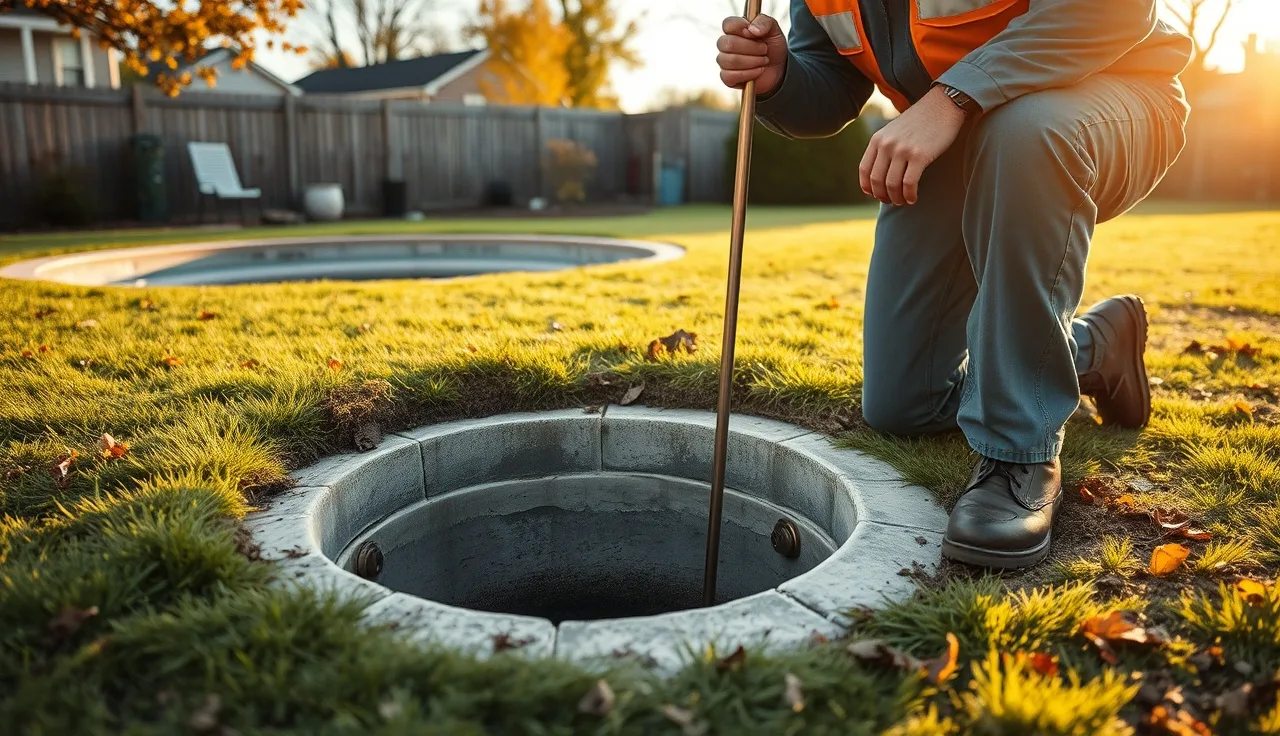
Second, they open the tank. That means removing the access cover, which may mean digging if it's buried. They check the inlet and outlet baffles, look at the scum layer floating on top, and measure the sludge at the bottom with a Sludge Judge or a similar tool. EPA guidance says a tank should be pumped once the combined scum and sludge layers fill more than a third of its liquid volume [3]. Many Mattituck tanks hold 1,000 gallons, sized for two to three bedrooms under old Suffolk rules.
Third, they evaluate the leaching pools. Suffolk County systems almost always use precast concrete leaching pools (cesspools or rings) instead of a gravel-and-pipe leach field. The inspector checks for standing effluent inside the pools, which means the pools have failed or are close. They probe for soft, wet ground above the rings and look for sewage surfacing at grade, which is both a failure sign and a public health violation.
Fourth, they run a flow test. Water goes into the system while the inspector watches the pools accept it. A pool that rises two inches and sits there for thirty minutes is in trouble. One that drops back down in ten minutes is probably fine.
The whole thing takes two to four hours. A simple system with one 1,000-gallon tank and two leaching pools moves fast. A big property with multiple tanks, a pump chamber, and four or five pools takes longer and costs more.
How much does a septic inspection cost in Mattituck?
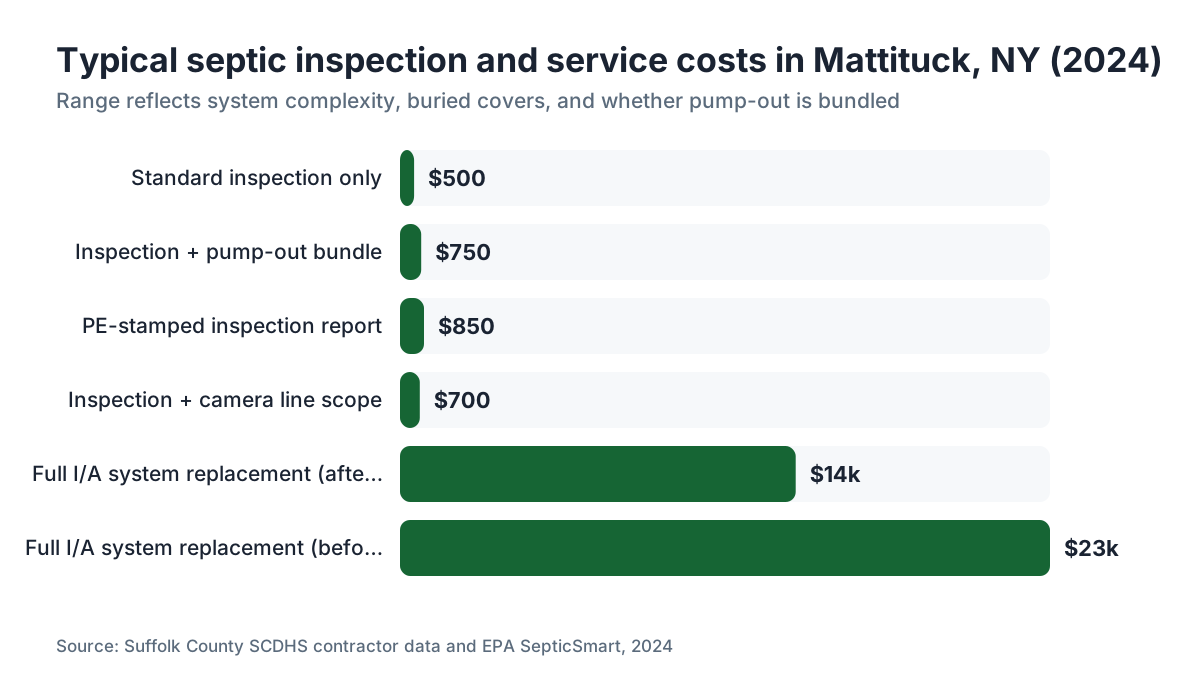
Expect $300 to $700 for a standard residential inspection in Mattituck. The low end buys a visual inspection of an accessible, well-documented system. The high end covers digging to expose buried covers, probing a system with no as-built records, or working a larger property with multiple tanks.
If the inspector pumps the tank during the visit (which gives a much cleaner view of the tank interior and baffles), add $300 to $500 for septic tank pumping on top of the inspection fee. Some operators bundle the two, and the bundle usually runs $550 to $950. That's good value. You get a more accurate read on the tank plus the service in one trip.
Real estate deals sometimes require a formal report from a licensed professional engineer (PE). PE-stamped reports cost more, typically $500 to $1,200 depending on system complexity and how much field work the engineer does.
A camera inspection of the inlet and outlet lines adds $150 to $300. It isn't always required but it earns its keep on older systems where pipe material and joint condition are a mystery. Nobody has clean public data on how many Mattituck inspections turn up cracked or offset pipes, but lateral line failures show up often wherever systems are thirty years or older.
One cost people forget: buried covers. Many inspectors charge a per-cover excavation fee of $50 to $150. On a system with three compartments, that adds up fast. Installing access risers after the fact costs $200 to $400 per riser, but it pays for itself by making every future inspection and pump-out quicker and cheaper.
What are the Suffolk County rules for septic inspections at property transfer?
There's no single New York law forcing a septic inspection at sale. The requirement in Mattituck comes from lenders, title companies, and the purchase contract, backed by Suffolk County's authority to step in when a system fails. Under Article 6, any alteration or extension of an existing sewage disposal system needs SCDHS review and approval [2].
A transfer inspection doesn't automatically pull SCDHS in. But lenders and title companies increasingly demand a written report, and if the system turns up failing, the county can and does get involved. New York State has no statewide mandatory septic inspection law for property transfers as of 2025, unlike Connecticut. So a cash buyer with no lender could technically close without one. That would be a mistake.
The working standard in Southold Town real estate is simple: buyers ask for an inspection as a contract contingency. If the system fails, the buyer can negotiate repairs, a price cut, or walk away. Sellers who want a clean deal get an inspection before they list.
SCDHS keeps a list of approved sanitarian consultants and engineers whose inspections satisfy county review. If your deal needs SCDHS sign-off (usually because the system was cited for a violation or a modification is on the table), make sure your inspector is on that list. Hiring an uncredentialed inspector in that spot wastes everyone's time.
What do Mattituck inspectors look for in leaching pools specifically?
Suffolk County systems use precast concrete leaching pools almost exclusively, not the gravel trenches common in other states. These pools fail in specific ways, and a Mattituck-experienced inspector knows the whole list.
Biomat clogging is the most common failure. Over years, a layer of biological gunk builds up on the soil interface at the bottom and walls of the pool and seals the soil pores. Once enough of the wall is sealed, effluent can't drain and the pool stays wet. The inspector reads the water level inside each pool against the crown of the inlet pipe. Standing liquid at or above the inlet means that pool is failing.
Concrete deterioration comes next. Precast rings from the 1960s and 1970s often used lower-quality concrete, and hydrogen sulfide gas from anaerobic decomposition plus moisture eats the walls, causing spalling and cracks. A pool with badly degraded walls has lost absorption surface and may be structurally weak. Inspectors look for loose concrete, exposed rebar, and a cover that's starting to sag.
High groundwater is a chronic North Fork problem, worst in low-lying spots near Mattituck Creek or the Long Island Sound shoreline. Suffolk County requires minimum separation between the bottom of a leaching pool and the seasonal high water table. Older systems often don't have it. An inspector who takes groundwater seriously asks about flooding history and looks for water intruding into the tank or pools.
See the leach field guide for how absorption systems fail, even though Suffolk's pool-based systems differ from trench designs.
Last, they count the pools and check capacity. Under current SCDHS guidelines a three-bedroom home needs a minimum effective leaching area, and old systems often fall short. Inadequate capacity doesn't always mean the system is failing today, but it's a material disclosure in any sale.
How often should Mattituck homeowners get a septic inspection?
EPA recommends inspecting a conventional septic system at least every three years and pumping every three to five years, depending on household size and tank volume [3]. Those are national numbers. In Mattituck, the honest answer is that inspection frequency should track how hard you use the system, not a fixed calendar.
A full-time family of four in a three-bedroom house should plan on a pump-out every three to four years and a visual inspection at the same time. A vacation home used ten weeks a year can stretch to five or six years between pump-outs. But the first inspection after buying any seasonal property should happen inside the first year. You have no idea how the last owner used it.
Garbage disposals push the frequency up. A disposal roughly doubles the solids load entering the tank [9]. SCDHS doesn't ban them but county guidance discourages them on septic systems for exactly that reason. If you have one, pump more often and inspect more often.
Any time you notice slow drains across more than one fixture, sewage odors outside, wet or spongy ground near the pools, or a lush green stripe over the drain field while the rest of the yard is dry, get an inspection. Don't wait for the next scheduled visit. Those are symptoms, not quirks.
See how often to pump septic tank for a breakdown by household size and tank capacity.
What happens if the inspection finds a failed or failing system?
A failed system in Mattituck means repair or replacement, and the cost spread is wide. Minor repairs like replacing baffles, resetting a distribution box, or adding a pool to spread the load run $1,500 to $5,000. Full replacement runs $15,000 to $40,000 or more, depending on lot constraints, soil, and whether the county requires an advanced treatment system.
Suffolk County has been pushing I/A (innovative/alternative) onsite treatment systems through its Septic Improvement Program. These nitrogen-reducing systems (brands like Fuji Clean, Hydro-Action, and others certified under New York's approved list) are required for many new installations and replacements, especially near surface water. Mattituck properties close to the creek or tidal areas usually fall in that group. An I/A system costs $18,000 to $28,000 installed, and Suffolk County has offered rebates up to $30,000 through its Clean Water Infrastructure Act funding, though rebate availability shifts with each program cycle [4].
In a sale, a failing system means the parties negotiate. Sellers can repair before closing, cut the price by the estimated repair cost, or offer a credit. Buyers who waived the inspection contingency on a system that then fails have almost no recourse. Given replacement costs in this market, dropping the inspection contingency to win a bidding war is one of the worst moves a buyer can make.
SCDHS gets involved once surfacing sewage is observed. The county can issue a notice of violation demanding corrective action inside a set window. That's not a scare tactic. It happens regularly on the North Fork, and the timeline from notice to required repair usually runs sixty to ninety days, which is tight for permitting a replacement.
For repair options, see septic system repair and septic tank repair.
How do you find a qualified septic inspector in Mattituck?
Look for a licensed professional engineer (PE) or a New York State licensed home inspector with specific septic training. For SCDHS-required inspections, the inspector has to be on the county's approved consultant list. For a standard pre-purchase inspection, a well-regarded local inspector with North Fork experience is the practical bar.
Ask three questions before you hire anyone. Have they inspected systems in Southold Town specifically, more than Suffolk County broadly? The pool-based systems here need hands-on familiarity. Do they open and probe the leaching pools, or only the tank? An inspector who opens the tank alone is giving you half an inspection. Do they hand you a written report with photographs, or just talk you through it? A written report with photos is the only document worth having for a sale or an insurance claim.
Local real estate attorneys who work Southold deals will know which inspectors write reliable reports. That's the best referral source. Your agent may have names too, but check that the pick isn't just whoever clears deals fastest.
Walk away from anyone offering a Mattituck septic inspection under $200. That price buys a drive-by visual that never opens the tank or probes the pools. It wastes your money and hands you false confidence.
SepticMind's service operator directory can connect you with licensed operators who work the North Fork and know SCDHS requirements, which helps if you're struggling to find a qualified inspector on your own.
What should homeowners do to prepare for an inspection?
Pull every record you have before the inspector shows up. The old survey or as-built drawing, any SCDHS permits, past pump-out receipts. Even a rough sketch from memory of where the tank and pools sit saves time and money. SCDHS keeps records you can request through its Wastewater Management office, so call ahead and get what's on file [10].
Mark buried cover locations if you know them. Inspectors sometimes bill by the hour to locate buried components, so even an approximate spot speeds things up. If the covers have never been exposed, assume they're buried and budget for it.
Don't run the dishwasher, the washing machine, or take long showers in the twelve hours before the inspection. You want the system at baseline, not freshly loaded when the inspector arrives. Same logic: don't pump the tank the week before to make the numbers look good. A competent inspector sees through that, and in a sale it backfires.
Keep pets and kids away from the work area. Inspectors are pulling covers off active sewage vessels, and the ground around open tanks and pools is genuinely dangerous. Hydrogen sulfide gas is heavier than air and pools in confined spaces. A licensed inspector knows this, but an open access cover is not a spectator zone.
Check whether the covers need a special tool or sit on bolts that may have rusted solid. If the inspector can't open a cover on the first visit, you may eat a second-trip charge. A few minutes of prep is worth it.
How does Mattituck compare to neighboring hamlets for septic system age and condition?
Mattituck, Cutchogue, Southold, and Peconic share nearly identical septic histories. Most systems went in between 1955 and 1985, during the North Fork's first wave of residential building. So the average system still in service today is forty to seventy years old. Concrete leaching pools from that era have a design life of about thirty to fifty years under normal loading.
The county has estimated that a large share of onsite systems in Suffolk County are over thirty years old, and studies have tied aging cesspool infrastructure to elevated nitrogen in local waterways. Peconic Estuary, which takes drainage from Mattituck Creek and other North Fork tributaries, has documented elevated nitrogen concentrations that the Peconic Estuary Partnership blames in part on onsite wastewater [5].
Here's the practical read. If your Mattituck system hasn't been inspected in the last five years and is more than thirty years old, there's a real chance the leaching pools are at or near end of life. That's not a prediction about your specific property. It's the background rate. An inspection tells you where your system sits on that curve.
One number stands out from the county's own program data. Suffolk County processed over 3,000 applications for I/A system upgrades between 2017 and 2023 under its Septic Improvement Program, heavily concentrated in the East End townships including Southold [4]. That's a big number for a rural area, and it shows how seriously the county treats the aging infrastructure problem.
What are the costs of replacing a failed system in Mattituck?
If an inspection finds that replacement is necessary, here's a realistic cost picture based on what contractors work with on the North Fork.
| System type | Typical installed cost (2024) | Notes |
|---|---|---|
| Conventional cesspool replacement | $10,000 to $18,000 | May not be permitted in sensitive areas |
| Standard septic tank + leaching pools | $15,000 to $25,000 | Standard for most lots with adequate room |
| I/A nitrogen-reducing system | $18,000 to $28,000 | Required in many waterfront and near-water zones |
| I/A system after Suffolk County rebate | $8,000 to $20,000 net | Rebate up to $30,000; availability varies by program cycle [4] |
| Engineered design (complex lots) | Add $2,000 to $5,000 | Limited area, high groundwater, or setback conflicts |
Permitting through SCDHS adds time. A straightforward replacement permit can take sixty to ninety days. A system needing a variance or alternative design takes longer, sometimes four to six months. That timeline matters if you're trying to close a sale.
For full installation cost context, see cost to install septic system and cost to put in a septic tank.
Contractor availability on the North Fork is a real constraint. A limited number of SCDHS-licensed septic contractors work Southold Town, and in peak season (spring and summer), wait times for permits and installations stretch. If you're buying a property that needs a replacement, build contractor scheduling into your closing timeline.
How do you read a Mattituck septic inspection report?
A good report gives you a sketch of the system layout, the tank capacity, the number and dimensions of the leaching pools, observed water levels in each pool, baffle condition, estimated sludge and scum depths, and the inspector's overall verdict. Photos of every component should back up the written findings.
Check three things closely. First, the water level in the leaching pools relative to the inlet pipe. If the report says "water at inlet" or "water above inlet" for any pool, that pool is failing. Don't let anyone downgrade that to "a minor concern."
Second, the capacity notation. The report should state the system's permitted capacity (in bedrooms or gallons per day) and whether it matches how the home is used now. A system permitted for two bedrooms serving a four-bedroom, three-bath house is a problem, even if the pools currently drain.
Third, the pumping recommendation. If the inspector says pump within six months, take it seriously. A tank at 40 to 50 percent sludge and scum isn't failing yet, but it isn't healthy. See septic tank pump out for what happens during service, and septic tank cleaning for what a proper pump-out actually clears.
If the report is vague or skips pool-level observations, ask for a written addendum. A professional who inspected the system should have specific, measurable findings. A line like "system appeared functional" with no data behind it is useless for a negotiation or for planning maintenance.
Operators who manage inspection workflows across many properties use tools like SepticMind to track inspection histories, permit timelines, and service schedules by address, which helps given how much SCDHS documentation these jobs generate.
Frequently asked questions
Do I legally need a septic inspection to sell my house in Mattituck?
New York State has no statewide law requiring a septic inspection at property transfer as of 2025. But most buyers' lenders require one, and standard Southold Town purchase contracts include inspection contingencies. In practice, almost every North Fork sale involves a septic inspection. Selling to a cash buyer with no lender, you could technically skip it, but your liability if the system fails soon after closing is steep.
How long does a septic inspection take in Mattituck?
Plan for two to four hours. A simple system with one tank and two leaching pools with accessible covers runs closer to two hours. A complex property with multiple tanks, buried covers that need digging, or no as-built records can easily hit four hours or more. If the inspector pumps the tank during the visit, add another thirty to sixty minutes for that service.
Can I use a home inspector for a Mattituck septic inspection?
A New York State licensed home inspector can do a basic septic inspection, but many won't open and probe the leaching pools, which is where most failures show up in Suffolk County's pool-based systems. For a pre-purchase inspection that matters, hire a licensed professional engineer or a dedicated septic inspector with Southold Town experience. For SCDHS-required inspections, the inspector must be on the county's approved consultant list.
What is the Suffolk County Septic Improvement Program and does Mattituck qualify?
The Suffolk County Septic Improvement Program offers rebates up to $30,000 for homeowners who replace conventional cesspools with nitrogen-reducing I/A systems. Mattituck properties in the Town of Southold are eligible. The program is funded through the county's Clean Water Infrastructure Act. Rebate availability depends on program funding cycles. Applications go through SCDHS, and a licensed contractor must do the installation.
What's the difference between a cesspool and a septic tank in Mattituck?
In common Suffolk County usage, a cesspool is a single precast concrete ring that takes raw sewage and lets it drain into surrounding soil with no separate treatment. A septic tank is a watertight tank that separates solids before effluent flows to the leaching pools. Many older Mattituck systems are true cesspools. Modern code requires a septic tank upstream of any leaching area. An inspection documents which type you have.
How much does it cost to pump a septic tank in Mattituck after an inspection?
A pump-out in Mattituck typically costs $300 to $500 for a standard 1,000-gallon tank. Larger or heavily loaded tanks cost more. Many inspectors offer a bundled inspection-and-pump-out package for $550 to $950 total. Pumping during the inspection gives the inspector a better look at the tank interior and baffles, so the bundle is usually worth it on any system not serviced in three or more years.
What are signs my Mattituck septic system is failing before an inspection?
Watch for slow drains across more than one fixture, gurgling toilets or drains, sewage odors inside or outside, unusually green or lush grass over the leaching area, wet or spongy ground near the pools, and sewage surfacing at grade. Any of these calls for an inspection right away, not at your next scheduled visit. Surfacing sewage is a public health violation and triggers SCDHS involvement.
How old are most septic systems in Mattituck?
Most residential septic systems in Mattituck went in between 1955 and 1985, making them forty to seventy years old. Precast concrete leaching pools from that era have a design life of roughly thirty to fifty years under normal loading. A large share of active systems on the North Fork are at or past that mark. That's why the county's Septic Improvement Program has seen heavy uptake in Southold Town, with thousands of I/A upgrade applications since 2017.
Do I need a septic inspection for a home equity loan on a Mattituck property?
Some lenders require a septic inspection as part of the appraisal for a home equity loan or refinance, especially when the loan involves a formal appraisal tied to property condition. This varies by lender. Ask yours directly before ordering the inspection, so you know whether they need a PE-stamped report or whether a standard inspector's report satisfies them.
What is the minimum setback for a septic system in Mattituck?
Under Suffolk County Sanitary Code Article 6, setbacks include a minimum of 150 feet from a public water supply well, 100 feet from a private drinking water well, 100 feet from surface water in most cases, and set distances from property lines and structures. Exact figures depend on system type and lot classification. Older systems installed before current standards may not meet today's setbacks, which affects whether a replacement can go in the same spot.
Can an inspection tell me if my Mattituck system has high groundwater problems?
A good inspector looks for signs of high groundwater: water intrusion into the tank, unusual moisture around the leaching pools, and a history of seasonal flooding. For a definitive groundwater depth measurement, you need a soil test with a percolation test or monitoring well, which is usually part of the design process for a new or replacement system, not a standard inspection. Ask your inspector whether they saw any high-water-table indicators.
How does a Mattituck septic inspection affect home sale price?
A clean report removes a big uncertainty from the deal and supports the asking price. A failing system almost always leads to a price reduction or repair credit equal to the estimated replacement cost, which on the North Fork ranges from $15,000 to $28,000 or more for a full I/A system. Buyers who find a failing system after closing with no inspection contingency have very limited recourse under New York law unless fraud can be proven.
What I/A septic systems are approved for use in Mattituck?
New York State Department of Health maintains the approved list of I/A systems. Approved brands used on Long Island include Fuji Clean, Hydro-Action, Norweco, and others. Suffolk County SCDHS also keeps its own approved list for the Septic Improvement Program. Not every state-approved system qualifies for county rebates. Confirm with your SCDHS-licensed contractor which systems qualify before buying one.
Sources
- EPA, Sole Source Aquifer Program: The Magothy-Raritan aquifer system beneath Long Island is a designated sole-source aquifer supplying drinking water to roughly 2.7 million people with no surface-water backup.
- Suffolk County Department of Health Services, Article 6 of the Suffolk County Sanitary Code: Article 6 of the Suffolk County Sanitary Code governs construction, modification, and inspection of sewage disposal systems in Suffolk County, NY.
- EPA SepticSmart Program, Septic System Owner's Guide: EPA SepticSmart recommends pumping when combined scum and sludge layers occupy more than one-third of tank volume, and inspecting conventional systems at least every three years.
- Suffolk County Department of Health Services, Septic Improvement Program: Suffolk County's Septic Improvement Program offers rebates up to $30,000 for I/A nitrogen-reducing system installations, with over 3,000 applications processed between 2017 and 2023 in East End townships.
- Peconic Estuary Partnership, State of the Estuary Reports: The Peconic Estuary Partnership attributes elevated nitrogen concentrations in Peconic Estuary waters in part to aging onsite wastewater systems draining from North Fork tributaries including Mattituck Creek.
- New York State Department of Health, Drinking Water Program: New York State DOH maintains the approved list of innovative/alternative onsite wastewater treatment systems eligible for use in New York.
- EPA, How to Care for Your Septic System: EPA guidance states that garbage disposals roughly double the amount of solids entering a septic tank, increasing pump-out frequency.
- Suffolk County Department of Health Services, Wastewater Management: SCDHS Wastewater Management maintains records of permitted septic systems and a list of approved sanitarian consultants and engineers for inspection purposes in Suffolk County.
Last updated 2026-07-09