Septic inspection in Montauk: what to expect, what it costs, and what can fail
By the SepticMind Editorial Team
TL;DR
- A septic inspection in Montauk usually costs $300 to $700 and must follow Suffolk County Department of Health Services rules under the Sanitary Code.
- Inspectors check the tank, distribution box, and leach field.
- Montauk's high water table and sandy soils drive specific failure risks.
- Real estate deals need a formal inspection with a written report.
- Budget several days for scheduling in peak season.
Why is getting a septic inspection in Montauk different from anywhere else?
Montauk sits at the eastern tip of Long Island, with the Atlantic on three sides and the bays on the fourth. That geography isn't just scenic. It stacks up conditions that make septic systems here fail more often than in almost any other residential stretch of New York State.
The water table runs high, often within two to four feet of the surface in low-lying spots near Lake Montauk, Fort Pond, and the South Shore marshes. Sandy glacial outwash soils drain fast. That sounds like a win for septic leaching, but it also means poorly treated effluent reaches groundwater fast. Montauk's drinking water comes from the aquifer system under Suffolk County, which the EPA designated a sole-source aquifer in 1978. Contamination has no easy backup. [1]
Suffolk County runs its own wastewater rules through its Sanitary Code, and those rules are more detailed and often stricter than New York State's baseline. [2] Buy, sell, or renovate a Montauk property and you're inside that framework. An inspector who only knows generic state rules will miss things.
Montauk is a seasonal market too. A lot of the housing stock went up in the 1960s and 1970s as modest summer cottages, then got expanded, converted to year-round use, or sold to buyers who want to host a crowd. An old 750-gallon tank that handled six summer weeks of light use falls apart when the house runs full-time as a rental. That gap between original design capacity and real load is one of the first things a good inspector flags.
What does a septic inspection in Montauk actually cover?
A standard inspection has several parts, and the depth of each shifts with the inspector and the reason for the visit. The core is always the tank, the distribution box, and the leach field.
First, the inspector locates and uncovers the tank. In Montauk, as-built drawings (required by Suffolk County at installation) should be on file with the Department of Health Services, though older systems sometimes predate that requirement. The inspector measures the liquid level, checks the scum and sludge layers, and inspects the inlet and outlet baffles. Baffles matter a lot: a failed outlet baffle lets solids carry straight into the distribution system and the leach field, where they clog soil pores and kill the system. [3]
Second, the distribution box (D-box). Many Montauk systems use a D-box to split effluent evenly among multiple leach lines. A cracked, settled, or flooded D-box is one of the most common reasons a leach field fails on one side and not the other. The inspector looks for outside water getting in, cracks, and whether the outlet pipes sit at the same elevation.
Third, the leach field. Inspectors look for surface breakout (wet, spongy, or smelly areas above the trenches), probe for saturated soil, and watch for dead vegetation or, the opposite, lush green strips that mean effluent is surfacing over time. Sometimes the inspector runs a dye test: flush fluorescent dye through the house, wait, and look for it outside. Dye tests can miss intermittent failures, so a clean dye test is not a guarantee.
For a real estate transaction, Suffolk County may require the inspector to witness a hydraulic load test. The system gets dosed with water at a set rate and watched. That's more definitive than a visual alone.
A good inspector also checks the tank's structure. Concrete tanks crack. Older steel tanks rust from the inside out. A tank that looks fine from the access lid can have a collapsed bottom or a baffle that rotted away. Pumping the tank as part of the inspection (see septic tank pump out) gives a clear view of the walls, inlet, and outlet. Always insist on a pump-out combined with the inspection. If an inspector offers to inspect without pumping, ask why.
What do septic inspections cost in Montauk?
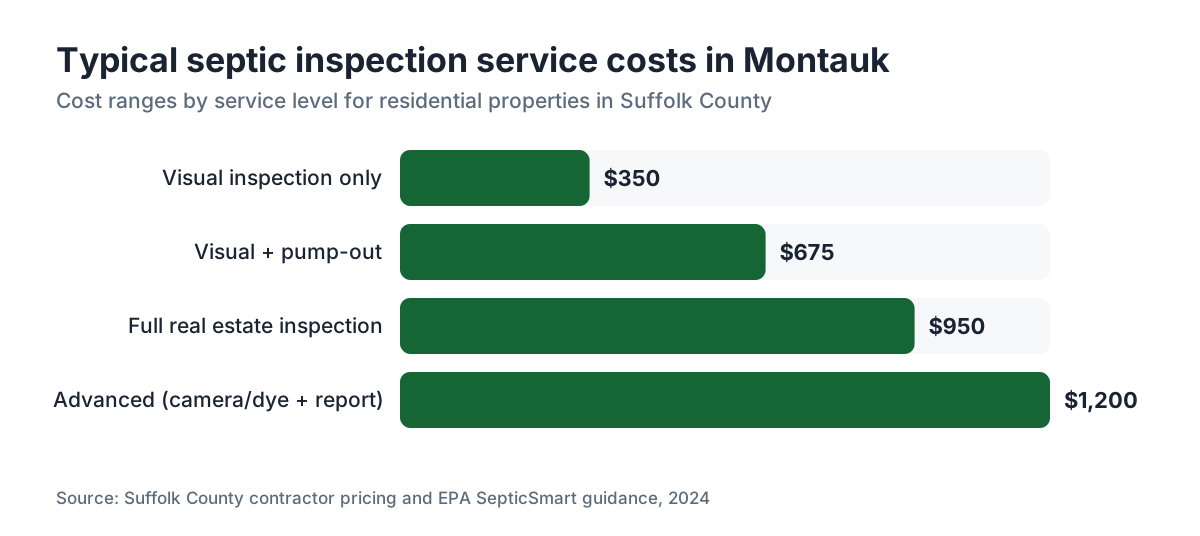
Expect $300 to $700 for a basic inspection without pumping. Add $250 to $500 for a pump-out, which you need every three to five years anyway. [4] A real estate inspection with a hydraulic load test and a written report meeting Suffolk County requirements commonly runs $600 to $1,200 all in.
Those ranges are wider than national averages for two reasons. Montauk is remote, so some contractors add a travel surcharge. And the depth of service swings hard. A $300 inspection and a $700 inspection are not the same product.
Here's a rough breakdown of what you're paying for at each price point:
| Service Level | What's Included | Typical Cost (Montauk) |
|---|---|---|
| Visual only | Locate tank, check lids, probe yard | $300 to $400 |
| Visual + pump-out | All above plus empty tank, inspect interior | $550 to $800 |
| Full real estate inspection | Visual, pump-out, hydraulic load test, written report | $700 to $1,200 |
| Advanced (video or dye) | Above plus camera scope or dye trace | $900 to $1,500 |
These figures come from Suffolk County contractor quotes and regional pricing. Your quote will move with access difficulty and current fuel prices. In summer, when every septic contractor on the East End is booked solid, some operators charge a premium for next-day scheduling.
If you're a homeowner doing routine maintenance, the visual plus pump-out is the right package. If you're buying, don't shortcut it. Pay for the full real estate inspection with a written report you can actually hand to a lender or attorney.
What are the Suffolk County rules for septic inspections?
Suffolk County Department of Health Services (SCDHS) runs the rules under Article 6 of the Suffolk County Sanitary Code. [2] A few things homeowners and buyers need to know.
All septic work, including inspections for real estate transfers, has to be done by a licensed professional. In practice that means a licensed engineer or an SCDHS-recognized inspector, not any plumber with a snake.
When you sell a property in Suffolk County, the buyer's lender almost always requires a septic inspection. New York doesn't have a single statewide real estate septic standard the way Massachusetts does with its codified Title 5 pass/fail program, but Suffolk County's local requirements work much the same way in practice. The SCDHS Office of Wastewater Management handles permits and can confirm what documentation your specific transaction needs. [2]
If your system has a violation, the timeline for fixing it depends on severity. A failed component that creates a public health risk, like surfacing sewage, can trigger an order to abate within a short window. Less urgent violations may give you more time. Either way, you won't get a clean inspection certificate until the work is done.
Montauk sits within the Peconic Estuary watershed, and nitrogen-reduction requirements apply under the county's Reclaim Our Water initiative, which targets nitrogen from septic systems as a driver of harmful algal blooms in the bays. [5] If your property is in a nitrogen-sensitive area, you may have to upgrade to an Innovative/Alternative (I/A) nitrogen-reducing system instead of replacing in kind. Ask your inspector about this before you budget any repair.
How do you find a qualified septic inspector in Montauk?
Start with SCDHS. The county recognizes licensed engineers and inspectors who can perform inspections for real estate and permit purposes. Someone outside that group can't give you the report your attorney or lender will accept. [2]
Beyond licensure, look for East End experience. Montauk soil profiles differ from Nassau County and from the North Shore. An inspector who has worked these sites over and over knows where the water table runs, what vintage systems look like here, and what the county office wants to see in a report.
Ask whether the inspector will pump the tank or subcontract it, and get the full service in writing before anyone shows up. Ask whether the fee covers the written report or just the site visit. Ask how long the report takes. In a transaction with a closing deadline, a two-week turnaround can blow up your deal.
For routine inspections not tied to a sale, a licensed inspector or a well-reviewed local pumping contractor who includes a visual inspection can be enough. For any transaction, use a licensed engineer.
Some operators now use digital scheduling and reporting tools, which speeds up turnaround. Platforms like SepticMind help service operators manage inspection workflows, reports, and scheduling queues, which matters in a high-volume summer when every contractor is stretched thin.
Word of mouth still works in a small community like Montauk. Ask your real estate attorney who they've seen produce reliable, accepted reports. That's usually a faster filter than Yelp.
What are the most common ways Montauk septic systems fail?
High water table saturation is the biggest killer. When groundwater rises to or above the leach field elevation, effluent has nowhere to go. The field backs up, the D-box floods, and sewage ends up surfacing in the yard or backing into the house. This runs on a seasonal cycle at some Montauk properties and gets worse after heavy rain. If the inspector finds evidence of seasonal saturation, that's not a simple repair. It may take a full redesign with a raised bed or mound system. [6]
Tank baffles fail. Concrete baffles corrode over 15 to 25 years in the presence of hydrogen sulfide gas. Plastic tee baffles last longer but can get knocked off by a forceful pump-out or a snake. A missing outlet baffle is cheap to fix (a plumber drops in a new tee in an hour) but causes fast, expensive damage if you don't catch it.
Overloading is common here because of the rental market. A three-bedroom house with a 1,000-gallon tank was designed around six people for a few months. Run it with eight people for 52 weeks and you burn through the sludge accumulation timeline twice as fast. The EPA's SepticSmart program notes the average person uses about 70 gallons of water per day, so a household of eight generates 560 gallons daily before any other loading factors. [7]
Root intrusion from hedges and trees planted near leach lines can crush pipes and pack fine root masses into the distribution. This shows up more in older Montauk lots where landscaping grew up over the original septic footprint.
Non-flushable wipes and grease are everywhere, but rentals suffer worse because guests don't read the house rules. One round of cooking grease dumped down a drain can coat a leach field and take years to recover.
What happens if your Montauk septic system fails the inspection?
A failed inspection during a sale stalls the deal until the issue gets fixed or the parties negotiate a credit or price cut. This happens more than buyers expect. In a coastal community with aging housing stock, failed septic inspections are a routine part of the process.
Step one is knowing exactly what failed. A failed baffle is a $150 to $400 repair. A failed D-box is $500 to $1,500. A failed leach field is a different conversation, and in Montauk that conversation often turns on whether the lot even has room for a replacement field under current setback rules. Setbacks from wells, property lines, and surface water live in the Suffolk County Sanitary Code, and many older Montauk lots are tight. [2]
If you need a full replacement, read the cost to install septic system and septic tank installation guides before you call contractors. A complete new system in Montauk, including engineering, permitting, and installation, typically runs $15,000 to $40,000 or more, with I/A nitrogen-reducing systems at the top of that.
For minor failures, get repair quotes before agreeing to a credit. A seller who hands over a $10,000 credit for a $2,000 baffle repair is leaving money on the table. A buyer who takes a $2,000 credit for a failing leach field is making a serious mistake.
For a failure on a system you already own, the order is: pump immediately to relieve it, get a full engineering assessment, weigh repair versus replacement, and pull the SCDHS permits before breaking ground. Unpermitted septic work in Suffolk County can bring fines and a mandatory tear-out of the unpermitted work.
How often should you get a septic inspection if you own property in Montauk?
The EPA recommends inspecting a conventional septic system every three years and pumping every three to five years depending on household size and tank volume. [4] In Montauk, lean toward the short end for any property used as a rental.
Here's the schedule most experienced East End owners follow. Pump and inspect every two to three years if the house runs seasonally with rotating rental guests. Inspect annually (visual only, no pump-out) if you've had past system issues or the system is over 20 years old.
An annual visual is cheap. A licensed inspector walking the yard, checking lids, and probing for wet spots costs $150 to $250 in most cases. Catching a baffle failure or a D-box crack at that stage costs a few hundred dollars. Missing it for three more years costs you a leach field.
On the how often to pump septic tank question: a 1,000-gallon tank serving two people full-time hits the pump-required threshold in roughly four to six years. Add four people and that drops to two to three years. Add vacation rental turnover and you may need annual pumping. The Imhoff cone sludge test your inspector runs tells you exactly where you stand. Don't guess.
Keep records. Every pump-out, every inspection, every repair. Suffolk County may ask for them when you sell, and a clean maintenance history is a real selling point in a market where buyers have learned to be skeptical of aging systems.
What should you do before the inspector arrives?
Locate your as-built drawing first. If you don't have one, the SCDHS Office of Wastewater Management keeps records for permitted systems. [2] Bring a copy to the inspection so the inspector can confirm the system was built as designed and hasn't been changed without permits.
Mark the tank and D-box lids if you know where they are. Digging time is billable time with most inspectors.
Don't run water or flush toilets for a few hours beforehand if you can help it. A fresh hydraulic load makes it harder to read the system's resting state, though this matters more for a formal load test than a visual.
Tell the inspector about any symptoms you've noticed: slow drains, gurgling, wet patches, odors. Don't wait for them to find problems you already know about. The inspector works better with context.
If you're a buyer, show up in person. Don't lean only on the written report. Walk the yard with the inspector, ask questions, and watch their face when they open the tank lid. The verbal commentary during the site visit is often more useful than what lands in the formal report.
Have payment ready. Most Montauk inspectors expect payment at time of service. Some invoice commercial clients, but for residential work, a check or card on hand avoids delays.
What are Innovative/Alternative (I/A) septic systems and do you need one?
Suffolk County has pushed hard on I/A system adoption since around 2017 as part of its nitrogen reduction strategy. These systems add treatment steps, usually an aerobic treatment unit or a recirculating media filter, to cut total nitrogen in the effluent from roughly 40 to 60 mg/L in a conventional system down to 19 mg/L or less. [5]
The Suffolk County Reclaim Our Water program offers rebates for voluntary I/A installation, and in some designated nitrogen-sensitive areas (which include parts of the Montauk watershed), an I/A upgrade is required when you're replacing a failed system. [5] Recent program updates put rebates as high as $14,000 for qualifying owners, though the program runs on a periodic county allocation and availability changes. Check the current status directly with SCDHS.
I/A systems cost more upfront. A conventional replacement might run $15,000 to $25,000 in Montauk. An I/A system runs $20,000 to $40,000 installed, before any rebate. They also carry ongoing requirements: a service contract with a certified operator, quarterly or semi-annual visits, and reporting to the county.
Whether you need one comes down to location. If your lot drains to a nitrogen-sensitive water body under the county's mapping and your old system fails, the county can require I/A as a condition of the new permit. Ask your inspector whether your property falls in one of these zones before you assume a like-for-like replacement is on the table.
For operators managing multiple Montauk properties or servicing I/A systems, the inspection and reporting cadence gets more complex than for conventional systems. SepticMind's operator platform tracks the distinct maintenance schedules and county reporting that I/A systems add to a service business.
What do septic inspection reports need to include for a Montauk real estate closing?
Your attorney and lender set the exact requirements, and they vary by lender, but a complete Suffolk County real estate septic report typically has all of the following.
A licensed professional's stamp and signature. Without it, the report is not acceptable to the county or most lenders.
The SCDHS permit number for the system, confirming it was legally installed. No permit number is a red flag that needs its own investigation.
Date of inspection, weather at the time (it matters, because heavy rain saturates soil and can mask or exaggerate leach field conditions), and who was present.
Tank size (measured or from the as-built), condition of the baffles, sludge and scum levels at the time of inspection (if pumped), and condition of the tank structure.
D-box condition: level, cracks, evidence of groundwater intrusion.
Leach field condition: probe results, any surfacing, comparison to the as-built design.
Conclusion: pass, fail, or conditional, with the specific repair items named. A conditional pass usually lists the repairs and states whether they're required before closing or acceptable as a post-closing credit.
Many reports include photographs, which are worth having. If your inspector doesn't shoot photos during the visit, ask them to.
For broader context on what's involved in a septic tank inspection, the process mirrors what's here, but Suffolk County's reporting requirements add a documentation layer most other regions never have to produce.
Frequently asked questions
How long does a septic inspection take in Montauk?
A basic visual inspection takes one to two hours on site. Add 30 to 60 minutes if the tank is pumped during the visit. A full real estate inspection with a hydraulic load test can run two to three hours. Written reports typically take two to five business days after the site visit, though in summer some inspectors are backed up further. Ask about turnaround before you book.
Can I use a septic inspector from off the East End for a Montauk property?
Technically, any professional licensed by Suffolk County can inspect a Montauk system. Practically, the local conditions, water table behavior, soil type, and the county office's specific report preferences are best understood by someone who has worked East End sites repeatedly. An inspector from Nassau County or the North Shore isn't disqualified, but the learning curve may show in the report. Confirm SCDHS licensure no matter where they're based.
Does a septic inspection in Montauk include the well?
No, not automatically. Septic inspections and well water tests are separate services. In a real estate transaction both are usually required, and the two get coordinated because setback distances between the well and the septic system need to be verified. You'll typically hire a water quality lab separately for the well test. Tell your attorney early if you need both, so they can coordinate timing.
What's the difference between a septic inspection and a septic pump-out?
A pump-out removes the tank's contents but includes no formal assessment of system condition. An inspection evaluates the tank, distribution box, and leach field and produces a written finding. The two work together: pumping gives the inspector a clear view of the tank interior, which is why combining them makes sense. You can pump without inspecting, but never skip the pump-out during an inspection if you can help it.
How do I find my septic system records in Montauk?
Contact the Suffolk County Department of Health Services Office of Wastewater Management. They keep records of permitted septic installations and as-built drawings. Bring your tax map number and property address. Older systems, especially those installed before the county's permit requirements took full effect in the 1970s, may have incomplete records or none. In that case, an inspector probes the yard to locate the tank and field.
What happens to a Montauk septic system in a major storm or flooding event?
Flooding can saturate the leach field, push groundwater into the tank through cracks, and temporarily overwhelm the system. After a major storm, cut water use in the house to the minimum for several days to give the system time to recover. If you see or smell sewage after a storm, stop using the system and call an inspector immediately. Contact SCDHS if you suspect storm damage has caused a public health hazard.
Is a septic inspection required when renovating or adding bedrooms in Montauk?
Yes. Suffolk County requires a review of the existing septic system when you apply for a building permit that increases the bedroom count or the design flow of the structure. Adding a bedroom adds design load, and the existing system must be shown to have enough capacity. If it doesn't, you'll need an upgrade as a condition of the permit. This catches a lot of homeowners off guard mid-renovation.
What is the Suffolk County Reclaim Our Water program and how does it affect septic inspections?
Reclaim Our Water is Suffolk County's initiative to reduce nitrogen pollution in its waterways by replacing conventional cesspools and septic systems with Innovative/Alternative nitrogen-reducing systems. For owners in designated nitrogen-sensitive areas, this can mean an I/A upgrade is required when the existing system fails. The program has also offered rebates up to $14,000 for voluntary upgrades. Your inspector should tell you if your property is in an affected zone.
How much does it cost to replace a septic system in Montauk if it fails?
A complete conventional replacement typically runs $15,000 to $25,000 in the Montauk area, including engineering, Suffolk County permitting, and installation. An Innovative/Alternative nitrogen-reducing system runs $20,000 to $40,000 before any county rebates. Costs vary with lot access, soil conditions, system size, and whether a mound or raised-bed design is needed because of a high water table. Get at least two quotes from licensed engineers.
How do I know if my Montauk septic system is a cesspool or a true septic system?
A cesspool is a single pit that receives raw sewage and relies entirely on the surrounding soil for treatment, with no separate tank and leach field. A true septic system has a tank that separates solids from liquid, then sends clarified effluent to a drain field. Many older Montauk properties still have cesspools. Your as-built drawing from SCDHS shows which you have. Cesspools are generally prohibited for new construction and often must be upgraded when they fail.
Can a Montauk septic system handle a large rental party?
It depends on the system's design capacity. Design flow is based on bedroom count, typically 110 gallons per bedroom per day under Suffolk County standards. A four-bedroom house is sized for 440 gallons per day. A party of 12 people each using 70 gallons generates 840 gallons daily, nearly double the design flow. Short spikes don't always cause immediate damage, but chronic overloading shortens system life. Pump more often if you run high-occupancy rentals.
What's the best time of year to schedule a Montauk septic inspection?
Spring before Memorial Day, or fall after Labor Day. Summer is the busiest season for every septic contractor on the East End, and a non-emergency inspection in July or August can mean a two to three week wait. Spring inspections let you catch winter damage before the rental season starts. Fall inspections are good for documenting system condition before the property sits dormant over winter.
Do I need a septic inspection to refinance a Montauk property?
It depends on the lender. Conventional refinances don't always require a septic inspection unless the appraisal or underwriting guidelines flag it. FHA and USDA loans have more specific requirements. Some lenders in coastal markets now request recent inspection reports as part of due diligence on property condition. Check with your lender early. If an inspection is required, you want time to schedule it, not scramble before closing.
Sources
- EPA, Sole Source Aquifer Program: The EPA designated Long Island's aquifer system as a sole-source aquifer, meaning it is the sole or principal source of drinking water for the region.
- Suffolk County Department of Health Services, Office of Wastewater Management: Suffolk County administers septic and wastewater regulations through its Sanitary Code, requiring licensed professionals for inspections and permits for all system work.
- EPA, How Your Septic System Works: The outlet baffle prevents scum and solids from flowing out of the tank into the drain field; a failed baffle leads to field clogging and system failure.
- EPA, Septic Systems (SepticSmart): The EPA recommends inspecting septic systems at least every three years and pumping every three to five years depending on household size and tank volume.
- Suffolk County, Reclaim Our Water Innovative/Alternative Septic System Program: Suffolk County's Reclaim Our Water program targets nitrogen from septic systems as a primary driver of harmful algal blooms, with I/A system requirements in nitrogen-sensitive areas and rebates for voluntary upgrades.
- EPA, Types of Septic Systems: High water table conditions require alternative system designs such as mound or raised-bed systems when the conventional leach field elevation cannot maintain adequate separation from groundwater.
- EPA, Septic Systems (SepticSmart homeowner guidance): The average person uses about 70 gallons of water per day, which the EPA uses as the baseline for estimating household hydraulic loading on septic systems.
- New York State Department of Health, Water Supply and Sewage Disposal: New York State establishes baseline standards for onsite sewage disposal systems, which Suffolk County supplements with its own more detailed local code.
- Cornell Cooperative Extension of Suffolk County: Cornell Cooperative Extension provides region-specific guidance on septic system maintenance for Long Island homeowners, including soil-type considerations specific to Suffolk County.
- EPA, Septic Systems maintenance guidance: The EPA notes that routine septic maintenance costs are significantly lower than emergency repair or full system replacement, supporting the case for regular inspection and pumping.
Last updated 2026-07-09