Septic inspection in Mount Sinai, NY: what to expect and what it costs
By the SepticMind Editorial Team
TL;DR
- A septic inspection in Mount Sinai, NY costs $300 to $600 and takes two to four hours.
- Suffolk County requires a Title 6 inspection for most home sales, and the inspector checks the tank, distribution box, and leach field under a water load.
- Even if you're not selling, inspect every three to five years.
- Failing systems foul the aquifer neighbors drink from.
What is a septic inspection in Mount Sinai and who actually needs one?
Mount Sinai is a hamlet in the Town of Brookhaven, Suffolk County, on Long Island's North Shore. Almost every property here sits on private well and septic, not municipal sewer. That makes the septic system one of the most expensive parts of any home, and it's the one piece of infrastructure that fails silently for years before the yard turns to swamp or the county comes knocking.
A septic inspection is a structured evaluation of the whole onsite wastewater system: the tank, the distribution box (d-box), and the leach field. A trained inspector locates each component, pumps or probes the tank, watches how effluent moves under a water load, and writes up what they find.
Who needs one? Most people get their first inspection when a real estate deal forces it. Suffolk County requires a Title 6 inspection for most property sales, and that requirement is not optional [1]. Beyond a sale, any homeowner who doesn't know the age or condition of their system, who bought a house without a proper inspection, or whose tank hasn't been pumped in three to five years is a good candidate. No law forces routine inspections on a set schedule. The EPA's SepticSmart program recommends inspecting conventional systems every one to three years and pumping every three to five, depending on household size [2].
Mount Sinai sits over the Lloyd Aquifer and the Upper Glacial Aquifer, which supply drinking water for much of Long Island. Suffolk County's regulatory intensity around septic is tied straight to groundwater protection. Failing systems don't just back up into your basement. They push nitrogen and pathogens into an aquifer your neighbors also drink from.
What does Suffolk County's Title 6 inspection actually require?
Suffolk County Sanitary Code Article 6 governs the inspection, installation, and repair of onsite sewage disposal systems across the county, Mount Sinai included [1]. For real estate transfers, the Suffolk County Department of Health Services (SCDHS) requires what people call a "Title 6" or "Article 6" inspection. It has to be done by a licensed professional (usually a licensed master plumber, a professional engineer, or an SCDHS-approved inspector), and the results go to SCDHS on a specific form.
The core requirements under a Title 6 real estate inspection:
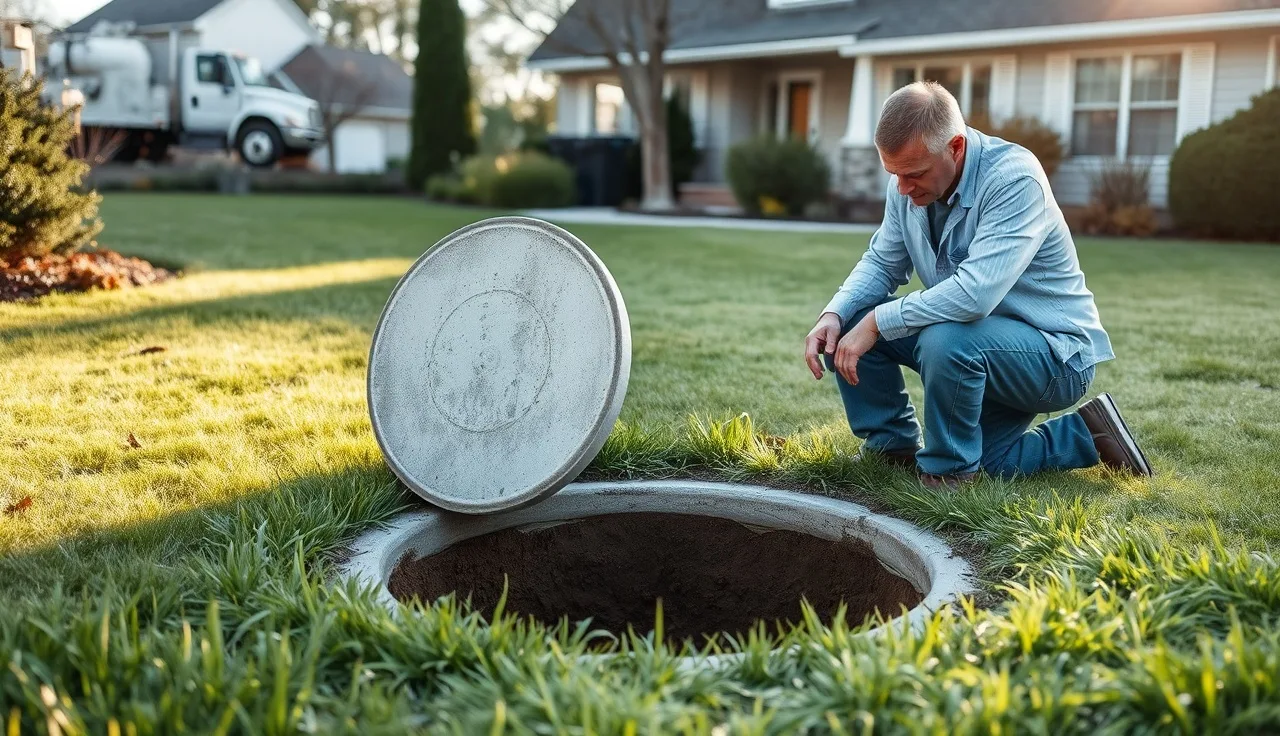
- Locating and exposing the septic tank (the lid has to be uncovered)
- Recording tank size, construction material, and baffle condition
- Checking the distribution box for structural integrity and even flow
- Running a dye test or hydraulic load test on the leach field
- Noting setback violations from wells, property lines, and structures
- Flagging any component in imminent failure
If a system fails, SCDHS will not issue a Certificate of Existing Use, and that blocks the transfer until the system is repaired or replaced [1]. The county also runs a separate I/A (innovative/alternative) OWTS program that encourages or requires nitrogen-reducing technology in certain Critical Environmental Areas, including parts of the Mount Sinai Harbor watershed [3].
Mount Vernon and other Westchester County municipalities run under a different framework. Westchester uses its own Health Department protocols under New York State Article 145, so inspectors who work both areas need to know which code applies. If your property sits near the Mount Sinai/Miller Place border, confirm your inspector is certified under Suffolk County's program specifically.
One practical note. SCDHS paperwork review can take two to four weeks once a report is submitted. Build that into your closing timeline.
How much does a septic inspection cost in Mount Sinai?
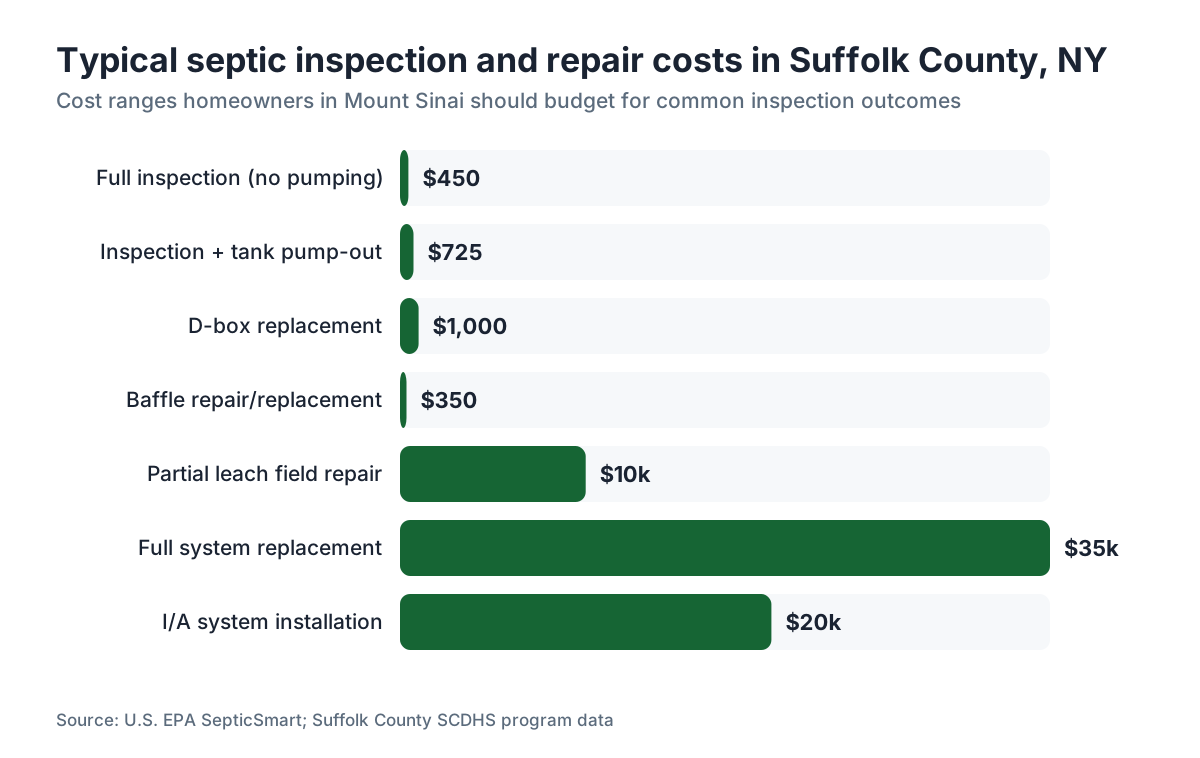
Expect $300 to $600 for a standard full-system inspection in the Mount Sinai area, based on typical Suffolk County pricing. That covers the site visit, the written report, and the SCDHS submission form. It does not cover pumping, which inspectors almost always require before they can judge tank condition.
Pumping adds $300 to $500 in Suffolk County, depending on tank size and access. A combined inspection-plus-pump package from one contractor runs $550 to $900 total, and booking them together beats paying two separate vendors.
Here's what pushes the price past the base range:
- Tank isn't located or mapped (add $75 to $150 for locating)
- No risers installed, so lids need digging (add $100 to $250 per lid)
- System has a pump chamber or pressure distribution (add $100 to $200)
- Inspector has to expedite SCDHS paperwork (add $50 to $100)
I/A systems (nitrogen-reducing units like Fuji Clean or Hydro-Action, common in the county's CEA zones) cost more to inspect and maintain because they have more parts. Annual maintenance contracts on I/A systems run $400 to $600 a year and include the required SCDHS reporting [3].
For scale, a full septic replacement in Suffolk County runs $20,000 to $40,000 or more, and that's before engineering, permitting, and SCDHS approval. The $400 inspection is not the expense to skip [4].
See our breakdown of septic tank inspection costs across system types if you want a closer look at how pricing shifts.
What does the inspector actually check during the appointment?
A good inspection in Mount Sinai follows a logical order. The inspector starts at the house, confirms fixture count and estimated daily flow, then works outward toward the field.
The septic tank gets the most attention. The inspector opens both the inlet and outlet lids, measures the scum layer on top and the sludge layer on the bottom, checks both baffles, and looks for cracks, root intrusion, or water leaking in. Scum and sludge together should not fill more than a third of the tank; most inspectors flag it for pumping at that point regardless [7]. EPA guidance says the average household septic system "should be inspected at least every three years," with pumping frequency set by tank size and household size [2].
After the tank comes the distribution box. In most Mount Sinai systems built before 2000, you'll find a concrete d-box that splits flow to several leach lines. The inspector checks that water enters and exits level, that no single outlet is hogging all the flow (a classic sign of a tilted or settled d-box), and that the box isn't cracked or full of groundwater.
The leach field is the hardest part to read. Inspectors run a hydraulic load: water through the house fixtures (toilets, showers, dishwasher) for 30 to 60 minutes while they watch the d-box and field surface for effluent breaking to the surface or soil going saturated. A working field takes the load with no surface breakout. Soft, wet, or smelly ground over the field is a red flag even without visible surfacing.
The deliverable is a written report: every observation, any deficiency, recommended fixes, and the SCDHS form if it's a real estate inspection.
If your tank hasn't been pumped lately, schedule that before the inspection date. Nobody can read baffles or tank walls through a full tank of sludge. Our guide to septic tank pump out walks through that process start to finish.
How do I find a qualified septic inspector in Mount Sinai?
For a Title 6 real estate inspection, the inspector has to be on SCDHS's approved list. Request that list directly from Suffolk County Department of Health Services, Division of Environmental Quality [1]. Licensed master plumbers (LMPs) with onsite system endorsements and licensed professional engineers are the most common providers.
For a routine maintenance inspection that isn't tied to a sale, your options open up. Many septic pumping companies in the Brookhaven/Port Jefferson area offer inspection alongside their pumping. Ask specifically whether the technician is trained in system evaluation or just pumps tanks. Those are two different skills.
Questions worth asking any inspector before you book:
- Are you on the SCDHS approved list for Article 6 inspections?
- Do you carry liability insurance for inspection work?
- Do you charge separately for pumping, or is it bundled?
- Will you submit the SCDHS form, or do I do that myself?
- Can you locate the tank if I don't have an as-built drawing?
As-built drawings (the original system design filed with SCDHS) are public records, available from the SCDHS Office of Wastewater Management [6]. A lot of Mount Sinai homeowners don't know this file exists. Having the drawing in hand before the inspection saves time and often money, because the inspector goes straight to the tank instead of probing blind.
SepticMind's operator directory helps you find licensed inspectors in Suffolk County who are actively taking appointments, which matters during busy spring closing season when schedules fill fast.
For a wider view of what an inspection covers, our septic tank inspection guide runs through national standards and how they apply locally.
What are the most common septic problems found in Mount Sinai homes?
Mount Sinai's housing stock mixes mid-century homes with 1970s to 1990s construction, so a lot of these septic systems are 30 to 50 years old. That's the age bracket where problems cluster.
The most common findings in Suffolk County inspections of older systems:
Collapsed or missing outlet baffle. Concrete baffles deteriorate. When the outlet baffle fails, solids carry over into the leach field and clog the soil. This is the single most common cause of premature leach field failure, and it's a cheap fix ($200 to $400) when caught early [7].
Saturated leach field. Long Island soil varies a lot. Some Mount Sinai properties have good sandy loam with high percolation; others have heavier soils that take effluent slowly. Systems sized to minimum code in slow-draining soil often show saturation after 20 to 30 years. Once a field is fully saturated and biologically clogged, resting it sometimes helps, but replacement is usually the only lasting fix [4].
D-box tilt and uneven distribution. Settlement over time tips the concrete d-box, dumping all flow into one or two leach lines instead of spreading it. That overloads part of the field and starves the rest. Releveling or replacing the d-box is a moderate repair.
Root intrusion. Large trees anywhere near the leach field are a slow-motion threat. Roots chase moisture. They crack distribution pipes, invade the d-box, and colonize leach trenches. Systems near mature oaks or maples (common on North Shore lots) should be checked more often.
Undersized tank for the current household. A 1,000-gallon tank was standard code for a 3-bedroom home for decades. SCDHS now requires larger tanks for new construction. If a family of five lives in what was permitted as a 2-bedroom cottage, the system runs over its design load every day.
If an inspection turns up any of these, read our guides on septic tank repair and septic system repair to understand your options before you take contractor bids.
What happens if a Mount Sinai septic system fails inspection?
Failing a Title 6 inspection in Suffolk County has real teeth. SCDHS won't issue the clearance needed to close a sale. The seller either repairs the system to passing condition or negotiates with the buyer on price and repair responsibility before the deal can move.
The repair itself needs SCDHS permits. You can't just bring in an excavator and swap the leach field. You submit an engineered design, get county approval, and use a licensed contractor. That review runs four to eight weeks on a typical cycle, longer if the property is in a Critical Environmental Area or a groundwater protection overlay [1].
For non-sale failures (an inspection you ordered on your own that comes back bad), there's no immediate SCDHS enforcement unless there's surface breakout or a public health complaint. Ignoring a failing system is still a bad call. Surfacing sewage is a health hazard, and if a neighbor or a code officer files a complaint, SCDHS can issue a Notice of Violation with mandatory repair timelines.
Costs run a wide range. Replacing a d-box is $500 to $1,000. Repairing or replacing a leach field runs $5,000 to $25,000 depending on size, soil, and whether an engineered I/A system is required instead of a conventional replacement [4]. Full replacement in Suffolk County, including engineering and permits, can hit $30,000 to $50,000 for larger homes or difficult sites.
See our cost guide on cost to install septic system for a detailed breakdown of what drives replacement pricing.
How does a Mount Sinai inspection differ from a septic inspection in Mount Vernon?
This comes up because both towns share the "Mount" name and both sit in New York State, but they run under completely different rules.
Mount Vernon is a city in Westchester County. Properties there with private septic (most are on municipal sewer, but some older or rural-adjacent parcels aren't) fall under the Westchester County Department of Health and New York State Department of Health rules under 10 NYCRR Part 75 [5]. Westchester's inspection process for sales uses different forms, different approval steps, and different setbacks than Suffolk County.
Suffolk County's septic rules are among the most detailed in New York State, driven by Long Island's sole-source aquifer designation and the nitrogen loading problems in its bays and harbors [3]. SCDHS runs its own Design Standards for Onsite Sewage Disposal Systems, its own engineer review process, and a separate I/A OWTS program that Westchester has no equivalent for.
In practice: an inspector certified for Suffolk County Article 6 inspections is not automatically cleared to sign off on a Westchester transaction, and the reverse holds too. If you're buying in both regions (or comparing notes with someone in Mount Vernon), know that the paperwork, fees, timelines, and technical standards are different.
The shared worry in both counties is groundwater. New York State's 10 NYCRR Part 75 sets minimum statewide standards, but counties can adopt stricter rules, and Suffolk County has done exactly that [5].
How often should Mount Sinai homeowners inspect and pump their septic system?
The EPA recommends inspecting conventional septic systems every one to three years and pumping every three to five for a typical household [2]. Those are national guidelines. For Suffolk County, most local engineers and SCDHS guidance point to pumping every three to four years for a household of four on a 1,000-gallon tank, with a full inspection at the same visit.
A few things push that schedule shorter:
- More than four people in the house
- A garbage disposal in regular use (adds a heavy solids load)
- System age over 25 years
- A history of slow drains or past repairs
- A CEA zone with an I/A system (SCDHS requires annual maintenance anyway)
One thing surprises homeowners: pumping frequency tracks tank volume against daily flow more than it tracks calendar time. A 2-person household with a 1,500-gallon tank might run six or seven years before hitting the pump threshold. A large family on a 750-gallon tank (older systems sometimes came undersized) might need pumping every 18 months.
Our deeper guide on how often to pump septic tank has a sizing table you can use to estimate your real interval. For routine service, septic tank cleaning and septic tank pumping show what those visits look like on the ground.
What should homeowners do before the inspector arrives?
A little prep changes both inspection quality and cost.
Find your as-built drawing before the appointment. As noted, SCDHS holds these on file and they're public. If you have the original paperwork from when the house was built or the system last replaced, pull it out. The drawing shows exact tank location, d-box location, and leach field footprint. Without it, the inspector charges time (and sometimes a fee) to probe for components.
Clear the ground over your tank and d-box. If the lids sit under a flower bed, a wooden deck, or a stack of lumber, do the digging before the inspector shows up. Many inspectors charge extra to excavate lids, and some flat refuse and reschedule.
Go easy on the system the morning of. A full load of laundry plus a dishwasher cycle right before the inspector arrives floods the leach field going into the test. Normal morning use is fine. Heavy loads aren't.
Write down symptoms you've noticed. Slow drains, gurgling, yard odors, wet patches over the field, one bright green strip of grass. All of it is diagnostic. Homeowners forget details under pressure, so write them down the night before.
Ask for the report in writing, more than a verbal rundown at the end of the visit. A written report with photos is what you need for SCDHS submissions, buyer negotiations, or insurance. If the inspector doesn't offer photos by default, ask.
Schedule the pump-out and inspection together if you can. Septic tank emptying right before the inspection gives clear sight lines to tank walls, baffles, and inlet/outlet pipes. Reading tank condition through 900 gallons of sludge is guesswork.
Is a septic inspection worth it if you're not selling?
Yes, plainly. The argument against a voluntary $400 to $600 inspection usually runs: the system works fine, so why spend the money. That logic holds right up until the leach field fails.
Leach field replacement in Suffolk County averages $10,000 to $30,000 for a conventional system, more if an engineered I/A system is required [4]. Many failures throw clear warning signs six to eighteen months before the system quits. An inspector who catches a failing d-box or early field saturation hands you options. You make a targeted repair for a few hundred to a few thousand dollars instead of replacing the whole field.
There's a regulatory angle too. Suffolk County's groundwater agenda isn't getting softer over time about upgrades in sensitive areas. Knowing exactly what you have, what shape it's in, and whether it's likely to trigger a future upgrade requirement is information that touches home value, insurance, and long-term planning.
For homeowners who want to track their system between inspections, SepticMind's homeowner tools make it easy to log pump dates, keep inspection history, and set reminders, so the next appointment doesn't sneak up on you.
The honest answer: voluntary inspections pay off for any home over 20 years old, any home where you don't have solid records of the last pump and inspection, and any home you might sell in the next three to five years. A surprise at closing costs far more than staying ahead of it.
How does the Suffolk County I/A OWTS program affect Mount Sinai properties?
Suffolk County launched its Reclaim Our Water initiative and the I/A OWTS (Innovative/Alternative Onsite Wastewater Treatment Systems) program specifically to cut nitrogen loading into embayments and groundwater [3]. Parts of Mount Sinai fall inside designated Critical Environmental Areas, especially properties near Mount Sinai Harbor and its tidal wetlands.
If your property sits in one of those zones and you need to replace or substantially repair your system, SCDHS may require an I/A system instead of a conventional leach field. I/A systems include treatment units that drop total nitrogen in the effluent to 19 mg/L or less. Conventional systems put out effluent in the 40 to 60 mg/L range [3].
The county offers rebates up to $10,000 for voluntary I/A upgrades under Reclaim Our Water, and some municipalities inside Brookhaven add their own incentives [3]. The rebate program has run waiting lists in past years, so check current availability directly with SCDHS.
For inspections on properties that already have I/A systems, the annual maintenance inspection is not optional. SCDHS requires a certified O&M (operation and maintenance) provider to inspect, sample effluent, and file annual reports. Skip it and you've created a compliance violation even if the system runs perfectly.
If you're weighing a new install or replacement and wondering whether I/A might be required, our guides on leach field and cost to put in a septic tank cover the cost and design side in more detail.
Frequently asked questions
Do I need a septic inspection to sell my house in Mount Sinai, NY?
Yes. Suffolk County requires a Title 6 inspection under Sanitary Code Article 6 for most residential property transfers. An SCDHS-approved inspector has to perform it, and SCDHS must issue clearance before closing. Skipping it or trying to close without it halts the transaction. Budget four to eight weeks from inspection to SCDHS approval if repairs are needed.
How long does a septic inspection take in Mount Sinai?
Plan on two to four hours for a full-system inspection. That covers locating and opening the tank, running the hydraulic load test on the leach field, checking the d-box, and completing the inspection form. If the inspector also pumps the tank at the same visit, add 30 to 60 minutes. Older systems with multiple components or hard-to-find lids take longer.
What is the pass/fail threshold for a Suffolk County Title 6 inspection?
There's no single numeric score. SCDHS reviews the report and decides whether the system meets the design and performance standards in the Suffolk County Sanitary Code. Common reasons for failure: surfacing effluent, collapsed leach structures, non-functional baffles, setback violations, and evidence the system can't handle its design flow. Minor deficiencies sometimes get conditional approval with a required repair timeline.
Can I use the same inspector for both a Mount Sinai property and a Mount Vernon property?
Not necessarily. Suffolk County Article 6 inspections require SCDHS-approved inspectors. Mount Vernon properties in Westchester County fall under a different program. Some licensed professional engineers hold qualifications in both counties, but confirm credentials before booking. The inspection forms, approval workflows, and technical standards differ between Suffolk and Westchester.
How do I get the as-built drawing for my septic system in Mount Sinai?
Contact the Suffolk County Department of Health Services, Office of Wastewater Management. As-built drawings filed with SCDHS are public records available to property owners. Many are now accessible through SCDHS online permit lookup tools, or you can request them by address at the SCDHS offices in Hauppauge. Having this drawing before an inspection often saves time and money.
What does it cost to repair a septic system after a failed inspection in Suffolk County?
It depends on what failed. Replacing a distribution box runs $500 to $1,500. Repairing or replacing a baffle costs $200 to $500. Partial leach field replacement runs $5,000 to $15,000. A full system replacement in Suffolk County, including engineering and permits, typically costs $20,000 to $50,000 depending on site conditions and whether an I/A nitrogen-reducing system is required in a Critical Environmental Area.
What is the Suffolk County I/A OWTS rebate and who qualifies?
Suffolk County's Reclaim Our Water program offers rebates up to $10,000 for homeowners who voluntarily replace a conventional septic system with an approved nitrogen-reducing I/A system. Properties in designated Critical Environmental Areas near embayments and harbors, including parts of Mount Sinai Harbor, get priority. Applications go through SCDHS. The program has run waiting lists; check current status directly with the county.
Does a septic inspection include pumping the tank?
Not automatically, but most inspectors require the tank pumped before or during the inspection so they can fully evaluate the tank walls, baffles, and inlet/outlet pipes. Some inspectors offer a combined pump-and-inspect package; others coordinate with a separate pumping contractor. Confirm before booking what's included in the quoted price, and ask whether pumping is required for the report to be valid.
How often should I pump my septic tank in Mount Sinai?
Every three to five years is the EPA's general recommendation for a conventional household system, but the right interval depends on tank size and household size. A family of four with a 1,000-gallon tank should plan on every three to four years. Suffolk County SCDHS guidance matches EPA SepticSmart recommendations. Properties with I/A systems have mandatory annual inspections that usually include a tank check.
What are signs that my Mount Sinai septic system might be failing?
Watch for slow drains across multiple fixtures, gurgling in toilets or pipes, sewage odors in the yard or basement, unusually lush or bright green grass over the leach field, and soft or wet soil in the drain field with no recent rain. Any of these warrants an inspection before the failure gets worse and pricier. Surface breakout is a SCDHS reportable condition.
Is a septic inspection required for a refinance or home equity loan in Mount Sinai?
It depends on the lender and loan type. FHA and VA loans often require a septic inspection during the appraisal if the home is on private septic. Conventional lenders vary. Some require one, some don't unless the appraisal flags a concern. Ask your lender directly at the start of the process, not right before closing.
How do I find SCDHS-approved septic inspectors for Mount Sinai?
Contact Suffolk County Department of Health Services directly to request their current list of approved inspectors for Article 6 real estate inspections. The SCDHS Division of Environmental Quality maintains this list. You can also ask local real estate attorneys or title companies, who work with approved inspectors regularly and can point you to providers with a track record of timely SCDHS submissions.
Can a septic system in Mount Sinai be too old to pass inspection?
Age alone isn't a legal basis for failing, but older systems are more likely to have degraded components. Systems built before Suffolk County's current design standards may be grandfathered for routine use but required to upgrade if they fail or get substantially repaired. A 1960s or 1970s system that functions and meets current setbacks can pass; one that's saturating the field or discharging to the surface fails regardless of age.
Sources
- Suffolk County Department of Health Services, Sanitary Code Article 6: Suffolk County requires Title 6 inspection under Sanitary Code Article 6 for residential property transfers; SCDHS must issue clearance before closing
- U.S. EPA SepticSmart Program: EPA SepticSmart recommends inspecting conventional septic systems every one to three years and pumping every three to five years; average household septic system should be inspected at least every three years
- Suffolk County Department of Health Services, Reclaim Our Water I/A OWTS Program: Suffolk County I/A OWTS program requires nitrogen-reducing systems in Critical Environmental Areas including parts of Mount Sinai Harbor watershed; rebates up to $10,000 available; I/A systems reduce total nitrogen to 19 mg/L or less versus 40-60 mg/L for conventional systems
- U.S. EPA, Septic Systems (Onsite Wastewater): Leach field replacement and full system replacement are primary cost outcomes of failed septic inspections; system replacement ranges are driven by site conditions and system type
- New York State Department of Health, 10 NYCRR Part 75, Individual Household Systems: New York State sets minimum statewide standards for onsite wastewater under 10 NYCRR Part 75; counties may adopt stricter requirements; Westchester County properties fall under NYSDOH and Westchester County Health Department oversight distinct from Suffolk County Article 6
- Suffolk County Department of Health Services, Office of Wastewater Management: As-built drawings for septic systems filed with SCDHS are public records available to property owners; SCDHS maintains online permit lookup tools and in-person records at Hauppauge offices
- U.S. EPA, How Your Septic System Works: Scum and sludge layers together occupying more than one-third of tank volume indicates pumping is needed; solid carryover from failed outlet baffle causes premature leach field failure
- U.S. EPA, Sole Source Aquifer Program: Long Island's aquifer system is a designated sole-source aquifer providing drinking water for the region; Suffolk County regulatory intensity on septic systems tied to groundwater protection
- Town of Brookhaven, Suffolk County, NY: Mount Sinai is a hamlet in the Town of Brookhaven, Suffolk County; municipal sewer is not available to most residential properties in the hamlet
- U.S. EPA SepticSmart, Homeowner Resources: Pumping frequency for typical household depends on tank size and number of people; EPA guidance distinguishes conventional system inspection from alternative/innovative system requirements
Last updated 2026-07-09