Caring for a septic system: the complete homeowner guide
By the SepticMind Editorial Team
TL;DR
- Caring for a septic system means pumping every 3 to 5 years, watching what goes down every drain, protecting the drain field from compaction and roots, and catching small problems before they turn into $10,000 failures.
- Most systems that die young die from neglect, not age.
- Simple habits keep a system running 25 to 40 years.
What does caring for a septic system actually involve?
A septic system has two jobs: separate solids from liquid waste, and let the liquid (effluent) filter safely into the soil. Your job is to keep both processes running without interruption. That's it. The details are where it gets interesting.
The parts are the tank, the distribution box or manifold, and the drain field (also called a leach field). Each fails in its own way and needs its own care. The tank needs periodic pumping to remove sludge and scum. The distribution system needs occasional inspection to confirm effluent spreads evenly. The drain field needs protection from compaction, tree roots, and too much water at once.
The EPA SepticSmart program puts the homeowner's role this way: "Inspect and Pump Frequently, Use Water Efficiently, Properly Dispose of Waste, and Maintain Your Drainfield." [1] That four-part list is as good a checklist as you'll find.
Septic failures rarely happen overnight. They build up from years of small decisions: flushing the wrong things, skipping pump-outs, planting trees too close, dumping too much water through in a short window. Learn the system well enough to make better small decisions and you've won most of the game.
How often should you pump a septic tank?
The EPA recommends pumping a household septic tank every 3 to 5 years, but treat that as a starting point, not gospel. [1] Your interval depends on four things: tank size, household size, how much wastewater you generate, and how much solid material lands in the tank.
A 1,000-gallon tank serving two people might run 5 to 7 years between pump-outs with no trouble. The same tank serving five people might need pumping every 2 years. The table below gives a rough guide based on EPA and University of Minnesota Extension data. [1][2]
| Household size | Tank size (gallons) | Pump interval (years) |
|---|---|---|
| 1-2 people | 1,000 | 5-7 |
| 3-4 people | 1,000 | 3-5 |
| 3-4 people | 1,500 | 4-6 |
| 5-6 people | 1,000 | 2-3 |
| 5-6 people | 1,500 | 3-4 |
The only reliable way to know when your tank needs pumping is to measure the sludge and scum layers at each inspection. When sludge reaches within 12 inches of the outlet baffle, pump it, no matter what the calendar says. A licensed pumper measures this with a sludge judge during a routine visit.
Skipping pump-outs is the single most common cause of premature drain field failure. Sludge eventually spills into the distribution system and clogs the soil pores in the field. Replacing a drain field costs $5,000 to $20,000 or more depending on region and soil. [3] A pump-out costs $300 to $600 in most U.S. markets. Do the math.
For more on timing and what the service actually involves, see our guide to septic tank pumping.
What should you never flush or drain into a septic system?
Your septic tank runs on living bacteria that break down organic waste. Anything that kills those bacteria, jams the works, or just won't break down damages the system over time. The list of things to avoid is shorter than most people expect. The trouble is that millions of households flush those exact things every week.
Hard rules: never flush wipes (including the ones labeled "flushable"), cotton balls, tampons and other feminine hygiene products, paper towels, condoms, or medications. None of these break down in a tank. Wipes especially have become a top cause of septic clogs and pump failures across the country.
Chemical threats: keep bleach, paint, solvents, motor oil, pesticides, and big doses of antibacterial cleaner out of every drain. Small amounts of household bleach from laundry are usually fine if your tank is sized right, but pouring undiluted bleach down a drain kills the bacterial colonies the tank depends on. [1]
Grease and fats: never pour cooking grease down the kitchen drain. It builds up in the scum layer and fills the tank faster. Over time it coats the drain field soil too.
Garbage disposals raise the solids load a lot. University of Minnesota Extension reports that a disposal can increase solids accumulation by 50% or more, which shortens your pump interval. [2] If you have one, use it lightly or plan to pump more often.
Now the additives. The market is stuffed with tablets, powders, and bacterial treatments promising to stretch your pump interval or "restore" a dying system. The EPA's position: "There is no scientific evidence that septic tank additives are beneficial or can reduce the frequency of pumping." [1] Some chemical additives actually damage the tank or the drain field. Keep your $20.
How do you protect a drain field from damage?
The drain field is the most expensive and most fragile part of a conventional septic system. It fails when soil pores clog, when it gets crushed, or when it drowns in more water than it can absorb. All three are preventable.
Keep vehicles and heavy equipment off it. Compaction squeezes out the permeability the field needs to work. Repeated foot traffic over years can matter on some soils, but vehicles and machinery are the real danger.
Don't plant trees or large shrubs near the field. Roots chase moisture, and they will find your pipes. The EPA recommends keeping trees at least as far away as their expected mature height. [1] Some species are worse than others. Willows, poplars, silver maples, and elms are terrible choices near any part of a septic system.
Grass is the right cover. It holds the soil, pulls up moisture, and sends no deep roots into pipes. Don't pave or build over the area. Don't run irrigation that soaks the field constantly, because a saturated field can't take effluent.
Watch your water during wet weather. When rain has already saturated the soil, the field has almost no room to absorb effluent. Spread out laundry, skip the long showers, and fix leaky toilets during wet stretches so the field can recover between doses. One leaky toilet can waste 200 gallons a day, a heavy load on a system designed for roughly 50 to 70 gallons per person per day. [9]
For a closer look at how the field works and what wrecks it, see our leach field guide.
What are the warning signs of a failing septic system?
Warning signs almost always show up before a full failure, and catching them at that stage is the line between a repair and a replacement.
The clearest signs: slow drains across the house (more than one fixture), gurgling from toilets or drains, sewage odors inside or outside, and wet or oddly green patches over the drain field. Any one of these earns a call to a licensed septic professional. All of them at once means the system is probably already failing.
Raw sewage surfacing in the yard is the worst visible symptom, and it's a public health emergency, more than a mess. Most states require you to fix surfacing sewage promptly. Some, including Florida and North Carolina, have specific notification rules when a septic system breaks through to the surface. Check your state's onsite wastewater regulations.
Inside the house, watch for backups that spread. Flush a toilet and water rises in the shower? That points to the septic system, not a single clogged pipe. A main-line clog is possible, but if you're on septic and haven't pumped the tank in a while, start there.
Seeing any of these? Read our guides on septic system repair and septic tank repair to understand what diagnosis and repair look like.
How should you conserve water to protect your septic system?
Water conservation matters for septic for a reason that has nothing to do with your water bill: every gallon that enters the system has to exit through the drain field. Overload the field and it fails.
A conventional household on septic generates roughly 50 to 100 gallons of wastewater per person per day, depending on fixtures and habits. [9] Spreading that load across the day beats dumping it in a few hours. Run five laundry loads back-to-back on a Saturday morning and you send a slug of water to the field all at once. Spread those loads across the week and the field never gets hit harder than it can absorb.
High-efficiency fixtures pay off. A WaterSense toilet uses 1.28 gallons per flush against the old 3.5 to 7 gallons, and front-loading washers use far less than older top-loaders. [4] Over a year of daily use, that's thousands of gallons less pushed through the system.
Fix leaks fast. A running toilet is often silent but obvious on a water meter. A flapper that won't seat can waste 200 gallons a day, more in a month than most small households use in a week. [9] That extra water saturates the drain field and cuts its working life short.
How do septic inspections work and how often are they needed?
A septic inspection and a pump-out are related but different. Pumping removes the solids. An inspection checks the condition and function of the whole system.
For conventional gravity-fed systems, the EPA suggests inspection every 3 years. [1] Systems with mechanical parts (pumps, float switches, aerators) need inspection every year, because those parts fail with no warning visible in the yard or house.
A thorough inspection covers: locating and uncovering the tank lids, measuring sludge and scum layers, checking the inlet and outlet baffles, confirming flow through the distribution box, and looking at the drain field for surfacing or saturation. A good inspector also checks the tank for cracks and inspects the riser if one is installed.
Inspections at the time of sale are common and sometimes required. Massachusetts, for example, requires a Title 5 inspection before a property changes hands, and the inspection must meet standards set by the state's Department of Environmental Protection. [5] Costs vary by state and system complexity, but plan for $200 to $600 for a standard inspection.
See our septic tank inspection guide for a full breakdown of what inspectors look for and how to prepare.
Operators managing multiple client systems can track inspection histories, flag systems due for service, and generate reports that satisfy state documentation rules with tools like SepticMind.
What does regular septic maintenance actually cost?
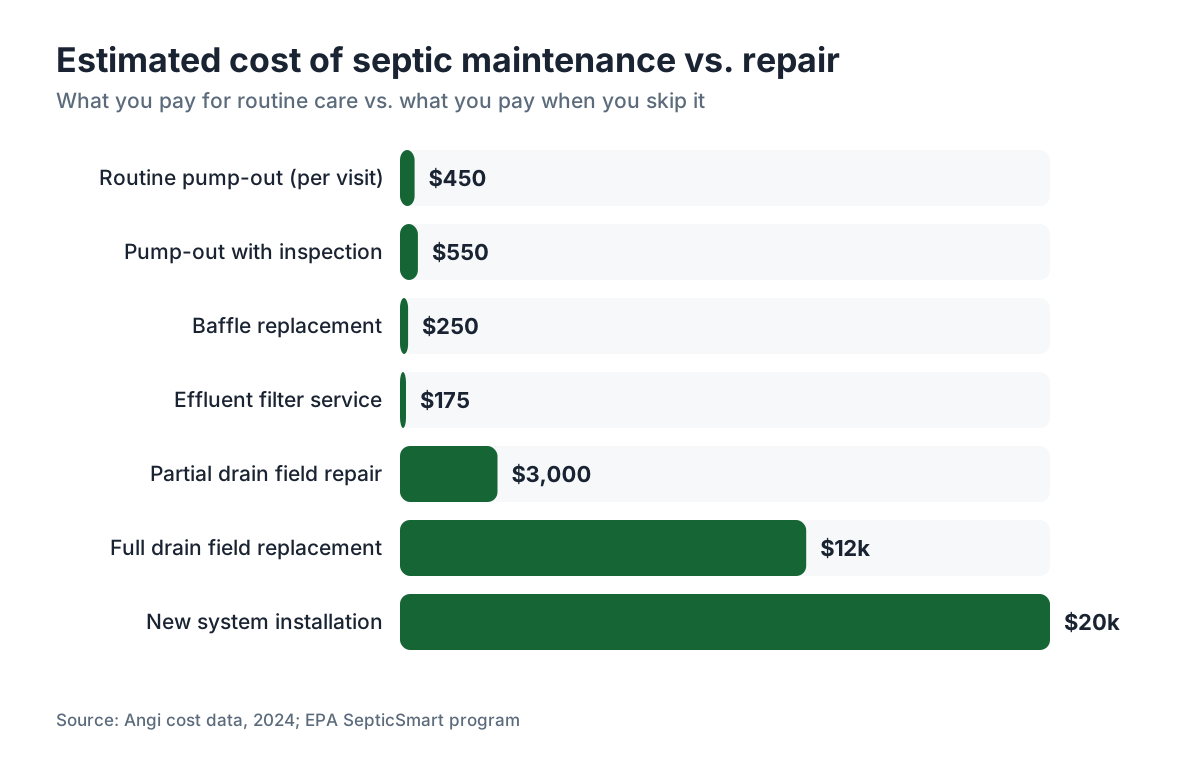
Maintaining a septic system costs little next to replacing one. The numbers below reflect typical 2024 U.S. ranges. Prices swing with region, tank size, and access.
| Service | Typical cost range |
|---|---|
| Routine pump-out (1,000-1,500 gal tank) | $300 - $600 |
| Pump-out with inspection | $400 - $700 |
| Riser installation (for easier access) | $200 - $400 per riser |
| Baffle replacement | $150 - $350 |
| Effluent filter cleaning/replacement | $100 - $250 |
| Drain field repair (partial) | $1,500 - $5,000 |
| Full drain field replacement | $5,000 - $20,000 |
| New system installation | $10,000 - $30,000+ |
Pump every 3 to 5 years at $500 a visit and you're spending roughly $100 to $165 a year on basic care. A drain field replacement runs 30 to 100 times that. No maintenance choice in home ownership pays back better.
For what a new system would cost if you had to start over, see our guides on cost to install a septic system and cost to put in a septic tank.
For a detailed breakdown of what a pump-out includes and costs near you, the septic tank pump out and septic tank emptying guides walk through the full process.
Do septic additives, treatments, or enzymes actually help?
This question comes up constantly. The honest answer: probably not, and sometimes they do harm.
The EPA states plainly that there's no scientific evidence additives are beneficial, and some chemical additives harm the system by disrupting the biology in the tank or by flushing fine particles into the drain field and clogging the soil. [1] Biological additives (bacteria and enzymes sold in packets) are usually less harmful, but usually unnecessary too. A working tank grows more than enough bacteria on its own.
The appeal makes sense. A $20 product that claims to add years to your pump interval sounds like a steal. Nobody has published a peer-reviewed study showing those claims hold up in real households. The closest independent data comes from small-scale state testing, and those studies generally found no measurable difference in sludge accumulation between tanks using additives and control tanks. [6]
One exception is worth naming. If a system was recently hit with large amounts of bleach or other biocides (after a sewage backup, say), a bacterial inoculant might help the microbial community bounce back faster. Under normal operation, additives aren't money well spent.
How do you care for an alternative or advanced septic system?
Conventional gravity systems are the most common, but a big share of new installs and replacements use alternative technology: aerobic treatment units (ATUs), mound systems, drip irrigation systems, and more. These carry extra maintenance requirements.
ATUs force air into the tank to raise bacterial activity and produce cleaner effluent. They typically require a maintenance contract with a licensed provider, and many states require it by law. Texas rules under 30 TAC Chapter 285 require aerobic systems to be maintained under contract with service at least twice a year. [7] The interval matters because ATUs have mechanical parts (air pumps, timers, chlorination gear) that fail and need adjustment.
Mound systems, used when soil is shallow or slow-draining, work like conventional drain fields but sit elevated above the natural soil surface. They're often more sensitive to overload, because the fill material saturates faster than native soil. Water conservation matters even more here.
Pressure distribution systems use a pump to dose the field in timed cycles instead of letting effluent flow by gravity. The pump and float controls need periodic inspection. When the pump fails, effluent stops spreading evenly, so one zone drowns while the rest sit dry.
Any system with electrical parts: check with your installer or state environmental agency for the required schedule. Missing a required inspection can void permits or trigger enforcement in some states.
What records should every septic system owner keep?
Good records are worth real money. When you sell the house, a complete service history makes the inspection smoother and gives buyers confidence. When the system acts up, records help a technician see what's happening and how fast it's slipping.
Keep the as-built drawing showing tank location and drain field layout, all pump-out receipts with dates and volumes, every inspection report, and records of repairs or modifications. Lost the as-built drawing? Your county health department or environmental agency may have one on file. Most jurisdictions require permit applications and as-built drawings to be filed. [10]
If you've lost track of the system entirely, a licensed inspector can locate and map it with probes or ground-penetrating radar. Some states also keep GIS databases of permitted septic systems that homeowners can search.
Operators running many client systems often lean on dispatch and recordkeeping software to track service histories across properties. If you run a septic service business, SepticMind is built for that workflow, with automated reminders, service records, and state-compliant reporting.
For homeowners, a simple folder (paper or digital) with photos of lid locations, as-built drawings, and service receipts does the job. The point is that the next owner or the next technician doesn't have to start from scratch.
How long should a septic system last with proper care?
A well-maintained conventional septic system usually lasts 25 to 40 years. A concrete tank that was poured right can go 40 years or more before cracking becomes a real worry. Steel tanks, common in homes built before the 1970s, have a much shorter life and often show heavy corrosion within 20 to 30 years. [8]
The drain field is the limiting part in most systems. Soil-based fields don't "wear out" mechanically. They fail when the soil loses its ability to accept and filter effluent, from solids overflow, from biomat buildup after too little rest, or from physical damage. A field that's been loaded gently and rested well can outlast the house.
Systems that fail early almost always have a traceable cause: years without pumping, chemicals that killed the treatment process, tree roots, or hydraulic overload. University of Minnesota Extension notes that "most septic system failures are caused by inappropriate design or poor maintenance." [2] Age alone is rarely the reason.
The practical takeaway: the tasks in this guide aren't optional. They're the reason some systems reach 40 years and others need replacing at 15.
Frequently asked questions
How often should I pump my septic tank?
Most households should pump every 3 to 5 years, but the right interval depends on tank size and how many people live in the home. A 1,000-gallon tank serving two people might go 5 to 7 years; the same tank serving five people may need pumping every 2 years. The only accurate way to know is to have sludge depth measured at each inspection.
What happens if you never pump your septic tank?
Sludge and scum build until solids overflow into the drain field. Once they clog the soil pores, the field stops accepting effluent and sewage backs up into the house or surfaces in the yard. At that point you're usually looking at a drain field replacement costing $5,000 to $20,000, sometimes more. Skipping pump-outs is the most expensive maintenance decision a homeowner can make.
Can you use a garbage disposal with a septic system?
You can, but it adds a lot of solids to the tank. University of Minnesota Extension estimates disposal use can raise solids accumulation by 50% or more, so you'll pump more often. If you use one regularly, budget for a pump-out every 2 to 3 years instead of 4 to 5, or limit it to small amounts of soft food waste.
What are the signs that a septic system is failing?
The clearest signs are slow drains throughout the house, gurgling toilets, sewage odors inside or outside, unusually green or wet grass over the drain field, and sewage backing up into fixtures. Any of these warrants a call to a licensed professional. Multiple signs at once usually mean the system is already in active failure and needs immediate attention.
Is it safe to plant a garden over a drain field?
Shallow-rooted vegetable gardens aren't recommended over drain fields for two reasons: root disturbance can damage pipes, and edible crops can pick up pathogens from the effluent below. Grass is the best cover. Ornamental plants with shallow roots are generally fine. Keep trees and shrubs with aggressive roots well away from the entire drain field area.
Do septic tank additives work?
No reliable evidence shows they do. The EPA states there's no scientific proof that additives reduce pumping frequency or improve performance, and some chemical additives can damage the system. Biological additives are generally harmless but unnecessary in a working tank. Save the money and put it toward a scheduled pump-out.
How much does it cost to maintain a septic system per year?
Pump every 3 to 5 years at $300 to $600 per visit and that's roughly $60 to $200 per year on average. Add occasional inspections and minor repairs and a realistic annual average is $100 to $300 for a well-maintained system. Compare that to $5,000 to $20,000 for a drain field replacement and the cost of maintenance is trivially small.
Can heavy rain damage a septic system?
Yes. Saturated soil has almost no room to absorb effluent, so a system under normal load can effectively fail for a while during long wet stretches. You'll often see slow drains or mild backups after heavy rain even in a healthy system. The fix is to cut water use during and after storms: delay laundry, take shorter showers, and fix any leaking fixtures.
How far should trees be planted from a septic system?
The EPA recommends keeping trees at least as far away as their expected mature height. For a tree that will grow 30 feet tall, keep it 30 feet from any part of the system. Aggressive-rooted species like willows, silver maples, and poplars should sit even farther away or be avoided entirely. Slow-growing, small ornamentals with non-invasive roots are safer near the system.
Does a septic system need to be inspected when selling a house?
In many states, yes. Massachusetts requires a Title 5 inspection before any property transfer. Other states have similar rules or let buyers request one as a condition of sale. Even where it isn't required, buyers routinely ask for a septic inspection. A clean recent inspection on record simplifies the sale and protects you from post-sale liability claims.
What is a septic tank baffle and why does it matter?
Baffles are barriers at the inlet and outlet of the tank that control flow and keep solids from passing through. The inlet baffle slows incoming waste so solids settle. The outlet baffle keeps scum from heading out to the drain field. Cracked or missing baffles are one of the most common causes of premature drain field failure. Inspectors check them at every visit, and replacement is fairly cheap at $150 to $350.
How do I find my septic tank if I don't know where it is?
Start with your county health department or environmental agency; most keep permit records and as-built drawings for permitted systems. If no record exists, a licensed inspector can probe the yard or use ground-penetrating equipment to find the tank and field. Your home's sewer pipe exits the foundation in a known direction, and the tank usually sits 10 to 30 feet from the house along that line.
Is it normal for the drain field to smell?
A healthy drain field has very little odor at ground level. A strong sewage smell over the field usually means effluent is surfacing or the field is saturated, both problems that need professional evaluation. A faint earthy smell after heavy rain or in humid weather can be normal. Persistent or strong odors are not, and they warrant inspection.
How does an aerobic septic system differ from a conventional one?
Aerobic treatment units inject air into the tank to speed up and complete the breakdown of waste, producing cleaner effluent than a conventional anaerobic tank. They're more effective but more complex, with pumps, air compressors, and sometimes chlorination systems that need regular service. Most states require a maintenance contract with a licensed provider for ATUs, typically with service every 6 to 12 months.
Sources
- U.S. EPA, SepticSmart homeowner guidance: Recommends pumping every 3-5 years, lists four core maintenance tasks, states no scientific evidence additives are beneficial, and provides guidance on water use and drain field protection
- University of Minnesota Extension, Septic Systems: Garbage disposals can increase solids accumulation by 50% or more; most septic system failures are caused by inappropriate design or poor maintenance
- Angi, Septic Tank Repair Cost Guide: Drain field replacement costs $5,000 to $20,000 or more depending on region and soil conditions
- U.S. EPA WaterSense, Water-Efficient Products: WaterSense-labeled toilets use 1.28 gallons per flush compared to older models using 3.5 to 7 gallons
- Massachusetts Department of Environmental Protection, Title 5 Septic System Inspection Program: Massachusetts requires a Title 5 inspection before property transfer, meeting state Department of Environmental Protection standards
- University of Wisconsin-Madison Extension, Septic System Additives Research: Small-scale state-level studies found no measurable difference in sludge accumulation rates between tanks using additives and control tanks
- Texas Commission on Environmental Quality, 30 TAC Chapter 285, On-Site Sewage Facilities: Texas regulations under 30 TAC Chapter 285 require aerobic systems to be maintained under contract with at least twice-yearly service visits
- National Environmental Services Center, West Virginia University, Septic System Owner's Manual: Concrete tanks can last 40 or more years; steel tanks installed before the 1970s typically show significant corrosion within 20 to 30 years
- U.S. EPA, How Your Septic System Works: Typical household on septic generates 50 to 100 gallons of wastewater per person per day; a leaky toilet can waste 200 gallons per day
- North Carolina State University Extension, Septic System Maintenance: Provides guidance on drain field protection, root intrusion risks, and the importance of inspection records for homeowners
Last updated 2026-07-09