Does FHA require a septic inspection before closing?
By the SepticMind Editorial Team

TL;DR
- FHA loans don't automatically require a septic inspection on every deal.
- One is required when the appraiser sees signs of failure, when local health code mandates a point-of-sale inspection, or when there's a well-to-septic distance problem.
- VA and USDA have their own rules.
- A full inspection costs $300 to $700.
- Skipping one on a septic home is almost always a mistake.
What does FHA actually require for septic systems?
FHA's baseline rules do not require a septic inspection on every purchase. They do require one in several situations that come up constantly in real transactions.
HUD's Single Family Housing Policy Handbook 4000.1, the governing document for FHA-insured loans, says that when the appraiser observes evidence of site drainage problems or conditions suggesting a malfunctioning septic system, they must note it and require a professional inspection before the loan can close [1]. That's not a blank exemption. Appraisers walk the property. A soggy drain field, a sewage odor, or a backyard that's clearly been failing for a year all stop the loan until a septic evaluation happens.
Beyond the appraiser trigger, FHA defers to local health authority requirements. If the county or state where the property sits mandates a septic inspection as part of a real estate transfer, FHA's rules layer on top of that, not around it [1]. Massachusetts and Connecticut both have transfer inspection requirements at the local or state level that effectively make every FHA (and conventional) purchase on septic require a professional evaluation.
There's also a separation distance rule that matters at appraisal. A well and a septic system on the same property must be at least 100 feet apart in most cases, though state code can vary [1]. If the property doesn't meet that minimum, the appraiser flags it, and the lender requires documentation or remediation before insuring the loan.
So the rule is not "FHA never requires a septic inspection." FHA requires one whenever the appraiser sees a problem, whenever local law requires it, and whenever the lender's own overlay adds it. Those three triggers are common enough that plenty of FHA transactions end up with an inspection anyway.
When is a septic inspection required vs. just recommended?
Required and recommended mean very different things in a loan file, and mixing them up costs buyers money or a blown closing. Required means the loan doesn't fund without it. Recommended means you're on your own if you skip it and the system fails.
A septic inspection is required under FHA guidelines when any of these apply:
- The appraiser notes visible evidence of septic failure: odors, wet spots over the drain field, or slow drains described during the property visit
- The local jurisdiction requires a point-of-sale septic inspection by statute or health code
- The property has a shared septic system, which triggers additional FHA requirements for documented maintenance agreements
- The well and septic system sit within the required minimum separation of each other (an automatic red flag under FHA and most state codes)
- The subject property is a manufactured home, which carries its own FHA checklist including a functioning sanitary system
A septic inspection is strongly recommended, but not mandated by FHA alone, when:
- The system is more than 20 years old with no documented service history
- The seller doesn't know when the tank was last pumped
- The listing disclosure says nothing about septic condition
- The property has been vacant for six months or more
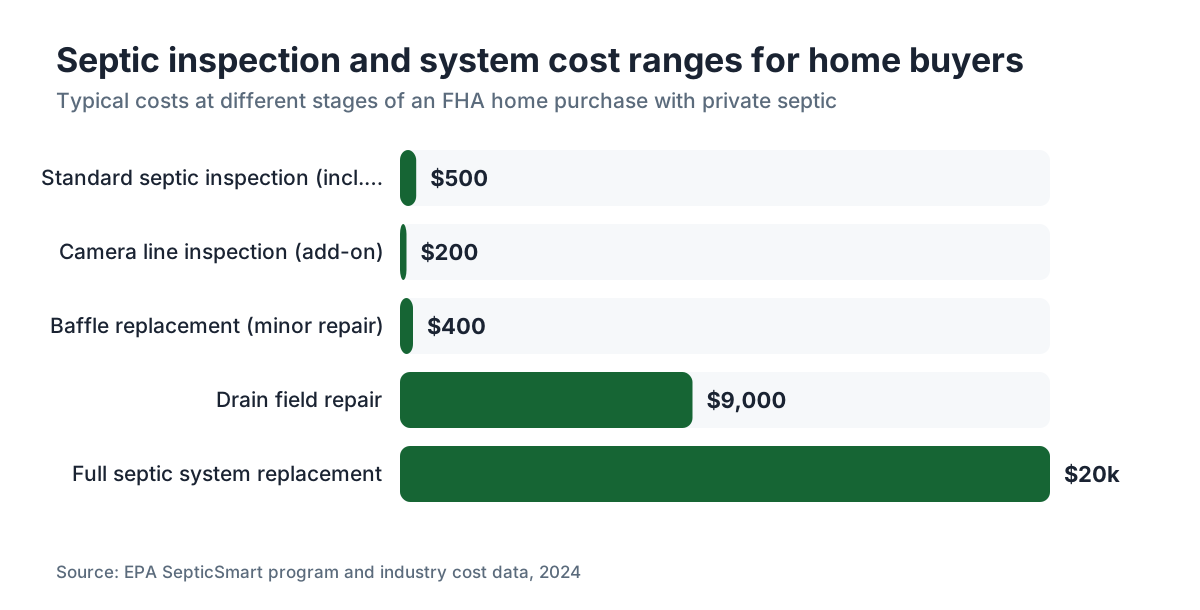
Here's the honest take. Even in the recommended category, a buyer who skips the inspection is taking on real financial risk. A failed septic system can cost $5,000 to $30,000 or more to repair or replace [2]. The inspection runs $300 to $700. That's not a hard math problem.
For what a full septic evaluation involves, see our guide to septic tank inspection.
How is a septic inspection different from an FHA appraisal?
An FHA appraisal is not an inspection. This confusion trips up buyers and agents constantly, and it can leave someone thinking the septic system got checked when it didn't.
The appraiser's job is to confirm the property's value and flag obvious health-and-safety conditions that violate FHA Minimum Property Standards. An appraiser is not a licensed septic professional. They walk the yard, look for visible problems, and make a call based on what they can see from the surface [1]. They do not pump the tank, run a camera through the lines, or pressure-test the distribution box.
A septic inspection, done by a licensed inspector or septic contractor, is a hands-on evaluation. Depending on the inspector and state rules, it usually includes pumping the tank to see its condition, checking the baffles and outlet filter, running water through the house to observe flow, and sometimes a camera inspection of the main line [3]. Some inspectors add a probe or dye test to check drain field function.
Two different professionals, two different jobs. An appraiser writing "septic appeared functional" is not the same as a licensed inspector writing "tank at 80% capacity, baffles intact, drain field shows no signs of saturation."
FHA requires the appraisal on every loan. The septic inspection is a separate step, ordered separately, paid for by the buyer (typically), and required only when the triggers above hit. Never assume the appraisal covered the septic system in any technical sense.
What are the FHA rules for well and septic on the same property?
Properties with both a private well and a private septic system get extra scrutiny under FHA, and for good reason. Contamination from a failing septic system can reach a drinking water well in a matter of weeks depending on soil type and distance.
FHA's standard minimum separation is 100 feet between a well and a septic tank, and 100 feet between a well and the drain field [1]. Some state codes go further. Florida sets a 75-foot minimum from the well to the tank under its onsite sewage program, with additional setbacks from drain fields based on soil type [4]. Where state or local code is stricter than FHA's standard, the stricter rule governs.
If the separation falls short of the required minimum, FHA won't insure the loan without either documented evidence that the local health authority approved a variance or proof that water quality testing shows no contamination. FHA requires a water quality test (coliform bacteria at minimum) on all properties with private wells, and the test must meet EPA or state standards, whichever is more protective [1].
A few practical notes.
Water quality testing and a septic inspection are separate things. A clean water test doesn't mean the septic system is working. It means the well water is safe to drink right now. A failing septic system that hasn't contaminated the well yet still needs to be addressed.
Sellers often don't know where their septic components are. On older rural properties, this is genuinely common. An inspector with a locating tool or tank finder can pin down tank and drain field locations before closing. Getting that done early prevents last-minute surprises.
Do VA and USDA loans have different septic inspection requirements?
Yes, and the differences matter if you're comparing loan types or serving clients across programs. All three government-backed programs share a floor: the sewage system has to work. What varies is how aggressively each one checks.
VA loans: VA requires the property's sewage system to be in proper working order. VA fee appraisers are instructed to flag any evidence of system failure, and if they flag it, a professional inspection is required before the loan closes. VA has no universal mandatory inspection, but its Minimum Property Requirements run slightly stricter than FHA's in practice because VA appraisers tend to note habitability conditions more thoroughly [5]. VA also uses a 100-foot well-to-septic separation standard.
USDA loans (Rural Development Single Family Housing): USDA has historically had the most explicit inspection requirements of the three programs. For USDA Guaranteed loans, the agency requires onsite sewage systems to comply with state and local requirements, and where there's any doubt about system condition, a professional inspection is required [6]. Some USDA lenders require inspections on every transaction with private septic as a lender overlay, which makes it effectively universal for that program.
Conventional loans (Fannie Mae, Freddie Mac): No universal septic inspection requirement, though individual lenders may add overlays and state law may require it.
The takeaway for operators working across loan types: check the program guidelines, the state law, and the lender's overlay policy. Those three layers can produce very different requirements on the same property.
Which states require a septic inspection to sell a house?
State and local rules vary widely, and this is where a lot of buyers and agents get caught off guard. Federal FHA rules are the floor. States and counties build on top.
A handful of states have formal point-of-sale (POS) septic inspection requirements:
| State | Point-of-Sale Requirement | Governing Authority |
|---|---|---|
| Massachusetts | Required before sale in most cases under Title 5 | MA DEP [7] |
| New Jersey | Required statewide for homes on septic before transfer | NJ DEP |
| Connecticut | Required in many towns; varies by municipality | CT DEEP [10] |
| Vermont | Required if system was installed after 1/1/2007 or if local bylaw requires it | VT DEC [11] |
| Washington | Some counties require inspection (King, Pierce, Thurston) | County health departments |
| Virginia | Some localities require it; no statewide mandate | Local health districts |
This table isn't exhaustive. Counties inside states with no statewide POS law often write their own rules. The only reliable way to confirm requirements is to contact the local health department for the property's jurisdiction, or check the state environmental or health agency's website.
Massachusetts Title 5 is the best-known example. The Massachusetts DEP requires a septic system to be inspected prior to the transfer of title in most cases, and a failed system must be repaired or replaced within two years of the inspection [7]. That's a hard legal requirement, not a lender overlay, and it applies regardless of loan type.
In states with POS requirements, the inspection cost and timeline need to be built into the purchase contract from the start.
How much does a septic inspection cost for an FHA loan?
A standard septic inspection for a home purchase runs $300 to $700 in most U.S. markets, though the range widens in either direction depending on what's included [3].
That base range covers a visual inspection of accessible components, a functional test (running water and watching the system respond), and inspection of the tank and baffles. It often includes pumping the tank, though some inspectors price pumping separately at $250 to $500 depending on tank size and local rates.
A camera inspection of the line from house to tank adds $100 to $300. A full drain field evaluation, which may include a probe or dye test, adds another $100 to $200. In states with formal POS programs like Massachusetts, inspectors are licensed under the program and prices land on the higher end because the paperwork and liability are heavier.
Who pays? In a standard transaction, the buyer pays for the septic inspection, the same as the general home inspection. It's negotiable in the contract. In a seller's market, sellers rarely chip in. In a buyer's market, asking the seller to cover it or reduce price for any deficiencies found is a reasonable position.
The inspection cost is separate from any repairs. If the inspection finds a failed baffle, a cracked tank, or a saturated drain field, you're looking at repair or replacement costs from a few hundred dollars (a baffle) to $5,000 to $15,000 for drain field repair, up to $10,000 to $30,000 or more for a full system replacement [2]. See our guide on septic system repair for what different failure types cost.
For operators tracking inspection revenue and scheduling, tools like SepticMind help manage the volume of inspection requests that pile up during peak real estate seasons.
What happens if the septic system fails inspection before closing?
A failed inspection doesn't automatically kill the deal, but it changes the negotiation completely. Here's how it usually plays out.
Start with the hard fact: lenders and FHA won't close on a property with a known, documented septic failure. If the inspector writes up a saturated drain field, a structurally compromised tank, or a system backing up, that report goes to the lender and the deal is on hold.
The options from there:
- Seller repairs before closing. The seller hires a licensed contractor, fixes the documented issues, and the inspector re-inspects to confirm. This is the cleanest path. It adds time, usually two to six weeks minimum, and the seller bears the cost.
- Price reduction and buyer repairs after closing. The seller reduces the price or provides a credit, and the buyer fixes the system after taking ownership. FHA is typically not comfortable with this for a failed system. Lenders want documented proof of a functioning system before closing, not a promise to fix it later. Conventional loans have more room here.
- Escrow holdback. Sometimes the lender allows repair funds to be escrowed at closing with a short completion timeline. FHA has specific rules about escrow holdbacks and doesn't always allow them for health-and-safety issues like a failed septic system. Check with the specific lender.
- Walk away. If the inspection contingency is properly written into the contract, the buyer can cancel and recover their earnest money. A full septic replacement is a legitimate reason to exit a deal.
For what different repairs involve, our articles on septic tank repair and leach field problems cover the most common failure scenarios.
What do FHA appraisers look for regarding septic systems?
FHA appraisers are not septic experts, but they work from a specific list of observable conditions they're trained to flag. Knowing what triggers their attention helps sellers prepare and helps buyers understand what the appraiser can and can't confirm.
Under HUD 4000.1, appraisers must note and require further inspection when they observe [1]:
- Sewage odors at the surface, inside the home, or in the yard
- Evidence of leakage, including lush, unusually green grass directly over the drain field (a classic sign of hydraulic overload or surfacing effluent)
- Visible sewage or gray water on the surface of the ground
- Toilets, sinks, or drains that flush or drain slowly or back up during the visit
- Separation distances that appear to violate HUD's 100-foot well-to-septic standard
- Shared septic systems without documented maintenance agreements
What appraisers are not required to do, and typically don't:
- Locate the tank or drain field
- Run water for extended periods to stress-test the system
- Pump the tank
- Open the tank
- Camera the lines
A septic system can be running at marginal capacity and show none of the visible signs on the appraiser's list. The tank could be 90% full, the baffles rotted, the drain field starting to fail, and an appraiser might still write "septic system appeared to be functioning adequately" after a 15-minute walkthrough. That's not negligence. It's the actual limit of what an appraisal covers.
That's exactly why buyers should never treat the FHA appraisal as a substitute for a professional septic inspection.
How long does a septic inspection take for a home purchase?
The inspection itself, from the time the inspector arrives to the time they leave, usually takes one to three hours depending on system size, accessibility, and what they find [3].
Scheduling is often the bigger constraint. During peak real estate seasons (spring and early summer in most markets), licensed septic inspectors book out one to three weeks. In states with point-of-sale requirements like Massachusetts, that lead time stretches further because demand concentrates on the inspector pool authorized under the state program.
Written reports usually land within 24 to 72 hours. Some inspectors deliver same-day on simpler jobs.
For FHA closings, the report needs to reach the lender with enough time to review it before the clear-to-close. Build at least two to three weeks into the timeline from contract execution to inspection completion, and more if the state has POS requirements that include a waiting period for re-inspection after repairs.
If the system needs pumping before inspection (which most inspectors recommend for the most accurate read on tank condition), coordinate it in advance. Pumping can sometimes happen the same day as the inspection with the right contractor, or as a separate appointment a day or two before. See our overview of septic tank pumping for what that process involves.
One practical tip. Order the septic inspection at the same time as the general home inspection, not after. Waiting for the general inspection to come back first just creates dead time.
Should you always get a septic inspection even if FHA doesn't require it?
Yes. There's no good argument against it for a buyer purchasing a home on private septic.
EPA's SepticSmart program notes that a properly designed and maintained septic system can last 25 to 30 years, but a neglected one can fail much faster and turn into both a public health problem and a major bill for the homeowner [8]. Repairing or replacing a drain field alone runs $3,000 to $15,000. A full system replacement can top $30,000 in tough soil and site conditions.
An inspection costs $300 to $700. The math is not complicated.
Here's the reality. A lot of home sellers have no idea what shape their septic system is in. They've lived in the house 15 years, nothing has backed up, they've never had it pumped, and they'll mark it "functioning" on the disclosure because as far as they know it is. That's not fraud. It's ignorance. And it can leave a buyer with an immediate five-figure expense.
EPA's guidance is blunt: "Have your system inspected by a qualified professional every 3 years and pump your tank as necessary, every 3-5 years" [8]. A home where the seller can't produce a single service record has been running on luck, and luck has an expiration date.
For homeowners who want to protect their system after purchase and dodge the maintenance failures that lead to the problems inspectors find, our guide on how often to pump septic tank is a good starting point.
What records should a seller have ready for an FHA septic inspection?
Sellers who can produce documentation have a smoother transaction and often a stronger negotiating position. Here's what's worth pulling together before the appraisal appointment.
Pumping records. Receipts from the last one or two pump-outs, ideally within the past three to five years, with the date, the company name, the tank size pumped, and any notes the technician made. If the technician flagged baffle condition or anything else, include that too.
Permit and installation records. The original permit for the septic system, which should show the system design, tank size, drain field layout, and soil evaluation. This document tells an inspector exactly what was installed and where. Many local health departments keep these on file if the homeowner lost them.
Inspection reports. Any prior inspection reports, including the one from when the current seller bought the property. A previous clean report is helpful context, though it doesn't replace a current inspection.
Repair records. Any documented repairs: baffle replacements, line repairs, tank riser installations, pump replacements in pressurized systems.
Location sketch or as-built drawing. A sketch showing where the tank and drain field sit relative to the house and property lines. This saves the inspector time and cuts the chance of the inspection running long because nobody could find the access risers.
A seller who hands an inspector a complete file on day one signals that the system has been maintained. That shows up in the appraiser's notes and in the buyer's confidence in the deal.
Frequently asked questions
Does FHA require a septic inspection on every purchase?
No. FHA does not mandate a septic inspection on every transaction. One is required when the appraiser observes signs of failure, when local or state law requires a point-of-sale inspection, when the property has a shared system, or when there's a well-to-septic separation concern. In practice, many FHA purchases on septic end up requiring one through at least one of these triggers.
Can an FHA loan be approved with a failed septic system?
No. FHA will not insure a loan on a property with a documented, known septic failure. The system must be repaired or replaced and re-inspected before closing. Options include seller-paid repairs prior to closing, or in limited cases an escrow holdback, though FHA lenders vary on whether they allow holdbacks for health-and-safety deficiencies like a failed septic system.
Who pays for the septic inspection in an FHA transaction?
The buyer typically pays, the same as the general home inspection. Cost runs $300 to $700 for most residential systems. It's negotiable in the purchase contract, and in some cases a buyer can ask the seller to cover it or credit the cost at closing. The buyer also pays for any water quality testing required on properties with private wells.
What is the FHA minimum distance between a well and a septic system?
FHA's standard minimum separation is 100 feet between the well and the septic tank, and 100 feet between the well and the drain field. Some states require greater distances. If the property falls short, FHA requires either a local health authority variance or a passing water quality test at minimum, and most lenders will still require a full septic inspection.
Does a VA loan require a septic inspection?
VA has no universal mandatory septic inspection requirement, but VA appraisers must flag any evidence of system failure, and a professional inspection is required if they do. VA's Minimum Property Requirements demand the sewage system be in proper working order. Many VA lenders add an overlay requiring an inspection on all properties with private septic, making it effectively required in practice.
Does USDA require a septic inspection?
USDA Rural Development guidelines require onsite sewage systems to comply with state and local requirements, and mandate a professional inspection when system condition is in doubt. Some USDA lenders require inspections on every transaction with a private septic system as a lender overlay. USDA tends to have the most proactive inspection stance of the three major government-backed loan programs.
What does an FHA appraiser actually check on a septic system?
FHA appraisers look for observable signs of failure: sewage odors, wet or unusually green areas over the drain field, visible surfacing effluent, slow-draining fixtures inside the home, and separation distances that appear to violate FHA standards. They do not pump the tank, run a camera, or open the system. A system can be in poor mechanical condition and still pass appraiser observation if it shows no surface symptoms.
How long does a septic inspection take when buying a house?
The on-site inspection usually takes one to three hours. Scheduling lead time is often one to three weeks during active real estate seasons, and longer in states with point-of-sale inspection programs. Written reports are usually delivered within 24 to 72 hours. Buyers should order the septic inspection at the same time as the general home inspection to avoid timeline delays.
What states require a septic inspection before selling a home?
Massachusetts requires inspections before transfer under Title 5 in most cases. New Jersey requires them statewide. Connecticut and Vermont have requirements in many jurisdictions. Several Washington counties (King, Pierce, Thurston) have local requirements. The list is not exhaustive; many counties within states with no statewide rule have their own point-of-sale requirements. Always verify with the local health department.
Can you negotiate repairs after a septic inspection when buying a home?
Yes. A failed or concerning inspection report is a legitimate basis for negotiating a price reduction, a seller credit at closing, or a requirement that the seller repair the system before closing. For FHA loans, lenders typically require documented repairs before closing rather than a credit-and-fix-later arrangement, because FHA's minimum property standards must be met at loan origination.
Is a septic inspection the same as pumping the tank?
No. Pumping removes waste from the tank and is a maintenance service. An inspection evaluates the condition and function of the whole system, including the tank, baffles, distribution box, and drain field. Many inspectors pump the tank as part of the inspection because it lets them see the tank interior clearly, but pumping alone doesn't tell you whether the drain field works or whether the baffles are intact.
What happens if a septic system can't be located before an FHA appraisal?
If the appraiser can't confirm the presence or condition of a sewage system, it becomes a condition of the appraisal. The lender will require documentation that the system exists and is compliant before closing. A licensed inspector or septic contractor can locate the tank using a probe, a locating device, or the original permit drawings on file with the local health department. Unlocatable systems are a red flag worth chasing early.
Does a new septic system installation affect an FHA loan?
A newly installed system, properly permitted and inspected by the local health authority, typically satisfies FHA's requirements. The lender will want a copy of the permit, the local approval, and confirmation the system was installed to current code. A new installation documented this way is generally a stronger position than an old system with an uncertain history. See our guide on the cost to install a septic system for what a replacement involves.
Sources
- HUD, Single Family Housing Policy Handbook 4000.1: FHA appraisers must flag evidence of septic failure and require professional inspection; well-to-septic separation of 100 feet is the standard minimum; local health authority requirements govern
- EPA, Septic Systems Overview: Septic system replacement and repair costs can represent a major financial burden for homeowners
- EPA, SepticSmart: Protect Your Investment: Professional septic inspections are recommended every 3 years; inspection process includes evaluation of tank, baffles, and drain field
- Florida Department of Health, Onsite Sewage Program: Florida's onsite sewage program sets minimum separation distances between wells and septic components under state code
- VA, Minimum Property Requirements for VA Home Loans: VA requires sewage systems to be in proper working order and appraisers must flag evidence of system failure
- USDA Rural Development, Single Family Housing Guaranteed Loan Program: USDA requires onsite sewage systems to comply with state and local requirements and mandates inspection when system condition is in doubt
- Massachusetts DEP, Title 5 Septic System Inspection Program: Massachusetts Title 5 requires a septic inspection before transfer of title in most cases; failed systems must be repaired within two years
- EPA, SepticSmart: Tips for Maintaining Your Septic System: EPA states that a properly designed and maintained septic system can last 25 to 30 years; recommends inspection every 3 years and pumping every 3 to 5 years
- Connecticut DEEP, Onsite Disposal Systems: Connecticut towns have authority to require point-of-sale septic inspections; requirements vary by municipality
- Vermont DEC, Wastewater and Potable Water Supply Rules: Vermont requires septic inspection before sale for systems installed after January 1, 2007 and where local bylaws mandate it
Last updated 2026-07-09