Drain field explained: how it works, fails, and what repair costs
By the SepticMind Editorial Team
TL;DR
- A drain field (also called a leach field) is the network of perforated pipes buried in gravel that releases treated wastewater into the soil.
- It fails when solids clog the soil or pipes, usually after years of skipped pumping.
- Repair runs from about $1,500 for a single-pipe fix to $20,000 or more for a full replacement, depending on system size and soil.
What is a drain field and what does it actually do?
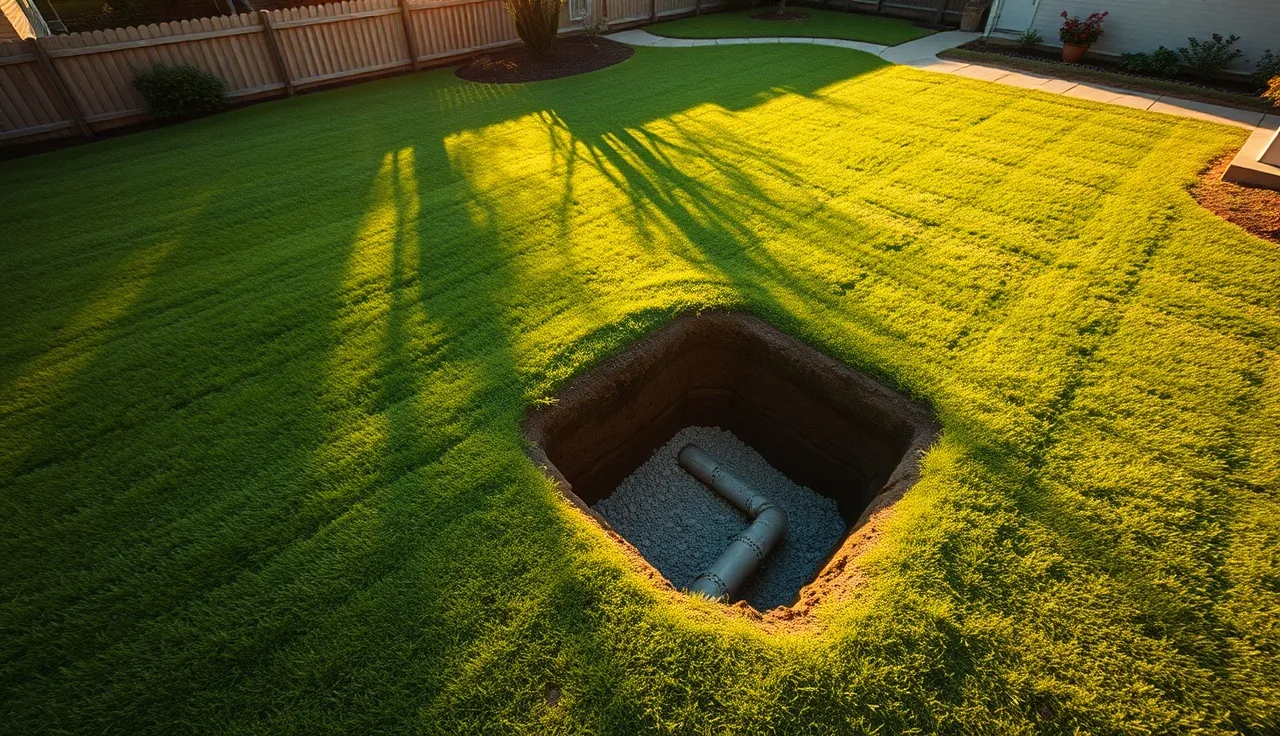
A drain field is the last treatment stage in a conventional septic system. Solids settle in the septic tank, and the clarified liquid on top (called effluent) flows by gravity into a distribution box, then spreads through perforated pipes laid in gravel-filled trenches. The effluent seeps out of those perforations, filters down through the gravel, and moves through a layer of unsaturated soil where bacteria break down pathogens and nutrients before the water ever reaches groundwater. [1]
That soil layer is the whole point. The EPA puts it plainly: the soil below a drain field "provides advanced treatment for the wastewater and removes harmful bacteria, viruses and nutrients." [1] Take away healthy, unsaturated soil and the system stops working. Full stop.
Most residential drain fields have three to five trenches, each 2 to 3 feet wide and 18 to 36 inches deep, filled with washed gravel or crushed stone. A septic drain field sized and installed correctly should handle roughly 100 to 150 gallons per bedroom per day, though state design standards vary. The Oregon DEQ, for one, sets a minimum trench bottom area based on measured soil loading rates. [2]
The field is also the priciest part of a septic system to replace. That alone is reason enough to understand how it works before it breaks.
How does a drain field become clogged or fail?
Most drain field failures trace back to one of three causes: biomat buildup, hydraulic overloading, or physical damage. Skipped pumping drives the first one, and the first one is the most common.
Biomat is a dense, dark layer of organic material and bacteria that forms along the trench walls and the soil interface. A thin layer is normal and even helps treatment. Trouble starts when solids escape the septic tank, usually because the tank is rarely or never pumped, and speed up biomat growth until the soil can no longer soak up water at the rate it arrives. EPA's SepticSmart guidance names infrequent pumping as a leading reason fields die early. [1] A tank that should be pumped every 3 to 5 years but sits for 10 or 15 will push a thick sludge blanket straight into the field.
Hydraulic overloading is too much water at once. A leaking toilet flapper can waste 200 gallons a day. A big family in a house originally built for one person can swamp a field that was sized right for its first owner. Saturated soil cannot absorb water no matter how clean that water is.
Physical damage is less common but real. Roots from willows, maples, and other aggressive species find perforated pipe. Vehicles driven over the field compact the soil and crush the pipes. Settling around an old concrete distribution box can send all the effluent into one trench instead of spreading it across the whole field.
There's a fourth factor most people ignore: age and soil type. A field in slow clay may last 15 years. The same system in fast sandy soil can run 30 or more. Nobody has clean national data on median drain field lifespan, but extension programs commonly cite 20 to 30 years for a well-maintained system in average soil. [3]
What are the warning signs of drain field failure?
The first thing most homeowners notice is slow drains across the house, more than one fixture at once. A single slow drain is usually a clog in that fixture's branch line. When every drain slows down together, especially after heavy water use, the septic system is backing up.
Wet spots or oddly lush, green grass over the field is a clear tell. If the ground above your trenches is soggy or holding standing water with no rain to explain it, effluent is surfacing. That's a system failure and a public health problem at the same time.
Sewage odors outside near the tank or field mean the same thing. Odors inside, that sulfur or rotten-egg smell coming from floor drains or toilets, usually mean the system is backed up and pushing gas back through the traps.
A failing field also makes the tank fill faster than normal. Pump the tank, and if it refills to the outlet level within a few days, the field isn't accepting effluent.
Any one of these means call a licensed septic inspector or service company soon. Surfacing effluent can contaminate wells, surface water, and the neighbor's yard. Some state codes require you to report surfacing sewage to the local health department. [2]
How much does drain field repair cost?
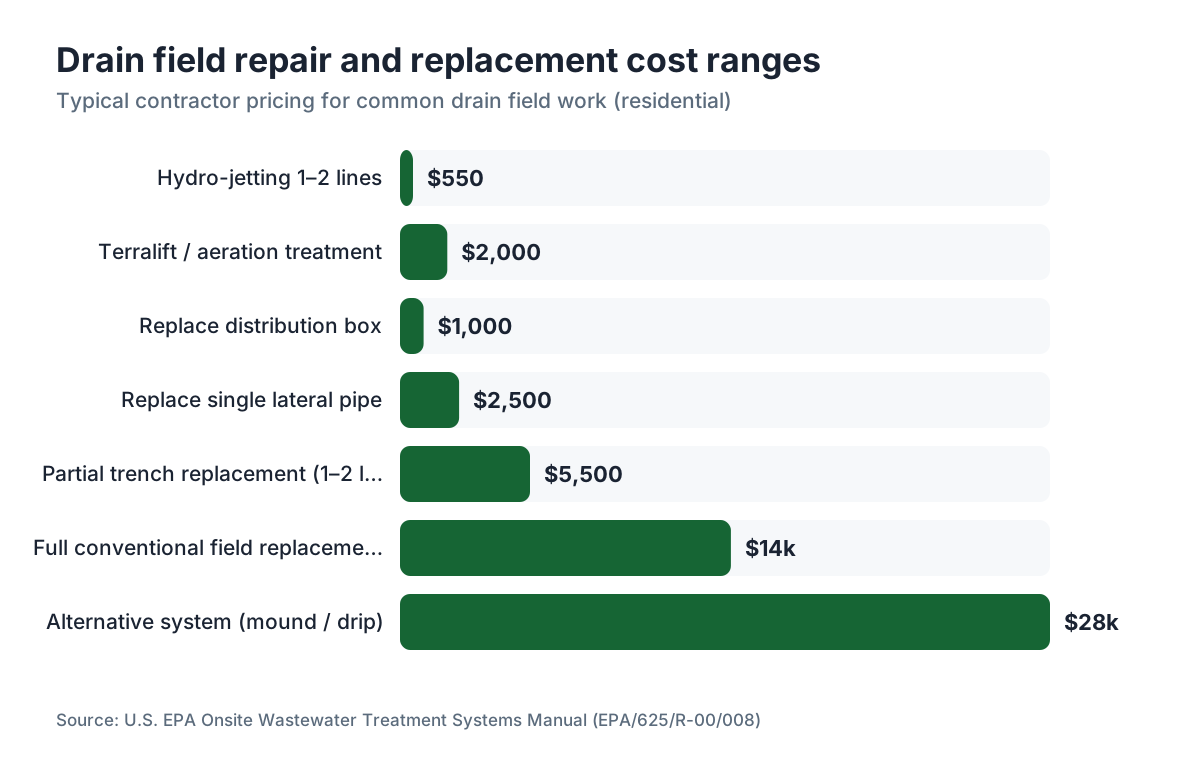
Drain field repair cost depends on what's broken, how much of the system is affected, and where you live. Here's an honest breakdown of what to expect:
| Repair type | Typical cost range |
|---|---|
| Hydro-jetting one or two lines | $300, $800 |
| Aerating clogged trenches (terralift or similar) | $1,000, $3,000 |
| Replacing a single lateral pipe | $1,500, $3,500 |
| Replacing a distribution box | $500, $1,500 |
| Partial trench replacement (1 to 2 trenches) | $3,000, $8,000 |
| Full conventional drain field replacement | $8,000, $20,000+ |
| Alternative system (mound, drip, aerobic) | $15,000, $40,000+ |
Those ranges come from published contractor survey data and the EPA's own cost figures for onsite wastewater systems. [1][4] They don't include permitting, engineering, or soil testing, which can add $500 to $3,000 depending on your county.
Replacing a septic drain field in a straightforward situation (flat lot, easy access, standard soil) runs around $8,000 to $12,000 for a three-bedroom home. In hard conditions, like a sloped lot that needs a mound system or a site with poor soil that needs drip irrigation, you can spend $25,000 to $40,000 or more. [4]
What you'll pay also hinges on whether you have to find a new location on your lot. Many jurisdictions require a "reserve area" that has never been used, set aside for exactly this. No reserve area, or a reserve area that fails percolation testing, and the cost climbs fast because the engineer has to design around the problem.
Septic service operators juggling quotes, schedules, and job costs across multiple crews can keep drain field repair and inspection records straight with a platform like SepticMind.
For what a whole new system runs, see our guide on cost to install septic system.
Can a drain field be repaired, or does it always need replacement?
Repair is often possible, and in the right situation it buys the field years. The answer depends on what caused the failure.
If a crushed or broken septic drain field pipe is the problem, a contractor digs out that section, replaces the pipe, and re-compacts the gravel. That's a real repair. septic system repair jobs like this cost a fraction of full replacement.
A clogged distribution box is a quick fix. Boxes are cheap, and the work rarely takes more than a few hours.
Biomat clogging has a few possible answers. Resting the field (diverting effluent to an alternate area while the biomat dries out and oxygen restores soil permeability) can work, but most lots have only one field. Aeration tools like Terralift inject compressed air and fracture the soil, which can bring back absorption in lightly to moderately clogged fields. Results are inconsistent, and the long-term evidence is thin, but some contractors report treated fields running another 5 to 10 years.
Full replacement is the right call when the biomat is so thick aeration won't touch it, when the field has sat saturated for years, or when the system was undersized from day one. If your inspector says the soil is "biologically plugged" across every trench, that's a replacement.
One thing that never works: bacterial additives or enzyme products poured down the toilet to "restore" a field. The EPA is direct about this, stating that "commercial septic tank additives do not eliminate the need for periodic pumping and can be harmful to your system." [1] Save your money.
What is the process for replacing a drain field?
A full replacement starts with a permit application to your county health department or onsite wastewater regulatory authority. Most jurisdictions want a licensed designer or engineer to submit a site plan with soil test results. Soil testing usually means a percolation test (a timed measure of how fast water drains from a test hole) or a more detailed soil morphology assessment by a certified soil scientist. [2]
Once the permit clears, the contractor digs out the old field, removes the gravel and failed pipe, and disposes of it under local rules (some places treat the old material as contaminated soil). New gravel, perforated pipe, and filter fabric go in per the approved layout. A sound septic tank stays. If it's damaged or undersized, this is the moment to deal with it, and you can read about septic tank repair separately.
Start to finish, permit to final inspection, the job usually takes 4 to 12 weeks, though timelines swing hard by county. In rural counties with small health departments, waits of 8 to 16 weeks aren't unusual.
Soil conditions during installation matter enormously. A contractor digging in wet spring ground can smear the trench walls and wreck the very soil structure the field depends on. Good contractors wait for dry conditions and keep heavy equipment off the new trench area.
After installation the field gets inspected, then covered. Most states require a setback inspection before backfill. Make the contractor hand you an as-built drawing showing the exact location and depth of every component. The next person who works on this system will need it.
How long does a drain field last?
There's no single honest number, and anyone who gives you one without knowing your soil, pumping history, and water use is guessing.
Still, 20 to 30 years is the range university extension programs and state regulators cite for a well-maintained conventional drain field. [3] Some fields last 40 years. Some fail at 8. The difference is almost always maintenance.
The biggest single variable is how often the tank got pumped. A tank pumped every 3 to 5 years protects the field. A tank that's never pumped kills it, often within 10 to 15 years of filling with solids.
Soil type matters too. Clay soils build biomat faster because water crawls through them. Sandy soils drain quicker and hold up better, though very fast soil over karst or fractured rock may not treat the water before it hits an aquifer, which is a different regulatory headache.
To stretch your field's life: pump the tank on schedule (see how often to pump septic tank), flush nothing but toilet paper and human waste, fix water leaks fast, and never drive over the field or plant trees near it.
What are the different types of drain fields?
Conventional gravity-fed trenches are the most common type, but they aren't the only option, and plenty of lots can't support them.
A conventional system uses gravity to move effluent through perforated pipe in gravel trenches. It needs relatively flat land, enough soil depth above restrictive layers or groundwater, and soil that percolates within an acceptable range, typically 1 to 60 minutes per inch depending on the state. [2]
A mound system comes in when soil is too shallow, too slow, or groundwater sits too high. A mound is a raised bed of imported sand over the native soil, with the drain field built inside it. Mounds cost a lot more than conventional systems, usually $15,000 to $25,000 or more, because of the imported material and extra design.
Drip irrigation uses pressure-dosed emitters to spread effluent at a controlled rate over a wide area, including lawns. It needs a pump, a timer, and more upkeep than gravity systems, but it works on tough soil or tight sites.
Aerobic treatment units (ATUs) use oxygen and bacteria to treat effluent to a higher standard before it reaches the field, which lets some states allow a smaller field footprint. They need electricity, regular service, and disinfection (usually chlorine or UV). ATU service contracts typically run $150 to $500 a year. [4]
Chamber systems swap gravel for plastic arch chambers that create void space for effluent storage and soil contact. They're common in newer construction because they install faster than gravel and use less aggregate.
What setback rules and regulations apply to drain fields?
Drain fields are heavily regulated at the state and county level. There's no single federal setback number, but the EPA publishes guidance and many states model their rules on it. [1][5]
Typical minimum setbacks (they vary by state) look roughly like this:
| Feature | Typical minimum setback |
|---|---|
| Private drinking water well | 50 to 100 feet |
| Public water supply well | 100 to 200 feet |
| Property line | 5 to 25 feet |
| Foundation or basement | 10 to 25 feet |
| Surface water (stream, pond) | 25 to 100 feet |
| Drainage ditch or swale | 10 to 25 feet |
These come from a composite of state onsite wastewater codes. Your state may require more. Florida's minimum setback from a private well is 75 feet. [6] Oregon requires at least 50 feet from a drinking water source. [2] Check your county health department's current rules before you assume any number applies to your lot.
Some jurisdictions also govern what you can do over an existing field. Paving, building a structure, or planting certain vegetation may need a variance or permit. Driving over the field is banned almost everywhere because compaction destroys the infiltrative surface.
Buying a house on septic? Get a septic tank pump out and inspection before closing. The inspector should confirm the field location and check that no setback violations exist.
How do I find, inspect, and map my drain field?
Start with your county health department. Most counties that permit onsite systems keep records of the original design, installation inspection, and as-built drawings, often searchable by address. It's the most reliable place to start and it costs nothing.
If records are missing (common for systems put in before the 1980s), a licensed inspector can locate the field using tank position, a visual ground survey, and a pipe probe or electronic locator. Newer septic drain field pipe sometimes has a tracer wire you can detect from the surface.
Once you find it, document it. Sketch the trench locations relative to permanent features (the house corner, a fence post, the tank lid). Photograph the area. That sketch will matter when you need repairs 15 years out.
For a formal inspection, a licensed inspector checks effluent levels in the tank, assesses the distribution box for equal flow, probes the soil above the trenches for saturation, and sometimes runs water to stress-test the system. The National Association of Wastewater Technicians (NAWT) certifies inspectors and sets a standardized inspection protocol. [7]
Operators who run inspections as a service line and want field locations, photos, and service history in one place can use software built for that workflow. SepticMind is made for septic service companies, with scheduling, documentation, and customer records.
If you're doing routine septic tank cleaning or septic tank pumping, ask the tech to check the distribution box and note any sign of effluent backing up from the field into the tank. That's one of the easiest early-warning checks you get.
Does homeowners insurance cover drain field repair or replacement?
Usually not. Standard homeowners policies exclude drain field failure because insurers treat it as a maintenance issue, not sudden accidental damage. [8]
There are exceptions. If a covered peril damages the field, say a tree falls in a storm and crushes the pipes, some policies cover that specific repair. Sewage backup coverage, a common add-on rider, typically covers interior damage from a backed-up system but not the cost to repair the field itself.
Septic warranties are a separate product. Some home warranty companies sell septic coverage, but the contracts often exclude the drain field or cap payouts well below real replacement cost. Read the fine print before buying one.
Since a full drain field replacement can run $8,000 to $20,000, treat the field like any other major home system. Budget for eventual replacement, and spend the small amount on regular septic tank pumping to stretch its life as far as it'll go.
What government programs or loans can help pay for drain field replacement?
Several federal and state programs help pay for failing septic systems, especially in rural areas or low-income households.
USDA Rural Development runs Section 504 Home Repair loans and grants that cover septic repairs, including drain field replacement. Grants go to homeowners 62 or older who can't repay a loan, up to $10,000. Loans go up to $40,000. [9]
USDA also administers the Section 306C Water and Waste Disposal Grants program, which funds wastewater infrastructure for rural communities. [9]
HUD's Community Development Block Grant (CDBG) program sends money to states and local governments, and some of it reaches individual homeowners for failing septic systems through local health departments or housing programs. Availability and amounts vary by state and county.
At the state level, many environmental and health agencies run low-interest loan programs for septic repair. Virginia has offered below-market loans specifically for drain field and septic repairs. Check your state's environmental quality or health department website for current programs.
For the full picture on a new installation if replacement is unavoidable, see our guide on the cost to put in a septic tank.
Frequently asked questions
How much does it cost to replace a drain field?
A full drain field replacement typically costs $8,000 to $20,000 for a conventional system on a residential lot. Hard conditions, such as poor soil requiring a mound system or a tight lot requiring a drip system, can push costs to $25,000 to $40,000 or more. Permitting and soil testing add another $500 to $3,000. Get at least two written quotes from licensed contractors in your county.
Can a clogged drain field be unclogged without replacing it?
Sometimes. Aeration methods like Terralift can fracture compacted soil and partially restore absorption, at $1,000 to $3,000. A broken or crushed lateral pipe can be replaced without touching the rest of the field. But severe biomat clogging across all trenches usually means replacement is the only lasting fix. Enzyme and bacteria additives do not work; the EPA says commercial additives can actually harm your system.
How long does a drain field last?
A well-maintained conventional drain field typically lasts 20 to 30 years, though some last 40 and some fail in under 10. The biggest factor is septic tank maintenance. A tank that's never pumped passes solids into the field and can destroy it within a decade of filling up. Soil type, water use, and installation quality also matter a lot.
What are the signs that a drain field is failing?
Watch for slow drains throughout the house (more than one fixture), wet or swampy ground over the field, unusually lush grass above the trenches, sewage odors outside near the tank or field, and sewage odors inside through floor drains. If your tank fills back to the outlet level within a few days of being pumped, the field isn't accepting effluent.
How far does a drain field need to be from a well?
Most states require a minimum of 50 to 100 feet between a drain field and a private drinking water well. Florida requires 75 feet. Oregon requires 50 feet. Some states require 100 feet or more for public water supply wells. These are minimums; your county may be stricter. Always check with your county health department before designing or siting a system.
Can I drive or park on a drain field?
No. Driving or parking on a drain field compacts the soil and destroys the pore structure that lets effluent infiltrate. Compacted soil doesn't recover easily, and the damage can cause premature field failure. Keep vehicles, heavy equipment, and even heavy landscaping materials off the entire field. Most state codes prohibit building any structure over a drain field.
Does homeowners insurance cover drain field replacement?
Standard policies usually don't cover drain field failure because insurers classify it as a maintenance issue. Some policies cover sudden physical damage from a covered peril (like a tree crushing pipes). Sewage backup riders cover interior cleanup but typically not the cost to repair the field. Home warranty septic add-ons often have low caps or drain field exclusions, so read the contract carefully before buying.
How do I find my drain field if I do not have a map?
Start with your county health department; most jurisdictions that permit onsite systems keep as-built records searchable by address. If those records don't exist, a licensed inspector can locate the field using a pipe probe, electronic locator, or tracer wire. Once found, sketch the trench locations relative to fixed reference points and photograph the area so you have your own record.
What is the difference between a drain field and a leach field?
They're the same thing. Both terms describe the network of perforated pipes buried in gravel trenches that disperses treated effluent into the soil after it leaves the septic tank. 'Leach field' is the older term and still common in many regions. 'Drain field' and 'absorption field' are used interchangeably in most state codes and EPA guidance.
How many years can I add to a drain field by resting it?
Resting a field, diverting flow to an alternate area so the clogged trenches dry out and oxygen partially restores soil permeability, can add 2 to 10 years in mild cases. It only works if there's a functioning alternate field or if you can divert waste elsewhere during the rest period, which is rarely practical on a single-family lot. It doesn't work for severely biologically plugged soils.
What permits do I need to replace a drain field?
Almost every state and county requires a permit from the local health department or onsite wastewater regulatory authority before replacement can begin. The process typically requires a site plan, soil test results, and a design prepared or reviewed by a licensed professional. Work done without a permit can bring fines, forced removal of the unpermitted system, and problems when you sell.
Are there government programs to help pay for a failed drain field?
Yes. The USDA Section 504 program offers repair loans up to $40,000 and grants up to $10,000 for eligible rural homeowners age 62 and older. CDBG funds sometimes flow through local health departments to individual homeowners. Several states run their own low-interest septic repair loan programs. Check your state environmental quality or health department website and USDA Rural Development for current availability.
Can I install a new drain field myself to save money?
In almost every state, no. Drain field installation requires a permit, and permits require a licensed designer or contractor in the vast majority of jurisdictions. Even in the rare states that allow owner-builder permits for septic work, you still need passing soil tests, an approved design, and inspections. DIY installation without permits creates serious liability, health risks, and gets flagged as unpermitted work when you sell.
What plants are safe to grow over a drain field?
Shallow-rooted grass is the safest cover for a drain field. It stabilizes the soil without sending roots into the pipes. Avoid trees and large shrubs anywhere near the field; willows, maples, and poplars are especially aggressive root spreaders. Vegetable gardens over drain fields are a bad idea because of contamination risk. Native grasses and low ground covers with fine, shallow roots are fine in most cases.
Sources
- U.S. EPA, SepticSmart and How Your Septic System Works: Soil below a drain field provides advanced treatment and removes bacteria, viruses, and nutrients; infrequent pumping is a leading cause of field failure; commercial septic additives do not replace pumping and can harm the system.
- Oregon DEQ, Onsite Wastewater Treatment Systems program: State minimum setback from drinking water source is 50 feet; trench design must meet soil loading rate requirements; surfacing sewage must be reported.
- Penn State Extension, home and water resources programs: 20 to 30 years is the commonly cited lifespan for a well-maintained conventional drain field.
- U.S. EPA, Onsite Wastewater Treatment Systems Manual (EPA/625/R-00/008): Cost estimates for conventional and alternative onsite wastewater systems; ATU maintenance costs; drain field sizing and design parameters.
- U.S. EPA, Septic Systems section: EPA publishes national guidance on onsite wastewater treatment; setback standards are implemented at the state and local level.
- Florida Department of Health, Onsite Sewage Program (Chapter 64E-6 FAC): Florida requires a minimum 75-foot setback between a drain field and a private drinking water well.
- National Association of Wastewater Technicians (NAWT), Inspector Certification: NAWT certifies septic inspectors and establishes a standardized inspection protocol for onsite systems.
- Insurance Information Institute, Homeowners Insurance Basics: Standard homeowners policies exclude damage from lack of maintenance; drain field failure is typically classified as a maintenance issue.
- USDA Rural Development, Single Family Housing Repair Loans and Grants (Section 504): Section 504 grants up to $10,000 for eligible homeowners 62+; loans up to $40,000 for rural home repair including septic systems.
- University of Minnesota Extension, onsite sewage treatment program: Conventional drain field trench design specifications; biomat formation and causes; expected system lifespan under different maintenance conditions.
- North Carolina State University Extension, Septic Systems and Their Maintenance: Hydraulic overloading and biomat clogging as primary causes of drain field failure; aeration as a potential remediation approach.
Last updated 2026-07-09