Do septic tanks need to be emptied? Yes, here's why
By the SepticMind Editorial Team
TL;DR
- Yes, every septic tank needs to be emptied (pumped) on a regular schedule.
- Solids that can't decompose pile up in the tank and eventually spill into the drain field, wrecking it.
- Most households need pumping every 3 to 5 years, though tank size and household size shift that window a lot.
- Skipping it is the single most common cause of septic failure.
Do septic tanks actually need to be emptied?
Yes, without exception. Every conventional septic tank builds up a layer of solids at the bottom (sludge) and a layer of grease and lighter material at the top (scum). The liquid in the middle, called effluent, flows out to the drain field. The sludge and scum layers do not. They pile up over time, and once they build up far enough, they start leaving the tank with the effluent and clogging the drain field.
The EPA's SepticSmart program puts it plainly: "Have your septic system inspected every 3 years by a licensed contractor and have your septic tank pumped when necessary (generally every three to five years)." [1] That's not a suggestion. A drain field clogged with solids costs $5,000 to $30,000 or more to repair or replace, depending on your region and soil. [2] The pump-out that would have prevented it runs $300 to $600 in most markets.
Some homeowners assume bacteria inside the tank break everything down, so no pumping is ever needed. Wrong. Bacterial digestion does cut organic solids a lot, but it leaves behind inorganic material, dead bacteria cells, and other compounds that build up no matter how healthy your tank biology is. There is no biological workaround for pumping.
How does a septic tank actually work, and why does it fill up?
Wastewater from your home flows into the tank and separates by density. Heavy solids sink and form the sludge layer. Fats, oils, and paper float up into the scum layer. The clarified liquid in between flows through an outlet baffle to the drain field, where it soaks through soil and gets filtered.
Bacteria inside the tank digest a share of the solids, which is why tanks don't fill up overnight. But digestion never gets everything. Research summarized by the University of Minnesota Extension found that a typical household of four generates roughly 50 to 60 gallons of sludge per year in a standard tank. [3] A 1,000-gallon tank holds only about 250 to 300 gallons of usable sludge storage before it hits the one-third-full threshold where solids start escaping with the effluent.
That math is why pumping every 3 to 5 years is the standard recommendation, not a padded guess. The tank is genuinely out of room on that schedule for a typical household.
For more on how the full pumping process works, see our guide to septic tank pumping.
How often does a septic tank need to be emptied?
It depends on tank size and household size, and those two things matter far more than a flat 3-to-5-year rule suggests.
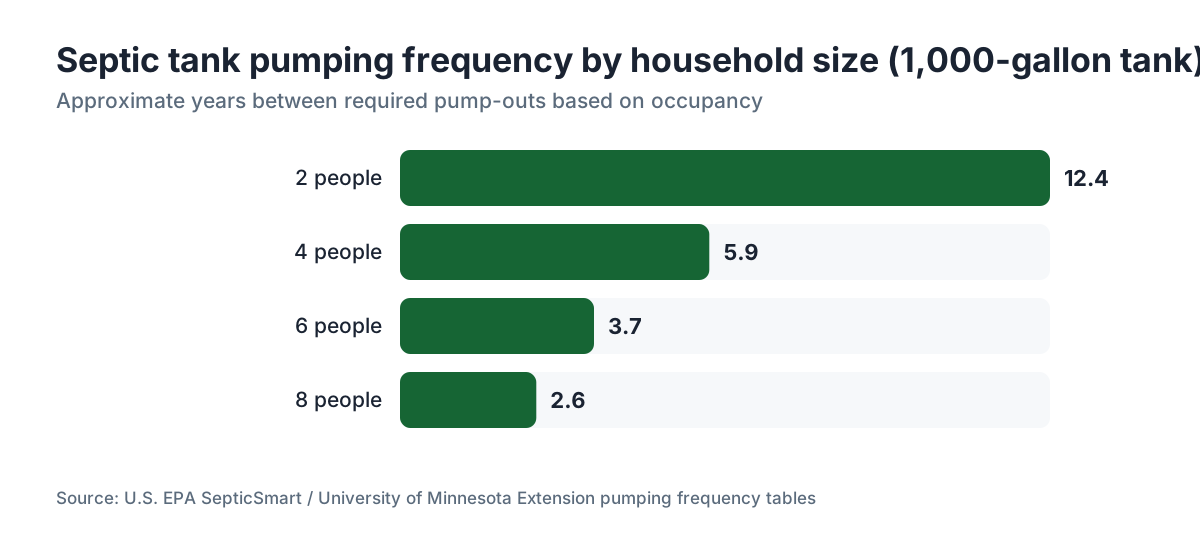
The EPA and most state agencies use a table approach. A 1,000-gallon tank serving two people needs pumping roughly every 12 years. That same tank serving six people needs it every 3 to 4 years. [1] Tank size and number of occupants are the two inputs that drive the math, and you can look up your exact combination.
Things that shorten the interval: a garbage disposal (adds a big solids load), heavy laundry at home, a home business with extra water use, or frequent guests. Things that might stretch it: a tank bigger than your household needs, or an effluent filter on the outlet baffle.
The table below shows approximate pumping frequency by tank size and household size, adapted from published extension pumping tables.
| Tank size (gallons) | 2 people | 4 people | 6 people | 8 people |
|---|---|---|---|---|
| 500 | 5.8 yrs | 2.6 yrs | 1.5 yrs | 1.0 yr |
| 750 | 9.1 yrs | 4.2 yrs | 2.6 yrs | 1.8 yrs |
| 1,000 | 12.4 yrs | 5.9 yrs | 3.7 yrs | 2.6 yrs |
| 1,250 | 15.6 yrs | 7.5 yrs | 4.8 yrs | 3.5 yrs |
| 1,500 | 18.9 yrs | 9.1 yrs | 5.9 yrs | 4.2 yrs |
Source: Adapted from University of Minnesota Extension and EPA SepticSmart pumping frequency tables. [1][3]
For a full breakdown of scheduling factors, see our article on how often to pump septic tank.
What happens if you never empty your septic tank?
The progression is predictable and expensive.
First, the sludge and scum layers reach the outlet baffle. From that point, solids move into the drain field with every flush. The drain field biomat, the thin biologically active layer that treats effluent, gets overwhelmed and plugs. Sewage starts backing up through the soil surface or, more often, back into the house through the lowest drain.
At advanced failure, sewage surfaces in the yard above the drain field. That's a public health problem and, in most states, a code violation. State onsite wastewater rules commonly treat surfacing sewage as a system malfunction that triggers a mandatory repair requirement. [4] The details differ by state, but the enforcement logic is the same everywhere.
The money follows the biology. Once a drain field is clogged with solids from an unpumped tank, cleaning it is often impossible. You're looking at drain field replacement: $3,000 to $15,000 for a conventional system and $10,000 to $30,000 or more for alternative systems on tough soils. [2] Compare that to a $400 pump-out every few years.
If you're already seeing signs of failure, read our guides on septic tank repair and septic system repair for what your options actually are.
What is the difference between pumping, emptying, and cleaning a septic tank?
These terms get used interchangeably, and mostly they mean the same service. A pump truck shows up, the technician finds and opens the access lids, and a vacuum hose pulls out the contents including sludge, scum, and liquid.
Technically, "pumping" or "emptying" means removing the liquid and floating scum. "Cleaning" means the technician also breaks up and removes the packed sludge on the tank bottom, often by back-flushing water into the tank during the pump-out. Most decent operators do this by default. If you're hiring someone, ask straight up whether they break up and remove bottom sludge or just suck off the liquid.
Some companies push "septic tank additives" as a substitute for pumping. The EPA's position is blunt: additives do not eliminate the need for regular pumping, and some can harm the system. [1] Save your money.
For a detailed comparison of services and what each actually includes, see our articles on septic tank cleaning and septic tank pump out.
How much does it cost to empty a septic tank?
A standard residential pump-out runs about $250 to $600 nationally, with most homeowners paying $300 to $500. [2] Regional swing is real. Rural areas with fewer haulers often run higher, and cost also tracks tank size (a 1,500-gallon tank takes more time and disposal capacity than a 750-gallon tank) and how easy the lids are to reach.
If the technician has to hunt for a buried tank, dig down to the lids, or wrestle a tank that hasn't been touched in fifteen years and has compacted solids, expect extra charges. Some operators bill a flat locate fee of $50 to $150. A riser install, which brings the lid up to ground level so future access is easy, runs $200 to $600 depending on depth and materials.
Pumping every 3 to 5 years at $400 works out to $80 to $133 a year. That's cheap insurance against a drain field replacement that costs ten to a hundred times more.
For a complete cost breakdown, see our article on cost to install septic system for context on the full investment you're protecting.
How do you know when your septic tank needs to be emptied?
Don't wait for symptoms. Schedule pumping ahead of time based on your tank size and household count, using the frequency table above.
That said, the warning signs of an overdue tank are worth knowing. Slow drains in several fixtures at once, especially with gurgling in the pipes, often means the tank is near capacity. Sewage odors inside the house or around the tank and drain field point the same direction. Unusually lush, green grass right over the drain field lines can mean partially treated effluent is surfacing and feeding the soil from below. Sewage backing up into the lowest drain is a late-stage sign that the tank may already be pushing solids into the field.
None of these mean you're always too late. They all mean you need a professional on-site, not another month of waiting. A technician can open the tank, measure sludge depth with a Sludge Judge or similar tool, and tell you flat out whether you need pumping now. Many will also check baffle condition and look for signs that solids have been escaping.
If you're unsure about your system's condition, a septic tank inspection before the pump-out is smart, especially on a system that hasn't been serviced in years.
Do alternative septic systems also need to be emptied?
Yes. Alternative and advanced treatment systems, including mound systems, aerobic treatment units (ATUs), drip irrigation systems, and chamber systems, all have a tank component that collects solids and needs pumping.
ATUs in particular get pumped more often than conventional tanks, typically every 1 to 3 years, because the aeration chamber and clarifier chamber both build up material. Many state permits for ATUs require a maintenance contract with a licensed operator who inspects and pumps the system on a set schedule. In Texas, Chapter 285 of the Texas Commission on Environmental Quality rules requires ongoing maintenance on aerobic units, which includes tank pumping as part of a mandatory service agreement. [5]
Mound systems use a standard septic tank ahead of the pump chamber and mound field. That septic tank needs pumping on the same schedule as any other tank. The pump chamber also collects solids and should be pumped when the main tank is.
The tank type changes the treatment process, not the basic physics of solids piling up.
Can you empty a septic tank yourself?
Technically possible in a few places, genuinely a bad idea in almost all of them.
Septic tank contents are classified as domestic septage, and their transport and disposal are regulated at the state level. Most states require a licensed septage hauler to move it and dispose of it at an approved facility. You cannot legally dump it on your property in any state, and taking it to a public wastewater plant requires that plant to accept septage and the hauler to hold a permit. [6]
The legal problem isn't even the scary part. Septic tank gases, mainly hydrogen sulfide and methane, can kill in a confined space. NIOSH has documented worker deaths from hydrogen sulfide in and around manure and sewage structures. [7] Leaning over an open tank without proper equipment is how people die.
Hire a licensed pumper. The $400 is worth it. If you want to be an informed customer, watch what they do: they should pump from both the inlet and outlet sides if accessible, break up and remove the bottom sludge, and check the inlet and outlet baffles before closing up.
What should you do after your septic tank is emptied?
A few things matter here.
Don't add septic starter products or bacteria additives. The tank recolonizes on its own from incoming wastewater within days. You don't need to add anything.
Record the date, the company, and any notes the technician gave you. If they found a cracked baffle, a high water table, or early signs of solids reaching the outlet, get it in writing and keep a service log. Some states require homeowners to keep pumping records, and even where they don't, the log pays off when you sell the house or troubleshoot a future problem.
If the technician recommended repairs, like replacing a worn baffle, adding an effluent filter, or installing a riser for easier access, take it seriously. Those fixes are almost always cheaper now than later.
SepticMind's maintenance tracking tools help homeowners log service dates and set reminders so the next pump-out doesn't slip.
Schedule the next one now. You know your tank size. You know your household size. Use the table in this article and put the date on your calendar.
Does regular pumping actually extend the life of a septic system?
Yes, and the evidence lines up. The most common cause of drain field failure cited by state regulators and extension programs is solids carryover from an unpumped or under-pumped tank. [3][8] Remove the solids on schedule and the drain field only ever sees clarified effluent, which it handles for decades.
The University of Minnesota Extension's work on septic system longevity found that well-maintained systems with regular pumping and good soil routinely last 25 to 30 years or more. Systems that weren't pumped regularly often failed within 10 to 15 years of installation. [3]
A conventional drain field that gets proper maintenance has no moving parts and nothing to wear out. Soil permeability can degrade from biomat buildup, root intrusion, compaction from vehicles, or solids carryover from the tank. The first three you manage through other habits. The last one you control entirely through pumping.
If you're weighing a new system against maintaining the one you have, our article on cost to put in a septic tank covers what replacement actually runs.
For operators who service multiple systems and want to track pumping schedules and customer histories in one place, SepticMind's platform is built for that workflow.
Are there any rules or regulations that require septic tank pumping?
This varies by state and sometimes by county, but the trend has moved toward requiring documented pumping on a schedule.
At the federal level, the EPA does not mandate a pumping frequency directly. It publishes guidance recommending every 3 to 5 years and pushes states to run onsite wastewater management programs. [1]
At the state level, requirements run from voluntary guidance to mandatory permits with service records. Washington State's Department of Health requires certified operation and maintenance professionals to inspect alternative systems on a schedule, and several counties there require periodic inspection or pumping of conventional systems. [9] Massachusetts requires a Title 5 inspection before most property transfers, which effectively forces owners to deal with a neglected system. [10] Virginia's sewage handling regulations treat unmaintained systems as potential public health hazards subject to enforcement.
Even with no legal mandate, homeowner insurance and mortgage lenders at property sale increasingly want proof of recent pumping. If you're buying or selling a home with a septic system, that service history matters.
Check your state's environmental or health agency site for your jurisdiction's rules. The leach field article on this site covers what happens on the drain field side when those rules get ignored.
Frequently asked questions
Do septic tanks need to be emptied if the house is empty or rarely used?
Yes, but the interval can stretch a lot. With very low water use, solids build slowly. Even so, an unoccupied house still has some biological activity in the tank, and sitting water causes its own problems. If a home is empty for more than a year, have the tank inspected before moving back in. A technician can measure sludge depth and tell you whether pumping is needed before you resume normal use.
How do I find out the size of my septic tank?
Start with the permit records filed when the system was installed. Most counties keep these through the health or environmental department, and many are searchable online. If records aren't available, a septic technician can often estimate size from the tank dimensions when they open it for inspection or pumping. Knowing the size is the first step to figuring out how often you actually need service.
Can a septic tank get too full to pump?
Rarely, but sludge can consolidate over many years into a thick, packed layer that a standard vacuum truck struggles with. Most experienced pumpers back-flush water into the tank during pumping to break it loose. If a tank hasn't been pumped in fifteen or twenty years, expect the job to take longer and cost more. It's still worth doing. The alternative is field replacement.
Do septic additives reduce how often you need to pump the tank?
No. The EPA states directly that additives, whether biological, chemical, or enzyme-based, do not eliminate the need for regular pumping. Some additives can actually harm the system by disrupting the bacterial balance or pushing solids into the drain field. Skip the additives and put that money toward the next pump-out.
What's the difference between a septic tank and a cesspool, and do both need emptying?
A septic tank separates solids from liquid before the liquid flows to a drain field. A cesspool is a pit lined with porous material where both liquid and solids collect. Both need regular pumping, but cesspools usually need it more often because there's no pre-treatment stage. Cesspools are also banned for new construction in most states and have been for decades in many places.
Is it normal to smell sewage after a septic tank is pumped?
A brief odor right after pumping is normal as gases escape the open tank. It should fade within a few hours once the lids go back on. Odor that lingers for days points to a lid that isn't sealed or a venting problem. If the smell is inside the house, check that all plumbing traps hold water, since an empty p-trap after a low-use stretch lets tank gases into the room.
Do aerobic septic systems need to be pumped as often as conventional ones?
Often more often. Aerobic treatment units run more biological activity and build up material in both the pretreatment and clarifier chambers. Many state permits require ATU pumping every 1 to 3 years as part of a mandatory maintenance contract. Check your permit documents and your state environmental agency's rules for your unit type, since requirements vary by manufacturer and jurisdiction.
What happens to the waste after a septic tank is pumped?
The licensed pumper hauls it to an approved septage facility, usually a municipal wastewater plant that accepts septage or a permitted land application site. Both are regulated under state permits. That's why you can't legally haul and dump it yourself in most states. The disposal chain is controlled to protect public health and groundwater.
Does a garbage disposal increase how often the septic tank needs to be pumped?
Yes, meaningfully. Garbage disposals raise the solids load entering the tank, and several extension programs estimate the increase at roughly 50%. If you have a disposal and use it regularly, cut your pumping interval by about a year compared to the standard table for your tank and household size. Some jurisdictions with older systems or marginal soils prohibit garbage disposals on septic entirely.
How long does it take to pump a septic tank?
For a typical 1,000 to 1,500-gallon residential tank pumped within the last 5 years, the job usually takes 30 to 60 minutes from arrival to departure. A tank untouched for a decade, or one where the lids need to be found and dug out, can take two to three hours. The technician should also inspect the baffle condition and glance at the drain field area before leaving.
Can heavy rain affect whether a septic tank needs to be pumped?
Heavy rain can raise the water table and push groundwater into an older or damaged tank through cracks and loose joints, filling it faster than household use alone. If you see slow drains or backups after heavy rainfall, have the system inspected. Saturated soil also drops drain field performance for a while, which can make an almost-full tank behave like a full one until things dry out.
Do I need to be home when the septic tank is pumped?
Not strictly, if you can tell the technician where the lids are and the access is clear. Being present for part of the service helps, though. You can hear any concerns about the baffles, the tank, or the drain field, and you can ask questions on the spot. First-time pump-outs on a system with unknown history are especially worth watching.
Is there a way to make a septic tank last longer between pumpings?
Yes, within limits. Conserving water cuts the hydraulic load and gives solids more time to settle. Keeping out non-biodegradable wipes, feminine products, and heavy grease shrinks the scum layer. Skipping the garbage disposal helps. None of this eliminates pumping. It just shifts the frequency. The table tied to tank size and occupancy is still the right framework.
What does a septic technician check during a pump-out?
A thorough technician measures sludge and scum depth before pumping to document conditions, checks the inlet and outlet baffles for wear or blockage, inspects the tank walls for cracks, and notes the water level. Some will also check whether the drain field distribution box shows signs of solids. You should get a service report documenting what they found.
Sources
- U.S. EPA, SepticSmart program guidance: EPA recommends pumping the septic tank every 3 to 5 years and states additives do not eliminate the need for regular pumping.
- U.S. EPA, A Homeowner's Guide to Septic Systems: Drain field repair and replacement costs $3,000 to $30,000 or more; routine pump-out costs $300 to $600.
- University of Minnesota Extension, Septic Systems section: A typical household of four generates 50 to 60 gallons of sludge per year; properly maintained systems last 25 to 30 years; lack of pumping is the leading cause of drain field failure.
- North Carolina Department of Environmental Quality, onsite wastewater program: State onsite wastewater rules classify surfacing sewage as a system malfunction requiring mandatory repair.
- Texas Commission on Environmental Quality, Chapter 285 On-Site Sewage Facilities rules: Texas TCEQ Chapter 285 requires maintenance contracts with licensed operators for aerobic units, including tank pumping.
- U.S. EPA, Biosolids and Septage program: Domestic septage disposal is regulated at the state level; transportation requires a licensed hauler and approved disposal facility.
- CDC / NIOSH, hydrogen sulfide and confined space hazard guidance: Hydrogen sulfide and methane in sewage structures create lethal confined-space hazards; NIOSH has documented fatalities.
- National Environmental Services Center, West Virginia University, septic system resources: Solids carryover from unpumped tanks is the most commonly cited cause of drain field failure in state regulator and extension literature.
- Washington State Department of Health, Onsite Sewage Systems program: Washington State requires certified O&M professionals to inspect alternative systems on a schedule, and several counties require periodic inspection or pumping of conventional systems.
- Massachusetts government, Title 5 septic systems guide: Massachusetts Title 5 requires septic system inspection before most property transfers, compelling owners to address unmaintained systems.
Last updated 2026-07-09