Cesspool vs septic system: key differences, costs, and what to do next
By the SepticMind Editorial Team
TL;DR
- A cesspool is a buried pit that holds raw sewage and lets untreated liquid seep into the soil.
- A septic system separates solids from liquid, then disperses treated effluent through a drain field.
- Cesspools pollute groundwater faster and are banned for new construction in all 50 states.
- Many older ones are being phased out.
- Converting to a septic system runs $3,000 to $15,000 depending on your site.
What is a cesspool and how is it different from a septic system?
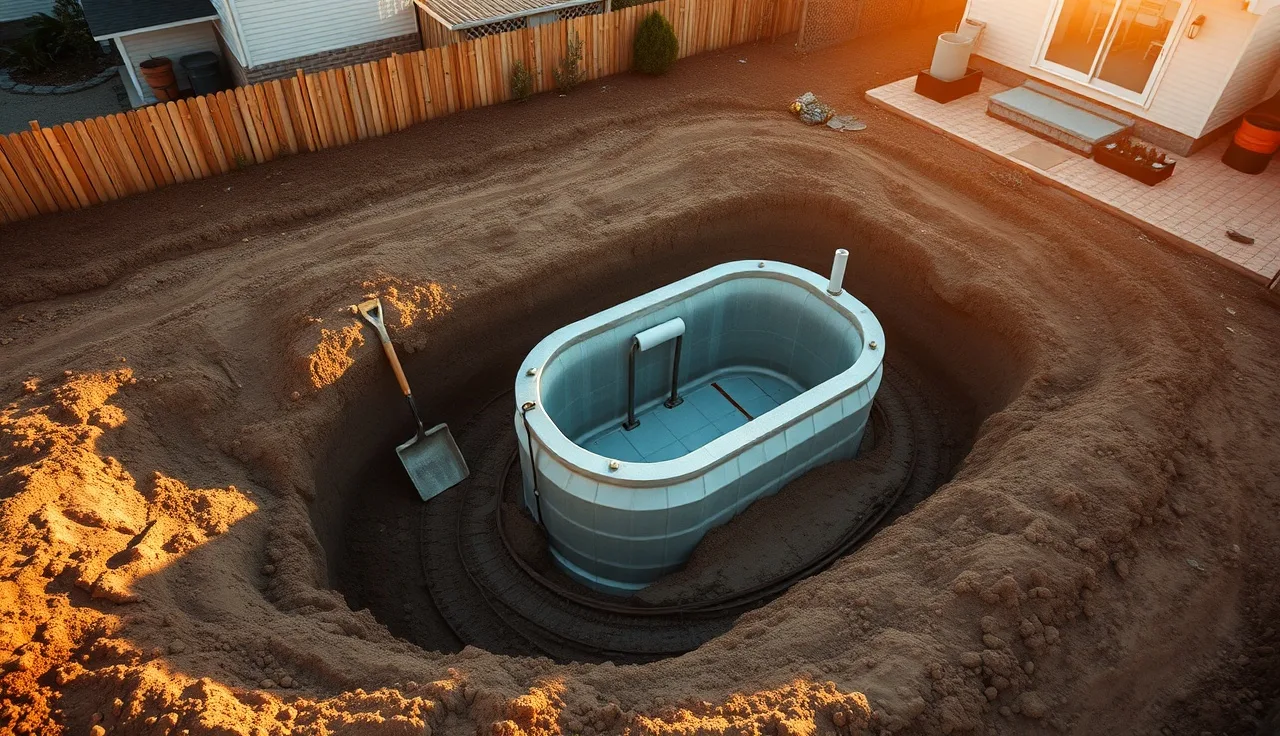
A cesspool is a covered pit, usually built from stone, brick, concrete block, or precast concrete rings, with perforated or open-jointed walls. Raw, untreated sewage flows straight in. Some liquid seeps out through the walls into the surrounding soil. Solids pile up at the bottom. That's the whole thing. No treatment. No separation of solids and liquid before the liquid meets the earth.
A modern septic system works nothing like that. Wastewater from your house enters a watertight septic tank, where gravity separates scum (grease and light solids floating on top) from sludge (heavy solids that sink) and a clearer middle liquid layer called effluent. Anaerobic bacteria partly digest the solids inside the tank. The effluent then flows out to a leach field, a network of perforated pipes in gravel-filled trenches, where soil microbes break down remaining pathogens and nutrients before the water reaches groundwater. [1]
The EPA describes the conventional setup this way: "wastewater flows out of the house to a septic tank... the liquid (effluent) then leaves the tank and is distributed into the drainfield." [1] A cesspool skips every one of those steps.
The difference matters most underground. Around a cesspool, the soil eventually clogs with biological mat, raw solids, and grease. When that happens, the liquid has nowhere to go and the system backs up. Around a properly designed drain field, the soil takes pre-treated effluent at a rate it can handle for decades.
Are cesspools legal? What states have banned them?
New cesspools have been prohibited in all 50 states since the federal Clean Water Act took hold in the 1970s, and every state's onsite wastewater code now bans new cesspool construction outright. [2] The real problem is the millions still in the ground, built before modern rules.
Hawaii pushes hardest on existing cesspools. Act 125 (2017) and its amendments require every cesspool statewide to be upgraded, converted, or connected to a sewer by 2050, with high-priority areas facing shorter timelines. The state has roughly 88,000 cesspools, more per capita than anywhere else in the country. The Hawaii Department of Health estimates those cesspools discharge about 53 million gallons of untreated sewage into the ground every day. [3]
New York banned new cesspools in 1973 but only required replacement at sale or on failure. Long Island alone has an estimated 360,000 cesspools and cesspool-era single-compartment tanks still pushing nitrogen-rich effluent into the sole-source aquifer that supplies drinking water to 2.7 million people. [4] In 2021, New York enacted the Septic System Replacement Program, with grants of up to $20,000 per household for voluntary upgrades. [4]
California, New Jersey, Connecticut, and Massachusetts all share the same pattern: legacy cesspools in older housing stock, no firm statewide phase-out deadline (except near sensitive water bodies), and county-level programs nudging conversion at point of sale. Own a home built before 1970 and never confirmed what's in your yard? Get an inspection. A house labeled "septic" can turn out to have a cesspool or a one-compartment tank that behaves like one. Our guide to septic tank inspection walks through that process.
How do cesspools harm the environment and public health?
The core problem is simple. Cesspools discharge raw sewage, not treated effluent. That sewage carries pathogens (bacteria, viruses, parasites), nitrogen, phosphorus, pharmaceuticals, and household chemicals. None of it gets removed before the liquid enters the soil and, eventually, groundwater.
Nitrogen is the biggest documented long-term threat. Nitrate from cesspools and old septic systems is a leading cause of drinking water contamination in rural and suburban areas. The EPA's maximum contaminant level for nitrate in drinking water is 10 mg/L. Above that, nitrate causes methemoglobinemia ("blue baby syndrome") in infants and is associated with elevated colorectal cancer risk in adults. [2] USGS studies of Long Island groundwater have traced nitrate plumes directly to residential wastewater disposal systems, with some private wells exceeding the 10 mg/L limit. [10]
Pathogen contamination hits harder in the short term but usually stays local. Cesspools near private wells, streams, or shallow aquifers can cause drinking water outbreaks of E. coli, Giardia, and Cryptosporidium. How far a pathogen travels through soil before dying off depends on soil type, moisture, temperature, and the volume of sewage entering the system. In sandy soils, pathogens can move 50 feet or more horizontally. [9]
Phosphorus from cesspools feeds algae blooms in lakes and coastal estuaries. Hawaii's nearshore reef damage has been partly blamed on cesspool nitrogen and phosphorus. [3]
For a neighbor on a well, a failing cesspool uphill is a real contamination risk. Not a theoretical one.
Cesspool vs septic system: side-by-side comparison
The table covers the points homeowners ask about most. Dollar figures reflect national ranges as of 2024 and swing hard by region, soil type, lot size, and local labor.
| Factor | Cesspool | Conventional Septic System |
|---|---|---|
| Treatment level | None (raw sewage) | Primary (solids separation) + secondary (soil treatment) |
| Legal for new construction | No, banned in all 50 states | Yes, with permit |
| Typical lifespan | 20-40 years before failure | 25-40+ years with maintenance |
| Pumping frequency | Every 1-3 years (fills faster) | Every 3-5 years [5] |
| Groundwater nitrogen impact | High | Lower (still some impact) |
| Average installation cost | N/A (not permitted) | $3,000-$15,000+ [6] |
| Conversion/replacement cost | $3,000-$15,000+ | N/A |
| Grant/incentive availability | Yes, in HI, NY, others | Sometimes, for upgrades |
| Regulatory trajectory | Phase-out in most states | Required replacement for cesspool |
| Odor and surface wet spots | Common when aging | Less common with proper design |
The pumping gap matters more than it looks. A cesspool fills faster because it stores raw sludge with no biological pre-digestion. A septic tank's anaerobic bacteria shrink the solids, so you get more time between pump-outs. Over 20 years, that difference in pumping costs alone runs $1,500 to $3,000. Our full guide on how often to pump septic tank gets into the specifics.
How do you know if you have a cesspool or a septic system?
Plenty of homeowners honestly don't know what's buried in the yard, especially in houses built before 1970. Here's how to find out.
Start with your local health department or county environmental services office. They keep records of permitted onsite wastewater systems. If your home went up after 1973 in most states, there should be an as-built or permit on file. Nothing on file is a warning sign that the system predates modern permitting, which lines up strongly with cesspools.
Got records? Read what they describe. A cesspool permit or as-built drawing shows a single pit, sometimes called a "seepage pit," with no separate tank. A septic system shows a tank (usually 750 to 1,500 gallons for a house) connected to a drain field or leach field.
A septic tank inspection by a licensed inspector confirms what's actually there. The inspector locates, uncovers, and eyeballs the components. A perforated-wall pit with no separate tank is a cesspool. A watertight tank feeding distribution lines to a field is a septic system. Some older properties run a cesspool as a secondary overflow chamber after a tank, a hybrid setup that most states now also require you to upgrade.
Age and location tell you a lot. A 1955 home in rural New England or on Long Island has a high odds of a cesspool. A 1985 home in the same spot almost certainly has a proper tank and field, because permits were required by then.
Odor and wet spots point to a failing system but won't tell you which kind you have. Both cesspools and failing septic systems throw those same symptoms.
How much does it cost to convert a cesspool to a septic system?
Converting a cesspool to a full septic system is basically a new septic install, plus excavation and proper decommissioning of the old pit. The cesspool gets pumped out, collapsed or filled (rules vary by state), and abandoned to local code before the new system goes in.
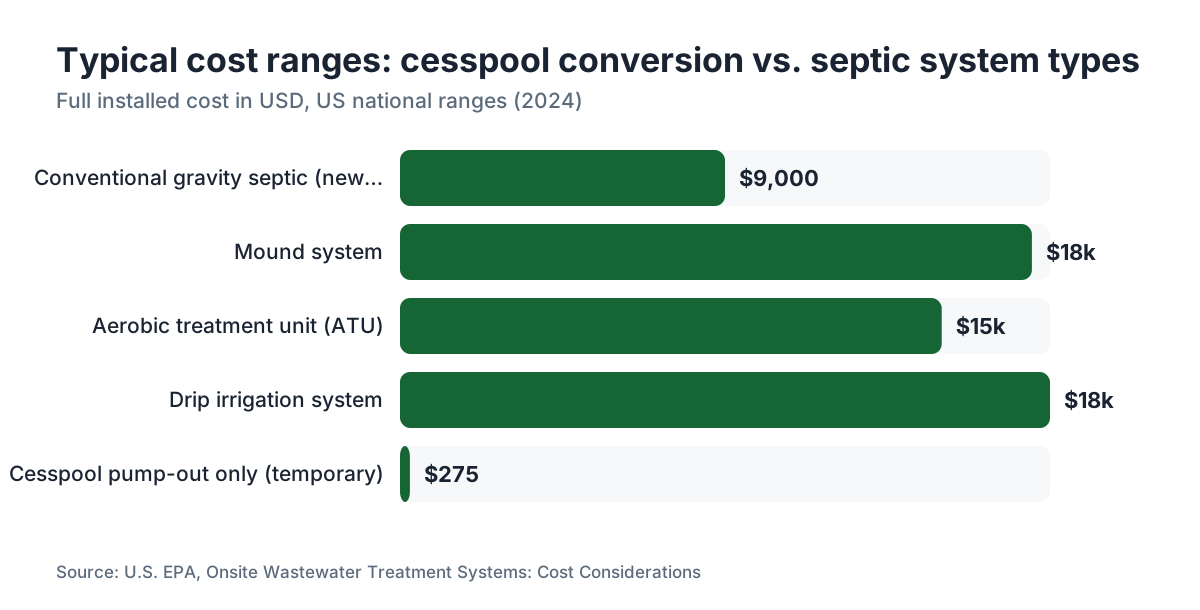
National cost for the full conversion runs from about $3,000 on the low end (small lot, good soil, simple gravity system) to $15,000 or more for a pressurized or engineered system on a hard lot. The average full septic install in the US lands around $7,000 to $9,000 before complications. [6] Our guide on cost to install septic system breaks it down.
A few things push the number up fast.
Percolation test and design fees: Most states require a soil evaluation and engineered design before issuing a permit. That runs $500 to $2,500 depending on the engineer, the number of test holes, and whether the site needs multiple test days. [6]
Site conditions: Rocky soil, high groundwater, clay, or a cramped lot can force an engineered alternative (mound system, drip irrigation, aerobic treatment unit) instead of a conventional gravity system. Alternatives run $10,000 to $30,000 or more. [6]
Cesspool decommissioning: Pumping and filling the old pit adds $500 to $2,000, depending on size and depth.
Grants can cut the net cost hard. Hawaii offers up to $10,000 per household through the Cesspool Upgrade, Conversion, or Connection program (run by the Hawaii DOH). [3] New York offers up to $20,000 through its Septic Replacement Program for eligible homes. [4] Check with your state environmental agency and county health department first, because these programs often carry income limits and priority areas.
For a full look at what the install involves, see our septic tank installation guide.
How do you maintain a cesspool versus a septic system?
A cesspool is simpler to maintain in the sense that there's less to it, but that simplicity buys you more frequent pumping and a shorter life.
For a cesspool, the main job is pumping out accumulated solids. With no biological pre-treatment, solids build faster. A cesspool serving a family of four usually needs pumping every one to three years, against three to five years for a properly sized septic tank. [5] Between pump-outs, keep grease, harsh chemicals, and non-degradable junk out of the drain, because anything that speeds biological mat formation in the soil around the pit hastens failure. Find a licensed pumper through your state's licensing board or the National Association of Wastewater Technicians.
For a septic system, the EPA's SepticSmart program recommends pumping every three to five years for a conventional setup, inspecting the tank and baffles at each pump-out, and checking the distribution box and drain field periodically. [1] Our guide on septic tank pumping covers what that service includes and what the pumper should be checking.
One rule applies equally to both. What goes down the drain matters. Antibacterial soaps, bleach, solvents, and medications kill the bacteria that break down solids. For a cesspool already getting minimal treatment, adding more bacteria killers makes a bad situation worse. For a septic tank, killing the bacteria means solids pass to the drain field and clog the soil. Same habits, faster consequences with a cesspool.
If you run multiple properties or service accounts and want a cleaner way to track pumping schedules and inspection records, SepticMind's operator platform keeps all of it in one place.
For routine septic tank cleaning and what a proper pump-out involves, that guide runs through the whole process.
Can you repair a failing cesspool, or does it have to be replaced?
Short answer: you can pump and temporarily revive a failing cesspool, but you can't fix the underlying problem, which is a biologically clogged soil zone around the pit. Once the soil's absorption capacity is spent, the cesspool is done.
Some contractors sell cesspool "rejuvenation" treatments, usually high-pressure jetting or chemical additives, that claim to restore soil permeability. The EPA and most state environmental agencies don't endorse these as long-term fixes, and no peer-reviewed evidence shows they extend system life by more than a few months to a couple of years at best. [1] Worth a try if you're in a temporary bind. Not a substitute for replacement.
When a cesspool fails (backing up into the house, surfacing in the yard, causing odors), most state codes require you to replace it with an approved system. In states with active phase-out programs, a failed cesspool triggers a mandatory upgrade. In states without one, you still can't pull a repair permit for an inherently illegal system. You can only get a replacement permit.
Replacement follows the same path as a new install: soil evaluation, system design, permit, excavation, installation, final inspection. See our septic system repair guide for how the permitting and design process works, and our septic tank repair guide if the issue lives inside an existing septic tank rather than needing a full system replacement.
Does having a cesspool affect your home's sale or resale value?
Yes, and meaningfully. A cesspool is a disclosed material defect in most states. Real estate agents and attorneys in New York, Hawaii, and New Jersey routinely flag cesspool status in listing disclosures. Buyers either walk, negotiate a big price cut, or require the seller to convert before closing.
The price hit is real, though it varies. In Long Island markets, a home with a cesspool typically sells for $20,000 to $50,000 less than a comparable home with a modern septic system, and that spread narrows when grant funding is available because buyers know they can tap state money to upgrade. In Hawaii, cesspool disclosure kicks off detailed buyer negotiation in nearly every transaction.
In states with point-of-sale upgrade requirements (some counties in New Jersey, parts of California, some New England municipalities), you can't sell without converting first. That's not a negotiating point. It's a legal condition before the deed transfers.
Buying a home and the seller says "I think it's a septic system"? Get a licensed inspection before closing. The inspection cost ($250 to $600 in most markets) is cheap insurance against inheriting a cesspool conversion project. See our septic tank inspection guide for what a pre-purchase inspection should cover.
SepticMind's homeowner tools help you document your system's history and generate records that support disclosure or prove condition to a buyer.
What are the alternatives if a full septic system won't fit on your lot?
Some lots genuinely can't support a conventional drain field. Too little soil depth above bedrock, a seasonal high water table, a lot too small for required setbacks, or a perc rate that's too slow. These are the same constraints that historically pushed people toward cesspools, and the same ones that make cesspool replacement tricky.
State environmental agencies have approved several alternative system types for exactly these sites.
Mound systems raise the drain field above grade using engineered fill. They work on sites with high water tables or shallow restrictive layers. Cost typically runs $10,000 to $25,000. [6]
Aerobic treatment units (ATUs) use mechanical aeration to treat wastewater to a higher standard before it reaches the soil, which shrinks the required soil treatment area. ATUs cost $10,000 to $20,000 installed and require a maintenance contract. [6]
Drip irrigation systems distribute highly treated effluent through shallow drip lines, which suits tight lots. They're common in states with strict nutrient standards near water bodies.
Connecting to a municipal sewer, when it's available and the connection cost is reasonable, often beats an engineered alternative on a difficult lot. Connection fees and lateral installation run $3,000 to $30,000 depending on distance to the main.
Your state's onsite wastewater code decides which options are approved and what site evaluation it requires. Most state agencies publish their onsite rules online. The EPA's SepticSmart program links to state resources as a starting point. [1] For a full look at a new install and cost by system type, see cost to put in a septic tank.
Are there grants or financial help to convert a cesspool to a septic system?
Financial help exists at federal, state, and county levels, though the amounts and availability shift by location and funding cycle.
At the federal level, USDA Rural Development offers grants and low-interest loans for water and wastewater projects in rural areas, including individual homeowner help in some states through the Section 504 Home Repair program. [7] The EPA's Clean Water State Revolving Fund provides low-cost financing to states, which can pass it through to homeowners for onsite system upgrades. [2]
Hawaii's Cesspool Upgrade, Conversion, or Connection grant program offers up to $10,000 per household. Priority goes to properties near sensitive water bodies and homes owned by low- to moderate-income households. [3]
New York's Septic System Replacement Program, funded through the Environmental Protection Fund, offers up to $20,000 per eligible household. Applications go through the state's Homes and Community Renewal agency. [4]
New Hampshire, Rhode Island, and several other New England states run revolving loan funds for failed or failing onsite systems. Massachusetts has the Title 5 Loan Program, through MassHousing, offering 0% loans up to $25,000 for failed system replacement. [8]
County programs are common in areas with known groundwater sensitivity. Long Island's Nassau and Suffolk counties have run various loan and grant programs tied to nitrogen reduction goals. Check with your county health department and your state's environmental or housing agency before you start.
One honest note. These programs often carry waiting lists and narrow eligibility windows. Don't bank on grant money being there the exact moment your system quits. Apply early if you know replacement is coming.
Frequently asked questions
Can a cesspool be pumped out and still used legally?
Pumping a cesspool extends its life temporarily but doesn't make it legal for new use. Cesspools are banned for new construction in all 50 states. In most states you can keep using an existing one until it fails or gets flagged by a sale or inspection, but states like Hawaii impose mandatory phase-out deadlines no matter how well it works. Cesspools typically need pumping every 1 to 3 years.
What does a cesspool look like when you dig it up?
A cesspool is usually a cylindrical pit, 4 to 8 feet across and 5 to 15 feet deep, with walls built from stacked concrete rings, stone, or brick. The walls have gaps or perforations that let liquid seep into the surrounding soil. There's no inlet baffle, no outlet pipe to a drain field, and no second chamber. Raw sewage enters and liquid slowly exits through the walls.
How long does a cesspool last before it needs to be replaced?
Most cesspools last 20 to 40 years before the surrounding soil clogs biologically and absorption fails. Life span depends on household water use, what goes down the drain, soil type, and pumping frequency. Sandy soils fail faster because they move more liquid but also build biological mat more quickly. Once the soil is saturated, no amount of pumping brings absorption capacity back.
Is a cesspool the same as a septic tank?
No. A septic tank is a watertight treatment vessel that separates solids from liquid before sending effluent to a drain field. A cesspool is an unlined or perforated pit that holds raw sewage and lets untreated liquid seep straight into the soil. A cesspool has no treatment process, no separate distribution to a drain field, and no biological or soil-based polishing of the wastewater.
What happens if you ignore a failing cesspool?
A failing cesspool will eventually back up raw sewage into the house through toilets and drains. Before that, you may see wet spots or lush grass over the pit, smell sewage in the yard, or find contaminated water in a nearby well. Continuing to use a failing cesspool risks public health violations, fines from your local health department, and liability if it contaminates a neighbor's well.
Does homeowner's insurance cover cesspool replacement?
Standard homeowner's policies almost universally exclude cesspool or septic failure, treating it as maintenance rather than a sudden covered loss. Some insurers offer riders or separate service line coverage that includes septic components, but read the fine print. Cesspool replacement due to age or gradual failure is almost never covered. Coverage for sudden, accidental damage (like a contractor hitting the tank) varies by policy.
What are the signs that a cesspool is failing?
The common signs are slow drains throughout the house (more than one fixture), sewage backing up into the lowest drains, a persistently soggy patch of grass above or near the cesspool, a strong sewage odor in the yard, and unusually lush green grass over the pit. Any of these warrant an immediate inspection. A failing cesspool during heavy rain is often more obvious, because groundwater pressure pushes sewage upward faster.
Can I sell my house if it has a cesspool?
You can sell a house with a cesspool in most states, but you must disclose it. In some counties and states, a point-of-sale upgrade requirement means you either convert before closing or fund the conversion through escrow. In Hawaii, all cesspools must be upgraded by 2050 regardless of sale status. Buyers in active markets often negotiate $20,000 to $50,000 off the price, or require conversion as a sale condition.
How deep is a cesspool typically buried?
Residential cesspools usually sit with their top 1 to 3 feet below grade, making the total depth from ground surface to pit bottom about 6 to 18 feet. Deeper pits were often dug to reach more permeable soil or add capacity. Depth varies a lot by region, soil type, water table, and build era. Your local health department records or a licensed inspector can determine the exact depth of your specific pit.
Does a cesspool need to be pumped out more often than a septic tank?
Yes. A cesspool usually needs pumping every 1 to 3 years for a household of four, against every 3 to 5 years for a properly sized conventional septic tank. The difference is that a septic tank uses anaerobic bacteria to digest solids, cutting their volume before they pile up. A cesspool stores raw solids with minimal digestion, so it fills faster. Over 20 years, that adds up to a meaningful cost gap.
What is the difference between a cesspool and a seepage pit?
They're essentially the same thing, with different terms used in different regions and eras. Both are perforated or open-jointed underground pits that receive wastewater and let liquid seep into the soil without prior treatment. Some older setups used both terms for different-sized or differently-positioned pits on one property. In modern regulatory language, both describe unpermitted systems that don't meet current wastewater treatment standards.
Are cesspool additives or treatments worth buying?
The honest answer is no, not as a long-term fix. Enzyme and bacterial additives marketed for cesspools lack peer-reviewed evidence of meaningful benefit. The EPA doesn't endorse them for extending system life. High-pressure jetting can temporarily restore some absorption in early-stage clogging, but once the surrounding soil is saturated with biological mat, no treatment reverses that. Save the additive money and put it toward the inspection and replacement fund.
How do I find out if my property has a cesspool or septic system?
Start with your county health department or environmental services office, which keeps records of permitted onsite wastewater systems. If your home predates the 1970s and you find no permit records, a cesspool is likely. A licensed septic inspector can physically locate, uncover, and identify what's in your yard for $250 to $600 in most markets. Look for an inspector certified through your state's licensing program or the National Association of Wastewater Technicians.
What does it cost to pump a cesspool versus a septic tank?
Cesspool pump-outs typically run $150 to $400 per service in most markets, similar to a septic tank pump-out, which runs $250 to $500 for a standard 1,000-gallon tank. The per-visit gap is modest, but because cesspools need pumping twice as often, the cumulative cost over 10 to 20 years is noticeably higher. Some contractors charge more for cesspools because the waste is unprocessed and heavier to haul.
Sources
- U.S. EPA, SepticSmart: How Your Septic System Works: Description of conventional septic system function: wastewater flows to tank, effluent distributes to drainfield, soil provides final treatment; maintenance recommendation of pumping every 3-5 years.
- U.S. EPA, Clean Water Act and Onsite Wastewater Treatment Systems: Federal prohibition on new cesspools under Clean Water Act framework; nitrate MCL of 10 mg/L in drinking water; CWSRF financing for onsite system upgrades.
- Hawaii Department of Health, Cesspool Upgrade, Conversion, or Connection Program: Hawaii Act 125 (2017) requires all cesspools to be upgraded by 2050; approximately 88,000 cesspools discharge ~53 million gallons of untreated sewage daily; grant program offers up to $10,000 per household.
- New York State Department of Environmental Conservation, Septic System Replacement Program: Long Island has approximately 360,000 cesspools and old single-compartment tanks; 2021 Septic Replacement Program offers grants up to $20,000 per household; nitrogen contamination of sole-source aquifer serving 2.7 million people.
- U.S. EPA, Septic Systems: Frequency of Pumping: EPA recommends pumping septic tanks every 3 to 5 years; cesspools fill faster due to lack of biological pre-treatment and typically require pumping every 1 to 3 years.
- U.S. EPA, Onsite Wastewater Treatment Systems: Cost Considerations: Conventional septic system installation costs range from approximately $3,000 to $15,000; alternative systems (mound, ATU, drip) cost $10,000 to $30,000+; perc test and design fees run $500 to $2,500.
- USDA Rural Development, Section 504 Home Repair Program: USDA Rural Development Section 504 program offers grants and low-interest loans for home repair including wastewater system replacement in eligible rural areas.
- MassHousing, Title 5 Septic Loan Program: Massachusetts Title 5 Loan Program offers 0% loans up to $25,000 for failed septic system replacement, administered through MassHousing.
- National Environmental Services Center (NESC) at West Virginia University, Onsite Wastewater Treatment: Pathogens in sandy soils can travel 50 feet or more horizontally from a failing cesspool or septic system; biological mat formation in cesspool soil walls is the primary failure mechanism.
- U.S. Geological Survey, Nitrogen in Groundwater from Septic Systems and Cesspools: Nitrate plumes from residential wastewater disposal systems on Long Island traceable in groundwater studies; some private wells exceeding EPA MCL of 10 mg/L nitrate.
Last updated 2026-07-09