Cesspool vs septic tank: what's the real difference?
By the SepticMind Editorial Team
TL;DR
- A cesspool is a bare pit that collects raw waste and slowly leaches it into the soil around it.
- A septic tank separates solids from liquid and sends treated effluent to a drain field.
- Cesspools fill faster, foul groundwater more readily, and are banned for new construction in most U.S.
- states.
- Septic systems cost more upfront and far less over 20 to 40 years.
What is a cesspool and how does it actually work?
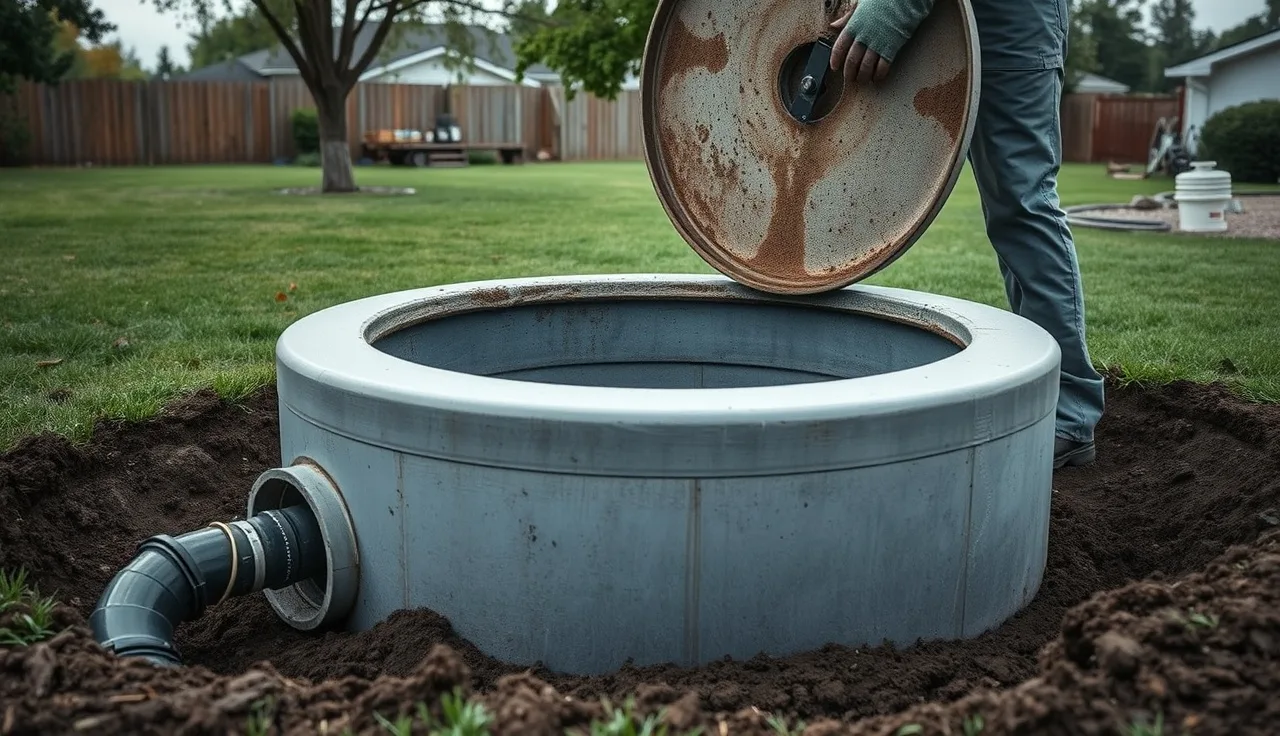
A cesspool is a buried pit with open joints or holes in its walls and floor, usually built from concrete, stone, or brick. Wastewater drops straight in. Solids settle at the bottom. Some liquid seeps out through the walls into the dirt around it. That is the whole treatment process, and it barely qualifies as one.
There is no separation stage, no drain field, no controlled dispersal. The pit fills, and the soil around it takes whatever it can. Cesspools were standard across rural America before the mid-20th century, and older homes in New England, the Mid-Atlantic, and Hawaii still sit on them today.
Here is the core problem. A cesspool takes raw sewage, pathogens and nitrates and drug residues included, and pushes it into the ground with no real treatment. The EPA's SepticSmart program reports that roughly 20 million U.S. households rely on septic systems or cesspools, and a good share of the older housing stock in that count is cesspools [1].
Once the surrounding soil saturates or clogs with biomat, the pit stops draining. Then you get sewage surfacing in the yard, backing up into the house, or both. The cesspool is full and it has nowhere left to send anything.
What is a septic tank and how does it differ from a cesspool?
A septic tank is a watertight buried container, usually concrete, fiberglass, or polyethylene, that takes all household wastewater and separates it into three layers before anything leaves. Solids sink and form sludge. Grease and light material float up as scum. A fairly clear middle layer, the effluent, sits between them.
That effluent, and only the effluent, leaves through an outlet baffle to a distribution box and then to a leach field, where it soaks through gravel and soil and gets treated biologically. The soil does the real work. Bacteria break down pathogens, plant roots pull up nutrients, and by the time water reaches groundwater it is far cleaner than what left the house.
The watertight tank is the whole difference. Nothing seeps through the walls. Effluent exits one place, the designed outlet, and nowhere else. That single design choice is why the EPA, state agencies, and county health departments have blocked cesspools for new construction and why many places make cesspool owners upgrade on a deadline [2].
Septic systems do need routine care, mainly septic tank pumping every three to five years for a normal household. Maintained, they run 25 to 40 years without a major repair [3].
How do cesspools and septic tanks compare side by side?
| Feature | Cesspool | Conventional Septic Tank + Drain Field |
|---|---|---|
| Treats wastewater before soil contact | No | Yes (primary settling in tank) |
| Watertight vessel | No | Yes |
| Has a drain field | No | Yes |
| Typical service life | 10-30 years | 25-40 years |
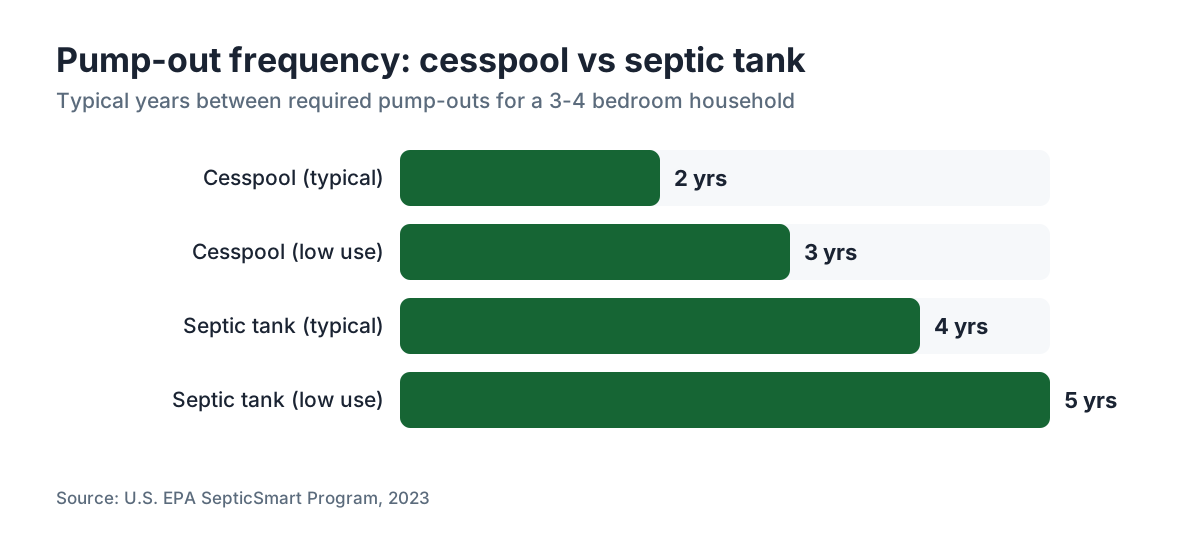
| Pump-out frequency | Every 1-3 years (fills faster) | Every 3-5 years |
| New construction permitted | Banned in most U.S. states | Yes |
| Groundwater contamination risk | High | Low to moderate |
| Replacement cost (national average) | $3,000-$10,000 (new pit) | $10,000-$30,000 (full system) [4] |
| Long-run cost over 30 years | Often higher due to frequent pumping + forced upgrade | Lower if maintained |
The cost line is the one people misread. A cesspool pump-out can run $75 to $200 less per visit than a septic pump-out in some markets. But a cesspool needs it far more often, sometimes every 12 to 18 months against every three to five years for a properly sized septic tank. Stretch that over 30 years and the savings vanish. Then most states hand you a mandatory upgrade on top.
Why are cesspools banned, and where?
Cesspools are banned or restricted because they inject raw sewage into the ground with no treatment, and both the Safe Drinking Water Act and the Clean Water Act give states the legal footing to stop that. The exact rules change state by state and county by county [5].
Hawaii went furthest. Act 125 (2017) requires every cesspool in the state to be upgraded, replaced, or connected to sewer by 2050, with high-priority areas moved up. Hawaii had roughly 88,000 cesspools at the time, named the single largest source of groundwater pollution in the state [6].
New York, New Jersey, Massachusetts, and Connecticut generally ban new cesspools and force replacement at property sale or major renovation [10]. Florida banned new cesspools decades ago and runs active programs to find and replace old ones near water bodies.
The EPA's Office of Water put it plainly. Large-capacity cesspools, meaning those serving multiple dwellings or non-residential buildings, were banned under the Underground Injection Control program as of April 5, 2005, over the risk of "direct injection of untreated waste into underground sources of drinking water" [2].
Own a home built before 1970 and not sure what you have? A septic tank inspection by a licensed inspector settles it. They find the lids, probe the soil, and check for the outlet pipe and drain field that only a septic system has.
What does a cesspool failure look like?
By the time a cesspool failure is bad enough to notice, it is usually obvious. The pit fills faster than the soil can absorb. Sewage backs up through floor drains or toilets. The ground above or downhill of the pit turns soft and wet, often with a sulfur smell.
Unlike a septic failure, there is no drain field to rehab. Your options are short: pump it for temporary relief, dig out and install a new cesspool where soils allow it (banned in many states), or convert to a full septic system or hook up to sewer.
Groundwater contamination is the harder problem because you cannot see it. Studies of coastal towns have found high nitrate and fecal coliform in shallow wells near cesspool-dense blocks. University of Hawaii research found nitrogen loading from cesspools was measurably reaching nearshore waters [6].
If your well tests high for nitrates or coliform and your neighbor is also on a cesspool, take it seriously. The EPA maximum contaminant level for nitrate in drinking water is 10 mg/L as nitrogen, and anything above that is a confirmed health risk, especially for infants [7].
How much does it cost to convert a cesspool to a septic system?
Cesspool-to-septic conversion runs about $8,000 to $25,000 for most homes. Tough sites, poor soils, a high water table, or a small lot, push that to $40,000 or more [4].
The cost drivers:
- Soil percolation testing and engineering (usually $500 to $2,000)
- Excavating and removing the old cesspool (often $1,000 to $3,000 extra if it is concrete)
- The tank itself (a 1,000-gallon concrete tank is usually $600 to $1,500 supply only)
- Drain field installation, the biggest variable by far
- Permit fees, from under $100 in rural counties to over $1,000 in some coastal or environmentally sensitive areas
Alternative systems (mound systems, aerobic treatment units, drip irrigation) add cost but may be your only option when soils fail the perc test. Our full breakdown of the cost to install a septic system walks through it line by line.
Some states help pay. Hawaii's Department of Health runs a cesspool conversion loan program. New York's Environmental Facilities Corporation has offered low-interest financing for onsite wastewater upgrades. Check your state environmental agency before you assume the whole bill is yours.
One honest note. Nobody has clean national cost data for cesspool conversions specifically. The ranges above come from contractor surveys and state program cost studies. Your real number rides on local labor rates and what the soil does.
What maintenance does each system actually need?
A cesspool is simpler to describe and harder to keep up with. No drain field, no real treatment, so solids and grease pile up faster. Most cesspool owners need a pump-out every one to three years, and each visit runs $200 to $500 depending on depth and access. Bacterial treatments between pump-outs can slow how fast sludge builds.
Products like CCLS Septic Tank and Cesspool Treatment are enzyme-and-bacteria blends sold for both cesspools and septic tanks. The CCLS safety data sheet lists the active ingredients as naturally occurring bacterial strains and enzymes. These can slow the rate solids accumulate. They will not replace pumping, and they will not bring back a cesspool whose soils have already clogged. Treat them as a supplement, not a fix.
Septic maintenance is more structured. EPA SepticSmart guidance recommends pumping every three to five years for a typical three-to-four-bedroom home, checking the inlet and outlet baffles at each pump-out, and keeping records [1]. For pump-out scheduling, how often to pump a septic tank covers sizing formulas and household variables.
Both systems live or die by the same habits. No wipes down the toilet. No grease down the drain. Go easy on the garbage disposal. With a cesspool those rules matter even more, because you have no buffer stage catching mistakes.
Can you use additives and treatments in a cesspool or septic tank?
The additive market for onsite wastewater is huge and mostly unregulated. Enzyme packets, yeast tablets, chemical treatments, products like CCLS Septic Tank treatment, all promising everything from "reduces pumping frequency" to "restores drain fields." The evidence behind most of those claims is thin.
EPA's position, stated in its SepticSmart materials, is that a properly working septic system does not need chemical additives, and that some chemical additives can harm the system or contaminate groundwater [1]. That matches the research. A 1999 University of Wisconsin extension review of septic additives found biological additives showed no measurable benefit in field tests, and some chemical additives actively degraded tank components or disrupted the biology in the drain field [9].
That said, biological enzyme products dosed correctly in a cesspool are unlikely to do harm, and plenty of operators report slower sludge buildup in cesspools treated on a schedule. My honest take: if you are spending money on cesspool maintenance, spend it on more frequent pump-outs before you spend it on treatments. The septic tank cleaning article covers what a proper cleaning actually involves versus what additives can and cannot do.
Operators running fleets of cesspool accounts may find it worth standardizing on one biological additive to manage customer expectations and cut callbacks between scheduled pump-outs. If your team tracks service intervals, maintenance outcomes, and treatment histories across a lot of accounts, a platform like SepticMind can hold that data without paper logs or scattered spreadsheets.
How do you tell if your home has a cesspool or a septic tank?
The fastest answer is a physical inspection. A cesspool has one lid, sometimes two, and no outlet pipe running to a distribution box or drain field. A septic tank has an inlet pipe, an outlet pipe with a baffle, and a line leaving the tank toward the yard.
Got property records from when the home was built? The permit file should say which system went in. Homes built before 1950 in rural areas lean toward cesspools. Homes built after 1970 in most states almost certainly have a septic system, unless they sat in an area exempt from updated codes.
Your county health department or environmental agency may have records too. Many counties that required permits for onsite systems kept files going back to the 1960s, and some states moved those records online.
Buying a home? Get a septic tank inspection before closing. A qualified inspector locates the tank or pit, probes for a drain field, pumps the tank if needed, and hands you a written report. On any property with an unknown wastewater system, this is not optional due diligence. A hidden cesspool that needs replacement can cost more to fix than it costs to find.
Which system should you choose if you are building new?
In most places this question answers itself. You cannot legally install a cesspool for new construction almost anywhere in the United States. The real choice is between types of septic systems.
On a lot with good soils and enough setback, a conventional septic tank and gravity-fed drain field is the right default. Simplest system, lowest long-term maintenance cost. The septic tank installation guide covers sizing, siting, and permit steps.
If the soil fails the perc test, you move to alternatives: mound systems, pressure-dosed drain fields, aerobic treatment units, or constructed wetlands. These cost more upfront, and some, aerobic treatment units in particular, want more ongoing attention.
Buying an existing home with a cesspool? Build the replacement cost into your offer, or ask the seller to upgrade before closing. Some buyers use cesspool conversion as a negotiating chip. Others walk away on properties in coastal or environmentally sensitive areas where the mandatory conversion clock is already short.
For the full picture on what a new system runs, see cost to put in a septic tank.
What are the environmental risks of cesspools compared to septic systems?
The case against cesspools is not theoretical. The EPA classifies large-capacity cesspools as Class V injection wells because they inject untreated waste straight into the subsurface [2]. That label reflects documented contamination, not a hypothetical.
Nitrogen is the biggest long-run worry. A properly designed drain field removes a real chunk of nitrogen from effluent through denitrification in the soil. A cesspool skips that stage completely. In coastal towns with thin sandy soils, nitrogen from cesspools has been linked directly to algal blooms, low-oxygen zones in estuaries, and seagrass die-offs. A 2021 study in Environmental Science and Technology found septic systems, cesspools included, are a leading source of reactive nitrogen in coastal watersheds across the Northeast U.S. [8].
Pathogens are the shorter-range but sharper risk. Fecal coliform and viruses from a cesspool can reach a nearby private well within weeks if soils are coarse or the water table is shallow. The standard 50-to-100-foot setback most state codes require between a cesspool and a well was designed for better soils than many old installations actually have.
A working septic system with a real drain field is not risk-free. But its risk profile beats a cesspool by a wide margin. The leach field article explains how soil treatment works and what goes wrong when drain field biomat builds up.
When does a cesspool or septic tank need to be replaced entirely?
A cesspool needs replacing once the soil around it is saturated and stops draining. That can happen in 10 years on a small lot under heavy use, or hold for 40 years on a big lot with light use. There is no repair for a cesspool whose soils have failed. Your choices are a new cesspool where it is still legal, conversion to a septic system, or a sewer connection.
A septic tank itself rarely fails; the tank is the durable part. What fails is usually the drain field (biomat clogging, tree roots, saturated soils) or internal parts (broken baffles, cracked lids). A tank can often be repaired and keep serving a rehabbed or expanded drain field. For repair options short of full replacement, see septic tank repair and septic system repair.
The end-of-life warning signs are similar for both. Slow drains throughout the house. Gurgling in the pipes. Sewage odors outdoors. Wet or discolored patches in the yard. Sewage backing up into the lowest fixtures. Do not wait for sewage to surface before you call a pro. By then you are usually looking at an emergency pump-out plus a repair bill, and your family is exposed to raw sewage.
For operators running a territory with many cesspool accounts, tracking which properties are near a mandatory replacement deadline drives both scheduling and revenue. A platform like SepticMind can flag those properties automatically, so you are planning the work instead of reacting to emergency calls you could have seen coming.
Regular septic tank pump out and septic tank emptying visits are the best early warning you have. A pumper who visits every few years knows the system's history and can catch a failing baffle or a rising sludge baseline before it turns into a crisis.
Frequently asked questions
Is a cesspool the same as a septic tank?
No. A cesspool is an unlined or perforated pit that collects raw sewage and slowly leaches it into surrounding soil with no real treatment. A septic tank is a watertight vessel that separates solids from liquid; only the treated effluent exits to a drain field. They look similar from above but work completely differently, and cesspools are banned for new construction in most U.S. states.
How long does a cesspool last before it needs to be replaced?
Most residential cesspools last 10 to 30 years before the surrounding soils clog and the pit stops draining. Heavy household water use, a small lot, and clay-heavy soils shorten that life. Coarser soils and low occupancy stretch it. Once the soil is saturated, no amount of pumping restores function; the system has to be replaced or the property connected to sewer.
Can I sell a house with a cesspool?
In most states, yes, but disclosure is required and some states mandate a pre-sale inspection. In areas with active cesspool phase-out programs, like Hawaii, the buyer takes on the legal obligation to upgrade by the state deadline. Buyers financing with FHA or VA loans may face extra requirements, since those agencies often require a passing septic inspection before approving a mortgage on a property with an onsite system.
How often does a cesspool need to be pumped?
More often than a septic tank. Because a cesspool has no drain field and no primary settling stage before leaching, it accumulates solids faster. Most residential cesspools need pump-outs every one to three years. A properly sized septic tank typically needs pumping every three to five years. That difference in frequency adds up quickly over a decade of ownership.
What are the signs that a cesspool is failing?
The main signs are slow or gurgling drains, sewage backing up through the lowest fixtures (floor drains, toilets), soft or wet patches in the yard above or downhill from the cesspool, and a lingering sulfur or sewage odor outdoors. These symptoms mean the pit is full and the surrounding soil no longer absorbs liquid. Emergency pumping buys time; it does not fix the underlying soil saturation.
How much does cesspool to septic tank conversion cost?
Most residential conversions cost $8,000 to $25,000. Sites with poor soils, a high water table, or limited yard space can run $40,000 or more. Major factors are soil testing, old cesspool removal, the new tank, and drain field installation. Some states, including Hawaii, offer low-interest loan programs for conversion. Get at least two contractor bids and confirm permit requirements with your county before you budget.
Are cesspool treatments and additives worth using?
Biological enzyme products like CCLS Septic Tank and Cesspool Treatment can slow sludge buildup and are unlikely to cause harm, but the EPA's position is that a properly working system needs no additives. Field studies have found no measurable benefit from biological additives in functioning systems. If your cesspool is failing because soils are saturated, no additive will fix it. Spend the money on more frequent pump-outs first.
Does a cesspool contaminate well water?
Yes, it can. A cesspool injects untreated sewage, including bacteria, viruses, and nitrates, directly into the soil. Where the water table is shallow or the soil is coarse and sandy, pathogens and nitrates can reach nearby wells quickly. The EPA maximum contaminant level for nitrate in drinking water is 10 mg/L as nitrogen; levels above that pose a confirmed health risk, particularly for infants. Annual well testing is wise for any household near a cesspool.
What states are banning or phasing out cesspools?
Hawaii has the most aggressive program, requiring all cesspools to be upgraded or replaced by 2050 under Act 125 (2017). New York, New Jersey, Massachusetts, Connecticut, and Florida prohibit new cesspool installation and require replacement under conditions like property sale, major renovation, or proximity to water bodies. Most other states have banned new cesspools through environmental or health codes even without a formal phase-out timeline for existing ones.
Can a cesspool be repaired instead of replaced?
Rarely. If a cesspool is failing because soils are clogged, there is no effective repair short of excavation. Pumping gives temporary relief. Chemical or biological treatments may slow reclogging slightly but do not restore failed soil. In places where a new cesspool is still legal, some owners replace a failed pit with a new one in a fresh spot on the lot. Most contractors and state agencies push conversion to a full septic system instead.
What is the difference between a cesspool and a cesspit?
In the United States the terms are used interchangeably. Technically, a cesspit sometimes means a sealed vault that holds sewage without leaching into soil, needing frequent pump-outs to empty. A cesspool leaches liquid through its walls into surrounding soil. In practice, most U.S. homeowners and regulators use both words for the same thing: an unlined or perforated pit that receives raw sewage.
Does homeowner's insurance cover cesspool or septic system failure?
Standard homeowner's policies exclude septic and cesspool failures in most cases, treating them as maintenance rather than sudden losses. Some insurers offer service line riders or septic endorsements that cover specific failure events. Coverage varies a lot by carrier and state. Read your policy carefully and ask your agent directly about onsite wastewater coverage before you assume you are protected.
How do I know if my home has a cesspool or a septic tank?
Hire a licensed inspector or pumper to locate and open the lids. A cesspool has one or two lids and no outlet pipe running to a drain field. A septic tank has an inlet, an outlet baffle, and a pipe leaving toward the yard. Property records, building permits, and county health department files can also show what was installed. Homes built before 1950 in rural areas are the most likely to have cesspools.
Sources
- U.S. EPA, SepticSmart Program: Approximately 20 million U.S. households rely on septic systems or cesspools; EPA recommends pumping every 3-5 years and states properly operating systems do not need additives.
- U.S. EPA, Underground Injection Control Program - Large Capacity Cesspools: Large-capacity cesspools were banned as Class V injection wells as of April 5, 2005, due to direct injection of untreated waste into underground sources of drinking water.
- U.S. EPA, A Homeowner's Guide to Septic Systems: A properly maintained septic system can function for 25 to 40 years.
- HomeAdvisor / Angi, Septic System Installation Cost Guide: Cesspool-to-septic conversion and new septic system installation costs range from roughly $8,000 to $30,000+ depending on site conditions.
- U.S. EPA, Safe Drinking Water Act Overview: The Safe Drinking Water Act provides federal regulatory foundation for state restrictions on underground injection, including cesspools.
- Hawaii Department of Health, Cesspool Upgrade Program: Hawaii had approximately 88,000 cesspools identified as the single largest source of groundwater pollution in the state; Act 125 (2017) requires upgrade by 2050.
- U.S. EPA, Drinking Water Contaminants - Nitrates: The EPA maximum contaminant level (MCL) for nitrate in drinking water is 10 mg/L as nitrogen.
- Environmental Science and Technology, Nitrogen Loading from Septic Systems in Coastal Watersheds (2021): Septic systems including cesspools are a leading source of reactive nitrogen in coastal watersheds across the Northeast U.S.
- University of Wisconsin Extension, Septic System Additives Review: A 1999 UW extension review found biological additives showed no measurable benefit in field tests and some chemical additives degraded tank components or disrupted drain field biology.
- New York State Department of Environmental Conservation, Onsite Wastewater: New York prohibits new cesspool installation and requires replacement under conditions including property sale and major renovation.
- U.S. EPA, How Your Septic System Works: Effluent from a septic tank flows to a drain field where soil treatment removes pathogens and nutrients before water reaches groundwater.
Last updated 2026-07-09