Septic inspection in Nesconset, NY: what to expect and what it costs
By the SepticMind Editorial Team
TL;DR
- A septic inspection in Nesconset, NY typically costs $300 to $600 and must comply with Suffolk County Department of Health Services rules.
- Inspectors check the tank condition, cover depth, inlet and outlet baffles, and the cesspool or leach field.
- Real estate transactions require a Title 6 inspection.
- Budget extra time for permit research since Nesconset is unincorporated and records sit with the county.
Why does Nesconset need a septic inspection at all?
Nesconset is a hamlet inside the Town of Smithtown in Suffolk County, Long Island. It has no municipal sewer district covering most residential neighborhoods, so the vast majority of homes rely on cesspools or septic systems to handle wastewater. Suffolk County estimates that roughly 360,000 on-site systems are operating across the county right now, and many of them are aging cesspools that predate modern treatment standards. [1]
That density matters. Nitrogen from failing systems flows into the groundwater and eventually into Long Island Sound, the Peconic Estuary, and local bays. Suffolk County has been under pressure from state and federal regulators for years over nitrogen pollution, and that pressure turned into stricter inspection and upgrade rules that hit Nesconset homeowners directly. [2]
So an inspection is more than paperwork. It tells you whether the system works, how close it is to failure, and, if you are buying or selling, whether it will pass the county's Title 6 review. Skip it and you are guessing about one of the most expensive systems in your house.
What does Suffolk County law require for septic inspections?
The governing authority is the Suffolk County Department of Health Services (SCDHS), Division of Environmental Quality. Its rules live mostly under Suffolk County Sanitary Code Article 6, which covers individual sewage disposal systems. [3]
For real estate transfers, Section 760 of the Suffolk County Sanitary Code (commonly called Title 6) requires the seller to disclose the type of system and, in many cases, provide an inspection report. The county keeps a database of permitted systems, and buyers' attorneys routinely pull those records during due diligence. If records are missing or the system went in without a permit, expect delays.
The SCDHS also enforces Article 12 for new construction and system upgrades. If an inspection turns up a failing system, the homeowner generally has to bring the replacement up to current standards under Article 12, which means nitrogen-reducing technology (called Innovative/Alternative, or I/A, systems) is often required rather than a simple cesspool swap. [4]
Nesconset sits within Groundwater Management Zone IV, one of the most sensitive zones in Suffolk County because the drinking water aquifer is shallow and the soil is sandy. That classification can trigger stricter setback and design requirements during any repair or replacement work. [12]
What does a septic inspector actually check at a Nesconset property?
A thorough inspection at a typical Nesconset property covers these components in order:
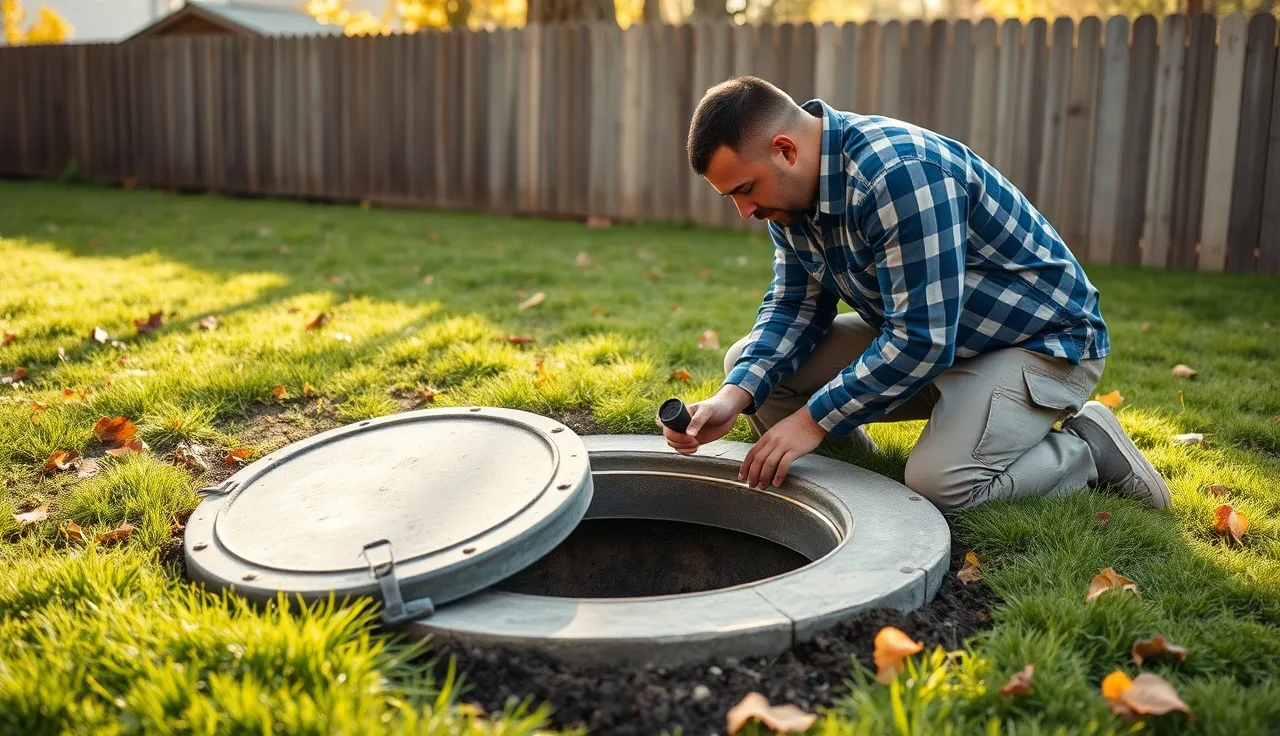
The tank or cesspool structure. The inspector exposes the covers (sometimes buried under a foot or more of soil), checks the concrete or precast material for cracks, separations, and root intrusion, and measures liquid depth against the outlet invert. A cesspool that is more than two-thirds full of settled solids is overdue for service. [5]
Inlet and outlet baffles or tees. These keep solids from short-circuiting into the leach field. Missing or rotted baffles are one of the most common problems found on older Long Island systems. Replacing them is cheap. Ignoring them destroys the field. [11]
The distribution system. If the home has a true septic tank followed by a leach field or seepage pool, the inspector checks the distribution box (D-box) for settled effluent levels in each outlet pipe. Uneven levels mean one arm of the field is flooding while others sit dry.
The leach field or seepage pools. Surface ponding, soft ground, lush green stripes over the field lines, or sewage odors all point to failure. The inspector may probe the soil or, in a more detailed inspection, camera the distribution lines.
Setback compliance. Suffolk County sets minimum distances between system components and property lines, wells, surface water, and foundations. Inspectors note any apparent violations, which can affect permitting for future repairs.
Riser and cover condition. Covers that sit below grade with no risers are a safety hazard and make future pumping and inspection harder. The county recommends risers to grade on all systems.
What an inspection does not include: a hydraulic load test (filling the system with water to watch performance), groundwater sampling, or a full camera inspection of every drain line from the house. You can add those for extra cost, and they are worth it on older properties.
How much does a septic inspection cost in Nesconset?
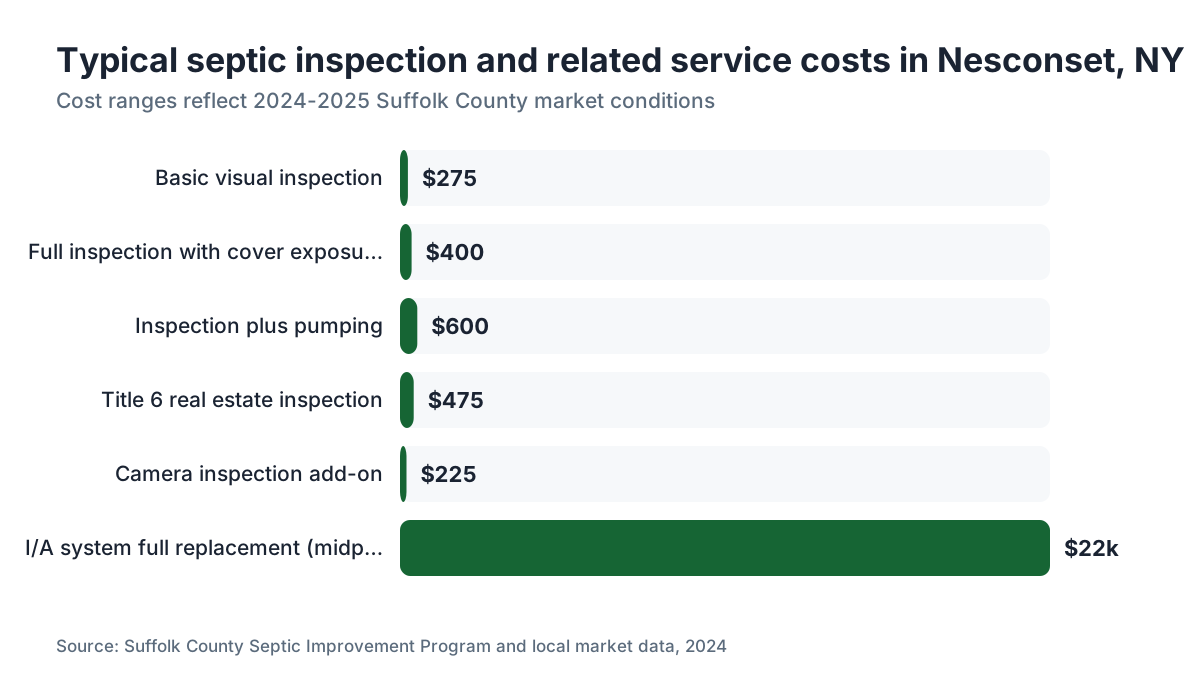
A septic inspection in Nesconset runs $300 to $600 for a standard job, and closer to $750 if you bundle in pumping. Prices vary with system type, how many components the inspector has to find and uncover, and whether pumping is needed to do the work right. Here is a realistic breakdown based on what operators charge across Suffolk County:
| Service | Typical cost range |
|---|---|
| Basic visual inspection (covers already exposed) | $200, $350 |
| Full inspection with cover location and exposure | $300, $500 |
| Inspection plus pumping (recommended) | $450, $750 |
| Cesspool inspection, multi-unit or large system | $500, $900 |
| Camera inspection of distribution lines (add-on) | $150, $300 |
| Title 6 real estate inspection with county forms | $350, $600 |
Those ranges reflect 2024 to 2025 market conditions on Long Island. Labor costs here run higher than most of the country because of licensing requirements, disposal fees, and drive time in a dense suburban market.
One thing to know: most inspectors in Nesconset will not give you a complete assessment without pumping the tank or cesspool first. You cannot see the bottom condition, check the baffle, or measure settled solids accurately through liquid. If an inspector quotes you $150 and says pumping is optional, find someone else.
For context, a septic tank pump out in Suffolk County runs $300 to $550 on its own depending on tank size and access. Bundling it with the inspection usually saves $50 to $100.
How do you find a licensed septic inspector in Nesconset?
New York State licenses septic system installers and inspectors through the Department of Labor. Inspectors who perform Title 6 evaluations for real estate transactions must also be approved by the SCDHS. The county keeps a list of approved engineers and licensed inspectors on its website. [9]
A few practical tips:
Check that the company or individual holds a current Suffolk County approval specifically for Article 6 inspections, more than a general plumbing or contractor license. The county tightened its approval requirements in recent years, and some operators who were once approved never renewed.
Ask whether the inspector carries errors and omissions insurance. If they miss a failing baffle or a cracked tank and you find out three months after closing, you want recourse.
Get the report in writing with photographs, not a pass/fail letter. A good report names the system type, tank size, cover depth, baffle condition, and the inspector's read on field condition. That report becomes part of your property records.
If you run a septic service business handling inspections across many Suffolk County properties, tools like SepticMind help track inspection schedules, permit records, and customer follow-ups in one place, so nothing slips between a field visit and the county submittal.
Ask neighbors or your real estate attorney for referrals. Long Island's septic market runs on relationships, and the best operators stay busy through word of mouth.
What happens if the inspection reveals a problem?
This is where Nesconset homeowners face some of the toughest decisions in the region. Because of the county's nitrogen-reduction mandate, a failing cesspool cannot simply be replaced with a new cesspool of the same design. Under the SCDHS Article 12 requirements and the county's Septic Improvement Program (SIP), most replacements now require an I/A nitrogen-reducing system. [4]
Those systems cost a lot more than conventional replacements. A standard cesspool swap might have run $8,000 to $15,000 a decade ago. An I/A system (brands like Norweco Singulair, Orenco AdvanTex, or Hydro-Action) runs $15,000 to $30,000 installed in Suffolk County, depending on site conditions and system size. [6]
The county's SIP offers grants and low-interest loans to offset those costs. As of 2024, the grant amount was up to $30,000 for qualifying properties, which can cover most or all of a replacement. Income limits and property eligibility rules apply. [7]
For a real estate transaction, a failing inspection does not automatically kill the deal. Options include:
- The seller pays for repair or replacement before closing.
- The parties negotiate a price cut and the buyer takes on the repair.
- The seller places funds in escrow to cover the work after closing.
- Both sides agree to a delayed closing to allow time for permitting and construction.
Permitting a new I/A system in Suffolk County takes six to twelve weeks on average. Build that timeline into any transaction contingency.
For tank-level septic tank repair work like baffle replacement or riser installation, costs are much lower, usually $200 to $800, and the work can often be done within days of the inspection.
How often should Nesconset homeowners get a septic inspection?
The EPA SepticSmart program recommends a professional inspection every three years for a conventional system, or annually if you have a mechanical or I/A system with pumps and aerators. [5]
Suffolk County matches that. The county recommends pumping and inspection every three to five years for single-family cesspools, and annual inspections for I/A systems because those systems have mechanical parts that need service. I/A systems in Suffolk County also usually require a maintenance contract with a licensed operator as a condition of the operating permit.
In practice, many Nesconset homeowners go much longer, sometimes only running an inspection at the point of sale. That is a gamble. A cesspool that is quietly failing can contaminate a private well, turn into a yard safety hazard, and become a far more expensive repair once the problem spreads into the surrounding soil.
If you are already on a how often to pump septic tank schedule, adding an inspection to that same visit costs almost nothing in extra time. Most pumping companies in Nesconset will assess the system as part of the pump-out. Ask them to document what they find in writing.
What is the difference between a cesspool and a septic system in Nesconset?
A cesspool is a single pit that lets raw sewage seep straight into the soil. A true septic system separates solids in a tank first, then disperses the cleaner liquid into a leach field. On Long Island the two terms get used interchangeably by homeowners, and sometimes by contractors who should know better.
A true septic system has two distinct parts: a septic tank, which separates solids from liquid through gravity and anaerobic digestion, followed by a distribution system that spreads the clarified effluent into a leach field where soil finishes the treatment.
A cesspool is a single-chamber pit lined with concrete blocks or rings with open joints. Raw sewage enters at the top and liquid seeps out through the block joints into the surrounding soil. There is no separate tank stage and no distribution system. Cesspools are older technology and were the default install across most of Long Island through the 1970s. Most Nesconset homes built before 1980 have cesspools, not true septic systems.
The practical difference for inspection: cesspools fail differently. They silt up as the joints clog with solids over time, slowly losing absorption capacity. A cesspool can look fine on a visual inspection but be running at 10 percent of its original capacity. Measuring the liquid level against the outlet and checking for surface saturation around the pool are the key indicators.
Suffolk County no longer permits new cesspool installations. Any replacement must meet current standards.
What permits and records should you pull before a real estate closing in Nesconset?
Before any property inspection in Nesconset, pull the SCDHS file on the system. The county has scanned most permit records going back to the 1960s and they are searchable through the SCDHS Environmental Quality portal. [3]
Things to look for in the file:
Permit history. Was the system permitted when installed? Any unpermitted system creates problems if you ever need to repair or replace it, because you are essentially starting from scratch with a new permit application.
As-built drawings. These show where the system sits on the property, how many pools or chambers exist, and approximate depths. Inspectors use them to find covers. Properties without as-builts need locating by probing or ground-penetrating radar, which adds cost and time.
Prior inspection reports. If the seller had an inspection done in the last few years, ask for a copy. Look for notes about system condition and whether any corrective action was recommended.
Certificate of compliance. If any repairs or upgrades happened in the past, there should be an SCDHS certificate of compliance on file. No certificate often means the work was done without permits, which is a red flag.
Your real estate attorney should be pulling these records as standard practice, but in a fast market things get skipped. Do not assume it has been done. The Town of Smithtown Building Department also keeps records that matter if additions or renovations were done to the house, since changes in bedroom count affect the required system size.
How does the Suffolk County Septic Improvement Program affect Nesconset homeowners?
The Suffolk County Septic Improvement Program (SIP) is one of the biggest financial programs available to Nesconset homeowners dealing with failing systems. It came out of the county's Long Island Nitrogen Action Plan (LINAP) to speed up replacement of old cesspools with nitrogen-reducing I/A technology. [7]
The program offers grants up to $30,000 and financing options for properties that do not qualify for the full grant. Priority areas include properties within a half-mile of surface water, but many Nesconset addresses qualify based on their groundwater management zone designation.
To tap the SIP, you need a county-approved I/A system design, a licensed contractor, and an approved application before work begins. You cannot install the system and then apply after the fact. The application and approval process takes roughly six to eight weeks.
The EPA's SepticSmart initiative names nitrogen from on-site systems as a leading cause of eutrophication in coastal waters and points to I/A technology as the most effective upgrade for existing lots that cannot expand their system footprint. [8] That is exactly what Suffolk County is trying to do with the SIP.
For operators bidding I/A replacement jobs in Nesconset, SepticMind's job costing and customer communication tools can track SIP application status alongside the installation schedule, so your crew is not stuck waiting on paperwork before mobilizing.
What should you do to prepare your property for a septic inspection?
Good preparation makes the inspector's job easier and your report more complete.
Locate the system covers before inspection day. If you have as-built drawings, mark the spots with small flags or stakes. If you do not know where the covers are, tell the inspector in advance so they bring probing equipment. Surprise location work can add an hour to the visit and cost you $75 to $150 extra.
Do not run heavy loads of laundry or use the dishwasher for 24 hours before the inspection. Flooding the system with water right before the visit can mask high liquid levels and make it harder to judge how the field is performing.
Clear ground-level access to the inspection area. Move any stored equipment, woodpiles, or vehicles parked over the system. Inspectors cannot dig in frozen or snow-covered ground safely, so if you are scheduling in winter, make sure the area is reachable.
Have your maintenance history ready. When was the system last pumped? Any backups in the house? Any wet spots in the yard? Even rough notes help the inspector calibrate what they are seeing.
Read up on septic tank cleaning and septic tank pumping basics before the visit. You will get more out of the conversation if you understand what they are looking at.
Frequently asked questions
How long does a septic inspection take in Nesconset?
A standard inspection with cover exposure and pumping takes two to four hours. Larger properties with multiple pools or a leach field system with a distribution box take longer. If the covers are already exposed and the system was recently pumped, a visual inspection alone can take 45 minutes to an hour. Always allow half a day when scheduling a real estate inspection so there is no rush.
Can I sell my house in Nesconset if the septic system fails inspection?
Yes, but it complicates the transaction. The most common path is a price reduction with the buyer taking responsibility for repairs, or escrow funds held at closing to cover the work. Suffolk County does not prohibit the sale of a property with a failing system, but lenders and buyers' attorneys will require a plan. Budget six to twelve weeks for permitting if a full system replacement is needed.
Does Suffolk County require a septic inspection before every home sale?
Suffolk County's Title 6 requirements mandate disclosure of the system type and, in most cases, an inspection report as part of real estate transfers. The exact requirements depend on the age and type of system. Your real estate attorney and the SCDHS website have the current requirements. Buyers should never waive the inspection contingency on a property with an on-site system in Suffolk County.
What is an I/A septic system and do I need one in Nesconset?
I/A stands for Innovative/Alternative. These are nitrogen-reducing systems that treat wastewater beyond the level a conventional cesspool or septic tank can manage. In Suffolk County, any system replacement on an existing residential lot now generally requires I/A technology under Article 12. They cost $15,000 to $30,000 installed, but the county's Septic Improvement Program offers grants up to $30,000 to eligible homeowners.
How do I find my septic system's location in Nesconset?
Start with the SCDHS Environmental Quality portal, which has scanned as-built drawings for most permitted systems in Suffolk County. Your Town of Smithtown tax file may also reference the system permit. If records are missing, a licensed inspector can locate the system by probing or ground-penetrating radar. Expect to pay $75 to $150 extra for location work on systems with no available records.
What is the difference between a Title 6 inspection and a regular septic inspection?
A Title 6 inspection follows the specific protocol required by the Suffolk County Sanitary Code for real estate transactions. It uses county-approved forms, must be performed or supervised by an SCDHS-approved inspector, and the report is submitted to the county as part of the transfer process. A regular maintenance inspection is less formal and not submitted to the county, but uses the same physical examination process.
How often should I pump my cesspool in Nesconset?
Every three to five years for a typical single-family home, but the right interval depends on household size and usage. A family of four generates roughly 200 to 250 gallons of wastewater per day. The EPA SepticSmart program recommends pumping every three to five years as a baseline. Annual pumping is not necessary for most households and can actually disrupt the biological activity in the system.
What does a septic system cost to replace in Nesconset?
A full I/A system replacement in Suffolk County runs $15,000 to $30,000 installed, depending on lot conditions, system size, and the specific technology required. The Suffolk County Septic Improvement Program offers grants up to $30,000 for qualifying properties, which can cover most or all of the replacement cost. For cost details on new installations more broadly, see our guide on the cost to install a septic system.
Can tree roots damage a septic system in Nesconset?
Yes. Root intrusion is one of the most common causes of concrete ring separation and baffle failure on Long Island. Trees within 10 to 20 feet of a cesspool or septic tank are a risk, especially willows, maples, and other water-seeking species. An inspector will look for root intrusion during a cover inspection. If roots have entered the tank, mechanical root cutting and baffle replacement are needed.
What are signs my septic system is failing in Nesconset?
Slow drains throughout the house (more than one fixture), gurgling sounds in the pipes, sewage odors indoors or outdoors, wet or spongy ground over the system location, and unusually green or lush patches of grass over the field. Any of these warrants an immediate inspection. Do not wait for the three-year routine interval if you are seeing active symptoms. A backup into the house means the system is already overloaded.
Do new construction homes in Nesconset need a septic inspection before occupancy?
New construction requires a permit and final inspection by the SCDHS under Article 12 before a certificate of occupancy can be issued. The installer must submit as-built drawings and the inspector verifies the installation matches the approved design. Homeowners buying a newly constructed home should request copies of the SCDHS approval documents and the as-built drawing as part of closing.
Can I inspect my own septic system in Nesconset?
You can do a basic visual check: look for odors, wet spots, and slow drains. But for any official purpose, including real estate transactions, permitting, or a condition assessment you can rely on, you need a licensed inspector approved by the SCDHS. Exposing septic covers also involves confined space safety risks. A $350 to $500 professional inspection is worth it compared to the cost of a missed problem.
What happens if my septic system backs up during a home sale in Nesconset?
An active backup is a disclosure obligation under New York real estate law and will almost certainly surface during inspection. The seller typically needs to have the system pumped immediately, investigate the cause, and either repair the problem before closing or negotiate terms with the buyer. A backup caused by a full tank is different from one caused by a failed leach field: get a complete inspection to understand which you are dealing with.
Does homeowners insurance cover septic system repairs in New York?
Standard homeowners insurance policies in New York typically exclude septic system failure from coverage. Some insurers offer riders or separate service line coverage that may cover certain repairs. Read your policy carefully. The cost of a full I/A replacement, $15,000 to $30,000, is almost never covered by standard insurance, which is why the Suffolk County SIP grant program matters so much for homeowners facing replacement.
Sources
- Suffolk County Department of Health Services, Office of Ecology: Suffolk County has approximately 360,000 on-site septic systems and cesspools, many of which are aging and contribute to nitrogen loading in groundwater.
- Long Island Nitrogen Action Plan (LINAP), Suffolk County: Nitrogen from on-site wastewater systems is a leading driver of water quality degradation in Suffolk County's coastal embayments and groundwater.
- Suffolk County Department of Health Services, Environmental Quality portal: SCDHS regulates individual sewage disposal systems under Suffolk County Sanitary Code Article 6, including Title 6 real estate transfer inspection requirements.
- Suffolk County Sanitary Code Article 12, SCDHS: Article 12 requires new and replacement systems in Suffolk County to meet current design standards, which now include Innovative/Alternative nitrogen-reducing technology for most residential replacements.
- EPA SepticSmart: How to Care for Your Septic System: The EPA recommends inspecting septic systems every three years and pumping tanks every three to five years depending on household size and system type.
- Suffolk County Septic Improvement Program, cost and technology information: Innovative/Alternative nitrogen-reducing septic systems cost approximately $15,000 to $30,000 installed in Suffolk County.
- Suffolk County Septic Improvement Program (SIP), grant details: The Suffolk County SIP offers grants up to $30,000 and low-interest financing to qualifying homeowners replacing failing cesspools with I/A technology.
- EPA SepticSmart Program: The EPA SepticSmart program states that nitrogen from on-site systems is a leading cause of eutrophication in coastal waters and recommends I/A technology as the most effective upgrade for existing lots.
- New York State Department of Labor, licensing for septic system installers: New York State licenses septic system installers and inspectors under the Department of Labor; county-level approvals from SCDHS are additionally required for Title 6 real estate inspections.
- EPA, Onsite Wastewater Treatment Systems Manual: EPA guidance on conventional septic systems describes the role of inlet and outlet baffles in preventing solids from reaching the drainfield, and notes missing baffles as a common and correctable deficiency.
- Suffolk County Groundwater Management Zones, SCDHS: Nesconset lies within Groundwater Management Zone IV, a sensitive designation that can trigger stricter setback and design requirements for septic system repairs and replacements.
Last updated 2026-07-09